

For families in our service areas
For families in our service areas, this guide explains home care and how non-medical in-home caregiving can support care planning in East Idaho, Treasure Valley & Magic Valley, Northern Wasatch, North Central West Virginia, and Northeast Ohio.
What to Expect
Home care services for special needs provide a personalized and compassionate alternative to traditional care. They focus on individualized support within the comfort of one’s home, addressing the unique needs of each patient. This model fosters better emotional well-being and satisfaction among patients. Studies show significant improvements in condition management and high satisfaction rates, especially when compared to institutional settings. In those environments, care can often feel more standardized and less attuned to personal needs.
For caregivers, the emotional challenges can be overwhelming. The stress and burnout they face are real and can take a toll on their well-being. Home care services offer not just practical support, but also emotional reassurance. They create an environment where caregivers can feel supported, knowing their loved ones are receiving compassionate care tailored to their needs.
Imagine a scenario where a patient receives care in their own home, surrounded by familiar faces and comforting surroundings. This nurturing approach not only improves health outcomes but also brings peace of mind to families. Testimonials from caregivers and clients alike highlight the profound impact of this personalized care, illustrating how it makes a difference in their lives.
In conclusion, choosing home care services for special needs is not just about meeting medical needs; it’s about fostering a sense of belonging and emotional support. By prioritizing compassion and individuality, we can ensure that both patients and caregivers feel valued and understood. Together, let’s embrace this caring approach to health and well-being.
What You Need to Know About Home Care Services for Special Needs: A
The landscape of care for individuals with special needs is evolving. Home care services are emerging as a compelling alternative to traditional institutional support. This shift reflects a growing preference for personalized, one-on-one assistance and highlights the significant benefits of receiving care in the comfort of one's own home. As families consider their options, a critical question arises: can home care truly deliver the same—or even better—outcomes compared to conventional care settings?
Exploring this comparison reveals not just the advantages of tailored support, but also the inherent challenges faced by traditional care models. These models often struggle to meet the unique needs of vulnerable populations, leaving families feeling stressed and overwhelmed. In contrast, home care services offer a nurturing environment, allowing individuals to thrive in familiar surroundings.
Ultimately, the choice of care is deeply personal, and it's essential to weigh the emotional and practical benefits that home care can provide. Families can find comfort in knowing that compassionate support is available, tailored to meet the specific needs of their loved ones.
Defining Home Care Services and Traditional Care
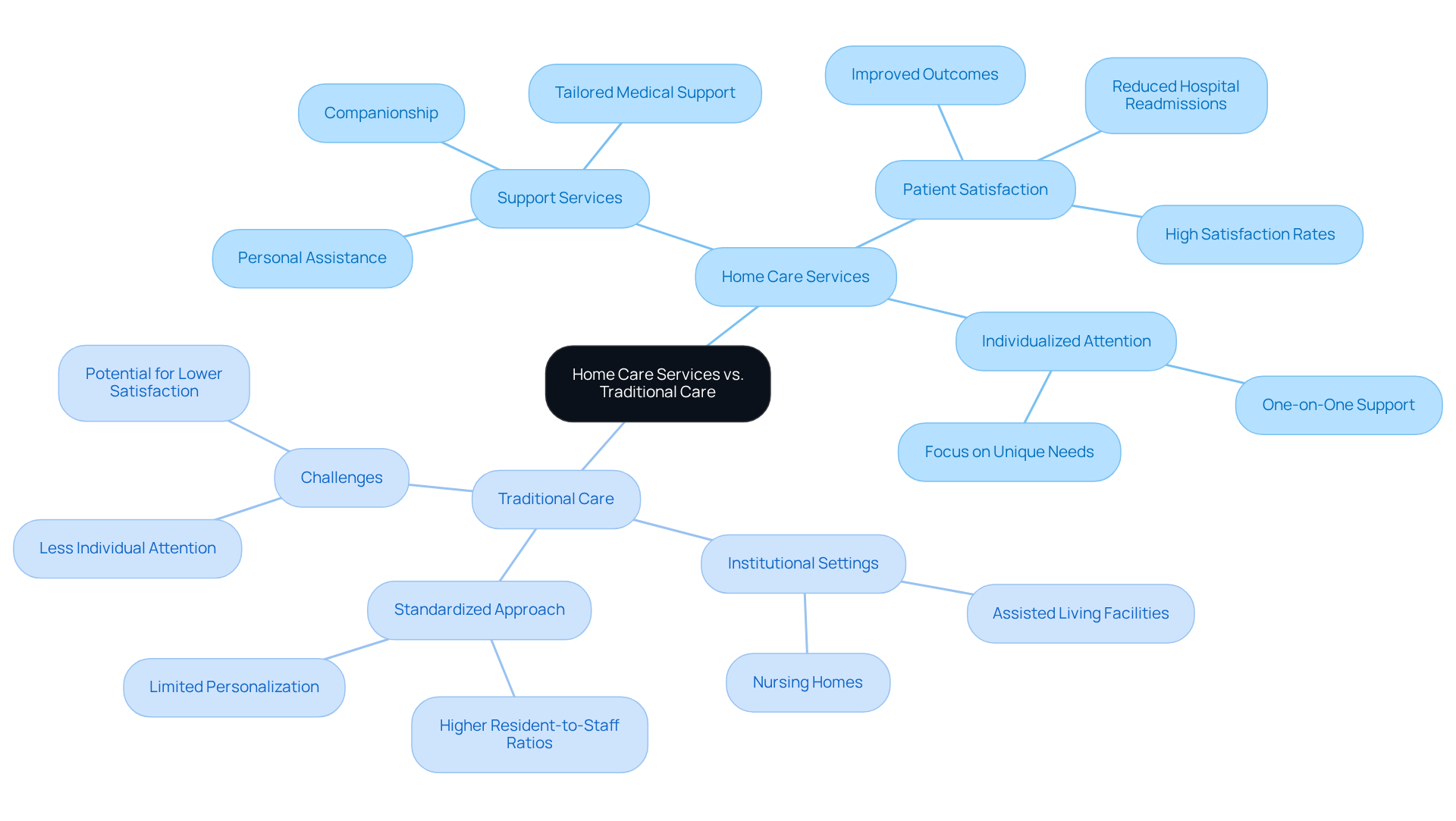
Support services, including companionship, personal assistance, and tailored medical support, are part of home care services for special needs that offer a variety of helpful options right in a person’s home. This model is a warm alternative to traditional support, which usually takes place in institutional settings like nursing homes or assisted living facilities, where care is provided in a more communal environment. Home assistance focuses on individualized, one-on-one support, allowing caregivers to truly concentrate on the unique needs of each client. In contrast, conventional support often follows a more standardized approach due to higher resident-to-staff ratios, which can limit the personalized attention each individual deserves.
This distinction is crucial, especially for seniors and individuals with special needs, as it significantly impacts the quality of home care services for special needs and the overall experience. Current trends indicate a growing preference for home care services for special needs, with approximately 4.5 million patients receiving residential healthcare services each year in the United States. This shift reflects a broader recognition of the benefits of personalized support, which includes home care services for special needs that contribute to improved patient outcomes, fewer hospital readmissions, and greater patient satisfaction. Notably, a survey conducted in Australia found that 90% of residential support recipients reported satisfaction with the overall quality of care, underscoring the positive results associated with home support services.
As the elderly population continues to rise, the demand for home care services for special needs is expected to grow. The domestic healthcare sector is recognized as one of the fastest-growing industries from 2020 to 2030. Additionally, statistics reveal that 30% of older adults with significant long-term services and supports (LTSS) needs received paid assistance, highlighting the widespread availability of these essential services. This trend positions home care services for special needs as an increasingly vital component of the healthcare landscape, ensuring that individuals receive the compassionate care they need.
Advantages of Home Care Services for Special Needs
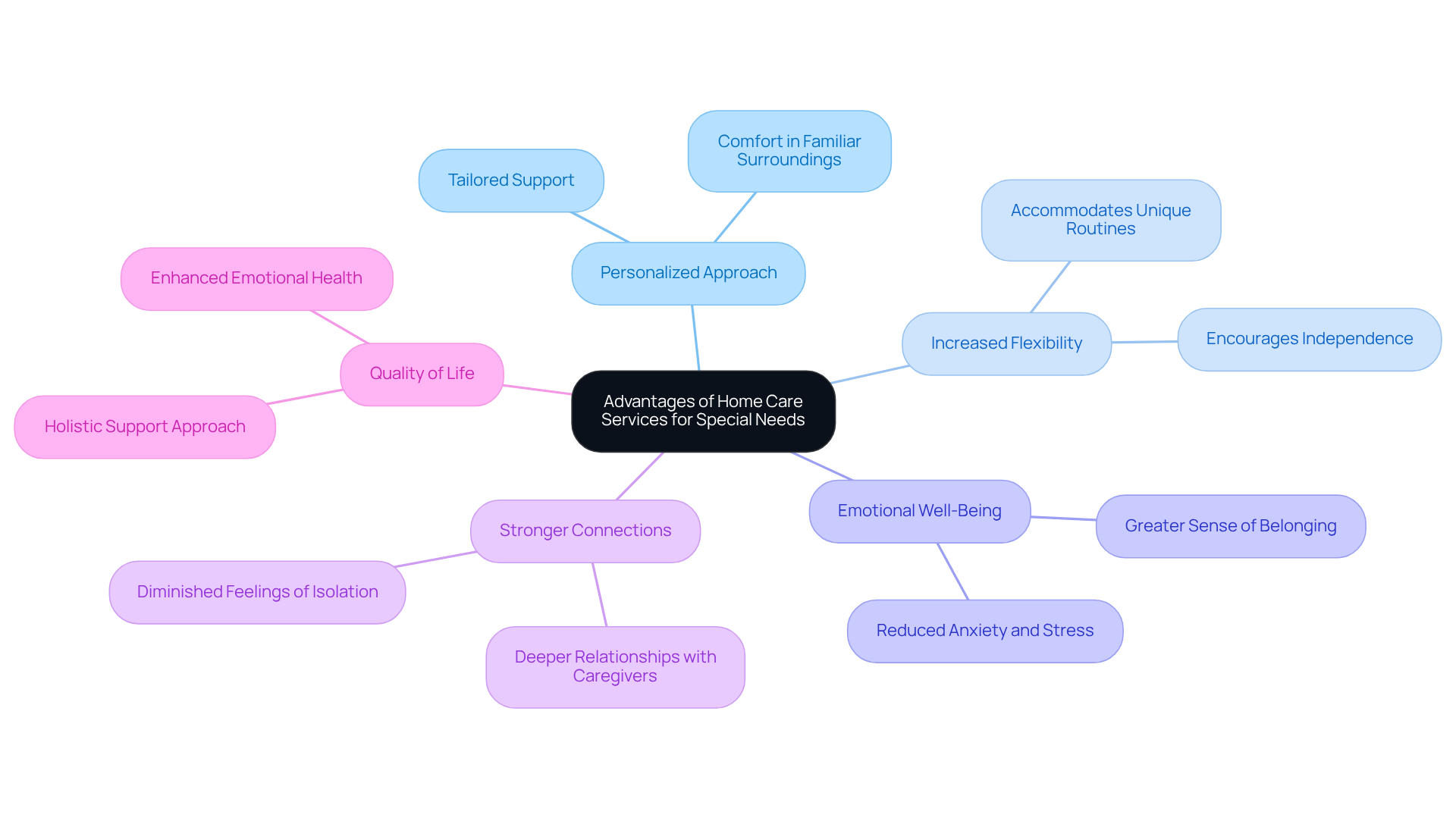
Home care services for special needs provide numerous advantages for individuals, primarily through their personalized approach. Unlike traditional support environments, in-home assistance is tailored to meet the unique needs of each person, allowing them to remain in familiar surroundings that enhance their comfort and emotional well-being. This sense of familiarity is vital, as it nurtures a feeling of security that can significantly reduce anxiety and stress. As Troy Mouton, District Director of the Wage and Hour Division, points out, domestic support workers provide essential services for those unable to care for themselves, underscoring the importance of adequate support in these settings.
Moreover, home care services for special needs provide increased flexibility in scheduling, accommodating the unique routines and preferences of individuals. This flexibility not only respects personal lifestyles but also encourages independence, with caregivers supporting individuals in daily activities while promoting self-sufficiency. The individualized attention from caregivers fosters deeper connections, effectively diminishing feelings of isolation and loneliness—common concerns in traditional support settings. Data show that personalized assistance can lead to improved emotional states; for instance, individuals receiving tailored support often report a greater sense of belonging and well-being.
Real-life examples illustrate these benefits: caregivers recognize the emotional advantages of in-home support, noting that the personal environment nurtures stronger bonds and more meaningful interactions with clients. This holistic approach to support not only enhances the quality of life for individuals with special needs but also nurtures their emotional health, making home care services for special needs a compelling alternative to conventional support options. However, it is essential to acknowledge the ongoing issue of employee misclassification within the home support sector, which can impact the quality of service provided. Addressing these challenges is crucial to ensure that both caregivers and recipients receive the care they deserve.
Challenges of Traditional Care for Special Needs
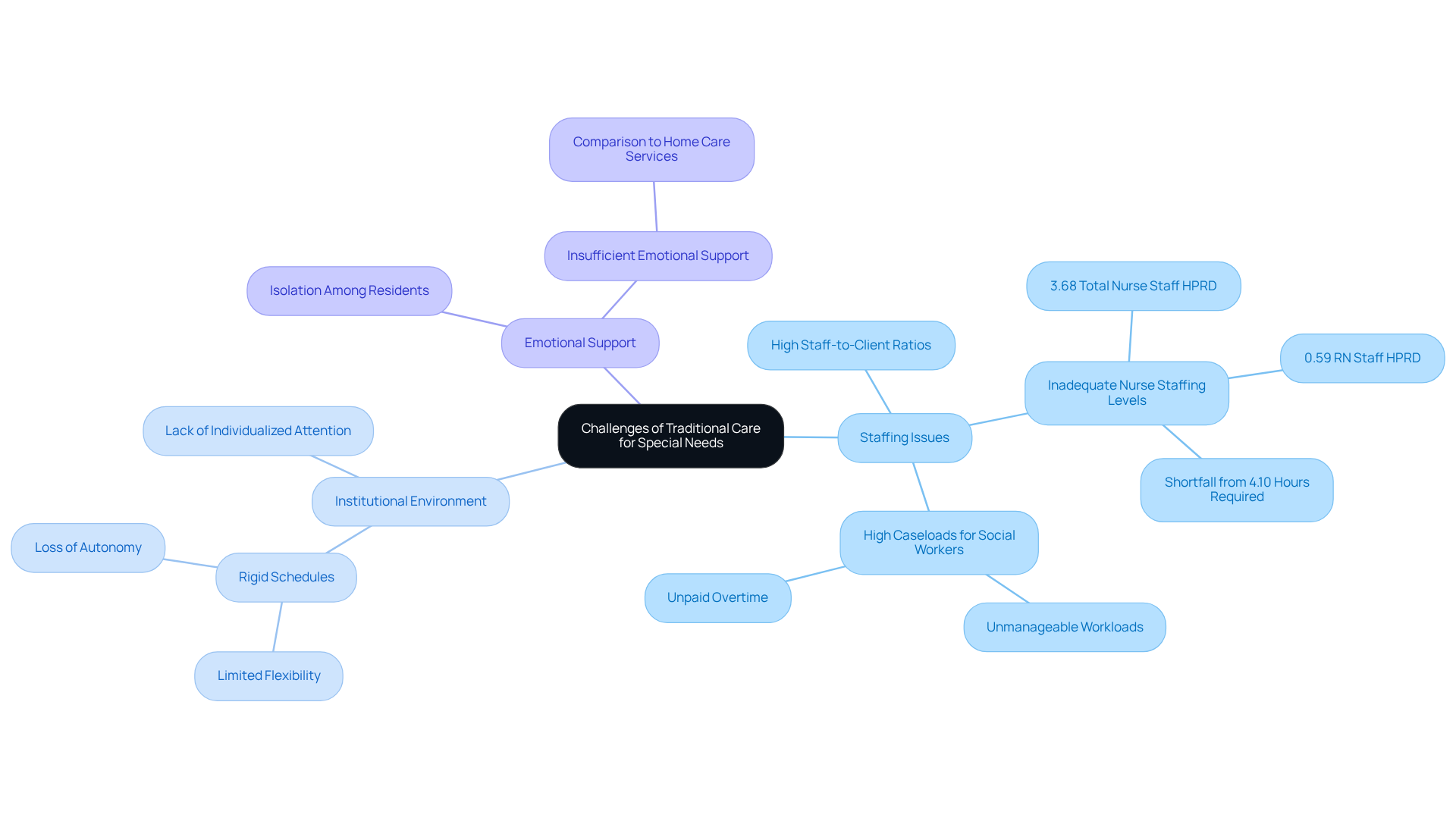
Supporting individuals with special needs can often be a daunting challenge, particularly due to high staff-to-client ratios. When caregivers are stretched too thin, it becomes difficult to provide the individualized attention that each client truly deserves. For instance, national averages reveal that many nursing facilities fall short of recommended staffing levels, with only 3.68 total nurse staff hours per resident day reported in Q4 2023, compared to the 4.10 hours deemed necessary for adequate clinical support according to a 2001 federal study. This staffing shortfall can lead to essential tasks being overlooked, resulting in negative outcomes such as pressure ulcers and medication errors.
Additionally, the institutional environment often does not cater to the unique preferences and routines of individuals, which can lead to discomfort and anxiety. A rigid schedule for activities and meals may intensify feelings of lost autonomy for those accustomed to a more flexible lifestyle. Social workers have noted that these settings frequently lack the emotional support that home care services provide, which can lead to increased feelings of isolation among residents. One social worker shared their struggles with high caseloads, expressing that they often felt unable to meet the emotional and physical needs of their clients due to insufficient staffing.
These challenges underscore the importance of considering alternatives to traditional care models. Families seeking to enhance the quality of life for their loved ones might find great benefit in tailored domestic support services. These services prioritize individual needs and foster a nurturing environment, creating a more supportive and compassionate experience for all involved.
Comparative Summary: Home Care vs. Traditional Care
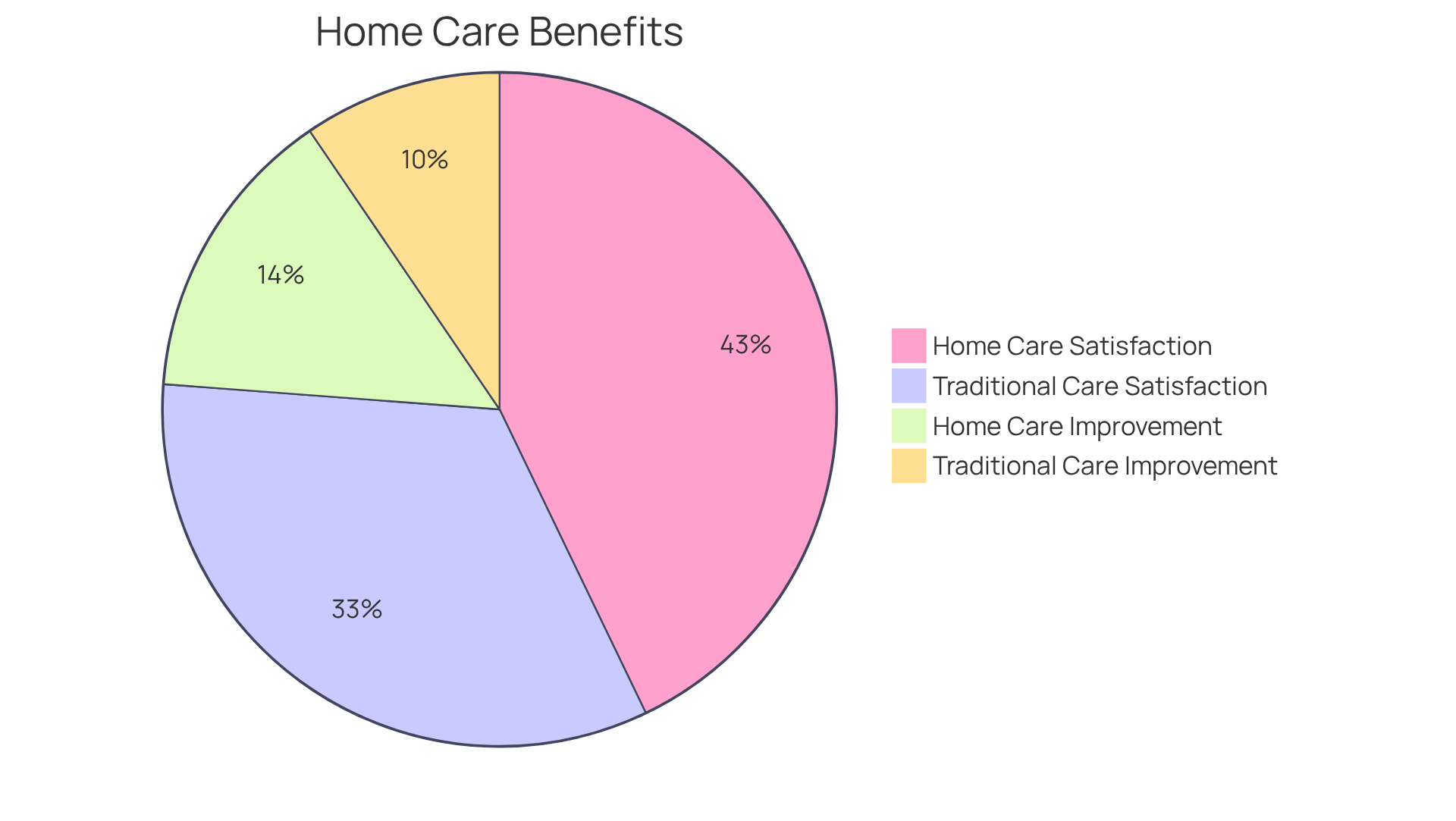
Home care services for special needs provide significant benefits for individuals with special requirements, particularly in offering tailored, adaptable, and compassionate support within the comforting environment of their own homes. This approach not only nurtures independence but also enhances emotional well-being. Studies reveal that patients receiving support at home experience a 30% improvement in condition management over six months, compared to a 20% enhancement for those in traditional treatment settings. Moreover, over 90% of patients express satisfaction with their home health services, appreciating the personalized nature of the care they receive.
Industry leaders underscore the importance of individualized support in enhancing quality of life. For instance, a study from the National Association for Home Support & Hospice highlights that patients who receive home care services for special needs report better physical and mental health outcomes, showcasing the effectiveness of these services in managing health concerns and promoting overall wellness.
Real-life stories illustrate how at-home care can empower individuals. Caregivers engage clients in activities they cherish, alleviating feelings of loneliness and isolation while ensuring a safe and comfortable home environment. This personalized attention not only addresses the unique needs of clients but also provides families with confidence and support during challenging times.
Conversely, traditional support environments may struggle to deliver the same level of personalized care, often leading to a more institutional atmosphere that might not cater to everyone's needs. Families must thoughtfully consider these aspects, weighing their loved ones' specific requirements against the potential influence on their quality of life. Ultimately, the choice between home care and traditional care should resonate with the individual's preferences and the family's capacity to provide support.
Your Path Forward
Home care services for special needs offer a heartfelt alternative to traditional care models, focusing on personalized support that meets individual requirements. This approach not only improves the quality of care but also creates a nurturing and familiar environment, allowing individuals to flourish in the comfort of their own homes. As the demand for home care grows, it is clear that this model resonates deeply with the needs and preferences of many, especially those with special needs.
Key insights from our discussion reveal the many benefits of home care services, including:
- Tailored support that encourages independence
- Emotional well-being
- Greater satisfaction among recipients
In contrast, traditional care settings often face challenges such as high staff-to-client ratios and strict schedules, which can lead to feelings of isolation and a lack of personal attention. Real-life stories and statistics highlight the positive effects of home care, showcasing improved health outcomes and a better quality of life for those receiving in-home assistance.
Ultimately, the decision between home care and traditional care should be guided by the specific needs of individuals and their families. Embracing the advantages of home care services for special needs not only addresses immediate care requirements but also fosters a more compassionate and supportive healthcare landscape. As the industry evolves, a commitment to recognizing and prioritizing individual preferences will be crucial in shaping the future of care for those with special needs.
https://iframe.tely.ai/cta/eyJhcnRpY2xlX2lkIjogIjY4ZjgxZWQyY2Q5YTk3ZTY3N2NkMjg1NyIsICJjb21wYW55X2lkIjogIjY4ZWU1ZGNhNzMxNzYyNTU3ZjNjOTVjMSIsICJpbmRleCI6IG51bGwsICJ0eXBlIjogImFydGljbGUifQ==Frequently Asked Questions
What are home care services?
Home care services include support such as companionship, personal assistance, and tailored medical support, provided in a person's home. This model focuses on individualized, one-on-one support, contrasting with institutional care settings.
How do home care services differ from traditional care?
Home care services offer personalized attention and support in a home environment, while traditional care typically occurs in institutional settings like nursing homes, where care is more standardized due to higher resident-to-staff ratios.
Why is the distinction between home care and traditional care important?
The distinction is crucial as it impacts the quality of care, especially for seniors and individuals with special needs, leading to improved patient outcomes and greater satisfaction with the care received.
What trends are observed regarding home care services for special needs?
There is a growing preference for home care services, with approximately 4.5 million patients receiving residential healthcare services annually in the United States, reflecting the benefits of personalized support.
What are the benefits of home care services for special needs?
Benefits include improved patient outcomes, fewer hospital readmissions, and greater patient satisfaction, as evidenced by surveys indicating high satisfaction rates among recipients of residential support.
How is the demand for home care services expected to change in the future?
As the elderly population continues to rise, the demand for home care services for special needs is expected to grow, making it a vital component of the healthcare landscape.
What statistics highlight the importance of home care services?
Statistics show that 30% of older adults with significant long-term service and support needs received paid assistance, underscoring the availability and necessity of these essential services.