Understanding Home Health Care vs. Nursing Homes: Key
Choosing the right care for aging loved ones can be a daunting task. Families often find themselves torn between home health care and traditional nursing homes. This decision carries significant implications for independence, emotional well-being, and financial stability.
As families navigate these critical choices, they must consider not only the medical needs of their loved ones but also their personal preferences and comfort. The challenge lies in balancing these factors to ensure the best possible outcome. What will ultimately guide families in making the right choice?
To address this dilemma, caregivers should start by assessing the specific needs of their loved ones. Here are some key factors to consider:
- Independence: Does your loved one value their independence? Home health care may offer more personalized support.
- Emotional Well-being: Consider the emotional impact of each option. Familiar surroundings can enhance comfort.
- Financial Stability: Evaluate the costs associated with each choice to ensure long-term sustainability.
By weighing these factors, families can make informed decisions that prioritize the well-being of their loved ones.
Defining Home Health Care and Traditional Nursing Homes
Choosing the right care for loved ones can be a daunting task. Families often face the challenge of deciding between home health care Portsmouth VA and conventional elder facilities. Understanding these options is crucial, as it directly impacts the level of independence and type of support available to their loved ones.
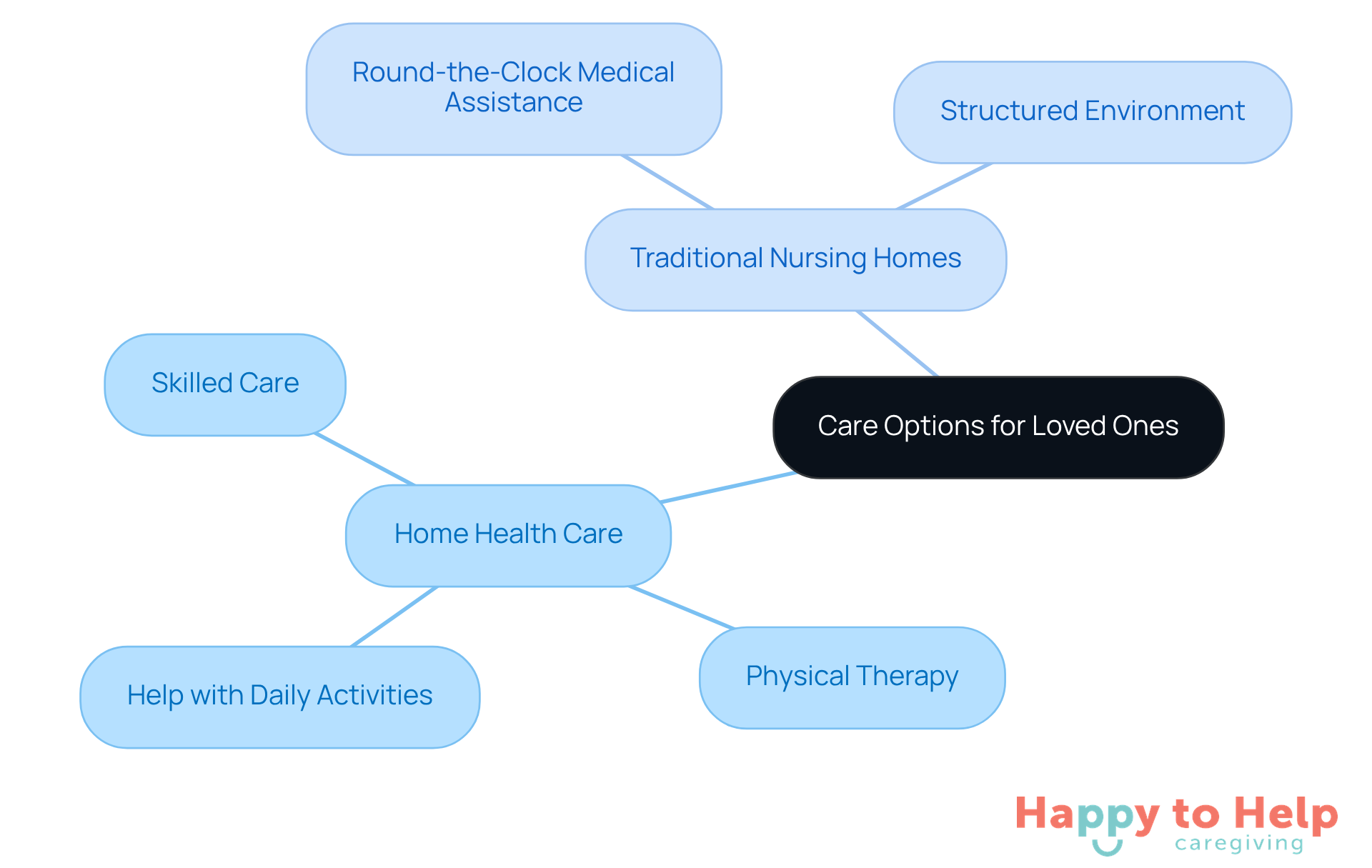
Home health care Portsmouth VA encompasses a range of medical and non-medical assistance provided in a patient's residence. These services aim to enhance health, recovery, and autonomy. They can include:
- Skilled care
- Physical therapy
- Help with daily activities
All tailored to individual needs. This flexibility allows for a more personalized approach to care.
In contrast, conventional elder facilities, also known as skilled treatment centers, offer a more institutionalized environment. Here, residents receive round-the-clock medical assistance and supervision, which is essential for those with complex medical needs. These facilities provide a structured environment for individuals who require constant assistance, but they may limit personal freedom.
Understanding these definitions is vital for families considering assistance options. It affects not only the degree of independence their loved ones will have but also the kind of support they will receive. By weighing the benefits of home health care Portsmouth VA against the structured care of elder facilities, families can make informed decisions that best suit their loved ones' needs.
Comparing Services: Home Health Care vs. Nursing Homes
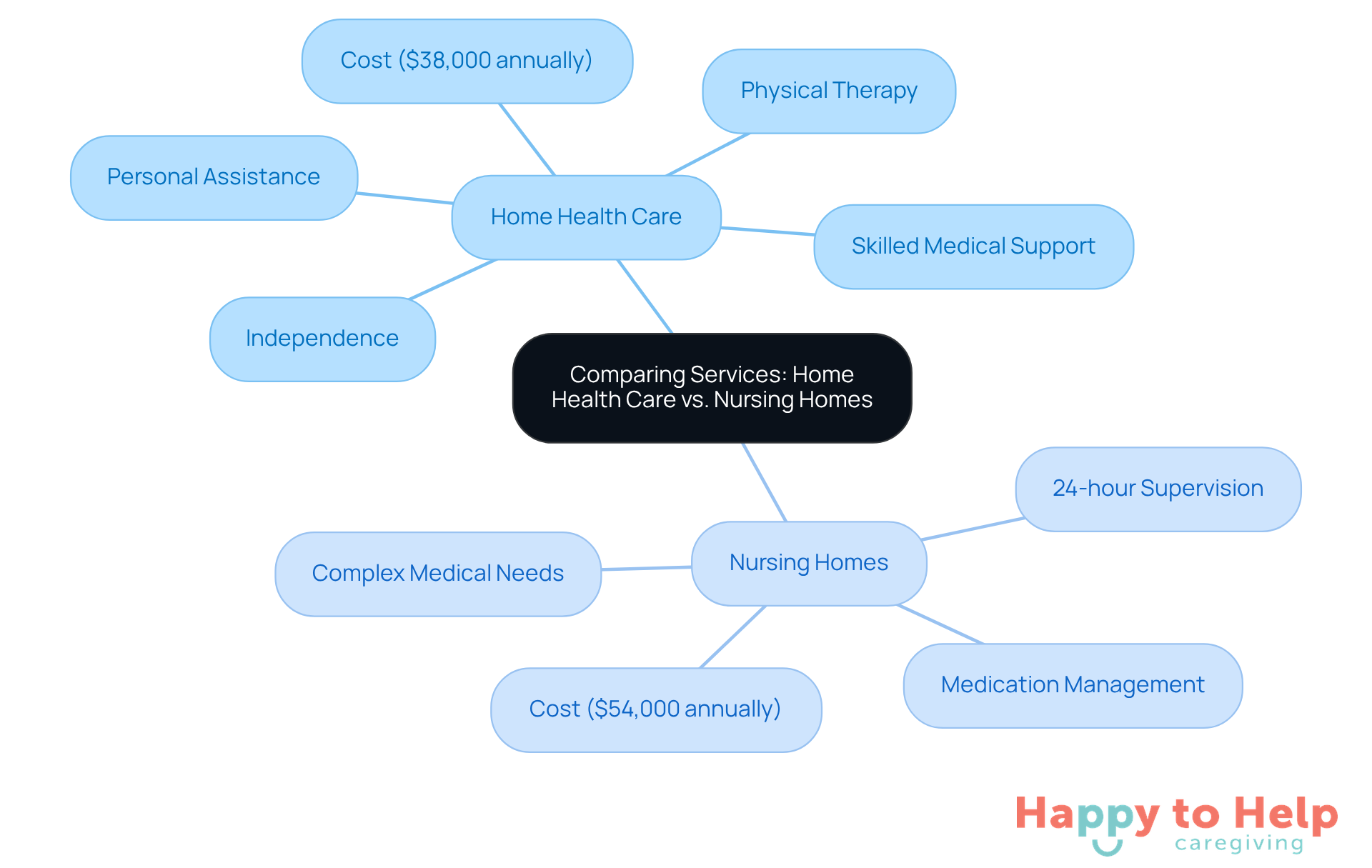
Choosing the right health service for loved ones can be a daunting task for caregivers. At-home health services, such as home health care Portsmouth VA, offer options like skilled medical support, physical therapy, and personal assistance, all within the comfort of the patient's home. This model promotes independence and allows for a customized approach that aligns with individual preferences. However, care facilities provide a broader range of services, including 24-hour supervision and medication management, which can be essential for those with complex medical needs.
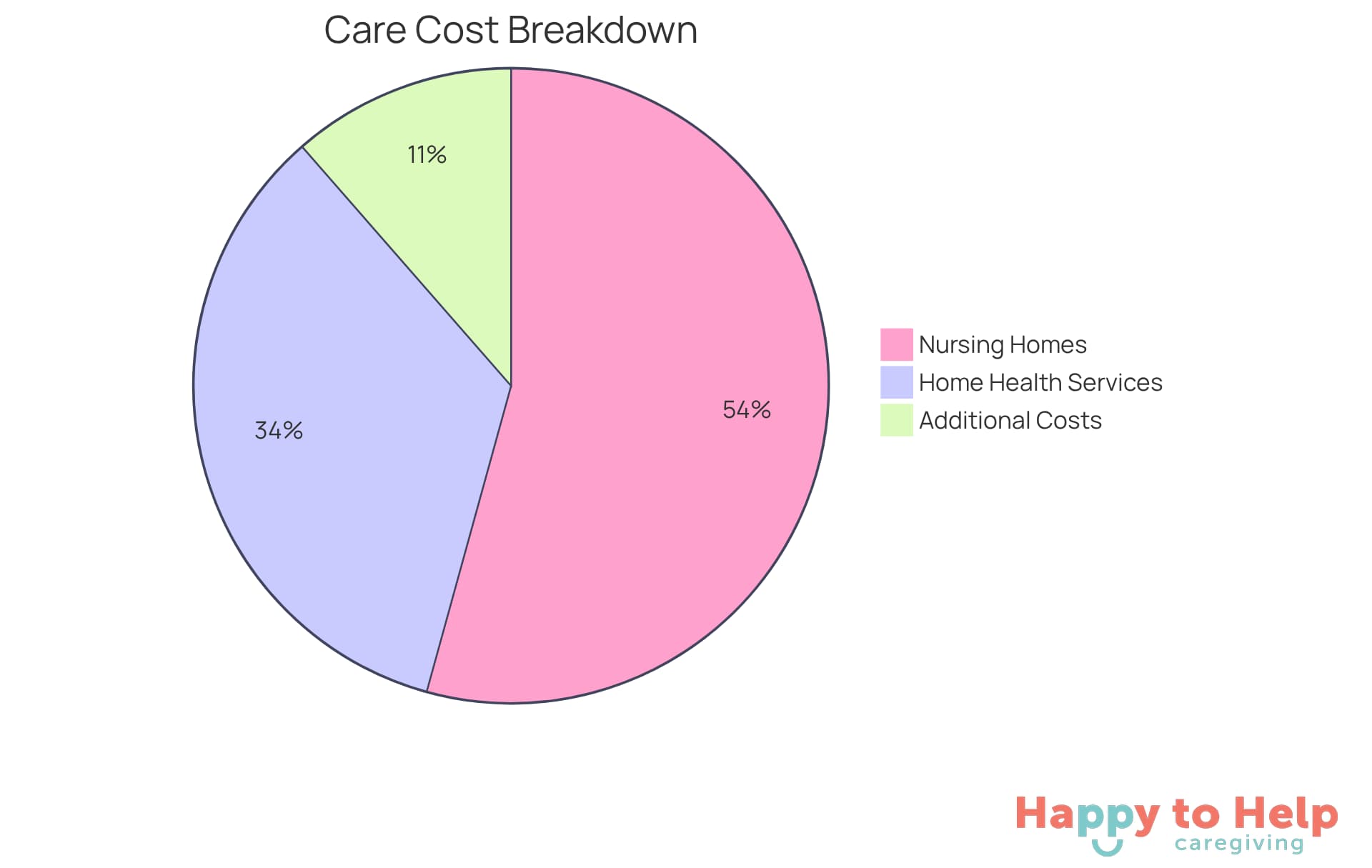
The implications of this choice are significant. While assisted living facilities can manage more intricate health issues, at-home services stand out for their adaptability and personalized treatment plans. Healthcare specialists emphasize that home health care Portsmouth VA can greatly enhance patients' quality of life, enabling them to stay in familiar environments while receiving necessary support. For instance, research indicates that residential support is often more economical, averaging about $38,000 annually compared to nearly $54,000 for nursing facility care. This financial advantage, coupled with the ability to tailor support, makes home health care Portsmouth VA appealing for many families.
Moreover, most Medicaid enrollees prefer home-based services, underscoring their popularity. The focus on individualized support in residential wellness environments leads to improved patient satisfaction and outcomes, as caregivers can concentrate on specific needs. However, potential cuts to Medicaid funding pose a threat to the availability of these vital services. Families must consider the implications of such changes carefully.
When deciding between at-home services and care facilities, families are encouraged to evaluate the specific medical conditions and preferences of their loved ones. The right choice can significantly impact overall well-being. By weighing the benefits of personalized care against the comprehensive services offered by facilities, caregivers can make informed decisions that best suit their family members' needs.
Evaluating Emotional and Practical Considerations
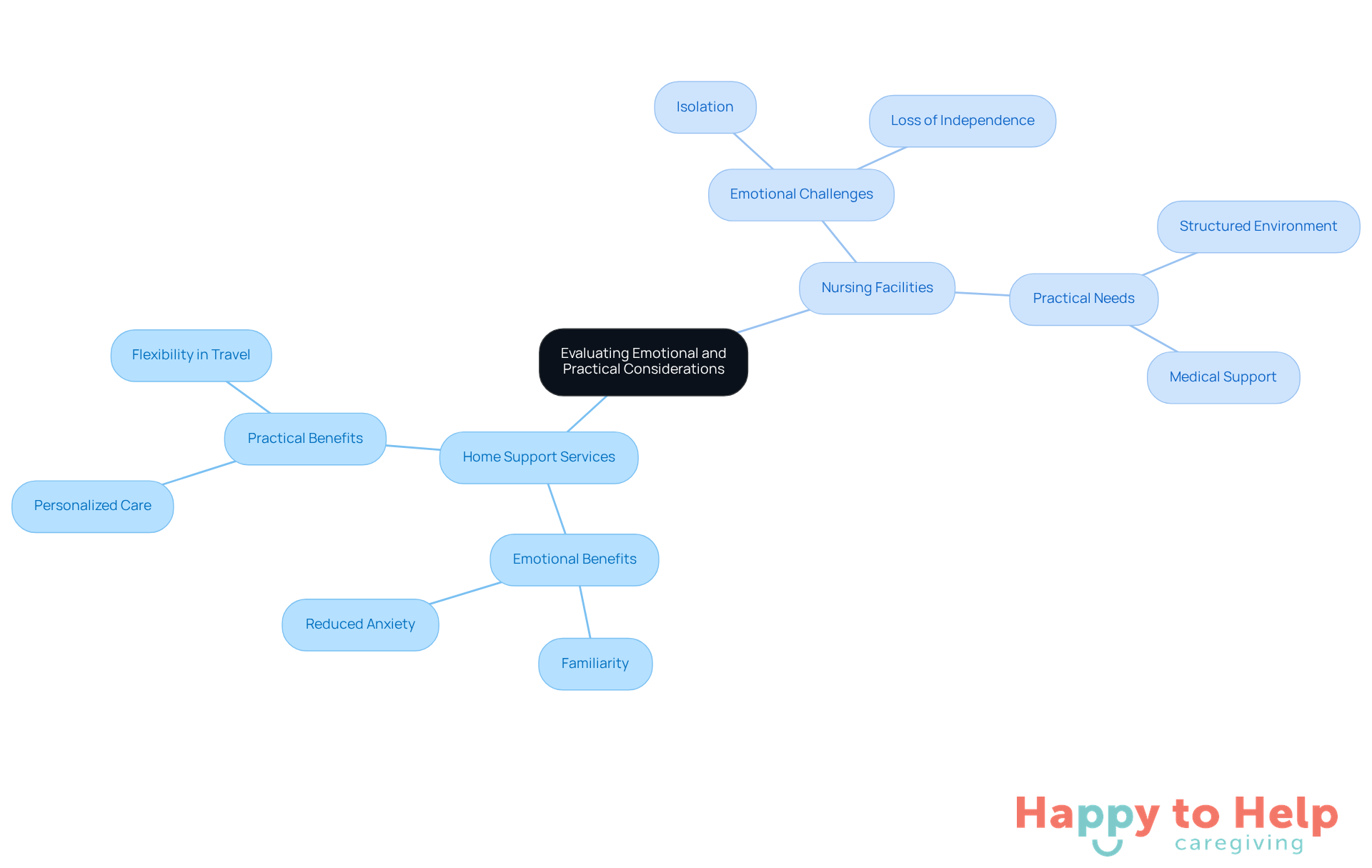
Choosing between home support services and nursing facilities presents a significant challenge for families. The emotional and practical implications of this decision can greatly affect the well-being of seniors.
Problem: Home care allows seniors to stay in familiar environments, which can significantly reduce anxiety and foster a sense of security. Research indicates that this familiarity enhances emotional well-being and overall satisfaction, as seniors are surrounded by their cherished possessions and routines.
Agitate: Conversely, nursing facilities offer a structured environment that may be necessary for those with severe medical needs. However, these facilities can also lead to feelings of isolation and a loss of independence, which can negatively impact emotional health. Families must carefully consider the emotional comfort of their loved ones alongside their practical support needs.
Solution: To ensure that the chosen option promotes both physical wellness and emotional well-being, families often find that home health care Portsmouth VA provides the best in-home support. Real-world examples show that many families prioritize their loved ones' emotional health by opting for home care, reinforcing the importance of a familiar setting in enhancing the quality of life for seniors.
Psychologists emphasize that remaining in a familiar environment can significantly influence older adults' emotional well-being, leading to greater contentment with their care. As the landscape of elderly support evolves, the emotional benefits of home health care Portsmouth VA are increasingly recognized, making it a compelling choice for many families.
Analyzing Costs and Financial Considerations
The costs associated with residential medical services and assisted living facilities can pose a significant challenge for families. Home health services typically range from $25 to $35 per hour, depending on the level of assistance required. This can lead to monthly expenses between $4,000 and $8,000, based on the hours needed. In contrast, nursing homes often come with a much steeper price tag, averaging $9,000 to over $10,000 per month, influenced by the facility and the level of care provided.
Families must navigate not only these direct costs but also consider potential insurance coverage, Medicaid eligibility, and the importance of long-term financial planning. Understanding these financial implications is crucial for making informed decisions about their loved ones' care. By evaluating all available options and resources, caregivers can better manage the financial aspects of caregiving.
Making the Right Choice
Navigating the decision between home health care and nursing homes presents a significant challenge for families in Portsmouth, VA. This choice is not merely logistical; it carries emotional weight and practical implications that can affect the quality of life for loved ones. Home health care offers personalized support in a familiar environment, promoting independence and emotional well-being. In contrast, nursing homes provide structured care for individuals with complex medical needs, which can sometimes lead to feelings of isolation.
Understanding these differences is crucial for families aiming to make informed choices. Home health care often proves to be more economical and enhances patient satisfaction through tailored services. The emotional benefits of remaining in a familiar setting are substantial; studies indicate that staying at home can alleviate anxiety and foster a sense of security. Conversely, while nursing homes may be necessary for some, they can contribute to feelings of loneliness, underscoring the importance of considering both emotional and practical needs.
Ultimately, families must weigh the emotional comfort, financial implications, and specific care requirements of their loved ones. By thoroughly evaluating these factors, caregivers can make choices that best support their family members’ health and happiness. The conversation surrounding home health care versus nursing homes transcends mere services; it’s about ensuring dignity, comfort, and the best possible quality of life for seniors.
https://iframe.tely.ai/cta/eyJhcnRpY2xlX2lkIjogIjY5NDFmMzU1MTE4MTVjMDQxY2UzNWU2NyIsICJjb21wYW55X2lkIjogIjY4ZWU1ZGNhNzMxNzYyNTU3ZjNjOTVjMSIsICJpbmRleCI6IG51bGwsICJ0eXBlIjogImFydGljbGUifQ==Frequently Asked Questions
What is home health care?
Home health care refers to a range of medical and non-medical assistance provided in a patient's residence, aimed at enhancing health, recovery, and autonomy. Services can include skilled care, physical therapy, and help with daily activities, all tailored to individual needs.
What are the benefits of home health care?
The benefits of home health care include a more personalized approach to care, allowing for flexibility and independence for patients in their own homes.
What are traditional nursing homes?
Traditional nursing homes, also known as skilled treatment centers, provide a more institutionalized environment where residents receive round-the-clock medical assistance and supervision, which is essential for those with complex medical needs.
How do home health care and nursing homes differ?
Home health care offers personalized care in a patient's home, promoting independence, while nursing homes provide structured environments with constant assistance, which may limit personal freedom.
Why is it important for families to understand these care options?
Understanding the differences between home health care and traditional nursing homes is crucial for families, as it impacts the level of independence and type of support available to their loved ones, helping them make informed decisions about care.
List of Sources
- Defining Home Health Care and Traditional Nursing Homes
- What’s Next For Home Health As The Industry Faces Its Biggest Test Yet (https://homehealthcarenews.com/2025/10/whats-next-for-home-health-as-the-industry-faces-its-biggest-test-yet)
- From facility to home: How healthcare could shift by 2025 (https://mckinsey.com/industries/healthcare/our-insights/from-facility-to-home-how-healthcare-could-shift-by-2025)
- Impact of Government Shutdown on Nursing Home Care (https://theconsumervoice.org/news/impact-of-government-shutdown-on-nursing-home-care)
- 5 Key Facts About Nursing Facilities and Medicaid | KFF (https://kff.org/medicaid/5-key-facts-about-nursing-facilities-and-medicaid)
- Recent Legislative and Regulatory Updates for Long-Term Care Facilities (https://reedsmith.com/our-insights/blogs/health-industry-washington-watch/102lu36/recent-legislative-and-regulatory-updates-for-long-term-care-facilities)
- Comparing Services: Home Health Care vs. Nursing Homes
- Medicaid cuts could hurt older adults who rely on home care, nursing homes | Alabama Reflector (https://alabamareflector.com/2025/03/28/medicaid-cuts-could-hurt-older-adults-who-rely-on-home-care-nursing-homes)
- How Medicaid Cuts Could Force Millions Into Nursing Homes (https://ldi.upenn.edu/our-work/research-updates/how-medicaid-cuts-could-force-millions-into-nursing-homes)
- Home Care News Brief: September 17, 2025 (https://members.homecarefla.org/news/Details/home-care-news-brief-september-17-2025-289036)
- How the ‘One Big Beautiful Bill Act’ Could Impact America’s Nursing Home Residents (https://aarp.org/advocacy/one-big-beautiful-bill-nursing-homes)
- Evaluating Emotional and Practical Considerations
- New study looks at home care versus nursing care (https://whec.com/top-news/new-study-looks-at-home-care-versus-nursing-care)
- In-Home Care vs. Nursing Homes | Village Caregiving (https://villagecaregiving.com/blog/in-home-care-vs-nursing-home)
- Why Home Nursing Care is the Future of Healthcare - Legacy Homecare LA (https://legacyhomecarela.com/2025/02/05/why-home-nursing-care-is-the-future-of-healthcare)
- Rethinking Recovery: How Private Home Health Care Fits Modern Wellness Goals - Wellbeing Magazine (https://wellbeingmagazine.com/rethinking-recovery-how-private-home-health-care-fits-modern-wellness-goals)
- Pros & Cons of Long-Term Health Care | Planning Ahead (https://benedictineliving.org/resources/news/navigating-the-pros-and-cons-of-long-term-health-care)
- Analyzing Costs and Financial Considerations
- Cost of Home Care vs. Nursing Homes (https://aplaceformom.com/caregiver-resources/articles/home-care-vs-nursing-home-costs)
- Home Care Costs in 2025: A State-by-State Guide (https://aplaceformom.com/caregiver-resources/articles/in-home-care-costs)
- Nursing Homes vs Home Care Comparison (https://seniorliving.org/compare/nursing-home-vs-home-care)
- Understanding the Cost and Value of Home Care in 2025 (https://assistinghands.com/135/texas/nesanantonio/blog/understanding-the-cost-and-value-of-home-care-in-2025)
- Nursing Home Room Costs Increase by 7% to 9% as all Long-Term Care Costs Rise (https://skillednursingnews.com/2025/03/nursing-home-room-costs-increase-by-7-to-9-as-all-long-term-care-costs-rise)