

For families in our service areas
For families in our service areas, this guide explains caregiver support and how non-medical in-home caregiving can support care planning in East Idaho, Treasure Valley & Magic Valley, Northern Wasatch, North Central West Virginia, and Northeast Ohio.
How Does Age Affect Memory? Insights at a Glance
Aging can significantly impact memory, introducing cognitive changes that often lead to slower processing speeds and challenges in recalling new information. This is particularly true due to structural changes in the brain, such as hippocampal shrinkage.
For family caregivers, understanding this dual nature of aging is crucial. While some cognitive functions may decline, others—like vocabulary and general knowledge—can remain stable or even improve. This nuanced perspective is essential for providing the right support to loved ones.
It's natural to feel overwhelmed by these changes. Caregivers often experience stress and burnout as they navigate these challenges. However, there are emotional and practical supports available to help you through this journey.
Remember, you’re not alone in this. Many caregivers share similar experiences, and hearing their stories can provide comfort and reassurance. By connecting with others and seeking support, you can find ways to manage the emotional toll and foster a nurturing environment for your loved ones.
As you continue to care for those you love, know that your efforts are invaluable. Embrace the moments of connection and understanding, and take heart in the knowledge that while aging brings challenges, it also offers opportunities for growth and deeper relationships.
Understanding How Does Age Affect Memory? Insights
Aging is a complex journey, filled with physical, cognitive, and emotional changes that can leave many caregivers feeling overwhelmed. It’s not uncommon for individuals aged 70 and older to experience forgetfulness, with over a third facing this challenge. This reality raises important questions about how age impacts memory and what caregivers can do to support their loved ones.
Understanding the nuances of cognitive decline is essential, especially for family caregivers who often bear the weight of these changes. They may wonder:
- What strategies can I use to tell the difference between normal age-related changes and more serious cognitive impairments?
- How can I create an environment that nurtures memory retention?
Exploring these insights not only empowers caregivers but also enhances the quality of life for their loved ones navigating the challenges of aging. By fostering a supportive atmosphere, caregivers can help their family members feel more secure and engaged, ultimately making this journey a little easier for everyone involved.
Define Aging and Memory: Key Concepts
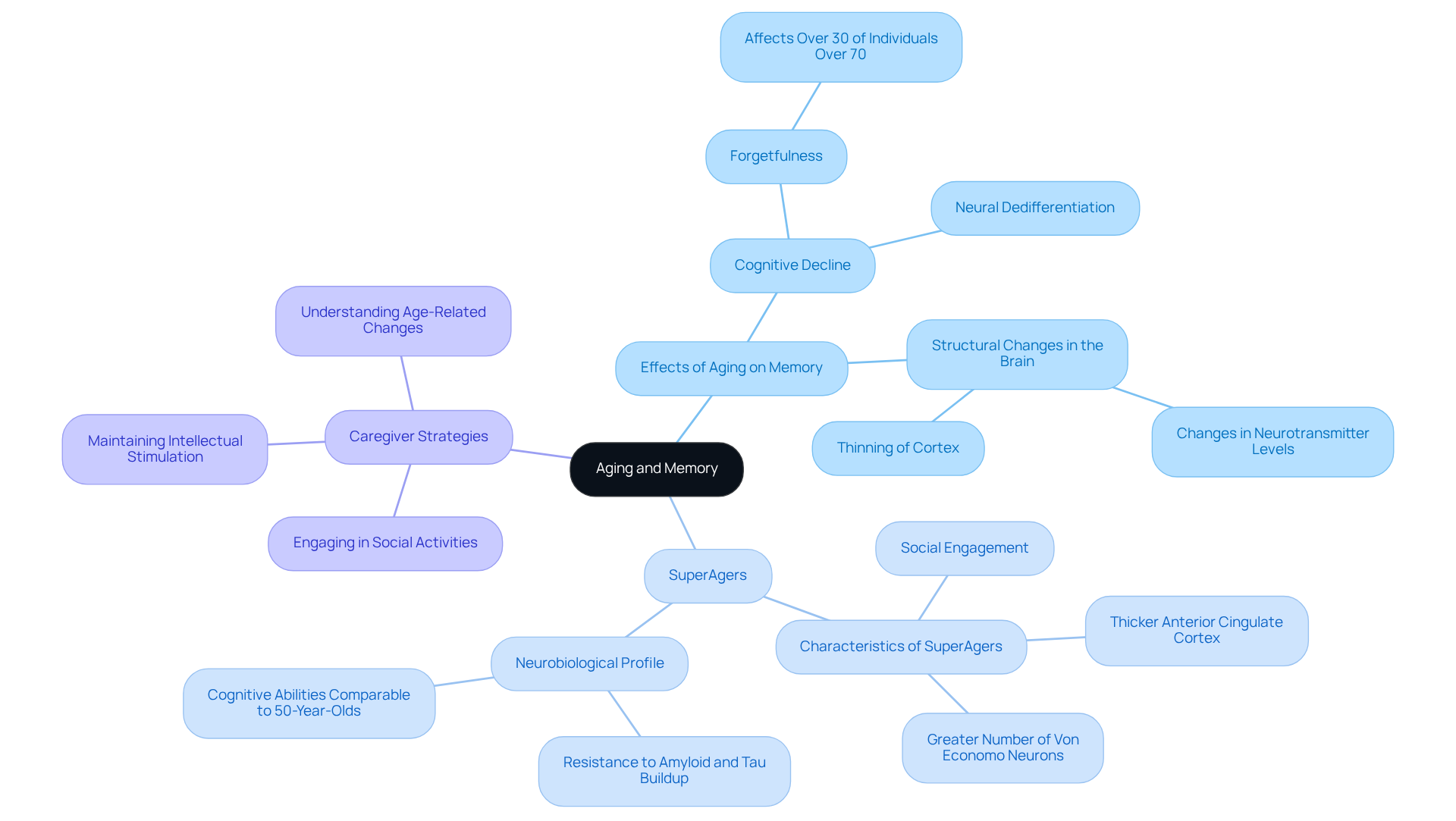
Aging is a gradual biological process that brings about various physical, cognitive, and emotional changes. For many, understanding how does age affect memory—the ability to encode, store, and retrieve information—can be significantly influenced by these transformations. As we age, our brains undergo structural and functional changes, which raises the question of how does age affect memory and our ability to recall information. It’s important to note how does age affect memory, as forgetfulness affects more than a third of individuals over 70, highlighting the common experience of mental decline in older adults and its relevance to the aging process.
Research into 'SuperAgers'—those aged 80 and older with remarkable memory—offers hope. Some of these individuals maintain cognitive abilities similar to those of 50-year-olds. They often possess a unique neurobiological profile, including a thicker anterior cingulate cortex and a greater number of von Economo neurons, which play a crucial role in recall and social behavior. Many SuperAgers are highly social and enjoy strong interpersonal relationships, which are vital for understanding what contributes to exceptional memory in later life. Interestingly, some SuperAgers show no buildup of amyloid and tau proteins, typically associated with Alzheimer's disease, or have these proteins without experiencing mental decline.
For family caregivers, understanding these biological processes is essential. It helps distinguish between typical age-related changes and more serious mental impairments. Engaging in social activities and maintaining intellectual stimulation are key strategies to explore how does age affect memory and can help slow memory decline. Dr. Marc Siegel emphasizes that ongoing socialization and mental exercise are vital for preserving cognitive function. By recognizing these factors, caregivers can feel empowered to support their loved ones as they navigate the complexities of aging.
Explore Age-Related Memory Changes
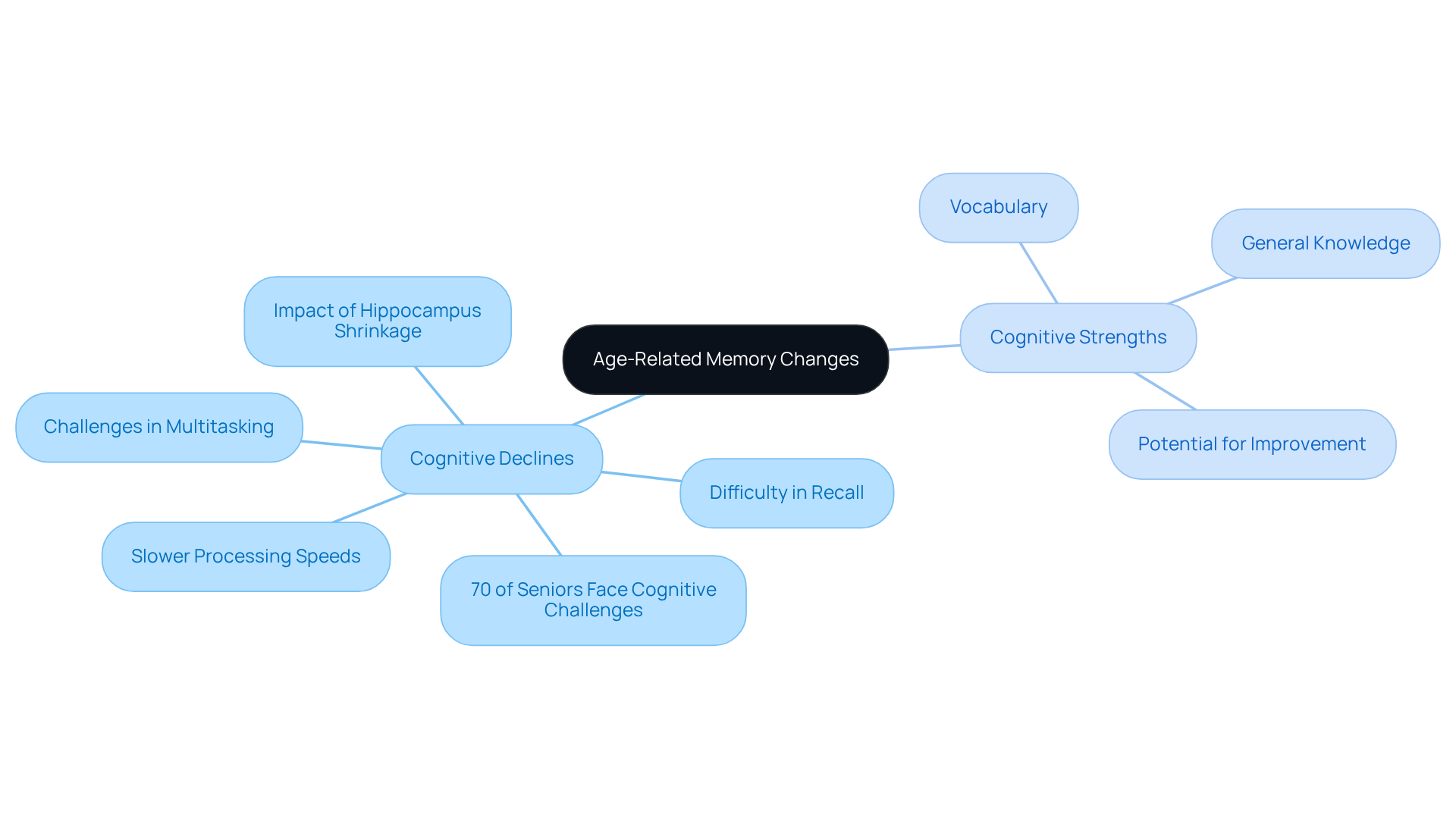
Aging brings about various cognitive changes, prompting inquiries into how does age affect memory and deeply impact daily life. It’s important to recognize that while some cognitive functions may decline, others can stay stable or even improve. Many older adults experience slower processing speeds, find it harder to recall new information, and struggle with multitasking, which leads to the inquiry of how does age affect memory. The hippocampus, a vital area for memory formation, often shrinks with age, leading to questions about how does age affect memory and making it tougher to create new memories.
Yet, there’s a silver lining. Older adults often shine in areas like vocabulary and general knowledge, which usually remain intact or may even enhance over time. It’s estimated that around 70% of seniors face cognitive challenges significant enough to disrupt their daily tasks. This statistic underscores the importance of understanding how does age affect memory regarding these changes.
For caregivers, this knowledge is crucial. It empowers them to provide personalized support and encouragement that aligns with the unique cognitive profiles of their loved ones. By recognizing these shifts, caregivers can foster a nurturing environment that respects the strengths and challenges of aging, ultimately enhancing the quality of life for both themselves and those they care for.
Discuss Implications for Caregiving and Daily Life
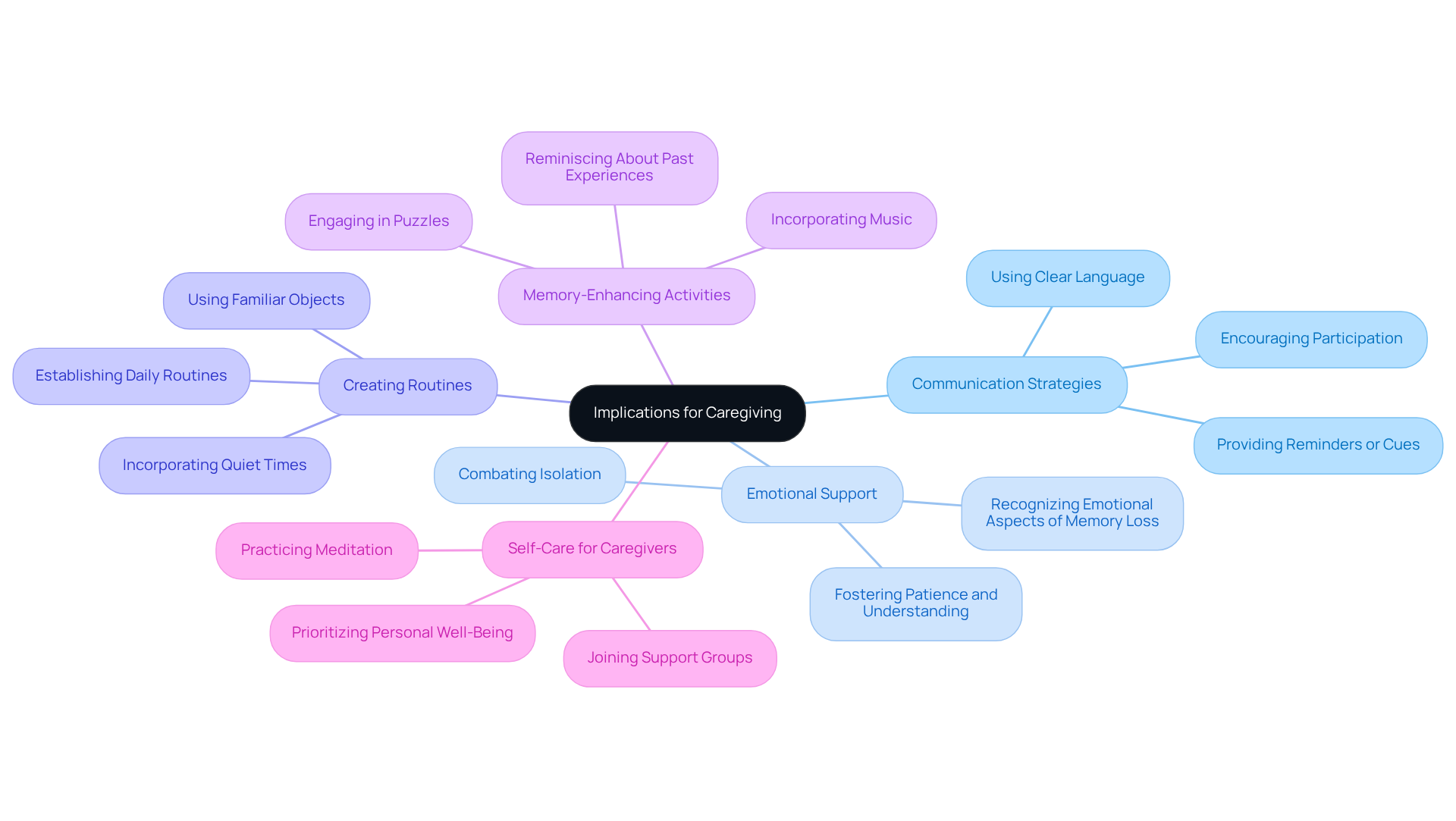
The implications of age-related cognitive changes for caregiving are profound. Caregivers often find themselves needing to adjust their communication styles. Using clear and simple language, along with providing reminders or cues, can make a world of difference in assisting with daily tasks. Statistics reveal that effective communication strategies significantly enhance the quality of life for seniors. This makes it essential for caregivers to adapt their methods as needed.
Creating routines can help individuals with recall difficulties feel more secure and less anxious. It’s also crucial for caregivers to recognize the emotional aspects of memory loss. This experience can lead to frustration or feelings of inadequacy for their loved ones. Dr. Helen Kales, a geriatric psychiatrist, emphasizes that isolation can accelerate cognitive decline, underscoring the importance of emotional support. By fostering an atmosphere of patience and understanding, caregivers can help alleviate these feelings and encourage a sense of independence and dignity.
Engaging in memory-enhancing activities, like puzzles or reminiscing about past experiences, can be beneficial for both the caregiver and the individual receiving care. Additionally, creating a calming environment by removing hazards and ensuring safety can greatly enhance the caregiving experience. Caregivers should also prioritize their own well-being, as self-care is vital for providing effective support. Remember, taking care of yourself allows you to be the best support for those you love.
Moving Forward with How Does Age Affect Memory? Insights
Aging undeniably influences memory, bringing about various cognitive changes that affect how individuals encode, store, and retrieve information. It’s essential to understand the relationship between age and memory, not just for the elderly but also for the family caregivers who support them. By recognizing the typical age-related changes in memory, caregivers can navigate the complexities of aging more effectively and provide meaningful assistance.
This article highlights key insights, such as the differences in cognitive decline and stability among older adults. While some may struggle with processing new information and multitasking, others might retain or even enhance their vocabulary and general knowledge. The phenomenon of 'SuperAgers' shows that exceptional memory can persist in some individuals, underscoring the importance of social engagement and mental stimulation in maintaining cognitive function. Caregivers equipped with this knowledge can create supportive environments that honor both the strengths and challenges faced by their loved ones.
Ultimately, understanding how age affects memory goes beyond mere awareness; it calls for proactive engagement and compassionate caregiving. By implementing effective communication strategies, establishing routines, and encouraging memory-enhancing activities, caregivers can significantly improve the quality of life for aging individuals. This holistic approach nurtures cognitive health and uplifts emotional well-being, reinforcing the vital role caregivers play in their loved ones' lives as they navigate the journey of aging.
https://iframe.tely.ai/cta/eyJhcnRpY2xlX2lkIjogIjY5MDQwNjM3MTRlOWM3YWNhMGRiMDViYyIsICJjb21wYW55X2lkIjogIjY4ZWU1ZGNhNzMxNzYyNTU3ZjNjOTVjMSIsICJpbmRleCI6IG51bGwsICJ0eXBlIjogImFydGljbGUifQ==Frequently Asked Questions
What is aging in the context of memory?
Aging is a gradual biological process that leads to various physical, cognitive, and emotional changes, significantly influencing memory, which involves encoding, storing, and retrieving information.
How does age affect memory?
As individuals age, their brains undergo structural and functional changes that can lead to forgetfulness and cognitive decline, affecting more than a third of individuals over 70.
What are 'SuperAgers'?
'SuperAgers' are individuals aged 80 and older who maintain remarkable memory abilities similar to those of 50-year-olds, often exhibiting a unique neurobiological profile.
What neurobiological traits are common in SuperAgers?
SuperAgers typically have a thicker anterior cingulate cortex and a greater number of von Economo neurons, which are important for recall and social behavior.
How do social relationships impact memory in older adults?
Many SuperAgers are highly social and have strong interpersonal relationships, which are essential for understanding exceptional memory in later life.
What is the significance of amyloid and tau proteins in aging?
Some SuperAgers do not show the buildup of amyloid and tau proteins, which are usually associated with Alzheimer's disease, or they may have these proteins without experiencing mental decline.
Why is it important for family caregivers to understand the biological processes of aging?
Understanding these processes helps caregivers distinguish between normal age-related changes and more serious mental impairments, allowing them to support their loved ones effectively.
What strategies can help slow memory decline in older adults?
Engaging in social activities and maintaining intellectual stimulation are key strategies that can help slow memory decline as individuals age.
What does Dr. Marc Siegel emphasize regarding cognitive function in aging?
Dr. Marc Siegel emphasizes that ongoing socialization and mental exercise are vital for preserving cognitive function in older adults.