
Understanding How Much Do Personal Care Aides Make? A
The role of personal care aides (PCAs) is increasingly recognized as vital in supporting individuals with daily living activities. However, many remain unaware of the complexities surrounding their compensation. As the demand for these essential workers grows - projected to rise by 22% in the coming decade - understanding how much personal care aides make becomes crucial for both caregivers and families navigating this landscape.
Yet, significant disparities in wages exist, influenced by factors like geographic location, experience, and type of employment. This raises an important question: how can one decipher the true value of this profession? Exploring the intricacies of PCA salaries not only sheds light on the economic realities of the caregiving sector but also highlights the urgent need for systemic change to ensure fair compensation for those who provide compassionate care.
Understand the Role of Personal Care Aides
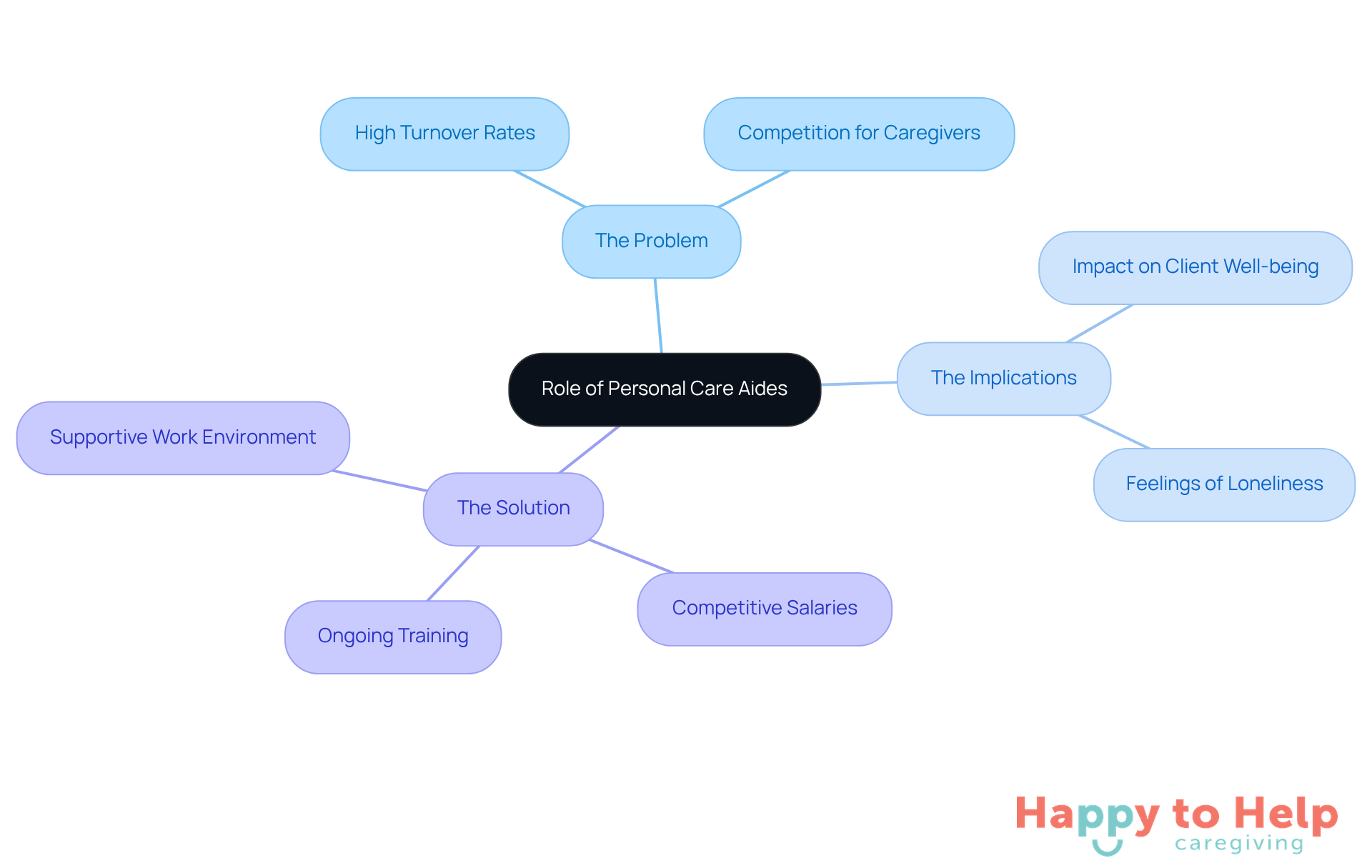
Personal care aides (PCAs) face significant challenges in their vital role of supporting individuals who require assistance with daily living activities due to age, illness, or disability. These challenges can impact not only the caregivers but also the clients they serve.
-
The Problem: High turnover rates and competition for caregivers are pressing issues in the industry. The average duration of employment for home health workers is only 1.3 years, which can disrupt the continuity of care for clients. This instability can lead to feelings of loneliness and isolation among clients, undermining their overall well-being.
-
The Implications: The influence of individual support workers on client well-being cannot be overstated. PCAs are often the foundation of home assistance, providing both practical help and emotional encouragement. When caregivers leave, clients may struggle to maintain their routines and support systems, which can adversely affect their health and quality of life.
-
The Solution: To address these challenges, it is crucial for organizations to implement strategies that enhance caregiver retention. This includes offering competitive salaries, like how much do personal care aides make, providing ongoing training, and fostering a supportive work environment. According to the U.S. Bureau of Labor Statistics, employment of home health and personal support workers is expected to rise by 22% from 2022 to 2032, highlighting the growing need for these essential positions.
Moreover, industry experts like Cooper Linton emphasize the importance of recognizing and valuing the contributions of PCAs. By prioritizing caregiver support and addressing the factors that lead to turnover, we can ensure that clients receive the consistent, compassionate care they deserve.
Identify Factors Influencing Salaries
Several factors significantly influence how much do personal care aides make, creating challenges for caregivers and families trying to navigate compensation in this sector.
-
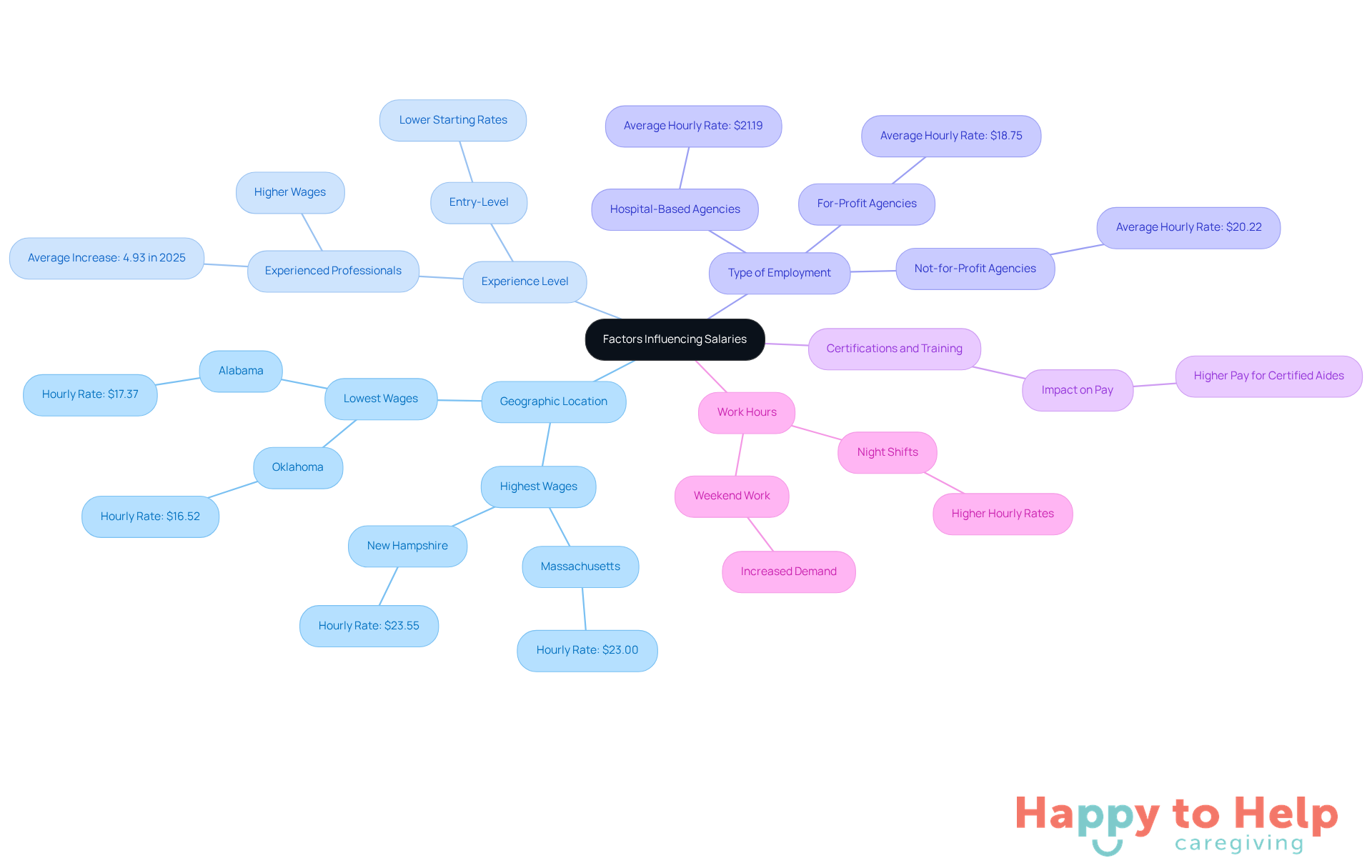
Geographic Location: Salaries can vary widely based on the cost of living in different states or cities. For instance, personal care assistants in Massachusetts and New Hampshire, specifically HCA III/CNAs, earn some of the highest hourly wages, at $23.00 and $23.55, respectively. In contrast, those in Oklahoma and Alabama receive lower rates of $16.52 and $17.37. Urban areas typically offer higher wages compared to rural settings, reflecting the demand for services in densely populated regions.
-
Experience Level: Experience plays a crucial role in determining salary. Entry-level assistants may start at lower rates, while experienced professionals can command significantly higher wages. The average hourly rate for Home Care Aide III/CNAs has seen an increase of 4.93% in 2025, indicating a trend toward better compensation as experience accumulates.
-
Type of Employment: The type of agency also affects wages. For example, assistants employed by hospital-based agencies receive an average of $21.19 per hour, whereas those in for-profit agencies earn approximately $18.75. Not-for-profit agencies tend to offer higher wages, averaging $20.22 per hour, which can influence job satisfaction and retention.
-
Certifications and Training: Extra certifications, like CPR or specialized instruction in elder support, can improve a caregiver's qualifications and result in higher pay. Agencies often reward assistants who invest in their professional development, recognizing the added value they bring to their roles.
-
Work Hours: Aides who work night shifts or weekends may receive higher hourly rates due to the increased demand for coverage during these times. This flexibility can lead to better earnings for those willing to work less desirable hours.
Understanding these elements can help caregivers and families manage the intricacies of remuneration in the caregiving sector, particularly regarding how much do personal care aides make, ensuring that support workers are justly rewarded for their vital contributions.
Research Salary Data in Your Area
To effectively research salary data for personal care aides in your area, consider the following steps:
-
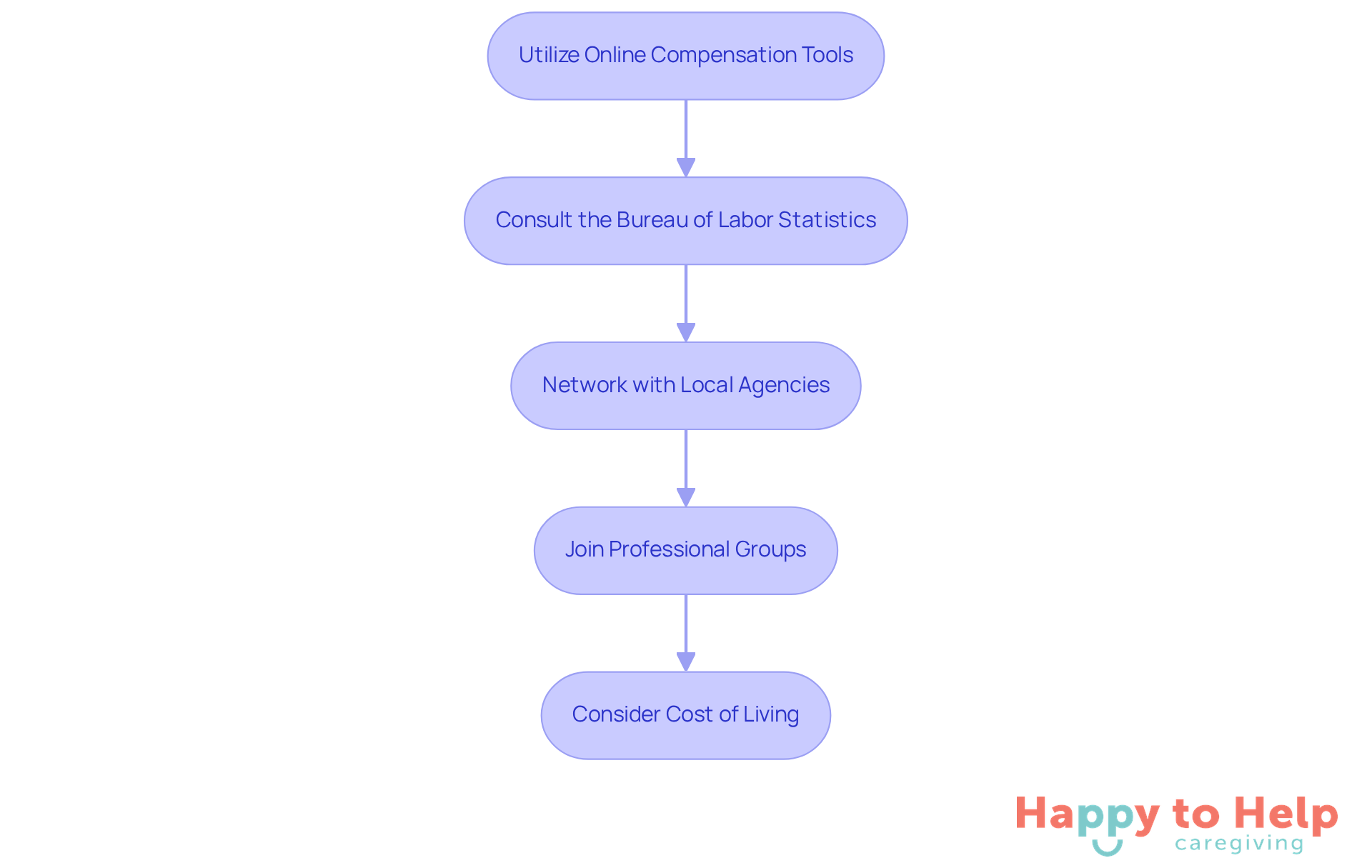
Utilize Online Compensation Tools: Leverage platforms such as Glassdoor, Indeed, and ZipRecruiter, which provide compensation estimates based on user-reported data. By searching for 'personal support worker' along with your location, you can discover specific wage amounts relevant to your region.
-
Consult the Bureau of Labor Statistics to discover how much do personal care aides make, as the BLS provides comprehensive information on their wages, including median earnings and employment figures organized by state and metropolitan area. For 2025, the national average hourly rate for Home Care Aide III/CNAs is $21.19, reflecting a notable increase of 4.93%. This highlights the growing demand for these roles.
-
Network with Local Agencies: Engage with local caregiving agencies or organizations to inquire about their pay scales. This direct approach can yield valuable insights into what employers in your vicinity are offering, helping you gauge competitive rates.
-
Join Professional Groups: Participate in online forums or local caregiver associations, which can provide excellent resources for discussing compensation expectations and sharing experiences with colleagues in the field. These networks often offer firsthand accounts of compensation trends.
-
Consider Cost of Living: When comparing incomes, it’s crucial to factor in the cost of living in your area. Understanding the purchasing power of your potential earnings will give you a clearer picture of your financial situation.
By following these steps, you can gather extensive compensation details that will help you learn how much do personal care aides make, assisting in making informed choices regarding your profession as a support worker. Additionally, the average sign-on bonus for Home Care Aides has increased from $2,129 in 2024 to $2,304 in 2025, indicating a trend towards better compensation. As Josh Moore notes, 'These continued pay increases for Home Care Aides/CNAs, along with increased sign-on bonuses for new hires, are helping agencies reduce turnover rates.
Utilize Resources for Accurate Salary Insights
To understand the challenges faced by personal care aides, it’s essential to recognize how much do personal care aides make, particularly regarding the issue of low wages in the industry. Despite the increasing demand for support workers - an estimated 800,000 more will be needed in the next ten years - many caregivers earn wages that lead one to wonder how much do personal care aides make, as they often qualify for assistance themselves. As Howard Gleckman notes, "The significant paradox of direct support workers: Even though the expense of in-home assistance is increasing quickly, many helpers earn such low wages that they typically would qualify for this support."
To navigate this complex landscape, consider utilizing the following resources for the most accurate and current salary insights:
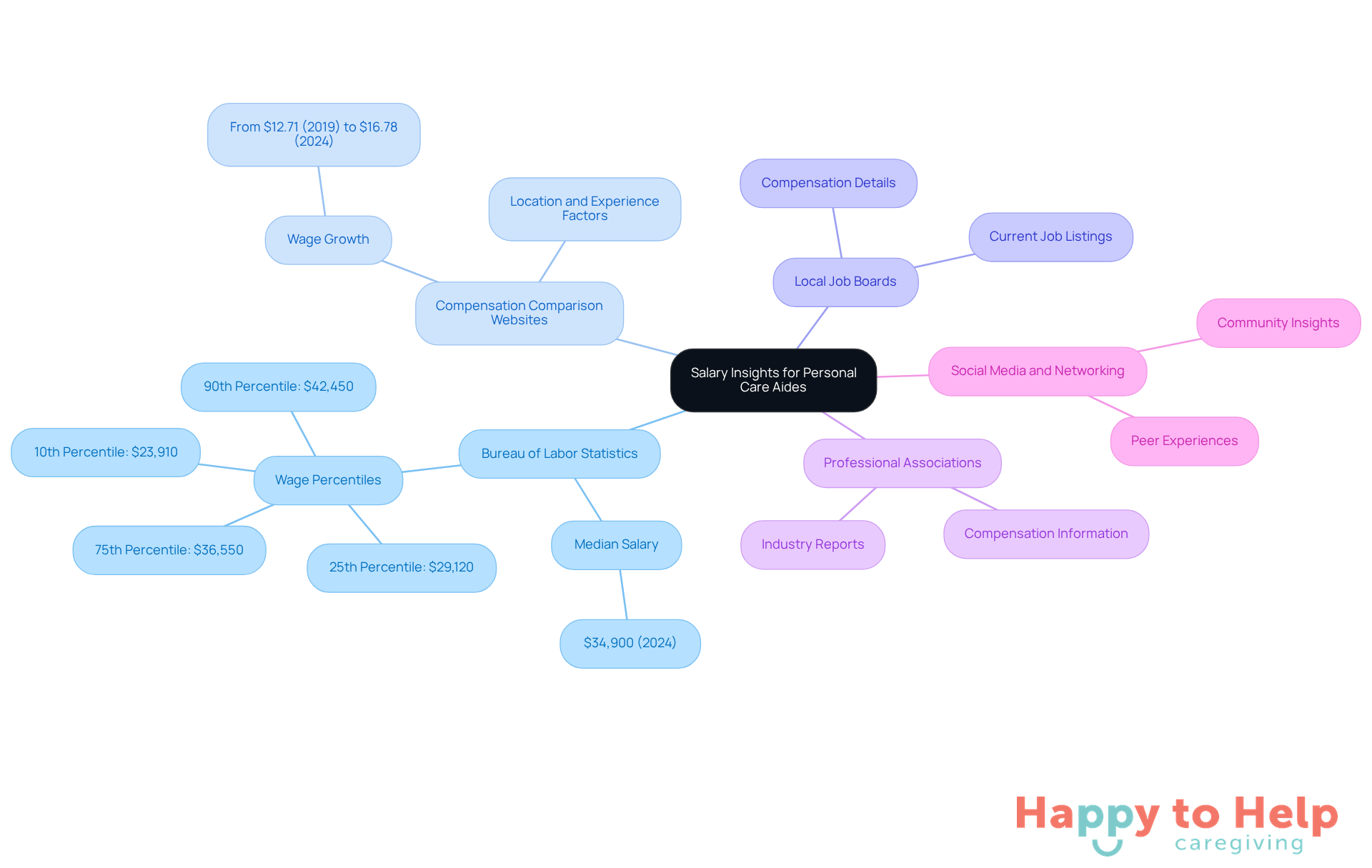
- Bureau of Labor Statistics (BLS): This authoritative source provides regularly updated data on wages and employment trends specifically for personal care aides, including median salaries and percentile breakdowns. As of 2024, the median yearly salary for home health and individual support workers is reported to be $34,900.
- Compensation Comparison Websites: Platforms like PayScale and CareerExplorer offer detailed earnings analyses based on various factors such as location, experience, and industry. Notably, how much do personal care aides make has increased from $12.71 in 2019 to $16.78 in 2024, reflecting a significant wage growth trend.
- Local Job Boards: Websites that focus on your specific area frequently showcase job listings with compensation details, giving a current view of what employers are presently offering.
- Professional Associations: Organizations such as the National Association for Home Care & Hospice often release reports on industry trends, including detailed compensation information that can inform your expectations.
- Social Media and Networking: Engaging with caregiving communities on platforms like LinkedIn or Facebook can yield valuable insights and shared experiences regarding compensation expectations from peers in the field.
By leveraging these resources, you can stay informed about salary trends and learn how much do personal care aides make to make well-informed decisions regarding your career.
Your Path Forward
Understanding the compensation for personal care aides is crucial in acknowledging their invaluable role in providing support to individuals in need. However, many personal care aides face significant challenges, including low wages and high turnover rates. This situation not only affects the aides themselves but also impacts the quality of care provided to clients. Addressing these issues is vital for ensuring that personal care aides can continue to deliver the compassionate care that enhances the quality of life for those they serve.
Key insights reveal that factors such as geographic location, experience level, type of employment, and certifications significantly influence the salaries of personal care aides. With an expected increase in demand for these roles, understanding how much personal care aides make and the variables affecting their wages can empower both caregivers and families to navigate compensation effectively. Utilizing resources such as the Bureau of Labor Statistics and compensation comparison websites can provide up-to-date information, helping individuals make informed decisions regarding their careers in this field.
Ultimately, the importance of personal care aides in healthcare cannot be overstated. As the industry evolves, it is essential to advocate for better wages and working conditions to retain these dedicated professionals. By recognizing their contributions and addressing the disparities in compensation, society can ensure that personal care aides receive the respect and support they deserve. This advocacy fosters a more stable and effective caregiving environment for those who rely on their services.
https://iframe.tely.ai/cta/eyJhcnRpY2xlX2lkIjogIjY5NDFmMzRlMTE4MTVjMDQxY2UzNWU2MSIsICJjb21wYW55X2lkIjogIjY4ZWU1ZGNhNzMxNzYyNTU3ZjNjOTVjMSIsICJpbmRleCI6IG51bGwsICJ0eXBlIjogImFydGljbGUifQ==Frequently Asked Questions
What is the role of personal care aides (PCAs)?
Personal care aides support individuals who require assistance with daily living activities due to age, illness, or disability. They provide practical help and emotional encouragement to enhance the well-being of their clients.
What challenges do personal care aides face?
PCAs face significant challenges, including high turnover rates and competition for caregivers, which can disrupt the continuity of care for clients and lead to feelings of loneliness and isolation.
What is the average duration of employment for home health workers?
The average duration of employment for home health workers is only 1.3 years.
How does caregiver turnover affect clients?
When caregivers leave, clients may struggle to maintain their routines and support systems, adversely affecting their health and quality of life.
What strategies can organizations implement to improve caregiver retention?
Organizations can enhance caregiver retention by offering competitive salaries, providing ongoing training, and fostering a supportive work environment.
What is the expected job growth for home health and personal support workers?
Employment of home health and personal support workers is expected to rise by 22% from 2022 to 2032, indicating a growing need for these positions.
Why is it important to recognize the contributions of personal care aides?
Recognizing and valuing the contributions of PCAs is crucial for prioritizing caregiver support and addressing factors that lead to turnover, ensuring that clients receive consistent and compassionate care.
List of Sources
- Understand the Role of Personal Care Aides
- News Releases (https://hcaoa.org/news-releases.html)
- ‘Unsung Backbone of Care Delivery’: The Growing Need for Hospice Aides (https://hospicenews.com/2025/03/28/unsung-backbone-of-care-delivery-the-growing-need-for-hospice-aides)
- HomeCare News | HomeCare Magazine (https://homecaremag.com/news)
- Pay, Job Protections for Home Care Aides at Risk Under Proposed Federal Rule (https://aarp.org/advocacy/job-protections-home-care-workers)
- Identify Factors Influencing Salaries
- Home Care Aides Receive 4.93% Pay Increase in 2025 (https://leadingage.org/home-care-aides-receive-4-93-pay-increase-in-2025)
- Home Health Worker Retention Improves As Wages, Bonuses Increase In 2025 (https://homehealthcarenews.com/2025/11/home-health-worker-retention-improves-as-wages-bonuses-increase-in-2025)
- Nursing Home Turnover Rate Declines as Salaries Rise Slightly in 2025 (https://skillednursingnews.com/2025/08/nursing-home-turnover-rate-declines-as-salaries-rise-slightly-in-2025)
- Structural factors undercut nursing home aide recruitment: report (https://mcknights.com/news/structural-factors-undercut-nursing-home-aide-recruitment-report)
- PHI Report Highlights Record Growth in Direct Care Workforce, Warns Federal Policy Changes Threaten Job Quality and Stability (https://phinational.org/news/phi-report-highlights-record-growth-in-direct-care-workforce-warns-federal-policy-changes-threaten-job-quality-and-stability)
- Research Salary Data in Your Area
- Home Care Aides Receive 4.93% Pay Increase in 2025 (https://leadingage.org/home-care-aides-receive-4-93-pay-increase-in-2025)
- Home care aides largest occupation in US as of last May, BLS reports (https://mcknightshomecare.com/news/home-care-aides-largest-occupation-in-us-as-of-last-may-bls-reports)
- THE NEW YORK STATE DEPARTMENT OF LABOR ANNOUNCES MINIMUM WAGE INCREASE FOR HOME CARE AIDES (https://dol.ny.gov/news/new-york-state-department-labor-announces-minimum-wage-increase-home-care-aides)
- Healthcare job growth projected to outpace other sectors over next decade (https://mcknightsseniorliving.com/news/healthcare-job-growth-projected-to-outpace-other-sectors-over-next-decade)
- Utilize Resources for Accurate Salary Insights
- Health Care’s Employment Growth Clouded by Immigration Crackdown, Medicaid Cuts - KFF Health News (https://kffhealthnews.org/news/article/health-care-employment-growth-immigration-crackdown-medicaid-cuts)
- Home Health and Personal Care Aides (https://bls.gov/oes/2023/may/oes311120.htm)
- Are care workers among the lowest-paid workers in the country? (https://coloradosun.com/2025/11/07/care-workers)
- How Immigration Curbs Make Care Less Affordable For Seniors And Others (https://forbes.com/sites/howardgleckman/2025/12/15/trump-makes-care-less-affordable-for-seniors-people-with-disabilities)
- Home Health and Personal Care Aides (https://bls.gov/ooh/healthcare/home-health-aides-and-personal-care-aides.htm)