
The Importance of How Much Does a Home Caregiver Make?
Understanding the financial landscape of home caregiving presents a significant challenge for families seeking quality support for their loved ones. Caregiver wages can vary widely due to factors like location, experience, and the type of care needed. This complexity makes it crucial for families to navigate a web of considerations to ensure fair compensation.
So, how can families determine what constitutes a fair wage for caregivers? This question is vital, as it directly impacts the quality of care provided. When caregivers are compensated fairly, it not only acknowledges their dedication but also enhances the overall care experience for those they support.
To address these challenges, families should consider the following actionable steps:
- Research local wage standards for caregivers in their area.
- Engage in open discussions with caregivers about their needs and expectations.
- Utilize resources from caregiving organizations that provide guidelines on fair compensation.
By exploring these questions and implementing these solutions, families can better appreciate the value of caregivers and ensure that those who dedicate their lives to supporting others receive the recognition and compensation they deserve.
Understand the Factors Influencing Caregiver Pay
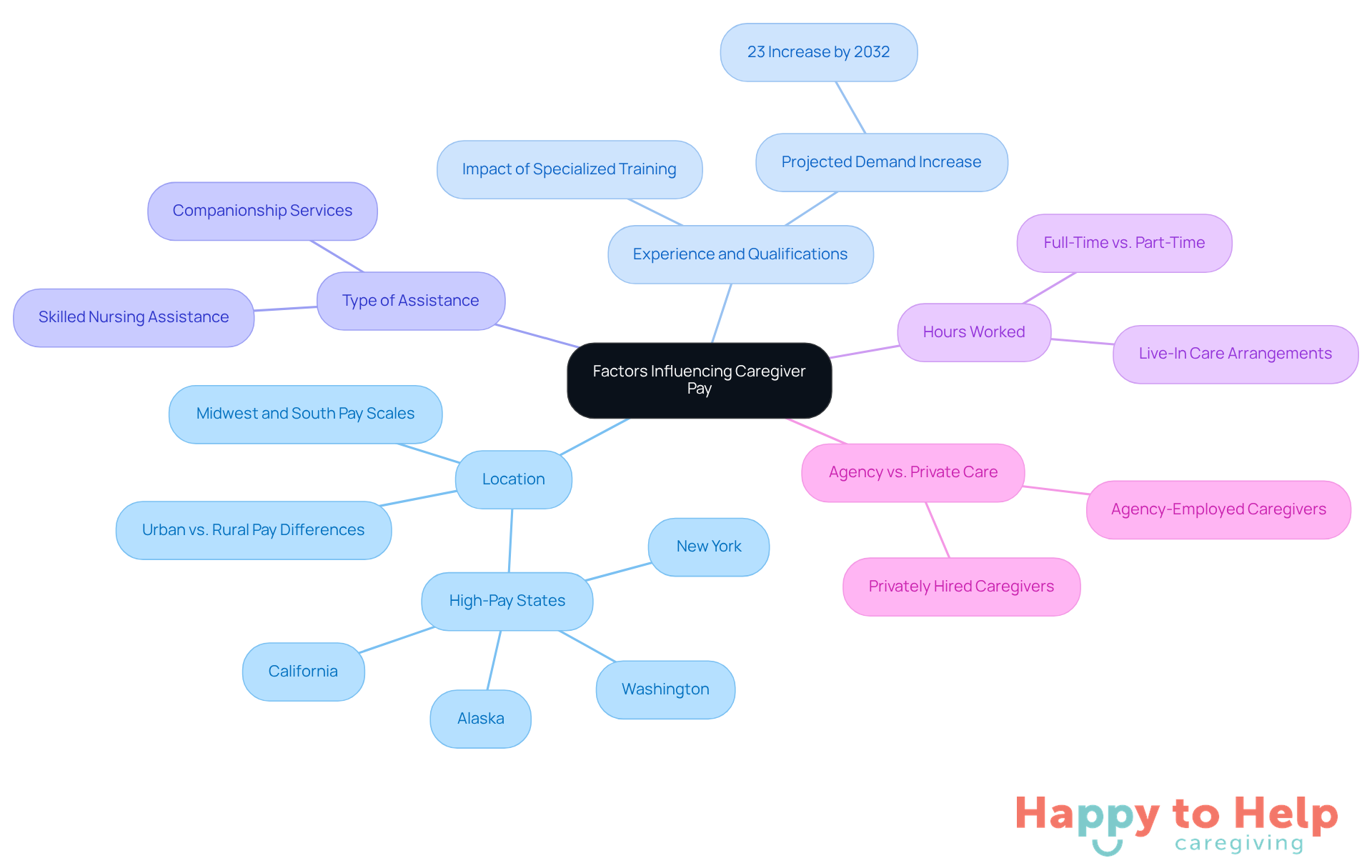
Families face a significant challenge when it comes to understanding how much does a home caregiver make and the factors that influence caregiver wages. This issue is crucial, as it directly impacts the quality of care their loved ones receive.
-
Location plays a pivotal role in determining caregiver wages. There's a notable variation across states and even within regions. Urban areas often offer higher pay due to increased living costs. For instance, states like California, New York, Washington, and Alaska report compensation levels that frequently exceed the national median wage of approximately $17.50 per hour in 2025. Conversely, caregivers in the Midwest and South may encounter lower pay scales, influenced by local economic conditions.
-
Experience and Qualifications also significantly affect pay rates. Caregivers with more experience or specialized training, such as in dementia support, can command higher fees. The caregiver employment forecast for 2025 indicates a projected 23% increase in demand for home support aides through 2032, highlighting the growing need for skilled professionals.
-
The Type of Assistance required is another critical factor. The complexity of care needed directly impacts pay rates. For example, skilled nursing assistance, which requires specialized training, is generally more expensive than companionship services. Families should carefully assess their loved ones' specific needs to determine the appropriate level of care and corresponding costs.
-
Hours Worked can also influence compensation structures. Full-time caregivers may receive different pay packages compared to part-time or live-in assistants, who often have unique arrangements reflecting their availability and responsibilities.
-
Lastly, the choice between Agency vs. Private Care can affect wages. Individuals hired through agencies may earn less than those working independently, but agency-employed staff typically enjoy standardized wages and additional support, such as training and benefits. Understanding the differences between agency and private support worker pay can help families make informed decisions about their care options.
By considering these factors, families can establish fair and competitive compensation for caregivers, ultimately helping them understand how much does a home caregiver make to ensure they receive the quality support necessary for their loved ones.
Explore Average Caregiver Salaries by State
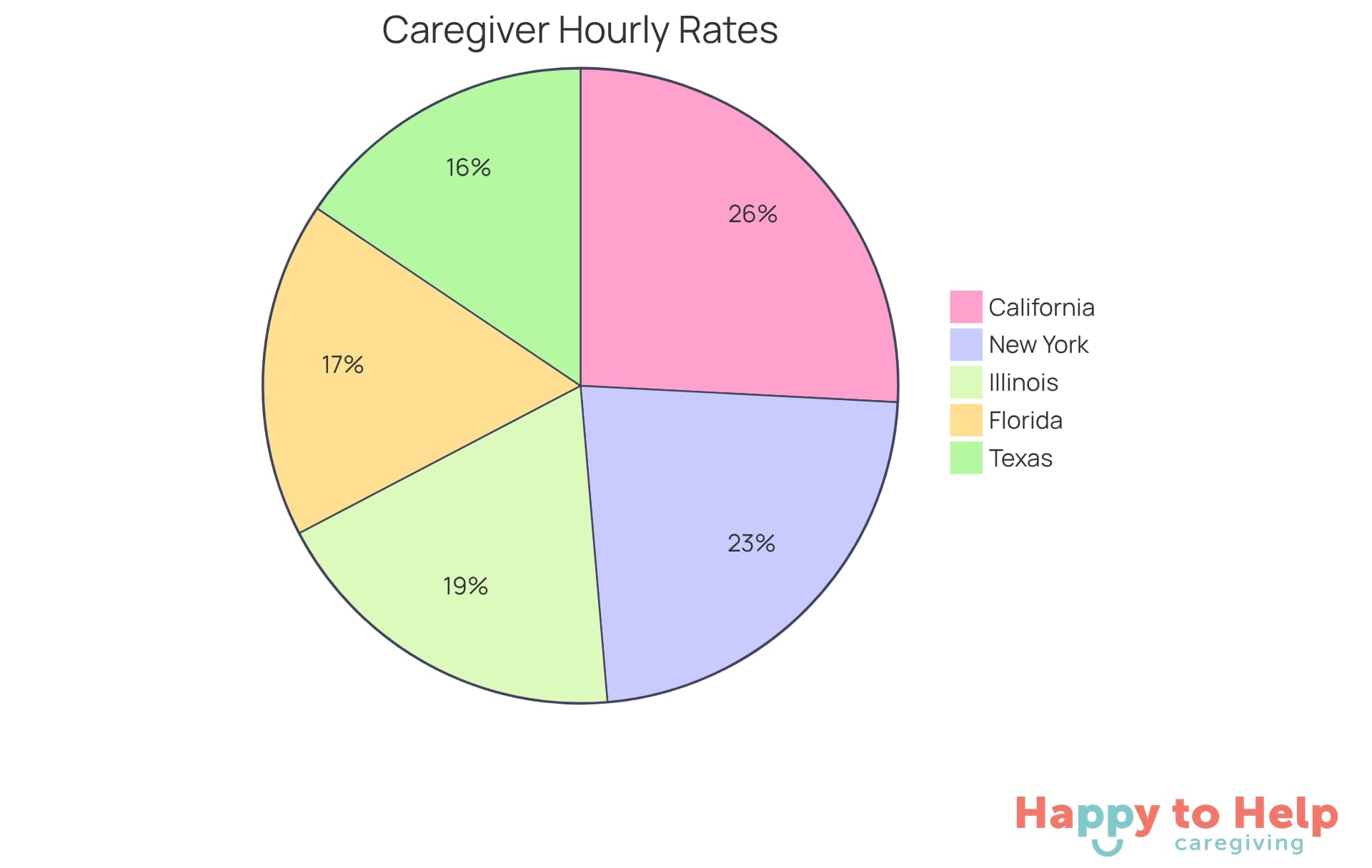
The variation in caregiver salaries across the United States leads many to wonder how much does a home caregiver make, as this is influenced by local demand, cost of living, and state regulations. As of 2025, the average hourly rates for caregivers in selected states are as follows:
- California: $24.89
- New York: $22.00
- Texas: $15.00
- Florida: $16.50
- Illinois: $18.00
These figures highlight the disparities in caregiver compensation. States like California and New York lead in pay rates due to higher living costs and increased demand for caregiving services. In contrast, states such as Texas and Florida offer lower average wages, reflecting regional economic conditions.
Understanding how much does a home caregiver make in different regions is essential for families pursuing in-home assistance. Worker compensation can directly influence the quality and availability of services. For instance, in California, higher wages are often linked to a robust labor advocacy environment, which has pushed for fair compensation in response to rising living expenses. Conversely, states like Texas are gradually raising wages to address workforce shortages and improve employee retention.
Future increases in hourly wages for support providers will depend on state budgets, Medicaid financing, and legislative priorities. It’s crucial for families to stay informed about these changes. As JR Ricker, Head of Care, notes, "Higher pay helps attract more workers into the caregiving field," emphasizing the importance of fair compensation in maintaining a stable workforce.
To gain a more detailed understanding of how much does a home caregiver make in your area, consider consulting resources such as the Bureau of Labor Statistics or local job postings. These can provide the most current rates and insights into the support landscape. Additionally, exploring case studies on caregiver pay can further illuminate how local conditions and regulations shape compensation across different regions.
Analyze Different Types of Home Care Services and Their Costs
Understanding how much does a home caregiver make is crucial for families navigating the complexities of caregiving. With various types of services available, understanding how much does a home caregiver make is essential as it comes with financial implications that can significantly impact family budgets.
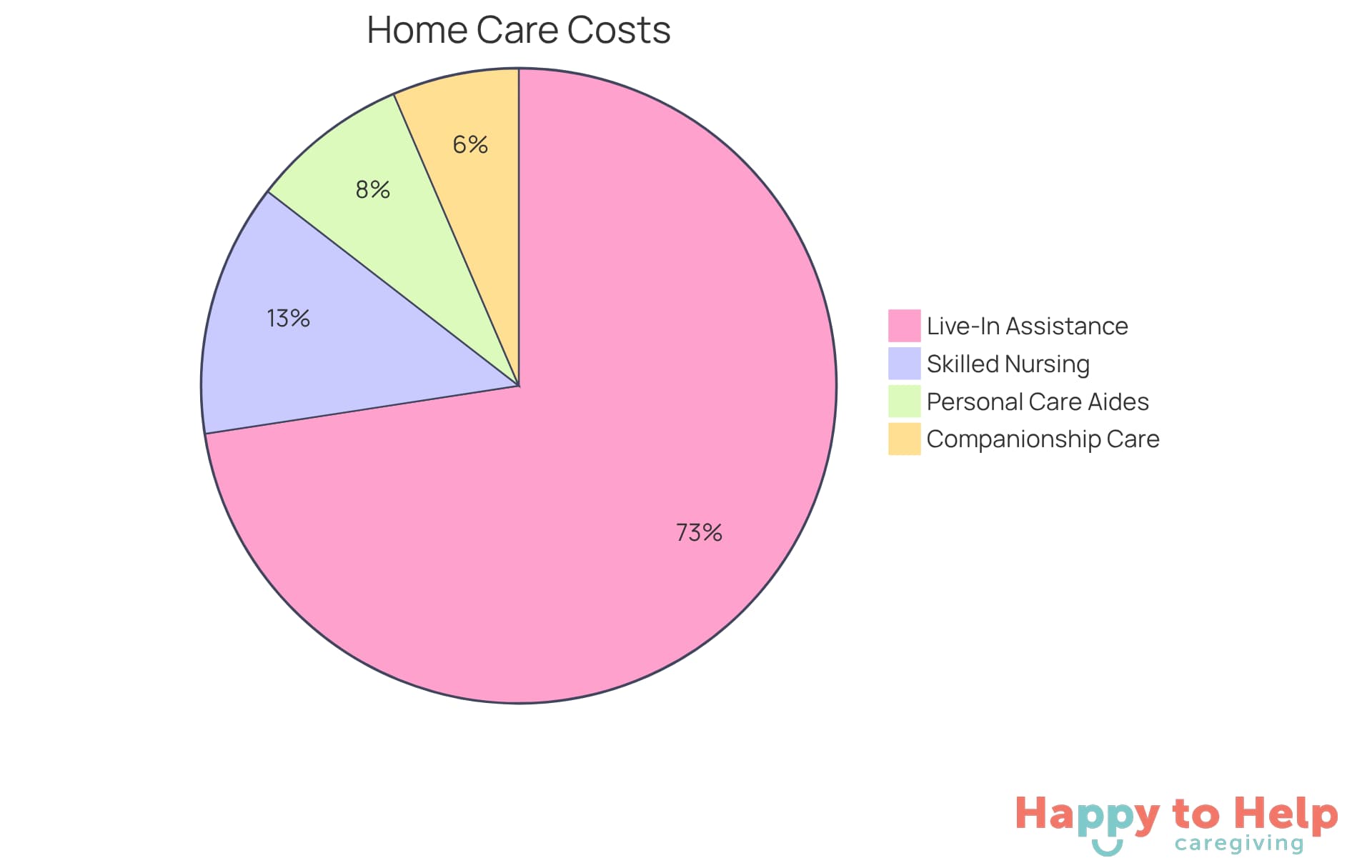
Companionship Care typically ranges from $15 to $25 per hour. This service focuses on providing social interaction and support, which can greatly enhance the emotional well-being of seniors.
Personal Care Aides cost between $20 and $30 per hour, assisting with daily activities like bathing and dressing. In 2025, national averages suggest that home assistance can be a cost-effective alternative to assisted living facilities, particularly when only moderate help is needed, leading many to wonder how much does a home caregiver make.
For more complex needs, Skilled Nursing Assistance is essential, costing between $30 and $50 per hour depending on the level of medical service required. This specialized support ensures proper health management for seniors.
Another option is Live-In Assistance, which can range from $150 to $300 per day. This service not only provides continuous support but also fosters a sense of safety and connection for seniors in their own homes.
To manage these expenses effectively, families should consider how much does a home caregiver make along with utilizing community services, such as Meals on Wheels. This approach can help reduce costs while ensuring comprehensive support. As home care expert Vicki Demirozu states, "There’s evidence that even small amounts of in-home care can extend independence," underscoring the importance of tailored care solutions.
Calculate a Fair Pay Rate for Home Caregivers
Determining how much does a home caregiver make can be challenging. Many caregivers struggle with inadequate compensation, which can lead to high turnover rates and a lack of quality care for those in need. To address this issue, it’s essential to establish a fair and competitive pay rate, considering how much does a home caregiver make, that reflects the caregiver's value and the demands of the job.
-
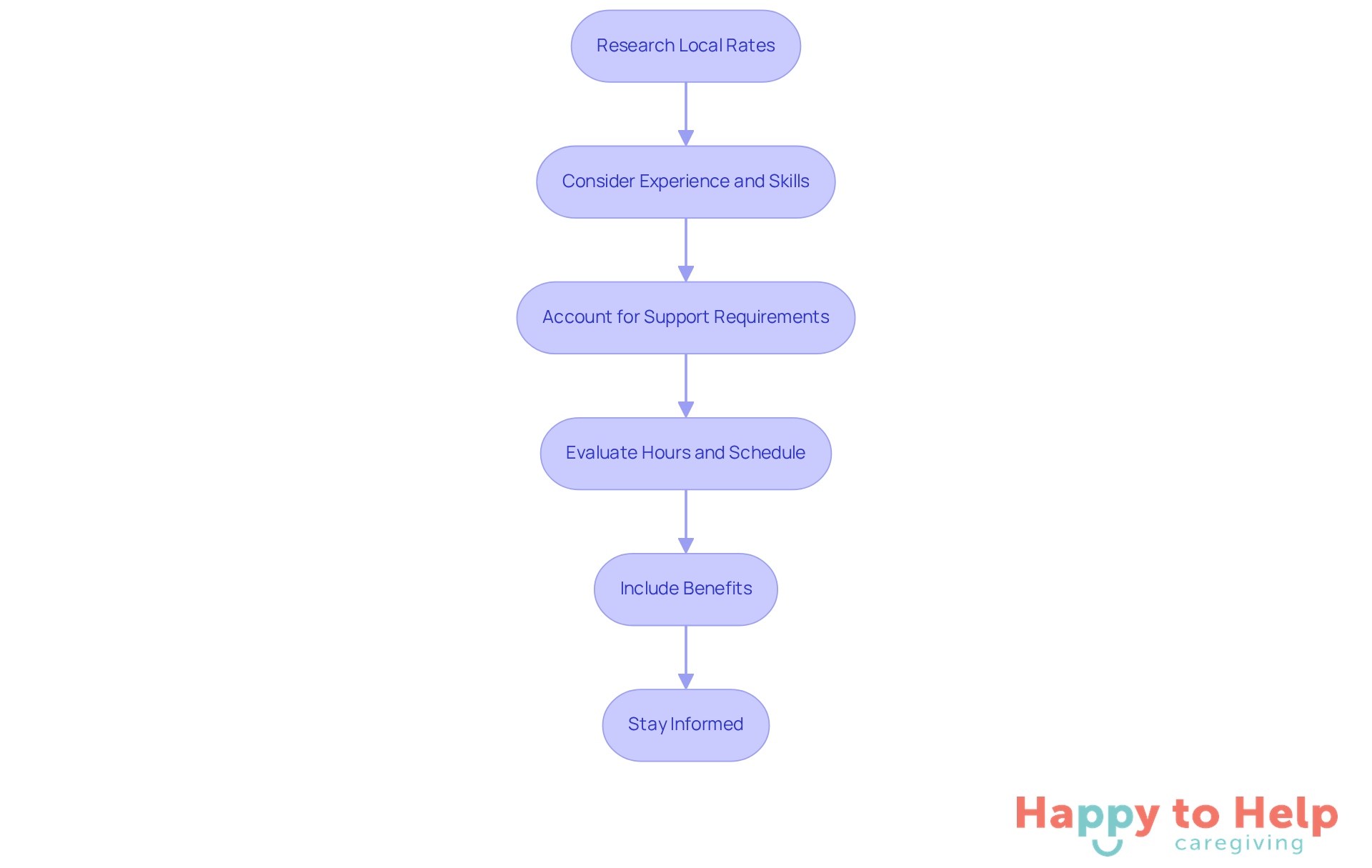
Research Local Rates: Start by gathering data on average support worker salaries in your area using resources like job boards and salary surveys. The typical hourly wage for support workers generally falls between $15.63 and $24.67, and it raises the inquiry of how much does a home caregiver make, with home health assistants averaging around $21 per hour, depending on location and care needs.
-
Consider Experience and Skills: Modify the base amount according to the provider's experience, certifications, and any specialized abilities they might possess. The earnings of certified professionals, typically between $31,368 and $40,969 each year, lead to the question of how much does a home caregiver make, reflecting their training and expertise.
-
Account for Support Requirements: If the caregiver will be offering specialized assistance (e.g., for Alzheimer’s patients), consider raising the pay rate accordingly. Specialized assistance often commands higher wages due to the additional training and emotional support required.
-
Evaluate Hours and Schedule: Determine whether the caregiver will be working full-time, part-time, or on a live-in basis, as this will affect the overall compensation structure. In the U.S., the average earnings of live-in support workers is $24 per hour, prompting the inquiry of how much does a home caregiver make, which translates to approximately $150 to $300 daily for 6-12 hours of assistance.
-
Include Benefits: If relevant, consider providing benefits such as paid time off or health insurance, which can enhance the position's appeal and assist in retaining skilled providers.
-
Stay Informed: It’s essential to remain aware of shifting compensation levels, as these can vary depending on market conditions and local demand.
By following these steps, you can arrive at a fair pay rate that not only reflects the caregiver's value but also considers the support available through programs like the National Family Caregiver Support Program (NFCSP). This approach ensures that caregivers are compensated fairly, ultimately leading to better care for those who need it.
Making the Right Choice
Understanding the compensation landscape for home caregivers presents a significant challenge for families seeking the best care for their loved ones. Caregiver wages vary widely due to factors such as geographical location, experience, the complexity of care required, and whether care is provided through an agency or privately. These disparities can lead to confusion and frustration when trying to ensure caregivers are compensated fairly.
The implications of these wage differences are profound. For instance, states like California and New York offer higher wages, driven by increased demand and living costs. This creates a disparity that can affect the quality of care provided. Families must consider the specific needs of the individual receiving care, as these needs directly impact the type of services required and the associated costs. Establishing a fair pay rate involves researching local rates, evaluating the caregiver's qualifications, and accounting for hours worked and benefits provided.
To address these challenges, families can take proactive steps:
- Start by gathering information on local caregiver rates and understanding the qualifications that contribute to fair compensation.
- By advocating for fair pay and staying informed about industry trends, families can help create a more sustainable caregiving environment.
This not only benefits those in need of assistance but also reinforces the value of the caregiving profession as a whole.
Ultimately, the well-being of caregivers is intrinsically linked to the quality of care they can provide. By ensuring caregivers are compensated fairly, families contribute to a more effective caregiving environment, enhancing the overall experience for everyone involved.
https://iframe.tely.ai/cta/eyJhcnRpY2xlX2lkIjogIjY5MjI2NGZlYWNkMDUyNjc3Yjk4NWRhYyIsICJjb21wYW55X2lkIjogIjY4ZWU1ZGNhNzMxNzYyNTU3ZjNjOTVjMSIsICJpbmRleCI6IG51bGwsICJ0eXBlIjogImFydGljbGUifQ==Frequently Asked Questions
What factors influence caregiver pay?
Caregiver pay is influenced by location, experience and qualifications, the type of assistance required, hours worked, and whether the caregiver is hired through an agency or privately.
How does location affect caregiver wages?
Location plays a significant role, with urban areas typically offering higher pay due to increased living costs. States like California, New York, Washington, and Alaska often have wages that exceed the national median, while caregivers in the Midwest and South may earn less.
What role does experience and qualifications play in caregiver compensation?
Caregivers with more experience or specialized training, such as in dementia support, can command higher fees. The demand for skilled home support aides is projected to increase significantly through 2032.
How does the type of assistance required impact caregiver pay?
The complexity of care needed affects pay rates; for instance, skilled nursing assistance, which requires specialized training, is generally more expensive than companionship services.
Does the number of hours worked influence caregiver wages?
Yes, full-time caregivers may have different pay packages compared to part-time or live-in assistants, who often have unique arrangements based on their availability and responsibilities.
What is the difference in pay between agency and private caregivers?
Caregivers hired through agencies may earn less than those working independently, but agency-employed staff typically receive standardized wages, training, and benefits, which can influence families' decisions on care options.
List of Sources
- Understand the Factors Influencing Caregiver Pay
- All The Payment Factors Included In The 2025 Home Health Proposed Rule (https://homecareofcolorado.org/?option=com\_content&view=article&id=2215:all-the-payment-factors-included-in-the-2025-home-health-proposed-rule&catid=23:in-the-news&Itemid=196)
- Exploring in-home caregiver pay across regions (https://exploreverity.com/en-us/article/health/exploring-in-home-caregiver-pay-across-regions-1276000672)
- Home Care Costs in 2025: A State-by-State Guide (https://aplaceformom.com/caregiver-resources/articles/in-home-care-costs)
- What Are the Average Caregiver Pay Rates in 2025? — Paid.Care (https://paid.care/guides/what-are-the-average-caregiver-pay-rates-in-2025)
- Factors Affecting the Home Care Industry in 2025 (https://carearoundtheblock.com/post/factors-affecting-the-home-care-industry-in-2025)
- Explore Average Caregiver Salaries by State
- What Is the Average Caregiver Salary by State in 2025? (https://ziprecruiter.com/Salaries/What-Is-the-Average-Caregiver-Salary-by-State)
- Here's the average monthly in-home caregiver salary by state (https://care.com/c/average-in-home-caregiver-salary-by-state)
- Which States Increased Caregiver Hourly Rates in 2025? — Paid.Care (https://paid.care/guides/which-states-increased-caregiver-hourly-rates-in-2025)
- Home Care Costs in 2025: A State-by-State Guide (https://aplaceformom.com/caregiver-resources/articles/in-home-care-costs)
- Caregiver Pay in 2025: Average Salary by State & Role (https://goinstacare.com/blogs/caregiver-salaries-2025-role-state-guide)
- Analyze Different Types of Home Care Services and Their Costs
- Home Care Costs in 2025: A State-by-State Guide (https://aplaceformom.com/caregiver-resources/articles/in-home-care-costs)
- How Much Will Home Care Cost Per Month in 2025? | Home Care agency in New York (https://angelcareny.com/how-much-will-home-care-cost-per-month-in-2025)
- How Much Does In-Home Care Cost in 2025? A State-by-State Guide - Elder Answers (https://elder-answers.com/how-does-in-home-care-cost-in-2025)
- Understanding the Cost and Value of Home Care in 2025 (https://assistinghands.com/135/texas/nesanantonio/blog/understanding-the-cost-and-value-of-home-care-in-2025)
- How Much Do In-Home Caregivers Cost? - WTOP News (https://wtop.com/news/2025/11/how-much-do-in-home-caregivers-cost)
- Calculate a Fair Pay Rate for Home Caregivers
- How Much Do Caregivers Make in 2025? | The Senior List (https://theseniorlist.com/caregiving/caregiver-pay)
- Here's the average monthly in-home caregiver salary by state (https://care.com/c/average-in-home-caregiver-salary-by-state)
- Elderly Care: How Much Do Caregivers Make? (https://h2hhc.com/blog/how-much-do-elderly-caregivers-make)
- All states must set higher wage benchmarks for home health care workers (https://epi.org/publication/state-home-health-care-wages)