

For families in our service areas
For families in our service areas, this guide explains companion care and how non-medical in-home caregiving can support care planning in East Idaho, Treasure Valley & Magic Valley, Northern Wasatch, North Central West Virginia, and Northeast Ohio.
Why How Much Does Companion Care Cost? A Matters
Companion care plays a crucial role in addressing the emotional and physical needs of seniors and individuals with disabilities. In a world where loneliness often prevails, this service offers much-needed support.
Navigating the complexities of companion care costs can feel overwhelming. Families often face emotional challenges, including stress and burnout, as they seek the best care for their loved ones. Understanding the factors that influence pricing and the financial options available is essential.
As we anticipate a rise in senior support costs, it’s vital to explore strategies that can help families ensure their loved ones receive the compassionate care they deserve without breaking the bank. Together, we can find solutions that provide both emotional and practical support, fostering a nurturing environment for those we care about.
Define Companion Care and Its Importance
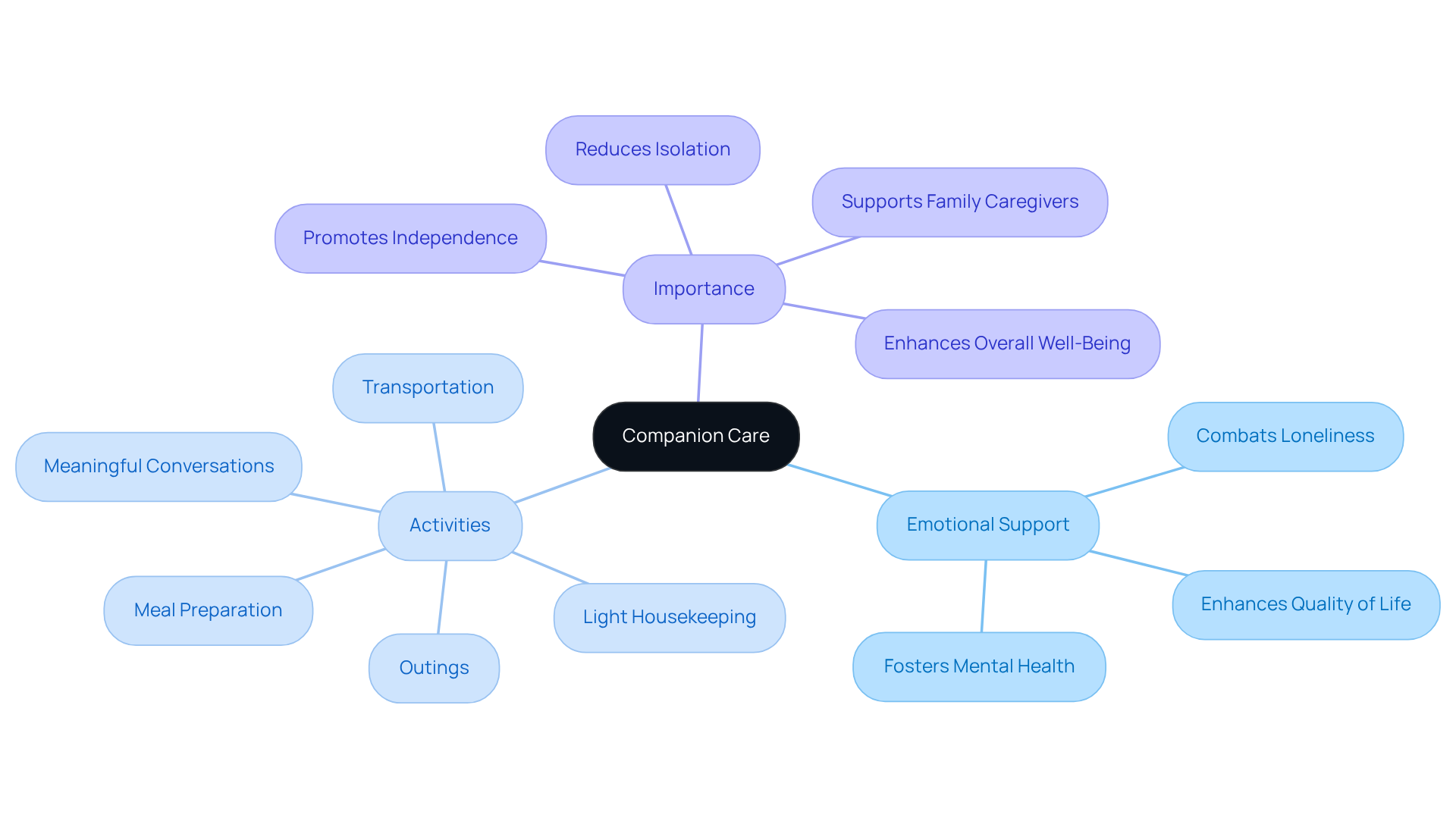
Companion assistance is more than just a service; it’s a heartfelt commitment to providing emotional support and companionship to seniors and individuals with disabilities. Many face the emotional challenges of loneliness and isolation, and this type of support is designed to enhance their quality of life. By fostering social interaction and offering help with daily activities, companion caregivers create a sense of security that is so vital.
Imagine a caregiver engaging in meaningful conversations, sharing laughter, and accompanying clients on outings. They also lend a hand with light housekeeping tasks, ensuring that clients feel comfortable and cared for in their own homes. The importance of this companionship cannot be overstated; it combats the feelings of loneliness that many seniors experience.
Through nurturing relationships and providing assistance, companion services play a crucial role in enhancing mental and emotional well-being. Clients often express how these connections lead to a higher quality of life, filled with joy and companionship. As one caregiver shared, "Seeing the smile on my client’s face when we go for a walk is the highlight of my day. It’s about making those moments count."
In a world where isolation can feel overwhelming, companion assistance offers a reassuring presence. It’s a reminder that no one has to face their challenges alone. By choosing companion services, families can rest assured that their loved ones are receiving compassionate care that truly makes a difference.
Identify Factors Affecting Companion Care Costs
Families may find it overwhelming to navigate how much does companion care cost, especially when considering the emotional weight of ensuring loved ones receive the best support. Several key factors influence how much does companion care cost, and understanding them can help ease some of that burden.
-
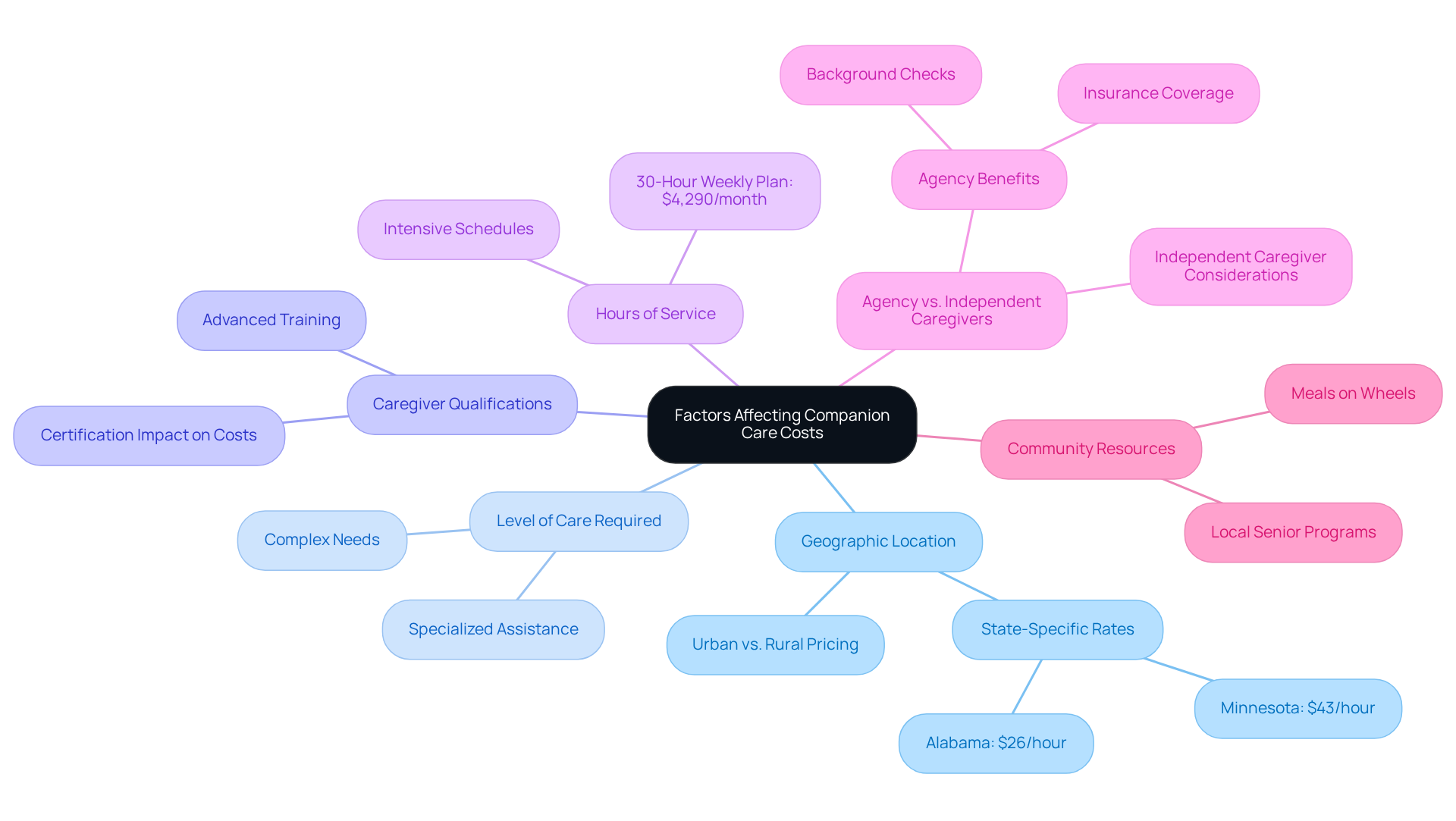
Geographic Location plays a significant role in pricing. Urban areas often see higher rates due to increased demand and living costs. For instance, in Alabama, the median hourly rate for in-home assistance averages around $26, while in Minnesota, it can soar to $43 per hour. This stark difference highlights the importance of considering local economic conditions when planning for care. Additionally, regions with larger senior populations may experience heightened demand, further impacting costs.
-
Another crucial factor is how much does companion care cost based on the level of care required. The complexity of a client’s needs directly affects pricing. Typically, when considering how much does companion care cost, more specialized assistance for individuals with chronic conditions or advanced age-related issues incurs higher costs. Families may find that investing in tailored care leads to better outcomes and a higher quality of support.
-
Caregiver Qualifications also matter. Caregivers with advanced training or certifications often charge more for their services. However, this investment can yield significant benefits, as highly qualified caregivers tend to provide superior care, enhancing the overall experience for both clients and their families.
-
The Hours of Service required each week will impact the total expense as well. For example, when considering how much does companion care cost, a 30-hour weekly support plan may be around $4,290 per month, while more intensive schedules can significantly increase expenses. Starting home assistance early can help seniors maintain their independence and prevent issues like social isolation and inadequate nutrition.
-
When considering Agency vs. Independent Caregivers, families should note that hiring through an agency may involve additional fees. However, agencies often provide valuable benefits such as background checks, training, and insurance, which can offer peace of mind. Long-term insurance may also cover home health aide assistance and personal support options, providing families with additional financial resources.
-
Lastly, families should explore Community Resources like Meals on Wheels, which can offer low-cost or no-cost support, potentially reducing the need for more expensive in-home assistance.
By understanding these factors, families can better anticipate expenses and make informed decisions about how much does companion care cost and their support options. This ensures they choose the most suitable and financially feasible solutions for their loved ones. With senior support costs projected to rise by 20-30% by 2025, proactive financial planning is more important than ever.
Explore Average Costs of Companion Care Services
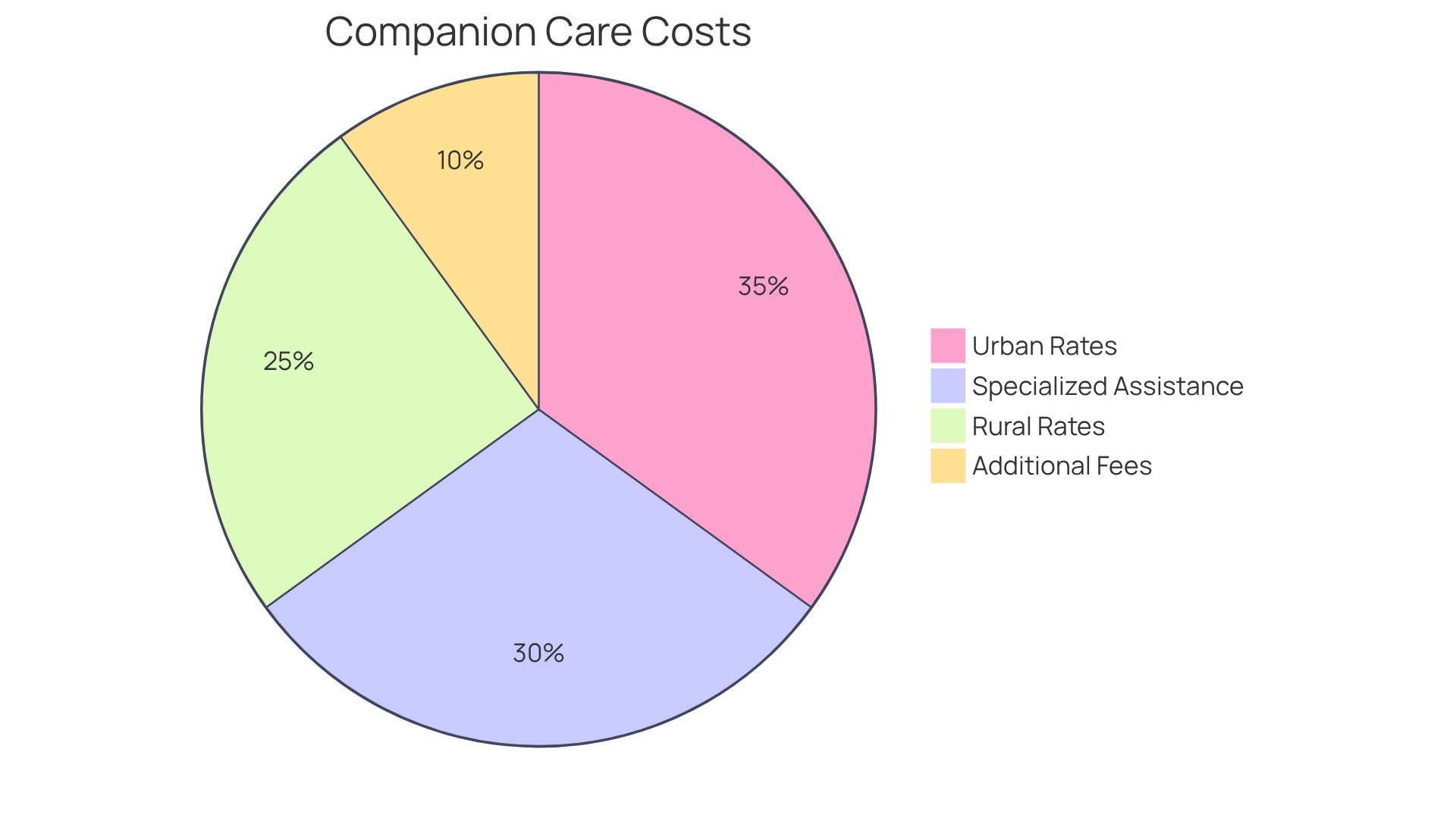
In 2025, families seeking companion care will learn how much does companion care cost, as prices typically range from $20 to $35 per hour. This variation is influenced by factors like where you live and the qualifications of the caregiver. In urban areas, rates tend to be higher, averaging between $34 and $35 per hour. On the other hand, rural regions may offer more budget-friendly options, with rates as low as $20 to $25 per hour. If specialized assistance is needed - especially for conditions like dementia - fees can rise, generally falling between $30 and $50 per hour.
It's important for families to be aware of potential extra costs, such as travel fees for caregivers and charges for specialized services. For example, hiring help on weekends or holidays can add an additional $5 to $10 per hour to the standard rate. As you plan for companion assistance, it is crucial to understand how much does companion care cost and the possible charges involved. This knowledge helps ensure that you can provide the essential support your loved ones need while managing financial expectations.
Moreover, it's wise to prepare for an anticipated 7% yearly increase in average expenses through 2029. This foresight is vital for long-term financial planning, allowing families to navigate the journey of care with confidence and compassion.
Review Payment Options and Financial Assistance for Companion Care
When families think about companion care, it’s essential to explore the various payment options and financial assistance programs that can help ease the burden:
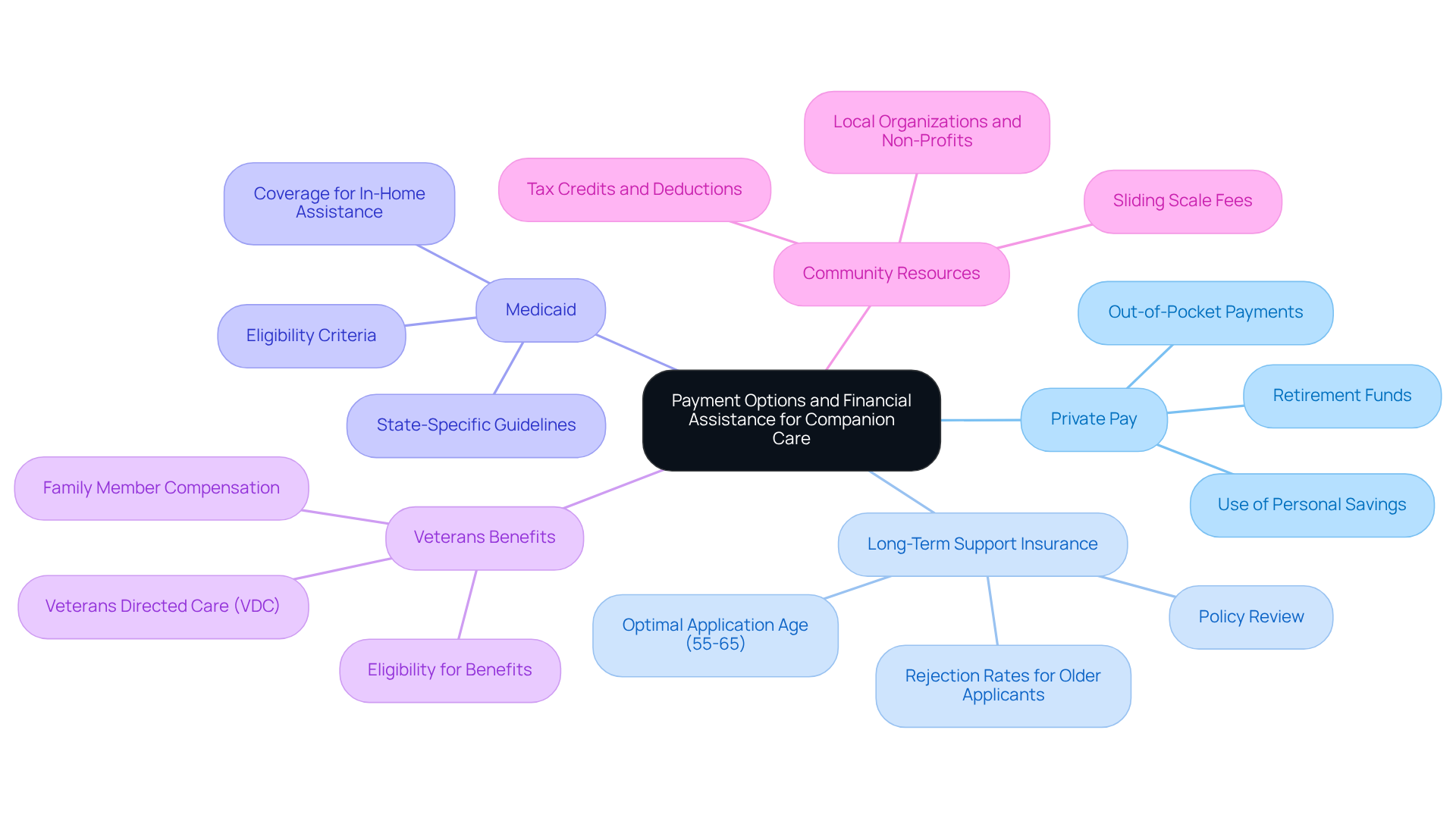
- Private Pay: Many families choose to pay out-of-pocket for companion care services, drawing from personal savings, retirement funds, or income. This approach allows for flexibility in selecting providers and services tailored to individual needs, ensuring that loved ones receive the care they deserve.
- Long-Term Support Insurance: Some long-term support insurance policies may cover companion assistance. It’s crucial for families to review their policy terms carefully, as coverage can differ widely. Ideally, applying for long-term assistance insurance between the ages of 55 and 65 is recommended, since nearly half of applicants over 70 face rejection due to health issues.
- Medicaid: In certain states, Medicaid provides financial support for in-home assistance, including companion care, based on eligibility criteria. Families should check their state’s specific guidelines to understand what services are available to them.
- Veterans Benefits: Veterans and their families may qualify for benefits that help cover the costs of companion assistance. Programs like Veterans Directed Care (VDC) allow eligible veterans to hire family members as support providers, ensuring personalized care while offering financial assistance.
- Community Resources: Local organizations and non-profits, such as the Eldercare Locator, often provide financial support or sliding scale fees based on income, making care more accessible for families in need. Additionally, families might be eligible for tax credits and deductions that can help alleviate caregiving expenses.
By understanding these options, families can navigate how much does companion care cost and other financial aspects of securing care for their loved ones with greater ease. This knowledge not only helps in managing costs but also ensures that their loved ones receive the necessary support and compassion they need.
Taking the Next Steps
Companion care is more than just basic assistance; it’s a heartfelt service that offers emotional support and companionship to those who need it most. This care is vital in building meaningful connections that truly enhance the quality of life for seniors and individuals with disabilities. By understanding the factors that influence companion care costs, families can make informed choices, ensuring their loved ones receive the compassionate care they deserve.
Throughout this discussion, we’ve highlighted key elements like:
- Geographic location
- Caregiver qualifications
- The level of care required
All of which significantly impact the overall cost of companion care. Exploring payment options and financial assistance programs can ease the financial burden, allowing families to access the support they need without added stress. As costs are expected to rise, proactive planning becomes essential in navigating these challenges effectively.
Ultimately, the importance of companion care is profound. It acts as a vital lifeline for those grappling with loneliness and isolation, ensuring they don’t have to face their journey alone. Families are encouraged to explore all available resources and options to secure the best possible care for their loved ones. Remember, compassion and companionship are invaluable in enriching the lives of seniors, and together, we can make a difference.
https://iframe.tely.ai/cta/eyJhcnRpY2xlX2lkIjogIjY5MTY3MjAzNTdlM2E1YjdiYjM1NWEyNiIsICJjb21wYW55X2lkIjogIjY4ZWU1ZGNhNzMxNzYyNTU3ZjNjOTVjMSIsICJpbmRleCI6IG51bGwsICJ0eXBlIjogImFydGljbGUifQ==Frequently Asked Questions
What is companion care?
Companion care is a service that provides emotional support and companionship to seniors and individuals with disabilities, helping to enhance their quality of life through social interaction and assistance with daily activities.
Why is companion care important?
Companion care is important because it addresses the emotional challenges of loneliness and isolation that many seniors face, fostering relationships that improve mental and emotional well-being.
What types of activities do companion caregivers engage in with clients?
Companion caregivers engage in meaningful conversations, share laughter, accompany clients on outings, and assist with light housekeeping tasks to ensure clients feel comfortable and cared for in their homes.
How does companion care impact clients' quality of life?
Companion care leads to a higher quality of life for clients, filled with joy and companionship, as it helps combat feelings of loneliness and provides a sense of security.
What is the overall goal of companion care?
The overall goal of companion care is to provide a reassuring presence and emotional support, ensuring that individuals do not have to face their challenges alone while receiving compassionate care.