

For families in our service areas
For families in our service areas, this guide explains caregiver support and how non-medical in-home caregiving can support care planning in East Idaho, Treasure Valley & Magic Valley, Northern Wasatch, North Central West Virginia, and Northeast Ohio.
Why How Much Is a Caregiver? Understand Matters
Understanding the financial implications of hiring a caregiver can be a daunting task for families navigating the complexities of care. Families face a significant problem: the multitude of factors influencing caregiver costs - from the type of assistance required to regional pricing variances. This complexity can lead to confusion and uncertainty, making it essential for families to grasp these nuances to make informed decisions.
As families seek to balance quality care with budgetary constraints, they often wonder: how can one effectively assess the true cost of caregiving while ensuring that their loved ones receive the necessary support? This article delves into the key elements that shape caregiver expenses, offering insights that empower families to make sound choices in their caregiving journey. By understanding these factors, families can navigate the financial landscape of caregiving more effectively.
Understand the Factors Influencing Caregiver Costs
For families, understanding how much is a caregiver can be challenging. Various factors contribute to these expenses, making it essential to grasp the nuances involved.
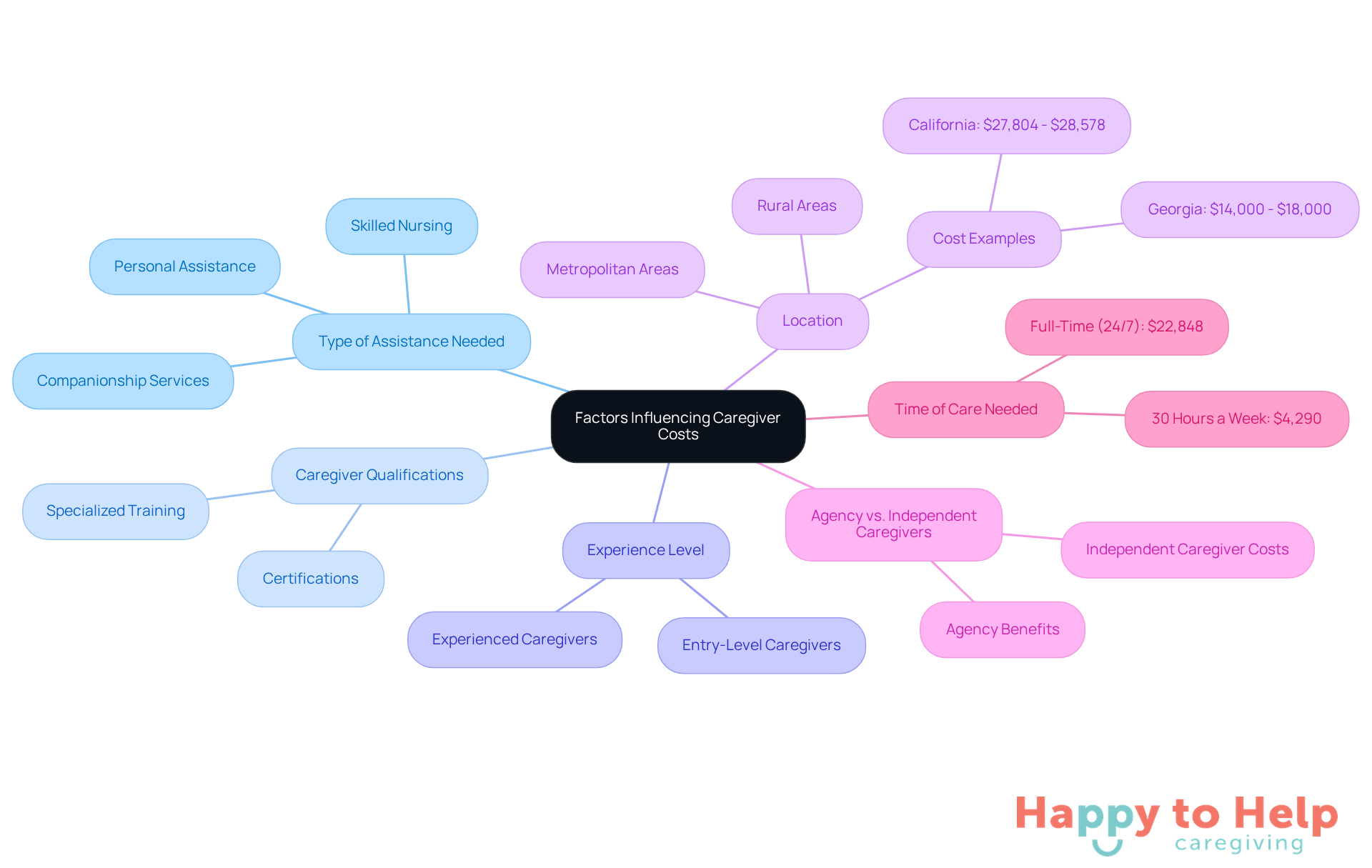
Key Factors Influencing Caregiver Costs:
-
Type of Assistance Needed: Different types of support, such as companionship, personal assistance, or skilled nursing, come with varying costs. For instance, skilled nursing services typically incur higher expenses than companionship services.
-
Caregiver Qualifications: Caregivers with specialized training or certifications, like nursing degrees, often charge higher rates due to their expertise.
-
Experience Level: More experienced caregivers may command higher fees, reflecting their ability to manage complex support needs effectively.
-
Location: Geographic location significantly impacts costs. Metropolitan areas usually see higher rates due to increased living expenses and demand for services. For example, in California, the average cost for 24/7 in-home care ranges from $27,804 to $28,578 monthly, while in Georgia, it can be between $14,000 and $18,000.
-
Agency vs. Independent Caregivers: Hiring through an agency may involve additional administrative fees, but it often provides greater reliability and oversight. Conversely, independent caregivers might be less expensive but require more family management.
-
Time of Care Needed: The total hours of care required each week directly affects overall costs. For example, a support plan for 30 hours a week amounts to roughly $4,290 each month, while full-time assistance (24/7) can total about $22,848 monthly.
In 2024, the national median cost for non-medical home assistance was approximately $30 per hour, providing a broader context for understanding these expenses. Families should also note that certain medical costs related to in-home assistance may qualify for tax deductions, potentially easing some financial burdens.
As Myechia Minter-Jordan, CEO of AARP, stated, "Family supporters are a backbone of our health and long-term care systems-often delivering complex assistance with minimal or no training, sacrificing their financial future and personal well-being, and too frequently handling it alone."
By considering these factors, families can better estimate how much is a caregiver and the potential expenses associated with hiring a support worker.
Evaluate Hourly Rates Based on Skills and Experience
When families evaluate how much is a caregiver, they often face a significant challenge: understanding what to expect in terms of costs and services. This can lead to confusion and uncertainty, especially when trying to find the right fit for their loved ones.
To address this, it’s essential to categorize caregivers based on their experience and skills:
-
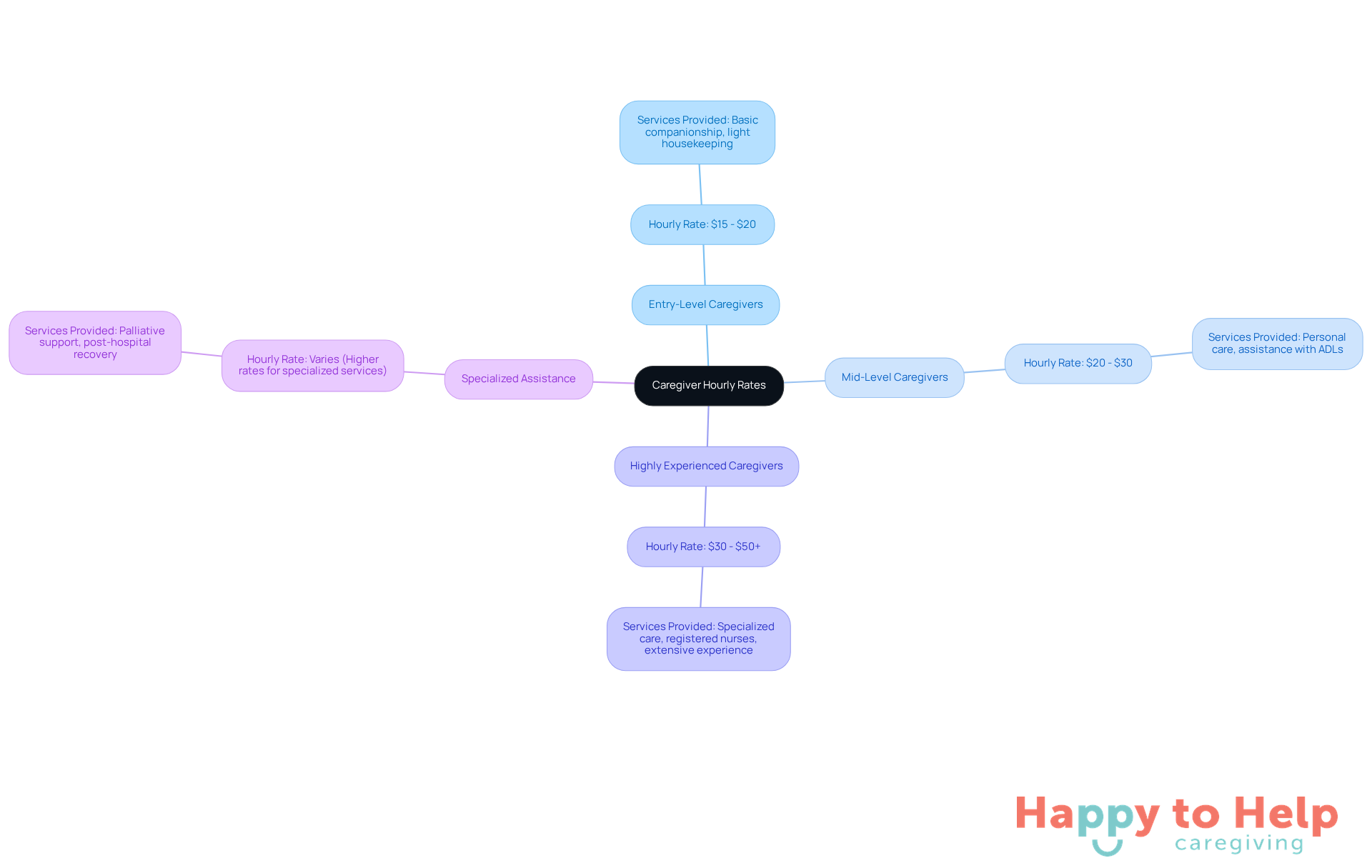
Entry-Level Caregivers: Typically charging between $15 to $20 per hour, these caregivers are suitable for basic companionship or light housekeeping tasks. They provide essential support without requiring specialized training.
-
Mid-Level Caregivers: With a few years of experience, these caregivers usually charge between $20 to $30 per hour. They can handle more complex tasks, including personal care and assistance with activities of daily living (ADLs), making them a valuable option for families needing additional support.
-
Highly Experienced Caregivers: Those with specialized skills or certifications may charge $30 to $50 per hour or more. This category includes registered nurses or support staff with extensive experience in specific conditions, such as dementia or post-surgery recovery, reflecting their advanced training and expertise.
-
Specialized Assistance: If your loved one requires specialized help, such as palliative support or post-hospital recovery, expect higher rates due to the additional training and expertise needed for these services.
By understanding how much a caregiver costs, families can make informed decisions about which caregivers best meet their needs and budget. This ensures that they receive the appropriate level of care for their loved ones.
Consider Regional Variations in Caregiver Pricing
Determining how much is a caregiver can vary widely based on location, presenting a significant challenge for families seeking assistance.
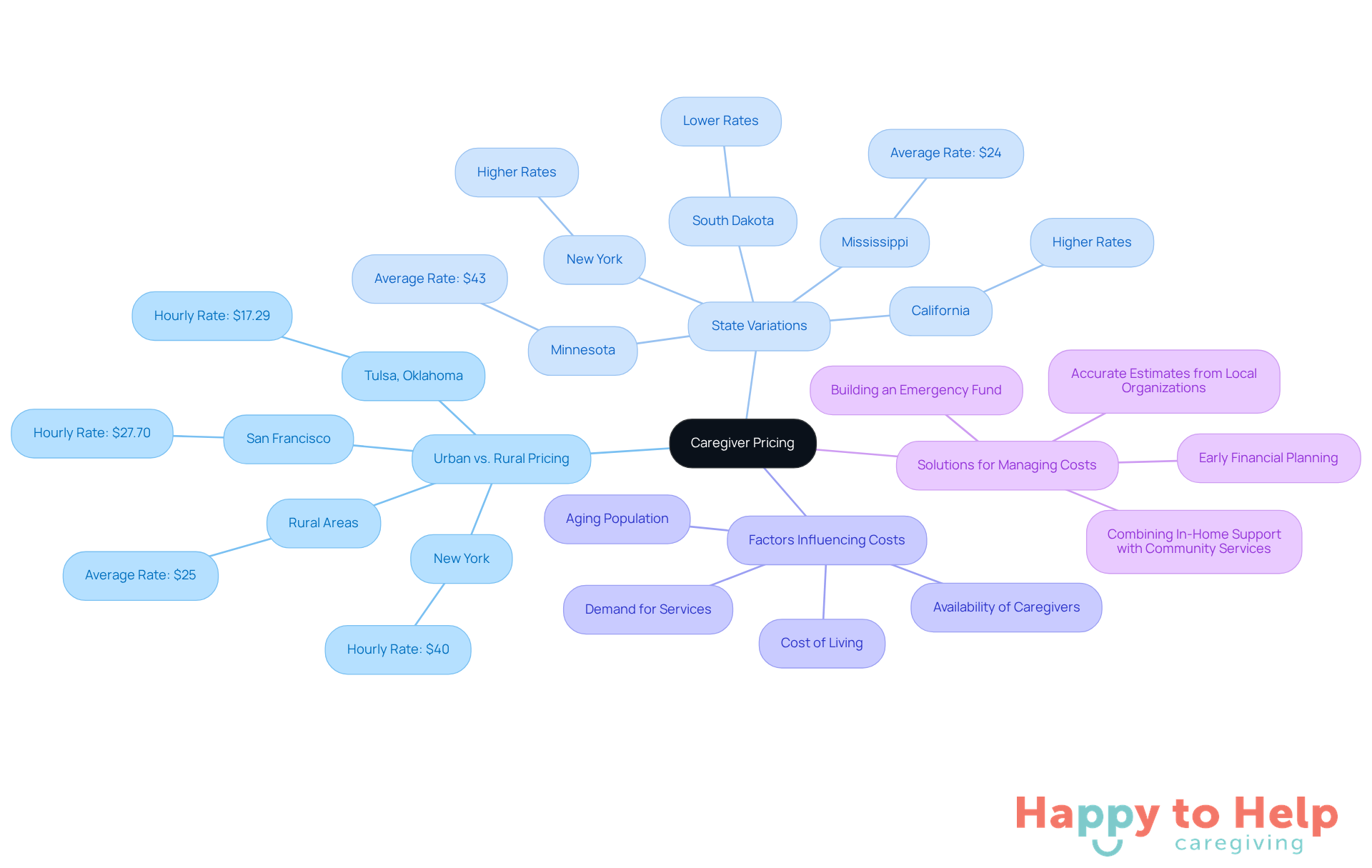
Problem: Urban regions generally have elevated expenses due to heightened demand and living requirements. For example, cities like New York or San Francisco may see rates as high as $40 per hour, while rural areas might average around $25 per hour. This disparity is largely influenced by the increased cost of living and the concentration of services in urban areas. Furthermore, rural regions face distinct difficulties, such as restricted support worker availability and increased travel distances, which can further affect pricing.
Agitate: The national median cost for nonmedical in-home care, specifically how much is a caregiver, is projected to be approximately $33 per hour in 2025, but this can range from $24 to $43 depending on the state. States like South Dakota may offer lower rates, while California and New York tend to be on the higher end of the spectrum, reflecting regional economic conditions and demand for services. Areas with a larger population of seniors or a lack of support providers may experience inflated rates due to demand exceeding supply, particularly in regions where the aging population is expanding quickly.
Solution: To efficiently manage caregiver expenses, families are advised to acquire accurate estimates from local organizations based on their specific assistance requirements. Additionally, considering the possibility of merging in-home support with community services can help reduce costs, offering a more holistic strategy for budgeting for assistance. Understanding how much a caregiver costs in different regions can assist families in organizing their budgets more effectively and finding services that align with their financial circumstances.
Assess Your Care Needs to Determine Total Costs
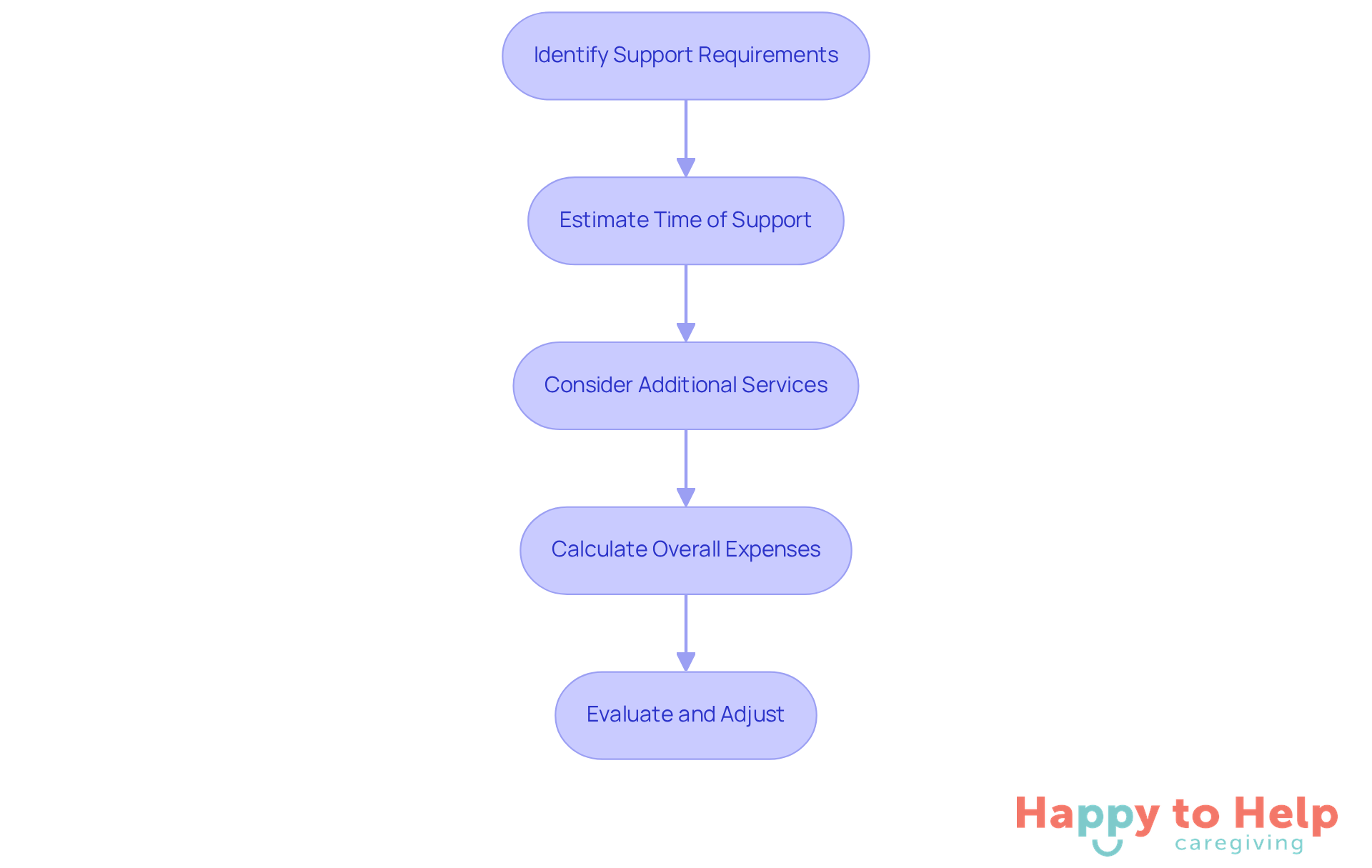
To determine total costs for in-home caregiving, it’s essential to follow these steps:
-
Identify Support Requirements: Start by evaluating the level of assistance needed. Is it companionship, personal assistance, or skilled nursing? Recognizing these needs helps in deciding the suitable type of provider.
-
Estimate Time of Support: Calculate how many hours your loved one will need assistance each week. Will it be full-time, part-time, or on an as-needed basis? On average, family caregivers spend about 24.4 hours each week providing support, with nearly 1 in 4 caregivers dedicating 41 hours or more. This variability in caregiving demands can significantly impact overall expenses.
-
Consider Additional Services: Don’t forget to factor in any extra services that may be necessary, such as transportation to appointments or specialized medical care. These can greatly influence overall costs.
-
Calculate Overall Expenses: Multiply the provider's hourly rate by the estimated number of hours needed each week, then multiply by the number of weeks in a month for a monthly expense estimate. For instance, if you require 20 hours of assistance each week at an average rate of $34 per hour, the monthly expense would be 20 x $34 x 4 = $2,720. Keep in mind that how much is a caregiver can vary based on local living expenses and state regulations regarding caregiver certification. For extensive support, such as 24/7 care, expenses can reach as high as $12,000 per month, prompting inquiries about how much is a caregiver and highlighting the financial commitment involved.
-
Evaluate and Adjust: Regularly assess the support plan and modify it as necessary based on changing needs or circumstances. This flexibility is crucial, as caregiver requirements can evolve over time.
By thoroughly assessing care needs and calculating costs, families can create a realistic budget that aligns with their loved one's requirements, ensuring they receive the necessary support while managing financial implications.
Making the Right Choice
Understanding the financial implications of hiring a caregiver is crucial for families navigating the complexities of care. The costs associated with caregiver services can vary significantly based on several factors, including:
- The type of assistance required
- The caregiver's qualifications and experience
- Geographic location
- Whether the caregiver is hired through an agency or independently
By grasping these variables, families can make informed decisions that align with their needs and budget. However, the challenge lies in evaluating specific care needs and estimating the total hours required for assistance. Families should also consider regional pricing variations and how these can impact overall expenses.
The national median cost for non-medical home assistance is projected to rise, which underscores the importance of staying informed about caregiver pricing trends. Families can explore potential financial strategies, such as tax deductions for medical costs, to alleviate some of the financial burden.
Ultimately, understanding how much a caregiver costs is not just about managing expenses; it’s about ensuring that loved ones receive the appropriate level of care. Families are encouraged to take a proactive approach in assessing their care needs and exploring various options to find a balance between quality support and affordability. By doing so, they can secure the necessary assistance while maintaining financial stability, ensuring peace of mind in their caregiving journey.
https://iframe.tely.ai/cta/eyJhcnRpY2xlX2lkIjogIjY5MjBmZDQwN2I4YTJhOGJkNzc1MGJiYyIsICJjb21wYW55X2lkIjogIjY4ZWU1ZGNhNzMxNzYyNTU3ZjNjOTVjMSIsICJpbmRleCI6IG51bGwsICJ0eXBlIjogImFydGljbGUifQ==Frequently Asked Questions
What are the main factors influencing caregiver costs?
The main factors include the type of assistance needed, caregiver qualifications, experience level, geographic location, whether the caregiver is hired through an agency or independently, and the total hours of care required each week.
How does the type of assistance needed affect caregiver costs?
Different types of support, such as companionship, personal assistance, or skilled nursing, come with varying costs. Skilled nursing services generally incur higher expenses compared to companionship services.
Why do caregiver qualifications impact costs?
Caregivers with specialized training or certifications, like nursing degrees, often charge higher rates due to their expertise and the level of care they can provide.
How does experience level influence caregiver fees?
More experienced caregivers may command higher fees because their experience allows them to manage complex support needs more effectively.
In what way does geographic location affect caregiver costs?
Geographic location significantly impacts costs, with metropolitan areas typically seeing higher rates due to increased living expenses and demand for services. For example, in California, the average cost for 24/7 in-home care ranges from $27,804 to $28,578 monthly, while in Georgia, it can be between $14,000 and $18,000.
What is the difference between hiring through an agency and hiring an independent caregiver?
Hiring through an agency may involve additional administrative fees but often provides greater reliability and oversight. Independent caregivers might be less expensive but may require more family management.
How does the time of care needed affect overall costs?
The total hours of care required each week directly impacts overall costs. For example, a support plan for 30 hours a week costs roughly $4,290 each month, while full-time assistance (24/7) can total about $22,848 monthly.
What is the national median cost for non-medical home assistance in 2024?
In 2024, the national median cost for non-medical home assistance was approximately $30 per hour.
Can families deduct any costs related to in-home assistance?
Yes, certain medical costs related to in-home assistance may qualify for tax deductions, potentially easing some financial burdens for families.
List of Sources
- Understand the Factors Influencing Caregiver Costs
- Home Care Costs in 2025: A State-by-State Guide (https://aplaceformom.com/caregiver-resources/articles/in-home-care-costs)
- New Report Reveals Crisis Point for America’s 63 million Family Caregivers (https://press.aarp.org/2025-07-24-New-Report-Reveals-Crisis-Point-for-Americas-63-million-Family-Caregivers)
- How Much Do In-Home Caregivers Cost? - WTOP News (https://wtop.com/news/2025/11/how-much-do-in-home-caregivers-cost)
- 24/7 In-Home Care Costs in 2025 - Assisted Living Magazine (https://assistedlivingmagazine.com/24-7-in-home-care-costs-in-2025)
- Factors Affecting the Home Care Industry in 2025 (https://carearoundtheblock.com/post/factors-affecting-the-home-care-industry-in-2025)
- Evaluate Hourly Rates Based on Skills and Experience
- 24/7 In-Home Care Costs in 2025 - Assisted Living Magazine (https://assistedlivingmagazine.com/24-7-in-home-care-costs-in-2025)
- Home Care Costs in 2025: A State-by-State Guide (https://aplaceformom.com/caregiver-resources/articles/in-home-care-costs)
- How Much Does In-Home Care Cost in 2025? A State-by-State Guide - Elder Answers (https://elder-answers.com/how-does-in-home-care-cost-in-2025)
- How Much Do In-Home Caregivers Cost? - WTOP News (https://wtop.com/news/2025/11/how-much-do-in-home-caregivers-cost)
- What Are the Average Caregiver Pay Rates in 2025? — Paid.Care (https://paid.care/guides/what-are-the-average-caregiver-pay-rates-in-2025)
- Consider Regional Variations in Caregiver Pricing
- At Home Care Pricing: Essential Industry Statistics for 2025 - Assisting Hands Rockford (https://assistinghands.com/100/illinois/rockford/blog/at-home-care-pricing-essential-industry-statistics-for-2025)
- Home Care Costs in 2025: A State-by-State Guide (https://aplaceformom.com/caregiver-resources/articles/in-home-care-costs)
- How Much Does In-Home Care Cost in 2025? A State-by-State Guide - Elder Answers (https://elder-answers.com/how-does-in-home-care-cost-in-2025)
- 24/7 In-Home Care Costs in 2025 - Assisted Living Magazine (https://assistedlivingmagazine.com/24-7-in-home-care-costs-in-2025)
- The Hidden Costs of Aging in Place | Village Caregiving (https://villagecaregiving.com/blog/the-hidden-costs-of-aging-in-place)
- Assess Your Care Needs to Determine Total Costs
- Home Care Costs in 2025: A State-by-State Guide (https://aplaceformom.com/caregiver-resources/articles/in-home-care-costs)
- The Caregiving Landscape: Data & Insights on the Caregiver Experience in the U.S. (https://caregiveraction.org/caregiver-statistics)
- The Cost of In-Home Caregivers May Surprise You (https://health.usnews.com/senior-care/caregiving/articles/how-much-do-in-home-caregivers-cost)
- Caregiver Statistics: Demographics (https://caregiver.org/resource/caregiver-statistics-demographics)
- National Alliance for Caregiving: Caregiving in the US 2025 Report (https://johnahartford.org/resources/view/national-alliance-for-caregiving-caregiving-in-the-us-2025-report)