

For families in our service areas
For families in our service areas, this guide explains caregiving and how non-medical in-home caregiving can support care planning in East Idaho, Treasure Valley & Magic Valley, Northern Wasatch, North Central West Virginia, and Northeast Ohio.
The Importance of How Much Vitamin D Should a Senior Take
As individuals age, understanding the critical role of vitamin D in maintaining health becomes increasingly important. For seniors, insufficient levels of this essential nutrient can lead to serious health risks, such as weakened bones and a higher susceptibility to fractures.
This deficiency poses a significant problem, as various factors contribute to low vitamin D levels in older adults. The implications are serious: without adequate vitamin D, seniors face not only physical health challenges but also a diminished quality of life.
So, how much vitamin D should a senior take to safeguard their well-being? This article explores the recommended daily intake, effective sources, and practical strategies for ensuring that seniors achieve optimal vitamin D levels. By empowering caregivers and families with this knowledge, we can take proactive steps to enhance the quality of life for our loved ones.
Understand the Importance of Vitamin D for Seniors
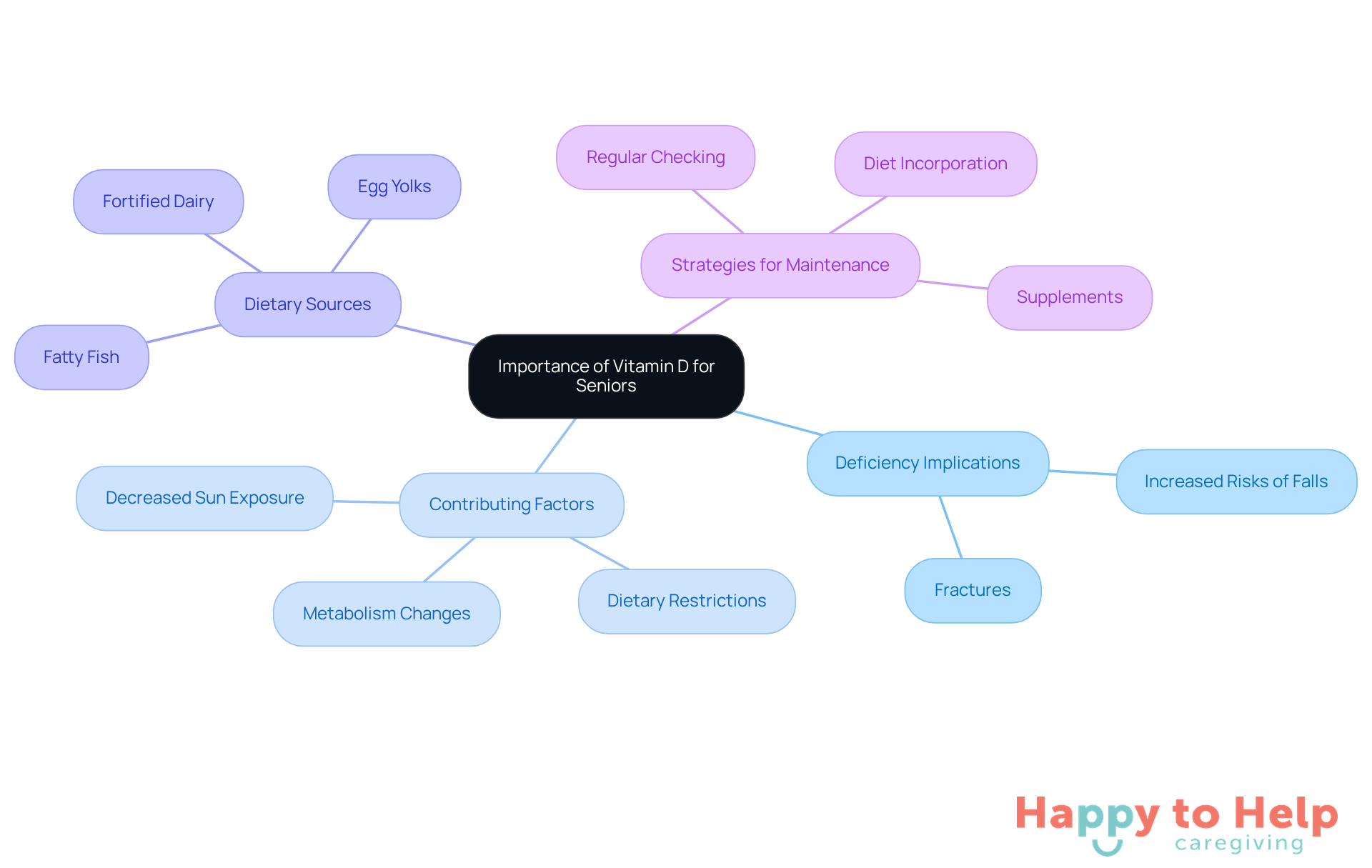
For seniors, a significant problem is vitamin D deficiency, making it essential to understand how much vitamin D should a senior take to ensure proper calcium absorption and maintain strong bones. This deficiency can lead to serious implications, including increased risks of falls, fractures, and other complications related to aging. Factors such as decreased sun exposure, dietary restrictions, and changes in metabolism contribute to this issue, making elderly individuals particularly vulnerable.
To address this challenge, caregivers can take proactive steps to ensure that older adults maintain sufficient levels of vitamin D by determining how much vitamin D should a senior take, as regularly checking vitamin D levels is essential for timely interventions. Incorporating vitamin D-rich foods into the diet, such as:
- Fatty fish
- Fortified dairy products
- Egg yolks
can also help. Additionally, safe sun exposure and supplements may be necessary to boost levels, particularly regarding how much vitamin D should a senior take, especially during winter months.
By recognizing the importance of vitamin D and implementing these strategies, caregivers can empower older adults to make informed health choices, ultimately enhancing their quality of life.
Assess Vitamin D Status in Seniors
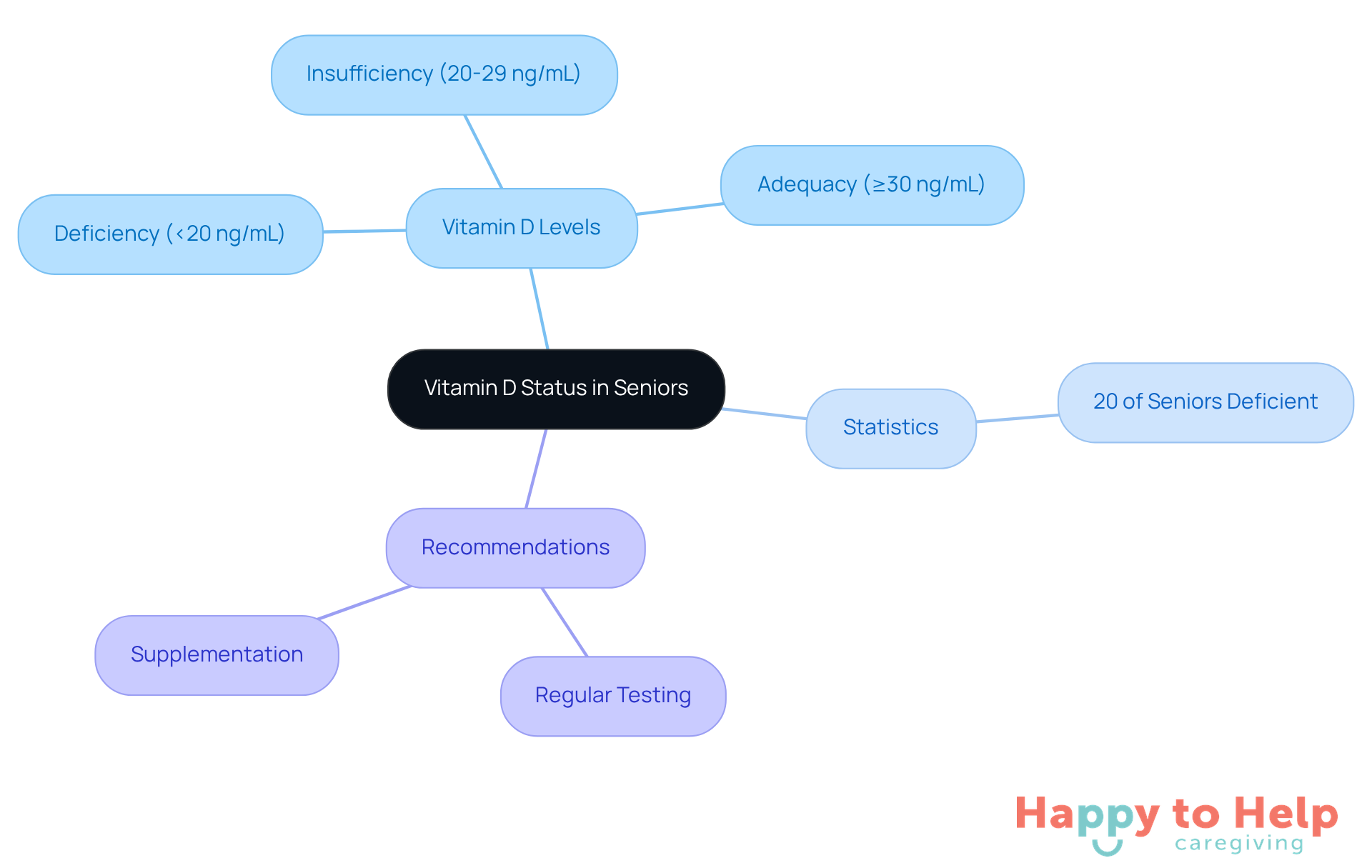
It is crucial to assess how much vitamin D should a senior take, as many face deficiencies that can impact their health. Healthcare providers recommend a blood test measuring the level of 25-hydroxy D (25(OH)D), which categorizes vitamin D levels into deficiency, insufficiency, or adequacy. Specifically, levels below 20 ng/mL indicate deficiency, while levels between 20 and 29 ng/mL suggest insufficiency.
Statistics from the National Health and Nutrition Examination Survey (NHANES) reveal that nearly 20% of older adults are vitamin D deficient. This highlights the importance of regular testing for this demographic. Seniors should engage with their medical providers to determine how much vitamin D should a senior take and the appropriate frequency for testing, as well as to accurately interpret the results.
Taking a proactive approach allows for timely adjustments in dietary intake or supplementation, including understanding how much vitamin D should a senior take, which are essential for maintaining optimal health. As one healthcare specialist noted, "The most effective and quickest way to address a D deficiency is supplementation." By staying informed and working closely with healthcare professionals, caregivers can help ensure that seniors receive the necessary support for their vitamin D needs.
Determine Recommended Daily Intake of Vitamin D
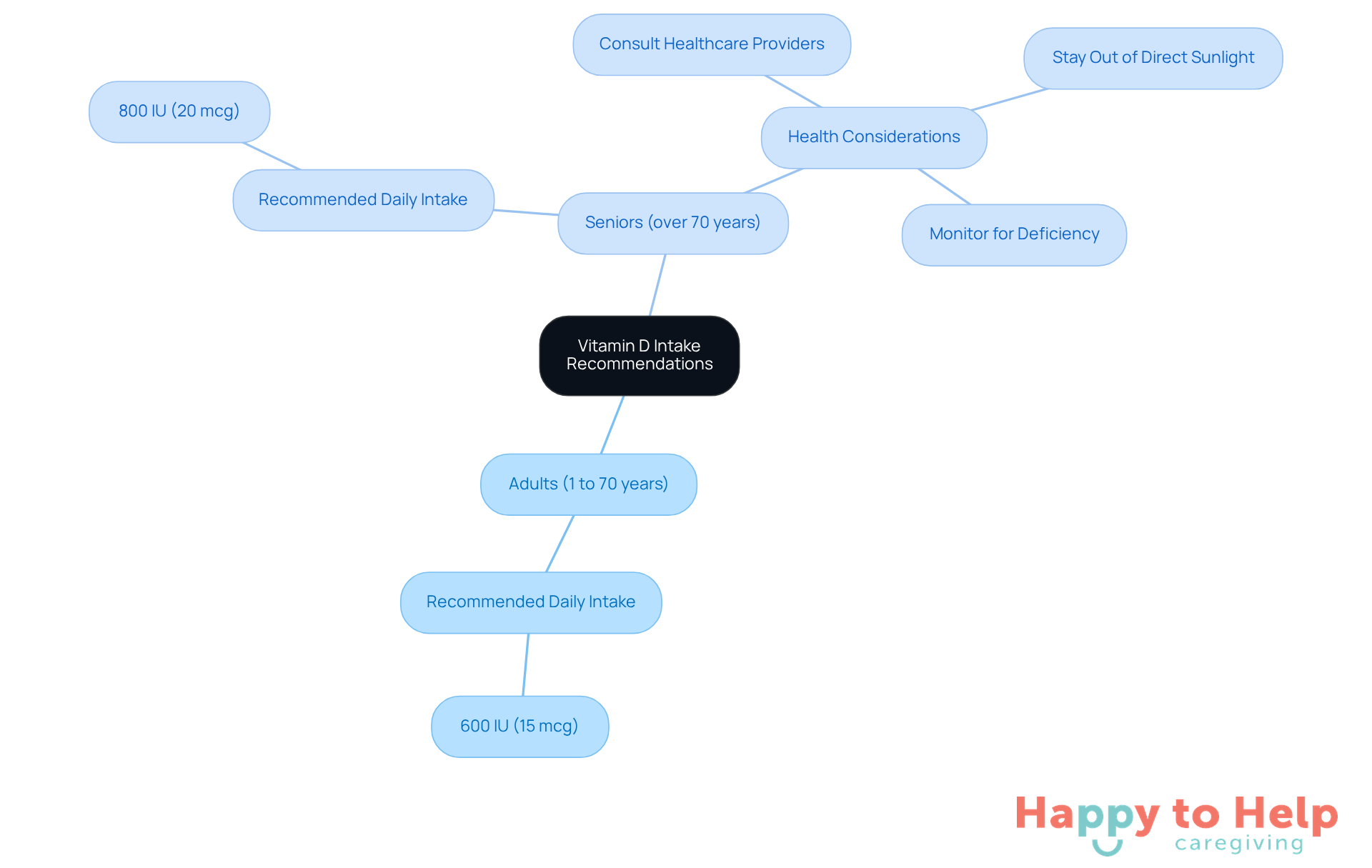
Vitamin D intake is a critical concern, especially as we age. For adults aged 1 to 70 years, the recommended daily consumption is 600 IU (15 mcg). However, seniors over 70 should aim for at least 800 IU (20 mcg) daily. Insufficient vitamin D can lead to weakened bones and overall health issues, highlighting the importance of seniors knowing how much vitamin D they should take and addressing their specific needs with healthcare professionals.
Many seniors may face challenges related to underlying health conditions or medications that affect vitamin D metabolism. This is why it's crucial to have open discussions with healthcare providers about individual requirements. By understanding these recommendations and seeking professional advice, caregivers can help ensure that seniors maintain optimal bone health and well-being.
Identify Sources of Vitamin D for Seniors
Seniors often face the challenge of vitamin D deficiency, which leads to the important question of how much vitamin D should a senior take to prevent various health issues. This deficiency can arise from limited sun exposure, dietary restrictions, or the body's decreased ability to synthesize vitamin D with age. In fact, 36.9% of adults aged 60 and above wonder how much vitamin D should a senior take to meet their daily needs.
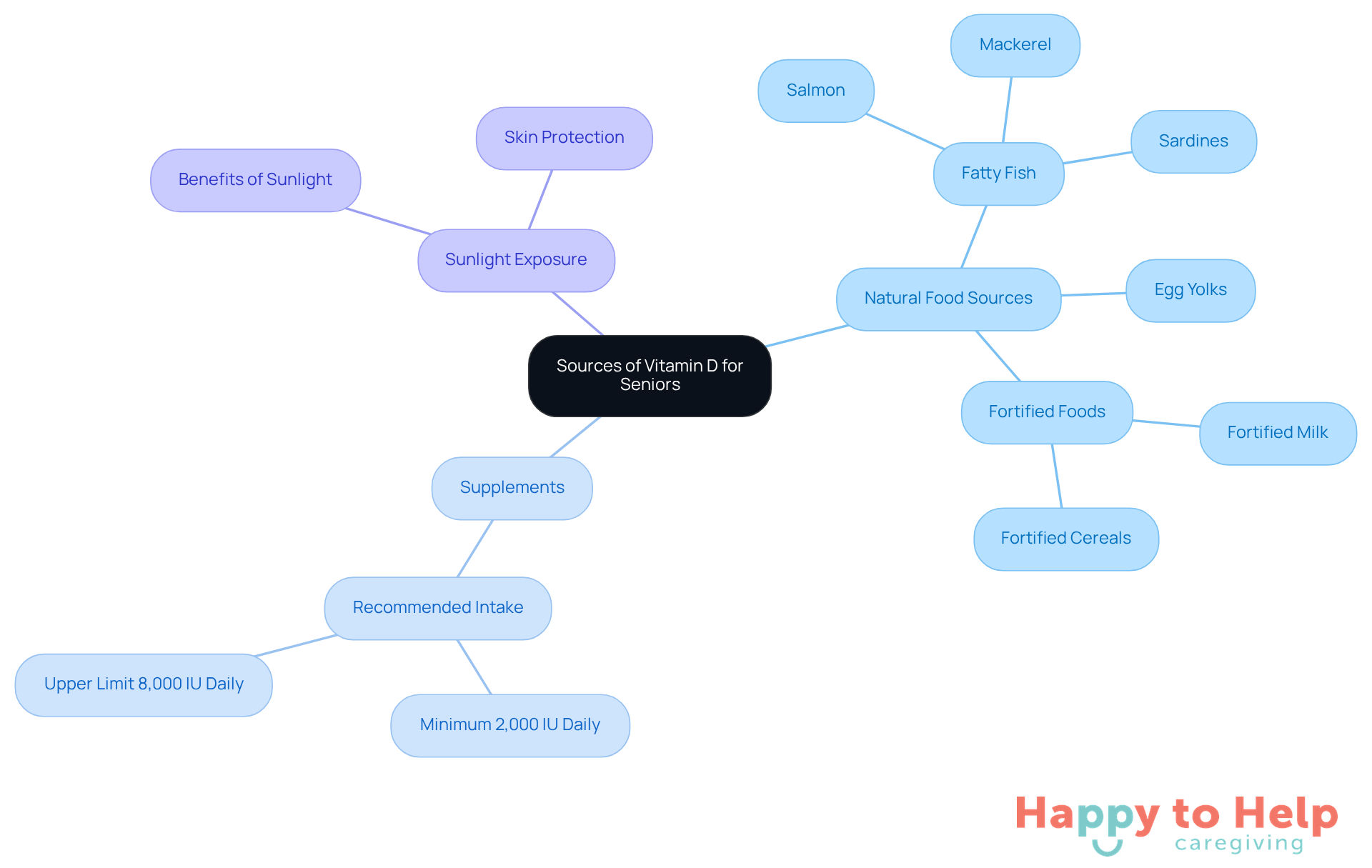
To combat this issue, seniors can acquire vitamin D from multiple sources. Natural food sources rich in vitamin D include:
- Fatty fish like salmon, mackerel, and sardines
- Egg yolks
- Fortified foods such as milk and cereals
For those who may not meet their vitamin D requirements through diet alone, it's important to know how much vitamin D should a senior take, as supplements can effectively help achieve the recommended intake. Spending time outdoors is also beneficial, as sunlight exposure enables the body to produce vitamin D naturally. However, it's essential for older adults to balance sun exposure with skin protection to reduce the risk of skin damage.
The suggested minimum intake of vitamin D for individuals aged 1 year and older is 2,000 IU daily, which raises the question of how much vitamin D should a senior take to maintain adequate levels. For example, a serving of salmon can provide over 500 IU of vitamin D, while fortified cereals can offer around 100 IU per serving. Incorporating these foods into daily meals can significantly enhance vitamin D consumption, promoting overall wellness. As Bodemer noted, "not everybody synthesizes it efficiently in the skin," highlighting the critical role of dietary sources and supplements.
Recognize Risks of Vitamin D Deficiency in Seniors
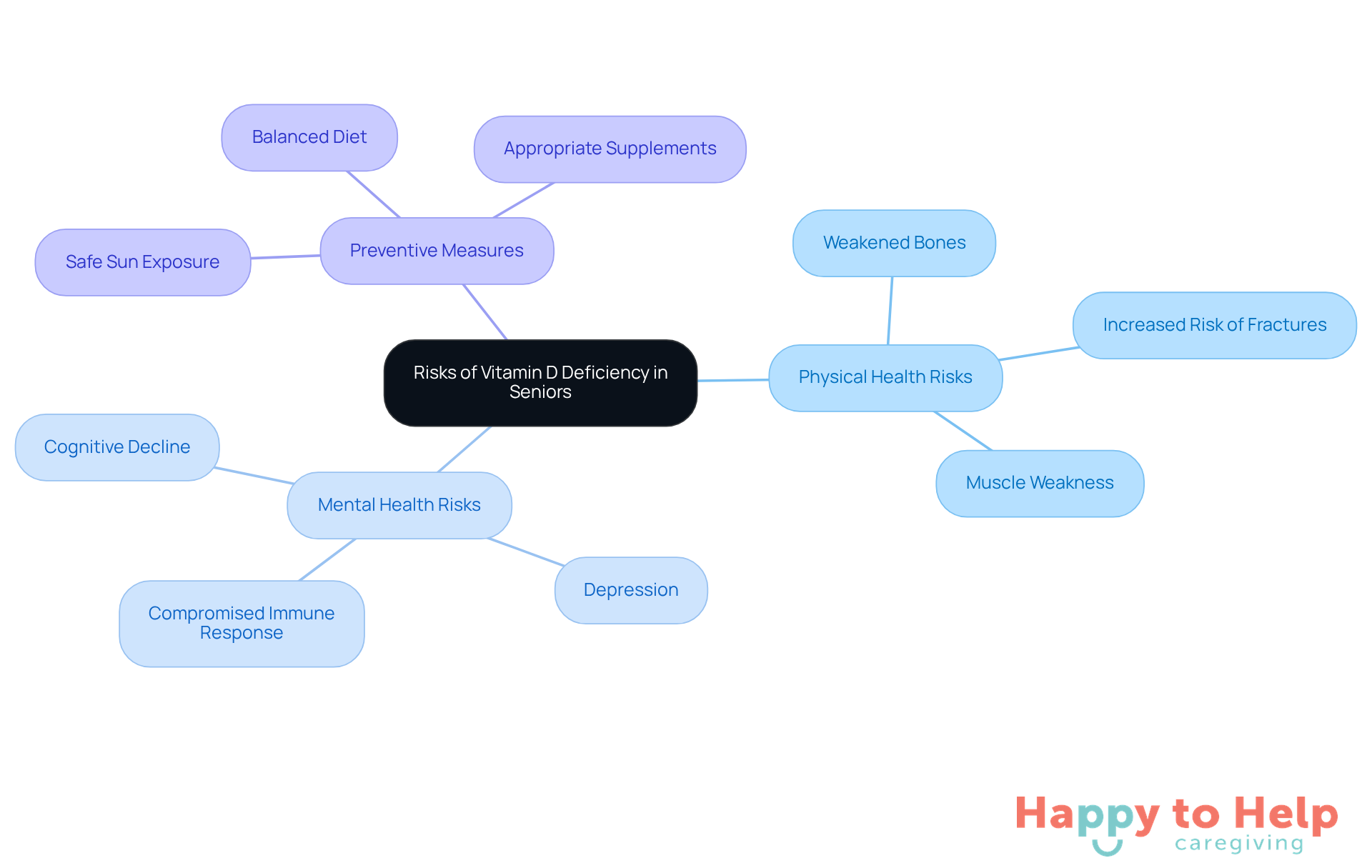
Vitamin D deficiency in older adults presents a significant health challenge. It can lead to:
- Weakened bones
- An increased risk of fractures
- Muscle weakness
All of these contribute to a higher likelihood of falls. Moreover, low levels of vitamin D3 have been linked to:
- Cognitive decline
- Depression
- A compromised immune response
Recognizing these risks is crucial for caregivers and families. By understanding how much vitamin D a senior should take, they can take proactive steps to ensure adequate intake. Achieving this can be done through:
- A balanced diet rich in vitamin D
- Safe sun exposure
- Knowing how much vitamin D a senior should take with appropriate supplements
Regular check-ups and open discussions with healthcare professionals are essential for managing these risks effectively.
Incorporate Vitamin D Supplements Effectively
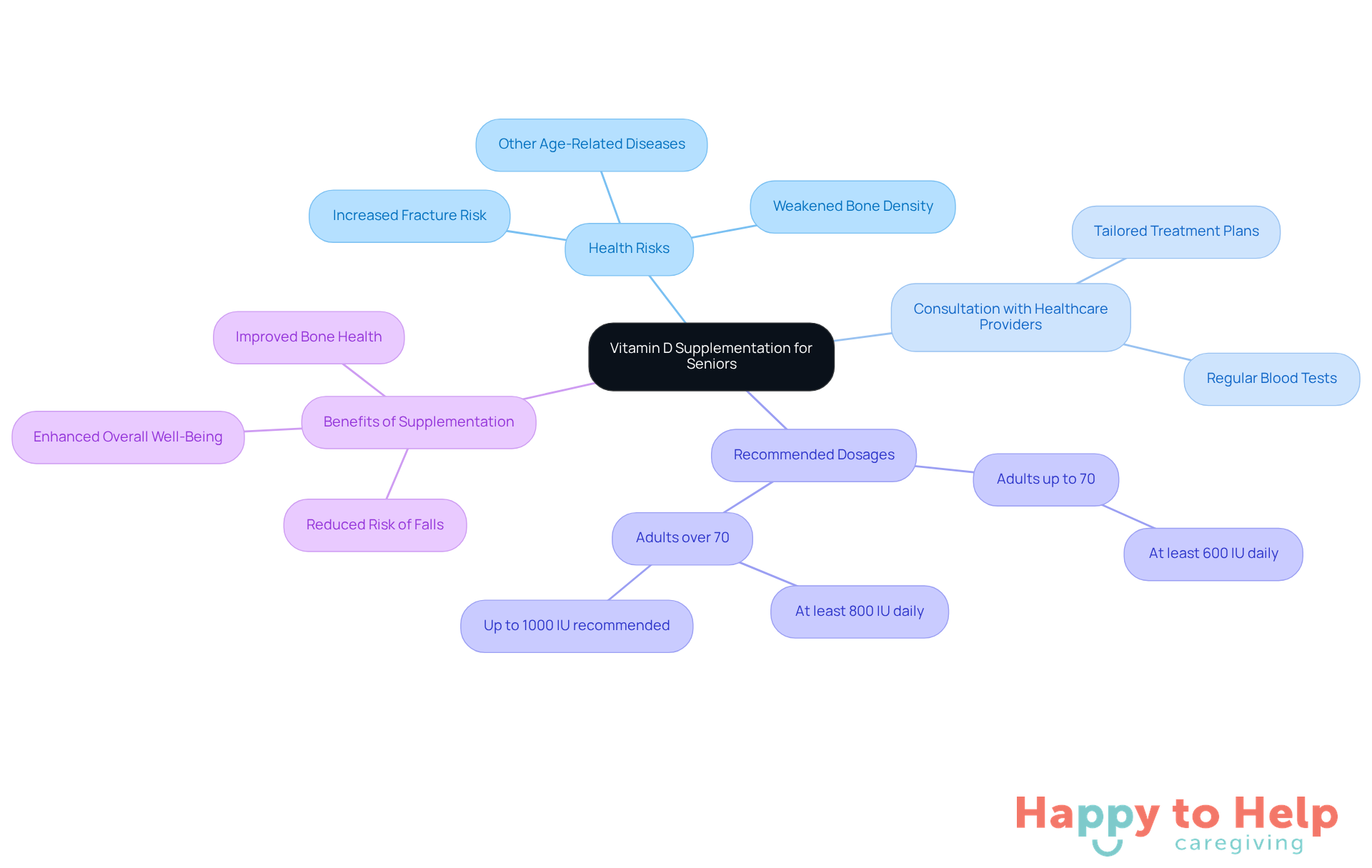
Vitamin D deficiency poses a significant problem for seniors, impacting their overall health and increasing the risk of bone-related issues. Without adequate levels of this essential nutrient, older adults may face a higher likelihood of fractures and weakened bone density.
To address this issue, seniors should consult their medical provider to determine how much vitamin D should a senior take, tailored to their specific health needs and current vitamin D levels. It's generally recommended to take vitamin D with a meal that contains fat, as this enhances absorption. For most adults, the maximum daily limit is typically set at 4,000 IU to avoid potential toxicity. Regular follow-ups with healthcare providers are crucial for adjusting dosages and monitoring vitamin D levels over time.
Real-life examples highlight the importance of proper supplementation. Older adults who adhered to recommended dosages reported improved bone health and a reduced risk of fractures. Guidelines provide information on how much vitamin D should a senior take, suggesting that adults up to 70 should aim for at least 600 IU daily, while those over 70 should target at least 800 IU, with some sources recommending up to 1,000 IU.
Healthcare experts emphasize the significance of vitamin D for maintaining overall health in older adults. As one specialist noted, "As a senior individual, adding this supplement will assist your bones in remaining healthy and robust and might also avert other indications of aging." Regular blood tests can help identify deficiencies, allowing for timely adjustments in supplementation. It's also advisable for adults over 65 to get a blood test and consult their doctor for a personalized treatment plan.
By following these guidelines and maintaining open communication with healthcare providers, seniors can optimize their vitamin D intake and enhance their well-being.
Key Takeaways for Caregivers
Understanding the appropriate vitamin D intake for seniors is crucial for maintaining optimal health and preventing the risks associated with deficiency. Reduced sun exposure and dietary restrictions can significantly impact older adults, making it essential to determine how much vitamin D a senior should take to support their overall well-being.
Regular assessments of vitamin D levels are vital. The recommended daily intake for seniors varies, and caregivers must be aware of various dietary sources and supplements that can help achieve adequate levels. Collaborating closely with healthcare providers ensures that seniors receive tailored guidance and support based on their individual health needs.
Prioritizing vitamin D intake can greatly enhance the quality of life for older adults. Here are some proactive steps caregivers can take:
- Incorporate vitamin D-rich foods into meals.
- Encourage safe sun exposure when possible.
- Consider supplements if dietary intake is insufficient.
Regular check-ups and open discussions about vitamin D levels empower seniors to make informed health choices, ultimately promoting stronger bones and better overall health. By addressing these needs, caregivers can help ensure the longevity and vitality of the seniors they support.
https://iframe.tely.ai/cta/eyJhcnRpY2xlX2lkIjogIjY5Mjc5NTA3MjI0NDc2YzA3YjhmODljNiIsICJjb21wYW55X2lkIjogIjY4ZWU1ZGNhNzMxNzYyNTU3ZjNjOTVjMSIsICJpbmRleCI6IG51bGwsICJ0eXBlIjogImFydGljbGUifQ==Frequently Asked Questions
Why is vitamin D important for seniors?
Vitamin D is essential for seniors as it helps with calcium absorption and maintaining strong bones. A deficiency can lead to serious health issues, including increased risks of falls, fractures, and other complications related to aging.
What factors contribute to vitamin D deficiency in seniors?
Factors contributing to vitamin D deficiency in seniors include decreased sun exposure, dietary restrictions, and changes in metabolism, which make elderly individuals particularly vulnerable.
How can caregivers help seniors maintain sufficient vitamin D levels?
Caregivers can help seniors maintain sufficient vitamin D levels by regularly checking vitamin D levels, incorporating vitamin D-rich foods into their diet (such as fatty fish, fortified dairy products, and egg yolks), ensuring safe sun exposure, and considering supplements when necessary.
How is vitamin D deficiency assessed in seniors?
Vitamin D deficiency is assessed through a blood test measuring the level of 25-hydroxy D (25(OH)D). Levels below 20 ng/mL indicate deficiency, while levels between 20 and 29 ng/mL suggest insufficiency.
What statistics highlight the prevalence of vitamin D deficiency among older adults?
Statistics from the National Health and Nutrition Examination Survey (NHANES) indicate that nearly 20% of older adults are vitamin D deficient, emphasizing the need for regular testing in this demographic.
What should seniors do to determine how much vitamin D they need?
Seniors should engage with their medical providers to determine how much vitamin D they should take and the appropriate frequency for testing, as well as to accurately interpret their vitamin D levels.
What is the recommended approach for addressing vitamin D deficiency?
The most effective and quickest way to address a vitamin D deficiency is through supplementation, along with dietary adjustments as needed. Staying informed and working closely with healthcare professionals is crucial for ensuring that seniors receive necessary support for their vitamin D needs.
List of Sources
- Understand the Importance of Vitamin D for Seniors
- Vitamin D: An Important Factor for Overall Health (https://rush.edu/news/vitamin-d-important-factor-overall-health)
- Vitamin D in the older population: a consensus statement - PMC (https://pmc.ncbi.nlm.nih.gov/articles/PMC9607753)
- Vitamin D supplements may slow biological aging — Harvard Gazette (https://news.harvard.edu/gazette/story/2025/05/vitamin-d-supplements-may-slow-biological-aging)
- Vitamin D supplements may lower blood pressure in older people with obesity (https://endocrine.org/news-and-advocacy/news-room/2024/vitamin-d-supplements-may-lower-blood-pressure-in-older-people-with-obesity)
- Effect of vitamin D, calcium, or combined supplementation on fall prevention: a systematic review and updated network meta-analysis - BMC Geriatrics (https://bmcgeriatr.biomedcentral.com/articles/10.1186/s12877-024-05009-x)
- Assess Vitamin D Status in Seniors
- Older adults at risk of vitamin D deficiency (https://uclahealth.org/news/article/older-adults-risk-vitamin-d-deficiency)
- Frontiers | Prevalence of vitamin D deficiency and associated risk of all-cause and cause-specific mortality among middle-aged and older adults in the United States (https://frontiersin.org/journals/nutrition/articles/10.3389/fnut.2023.1163737/full)
- Prevalence of vitamin D deficiency in seniors – A retrospective study (https://sciencedirect.com/science/article/pii/S2405457723005387)
- Roundup: Caution Urged on Use of Vitamin D, Calcium Supplements for Older Adults; and More News (https://baptisthealth.net/baptist-health-news/caution-urged-on-use-of-vitamin-d-and-calcium-supplements-for-older-adults)
- The Global Prevalence of Vitamin D Deficiency in the Elderly: A Meta-analysis - PMC (https://pmc.ncbi.nlm.nih.gov/articles/PMC10899554)
- Determine Recommended Daily Intake of Vitamin D
- Dietary vitamin D Intake for the elderly population: update on the Recommended Dietary Allowance (RDA) for vitamin D - PMC (https://pmc.ncbi.nlm.nih.gov/articles/PMC5821124)
- Endocrine Society Guideline recommends healthy adults under the age of 75 take the recommended daily allowance of vitamin D (https://endocrine.org/news-and-advocacy/news-room/2024/endocrine-society-recommends-healthy-adults-take-the-recommended-daily-allowance-of-vitamin-d)
- What to Know About Vitamin D Dosage for Older Adults (https://webmd.com/healthy-aging/what-to-know-about-vitamin-d-dosage-for-older-adults)
- Vitamin D (https://mayoclinic.org/drugs-supplements-vitamin-d/art-20363792)
- Identify Sources of Vitamin D for Seniors
- Products - Data Briefs - Number 399 - February 2021 (https://cdc.gov/nchs/products/databriefs/db399.htm)
- Frontiers | Global and regional prevalence of vitamin D deficiency in population-based studies from 2000 to 2022: A pooled analysis of 7.9 million participants (https://frontiersin.org/journals/nutrition/articles/10.3389/fnut.2023.1070808/full)
- Quotes on the State of Vitamin D Science, Reference to IOM Report - GrassrootsHealth (https://grassrootshealth.net/quotes-on-the-state-of-vitamin-d-science-reference-to-iom-report)
- Micronutrient Inadequacies in the US Population: an Overview | Linus Pauling Institute (https://lpi.oregonstate.edu/mic/micronutrient-inadequacies/overview)
- Shedding light on good vitamin D health (https://uwhealth.org/news/shedding-light-on-good-vitamin-d-health)
- Recognize Risks of Vitamin D Deficiency in Seniors
- Roundup: Caution Urged on Use of Vitamin D, Calcium Supplements for Older Adults; and More News (https://baptisthealth.net/baptist-health-news/caution-urged-on-use-of-vitamin-d-and-calcium-supplements-for-older-adults)
- Older adults at risk of vitamin D deficiency (https://uclahealth.org/news/article/older-adults-risk-vitamin-d-deficiency)
- Vitamin D Status Predicts Physical Performance and Its Decline in Older Persons (https://academic.oup.com/jcem/article/92/6/2058/2597231)
- Frontiers | Prevalence of vitamin D deficiency and associated risk of all-cause and cause-specific mortality among middle-aged and older adults in the United States (https://frontiersin.org/journals/nutrition/articles/10.3389/fnut.2023.1163737/full)
- Prevalence of vitamin D deficiency in seniors – A retrospective study (https://sciencedirect.com/science/article/pii/S2405457723005387)
- Incorporate Vitamin D Supplements Effectively
- Endocrine Society Guideline recommends healthy adults under the age of 75 take the recommended daily allowance of vitamin D (https://endocrine.org/news-and-advocacy/news-room/2024/endocrine-society-recommends-healthy-adults-take-the-recommended-daily-allowance-of-vitamin-d)
- Vitamin D in the older population: a consensus statement - PMC (https://pmc.ncbi.nlm.nih.gov/articles/PMC9607753)
- Roundup: Caution Urged on Use of Vitamin D, Calcium Supplements for Older Adults; and More News (https://baptisthealth.net/baptist-health-news/caution-urged-on-use-of-vitamin-d-and-calcium-supplements-for-older-adults)
- What to Know About Vitamin D Dosage for Older Adults (https://webmd.com/healthy-aging/what-to-know-about-vitamin-d-dosage-for-older-adults)