How Much Water Should an Elderly Person Drink? Essential Tips
For families in our service areas
For families in our service areas, this guide explains caregiver support and how non-medical in-home caregiving can support care planning in East Idaho, Treasure Valley & Magic Valley, Northern Wasatch, North Central West Virginia, and Northeast Ohio.
Why How Much Water Should an Elderly Person Matters
Hydration is vital for the health and well-being of older adults, yet many caregivers face the significant challenge of ensuring their clients drink enough water. As the body ages, its ability to retain fluids decreases, resulting in a concerning rate of dehydration among seniors. This issue can lead to serious health complications, including urinary tract infections and cognitive decline.
So, how can caregivers effectively promote optimal hydration in this vulnerable population? Understanding the recommended water intake for elderly individuals and the factors that influence their hydration needs is essential. By implementing practical strategies, caregivers can help mitigate the risks associated with dehydration and support their clients' overall health.
Understand the Importance of Hydration for Seniors
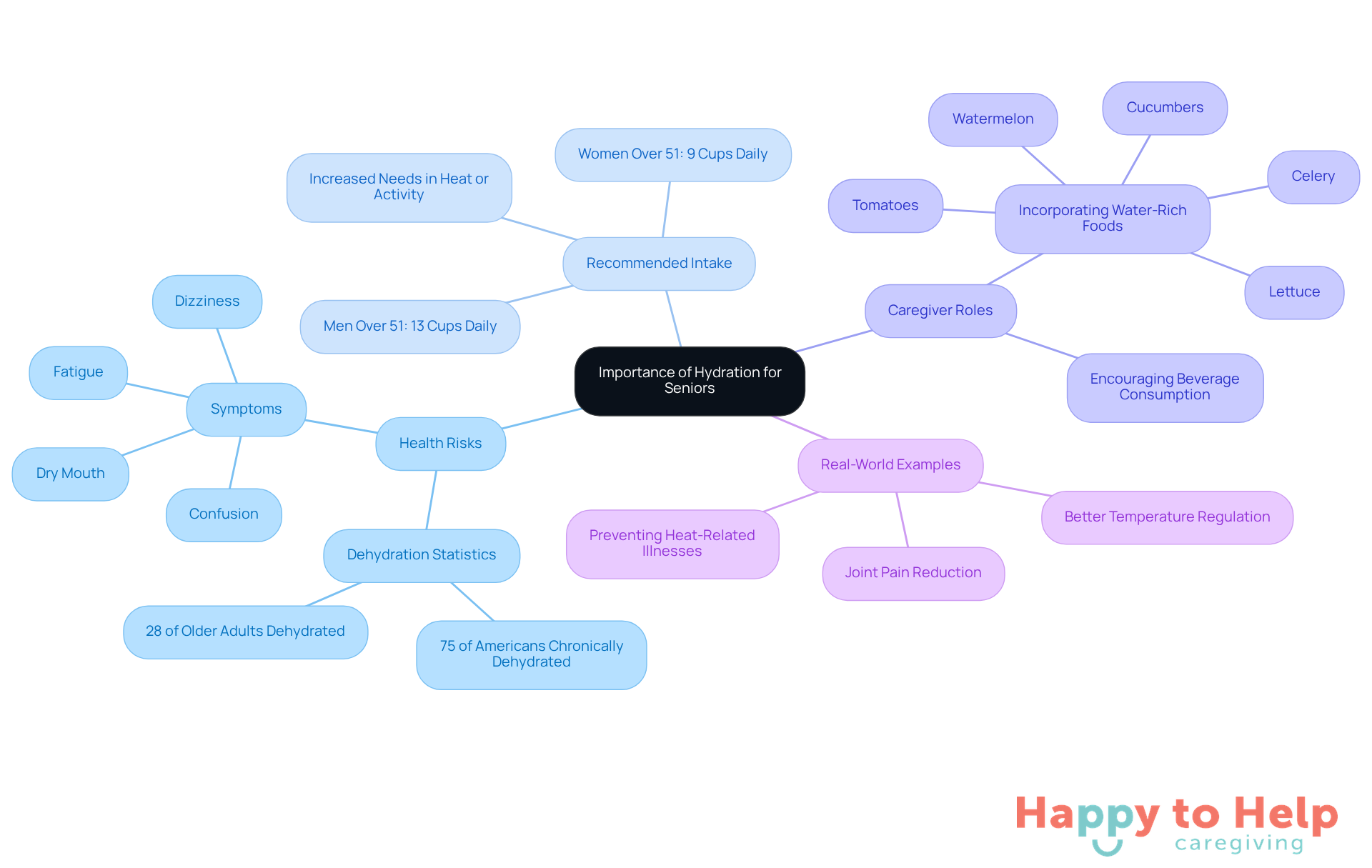
Hydration is a significant concern for older adults, raising the question of how much water should an elderly person drink, as it plays a crucial role in essential bodily functions like digestion, temperature regulation, and joint lubrication. However, as people age, their bodies become less efficient at retaining fluids, and the sensation of thirst diminishes. This decline can lead to dehydration, which poses serious health risks, including urinary tract infections, kidney stones, and cognitive decline. Alarmingly, statistics show that up to 28% of older adults experience dehydration, and 75% of Americans are chronically dehydrated, highlighting the urgent need for proper hydration among seniors.
To address this issue, the National Academy of Medicine provides guidance on how much water should an elderly person drink, recommending that men over 51 consume approximately 13 cups daily, while women should aim for about 9 cups. Individual health conditions and environmental factors can influence these needs. For instance, during warm weather or periods of physical exertion, increased fluid intake is essential to prevent dehydration-related complications.
Real-world examples underscore the importance of adequate water intake. A case study revealed that older adults who maintained proper fluid levels experienced fewer instances of joint pain and better temperature regulation, reducing their risk of heat-related illnesses. Recognizing dehydration symptoms - such as dry mouth, fatigue, and confusion - can lead to timely interventions, preventing severe complications like heat stroke and kidney failure.
Caregivers play a vital role in promoting hydration by encouraging consistent beverage consumption and incorporating water-rich foods into their clients' diets. Foods like watermelon, cucumbers, celery, lettuce, and tomatoes can significantly contribute to fluid intake. Understanding how much water should an elderly person drink, along with these fluid intake guidelines and the unique needs of older adults, is essential for ensuring their health and well-being.
Moreover, caregivers should be aware that common medications can lead to increased fluid loss, and factors like social isolation may exacerbate challenges related to fluid balance. By addressing these issues, caregivers can better support their clients' hydration needs.
Identify Factors Affecting Water Intake Requirements
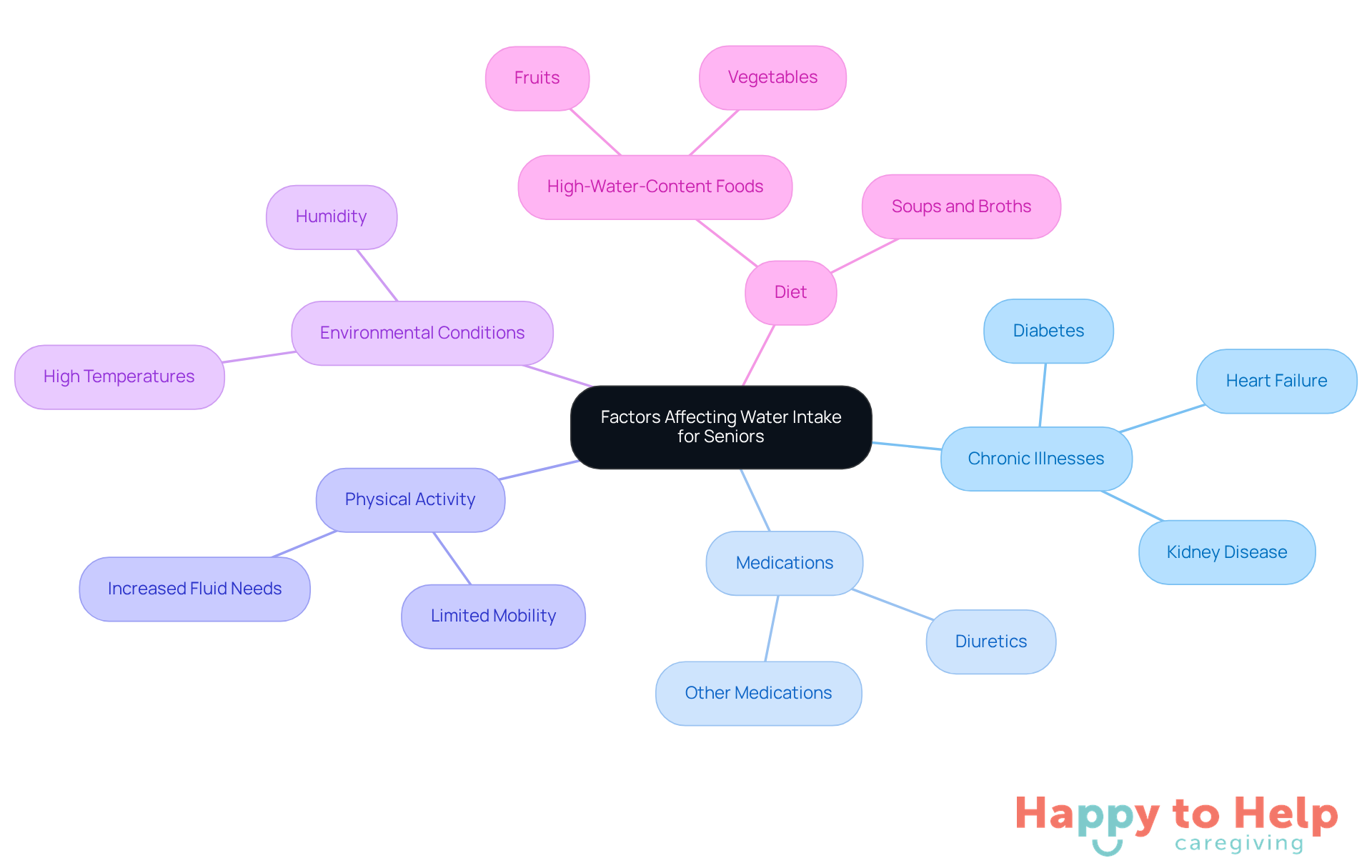
Several factors significantly influence how much water should an elderly person drink, particularly when considering chronic illnesses and health conditions.
Problem: Seniors face unique hydration challenges due to various health conditions. Chronic illnesses like diabetes, kidney disease, and heart failure can substantially alter hydration needs. For instance, seniors with diabetes may experience increased urination from high blood sugar levels, raising their risk of dehydration. Similarly, those with kidney disease might struggle to retain moisture, necessitating careful monitoring of their fluid intake. Additionally, older adults aged 65 and above generally have lower fluid levels in their bodies compared to younger adults, making them more susceptible to dehydration.
Agitate: Medications can further complicate hydration. Certain drugs, particularly diuretics, can exacerbate fluid loss by increasing urination. This creates a cycle where seniors need to consume more beverages to compensate for the fluids lost due to medication effects. Symptoms of dehydration, such as dry mouth, dizziness, and dark yellow urine, should be closely monitored.
Solution: Caregivers can take proactive steps to ensure seniors stay hydrated. Seniors who engage in physical activity typically require additional fluids to replenish losses from sweating. Conversely, those with limited mobility may have lower fluid needs but still require regular reminders to drink to prevent dehydration.
Environmental conditions also play a role; high temperatures or elevated humidity can lead to increased sweating, making it essential for older adults to drink more liquids in these situations.
Diet is another critical factor. Foods with high water content, like fruits and vegetables, significantly contribute to overall hydration. Caregivers should encourage the inclusion of these foods in seniors' diets, as they can greatly enhance hydration. A general recommendation for how much water should an elderly person drink is to consume approximately 6 to 8 cups (48-64 ounces) of beverages daily, though this can vary based on health issues and activity levels.
By evaluating these elements individually, caregivers can determine the appropriate beverage intake for each elder, ensuring their hydration needs are met effectively.
Implement Strategies to Maintain Optimal Hydration
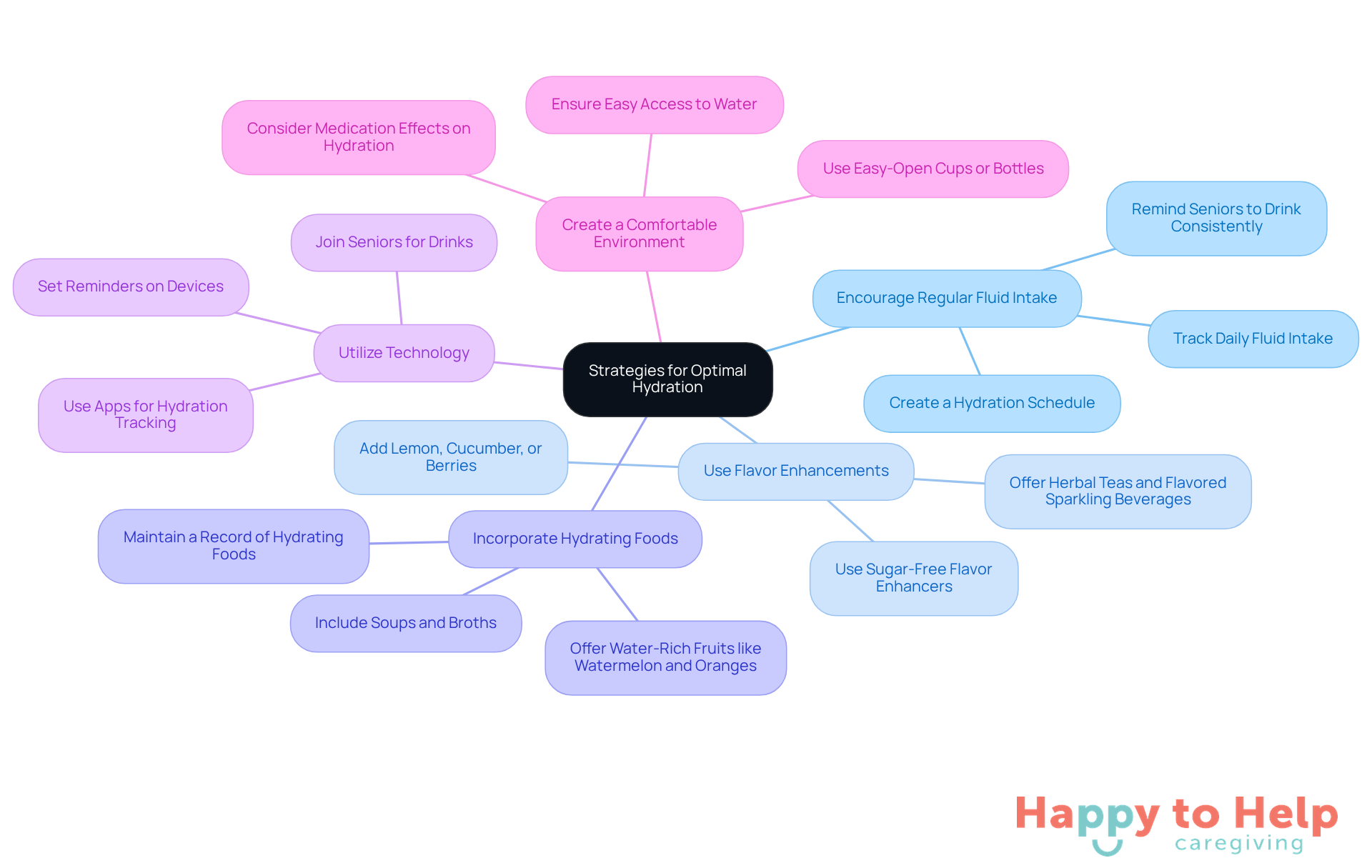
Caregivers face a significant challenge in helping seniors understand how much water should an elderly person drink to maintain optimal hydration, as many older adults may not drink enough fluids due to diminished thirst cues. This can lead to dehydration, which poses serious health risks. To combat this issue, caregivers can implement several effective strategies:
- Encourage Regular Fluid Intake: Remind seniors to drink water consistently throughout the day. Creating a hydration schedule can significantly enhance water intake. The current recommended daily fluid intake is 9 cups for women and 13 cups for men aged 65 and older, which leads to the question of how much water should an elderly person drink.
- Use Flavor Enhancements: Enhance the appeal of beverages by adding slices of lemon, cucumber, or berries. Herbal teas and flavored sparkling beverages can also motivate older adults to consume more fluids.
- Incorporate Hydrating Foods: Include meals rich in water content, such as soups, broths, and fruits like watermelon and oranges, to boost overall moisture levels. Maintaining a daily record of fluid intake can help ensure that elderly individuals know how much water should an elderly person drink to meet their hydration goals. Observing urine color can also provide insights; light yellow to clear urine suggests sufficient moisture, while dark yellow may indicate dehydration.
- Utilize Technology: Set reminders on phones or tablets to prompt seniors to drink fluids regularly. Caregivers can join them for drinks, fostering a social aspect around hydration that makes it more enjoyable.
- Create a Comfortable Environment: Ensure that water is easily accessible and consider using cups or bottles with easy-open lids or spouts to facilitate drinking. Be mindful of medications that may affect hydration, such as diuretics, which can increase fluid loss.
Your Path Forward
Understanding the hydration needs of elderly individuals is essential for their overall health and well-being. As age-related changes diminish the sensation of thirst and fluid retention capabilities, caregivers face a significant challenge: ensuring that seniors consume adequate amounts of water. The consequences of inadequate hydration can be severe, leading to health complications such as urinary tract infections and cognitive decline.
Key insights emphasize the recommended daily water intake - approximately 9 cups for women and 13 cups for men over 65. However, individual health conditions and environmental factors can affect these needs. Caregivers must adopt practical strategies to address this issue:
- Creating hydration schedules
- Incorporating water-rich foods
- Utilizing technology to remind seniors to drink fluids regularly
Recognizing the signs of dehydration and understanding the unique challenges faced by older adults can significantly enhance their quality of life. Caregivers hold the responsibility to advocate for and facilitate optimal hydration among seniors. By implementing these strategies and remaining aware of the factors influencing water intake, caregivers can make a meaningful difference in the health outcomes of the elderly.
Prioritizing hydration is not just about meeting a daily requirement; it’s about fostering a healthier, more vibrant life for those in their care.
https://iframe.tely.ai/cta/eyJhcnRpY2xlX2lkIjogIjY5Mjc5NGZlMWE3YzlhYWNlNmI1NGZiZiIsICJjb21wYW55X2lkIjogIjY4ZWU1ZGNhNzMxNzYyNTU3ZjNjOTVjMSIsICJpbmRleCI6IG51bGwsICJ0eXBlIjogImFydGljbGUifQ==Frequently Asked Questions
Why is hydration important for seniors?
Hydration is crucial for seniors as it plays a significant role in essential bodily functions like digestion, temperature regulation, and joint lubrication. Proper hydration helps prevent serious health risks, including urinary tract infections, kidney stones, and cognitive decline.
How much water should an elderly person drink daily?
The National Academy of Medicine recommends that men over 51 consume approximately 13 cups of water daily, while women should aim for about 9 cups. Individual health conditions and environmental factors can influence these needs.
What are the risks of dehydration in older adults?
Dehydration in older adults can lead to serious health issues such as urinary tract infections, kidney stones, cognitive decline, heat-related illnesses, heat stroke, and kidney failure.
What are some symptoms of dehydration to look out for in seniors?
Symptoms of dehydration in seniors include dry mouth, fatigue, and confusion. Recognizing these symptoms can lead to timely interventions to prevent severe complications.
How can caregivers help seniors maintain proper hydration?
Caregivers can promote hydration by encouraging consistent beverage consumption and incorporating water-rich foods into their clients' diets. Foods like watermelon, cucumbers, celery, lettuce, and tomatoes can significantly contribute to fluid intake.
What factors can increase the fluid needs of older adults?
Increased fluid needs can arise during warm weather or periods of physical exertion, as these conditions can lead to greater fluid loss and a higher risk of dehydration.
How do medications affect hydration in seniors?
Common medications can lead to increased fluid loss, which may exacerbate hydration challenges in older adults. Caregivers should be aware of these effects to better support hydration needs.
What role does social isolation play in hydration for seniors?
Social isolation can exacerbate challenges related to fluid balance in seniors, making it essential for caregivers to address this issue to ensure proper hydration.
List of Sources
- Understand the Importance of Hydration for Seniors
- Hydration in the Elderly | PortalCLÍNIC (https://clinicbarcelona.org/en/news/the-importance-of-hydration-in-older-people-during-extreme-heat)
- Good hydration linked to healthy aging (https://nhlbi.nih.gov/news/2023/good-hydration-linked-healthy-aging)
- Why Should Older Adults Stay Hydrated? (https://ncoa.org/article/10-reasons-why-hydration-is-important)
- Hydration and older adults: Why water matters more as you age (https://uclahealth.org/news/article/hydration-and-older-adults-why-water-matters-more-you-age)
- Identify Factors Affecting Water Intake Requirements
- Drink up: The importance of staying hydrated for seniors (https://morningjournalnews.com/news/local-news/2025/05/drink-up-the-importance-of-staying-hydrated-for-seniors)
- Angels: Risk of dehydration greater for older adults (https://morningjournalnews.com/news/local-news/2025/07/angels-risk-of-dehydration-greater-for-older-adults)
- The Connection Between Age and Dehydration Risk (https://health.clevelandclinic.org/drink-up-dehydration-is-an-often-overlooked-health-risk-for-seniors)
- Seniors Should Boost Their Water Intake; Here Are 6 Ways (https://morningstarseniorliving.com/seniors-should-boost-their-water-intake-here-are-6-ways)
- Hydration and older adults: Why water matters more as you age (https://uclahealth.org/news/article/hydration-and-older-adults-why-water-matters-more-you-age)
- Implement Strategies to Maintain Optimal Hydration
- Tips to Stay Hydrated - WelbeHealth (https://welbehealth.com/hydration-tips-for-seniors)
- Seniors Should Boost Their Water Intake; Here Are 6 Ways (https://morningstarseniorliving.com/seniors-should-boost-their-water-intake-here-are-6-ways)
- Hydration and older adults: Why water matters more as you age (https://uclahealth.org/news/article/hydration-and-older-adults-why-water-matters-more-you-age)
- What Older Adults Need to Know About Hydration (https://health.usnews.com/health-care/patient-advice/articles/what-older-adults-need-to-know-about-hydration)