
Why Choose the Right Elderly Companion Matters
Choosing the right elderly companion service can feel like navigating a complex maze. When the well-being of a loved one is at stake, the pressure can be overwhelming. These services provide essential support that enhances seniors' quality of life, yet the sheer variety of options can leave families feeling lost.
How can you ensure that you select a service that truly meets your loved one's unique needs? It’s not just about care; it’s about fostering a genuine connection with caregivers who understand and empathize with your situation. This guide explores the key factors to consider, empowering families to make informed decisions that prioritize both care and companionship.
Remember, you’re not alone in this journey. Many families face similar challenges, and there are compassionate services ready to help. Together, we can navigate this path with confidence and care.
Understand Elderly Companion Services
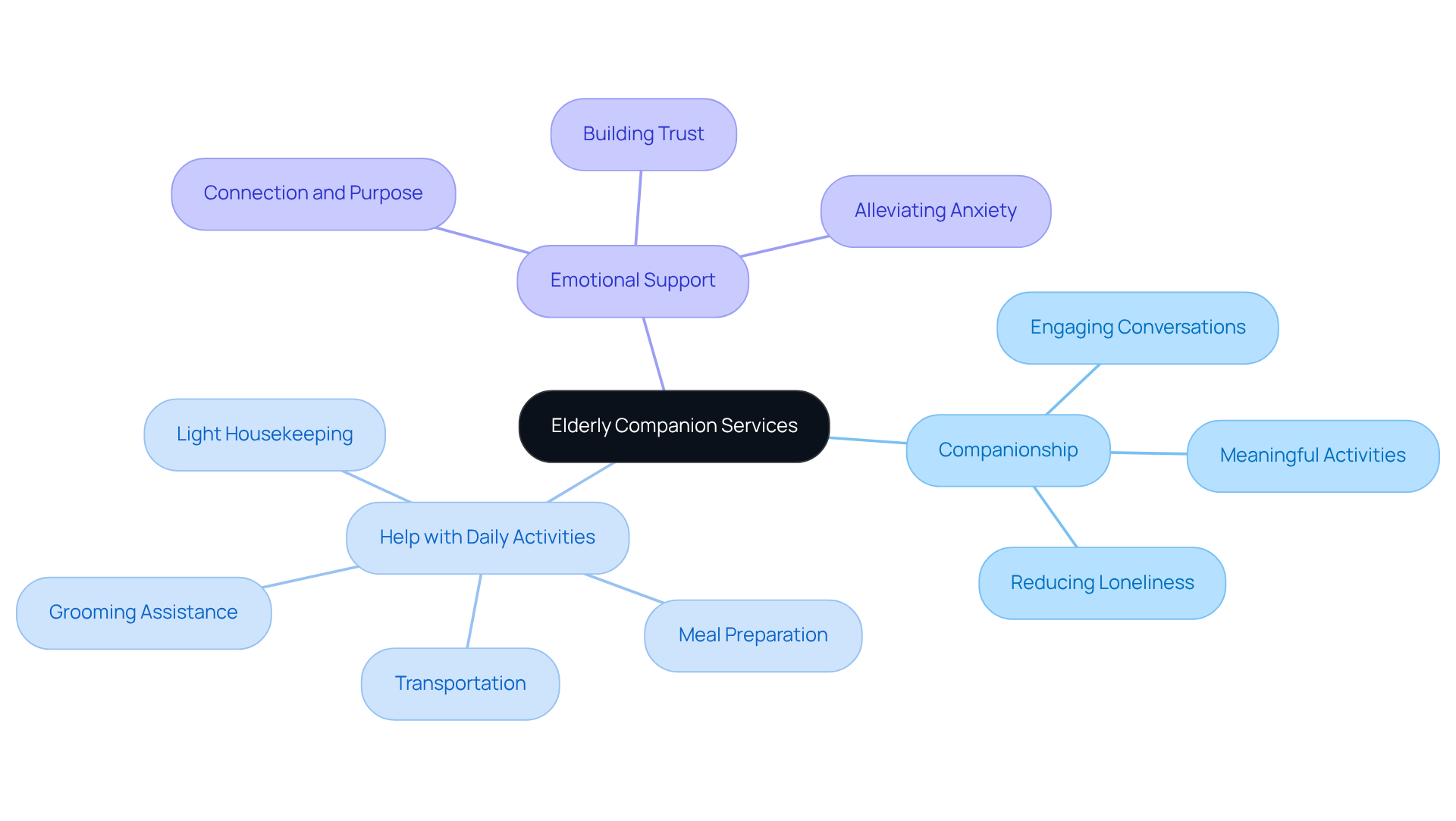
The elderly companion service options play a vital role in providing non-medical assistance to seniors, significantly enhancing their quality of life and promoting independence. These services are part of an elderly companion service that includes:
- Companionship
- Help with daily activities
- Emotional support
For example, companionship support focuses on alleviating loneliness by engaging seniors in meaningful conversations and enjoyable activities. Personal care assistance can also help with grooming and hygiene tasks, ensuring that seniors feel their best.
Moreover, practical support like meal preparation and light housekeeping can enrich seniors' daily lives, making their routines more manageable and enjoyable. In 2025, about 30% of seniors reported using companion assistance, reflecting a growing awareness of its importance. Alarmingly, 30% of seniors also indicated a lack of consistent companionship, underscoring the need for these services.
As noted by Happy to Help Caregiving, "older adults who utilize home assistance report 25% fewer doctor visits each year." This statistic highlights the health benefits that come with companionship. Understanding the various types of elderly companion service available is crucial for families seeking the best fit for their loved ones, ensuring that their unique needs and preferences are met.
The elderly companion service not only upholds seniors' dignity and independence but also alleviates concerns about being a burden. This support is essential for their overall well-being, fostering a sense of connection and purpose.
Evaluate Key Factors for Selection
Choosing an elderly companion service may seem overwhelming, but taking a moment to evaluate a few key factors can greatly benefit your loved one.
-
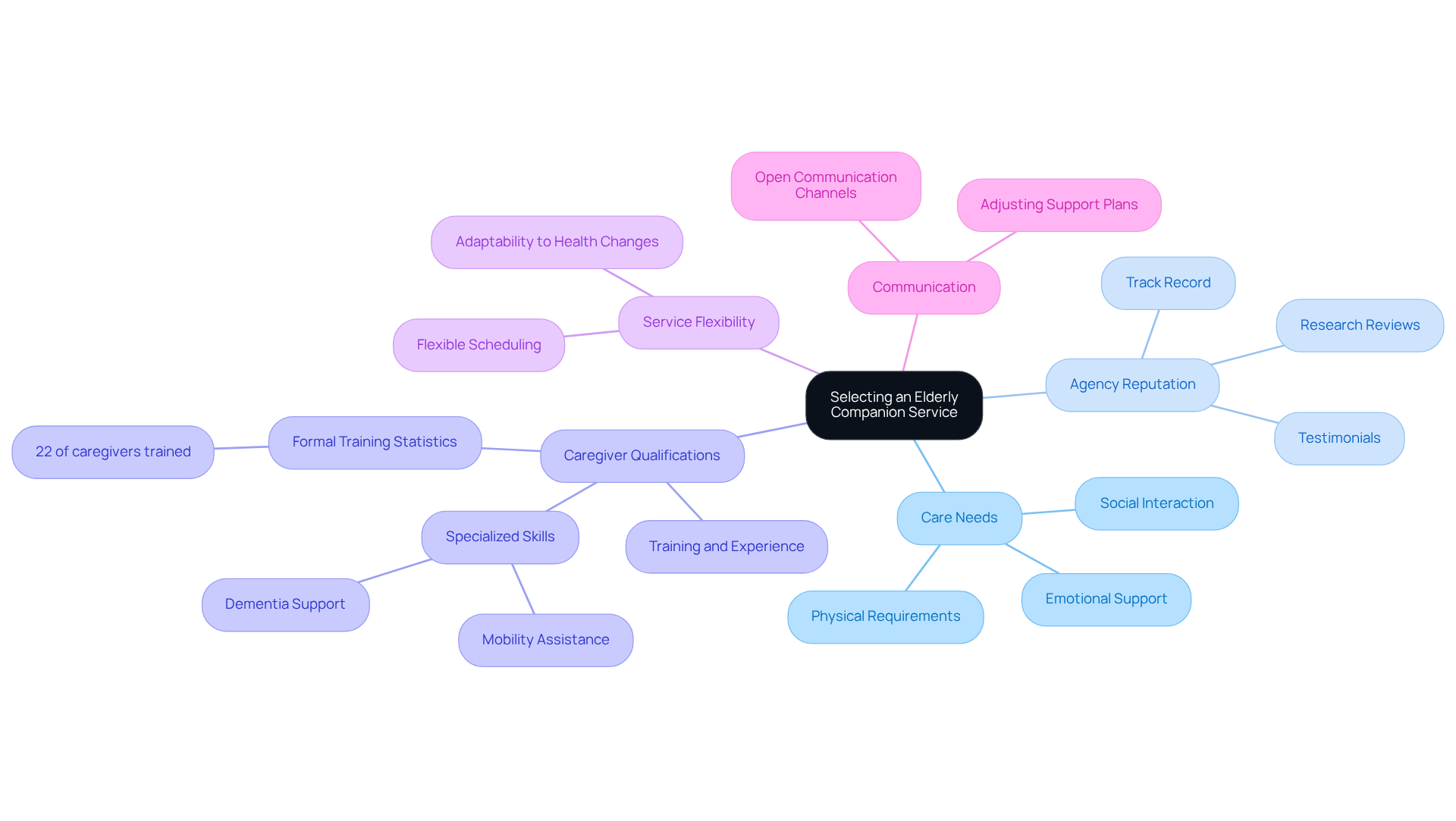
Care Needs: Begin by understanding the unique needs of your relative. Consider their physical, emotional, and social requirements. Recognizing these needs is essential for finding the right level of support that truly resonates with them.
-
Agency Reputation: Take the time to research potential agencies. Read reviews and testimonials to gauge their reputation. A reliable organization often has a proven track record of providing quality care, which is vital for your family member's well-being. For instance, Happy to Help Caregiving has garnered positive feedback for their personalized support strategies and compassionate approach.
-
Caregiver Qualifications: Don’t hesitate to ask about the training and experience of caregivers. It’s crucial to ensure that they possess the necessary qualifications to meet your loved one’s specific needs, especially in areas like dementia support or mobility assistance. It’s worth noting that only 22% of caregivers receive formal training, despite many providing high-intensity support. This highlights the importance of thorough investigation.
-
Service Flexibility: Look for agencies that offer flexible scheduling options. As health conditions evolve, having the ability to adapt is key to maintaining continuity of care. This flexibility can provide peace of mind for both you and your loved one.
-
Communication: Open and effective communication among the agency, caregivers, and family members is essential. This ensures that support plans are not only followed but also adjusted as needed to meet the changing needs of your family member.
By thoughtfully considering these factors, families can make informed decisions that significantly enhance the quality of care and support for their elderly relatives through an elderly companion service. Remember, with the average cost of a homemaker service being around $48,000 per year, understanding these elements can empower families to navigate their options with confidence.
Assess Compatibility and Caregiver Qualifications
Evaluating compatibility between your partner and the caregiver is crucial for effective caregiving. It’s important to ensure that both parties feel comfortable and understood. Here are some steps to help you find a good match:
-
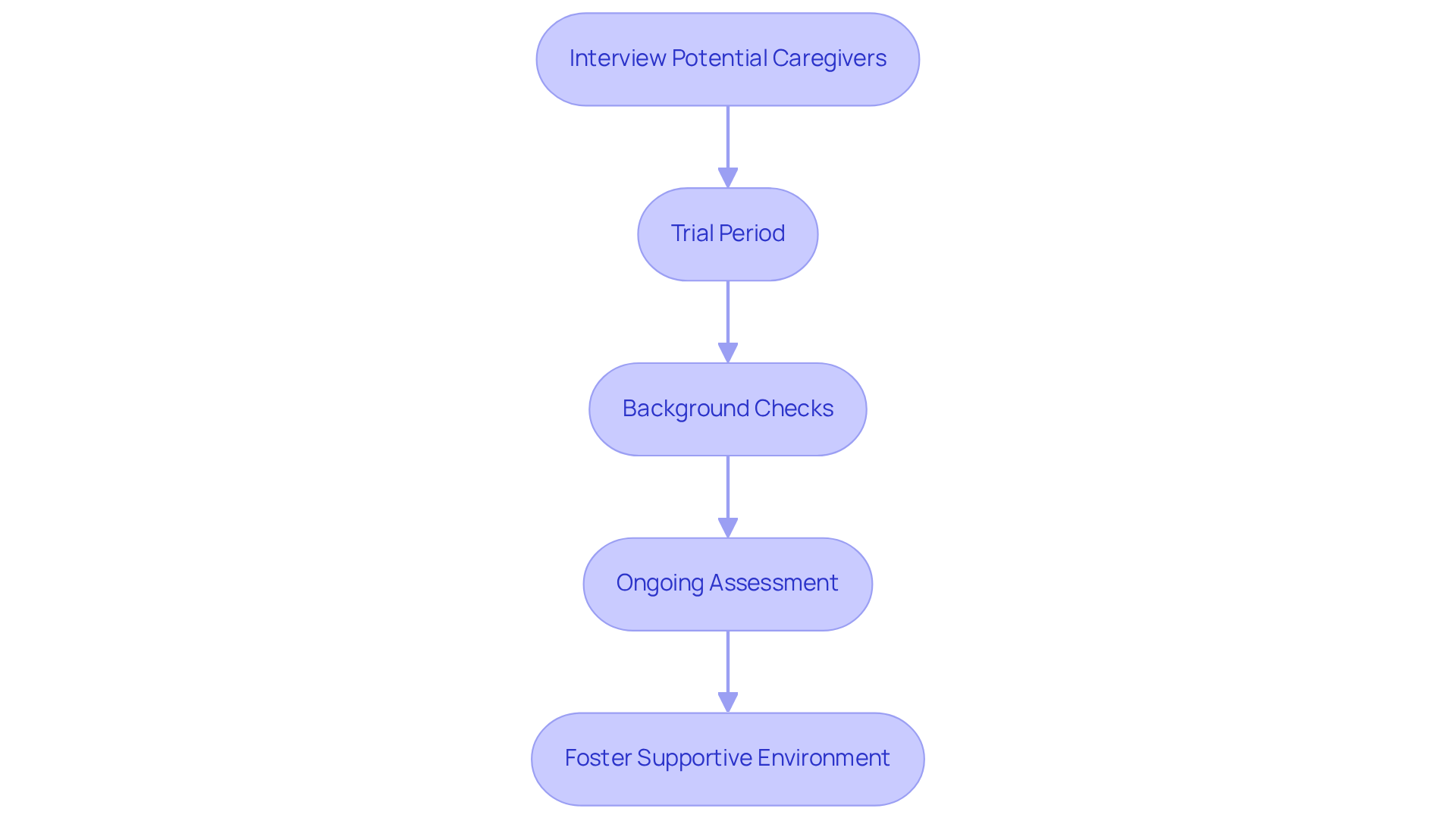
Interview Potential Caregivers: Start by conducting interviews to get a sense of their personality and communication style. Ask about their experiences with similar clients and how they handle specific situations. This can reveal a lot about their approach to care.
-
Trial Period: Consider organizing a trial phase where the caregiver can spend time with your family member. This allows everyone to assess comfort levels and compatibility. It’s a great way to see how they interact in a real-life setting.
-
Background Checks: Make sure that the agency conducts thorough background checks on caregivers. This includes verifying their qualifications, certifications, and references. Knowing that they have a solid background can provide peace of mind.
-
Ongoing Assessment: Regularly check in with your loved one and the caregiver to ensure that the relationship is working well. Address any issues promptly to maintain a positive dynamic.
Finding the right caregiver can be a journey, but with these steps, you can foster a supportive environment that prioritizes the well-being of your loved one through an elderly companion service.
Consider Cost and Payment Options
When considering the costs and payment options available for elderly companion service, it’s essential to think carefully.
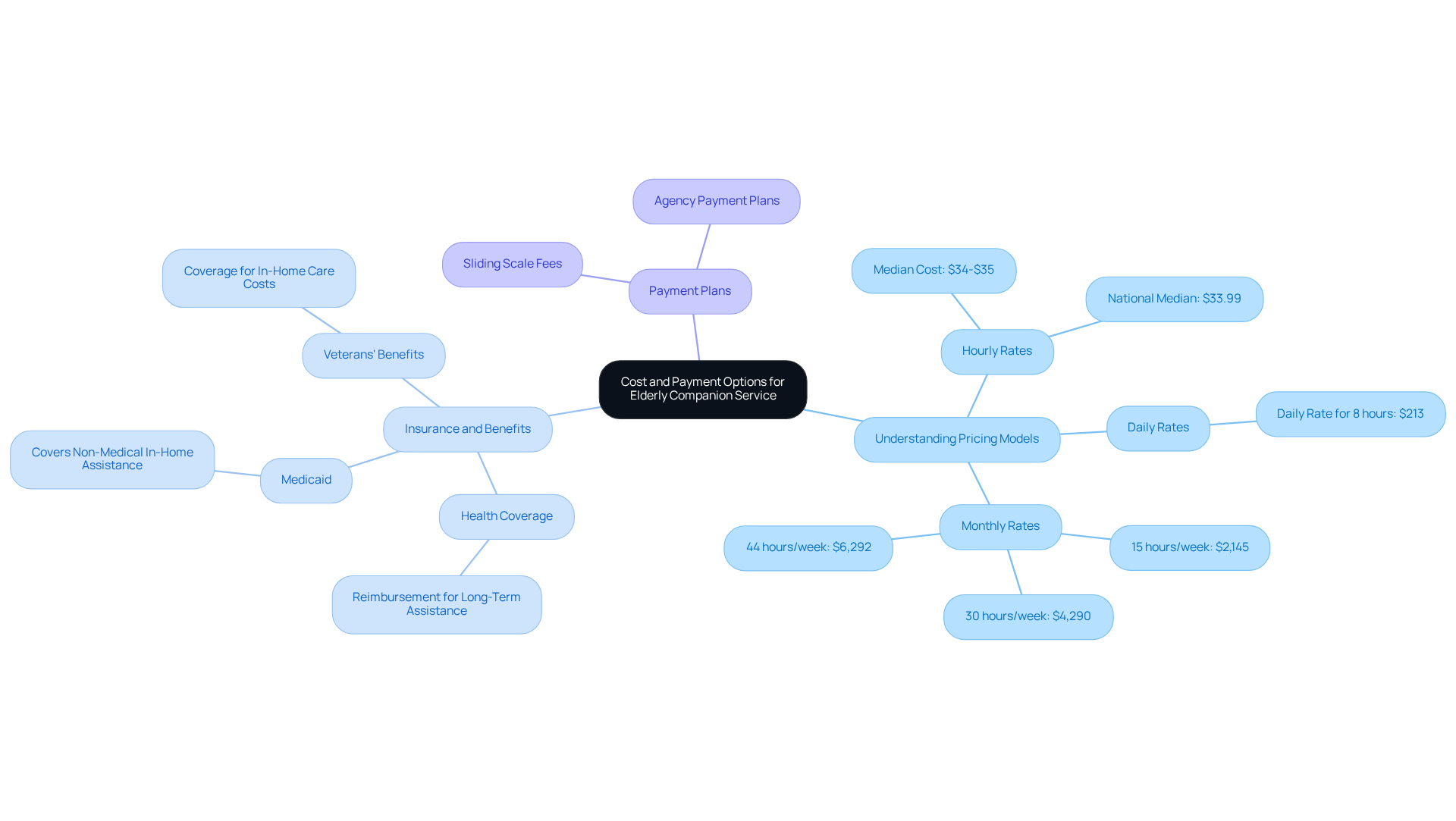
Understanding Pricing Models: Elderly companion service usually charges by the hour, day, or month. In 2025, the median cost for companion assistance ranges from $34 to $35 per hour, influenced by location and specific support needs. Knowing that the national median hourly wage for elderly companion service is $33.99 can help you budget more effectively by understanding local rates.
-
Insurance and Benefits: It’s worth exploring whether your loved one’s health coverage or long-term support insurance can help with companionship costs. Many policies allow for reimbursement of eligible long-term assistance, including elderly companion service, which can significantly ease out-of-pocket expenses. Additionally, Medicaid covers non-medical in-home assistance and healthcare, which can benefit those utilizing an elderly companion service by providing extra financial support. Veterans might also qualify for benefits that cover some or all of their in-home care costs provided by an elderly companion service.
-
Payment Plans: Don’t hesitate to ask agencies about any payment plans or sliding scale fees they might offer for their elderly companion service. These options can make elderly companion services more accessible and manageable, especially for families facing financial challenges.
Creating a detailed budget that includes all potential costs, particularly for an elderly companion service and any future services that may be needed, is crucial. For example, caring for someone for 15 hours a week can cost around $2,145 per month. Taking this proactive approach can help alleviate financial stress and ensure your loved one receives the support they need without unexpected expenses.
Your Path Forward
Choosing the right elderly companion service for a loved one is a journey that requires thoughtful consideration and a deep understanding of their unique needs. These services do more than just offer companionship; they play a vital role in enhancing the quality of life for seniors, helping them maintain their dignity and independence. By focusing on what truly matters to the individual, families can select a service that aligns beautifully with their loved one's lifestyle and preferences.
As you navigate this important decision, it’s essential to keep several key factors in mind. Take the time to:
- Understand the variety of services available
- Evaluate the reputations of different agencies
- Assess the qualifications of caregivers
Ensuring compatibility between the caregiver and the senior is crucial, as it fosters a trusting relationship. Additionally, considering the costs and exploring payment options can ease financial concerns, making it more manageable for families to provide the necessary support for their elderly relatives.
Ultimately, selecting the right elderly companion service goes beyond just finding assistance; it’s about nurturing meaningful connections and ensuring that seniors feel valued and cared for. By dedicating time to research and thoughtfully evaluate options, families can empower their loved ones to truly thrive in their golden years. The right companion can profoundly impact their lives, creating a positive environment that promotes well-being and happiness.
https://iframe.tely.ai/cta/eyJhcnRpY2xlX2lkIjogIjY5MWZhYzY0MDFkMDk4M2JlYjM1N2I2YyIsICJjb21wYW55X2lkIjogIjY4ZWU1ZGNhNzMxNzYyNTU3ZjNjOTVjMSIsICJpbmRleCI6IG51bGwsICJ0eXBlIjogImFydGljbGUifQ==Frequently Asked Questions
What are elderly companion services?
Elderly companion services provide non-medical assistance to seniors, enhancing their quality of life and promoting independence. These services include companionship, help with daily activities, and emotional support.
How do companionship services benefit seniors?
Companionship services help alleviate loneliness by engaging seniors in meaningful conversations and enjoyable activities, thereby improving their emotional well-being.
What types of assistance are included in elderly companion services?
Assistance includes companionship, personal care for grooming and hygiene, practical support such as meal preparation, and light housekeeping.
What statistics indicate the usage of companion assistance among seniors?
In 2025, about 30% of seniors reported using companion assistance, highlighting its growing importance. Additionally, 30% of seniors indicated a lack of consistent companionship.
What health benefits are associated with elderly companion services?
Older adults who utilize home assistance report 25% fewer doctor visits each year, indicating health benefits linked to companionship and support.
Why is understanding elderly companion services important for families?
Understanding the various types of elderly companion services is crucial for families to ensure they find the best fit for their loved ones, meeting their unique needs and preferences.
How do elderly companion services support seniors' dignity and independence?
These services uphold seniors' dignity and independence while alleviating concerns about being a burden, fostering a sense of connection and purpose in their lives.