
For families in our service areas
For families in our service areas, this guide explains dementia care and how non-medical in-home caregiving can support care planning in East Idaho, Treasure Valley & Magic Valley, Northern Wasatch, North Central West Virginia, and Northeast Ohio.
The Importance of Deal with a Parent with Dementia:
Navigating the complexities of dementia care presents a significant challenge for caregivers. Supporting a parent grappling with this progressive condition can be emotionally taxing and practically demanding. Understanding the multifaceted symptoms and stages of dementia is crucial; it equips caregivers with the knowledge needed to provide effective and compassionate support.
However, amidst the emotional toll and practical hurdles, caregivers often wonder: how can they ensure they are meeting the needs of their loved ones while also maintaining their own well-being? This article delves into essential strategies for managing dementia care, offering insights that empower caregivers to foster a safe, supportive environment while prioritizing their own health.
Understand Dementia: Symptoms and Stages
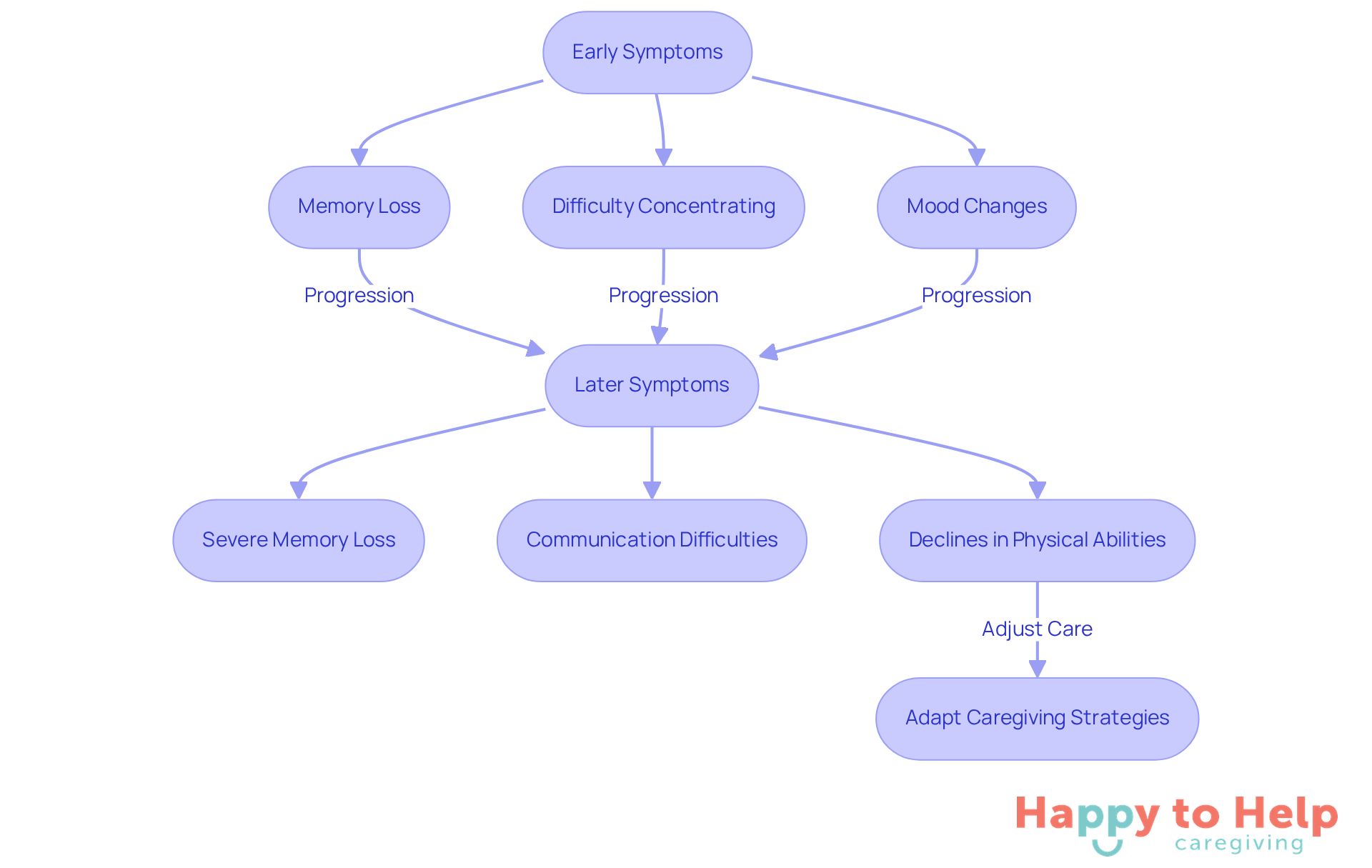
Caregivers face a significant challenge when learning how to deal with a parent with dementia, as it is a progressive condition that severely impacts memory, cognition, and behavior. It is crucial for providing effective support to understand how to deal with a parent with dementia, including its symptoms and stages. Early symptoms often include:
- Memory loss, particularly the inability to recall recent events or conversations.
- Difficulty concentrating and executing familiar tasks.
- Mood or personality changes, such as heightened anxiety or confusion.
As dementia progresses, symptoms can escalate, leading to:
- Severe memory loss, including the inability to recognize close family members.
- Communication difficulties, which may manifest as challenges in finding words or comprehending conversations.
- Declines in physical abilities, resulting in trouble walking or completing daily activities.
Recognizing these stages is essential for caregivers learning how to deal with a parent with dementia, as it allows them to anticipate needs and adjust care strategies accordingly. For instance, fostering independence is essential during the early stages, while later stages may require more direct assistance.
Recent studies indicate that structured support can significantly improve cognitive function in individuals with dementia, underscoring the importance of tailored caregiving approaches. Additionally, understanding the prevalence of dementia symptoms in senior populations-where two-thirds of Alzheimer's patients are female-highlights the necessity for caregivers to be well-informed and adaptable in their methods.
With the number of dementia patients and their supporters expected to nearly triple by 2050, it is imperative for caregivers to understand how to deal with a parent with dementia and stay informed with effective strategies. Programs like WECARE aim to enhance caregiving skills, providing valuable resources for those in this challenging role.
Create a Safe and Supportive Living Environment
Creating a safe and supportive environment is crucial when considering how to deal with a parent with dementia. Caregivers often face the challenge of understanding how to deal with a parent with dementia while ensuring safety and promoting independence. This can be daunting, as potential hazards in the home can lead to accidents and increased confusion for the individual.
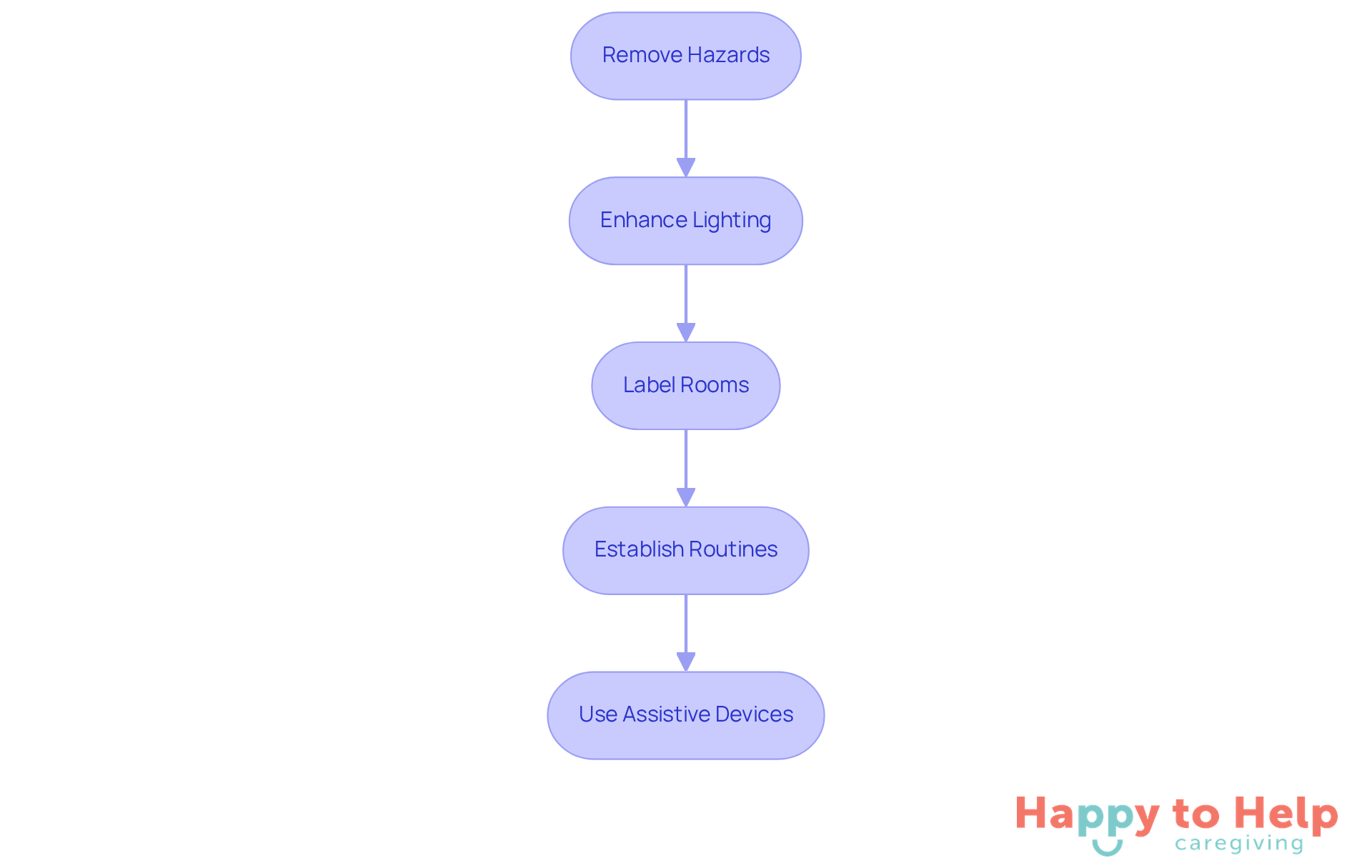
To address these concerns, consider the following actionable steps:
- Remove Hazards: Identify and eliminate potential dangers, such as loose rugs, sharp objects, or clutter that could lead to falls.
- Enhance Lighting: Ensure that all areas of the home are well-lit to reduce confusion and help with navigation. Use night lights in hallways and bedrooms.
- Label Rooms: Use clear labels or pictures on doors to help the person recognize different rooms and their purposes.
- Establish Routines: Consistent daily routines can provide structure and comfort, making it easier for the person to navigate their day.
- Use Assistive Devices: Consider installing grab bars in bathrooms, using non-slip mats, and providing mobility aids to enhance safety.
By implementing these changes, caregivers can foster a more secure and comforting environment that supports how to deal with a parent with dementia while promoting their independence and well-being.
Adapt Communication Methods for Effective Interaction
Caregivers often seek advice on how to deal with a parent with dementia, as effective communication can be challenging. Misunderstandings and frustration can arise, making interactions difficult. This can lead to feelings of isolation for both the caregiver and the individual with dementia.
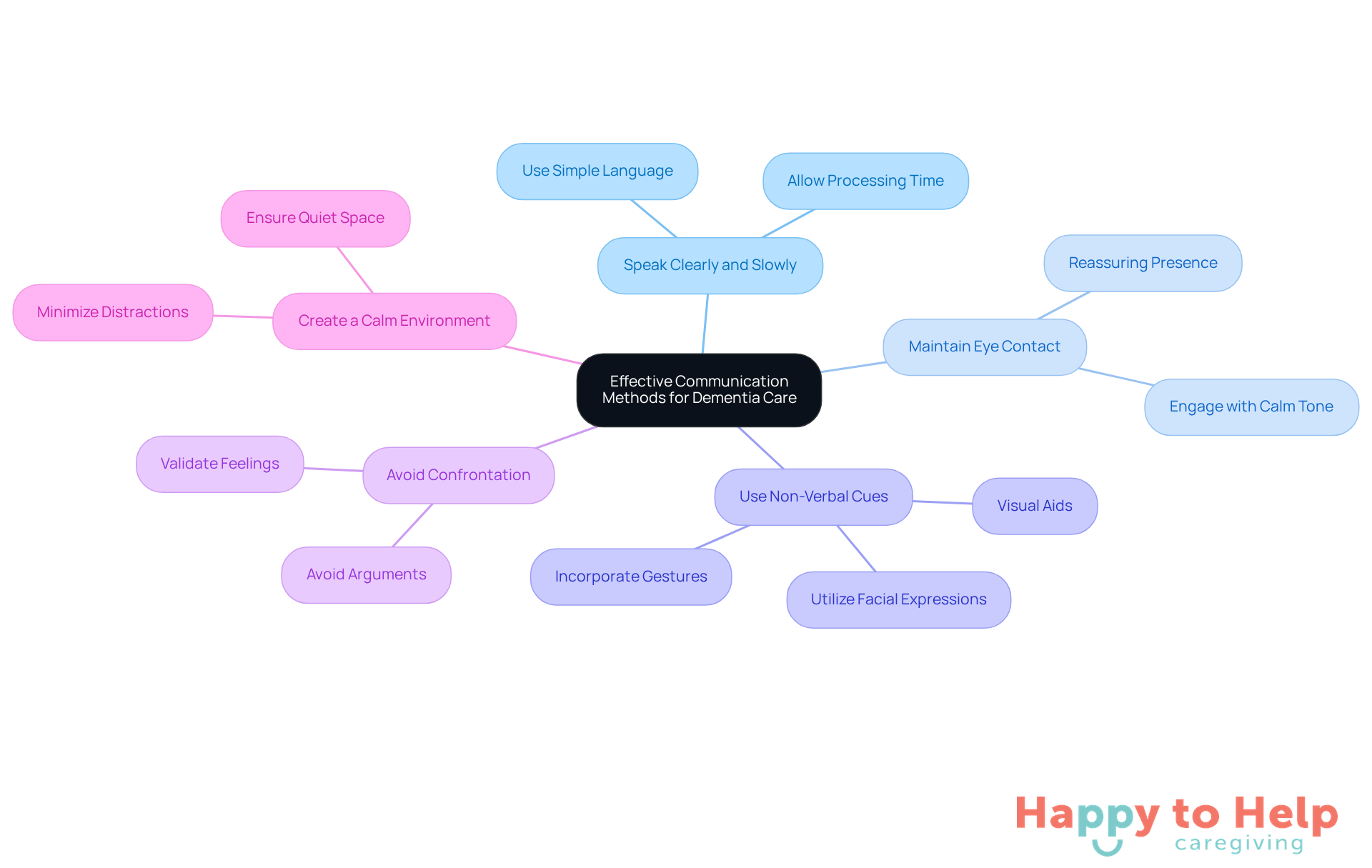
To address these challenges, here are some actionable strategies:
- Speak Clearly and Slowly: Use simple language and short sentences. Allow time for the person to process information and respond.
- Maintain Eye Contact: Engage the person by making eye contact and using a calm, reassuring tone.
- Use Non-Verbal Cues: Incorporate gestures, facial expressions, and visual aids to support verbal communication.
- Avoid Confrontation: If the person becomes confused or upset, validate their feelings rather than arguing or correcting them.
- Create a Calm Environment: Minimize distractions by reducing background noise and ensuring a quiet space for conversations.
By implementing these methods, caregivers can understand how to deal with a parent with dementia while fostering a more effective and compassionate communication approach. This not only honors the individual’s dignity but also significantly improves their quality of life.
Prioritize Caregiver Self-Care and Support
Caregivers often face significant challenges, including high levels of stress and the risk of burnout. Prioritizing self-care is essential for maintaining their capacity to provide effective support. Without proper self-care, caregivers may struggle to meet their own needs, which can negatively impact their ability to assist others.
To address these challenges, here are some actionable strategies:
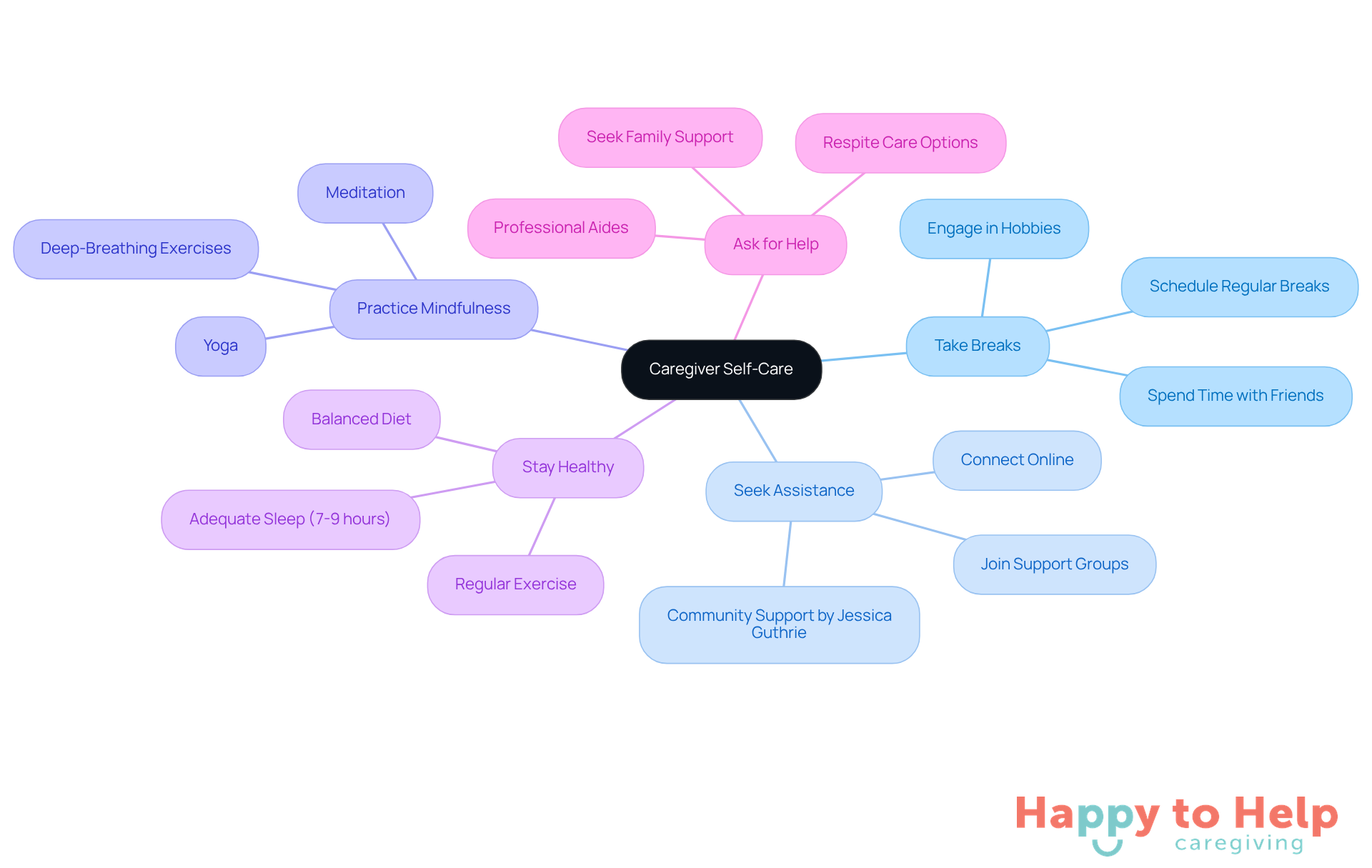
- Take Breaks: Schedule regular breaks to recharge. This can be through short walks, engaging in hobbies, or spending time with friends.
- Seek Assistance: Connect with other caregivers through support groups or online forums. Sharing experiences and advice can be invaluable. Jessica Guthrie has created a community that highlights the challenges and sacrifices of caregiving, offering valuable support.
- Practice Mindfulness: Engage in mindfulness practices such as meditation, yoga, or deep-breathing exercises to help reduce stress.
- Stay Healthy: Maintain a balanced diet, exercise regularly, and ensure adequate sleep. Caregivers should aim for 7 to 9 hours of sleep each night to combat fatigue and sustain energy levels, especially since over half of caregivers report experiencing extreme stress.
- Ask for Help: Don’t hesitate to seek support from family members or professional aides when needed. Respite care options are available and can significantly alleviate the caregiving burden.
Melissa Fisher emphasizes the importance of self-care, stating, "I learned that I had to make moments for myself, no matter what was happening." By taking care of their own needs, caregivers can provide better support to their loved ones, fostering a healthier dynamic for both parties.
Your Path Forward
Caring for a parent with dementia presents significant challenges for caregivers. The complexities of the condition can lead to feelings of frustration and isolation, making it crucial to adopt a comprehensive approach. This involves:
- Understanding dementia
- Creating a safe living environment
- Employing effective communication strategies
- Prioritizing self-care for caregivers
Recognizing the symptoms and stages of dementia is essential. This knowledge allows caregivers to tailor their support effectively, enhancing the quality of life for their loved ones. A safe and supportive environment promotes independence and minimizes the risk of accidents. Furthermore, adapting communication methods can lead to better interactions, reducing frustration for both caregivers and those they care for.
Self-care is not just a luxury; it’s a necessity for caregivers. By taking care of their own emotional and physical health, caregivers can sustain their energy and resilience, ultimately benefiting both themselves and their loved ones.
While the journey of caregiving is undeniably challenging, it can also be profoundly rewarding. By embracing these essential steps, caregivers empower themselves and reinforce the dignity and quality of life for those living with dementia. Seeking support, staying informed, and taking proactive measures are vital in creating a nurturing environment that honors the needs of both caregivers and their loved ones.
https://iframe.tely.ai/cta/eyJhcnRpY2xlX2lkIjogIjY5MjY2NjJiMTRjODUwNzI1NGI4N2FmYSIsICJjb21wYW55X2lkIjogIjY4ZWU1ZGNhNzMxNzYyNTU3ZjNjOTVjMSIsICJpbmRleCI6IG51bGwsICJ0eXBlIjogImFydGljbGUifQ==Frequently Asked Questions
What is dementia and how does it affect individuals?
Dementia is a progressive condition that severely impacts memory, cognition, and behavior, leading to significant challenges for both the individual and their caregivers.
What are the early symptoms of dementia?
Early symptoms of dementia often include memory loss (especially the inability to recall recent events), difficulty concentrating and executing familiar tasks, and mood or personality changes such as heightened anxiety or confusion.
How do dementia symptoms change as the condition progresses?
As dementia progresses, symptoms can escalate to severe memory loss (including the inability to recognize close family members), communication difficulties (such as challenges in finding words or understanding conversations), and declines in physical abilities (resulting in trouble walking or completing daily activities).
Why is it important for caregivers to recognize the stages of dementia?
Recognizing the stages of dementia is essential for caregivers as it allows them to anticipate needs and adjust care strategies accordingly, fostering independence in early stages and providing more direct assistance in later stages.
What impact does structured support have on individuals with dementia?
Recent studies indicate that structured support can significantly improve cognitive function in individuals with dementia, highlighting the importance of tailored caregiving approaches.
What demographic is most affected by dementia?
Dementia symptoms are particularly prevalent in senior populations, with two-thirds of Alzheimer's patients being female, emphasizing the need for caregivers to be well-informed and adaptable.
What is the expected trend for dementia patients and their caregivers by 2050?
The number of dementia patients and their supporters is expected to nearly triple by 2050, making it imperative for caregivers to stay informed about effective strategies for dealing with dementia.
What resources are available for caregivers of individuals with dementia?
Programs like WECARE aim to enhance caregiving skills by providing valuable resources and support for those in the challenging role of caring for individuals with dementia.
List of Sources
- Understand Dementia: Symptoms and Stages
- New Analysis Finds Dementia Caregivers More Likely to Report Modifiable Risk Factors that Increase Their Own Risk for Dementia (https://alz.org/news/2025/dementia-caregivers-modifiable-risk-factor-analysis)
- New NIA grant advances tools for dementia caregiving (https://news-medical.net/news/20251015/New-NIA-grant-advances-tools-for-dementia-caregiving.aspx)
- AAIC 2025: The future of Alzheimer’s research is here - Alzheimer's Research UK (https://alzheimersresearchuk.org/news/aaic-2025-the-future-of-alzheimers-research-is-here)
- Can we detect Alzheimer’s disease decades before symptoms start? (https://news.fiu.edu/2025/can-we-detect-alzheimers-disease-decades-before-symptoms-start)
- Alzheimer's Research Advances at AAIC 2025 | alz.org (https://aaic.alz.org/releases-2025/highlights-aaic-2025.asp)
- Adapt Communication Methods for Effective Interaction
- Study offers guidance for communicating with loved ones living with dementia (https://news-medical.net/news/20250827/Study-offers-guidance-for-communicating-with-loved-ones-living-with-dementia.aspx)
- Improv training: A new approach to dementia care | Emory University | Atlanta GA (https://news.emory.edu/stories/2025/01/hs\_improving\_dementia\_care\_through\_improv\_15-01-2025/story.html)
- Prioritize Caregiver Self-Care and Support
- Caregiver Well-Being (https://aarp.org/caregiving/well-being)
- Dementia care study highlights importance of caregiver self-efficacy (https://newsroom.ucla.edu/releases/dementia-care-study-highlights-importance-of-caregiver-self-efficacy)
- Self-Care for Caregivers - Charter Research (https://charterresearch.com/news/self-care-for-caregivers)
- Why self-care for caregivers matters | Kaiser Permanente (https://healthy.kaiserpermanente.org/health-wellness/care-stories/why-caregiver-self-care-matters)
- The Importance of Self Care for Caregivers - Alzheimer's San Diego (https://alzsd.org/importance-self-care-for-caregivers)