For families in our service areas
For families in our service areas, this guide explains caregiving and how non-medical in-home caregiving can support care planning in East Idaho, Treasure Valley & Magic Valley, Northern Wasatch, North Central West Virginia, and Northeast Ohio.
Understanding Find the Best Elderly Bathing Service
Finding the right bathing service for elderly loved ones can be a daunting task. Aging often brings challenges like decreased mobility and health concerns, making personal hygiene a struggle for many seniors. Families face the problem of navigating these complexities while ensuring safety, dignity, and comfort for their loved ones.
Understanding the unique needs of seniors is crucial. Many may experience physical limitations or cognitive impairments that complicate their ability to maintain personal hygiene. This situation can lead to feelings of frustration and helplessness for both seniors and their caregivers.
So, how can families address these challenges? This guide delves into essential steps and considerations to help caregivers make informed choices. By focusing on practical solutions, we aim to ensure that seniors receive the assistance they need while maintaining their independence.
Assess the Need for Bathing Assistance
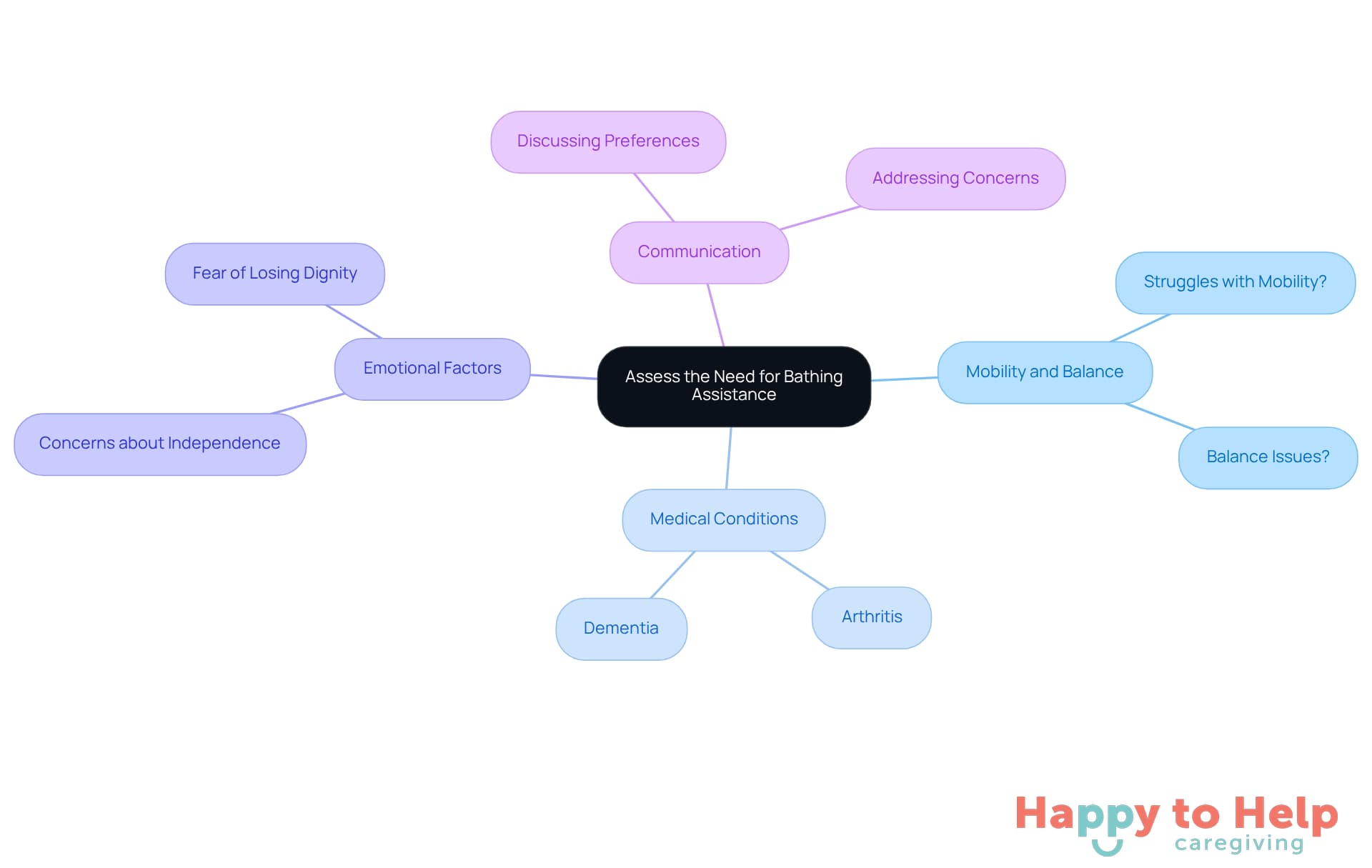
Start by observing your loved one's washing habits and physical abilities. Consider these questions:
- Does the individual struggle with mobility or balance?
- Are there any medical conditions that affect their ability to bathe independently, such as arthritis or dementia?
- How often do they require assistance, and what specific tasks do they need help with (e.g., getting in and out of the tub, washing, drying)?
Discussing washing preferences and concerns is essential. Many families find that open conversations can alleviate feelings of embarrassment or resistance to receiving help. For instance, one family noted that their elderly relative, initially reluctant to accept assistance, felt more at ease after discussing her worries about privacy and dignity during washing.
The prevalence of medical conditions like arthritis, which affects nearly 50% of seniors, significantly impacts their independence in personal hygiene, making the availability of an elderly bathing service near me crucial. Additionally, cognitive impairments such as dementia complicate the washing process, making it crucial to evaluate mobility and balance issues when considering an elderly bathing service near me. Geriatric care specialists emphasize that understanding these factors is vital for creating a secure washing environment. As one specialist stated, "The 'person-environment fit' theory recognizes that disability arises when an environment is not fit to a person’s capabilities."
Evaluating mobility and balance encompasses more than just physical ability; it also involves recognizing the emotional factors tied to washing. Caregivers should understand that many elderly individuals may resist assistance due to fears of losing independence. In fact, 42% of older individuals with recorded difficulties in personal hygiene or using the restroom lack equipment to assist them, highlighting the prevalence of unmet needs among the elderly. By fostering a trusting and supportive environment, families can help their loved ones maintain dignity while ensuring safety during the elderly bathing service near me.
Identify Key Criteria for Service Selection
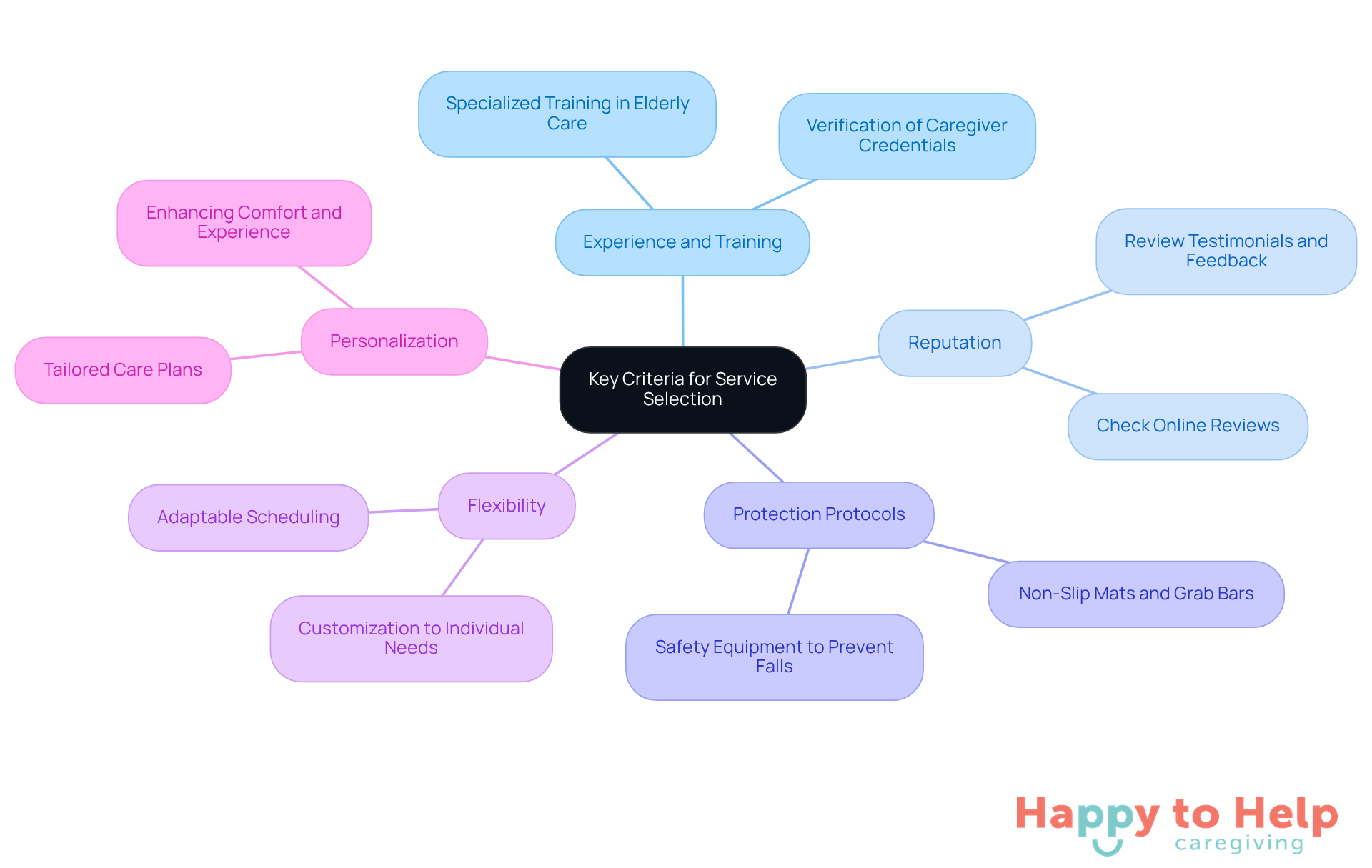
When selecting a bathing service for elderly care, several key criteria should guide your decision-making process:
-
Experience and Training: Caregivers must have specialized training in elderly care. This equips them to understand and address the unique needs of seniors effectively. Without proper training, caregivers may struggle to handle challenges that arise during bathing assistance. Verify the credentials of caregivers, as some home care providers may lack verified qualifications.
-
Reputation: The establishment's reputation is crucial. Review testimonials and feedback from other families. Favorable feedback can provide valuable insights into the quality of assistance and the experiences of those who have used it. Checking online reviews and client feedback can help assess the reliability of the service.
-
Protection Protocols: Strong protective measures are essential. Look for features like non-slip mats, grab bars, and other safety equipment designed to prevent falls, which are a leading cause of injuries among individuals 65 and older. These measures ensure a secure environment for seniors.
-
Flexibility: Choose a service that offers flexible scheduling and can adapt to your loved one's specific needs. This adaptability is vital for ensuring comfort and consistency in care, leading to a more positive bathing experience.
-
Personalization: The bathing experience should be tailored to meet the individual preferences and needs of your loved one. A personalized care plan can significantly enhance the experience, making it more enjoyable and less stressful.
Research and Evaluate Local Bathing Services
Caregivers may find it daunting to locate reliable elderly bathing service near me for their loved ones. With around 44% of home care recipients needing help with daily tasks, including washing, it’s essential to select an elderly bathing service near me that effectively meets these needs. Here’s how to navigate this process:
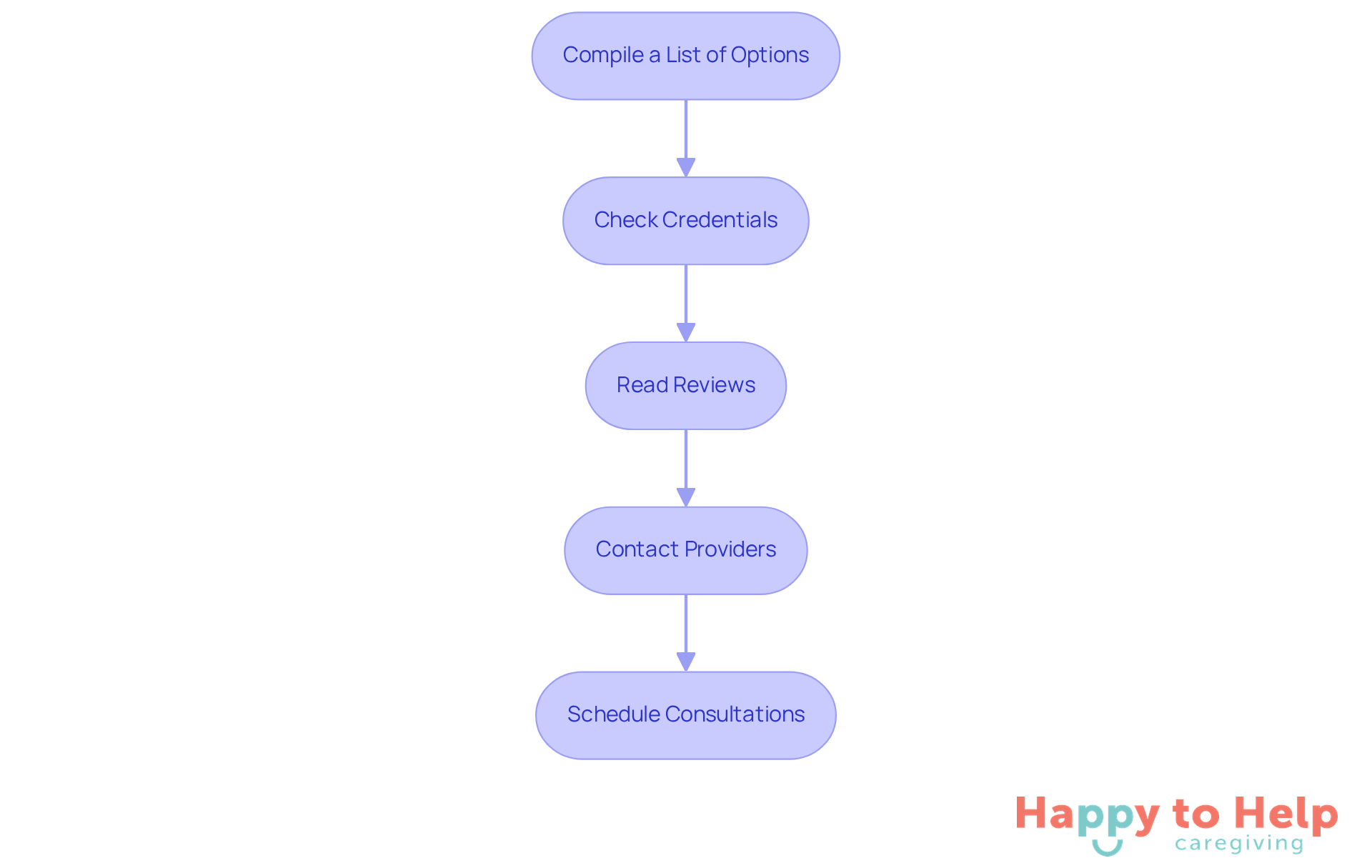
- Compile a list of options for elderly bathing service near me. Use online searches, seek recommendations from healthcare providers, and explore community resources to gather potential services.
- Check Credentials: Ensure that each provider is licensed and insured. Look for certifications that demonstrate adherence to quality standards in caregiving, as this is crucial for safety and reliability.
- Read Reviews: Investigate reviews on platforms like Yelp or Google. These insights can provide valuable perspectives on the experiences of other families, helping you gauge the quality of care offered.
- Contact Providers: Reach out to potential suppliers to inquire about their offerings, availability, and pricing. This initial interaction can also reveal their level of customer support and responsiveness.
- Schedule Consultations: Arrange for in-home assessments or consultations. Meeting caregivers in person allows you to discuss your loved one's specific needs and evaluate the caregivers' approach and compatibility.
By following these steps, families can ensure they select an elderly bathing service near me that prioritizes security, quality, and individualized care.
Ensure Safety and Comfort in Bathing Services
Problem: Safety and Comfort During Bathing
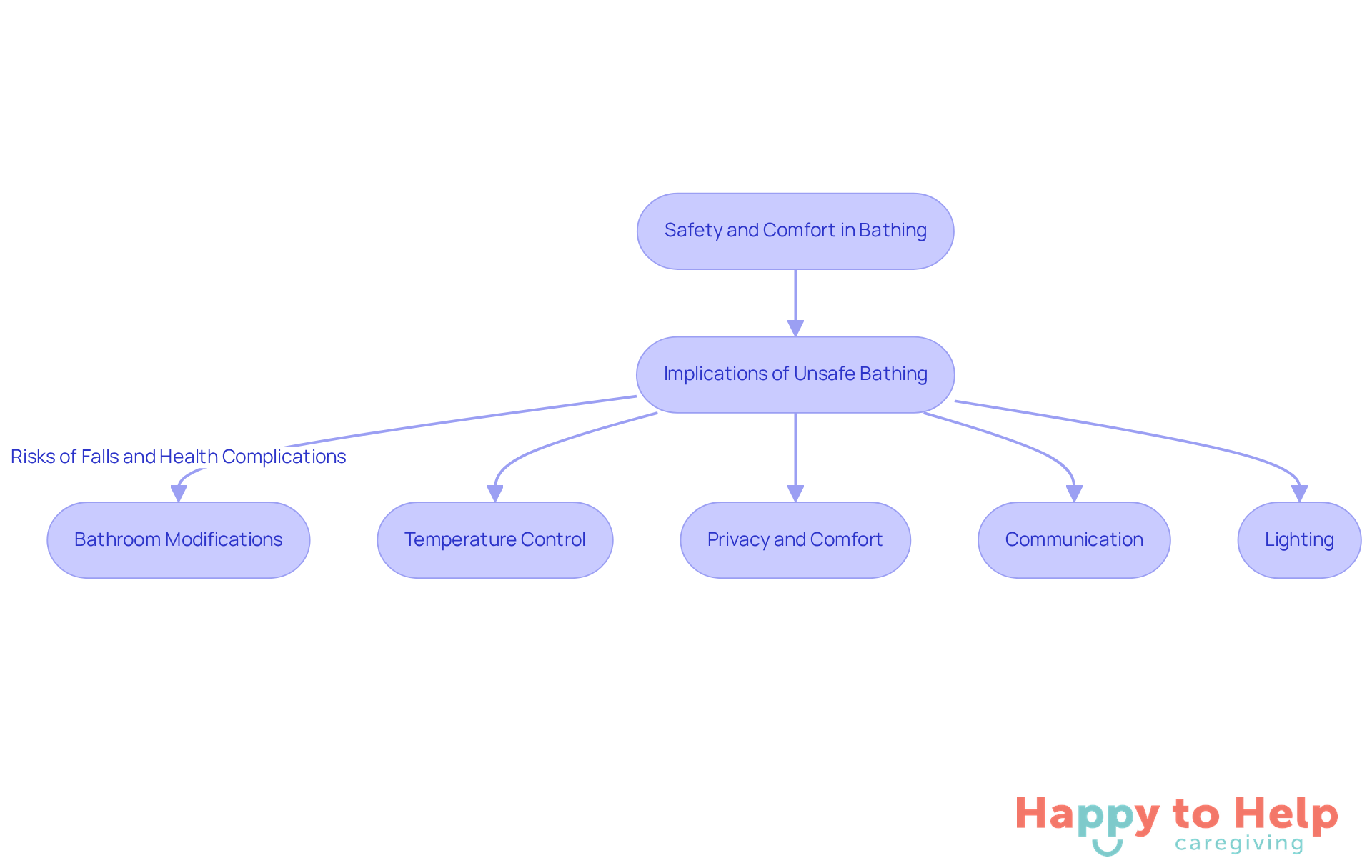
Bathing can pose significant risks for seniors, with the bathroom recognized as the most hazardous room in the house. Nearly 80% of falls occur there, making it crucial for caregivers to implement essential safety measures to protect their loved ones.
Agitate: The Implications of Unsafe Bathing
Without proper precautions, seniors face increased risks of falls and injuries, which can lead to serious health complications. Additionally, discomfort during bathing can diminish their sense of dignity and independence, further impacting their overall well-being.
Solution: Essential Measures for Safe Bathing
To enhance safety and comfort during bathing, consider the following strategies:
-
Bathroom Modifications: Install grab bars, non-slip mats, and a shower chair to significantly reduce the risk of falls. Elevated toilet seats and support frames are also vital for maintaining autonomy and lowering fall risk.
-
Temperature Control: Always check the water temperature before bathing to prevent burns. A thermometer can help ensure the water is at a safe level, ideally no hotter than 120 degrees Fahrenheit, minimizing scalding risks.
-
Privacy and Comfort: Create a warm, secluded bathing environment. This allows your loved one to feel secure and dignified, enhancing their overall experience and promoting independence.
-
Communication: Encourage open dialogue with caregivers about any discomfort or concerns during bathing. Effective communication is key to modifying care strategies and ensuring the needs of elderly individuals are met, particularly when considering an elderly bathing service near me. As Neal K. Shah notes, discussing the strategic placement of grab bars with older adults is crucial for their effectiveness.
-
Lighting: Improve bathroom illumination to prevent falls and disorientation. Bright, glare-free LED lights enhance visibility, making it easier for seniors to navigate the space.
Implementing these strategies not only enhances the bathing experience but also significantly contributes to the overall well-being of seniors at home.
Key Takeaways for Caregivers
Finding the right elderly bathing service presents a significant challenge for families, as it directly impacts the safety and dignity of loved ones who may struggle with personal hygiene. This issue can lead to feelings of anxiety and discomfort for both seniors and their caregivers. Therefore, it’s essential to thoroughly assess individual needs to identify the most suitable assistance that aligns with preferences and physical capabilities.
Key considerations in selecting a bathing service include:
- The experience and training of caregivers
- The reputation of the service provider
- Safety protocols in place
- The ability to offer personalized care
Researching local options, checking credentials, reading reviews, and scheduling consultations are crucial steps in making an informed decision. These measures contribute to a secure and supportive bathing environment, vital for the overall well-being of seniors.
Ultimately, prioritizing safety and comfort during bathing not only enhances the experience but also fosters a greater sense of autonomy for elderly individuals. By taking the time to evaluate needs and select the right service, families can ensure that their loved ones receive the compassionate care they deserve. This thoughtful approach allows seniors to maintain their dignity while navigating the challenges of aging.
https://iframe.tely.ai/cta/eyJhcnRpY2xlX2lkIjogIjY5MjI2NTA0OWEwZThiZmU5YWJhN2NiMiIsICJjb21wYW55X2lkIjogIjY4ZWU1ZGNhNzMxNzYyNTU3ZjNjOTVjMSIsICJpbmRleCI6IG51bGwsICJ0eXBlIjogImFydGljbGUifQ==Frequently Asked Questions
How can I assess the need for bathing assistance for my loved one?
Start by observing their washing habits and physical abilities. Consider questions such as whether they struggle with mobility or balance, if they have medical conditions affecting their ability to bathe independently, and how often they require assistance with specific tasks.
What should I discuss with my loved one regarding bathing assistance?
It is important to have open conversations about their washing preferences and concerns. Discussing worries about privacy and dignity can help alleviate feelings of embarrassment or resistance to receiving help.
What medical conditions commonly affect seniors' ability to bathe independently?
Conditions such as arthritis and dementia significantly impact seniors' independence in personal hygiene. Almost 50% of seniors are affected by arthritis, which can hinder their bathing capabilities.
Why is it important to evaluate mobility and balance when considering bathing assistance?
Evaluating mobility and balance is essential as it goes beyond physical ability; it also involves understanding the emotional factors tied to washing. Many elderly individuals may resist assistance due to fears of losing independence.
What is the significance of the "person-environment fit" theory in bathing assistance?
The "person-environment fit" theory emphasizes that disability can arise when an environment is not suited to a person's capabilities, making it crucial to create a secure washing environment tailored to the individual's needs.
How prevalent are unmet needs for bathing assistance among the elderly?
A significant number of older individuals, specifically 42%, who have difficulties with personal hygiene or using the restroom lack the necessary equipment to assist them, highlighting the prevalence of unmet needs.
How can families support their loved ones in maintaining dignity during bathing?
Families can foster a trusting and supportive environment, which helps their loved ones maintain dignity while ensuring safety during bathing assistance.
List of Sources
- Assess the Need for Bathing Assistance
- Aging: Family Caregiver Support Programs (https://dhs.wisconsin.gov/aging/caregiver.htm)
- What Is Senior Home Care: Services, Costs and Tips for Aging in Place (https://health.usnews.com/senior-care/articles/senior-home-care-aging-in-place)
- Bathing Assistance for Elderly: Caregivers Guide (https://caregiveraction.org/bathing-assistance-for-elderly)
- Unmet Need for Equipment to Help With Bathing and Toileting Among Older US Adults - PMC (https://pmc.ncbi.nlm.nih.gov/articles/PMC7985819)
- Identify Key Criteria for Service Selection
- Factors to Consider When Choosing Senior Care - Senior1Care (https://senior1care.com/senior-care-advice/factors-to-consider-when-choosing-senior-care)
- Understanding the Different Eldercare Options (https://health.usnews.com/senior-care/articles/understanding-the-different-senior-care-options)
- How to Choose the Right Senior Living Facility: A Checklist - WTOP News (https://wtop.com/news/2025/04/how-to-choose-the-right-senior-living-facility-a-checklist)
- 5 Factors to Consider When Choosing Home Care Services – Care Partners (https://carepartners.us/5-factors-to-consider-when-choosing-home-care-services)
- Warning From Older Adults: Care for Aging in America Needs Urgent Rethinking (https://johnahartford.org/newsroom/view/warning-from-older-adults-care-for-aging-in-america-needs-urgent-rethinking)
- Research and Evaluate Local Bathing Services
- Aurora releases study to address needs of older adults and caregivers (https://denver7.com/news/front-range/aurora/aurora-releases-study-to-address-needs-of-older-adults-and-caregivers)
- 'More pressure on families.' Nearly half of US states are on the brink of a caregiving emergency (https://usatoday.com/story/news/health/2025/05/21/columbia-university-state-caregiving-study/83651201007)
- 2025 Home Care Statistics: Trends & Insights To Know (https://premierhcinc.com/blog/home-care-statistics)
- Products - Data Briefs - Number 454 - December 2022 (https://cdc.gov/nchs/products/databriefs/db454.htm)
- Ensure Safety and Comfort in Bathing Services
- Top Bathroom Safety Upgrades to Protect Elderly Loved Ones (https://americareny.com/en/blog/bathroom-safety-modifications-for-seniors)
- Age-in-Place Bathroom Design: 7 Upgrades for Senior Safety (https://bathtubmadenew.com/age-in-place-upgrades-for-senior-safety)
- All Care’s Senior Safety Tips for National Bath Safety Month (https://nhcares.com/blog/senior-safety-tips-national-bath-safety-month)
- Bathroom Safety for Seniors: Quick Tips to Prevent Falls and Common Injuries (https://jevshumanservices.org/bathroom-safety-tips-for-seniors)
- 8 Bathroom Updates for Aging in Place (https://realestate.usnews.com/real-estate/articles/bathroom-updates-for-aging-in-place)