

For families in our service areas
For families in our service areas, this guide explains va aid and attendance and how non-medical in-home caregiving can support care planning in East Idaho, Treasure Valley & Magic Valley, Northern Wasatch, North Central West Virginia, and Northeast Ohio.
Understanding Get Aid and Attendance Approval: A
Navigating the complexities of VA Aid and Attendance benefits presents a significant challenge for many veterans and their families. With around 16% of the 16.2 million veterans in the U.S. potentially eligible for this vital support, understanding the eligibility criteria and application process is crucial. However, this journey is often hindered by complex documentation requirements and the risk of application delays.
These obstacles can lead to frustration and uncertainty, making it difficult for veterans and their caregivers to secure the financial assistance necessary for daily living activities. So, how can they effectively navigate these hurdles?
The key lies in understanding the process and being prepared. Here are some actionable steps caregivers can take:
- Familiarize yourself with eligibility criteria: Knowing who qualifies can save time and effort.
- Organize documentation early: Gather necessary paperwork to avoid delays.
- Seek assistance: Don’t hesitate to reach out to veteran service organizations for guidance.
By taking these steps, veterans and their caregivers can better position themselves to receive the benefits they rightfully deserve.
Understand Eligibility Criteria for VA Aid and Attendance Benefits
To qualify for VA Aid and Attendance benefits, applicants face specific challenges that can complicate the process:
-
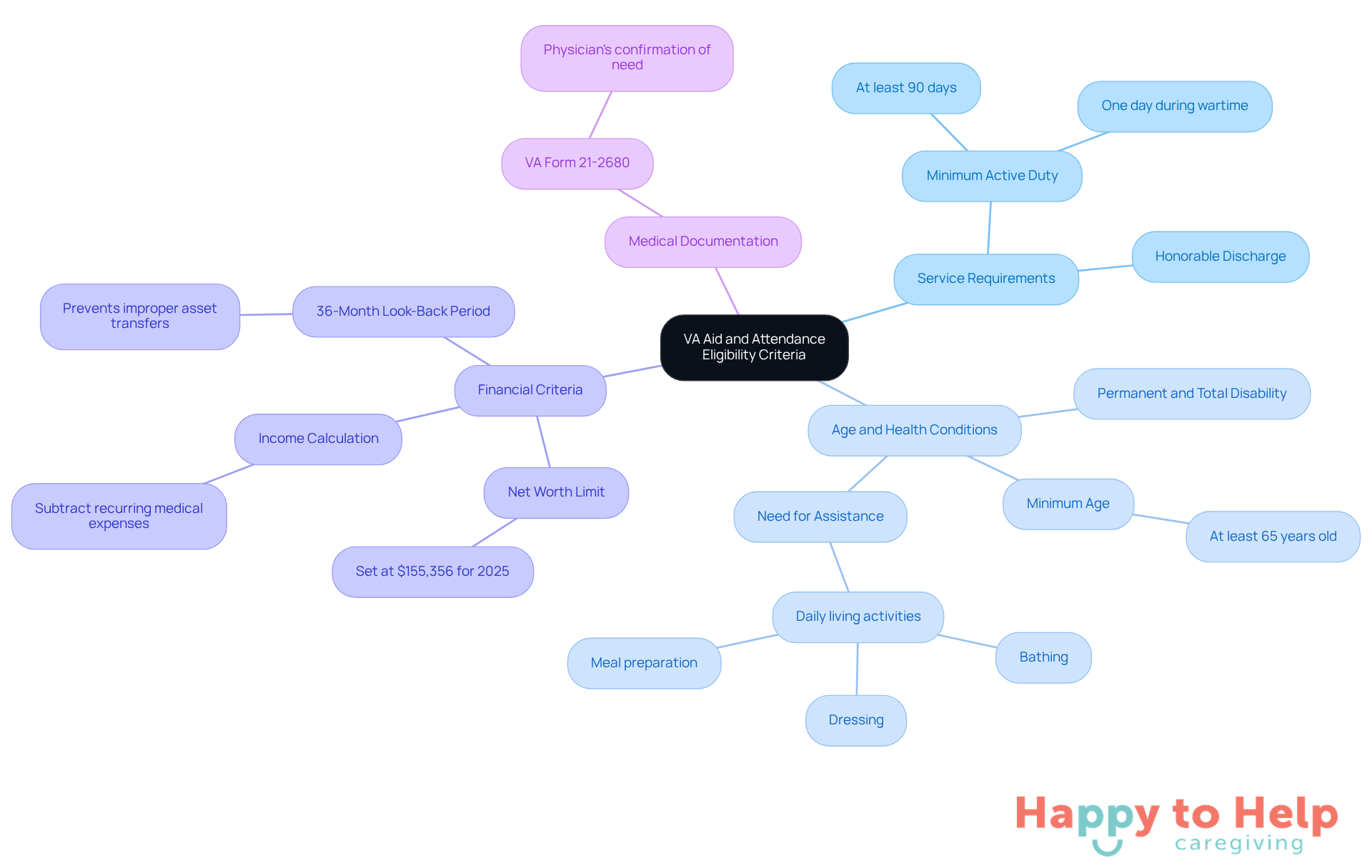
Service Requirements: Veterans must have served a minimum of 90 days of active duty, including at least one day during a recognized wartime period.
-
Age and Health Conditions: Applicants should be at least 65 years old or possess a permanent and total disability. They must also demonstrate a need for assistance with daily living activities, such as bathing, dressing, or meal preparation.
-
Financial Criteria: The VA imposes income and asset limits for eligibility. For 2025, the net worth limit is set at $155,356, allowing more veterans to qualify while maintaining financial thresholds. Income is calculated by subtracting recurring medical expenses from gross income, which can significantly impact eligibility. Additionally, it is important to note that the VA enforces a 36-month look-back period to prevent improper asset transfers.
-
Medical Documentation: A physician must confirm the need for assistance by completing VA Form 21-2680, which evaluates the applicant's health status and necessity for aid.
Understanding these criteria is crucial for veterans who want to know how to get aid and attendance approval, as around 16% of the 16.2 million veterans living in the U.S. may be eligible for Aid and Attendance assistance. This support can provide essential financial aid for those needing help with daily activities. Furthermore, the 2025 Cost-of-Living Adjustment (COLA) increases the Maximum Annual Pension Rates (MAPRs) by 2.5%, offering additional financial support for eligible veterans. By ensuring you meet these criteria, you can simplify the submission process for how to get aid and attendance approval and avoid unnecessary delays.
Follow the Application Process for Aid and Attendance Benefits
Caregivers often find it daunting to understand how to get aid and attendance approval when applying for Aid and Attendance benefits. The process is often complicated, requiring meticulous attention to detail and a thorough understanding of the necessary documentation. Without proper guidance, applicants may face delays or even denials, which can significantly impact their ability to receive the support they need.
To navigate this process effectively, follow these essential steps:
-
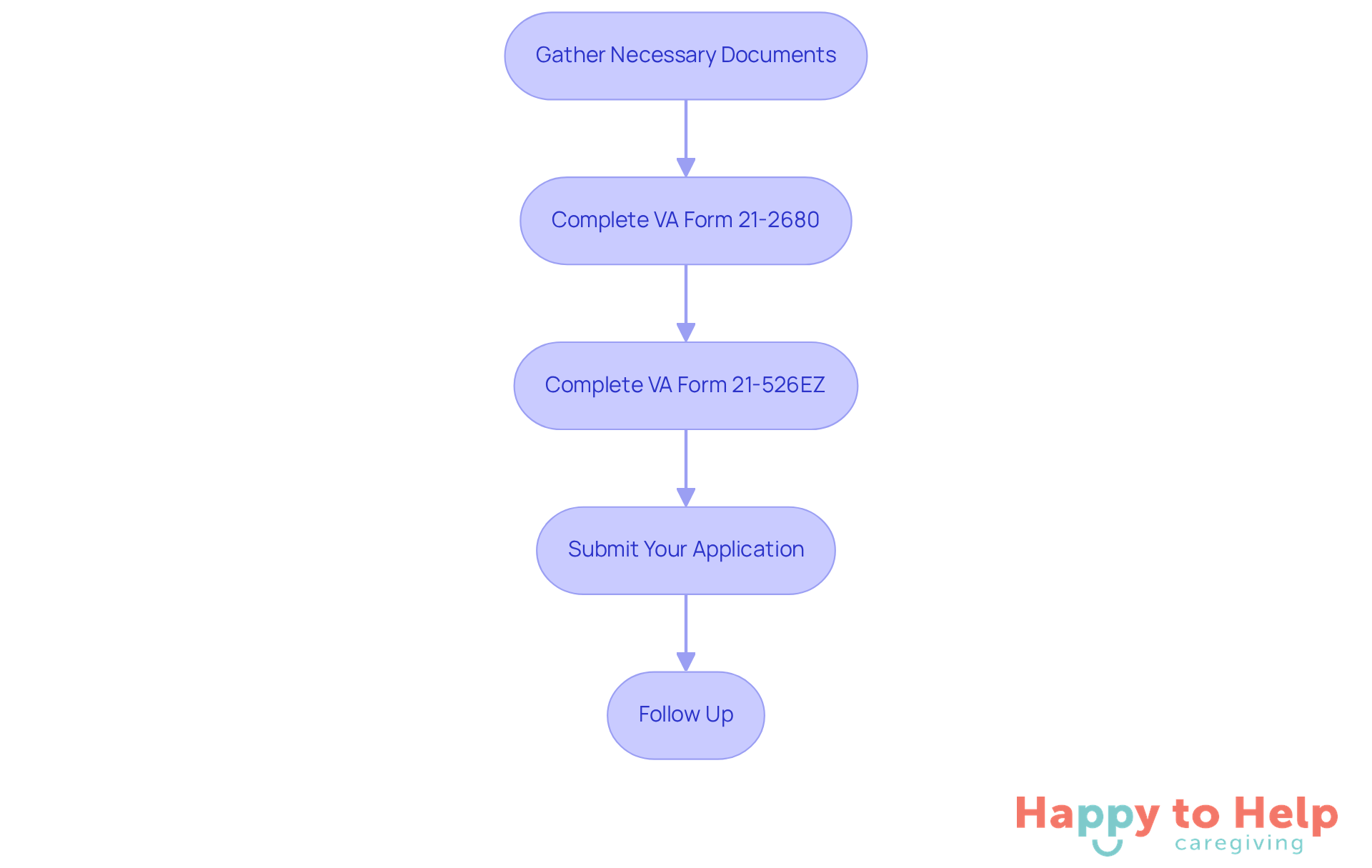
Gather Necessary Documents: Collect all required documentation, including proof of military service (DD-214), financial statements, and comprehensive medical records detailing your condition and daily care needs. Be sure to record all out-of-pocket medical expenses, as these can lower countable income and are essential for the submission process.
-
Complete VA Form 21-2680: This critical form must be filled out by a physician to evaluate the applicant's need for aid and attendance. Ensure that every section is accurately completed to avoid delays.
-
Complete VA Form 21-526EZ: This form acts as the request for disability compensation and associated support. Include all pertinent information to support your claim.
-
Submit Your Application: Send the completed forms and supporting documents to the appropriate Pension Management Center (PMC) for your state, which can be located on the VA's official website.
-
Follow Up: After submission, monitor your status. Contact the VA for updates or to provide any additional information they may request.
It's important to note that approval for Aid and Attendance assistance typically takes between 9 to 12 months. If you do not qualify now, changes in your medical condition, income, or assets may allow you to qualify in the future. Be cautious of improper asset transfers, as these can lead to penalties that affect your eligibility.
By carefully adhering to these steps and considering these crucial elements, you can enhance the thoroughness of your application, which will help you understand how to get aid and attendance approval, thereby increasing your chances of obtaining the benefits you deserve.
Navigate Common Challenges and FAQs in the Approval Process
Navigating how to get aid and attendance approval can be quite challenging. Many caregivers face significant hurdles that can lead to frustration and delays. Understanding these common issues can help you prepare and respond effectively.
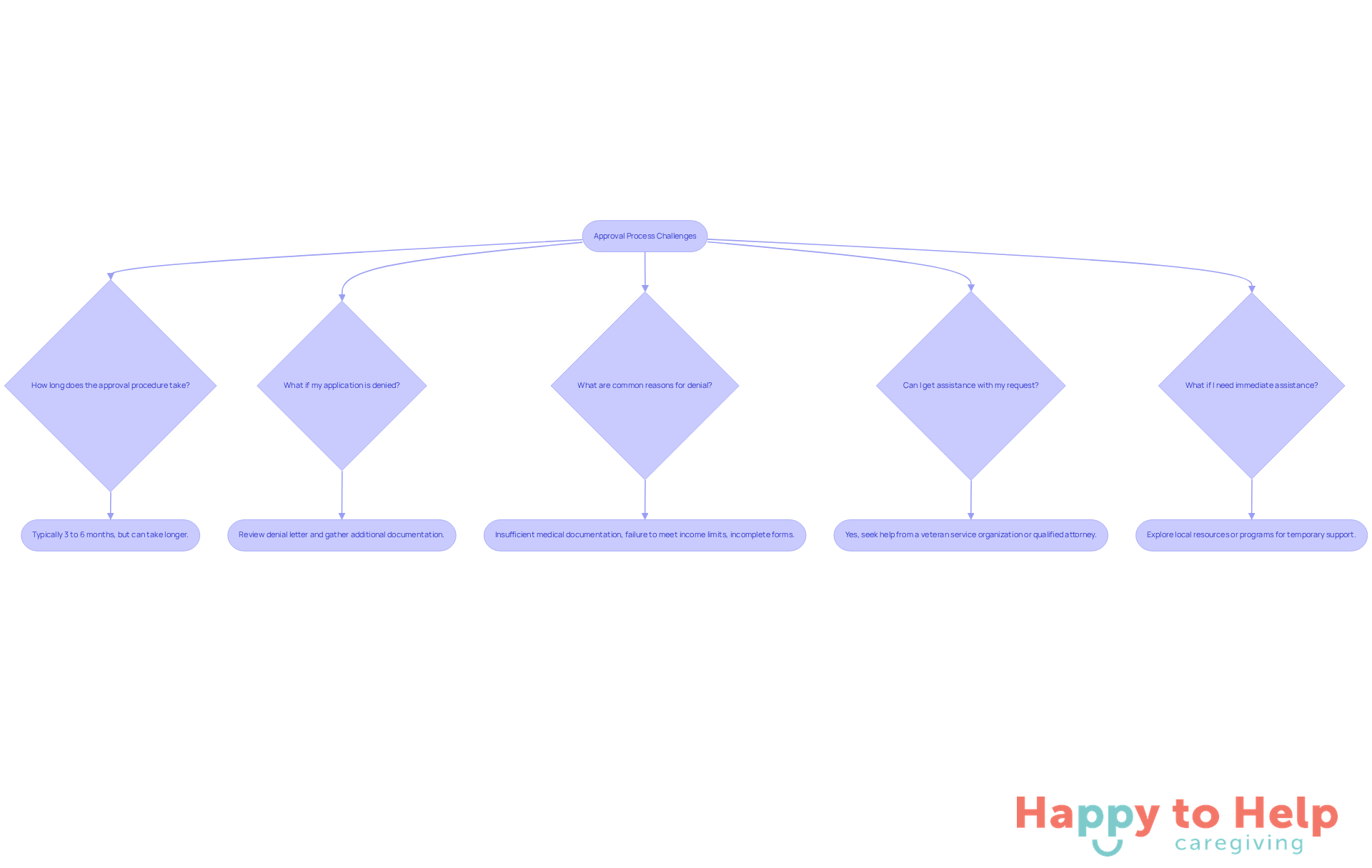
How long does the approval procedure take?
The VA typically processes applications within 3 to 6 months. However, it can take longer depending on the complexity of the case. Claims for Aid and Attendance benefits may take months or even years to obtain, so it's essential to be ready for potential delays.
What if my application is denied?
If your application is denied, you have the option to appeal the decision. Start by reviewing the denial letter for specific reasons and gather additional documentation to support your case. Many applicants have successfully navigated the appeals process by addressing the outlined deficiencies. Understanding the reasons for denial is crucial in strengthening your appeal, as noted by veterans' advocates.
What are common reasons for denial?
Common reasons for denial include:
- Insufficient medical documentation
- Failure to meet income or asset limits
- Incomplete forms
The VA reviews applicants' finances over the previous 36 months, ensuring that countable income does not exceed the pension amount and that net worth remains below $129,094. Additionally, applicants must meet at least one physical requirement to qualify for Aid and Attendance assistance, such as needing help with daily tasks or being bedridden.
Can I get assistance with my request?
Yes, consider seeking help from a veteran service organization or a qualified attorney who specializes in VA benefits. Expert assistance can guide you through the intricacies of the submission process and help you avoid common pitfalls.
What if I need immediate assistance?
If you are in urgent need of care, explore local resources or programs that may provide temporary support while your application is being processed. The VA may expedite applications for individuals over 90 years old or those in hospice care, ensuring that urgent needs are addressed promptly.
By being aware of these challenges and understanding how to get aid and attendance approval, you can navigate the approval process more effectively.
Your Path Forward
Understanding the process of obtaining VA Aid and Attendance benefits is crucial for veterans and their caregivers. Many face the challenge of navigating a complex approval process, which can be overwhelming. Without this support, veterans may struggle with daily living activities, impacting their independence and quality of life.
The eligibility criteria present a significant hurdle. Veterans must meet specific service requirements, age, health conditions, and financial limitations, along with the need for medical documentation. Gathering the required documents and completing essential forms can be daunting. Moreover, awareness of common challenges and potential reasons for application denial is vital. This knowledge can significantly enhance the likelihood of a successful outcome.
Securing Aid and Attendance benefits can mean the difference between maintaining independence and facing daily hardships. Therefore, it’s essential to approach the application process with diligence. Seek assistance when needed, and stay informed about eligibility criteria and potential obstacles. By doing so, veterans can better position themselves to receive the benefits that will improve their quality of life and provide necessary support during challenging times.
https://iframe.tely.ai/cta/eyJhcnRpY2xlX2lkIjogIjY5MjRmMWM3ZWM0Y2FiOGU3NGVjMDBhZCIsICJjb21wYW55X2lkIjogIjY4ZWU1ZGNhNzMxNzYyNTU3ZjNjOTVjMSIsICJpbmRleCI6IG51bGwsICJ0eXBlIjogImFydGljbGUifQ==Frequently Asked Questions
What are the service requirements for VA Aid and Attendance benefits?
Veterans must have served a minimum of 90 days of active duty, including at least one day during a recognized wartime period.
What age and health conditions must applicants meet to qualify?
Applicants should be at least 65 years old or have a permanent and total disability. They must also demonstrate a need for assistance with daily living activities, such as bathing, dressing, or meal preparation.
What are the financial criteria for eligibility?
The VA imposes income and asset limits for eligibility. For 2025, the net worth limit is set at $155,356. Income is calculated by subtracting recurring medical expenses from gross income. Additionally, the VA enforces a 36-month look-back period to prevent improper asset transfers.
What medical documentation is required for the application?
A physician must confirm the need for assistance by completing VA Form 21-2680, which evaluates the applicant's health status and necessity for aid.
How many veterans may be eligible for Aid and Attendance assistance?
Approximately 16% of the 16.2 million veterans living in the U.S. may be eligible for Aid and Attendance assistance.
What financial support does the 2025 Cost-of-Living Adjustment (COLA) provide?
The 2025 COLA increases the Maximum Annual Pension Rates (MAPRs) by 2.5%, offering additional financial support for eligible veterans.
List of Sources
- Understand Eligibility Criteria for VA Aid and Attendance Benefits
- New 2025 Updates to Veterans Benefits for Assisted Living (https://floridaseniorconsulting.com/updated-veterans-aid-and-attendance-benefits-for-assisted-living)
- VA.gov | Veterans Affairs (https://va.gov/vetdata)
- VA extends caregiver support program eligibility for “legacy” Veterans, caregivers (https://news.va.gov/press-room/va-extends-caregiver-support-program-eligibility-for-legacy-veterans-caregivers)
- Navigating Veterans Benefits: Your Guide to Aid and Attendance Options (https://mortonelderlaw.com/top-veterans-benefits-aid-and-attendance-eligibility-and-details)
- Upcoming Changes to Veterans Aid and Attendance Pension | KWGD (https://kwgd.com/news/upcoming-changes-to-veterans-aid-and-attendance-pension)
- Follow the Application Process for Aid and Attendance Benefits
- VA Aid and Attendance benefits and Housebound allowance | Veterans Affairs (https://va.gov/pension/aid-attendance-housebound)
- New 2025 Updates to Veterans Benefits for Assisted Living (https://floridaseniorconsulting.com/updated-veterans-aid-and-attendance-benefits-for-assisted-living)
- About VA Form 21-2680 | Veterans Affairs (https://va.gov/find-forms/about-form-21-2680)
- What to Know About Applying for the VA Aid & Attendance Benefit | The Herrick House (https://theherrickhouse.org/news-stories/all-news-stories/stories/2025/01/apply-va-aid-attendance-benefit)
- How to Get Aid and Attendance Approval | Hill & Ponton, P.A. (https://hillandponton.com/what-are-aid-and-attendance-va-benefits)
- Navigate Common Challenges and FAQs in the Approval Process
- VA Aid and Attendance: Make Sure Your Claim is "Fully Developed" - Critchfield, Critchfield & Johnston (https://ccj.com/va-aid-and-attendance-make-sure-your-claim-is-fully-developed)
- How Long Does the Aid & Attendance Application Process Take? (https://avcchomecare.com/aid-attendance-application-process-length)
- VA reduces backlog of Veterans waiting for VA benefits by 57% (https://news.va.gov/press-room/va-reduces-backlog-of-veterans-waiting-for-va-benefits-by-57)
- VA processes more claims in a single year than ever before (https://news.va.gov/press-room/va-processes-more-claims-in-a-single-year-than-ever-before)
- VA Chipping Away at Claims Backlog, Hopes to Process 2.5 Million Filings This Year (https://military.com/daily-news/2025/04/09/va-chipping-away-claims-backlog-hopes-process-25-million-filings-year.html)