How to Hire In-Home Caregivers: 5 Essential Steps for Families

For families in our service areas
For families in our service areas, this guide explains in-home care and how non-medical in-home caregiving can support care planning in East Idaho, Treasure Valley & Magic Valley, Northern Wasatch, North Central West Virginia, and Northeast Ohio.
Understanding Hire In-Home Caregivers: 5 Essential
Hiring in-home caregivers can be a daunting process for families. The emotional and financial aspects of care often create a heavy burden. Families must understand their loved one's specific needs, evaluate budget constraints, and decide between agency and independent caregivers. But what happens when the wrong choice leads to inadequate support or unmet expectations? This situation can leave families feeling frustrated and overwhelmed.
To address these challenges, this guide outlines five essential steps that empower families to make informed decisions. By following these steps, families can ensure that the care provided aligns with both the individual’s needs and the family’s values. With the right approach, navigating the hiring process can become a manageable and positive experience.
Assess Care Needs and Budget
-
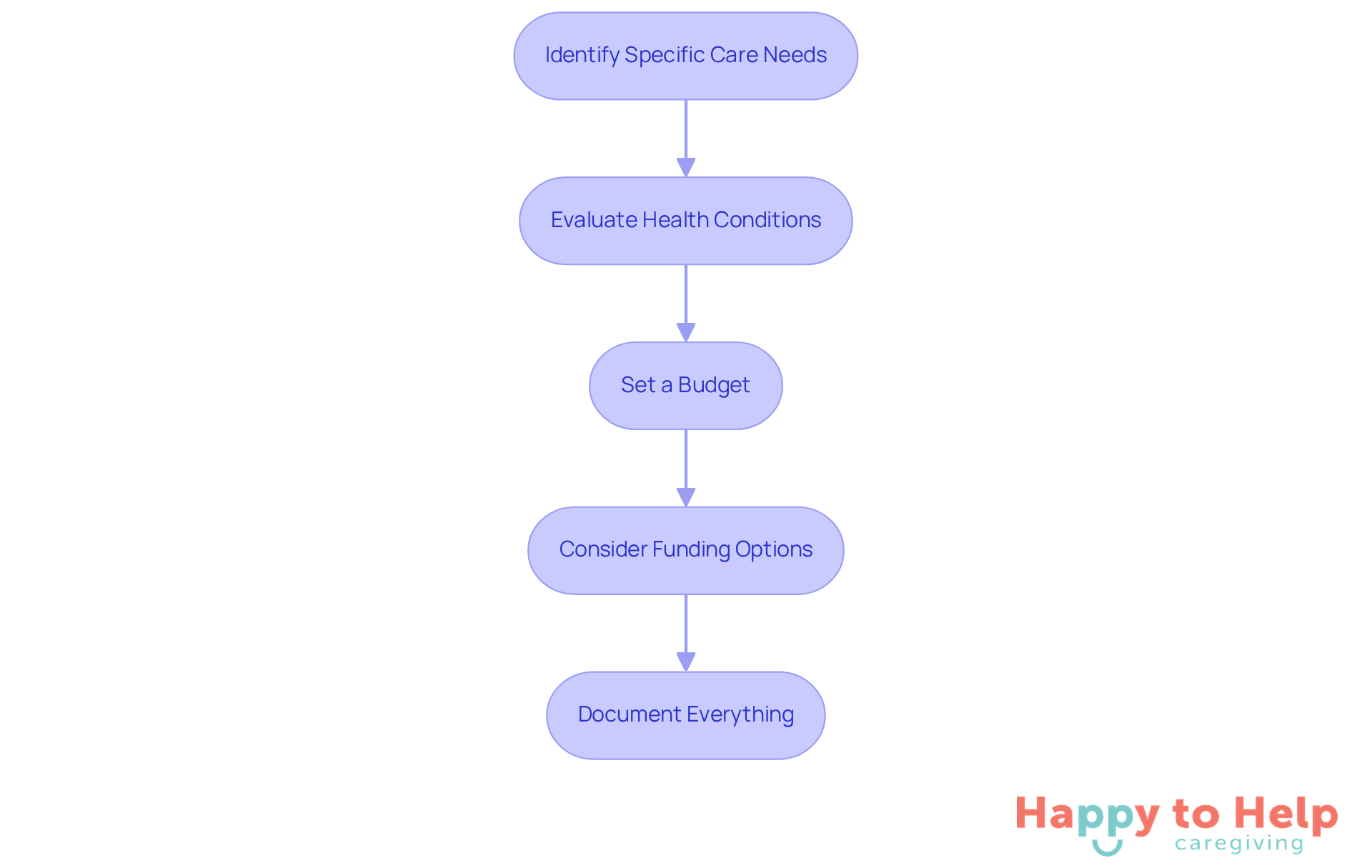
Identify Specific Care Needs: Engaging in conversations with your loved one and family members is crucial to pinpoint the exact types of assistance required. Daily activities such as bathing, dressing, meal preparation, medication management, and companionship are essential for maintaining quality of life.
-
Evaluate Health Conditions: Assess any medical conditions that may necessitate specialized assistance, including dementia, mobility challenges, or chronic illnesses. Understanding these needs helps identify the level of support necessary.
-
Set a Budget: Reviewing your financial situation is vital to establish a realistic budget for in-home assistance. In 2025, average costs for in-home caregivers range from $27 to $35 per hour, depending on the services needed and geographical location. For example, California may see rates closer to $32-$35 per hour, while Texas might average around $24-$26. The national median expense for non-medical home assistance is anticipated to be $33 per hour, providing a valuable reference point for families.
-
Consider Funding Options: Investigate potential funding sources that could alleviate some financial burdens, such as long-term support insurance, Medicaid, or veterans' benefits. Additionally, government programs and state Medicaid may offer subsidies or vouchers for home health services, significantly impacting your overall budget and helping cover essential expenses.
-
Document Everything: Compile a comprehensive list of support needs and budget constraints to reference throughout the hiring process. This documentation ensures you remain focused on how to hire in home caregivers who meet both the specific needs of your loved one and your financial parameters. Emphasizing the development of personalized care plans in collaboration with care providers will further ensure that the unique needs of individuals are met.
Choose Between Agency and Independent Caregiver
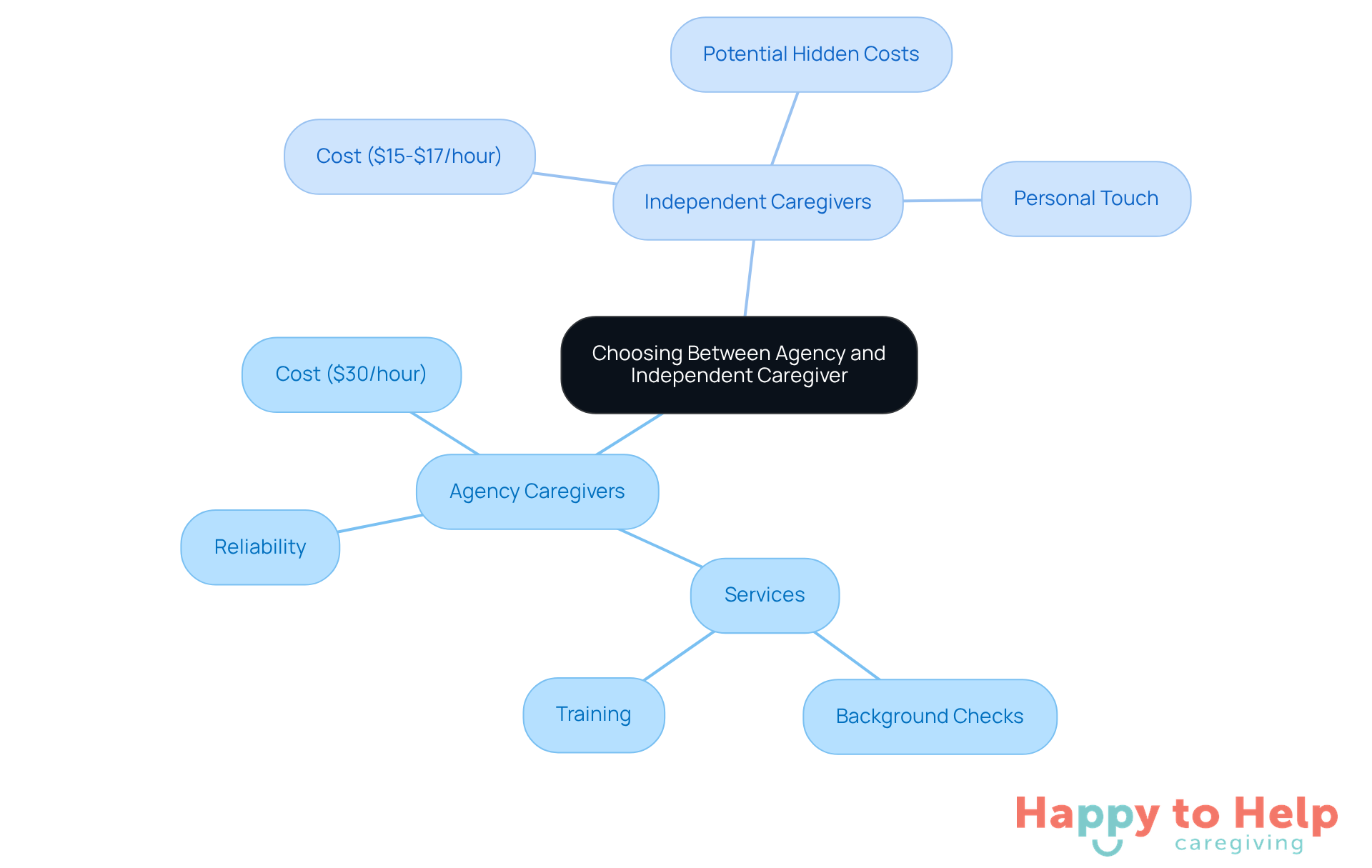
Understand the Differences: Choosing between an agency and an independent support worker can be challenging. Agencies typically handle background checks, training, and liability, which can provide peace of mind. However, they charge an average of $30 per hour, according to A Place for Mom’s 2024 Cost of Long-Term Care and Senior Living survey. This rate includes additional services like insurance and substitute support. On the other hand, independent providers usually charge between $15 and $17 per hour, offering a 20% to 30% cost savings. Yet, families must be aware of potential hidden costs related to supervision and oversight.
Evaluate Your Preferences: What does your family value in care? If consistency and reliability are priorities, an agency might be the better option. Conversely, if you prefer a more personal touch and can oversee the helper, hiring independently could work well. Just remember, taking this route means stepping into the employer role, which involves managing payroll and adhering to tax regulations.
Check Credentials: When opting for an independent provider, it’s crucial to verify their certifications and experience, especially if medication management is necessary. For agencies, ensure you check their reputation and the qualifications of their staff to guarantee quality care.
Assess Costs: It’s essential to compare the costs of both options. While agencies may charge higher rates, they often provide additional services like backup assistants and insurance. Independent caregivers might seem more economical, but families should remain vigilant about possible concealed expenses and responsibilities that come with managing them.
Make a Decision: After evaluating your options, choose the one that best aligns with your needs, budget, and comfort level. This decision should encompass not just financial aspects but also the level of support and oversight your family is ready to provide.
Interview and Compare Caregiver Candidates
Problem: Selecting the Right Care Provider
Choosing a caregiver for your loved one can be daunting. It’s essential to ensure that the individual not only has the right qualifications but also aligns with your family’s values and needs.
Agitate: The Risks of Inadequate Vetting
Failing to thoroughly vet potential caregivers can lead to mismatches that affect the quality of care. This can result in stress for both the caregiver and your loved one, potentially compromising their well-being.
Solution: Steps to Find the Right Care Provider
-
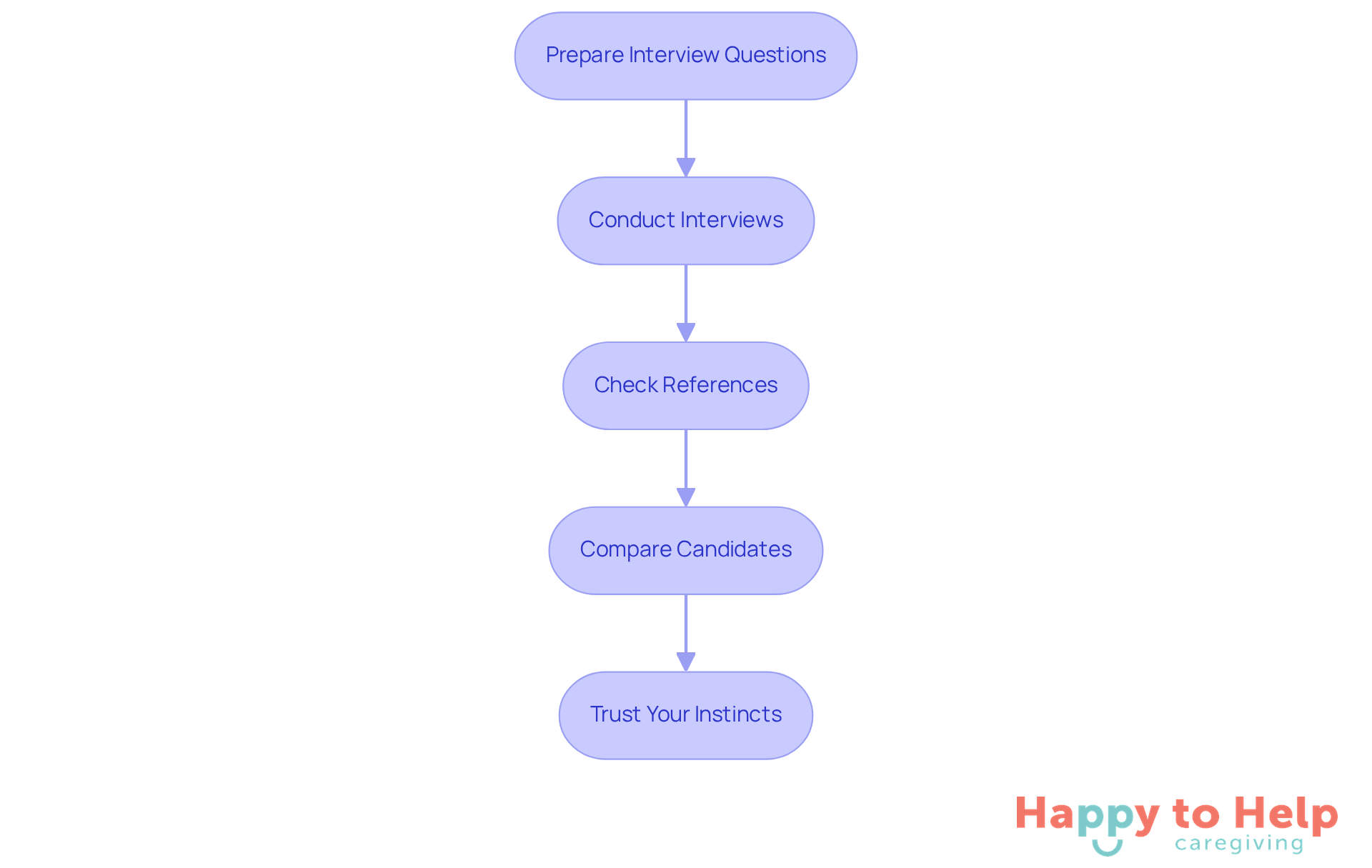
Prepare Interview Questions: Develop a list of questions that cover the caregiver's experience, training, and approach to care. Ask about their previous work with similar clients, how they handle emergencies, and their availability. For instance, consider asking, "Can you describe a challenging situation you faced with a client and how you handled it?" or "What specific training have you received that prepares you for this role?"
-
Conduct Interviews: Schedule interviews with potential candidates, either in person or virtually. Pay attention to their demeanor and communication style, as these traits are vital for building rapport with your loved one. Effective communication is crucial for establishing a positive relationship.
-
Check References: After interviews, contact references provided by the candidates. This step is essential for gaining insights into their reliability and performance in previous roles. Specialists emphasize that verifying references is key to understanding a provider's work ethic and dependability.
-
Compare Candidates: Create a comparison chart to evaluate each candidate based on their qualifications, experience, and your impressions from the interview. This visual aid can clarify your decision-making process and ensure you consider all relevant factors.
-
Trust Your Instincts: Ultimately, select a provider who meets the requirements and feels like a suitable match for your household. Trust your instincts about who will best support your loved one. Remember, the provider's compatibility with your family values is just as important as their qualifications.
Develop a Care Plan and Contract
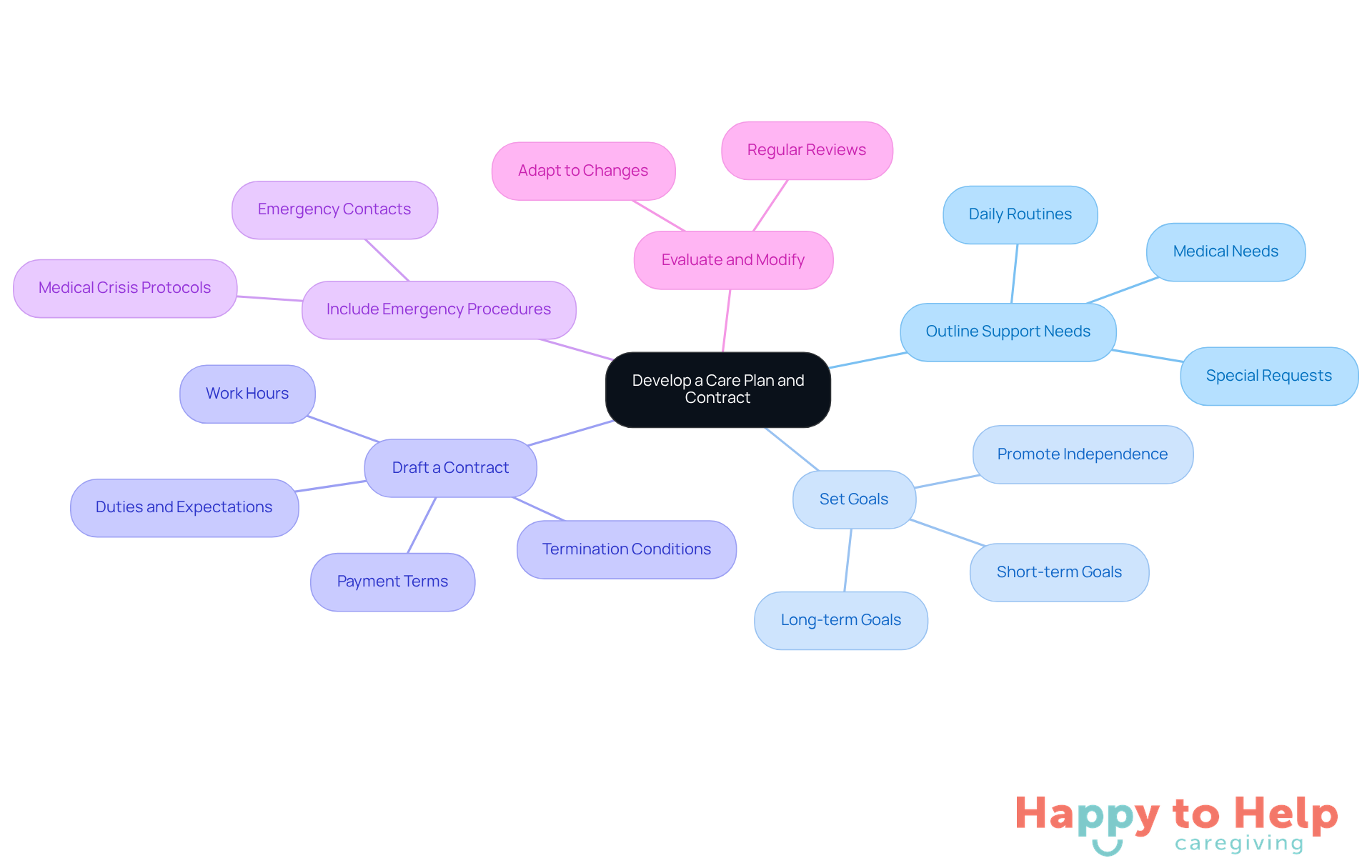
Outline Support Needs: Caregivers often struggle to define the specific tasks and responsibilities required in a support plan. This lack of clarity can lead to unmet needs and confusion. To address this, work closely with the caregiver to outline daily routines, medical needs, and any special requests from your loved one. This comprehensive approach ensures that all aspects of their support are effectively managed.
Set Goals: Establishing clear goals is crucial for both short-term and long-term success in caregiving. Without defined objectives, caregivers may find it challenging to enhance the quality of life for their loved ones. Focus on promoting independence and involvement by setting achievable goals that provide a sense of purpose for the person receiving assistance.
Draft a Contract: A common issue in caregiving is the absence of a formal agreement, which can lead to misunderstandings and disputes. To mitigate this risk, create a written contract that outlines payment terms, work hours, duties, and expectations. This legally binding document protects the rights of both the provider and the care recipient. According to industry insights, having a family caregiving contract is essential to avoid financial disputes and is often required for government benefits, ensuring that all parties understand their roles and responsibilities.
Include Emergency Procedures: Emergencies can arise unexpectedly, making it vital to have a plan in place. Ensure that your support plan includes emergency contact information and protocols for managing medical crises or changes in the recipient's condition. This preparation is essential for maintaining safety and ensuring prompt responses in critical situations.
Evaluate and Modify: Caregiving needs can change over time, and failing to adapt can lead to inadequate support. Regularly review the support plan with the provider and family members to implement necessary changes. Ongoing communication and assessments are key to adjusting to shifts in health conditions or personal preferences, ensuring that the support remains relevant and effective.
Start Care and Monitor Progress
Problem: Caregivers often struggle with effective communication and understanding the emotional well-being of their loved ones. Without a strong communication strategy, it can be challenging to keep track of the recipient's progress and needs.
Agitate: This lack of communication can lead to misunderstandings and unmet needs, ultimately affecting the quality of care. Observing interactions between the attendant and the recipient is crucial; positive engagement fosters trust and respect, which are vital for emotional well-being.
Solution:
-
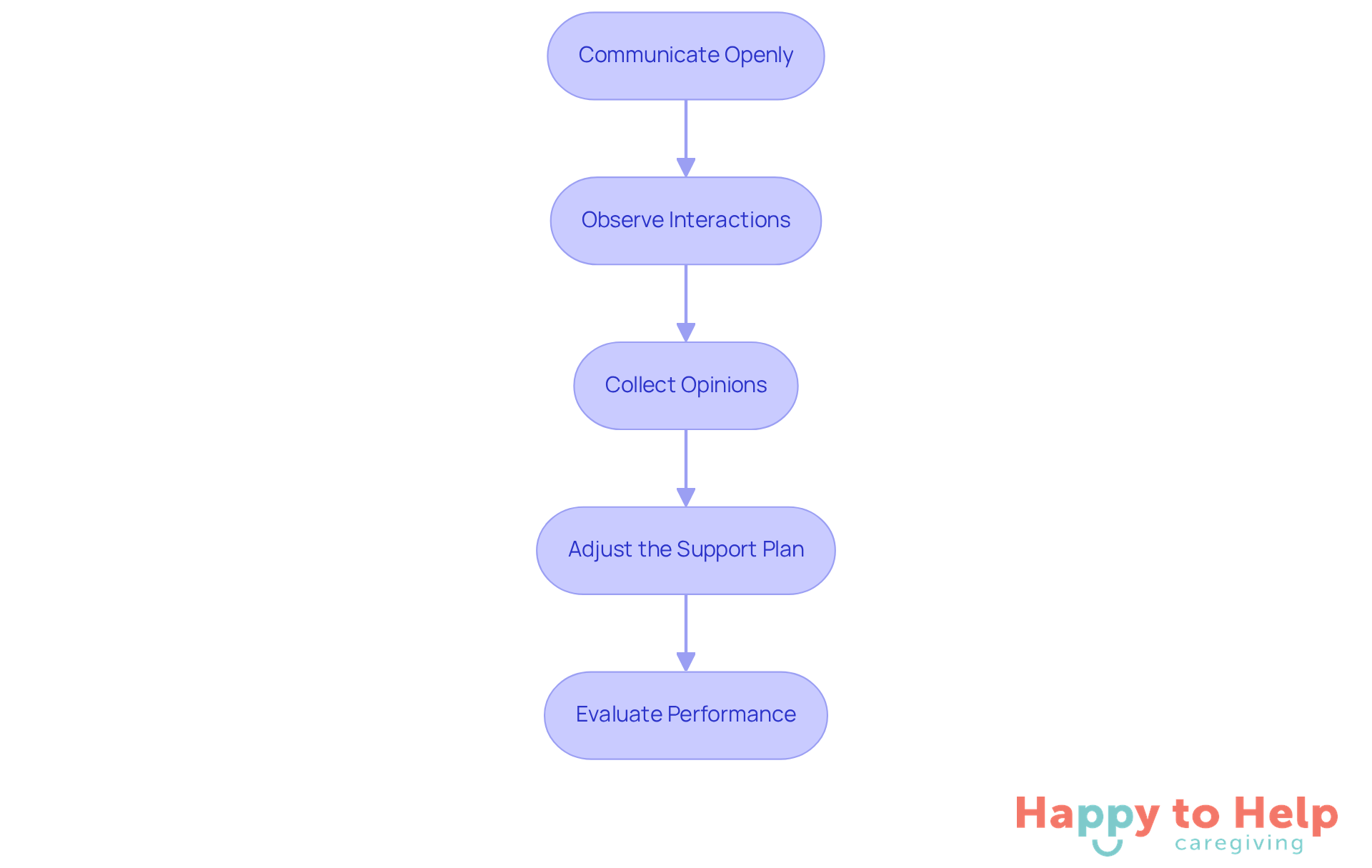
Communicate Openly: Establish a robust communication strategy with the provider. Regular conversations, such as daily check-ins or weekly meetings, can help review support notes and ensure alignment on objectives and necessary adjustments.
-
Observe Interactions: Actively monitor how the attendant interacts with your loved one. Look for signs of trust and engagement, as these positive interactions significantly influence emotional health.
-
Collect Opinions: Encourage your loved one to share their thoughts on the helper and the assistance they receive. Feedback is invaluable; studies indicate that patient satisfaction rates in home healthcare can reach up to 91%, with an overall client satisfaction rate of 89.2% reported in 2021. This input is essential for assessing caregiver effectiveness and making informed decisions.
-
Adjust the Support Plan: Be ready to modify the support plan based on observations and feedback. Flexibility is key to ensuring that care meets the evolving needs of your loved one, leading to improved outcomes and satisfaction.
-
Evaluate Performance: Set a timeline for formal assessments of the provider's performance. Discuss concerns and celebrate successes to foster a positive caregiving environment. Agencies that implement regular performance reviews often see a retention rate of up to 89% within the first 90 days, underscoring the importance of ongoing assessment and support. Remember, as one expert noted, "If feedback doesn’t lead to action, caregivers will stop sharing it.
Moving Forward with Hire In-Home Caregivers: 5 Essential
Hiring in-home caregivers presents a significant challenge for families, requiring careful consideration and planning. The implications of this decision can greatly affect the quality of life for loved ones, making it essential to secure the right support. Families often struggle with understanding specific care needs, evaluating budget constraints, and choosing between agency and independent caregivers.
To address these challenges, thorough assessments are crucial for identifying care needs. Setting a realistic budget is necessary to avoid financial strain, and vetting caregiver candidates through interviews and reference checks can ensure a good fit. Developing a clear care plan and maintaining open communication with caregivers can lead to better outcomes and satisfaction for everyone involved.
Ultimately, prioritizing the well-being of loved ones is key. Families should take these steps seriously, remaining proactive in monitoring caregiver performance and adapting the care plan as needed. By fostering a supportive environment, they can create a positive caregiving experience that meets the unique needs of their family members.
https://iframe.tely.ai/cta/eyJhcnRpY2xlX2lkIjogIjY5MjI0ZjY2NGZjYWRhOTUwOGRlNDNmOSIsICJjb21wYW55X2lkIjogIjY4ZWU1ZGNhNzMxNzYyNTU3ZjNjOTVjMSIsICJpbmRleCI6IG51bGwsICJ0eXBlIjogImFydGljbGUifQ==Frequently Asked Questions
What are the first steps to assess care needs for a loved one?
The first steps include engaging in conversations with your loved one and family members to identify specific care needs, such as assistance with daily activities like bathing, dressing, meal preparation, medication management, and companionship.
How should health conditions be evaluated when considering care?
It's important to assess any medical conditions that may require specialized assistance, including dementia, mobility challenges, or chronic illnesses, to determine the appropriate level of support needed.
How can I set a budget for in-home assistance?
Review your financial situation to establish a realistic budget. In 2025, average costs for in-home caregivers range from $27 to $35 per hour, depending on services and location, with the national median expense anticipated to be $33 per hour.
What funding options are available to help cover care costs?
Potential funding sources include long-term support insurance, Medicaid, veterans' benefits, and government programs that may provide subsidies or vouchers for home health services.
Why is it important to document care needs and budget constraints?
Documenting support needs and budget constraints helps maintain focus during the hiring process and ensures that caregivers meet both the specific needs of your loved one and your financial parameters.
What should I consider when choosing between an agency and an independent caregiver?
Consider the differences in services, costs, and your family's preferences. Agencies handle background checks and training but charge higher rates, while independent caregivers may offer lower rates but require more oversight.
What are the typical costs associated with agencies and independent caregivers?
Agencies typically charge around $30 per hour, including additional services, while independent caregivers usually charge between $15 and $17 per hour, potentially offering significant cost savings.
How can I verify the qualifications of caregivers?
For independent providers, check their certifications and experience, especially for tasks like medication management. For agencies, ensure you review their reputation and the qualifications of their staff.
What factors should influence my decision on hiring a caregiver?
Your decision should be based on the alignment of care options with your needs, budget, and comfort level regarding the level of support and oversight your family is prepared to provide.
List of Sources
- Assess Care Needs and Budget
- Home Care Costs in 2025: A State-by-State Guide (https://aplaceformom.com/caregiver-resources/articles/in-home-care-costs)
- Understanding the Cost and Value of Home Care in 2025 (https://assistinghands.com/135/texas/nesanantonio/blog/understanding-the-cost-and-value-of-home-care-in-2025)
- 2025 Budget Impacts: House Bill Would Cut Assistance and Raise Costs for Seniors (https://cbpp.org/research/federal-budget/2025-budget-impacts-house-bill-would-cut-assistance-and-raise-costs-for)
- Most Americans expect to experience a long-term care event, and nearly 3 in 4 want in-home care if it happens to them - according to Northwestern Mutual Planning & Progress Study (https://news.northwesternmutual.com/2025-10-07-Most-Americans-expect-to-experience-a-long-term-care-event,-and-nearly-3-in-4-want-in-home-care-if-it-happens-to-them-according-to-Northwestern-Mutual-Planning-Progress-Study)
- Choose Between Agency and Independent Caregiver
- Choosing a Caregiver: Agency vs Independent Contractors (https://senior1care.com/senior-care-advice/choosing-a-caregiver-agency-vs-independent-contractors-fortwayne)
- Independent Home Care vs. Home Care Agency (https://aplaceformom.com/caregiver-resources/articles/hiring-private-caregivers)
- Pros and Cons of Hiring an Agency vs Private Caregivers (https://tandem.care/post/https-tandem-care-hiring-agency-vs-private-caregiver)
- Choosing Between Agency or Independent Home Care Provider | Home Care in Illinois | Angels Homecare (https://myangelshomecare.com/choosing-between-agency-or-independent-home-care-provider)
- Home Care Agencies vs. Independent Caregivers | Pros & Cons (https://payingforseniorcare.com/homecare/agency-or-independent-caregiver)
- Interview and Compare Caregiver Candidates
- How to Choose the Right In-Home Caregiver for Your Loved One (https://homeinstead.com/home-care/usa/tx/carrollton-coppell-irving/407/news-and-media/navigating-in-home-care-tips-for-choosing-the-right-caregiver-for-your-loved-one)
- Caregiver Recruitment Strategies That Work | Rellevate (https://rellevate.com/news/caregiver-recruitment-strategies)
- Op-ed: Finding a good caregiver can be daunting. Here are steps to hire the right one (https://cnbc.com/2024/02/12/op-ed-finding-a-caregiver-can-be-daunting-heres-how-to-hire-the-right-one.html)
- Asking the Right Interview Questions to Find the Best-Fit Caregiver Candidates | Aaniie, formerly Smartcare Software (https://aaniie.com/news/asking-the-right-interview-questions-best-caregiver-candidates)
- The Case For Stronger Caregiver Vetting In Home Care (https://homehealthcarenews.com/2024/10/the-case-for-stronger-caregiver-vetting-in-home-care)
- Develop a Care Plan and Contract
- Home Care Statistics In 2025: Key Insights In Home Care (https://sagapixel.com/marketing/home-care-statistics)
- New Jersey Home Caregiver Employment Law Updates (https://finkrosnerershow-levenberg.com/new-law-sets-requirements-for-home-caregiver-employment-in-new-jersey)
- Resource (https://clarkssummit.seniorlivingnearme.com/resources/creating-a-caregiver-contract-what-to-include-and-why-its-important)
- 10 Must-Know U.S. Home Care Industry Stats for 2025 - North American Community Hub (https://nchstats.com/us-home-care-industry-stats)
- A New Labor Rule Could Push Caregivers to the Breaking Point | ACLU (https://aclu.org/news/womens-rights/a-new-labor-rule-could-push-caregivers-to-the-breaking-point)
- Start Care and Monitor Progress
- How caregiver feedback tools improve satisfaction, retention, and engagement in home care How caregiver feedback tools improve satisfaction, retention, and engagement in home care (https://alayacare.com/caregiver-feedback-tools-home-care-retention)
- Home Healthcare Statistics and Facts (2025) (https://media.market.us/home-healthcare-statistics)
- The Importance of Effective Communication in Caregiving (https://familycaregiversonline.net/the-importance-of-effective-communication-in-caregiving)
- 2025 HHAeXchange Survey Finds Caregivers Growing Increasingly Comfortable with Technology, But Support Remains Key to Retention | HHAeXchange (https://hhaexchange.com/press-releases/2025-hhaexchange-survey-technology-caregiver-retention)