

For families in our service areas
For families in our service areas, this guide explains caregiver support and how non-medical in-home caregiving can support care planning in East Idaho, Treasure Valley & Magic Valley, Northern Wasatch, North Central West Virginia, and Northeast Ohio.
The Importance of Hire Live-In Caregivers: A Step-by-Step
Hiring live-in caregivers can be a daunting task for families aiming to provide the best support for their loved ones. With an increasing number of seniors needing assistance, the complexities of caregiver roles and the hiring process can feel overwhelming. Families often struggle to find the right caregiver who not only meets their loved one's needs but also creates a positive caregiving environment.
This guide addresses these challenges by outlining essential steps and considerations for hiring live-in caregivers. By understanding the intricacies involved, families can make informed decisions that lead to better outcomes for their loved ones.
To navigate this process effectively, families should consider several strategies:
- Clearly define the specific needs of their loved one. This includes understanding the level of care required, daily routines, and any special considerations.
- Conduct thorough interviews and background checks to ensure they select a caregiver who is not only qualified but also a good fit for their family dynamics.
By following these steps, families can foster a supportive and nurturing environment for their loved ones, ensuring that the caregiver they choose enhances their quality of life.
Understand Types of Live-In Caregivers
Understanding the different types of live-in caregivers is crucial for families seeking the right support for their loved ones. Without this knowledge, families may struggle to find the appropriate care, which can lead to inadequate support and diminished quality of life for seniors.
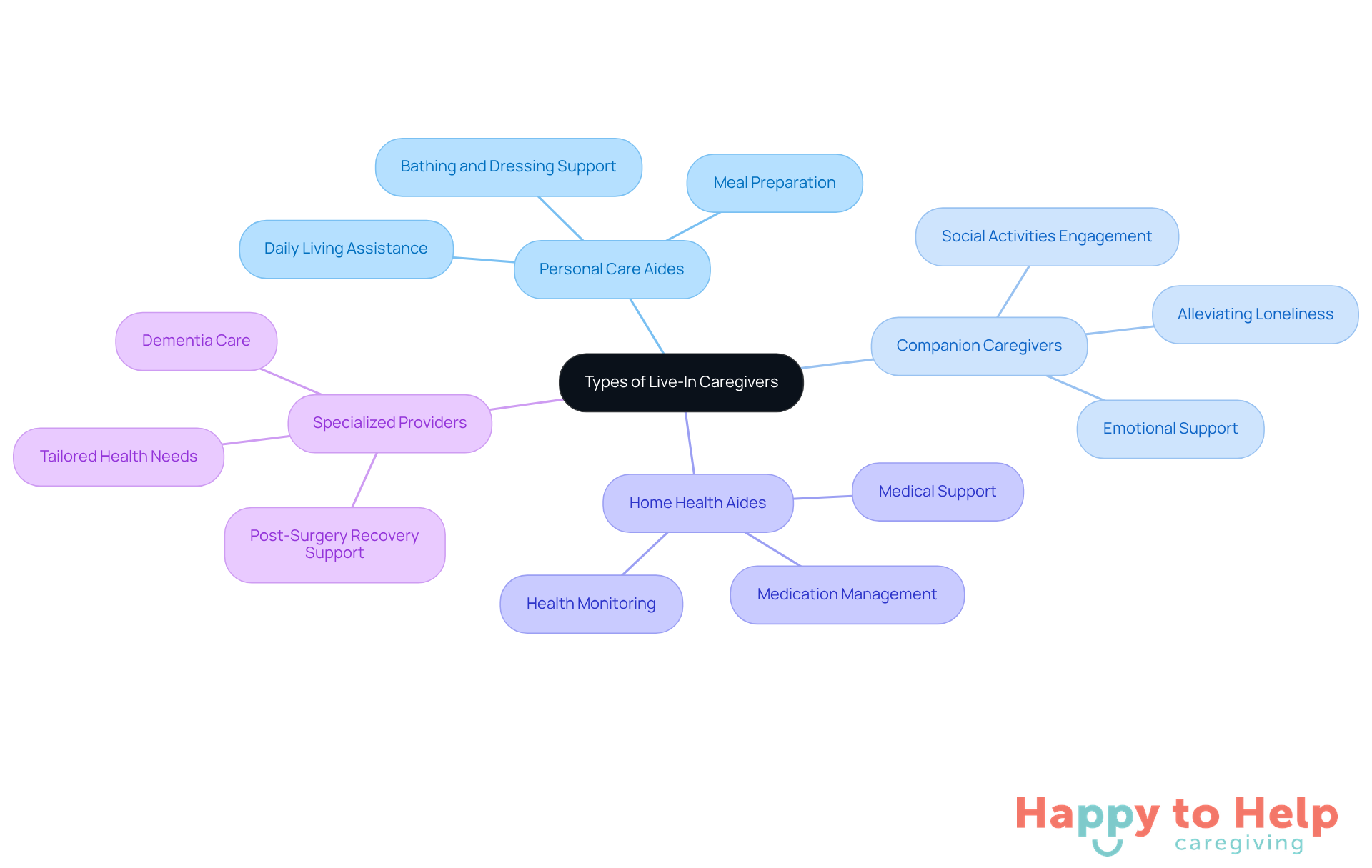
Types of Live-In Caregivers:
-
Personal Care Aides: These individuals assist with daily living activities such as bathing, dressing, and meal preparation. They provide practical support and physical assistance, playing a vital role in helping individuals maintain their independence at home.
-
Companion Caregivers: Focused on providing companionship and emotional support, they engage clients in social activities and help alleviate feelings of loneliness. Their role is essential for promoting mental well-being through regular interaction and companionship.
-
Home Health Aides: These assistants may provide medical support under the supervision of a healthcare professional, including medication management and basic health monitoring. They ensure that clients receive necessary medical care in a familiar environment.
-
Specialized Providers: Trained to manage specific conditions such as dementia or post-surgery recovery, these professionals offer tailored support based on the client's unique health needs.
Comprehending these categories helps families recognize the appropriate kind of support from live-in caregivers for the specific situations of their loved ones. With approximately 70% of seniors expected to need some type of support during their lifetime, choosing the right caregiver can significantly impact their quality of life.
Assess Your Care Needs and Preferences
To effectively assess your care needs, it’s crucial to recognize the challenges involved. Many caregivers struggle with understanding the specific needs of their loved ones, which can lead to inadequate support and increased stress.
-
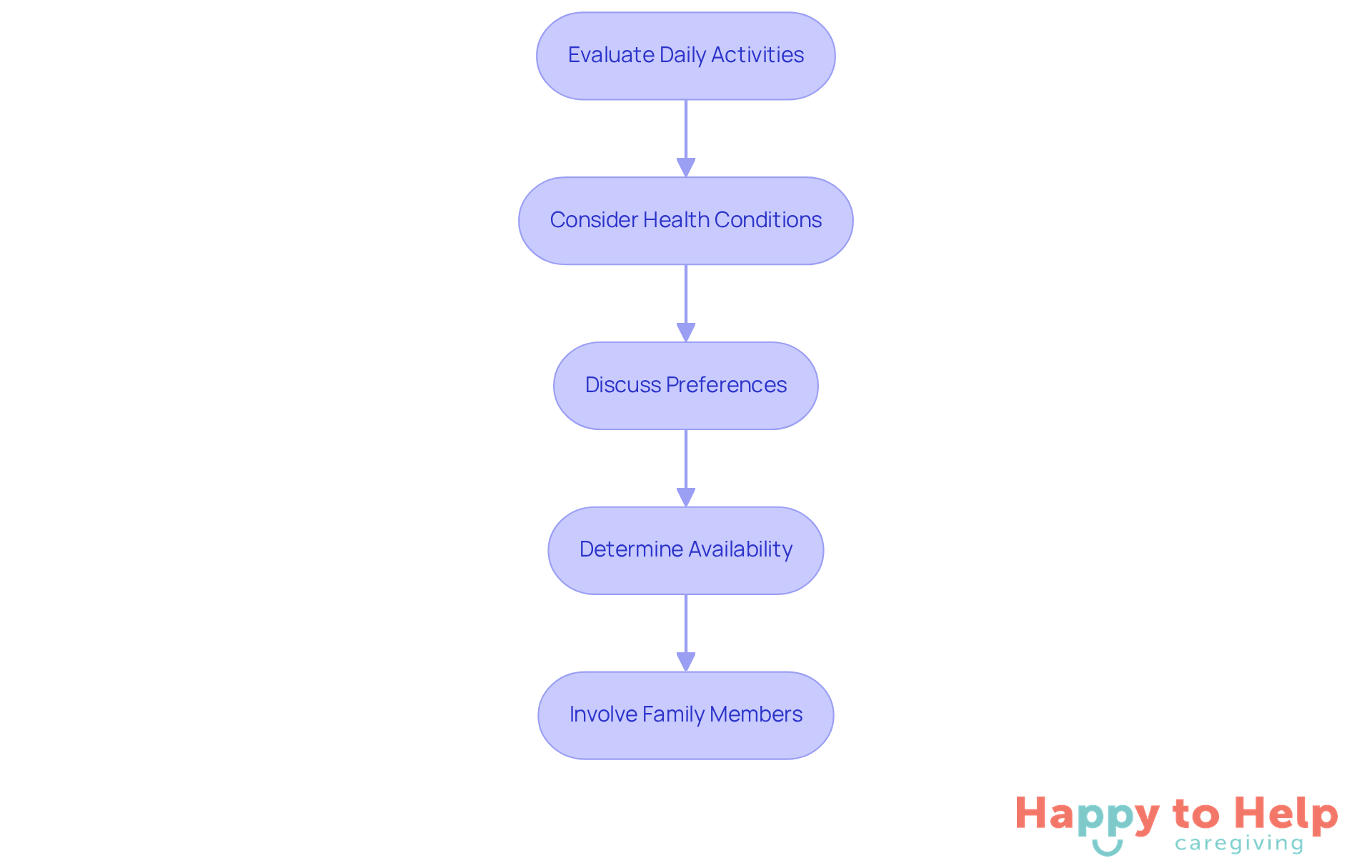
Evaluate Daily Activities: Start by identifying daily tasks your loved one finds difficult, such as bathing, cooking, or managing medications. Approximately 27% of community-dwelling older adults aged 65 and older require assistance with activities of daily living. This highlights the importance of a thorough evaluation. Moreover, around 80% of older adults have trouble understanding healthcare information, underscoring the need for clear communication during this assessment.
-
Consider Health Conditions: Next, take into account any medical conditions that may necessitate specialized attention or monitoring. Nearly 95% of seniors have at least one chronic condition, and about 80% live with two or more chronic health issues. These factors can significantly impact daily functioning and care requirements.
-
Discuss Preferences: Engage in open conversations with your loved one about their preferences regarding support worker characteristics, such as gender, age, and personality traits. This dialogue is essential for building a caregiver-client relationship based on comfort and trust. As Rita B. Choula noted, recognizing family caregivers as a vital workforce is crucial in these discussions.
-
Determine Availability: Assess how many hours of support are needed each day and whether full-time or part-time assistance is necessary. Understanding the level of assistance required will simplify the hiring process.
-
Involve Family Members: Encourage family members to participate in discussions to gather diverse perspectives and ensure everyone is aligned on support expectations. This collaborative approach fosters a supportive environment and can ease the transition to in-home care.
By performing this comprehensive evaluation, you’ll be better prepared to express your requirements clearly when starting the recruitment process for live-in caregivers.
Follow a Structured Hiring Process
Finding the right live in caregivers can be a daunting task. Many families struggle with the implications of a poor hiring process, which can lead to mismatched expectations and compromised care for loved ones. To address this challenge, follow these structured steps to establish a successful hiring process:
-
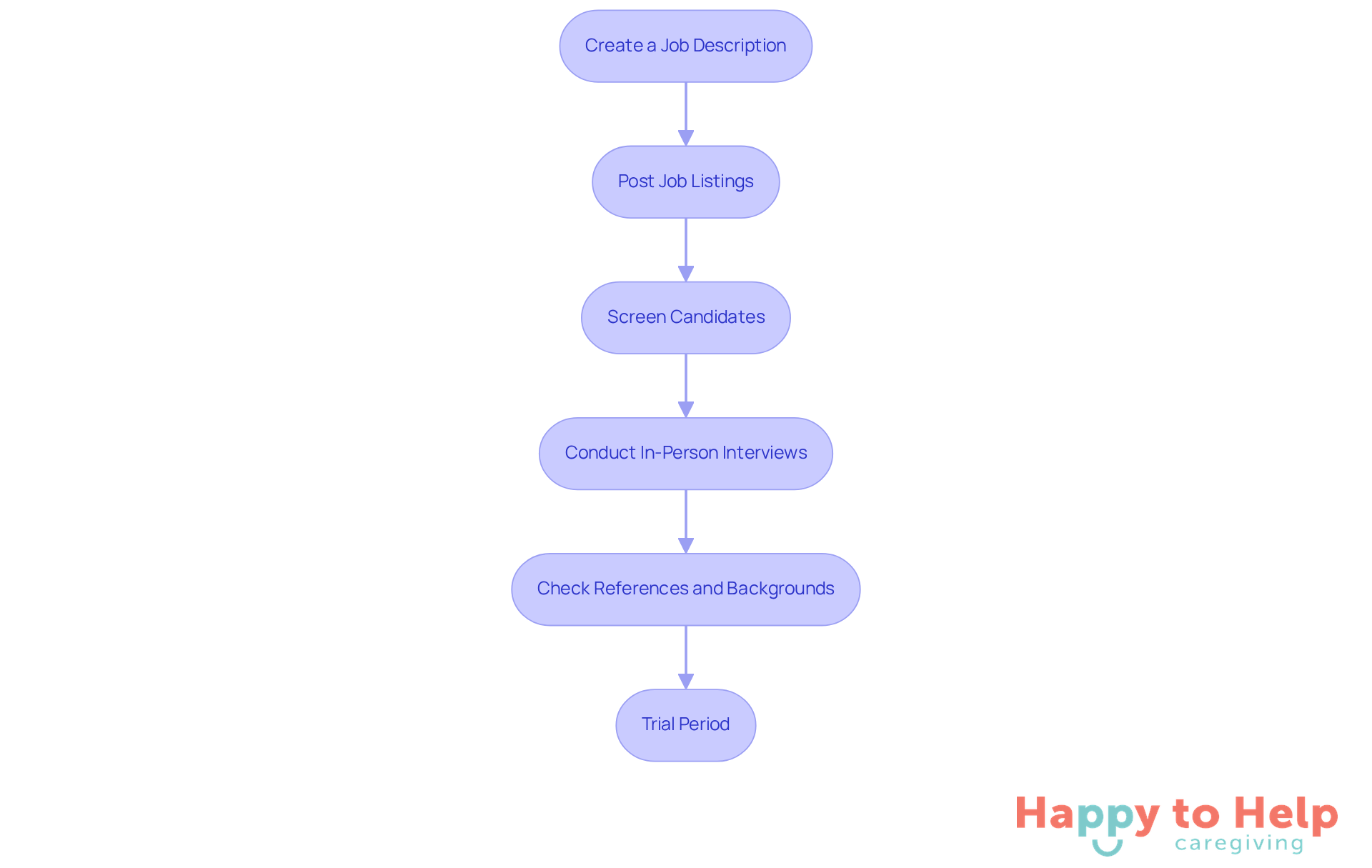
Create a Job Description: Clearly outline the specific duties, hours, and qualifications required for the support role. Effective job descriptions should include essential skills such as compassion, communication, and relevant certifications, ensuring candidates understand the expectations.
-
Post Job Listings: Utilize online platforms, local community boards, and support agencies to advertise the position. Highlighting the unique aspects of your caregiving service can attract qualified candidates.
-
Screen Candidates: Review resumes and conduct initial phone interviews to narrow down your options. This step is crucial as it allows you to assess candidates' experience and suitability before in-person meetings.
-
Conduct In-Person Interviews: Meet with prospective providers to assess their qualifications, experience, and compatibility with your loved one. This interaction is vital for gauging interpersonal skills and ensuring a good fit.
-
Check References and Backgrounds: Verify candidates' references and conduct thorough background checks to ensure safety and reliability. This step is essential for building trust and ensuring the well-being of your loved one.
-
Trial Period: Implement a trial period where the provider works with your loved one. This allows both parties to assess compatibility and make adjustments as needed before committing long-term. Regular check-ins during this period can help address any concerns and ensure a smooth transition.
By following these steps, you can successfully locate live in caregivers who fulfill your family's requirements, ensuring a supportive and nurturing atmosphere for your loved one. Statistics indicate that a well-defined hiring process can significantly reduce the average time to hire, which is crucial in a competitive caregiving landscape where demand is projected to grow by 21% by 2033. Furthermore, evaluating cultural fit during the hiring process can improve employee retention, ensuring that support staff align with your family's values and needs.
Discuss Compensation and Caregiver Expectations
When discussing compensation and expectations, caregivers often face significant challenges. Without a clear understanding of market rates and responsibilities, misunderstandings can arise, leading to dissatisfaction for both parties.
To address these issues, consider the following actionable solutions:
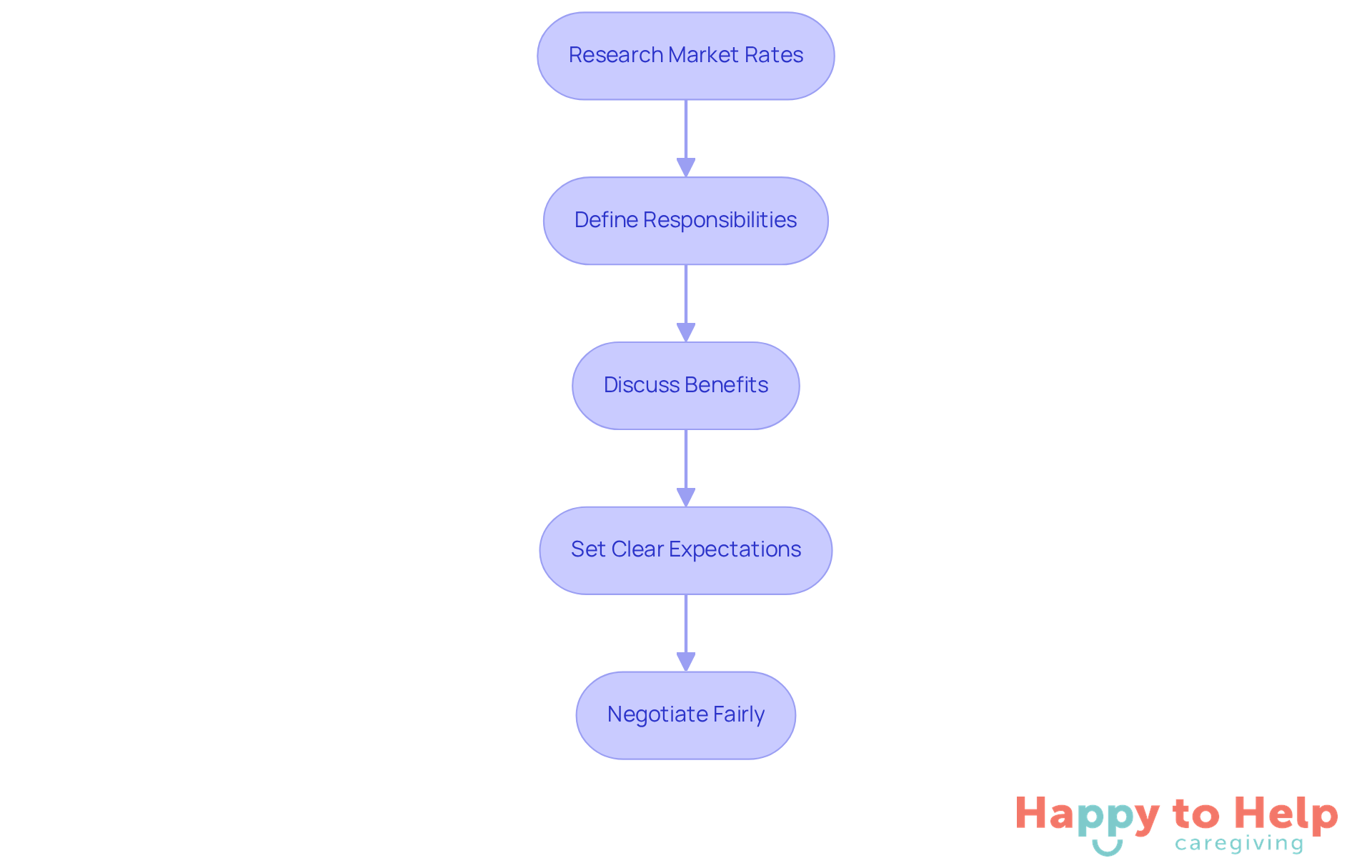
- Research Market Rates: Investigate the average compensation for live in caregivers in your area to ensure your offer is competitive.
- Define Responsibilities: Clearly outline the attendant's duties to avoid any ambiguity regarding their role.
- Discuss Benefits: Consider offering additional benefits such as paid time off, meals, or accommodations if applicable.
- Set Clear Expectations: Discuss work hours, time off, and any specific requirements related to the care of your loved one.
- Negotiate Fairly: Approach negotiations with an understanding of both the provider's needs and your budget, aiming for a mutually beneficial agreement.
Having these discussions early on will foster a positive working relationship and ensure that both parties are satisfied with the arrangement.
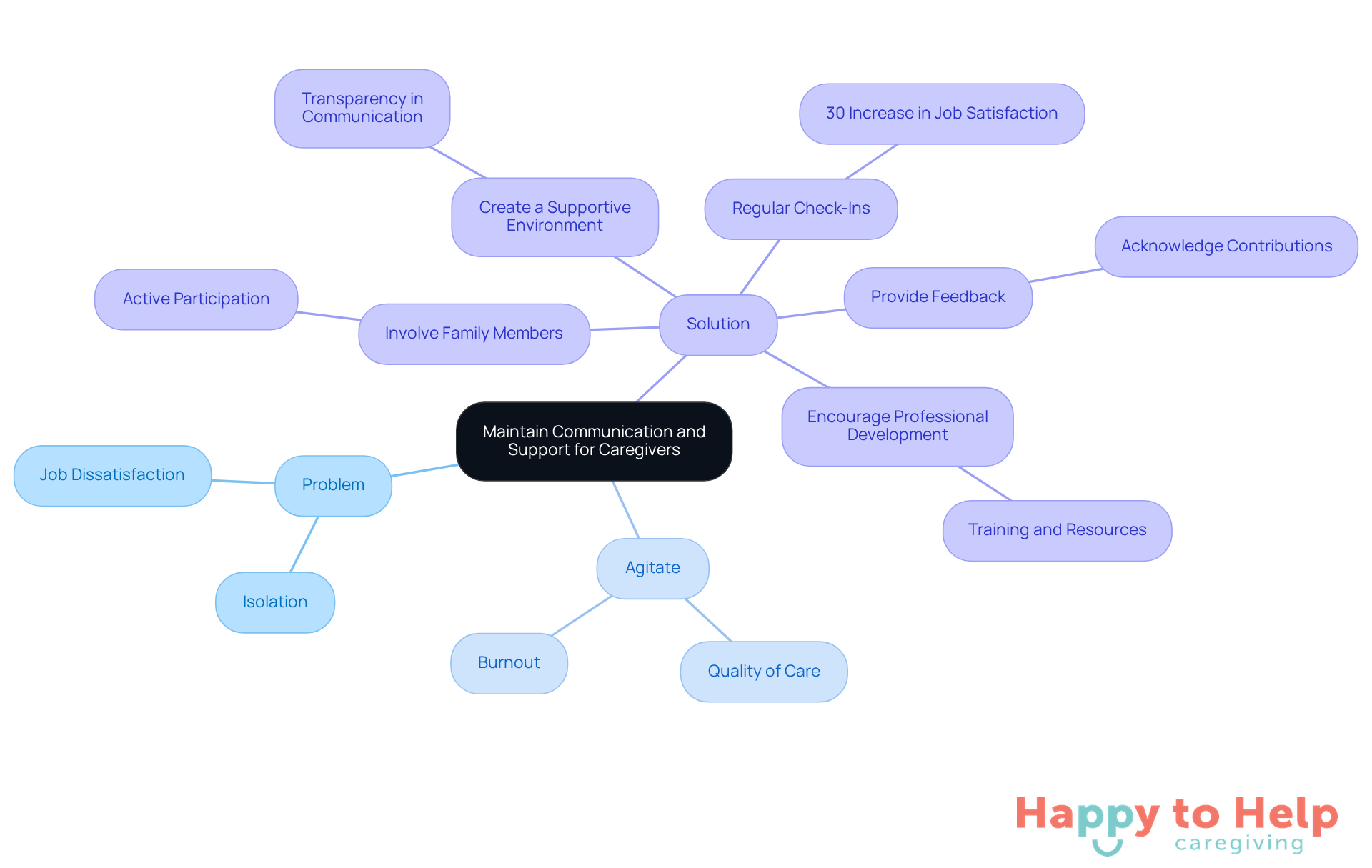
Maintain Communication and Support for Caregivers
Problem: Caregivers often face significant challenges that can impact their well-being and effectiveness. Feelings of isolation and job dissatisfaction are common, with research showing that caregivers who lack regular communication report lower job satisfaction.
Agitate: This lack of support can lead to burnout and decreased quality of care for those they support. For instance, caregivers who do not receive regular check-ins may feel disconnected and overwhelmed, which can hinder their ability to provide the best care possible.
Solution: To address these issues, consider implementing the following strategies:
-
Regular Check-Ins: Establish a routine for meetings to discuss caregivers' experiences and challenges. Research indicates that caregivers who receive regular check-ins report a 30% increase in job satisfaction and a decrease in feelings of isolation. This highlights the importance of consistent communication in enhancing caregivers' well-being.
-
Provide Feedback: Offer constructive feedback and acknowledge caregivers' efforts. Recognizing their contributions fosters a positive working relationship and encourages continued dedication. As Mary Lazare, Acting Administrator for ACL, noted, acknowledging caregivers' contributions is crucial for their morale and effectiveness.
-
Encourage Professional Development: Support caregivers in pursuing training or resources that enhance their skills. Investing in their professional development not only benefits them but also improves the quality of support they provide.
-
Create a Supportive Environment: Cultivate an atmosphere where caregivers feel comfortable sharing concerns or suggestions without fear of judgment. This transparency can lead to improved treatment outcomes and a more harmonious caregiving environment.
-
Involve Family Members: Encourage family members to actively participate in discussions about care. This involvement ensures alignment and support for the caregiver's role, significantly reducing stress and enhancing the overall caregiving experience.
Additionally, it's essential to recognize the broader context of support provider challenges. The recent $2 million initiative announced by HHS aims to address staffing shortages in direct support work, emphasizing the need for ongoing assistance for caregivers. Families can also explore existing programs like the National Family Caregiver Support Program to access resources that further aid caregivers.
By prioritizing communication and support, families can significantly enhance the caregiving experience, ensuring that their loved ones receive the highest quality of care while also supporting the well-being of the caregivers.
Making the Right Choice
Finding the right live-in caregiver can be a daunting task, yet it’s crucial for enhancing the quality of life for loved ones needing support. Families often face the challenge of navigating various caregiver options and assessing individual care needs. This process can feel overwhelming, but it’s essential to approach it with clarity and intention.
To tackle this issue effectively, families should start by:
- Evaluating daily activities
- Discussing preferences openly
Clear communication throughout the hiring process is vital. Understanding compensation and caregiver expectations can foster a positive working relationship, benefiting both parties involved. Regular check-ins and support for caregivers can lead to improved job satisfaction and better care outcomes.
By prioritizing these steps, families not only enhance the caregiving experience but also contribute to the overall well-being of both the caregiver and the care recipient. Taking proactive measures in the search for live-in caregivers is encouraged, ensuring a nurturing environment that supports loved ones and the dedicated individuals who care for them.
https://iframe.tely.ai/cta/eyJhcnRpY2xlX2lkIjogIjY5MjBmZDQyYzQ4NjU1NjRkNDliYzY5ZSIsICJjb21wYW55X2lkIjogIjY4ZWU1ZGNhNzMxNzYyNTU3ZjNjOTVjMSIsICJpbmRleCI6IG51bGwsICJ0eXBlIjogImFydGljbGUifQ==Frequently Asked Questions
What are the different types of live-in caregivers?
The types of live-in caregivers include Personal Care Aides, Companion Caregivers, Home Health Aides, and Specialized Providers. Personal Care Aides assist with daily living activities, Companion Caregivers provide companionship and emotional support, Home Health Aides offer medical support under supervision, and Specialized Providers manage specific health conditions.
Why is it important to understand the types of live-in caregivers?
Understanding the types of live-in caregivers is crucial for families to find the appropriate support for their loved ones, which can enhance their quality of life and ensure they receive adequate care.
How can families assess their care needs effectively?
Families can assess their care needs by evaluating daily activities their loved one struggles with, considering any health conditions that require specialized attention, discussing preferences regarding caregiver characteristics, determining the availability of support needed, and involving family members in the conversation.
What percentage of older adults require assistance with daily living activities?
Approximately 27% of community-dwelling older adults aged 65 and older require assistance with activities of daily living.
How many seniors live with chronic health conditions?
Nearly 95% of seniors have at least one chronic condition, and about 80% live with two or more chronic health issues.
Why is communication important during the assessment of care needs?
Clear communication is essential during the assessment of care needs because around 80% of older adults have trouble understanding healthcare information, which can affect their care and support.
What role do family members play in assessing care needs?
Family members should participate in discussions about care needs to gather diverse perspectives, ensure alignment on support expectations, and foster a supportive environment for the transition to in-home care.
List of Sources
- Understand Types of Live-In Caregivers
- Companion Care vs. Personal Care | What's the Difference (https://corewoodcare.com/news/personal-vs-companion-care)
- Home Care Industry Trends to Watch in 2025 (https://firstlighthomecare.com/blog/home-care-industry-trends)
- Types of Home Care Services in 2025 (https://websterhc.com/breaking-down-the-different-types-of-home-care-services-in-2025)
- As Long Island ages, home care booms. An alleged unlicensed business shows dangers to clients and aides. (https://newsday.com/long-island/investigations/home-health-care-companionship-hg7flycx)
- The declining population will make it even harder to care for elders (https://npr.org/2025/11/02/nx-s1-5535648/population-elderly-caregivers)
- Assess Your Care Needs and Preferences
- WHO calls for urgent transformation of care and support systems for older people (https://who.int/news/item/01-10-2024-who-calls-for-urgent-transformation-of-care-and-support-systems-for-older-people)
- Caregiving Crisis: 45% Increase in Americans Providing Care (https://aarp.org/caregiving/basics/caregiving-in-us-survey-2025)
- Warning From Older Adults: Care for Aging in America Needs Urgent Rethinking (https://johnahartford.org/newsroom/view/warning-from-older-adults-care-for-aging-in-america-needs-urgent-rethinking)
- 52+ Senior Health Statistics, Facts & Trends (https://humancareny.com/blog/52-senior-health-statistics-facts-trends)
- (https://belleviecare.co.uk/support-advice/60-elderly-care-quotes-to-lift-your-spirits)
- Follow a Structured Hiring Process
- 42 inspirational quotes for caregivers (https://care.com/c/40-inspirational-caregiver-quotes)
- Caregiver Recruitment Strategies That Work | Rellevate (https://rellevate.com/news/caregiver-recruitment-strategies)
- Family Caregiver Annual Report and Statistics | SeniorLiving.org (https://seniorliving.org/research/family-caregiver-report-statistics)
- Caregiver Statistics: Work and Caregiving (https://caregiver.org/resource/caregiver-statistics-work-and-caregiving)
- Discuss Compensation and Caregiver Expectations
- As Family Caregiving Grows, So Does the Need for Reform - Medicare Rights Center (https://medicarerights.org/medicare-watch/2025/08/14/as-family-caregiving-grows-so-does-the-need-for-reform)
- 27 Inspirational Quotes for Caregivers (https://ultimatecareny.com/resources/27-quotes-for-caregivers)
- Home Care Costs in 2025: A State-by-State Guide (https://aplaceformom.com/caregiver-resources/articles/in-home-care-costs)
- Caregiving in the US 2025 (https://aarp.org/pri/topics/ltss/family-caregiving/caregiving-in-the-us-2025)
- Maintain Communication and Support for Caregivers
- Family Caregivers Report Weak Coordination With Medical Professionals | AJMC (https://ajmc.com/view/family-caregivers-report-weak-coordination-with-medical-professionals)
- HHS Launches $2M AI Initiative To ‘Transform’ Caregiving, Address Staffing Challenges (https://homehealthcarenews.com/2025/11/hhs-launches-2m-ai-initiative-to-transform-caregiving-address-staffing-challenges)
- HHS Backs AI Innovation for America’s Caregivers | HHS.gov (https://hhs.gov/press-room/hhs-backs-ai-innovation-for-americas-caregivers.html)