How to Pay for Assisted Living in California: A Step-by-Step

Active service-area notice
Happy to Help does not currently list California as an active service area. This article is general educational information. For local care availability, browse our active service areas.
Browse active service areasFor families in our service areas
For families in our service areas, this guide explains caregiving and how non-medical in-home caregiving can support care planning in East Idaho, Treasure Valley & Magic Valley, Northern Wasatch, North Central West Virginia, and Northeast Ohio.
Understanding Pay for Assisted Living in California:
Navigating the financial landscape of assisted living in California presents a significant challenge. With costs projected to reach an average of $6,631 per month by 2025, families face a daunting financial burden. Expenses can vary widely based on location and individual care needs, making it crucial for caregivers to understand their options.
What can families do to ensure their loved ones receive the necessary care without overwhelming their finances? This guide will explore effective strategies and resources available to help families finance assisted living in California. By arming themselves with knowledge about funding options and payment strategies, families can alleviate some of the financial stress associated with these essential services.
Understand Assisted Living Costs in California
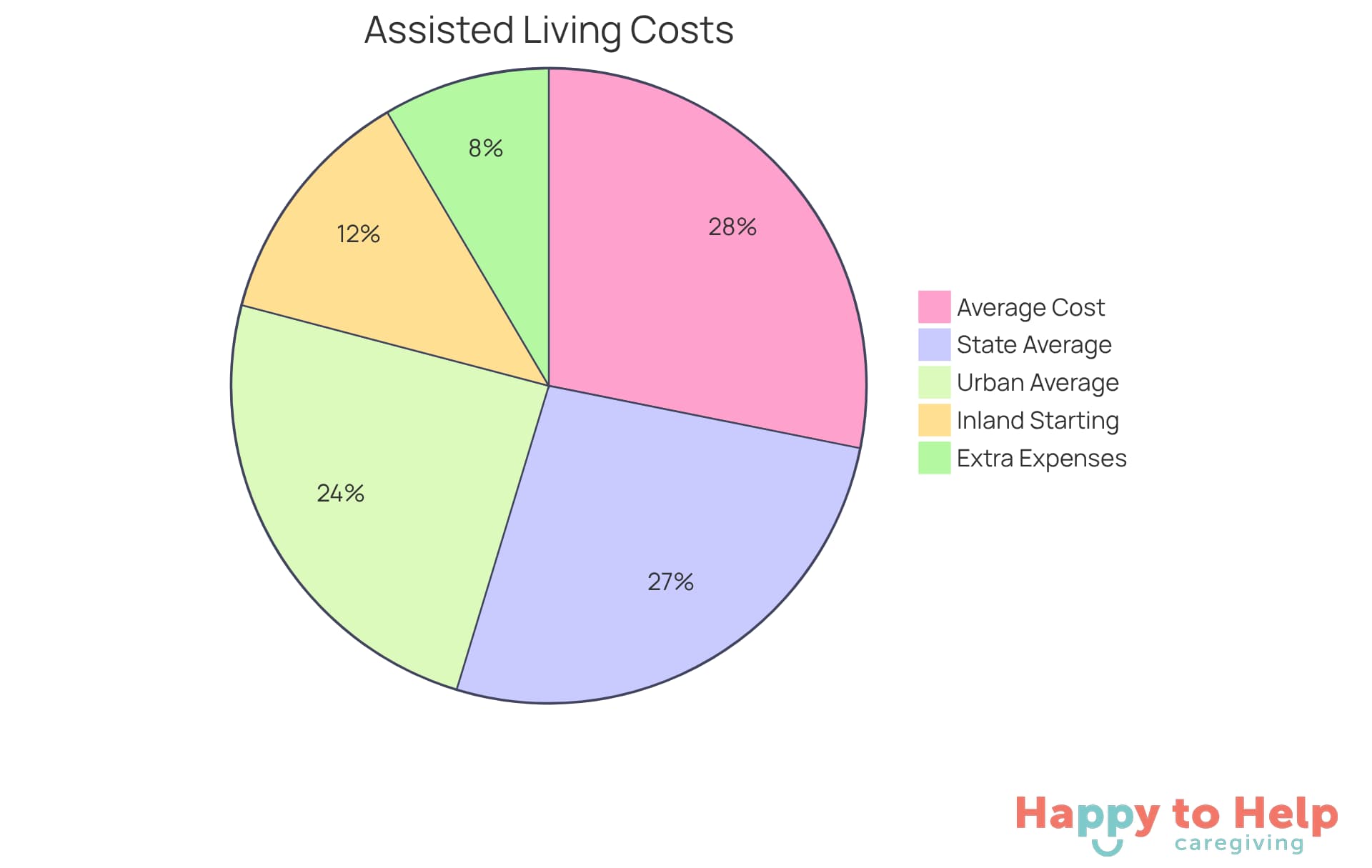
In California, families face a significant challenge: the typical expense of supportive housing is projected to reach about $6,631 each month by 2025. Costs can vary widely, ranging from roughly $4,500 to over $7,000, depending on location and level of care. This financial burden is compounded by the California state average for assisted living, which stands at $6,250 per month, providing a broader context for families navigating these expenses.
Urban areas, such as Los Angeles, typically demand higher prices, averaging $5,748 per month. In contrast, more economical inland regions can see costs starting as low as $2,925. By 2026, urban expenses are expected to rise to $6,281 per month. Factors influencing these costs include the type of facility, available amenities, and the specific care needs of residents.
Families should also consider additional expenses, such as personal care services, medication management, and transportation, which can add between $500 to $3,000 monthly. Notably, supportive housing is about 85% cheaper than nursing facilities, a crucial factor for budget planning.
To effectively manage these financial dynamics, families can explore how to pay for assisted living in California by considering various funding options. These include:
- Social Security benefits
- Home equity
- Government support programs like Medi-Cal and the Assisted Care Waiver Program
By understanding how to pay for assisted living in California, families can better plan their finances for supportive housing.
Explore Payment Options for Assisted Living
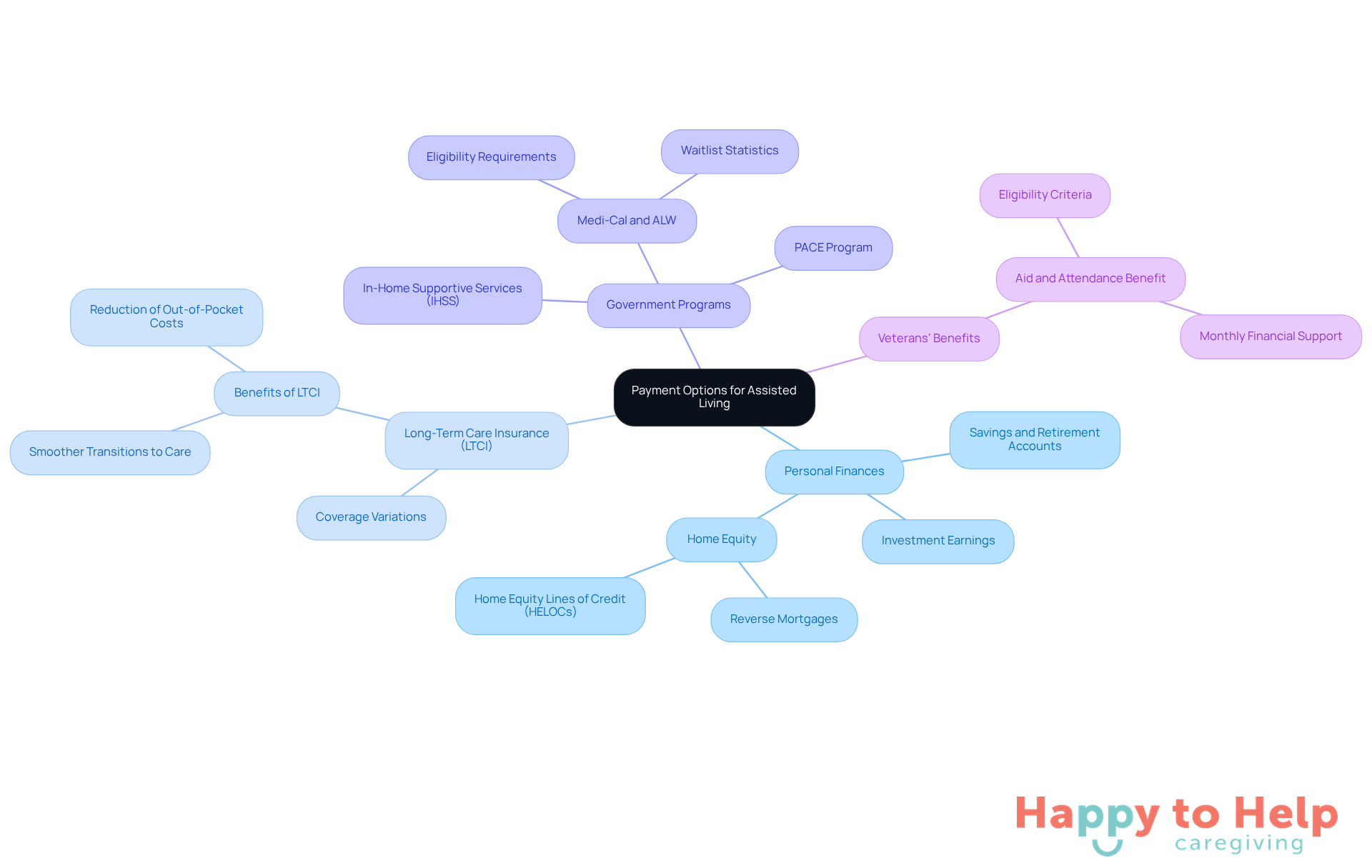
Families in California face a significant challenge when it comes to the costs of supportive care. With the median monthly expense for assisted living projected to be around $5,561 in 2025, and even higher in Los Angeles at approximately $6,098, budgeting becomes essential for families. Understanding various payment methods, including how to pay for assisted living in California, is crucial to managing these expenses effectively.
Personal finances, including savings, retirement accounts, and investment earnings, are often the first line of defense. Long-term care insurance (LTCI) can also play a vital role in reducing out-of-pocket costs, but families must be aware that coverage varies by policy. This makes it essential to understand how to pay for assisted living in California in order to maximize financial support.
Government programs like Medi-Cal offer crucial assistance through the Assisted Living Waiver (ALW). This program helps eligible seniors, including those over 65 and younger adults with disabilities who qualify for Medicaid, cover costs at approved facilities. As of April 2025, nearly 12,000 residents were on the ALW waitlist, highlighting the high demand for these services. Additionally, veterans' benefits, such as the Aid and Attendance benefit, provide further financial support for veterans and their surviving spouses, enhancing their overall financial strategy.
Real-life examples demonstrate how LTCI can effectively manage assisted living expenses. Families utilizing LTCI often report smoother transitions to care, as the insurance helps cover significant portions of their loved ones' costs. Advisors frequently recommend combining various funding sources, including LTCI, to create a comprehensive strategy that addresses both immediate and long-term care needs. This multifaceted approach not only eases the financial burden but also ensures families can secure the best possible care for their loved ones.
Implement Strategies to Finance Assisted Living
Families often face a significant challenge when it comes to understanding how to pay for assisted living in California. The burden of costs can lead to stress and uncertainty, making it crucial to explore effective strategies, particularly on how to pay for assisted living in California.
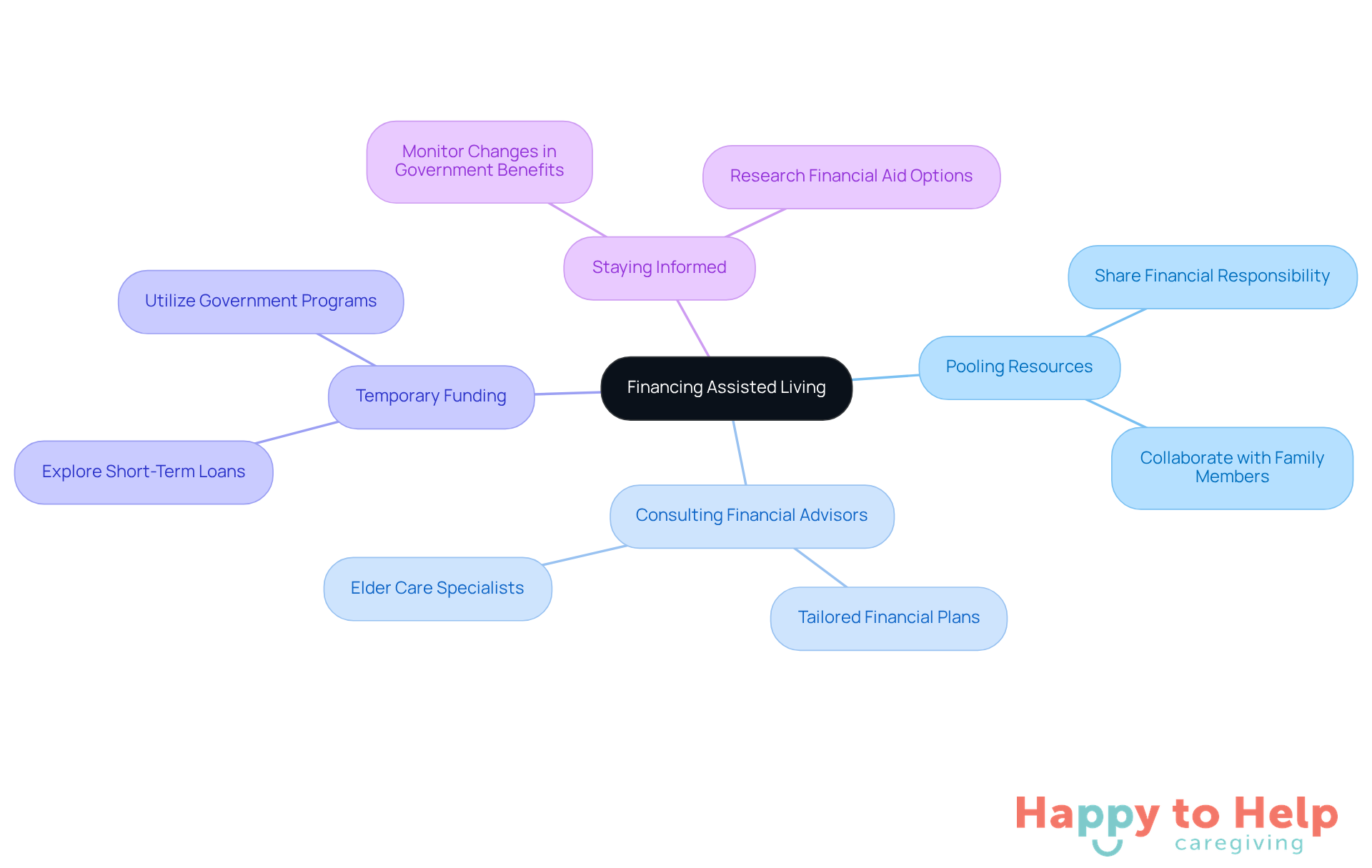
One solution is to pool resources among family members. By sharing the financial responsibility, families can alleviate some of the pressure. Additionally, examining how to pay for assisted living in California can provide temporary funding while waiting for other monetary resources to become available.
It is also beneficial to consult with a financial advisor who specializes in elder care to learn how to pay for assisted living in California. They can help create a tailored financial plan that addresses how to pay for assisted living in California to meet the family's specific needs. Lastly, staying informed about how to pay for assisted living in California can empower families to maximize their funding options through changes in government programs and benefits.
Your Path Forward
Understanding how to pay for assisted living in California presents a significant challenge for families facing the complexities of supportive care costs. With monthly expenses projected to reach approximately $6,631 by 2025, the financial burden can be overwhelming. Families must explore various funding options and strategies to alleviate these costs.
Key insights reveal that costs vary significantly based on location and individual care needs. Additionally, families should consider potential extra expenses that may arise. To navigate these challenges, utilizing a diverse range of payment methods is crucial. Options include:
- Personal savings
- Long-term care insurance
- Government programs like Medi-Cal
- Veterans' benefits
By combining these resources, families can develop a comprehensive financial strategy that ensures their loved ones receive the necessary care without causing financial strain.
Ultimately, proactive financial planning and informed decision-making are essential in addressing the challenges of assisted living costs in California. Staying informed about available options and seeking professional advice can empower families to manage these expenses effectively. This approach not only provides peace of mind but also secures a brighter future for aging relatives, ensuring they receive the quality care they deserve.
https://iframe.tely.ai/cta/eyJhcnRpY2xlX2lkIjogIjY5MjRmMWM2ZWM0Y2FiOGU3NGVjMDBhOSIsICJjb21wYW55X2lkIjogIjY4ZWU1ZGNhNzMxNzYyNTU3ZjNjOTVjMSIsICJpbmRleCI6IG51bGwsICJ0eXBlIjogImFydGljbGUifQ==Frequently Asked Questions
What is the projected average cost of assisted living in California by 2025?
The projected average cost of assisted living in California is about $6,631 per month by 2025.
What is the current average cost of assisted living in California?
The current average cost of assisted living in California is $6,250 per month.
How do assisted living costs vary across different regions in California?
Costs can vary widely, with urban areas like Los Angeles averaging $5,748 per month, while more economical inland regions can start as low as $2,925.
What are the expected trends in assisted living costs for urban areas by 2026?
By 2026, urban assisted living costs are expected to rise to $6,281 per month.
What factors influence the cost of assisted living in California?
Factors influencing costs include the type of facility, available amenities, and the specific care needs of residents.
Are there additional expenses associated with assisted living?
Yes, additional expenses such as personal care services, medication management, and transportation can add between $500 to $3,000 monthly.
How does the cost of supportive housing compare to nursing facilities?
Supportive housing is about 85% cheaper than nursing facilities.
What funding options are available for families to pay for assisted living in California?
Families can explore funding options such as Social Security benefits, home equity, and government support programs like Medi-Cal and the Assisted Care Waiver Program.
List of Sources
- Understand Assisted Living Costs in California
- Cost of Assisted Living in the Greater Los Angeles Area - Raya's Paradise | Residential Care Communities (https://rayasparadise.com/blog/assisted-living-resources/assisted-living-costs-los-angeles-orange-county)
- Costs Of Assisted Living In Los Angeles Area (https://realcareliving.com/costs-of-assisted-livinglos-angeles-area)
- 2025 Assisted Living Cost in California: What You'll Actually Pay - Resource for Seniors and Caregivers | SeniorSite (https://seniorsite.org/resource/assisted-living-cost-in-california-what-youll-actually-pay)
- Explore Payment Options for Assisted Living
- What is California's Assisted Living Waiver (ALW) program? (https://aplaceformom.com/caregiver-resources/articles/california-assisted-living-waiver)
- Cost of Assisted Living in the Greater Los Angeles Area - Raya's Paradise | Residential Care Communities (https://rayasparadise.com/blog/assisted-living-resources/assisted-living-costs-los-angeles-orange-county)
- State policies ‘crucial’ to expanding access, affordability of assisted living (https://mcknightsseniorliving.com/news/state-policies-crucial-to-expanding-access-affordability-of-assisted-living)
- 2025 Assisted Living Cost in California: What You'll Actually Pay - Resource for Seniors and Caregivers | SeniorSite (https://seniorsite.org/resource/assisted-living-cost-in-california-what-youll-actually-pay)
- Cost of In-Home Care in California (2025) + 11 Ways to Pay (https://lovinghomecareinc.com/blog/cost-of-in-home-care-california)
- Implement Strategies to Finance Assisted Living
- The True Cost of Assisted Living in 2025 and How Families Are Paying For It - Assisted Living Magazine (https://assistedlivingmagazine.com/the-true-cost-of-assisted-living-in-2025-and-how-families-are-paying-for-it)
- Bridge the Gap: Using Pooled Trusts to Fund Private-Pay Home Care Services - Consumer Directed Choices (https://cdchoices.org/2025/08/26/bridge-the-gap-using-pooled-trusts-to-fund-private-pay-home-care-services)
- Senior Living Financial Analysis: Key Insights and Strategies - Sherman & Roylance (https://srseniorliving.com/2025/08/20/senior-living-financial-analysis-key-insights-and-strategies)
- 2025 Assisted Living Cost in California: What You'll Actually Pay - Resource for Seniors and Caregivers | SeniorSite (https://seniorsite.org/resource/assisted-living-cost-in-california-what-youll-actually-pay)
- The Affordability of Long-Term Care and Support Services: Findings from a KFF Survey | KFF (https://kff.org/health-costs/the-affordability-of-long-term-care-and-support-services)