How to Talk to Someone with Early Stage Dementia: Key Strategies
For families in our service areas
For families in our service areas, this guide explains dementia care and how non-medical in-home caregiving can support care planning in East Idaho, Treasure Valley & Magic Valley, Northern Wasatch, North Central West Virginia, and Northeast Ohio.
Understanding Talk to Someone with Early Stage
Dementia poses a significant challenge for both those diagnosed and their caregivers, fundamentally altering communication. With over 10 million new cases reported annually, it’s essential to understand how to engage effectively with individuals in the early stages of this condition. This challenge not only affects the diagnosed but also places an emotional burden on caregivers, making it crucial to address these implications.
To navigate the complexities of communication and enhance the quality of life for both caregivers and those they support, several strategies can be implemented. By fostering meaningful connections, caregivers can alleviate some of the emotional toll associated with caregiving. This article explores essential strategies that empower caregivers, providing them with practical tools to improve their interactions and support.
Understand Dementia's Impact on Communication
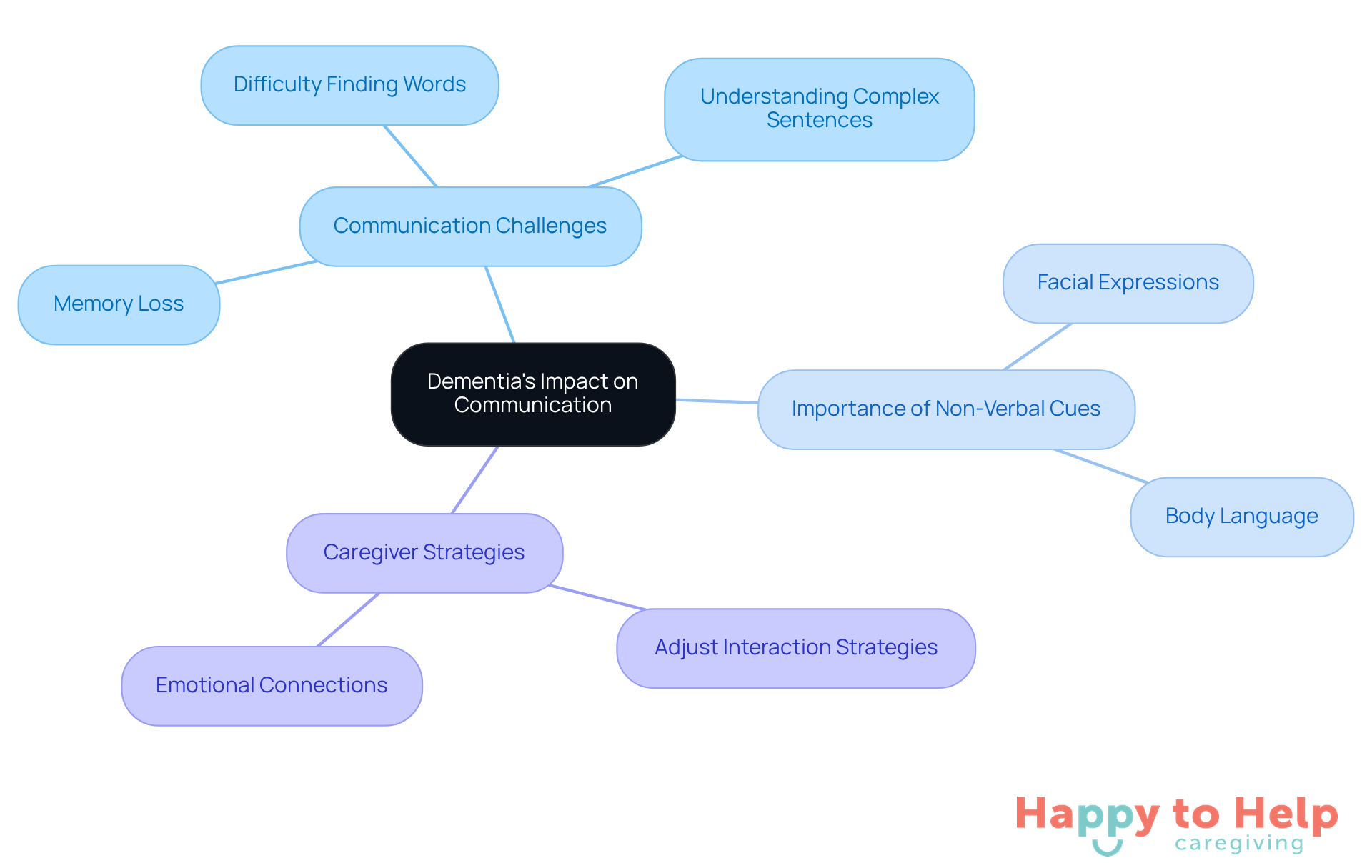
Dementia significantly impacts a person's ability to communicate. Individuals often face memory loss, difficulty finding words, and challenges in understanding complex sentences. As cognitive decline progresses, these issues can lead to frustration and withdrawal from conversations. Caregivers must recognize that non-verbal cues, such as facial expressions and body language, become increasingly crucial. Understanding how to talk to someone with early stage dementia helps caregivers adjust their interaction strategies, promoting better engagement.
With over 10 million new cases of dementia emerging annually worldwide, the need for effective interaction strategies is urgent. Caregivers should prepare for emotional reactions, as frustration often arises from communication difficulties. Non-verbal communication plays a vital role; being attentive to body language and facial expressions can convey feelings and needs even when words fail.
For additional support, caregivers can contact the National Dementia Helpline, available 24/7 at 1800 100 500. Specialists emphasize how to talk to someone with early stage dementia by using a personal and compassionate approach, as it encourages them to become more involved. This highlights the importance of emotional connections and non-verbal signals in fostering meaningful interactions, ultimately enhancing the well-being of individuals facing cognitive decline.
Prepare for Effective Communication
Effective communication is crucial for caregivers, particularly in understanding how to talk to someone with early stage dementia, yet many face challenges that can hinder their interactions. Caregivers often struggle with ensuring that their messages are understood, especially when they are trying to learn how to talk to someone with early stage dementia. This can lead to frustration for both the caregiver and the person receiving care.
To address these challenges, caregivers can take several steps to enhance communication:
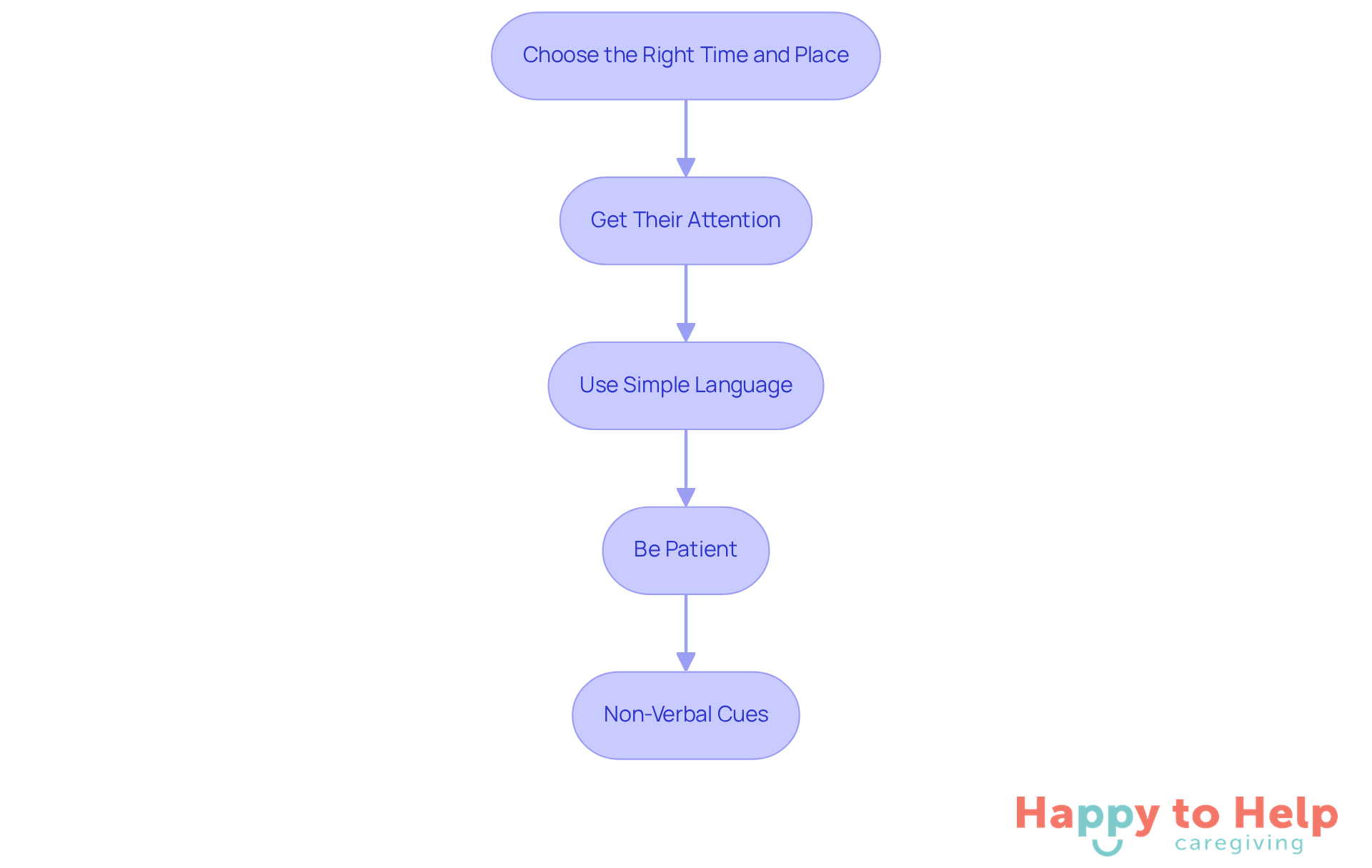
- Choose the Right Time and Place: Select a quiet, comfortable setting with minimal distractions. Ensure the person is not tired, hungry, or in discomfort.
- Get Their Attention: Approach the individual calmly, use their name, and make eye contact to ensure they are focused on you.
- Use Simple Language: Speak clearly and use short, straightforward sentences. Avoid jargon and complex phrases. To effectively communicate, it is important to know how to talk to someone with early stage dementia by focusing on one idea or instruction at a time to aid comprehension.
- Be Patient: Allow extra time for the person to process information and respond. Processing delays are common in dementia, which is why knowing how to talk to someone with early stage dementia can make silence a natural part of the conversation.
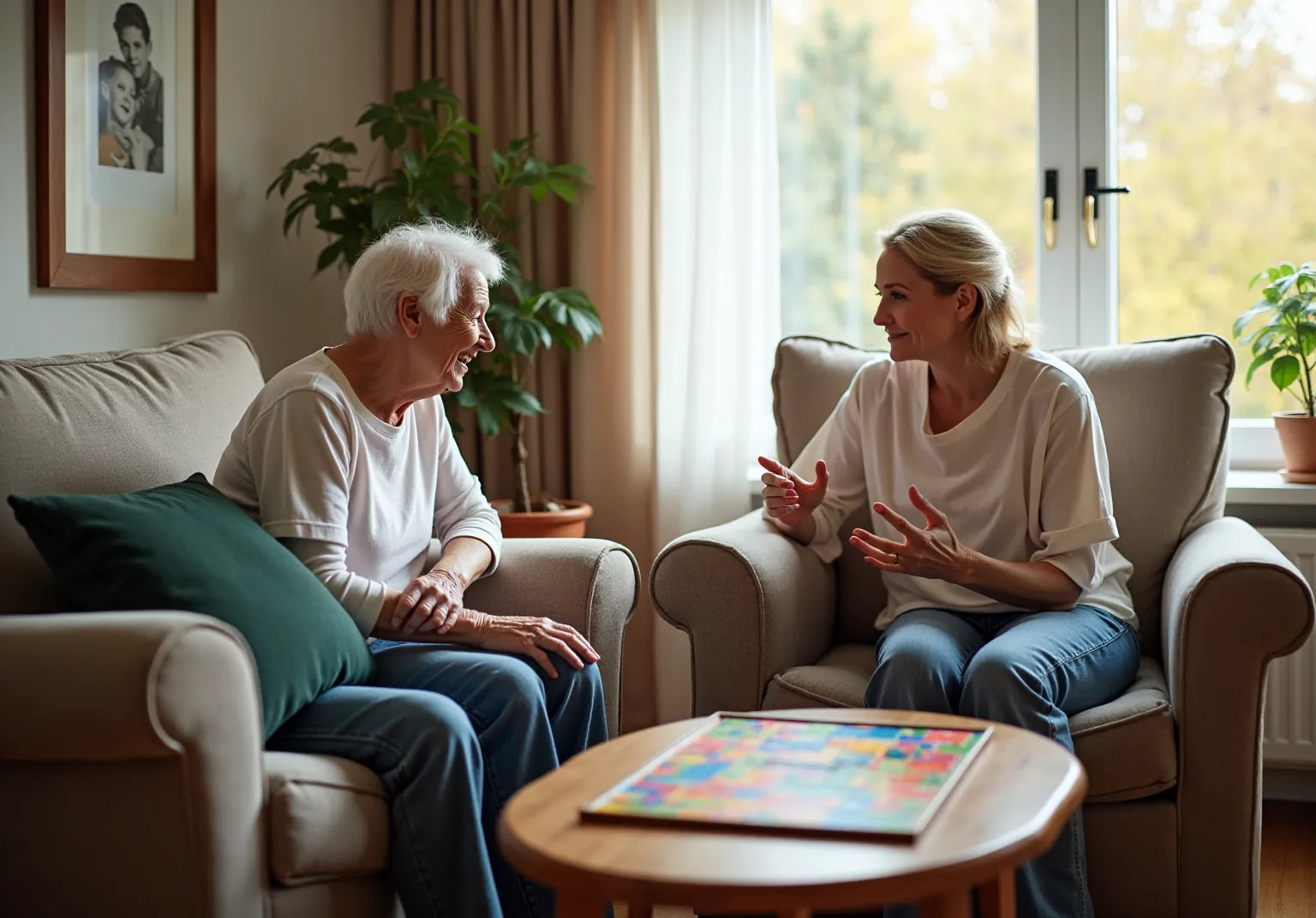
- Non-Verbal Cues: Use gestures, facial expressions, and touch to reinforce your message and show empathy. Avoid interrupting or finishing their sentences, as this can hinder their ability to express themselves.
Establishing a supportive atmosphere for dialogue is crucial when considering how to talk to someone with early stage dementia, as it nurtures trust and reduces anxiety and agitation. This enhances interactions, making them more effective and compassionate. As noted by Allenbrook Care Home, clear and empathetic communication can significantly reduce frustration for both patients and their support staff, ultimately improving their quality of life.
Engage in Meaningful Conversations
Caregivers often face challenges when learning how to talk to someone with early stage dementia during meaningful conversations. Limited communication can lead to feelings of isolation for those in their care, making it essential to understand how to talk to someone with early stage dementia to foster connections through effective dialogue. Here are some strategies to help caregivers enhance their interactions:
-
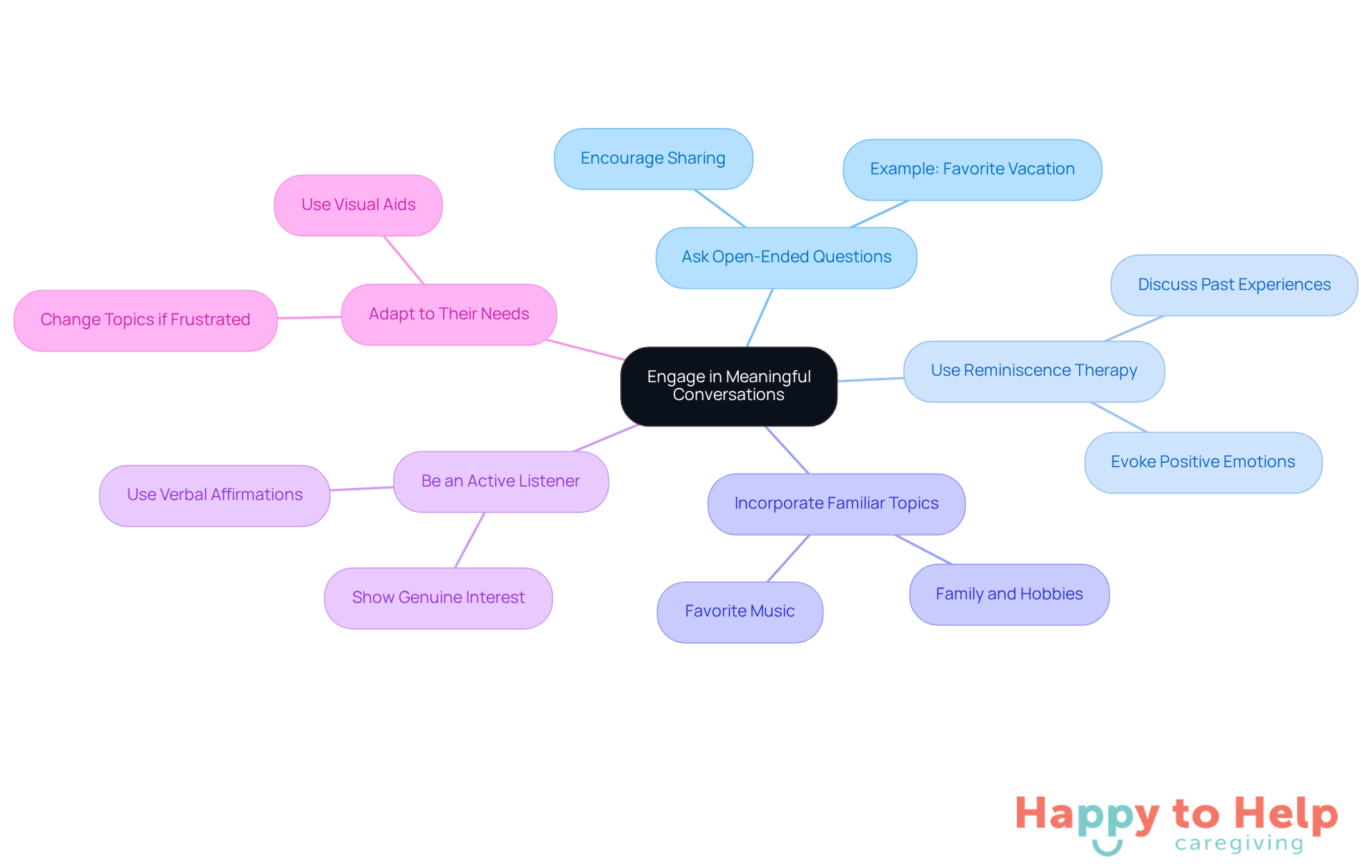
Ask Open-Ended Questions: Encourage individuals to share their thoughts and feelings by posing questions that require more than a yes or no answer. For instance, asking, "What was your favorite vacation?" invites deeper reflection and sharing.
-
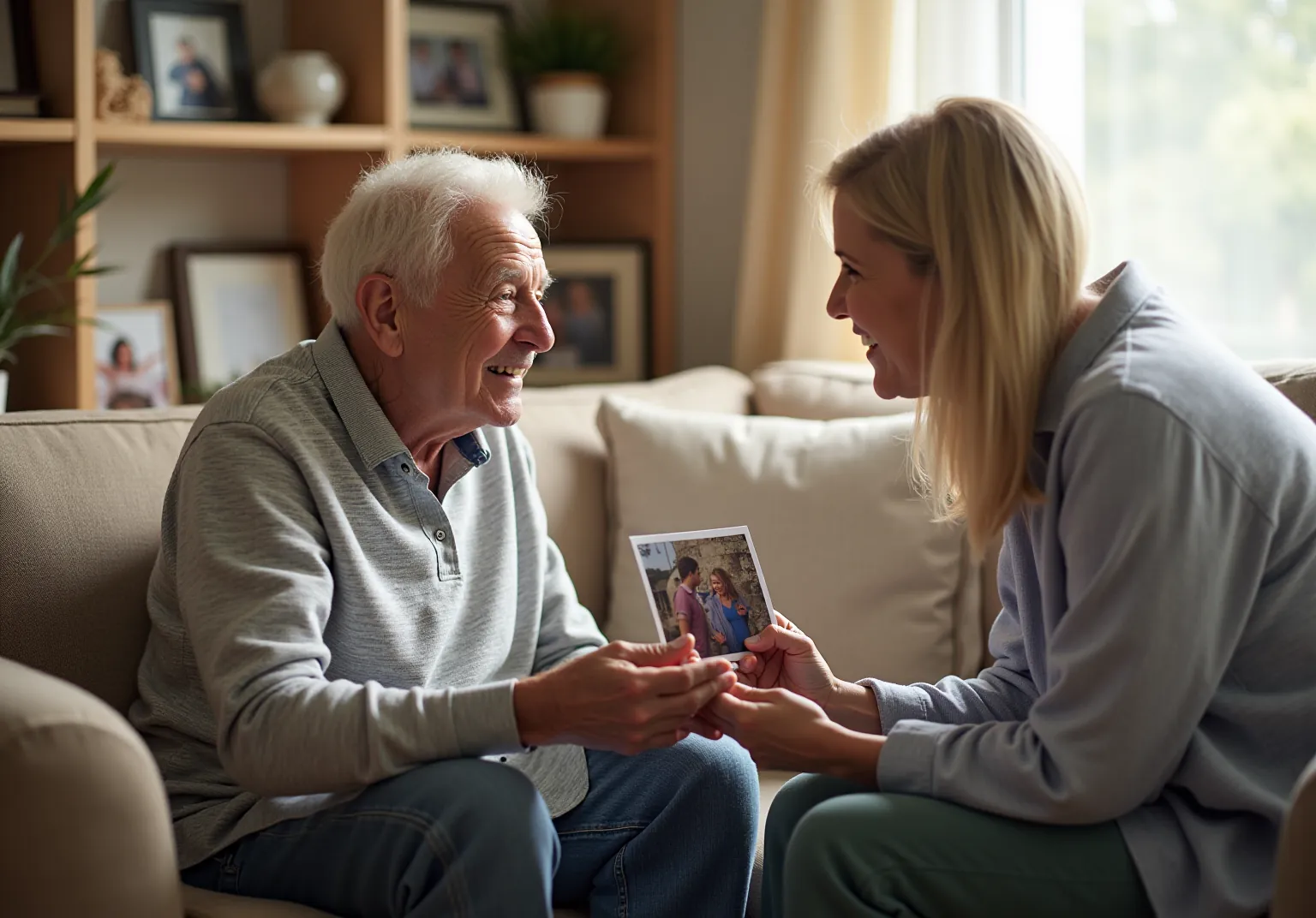
Use Reminiscence Therapy: Discussing past experiences and memories can stimulate conversation and evoke positive emotions, creating a warm atmosphere for dialogue.
-
Incorporate Familiar Topics: Engage in discussions about subjects that resonate with the individual, such as family, hobbies, or favorite music. This connection can spark interest and encourage participation.
-
Be an Active Listener: Show genuine interest in their responses. Nod, maintain eye contact, and provide verbal affirmations to encourage them to continue sharing.
-
Adapt to Their Needs: If the person appears frustrated or confused, be flexible in your approach. Changing the topic or using visual aids can help convey your message more effectively.
By implementing these strategies, caregivers can improve how to talk to someone with early stage dementia, creating a more engaging and supportive environment that enhances the quality of conversations.
Prioritize Caregiver Well-Being
Caring for someone with dementia can be emotionally and physically taxing. This strain can lead to burnout, making it difficult for caregivers to provide the necessary support. To maintain effective communication and care, caregivers must prioritize their own well-being.
-
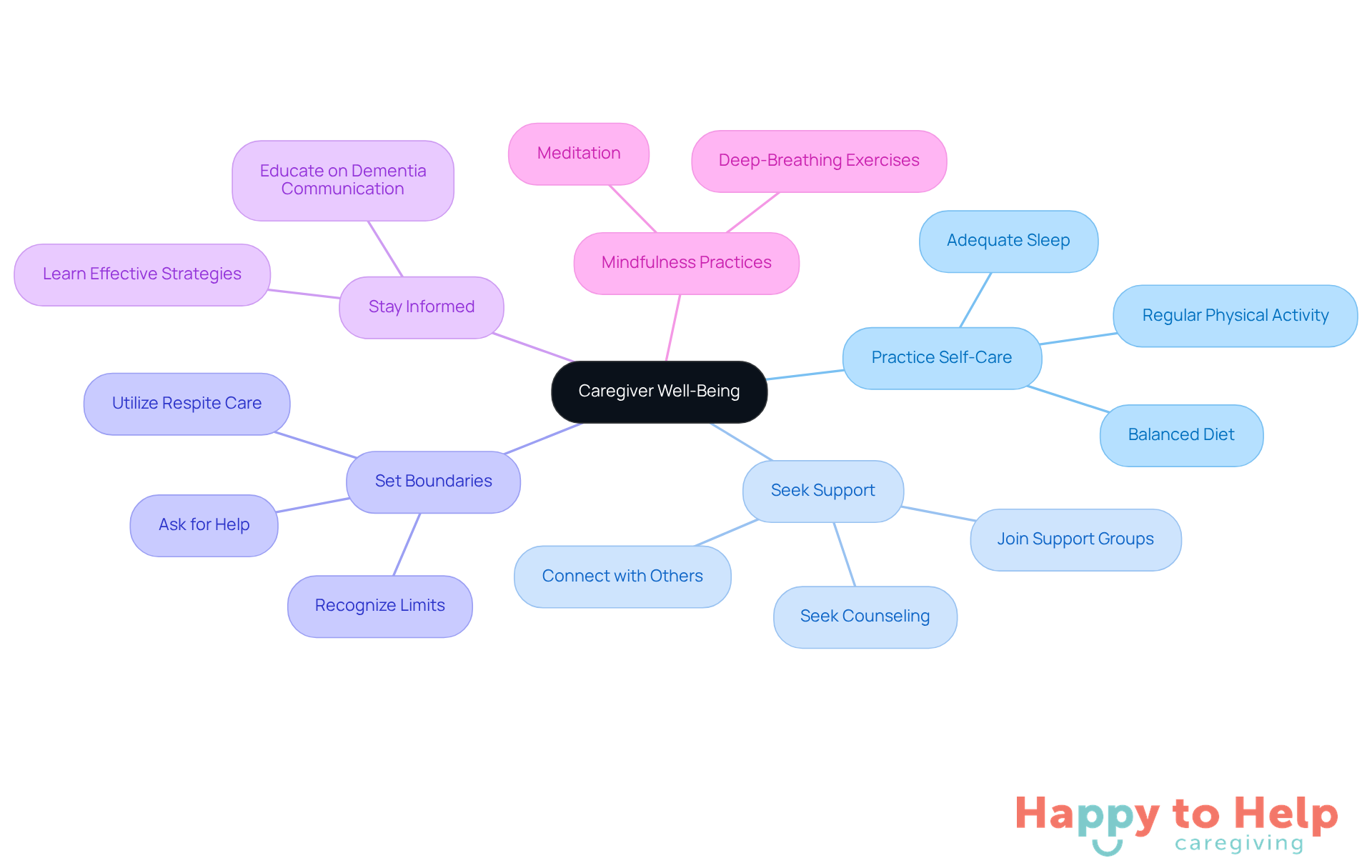
Practice Self-Care: Engage in regular physical activity, maintain a balanced diet, and ensure adequate sleep. Taking care of your health enables you to care for others more effectively.
-
Seek Support: Join caregiver support groups or seek counseling to share experiences and gain insights from others in similar situations. Connecting with others can alleviate feelings of isolation.
-
Set Boundaries: Recognize your limits and don’t hesitate to ask for help when needed. Respite care can provide necessary breaks, allowing you to recharge.
Stay informed by educating yourself on how to talk to someone with early stage dementia and effective communication strategies. Understanding how to talk to someone with early stage dementia can empower you and reduce feelings of helplessness, making you a more effective caregiver.
- Mindfulness Practices: Incorporate mindfulness techniques such as meditation or deep-breathing exercises to manage stress and enhance emotional resilience. These practices can help you stay grounded during challenging times.
Your Path Forward
Effective communication with individuals experiencing early-stage dementia presents a significant challenge for caregivers. This issue can lead to feelings of frustration and isolation for both parties, making it essential to address these communication barriers.
To foster connection and understanding, caregivers must employ thoughtful strategies that enhance interactions. The following are crucial steps in ensuring that those with dementia feel heard and valued:
- Choosing the right environment
- Using simple language
- Practicing patience
Additionally, non-verbal cues and active listening play vital roles in bridging the gaps created by cognitive decline.
Moreover, prioritizing caregiver well-being is essential for maintaining effective communication. When caregivers take care of their own mental and emotional health, they are better equipped to provide compassionate support, creating a reciprocal relationship that benefits everyone involved.
In conclusion, the journey of caring for someone with dementia involves not only understanding their needs but also nurturing one's own well-being. By integrating these communication strategies, caregivers can foster a supportive atmosphere that encourages engagement and connection. Embracing these practices enhances the quality of interactions and contributes to a more compassionate and fulfilling caregiving experience.
https://iframe.tely.ai/cta/eyJhcnRpY2xlX2lkIjogIjY5Mjc5NTE3NmFmMzU5NTU2OTU3ODdkYiIsICJjb21wYW55X2lkIjogIjY4ZWU1ZGNhNzMxNzYyNTU3ZjNjOTVjMSIsICJpbmRleCI6IG51bGwsICJ0eXBlIjogImFydGljbGUifQ==Frequently Asked Questions
How does dementia affect communication?
Dementia significantly impacts a person's ability to communicate, leading to memory loss, difficulty finding words, and challenges in understanding complex sentences. As cognitive decline progresses, these issues can result in frustration and withdrawal from conversations.
Why are non-verbal cues important when communicating with someone who has dementia?
Non-verbal cues, such as facial expressions and body language, become increasingly crucial as dementia progresses. They can convey feelings and needs even when verbal communication fails.
What strategies can caregivers use to improve communication with individuals in the early stages of dementia?
Caregivers can adjust their interaction strategies by using a personal and compassionate approach, promoting better engagement and encouraging emotional connections.
What should caregivers expect in terms of emotional reactions from individuals with dementia?
Caregivers should prepare for emotional reactions, as frustration often arises from communication difficulties experienced by individuals with dementia.
How prevalent is dementia globally?
There are over 10 million new cases of dementia emerging annually worldwide, highlighting the urgent need for effective interaction strategies.
Where can caregivers find additional support for communicating with individuals with dementia?
Caregivers can contact the National Dementia Helpline, available 24/7 at 1800 100 500, for additional support and guidance.
List of Sources
- Understand Dementia's Impact on Communication
- Communication and engagement with people living with dementia (https://dementia.org.au/news/communication-and-engagement-people-living-dementia)
- Frontiers | Grand challenge of maintaining meaningful communication in dementia care (https://frontiersin.org/journals/dementia/articles/10.3389/frdem.2023.1137897/full)
- ADI - Dementia statistics (https://alzint.org/about/dementia-facts-figures/dementia-statistics)
- Study offers guidance for communicating with loved ones living with dementia (https://news-medical.net/news/20250827/Study-offers-guidance-for-communicating-with-loved-ones-living-with-dementia.aspx)
- Prepare for Effective Communication
- Communication and engagement with people living with dementia (https://dementia.org.au/news/communication-and-engagement-people-living-dementia)
- Bridging the gap: Dementia communication strategies - Harvard Health (https://health.harvard.edu/mind-and-mood/bridging-the-gap-dementia-communication-strategies)
- Communicating with a Person with Dementia | Strategy (https://allenbrook-fordingbridge.co.uk/news/effective-communication-strategies-with-dementia-patients)
- Clearer Conversations, Better Care: New Guide Highlights Best Practices for Communicating with Older Adults (https://geron.org/News-Events/GSA-News/Press-Room/Press-Releases/clearer-conversations-better-care-new-guide-highlights-best-practices-for-communicating-with-older-adults)
- Dementia Statistics & Facts (https://mastermindbehavior.com/post/dementia-statistics-facts)
- Engage in Meaningful Conversations
- Case study: Building sustainability at Age Exchange - The Management Centre (https://managementcentre.co.uk/case\_studies/age-exchange-building-sustainability)
- Meaningful activities for a person with dementia (https://dementiauk.org/news/meaningful-activities-for-a-person-with-dementia)
- Best Questions for People With Dementia | Huntsville (https://flemingfarms.com/best-questions-for-people-with-dementia-keep-connecting-with-loved-ones)
- Mindsong - The Fore (https://thefore.org/case\_studies/mindsong)
- Top List of Inspirational Dementia Quotes for Caregivers (https://rochesterlawcenter.com/dementia-resources/dementia-quotes)
- Prioritize Caregiver Well-Being
- New Report Reveals U.S. Family Caregivers Perform Equivalent of a Staggering $873.5 Billion Worth of Labor, Would Surpass Revenue of Top Global Companies | Otsuka US (https://otsuka-us.com/news/new-report-reveals-us-family-caregivers-perform-equivalent-staggering-8735-billion-worth-labor)
- Alzheimer’s Association Encourages Dementia Caregivers to Make Their Health and Well-Being an Equal Priority (https://alz.org/news/2024/november-national-family-caregivers-month)
- Caregiver Statistics: Demographics (https://caregiver.org/resource/caregiver-statistics-demographics)
- More Than 60% Say Caregiving Increased Their Level of Stress, AARP Report Finds (https://aarp.org/caregiving/medical/report-caregiver-mental-health)
- The Caregiving Landscape: Data & Insights on the Caregiver Experience in the U.S. (https://caregiveraction.org/caregiver-statistics)