What You Need to Know About How Veterans Qualify
Understanding the complexities of caregiver support for veterans is crucial. As the needs of those who have served their country evolve, caregivers face significant challenges. Navigating the maze of applications and regulations can be overwhelming, leaving many unsure of where to turn for help.
Veterans must meet specific criteria to qualify for caregiver assistance. This guide not only outlines these eligibility requirements but also highlights the financial benefits available to ease the burden of caregiving. However, the process can feel daunting. What are the key steps that can simplify this journey and ensure that veterans and their families receive the support they deserve?
In the following sections, we will explore practical solutions to help caregivers navigate this complex landscape.
Clarify the Caregiver Qualification Criteria for Veterans
Former military personnel face specific challenges set by the Department of Veterans Affairs (VA) regarding how does a veteran qualify for a caregiver assistance. Understanding how does a veteran qualify for a caregiver is crucial for ensuring that support reaches those who need it most.
Key Requirements:
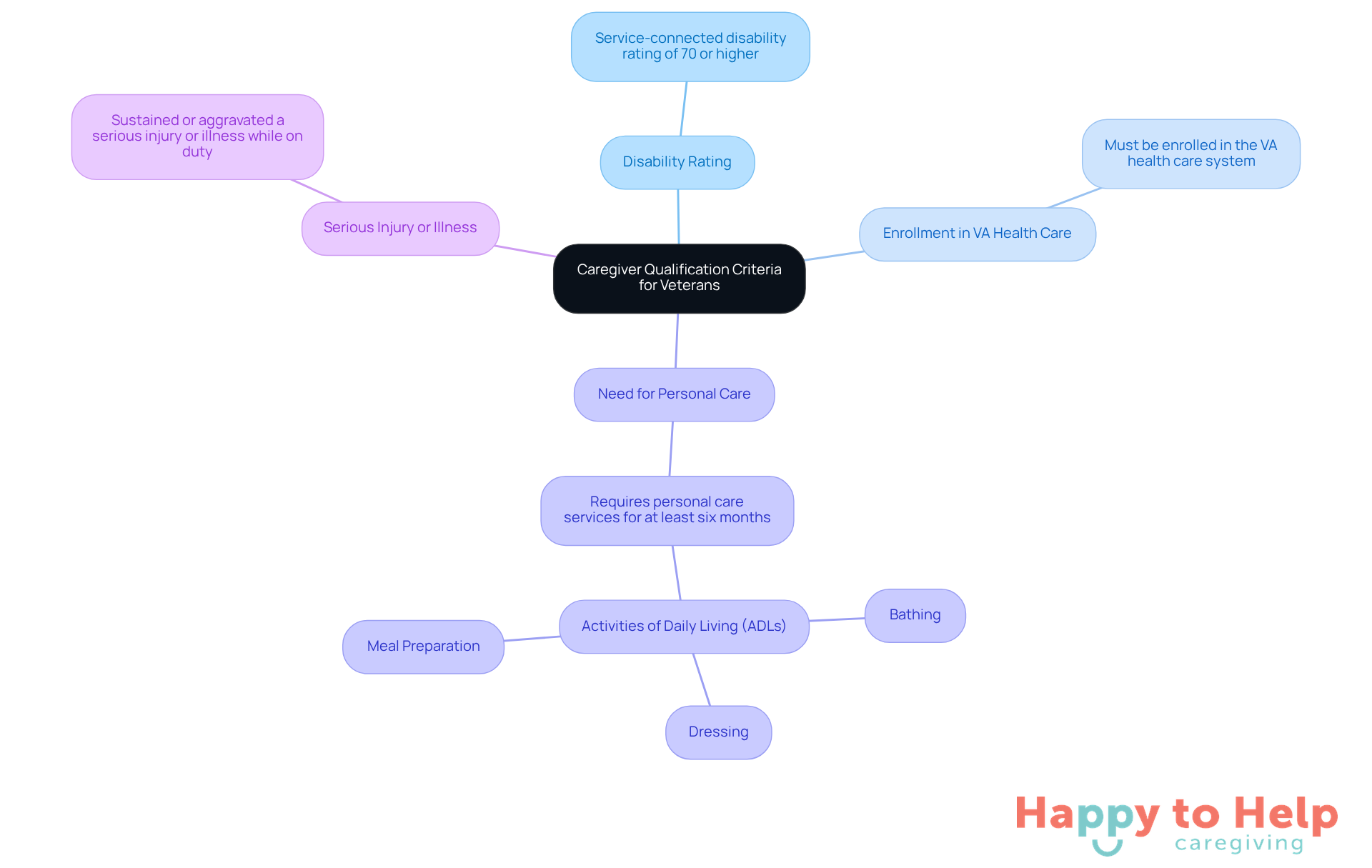
- Disability Rating: Veterans must have a service-connected disability rating of 70% or higher, whether individual or combined.
- Enrollment in VA Health Care: Service members need to be enrolled in the VA health care system.
- Need for Personal Care: Individuals must require personal care services for at least six months, which includes assistance with activities of daily living (ADLs) like bathing, dressing, and meal preparation.
- Serious Injury or Illness: The individual must have sustained or aggravated a serious injury or illness while on duty.
These criteria ensure that support is directed to those former military personnel who need it most, highlighting how does a veteran qualify for a caregiver to provide the necessary assistance effectively.
Explore Financial Benefits: Aid & Attendance and Housebound Pension
Veterans face significant caregiving costs that can strain their finances. Fortunately, there are essential financial benefits available that can help alleviate these burdens:
-
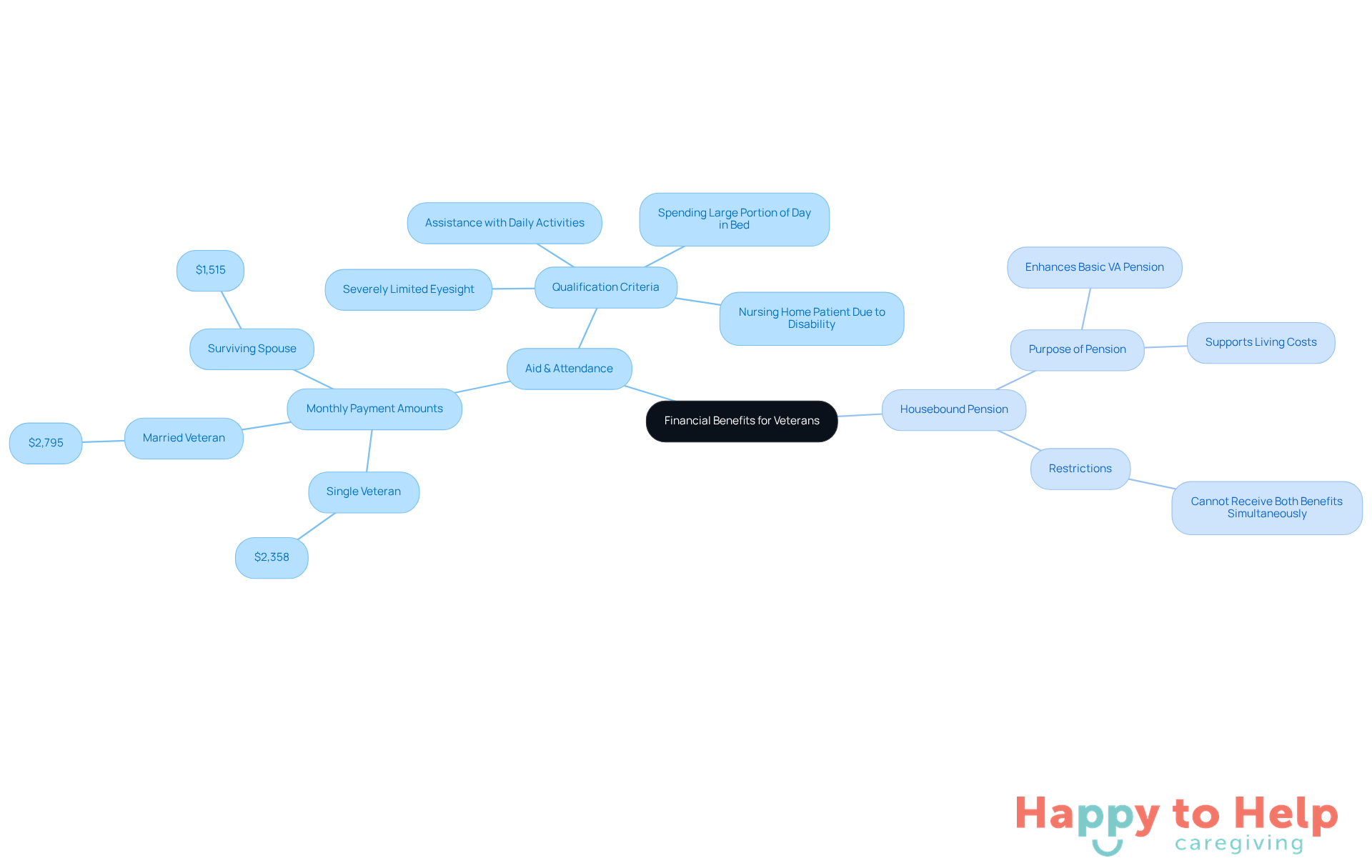
Aid & Attendance: This benefit provides additional monthly payments to veterans who require assistance with daily living activities. In 2025, a single veteran could receive up to $2,358 per month, while married veterans might qualify for as much as $2,795. Surviving spouses may receive up to $1,515 per month. This financial support is crucial for those needing help with tasks like bathing, dressing, or feeding. Veterans must understand how does a veteran qualify for a caregiver, which includes meeting specific criteria such as needing assistance with daily activities, spending a large portion of the day bedridden due to illness, being a nursing home patient due to disability, or having severely limited eyesight.
-
Housebound Pension: Designed for individuals who are permanently disabled and primarily confined to their homes, this pension enhances the basic VA pension. It provides essential monthly payments that help cover living costs, allowing former service members to maintain their independence while receiving necessary care. It's important to note that veterans cannot receive both Aid and Attendance and Housebound support simultaneously.
Both benefits aim to empower former service members, enabling them to live comfortably while receiving the assistance they need. By understanding these options, veterans and their families can better navigate the financial landscape of caregiving.
Outline the Application Process for Family Caregiver Compensation
Navigating the application process for family caregiver compensation can be challenging for many caregivers. Without clear guidance, the steps involved may lead to confusion and delays, ultimately affecting the support they can provide to their loved ones.
To tackle these challenges, here’s a straightforward approach:
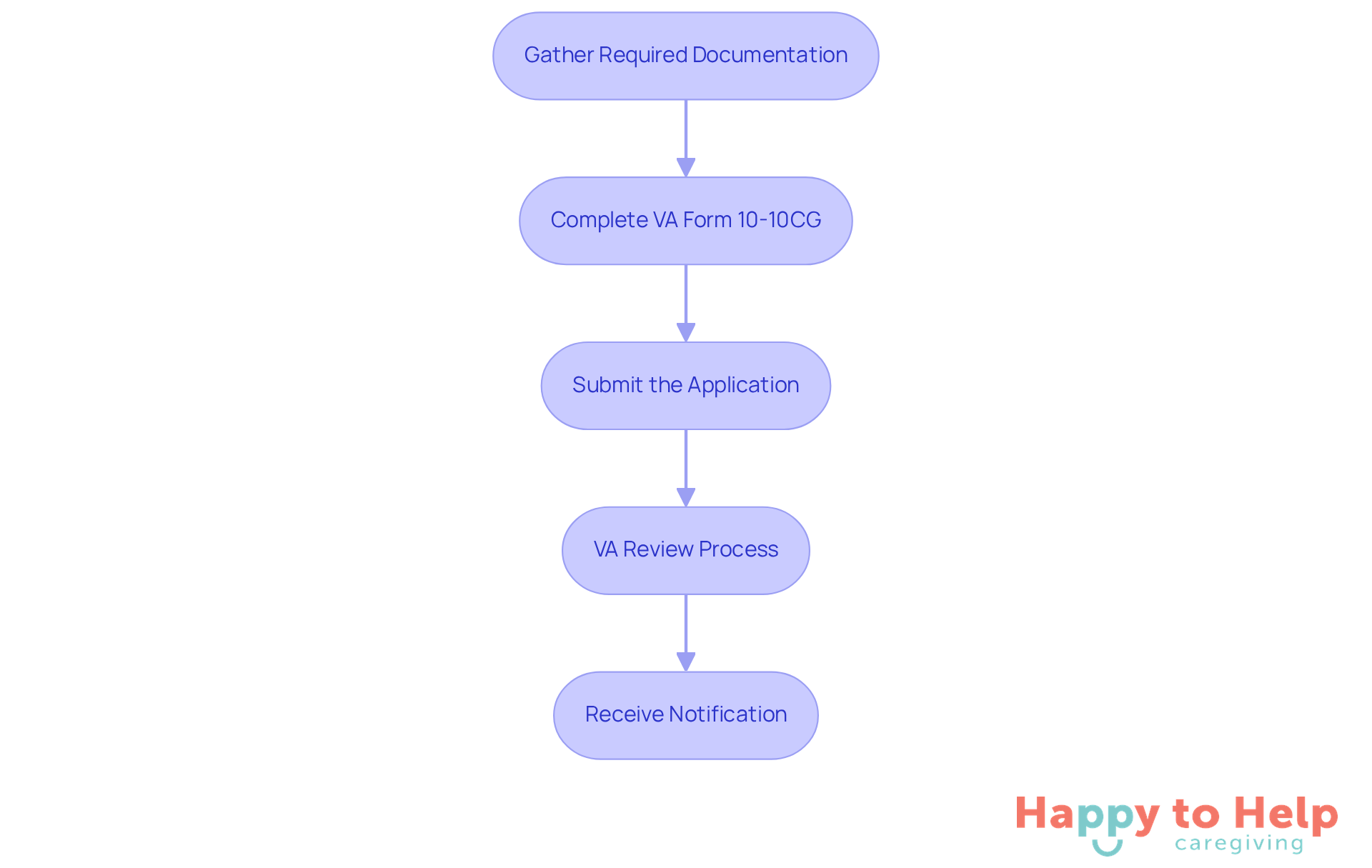
- Gather Required Documentation: Collect necessary documents, including the individual's discharge papers, medical records, and proof of disability rating.
- Complete VA Form 10-10CG: This form is crucial for applying to the Program of Comprehensive Assistance for Family Caregivers (PCAFC). It can be filled out online or submitted by mail.
- Submit the Application: Send the completed form along with all required documentation to the appropriate VA office. Ensure that all information is accurate to prevent delays in processing.
- VA Review Process: After submission, the VA will review the application, which may involve a Compensation & Pension (C&P) exam to evaluate the veteran's needs.
- Receive Notification: Once the review is complete, the VA will inform the applicant of the decision. If approved, the support provider will receive compensation and access to additional resources.
The average duration required for the VA to handle compensation applications has improved considerably, with recent efforts decreasing backlogs and increasing efficiency. In fact, the backlog of Veterans waiting for VA compensation and pension assistance has decreased by more than 57%, making the application process more accessible and timely. Furthermore, the VA has extended support benefits through September 30, 2028, providing reassurance about the program's stability.
As VA Secretary Doug Collins stated, "This decision highlights VA’s dedication to Veterans and supporters across the nation and will help provide consistency and stability to nearly 15,000 legacy participants for years to come."
By adhering to these steps carefully, caregivers can enable a more efficient application process and gain faster access to essential assistance. Many caregivers have successfully navigated this process, benefiting from the resources and support available through the VA.
Making the Right Choice
Understanding the complexities of caregiver support for veterans is crucial. Many caregivers face challenges in navigating the resources available to them, which can lead to feelings of frustration and overwhelm. Without proper guidance, veterans and their families may miss out on essential benefits that can significantly ease their caregiving burden.
Veterans must meet specific criteria to qualify for caregiver support, including:
- A service-connected disability rating
- Enrollment in VA health care
The implications of not understanding these requirements can be significant, as it may prevent access to vital financial benefits like Aid & Attendance and the Housebound Pension. These resources are designed to alleviate caregiving costs and provide necessary support.
To address these challenges, it’s essential for caregivers to familiarize themselves with the application process. A clear, step-by-step guide can simplify this journey, making it easier for caregivers to access the resources they need. Taking action is vital - whether by seeking assistance through the VA or exploring available financial benefits, caregivers can significantly enhance their support systems.
Ultimately, understanding how veterans qualify for caregiver support is paramount. By being informed about the requirements and benefits, veterans and their families can navigate the system more effectively. It’s time to take proactive steps to ensure the well-being of those who have dedicated their lives to serving our country.
https://iframe.tely.ai/cta/eyJhcnRpY2xlX2lkIjogIjY5MjY0MzY1ZGUyNDgxZjQ1MzJkZTdhYyIsICJjb21wYW55X2lkIjogIjY4ZWU1ZGNhNzMxNzYyNTU3ZjNjOTVjMSIsICJpbmRleCI6IG51bGwsICJ0eXBlIjogImFydGljbGUifQ==Frequently Asked Questions
What are the main qualifications for a veteran to receive caregiver assistance?
Veterans must have a service-connected disability rating of 70% or higher, be enrolled in the VA health care system, require personal care services for at least six months, and have sustained or aggravated a serious injury or illness while on duty.
What is the required disability rating for veterans to qualify for caregiver assistance?
Veterans must have a service-connected disability rating of 70% or higher, whether individual or combined.
Do veterans need to be enrolled in a specific health care system to qualify for caregiver assistance?
Yes, veterans need to be enrolled in the VA health care system.
How long must a veteran require personal care services to qualify for caregiver assistance?
Veterans must require personal care services for at least six months.
What types of assistance are considered personal care services?
Personal care services include assistance with activities of daily living (ADLs) such as bathing, dressing, and meal preparation.
What type of injury or illness must a veteran have to qualify for caregiver assistance?
The veteran must have sustained or aggravated a serious injury or illness while on duty.
List of Sources
- Clarify the Caregiver Qualification Criteria for Veterans
- The Program of Comprehensive Assistance for Family Caregivers | Veterans Affairs (https://va.gov/family-and-caregiver-benefits/health-and-disability/comprehensive-assistance-for-family-caregivers)
- Who qualifies for the VA caregiver program? (https://dav.org/learn-more/news/2023/caregiver-program-expands-to-veterans-of-all-eras)
- VA extends ‘legacy’ caregiver benefits through 2028 (https://militarytimes.com/news/your-military/2025/11/20/va-extends-legacy-caregiver-benefits-through-2028)
- Expand Eligibility for the VA Comprehensive Caregiver Program (https://pva.org/news-and-media-center/recent-news/expand-eligibility-for-the-va-comprehensive-caregi)
- VA extended caregiver benefits to 2028: What this means for veterans (https://marca.com/en/lifestyle/us-news/personal-finance/2025/11/22/6921bcdc268e3ef80f8b456e.html)
- Explore Financial Benefits: Aid & Attendance and Housebound Pension
- VA Aid and Attendance benefits and Housebound allowance | Veterans Affairs (https://va.gov/pension/aid-attendance-housebound)
- A Hidden Lifeline for Veterans: Understanding VA Aid & Attendance Benefits (https://patch.com/illinois/homerglen-lockport/hidden-lifeline-veterans-understanding-va-aid-attendance-benefits)
- VA extended caregiver benefits to 2028: What this means for veterans (https://marca.com/en/lifestyle/us-news/personal-finance/2025/11/22/6921bcdc268e3ef80f8b456e.html)
- Veterans Aid & Attendance Benefit | Senior Living Residences (https://seniorlivingresidences.com/family-guide/financial-options/veterans-aid-and-attendance-benefit)
- Outline the Application Process for Family Caregiver Compensation
- VA extends caregiver support program eligibility for “legacy” Veterans, caregivers (https://news.va.gov/press-room/va-extends-caregiver-support-program-eligibility-for-legacy-veterans-caregivers)
- VA eliminates Veteran family health care backlog (https://news.va.gov/press-room/va-eliminates-veteran-family-health-care-backlog)
- VA extends ‘legacy’ caregiver benefits through 2028 (https://militarytimes.com/news/your-military/2025/11/20/va-extends-legacy-caregiver-benefits-through-2028)
- VA to extend caregiver support program eligibility for “legacy” Veterans, caregivers (https://news.va.gov/press-room/va-to-extend-caregiver-support-program-eligibility-for-legacy-veterans-caregivers)