
Understanding In-Home Care vs. Assisted Living: Home
Navigating care options for adults with disabilities poses a significant challenge for families. They often find themselves torn between the desire for independence and the need for essential support. This dilemma can lead to emotional strain and financial burdens for caregivers, making it crucial to understand the available choices.
As the demand for personalized care increases, families must weigh the distinct advantages of in-home care against those of assisted living. Which option truly enhances quality of life while addressing the unique challenges caregivers face? This article will explore these care models, shedding light on their benefits and drawbacks. By doing so, we aim to equip families with the knowledge needed to make informed decisions.
Understanding In-Home Care and Assisted Living
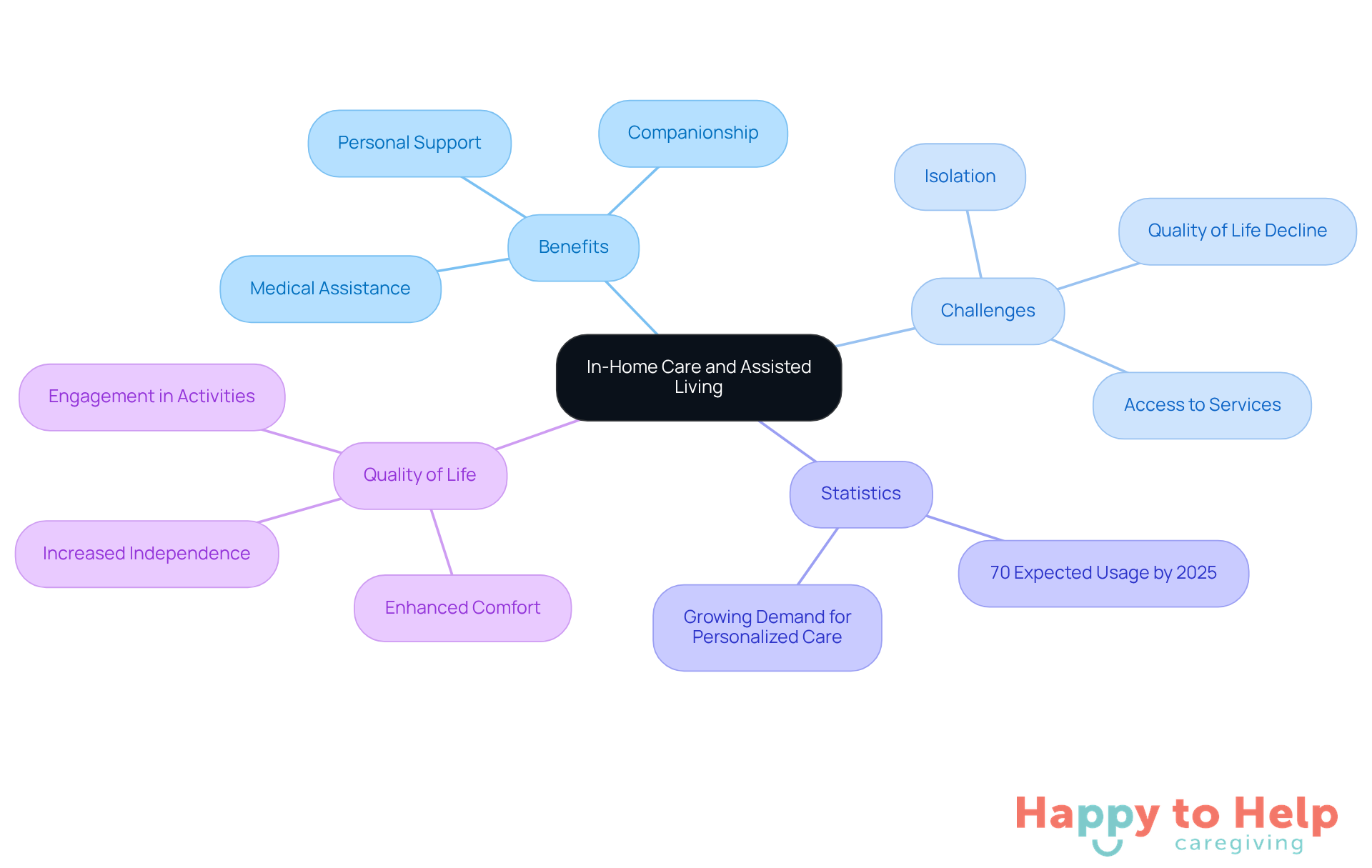
Home care for adults with disabilities addresses a significant challenge faced by many seniors: the need for support in daily activities while maintaining their independence. This situation can lead to feelings of isolation and a decline in quality of life if not managed effectively.
The implications of this challenge are profound. Many seniors find themselves in a position where they require home care for adults with disabilities, which includes personal support, companionship, or even medical assistance tailored to their unique needs. Without adequate support, they may struggle to engage in their favorite activities or feel comfortable in their own homes.
Fortunately, home care for adults with disabilities provides a practical solution. By providing home care for adults with disabilities in familiar surroundings, seniors can receive the personalized support they need while preserving their sense of independence. In fact, specialists in elder support emphasize that this approach not only enhances comfort but also fosters a greater quality of life.
Statistics indicate a growing trend: by 2025, approximately 70% of seniors are expected to utilize some form of in-home assistance. This reflects a clear preference for personalized care that allows individuals to thrive in their own homes.
Effective home care for adults with disabilities has demonstrated success in enabling seniors to participate in activities they love while receiving necessary assistance. This method not only improves their overall well-being but also significantly reduces feelings of isolation, making it an appealing choice for families seeking support options for their loved ones.
Exploring In-Home Care Services for Adults with Disabilities
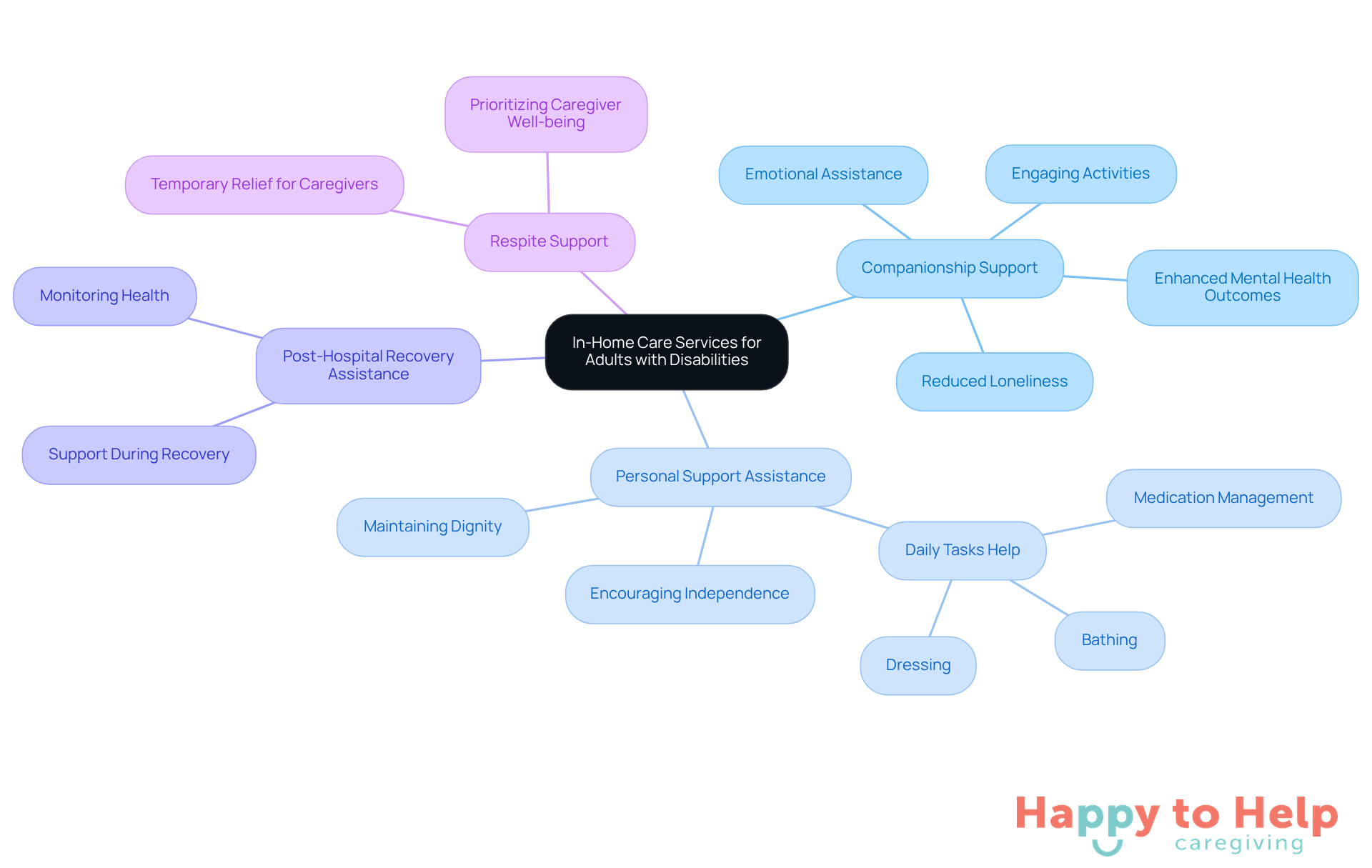
Home care for adults with disabilities presents a vital solution to the challenges faced by caregivers. Many caregivers experience significant emotional and physical demands, often leading to high levels of stress and burnout. In fact, approximately 92% of caregivers providing 21 or more hours of care per week are classified as high burden. This statistic highlights the urgent need for support systems that can alleviate these pressures.
One effective solution is companionship support, which focuses on providing emotional assistance and engaging clients in enjoyable activities. This service not only reduces feelings of loneliness but also fosters a sense of connection and belonging among individuals with disabilities. Research indicates that companionship support can lead to enhanced mental health outcomes, making it a crucial component of home care for adults with disabilities.
Home care for adults with disabilities includes personal support assistance, which is an essential service that helps with daily tasks such as bathing, dressing, and medication management. By encouraging independence, this assistance allows individuals to maintain their dignity and comfort in their own homes. Additionally, post-hospital recovery assistance ensures that individuals transitioning from medical procedures receive the necessary support and monitoring during their recovery phase.
Respite support is equally important for caregivers, offering temporary relief that enables them to rejuvenate and prioritize their own well-being. By utilizing home care for adults with disabilities, families can create a supportive environment that prioritizes the health and happiness of their loved ones, ultimately leading to a more balanced caregiving experience.
Examining Assisted Living Facilities for Adults with Disabilities
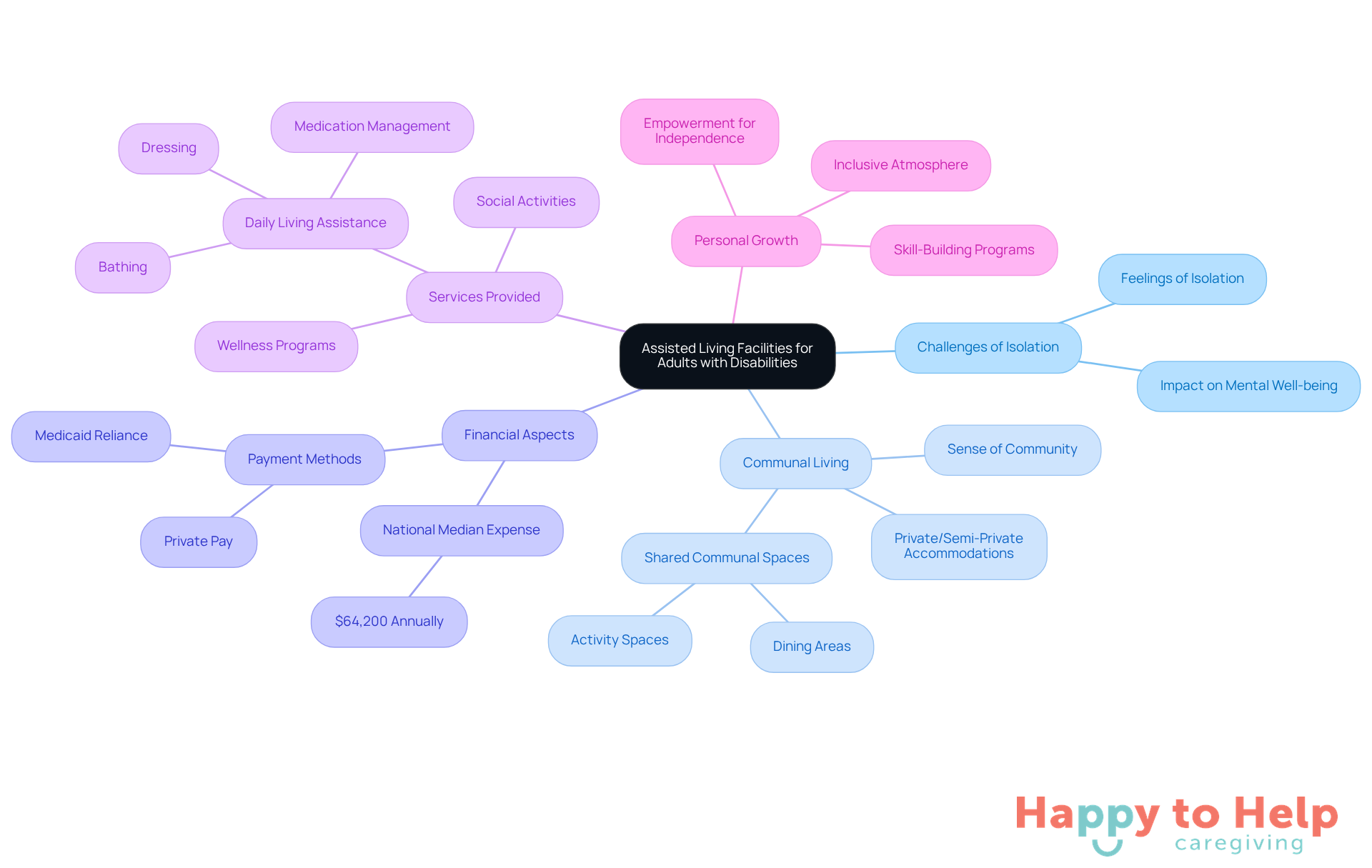
Assisted care facilities face a significant challenge: many adults with disabilities who require home care for adults with disabilities experience feelings of isolation. This issue can lead to decreased mental well-being and hinder social engagement, which is crucial for personal growth and independence.
To address this, these facilities provide a nurturing environment that focuses on improving independence and promoting social interaction. Residents enjoy private or semi-private accommodations while sharing communal spaces for dining and activities, fostering a sense of community. In fact, the communal arrangement not only encourages social interaction but also greatly reduces feelings of isolation.
In 2025, the national median expense for assisted housing services is roughly $64,200 each year, reflecting the investment in quality assistance and community support. Facilities offer crucial home care for adults with disabilities by assisting with everyday tasks such as:
- bathing
- dressing
- medication management
alongside a variety of social activities and wellness programs.
Successful programs within these facilities emphasize skill-building and personal growth, empowering residents to maintain their independence while enjoying the companionship of peers. Facility managers often stress the importance of creating an inclusive atmosphere that nurtures independence, ensuring that residents feel valued and engaged in their daily lives.
Comparing Pros and Cons of In-Home Care and Assisted Living
When assessing in-home support versus assisted living, caregivers face significant challenges. The primary issue is the emotional and financial burden associated with each option. In-home assistance, which is a form of home care for adults with disabilities, offers personalized support in a familiar environment, allowing individuals to maintain their independence. This model is particularly beneficial for those who value comfort and familiarity in home care for adults with disabilities, as it provides customized care tailored to specific needs. Flexibility in scheduling further enhances its appeal, accommodating the unique rhythms of each client’s life. Notably, 84% of participants appreciated their loved one's autonomy, underscoring its importance in family decision-making.
However, in-home care can lead to feelings of isolation due to limited social interaction. In contrast, assisted living facilities foster social engagement and provide 24/7 support. While this communal living arrangement can significantly reduce loneliness, it often comes with a hefty price tag. The average cost of assisted living can exceed $54,000 annually, which can strain household budgets. In comparison, hiring a home health aide for several hours each day may cost around $60,000 per year. Importantly, 72% of respondents identified cost as a primary concern regarding home care for adults with disabilities, highlighting the financial implications of these choices.
Real-world examples illustrate these dynamics. For instance, Margaret Newcomb opted for in-home assistance for her husband with severe dementia, motivated by a desire to protect their retirement savings while ensuring personalized care. Conversely, Gay Glenn's experience with her mother in a nursing facility costing over $10,000 monthly emphasizes the financial strain of assisted care. Richard Johnson remarked, "Individuals are subject to the chance of exhausting nearly all their wealth," pointing to the financial risks associated with prolonged support.
Ultimately, while assisted living provides structured assistance and social opportunities, home care for adults with disabilities offers a level of personalization and flexibility that many families find invaluable. As the population of older adults continues to grow-projected to reach 86 million Americans aged 65 and above by 2050-understanding these options becomes increasingly crucial for families navigating the complexities of elder care. Additionally, 75% of caregivers report experiencing stress or anxiety at least monthly, reflecting the emotional toll of caregiving decisions.

Navigating Family Considerations in Care Decisions
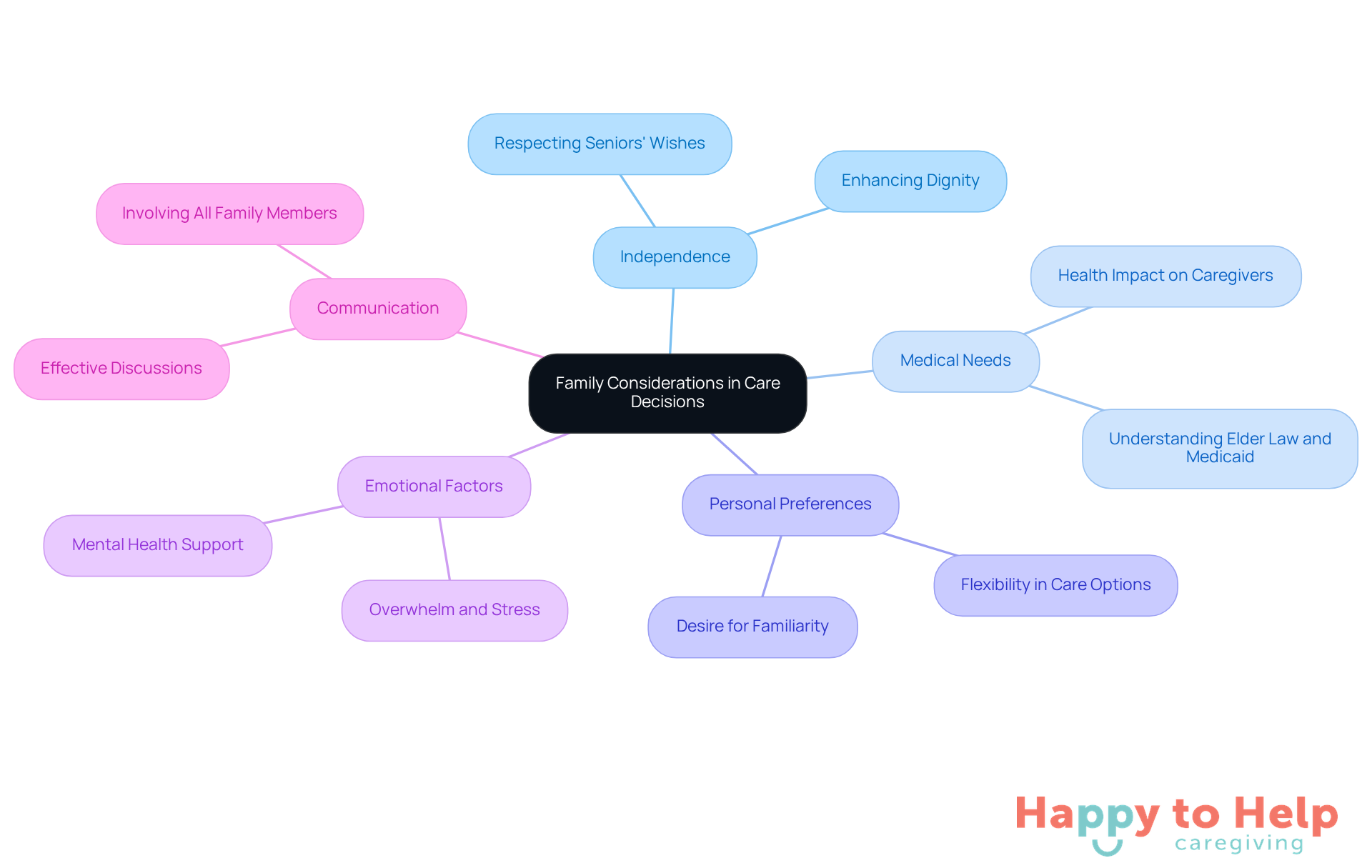
When households face the challenge of making support decisions, they encounter a complex landscape of factors. These include the individual's independence, medical needs, and personal preferences. Emotional factors often play a significant role, as families grapple with the desire to keep loved ones in familiar surroundings while recognizing the need for more structured support. This tension complicates decision-making, making it essential for households to evaluate their ability to provide support and the potential effects on relational dynamics.
Effective communication among relatives is vital to ensure alignment on care options that prioritize the individual's best interests. Open discussions allow families to address differing viewpoints and emotional issues, promoting a cooperative approach to caregiving. Studies show that households engaging all members in these discussions tend to reach agreements more easily, minimizing misunderstandings and emotional turmoil.
Moreover, acknowledging the emotional toll caregiving can impose on relatives is crucial. Many caregivers report feeling overwhelmed, with nearly 20% indicating fair or poor health due to their responsibilities. By prioritizing mental health and encouraging involvement from all household members, families can create a supportive environment that fosters teamwork and shared responsibility.
Involving senior relatives in support decisions not only honors their autonomy but also enhances their dignity and quality of life. This approach can lead to greater satisfaction and reduce potential conflicts among relatives. As the landscape of senior care evolves, families are encouraged to adopt a proactive mindset, focusing on clear communication and emotional support to navigate the complexities of caregiving effectively. Additionally, utilizing tools like calendars and checklists can help manage caregiving responsibilities, while understanding elder law and Medicaid coverage aids in making informed decisions.
Making the Right Choice
When evaluating in-home care versus assisted living for adults with disabilities, a significant problem arises: how to balance personalized support with the need for independence. This decision is not just about care; it impacts emotional well-being and financial stability for families. Caregivers often face the emotional toll of their responsibilities, which can lead to burnout and stress.
In-home care services offer tailored support in a familiar environment, enhancing the quality of life for many seniors. This option fosters independence and alleviates some burdens from caregivers. However, assisted living facilities provide a structured environment that encourages social interaction and community engagement, though at a higher financial cost. These facilities can help reduce feelings of isolation, which is crucial for many adults with disabilities.
To navigate these complexities, families must prioritize open communication and collaboration. Understanding the unique needs of their loved ones is essential. By considering both in-home care and assisted living options, families can make informed choices that enhance dignity and quality of life. Engaging in this decision-making process not only respects the autonomy of individuals but also creates a supportive atmosphere for everyone involved.
https://iframe.tely.ai/cta/eyJhcnRpY2xlX2lkIjogIjY5NDBhMjNjMjI1ZjA3N2M1ZmMwYmY1OCIsICJjb21wYW55X2lkIjogIjY4ZWU1ZGNhNzMxNzYyNTU3ZjNjOTVjMSIsICJpbmRleCI6IG51bGwsICJ0eXBlIjogImFydGljbGUifQ==Frequently Asked Questions
What is in-home care for adults with disabilities?
In-home care for adults with disabilities provides support for seniors in daily activities while allowing them to maintain their independence. This includes personal support, companionship, and medical assistance tailored to individual needs.
Why is in-home care important for seniors?
In-home care is important because it helps seniors avoid feelings of isolation and decline in quality of life. It allows them to engage in their favorite activities and feel comfortable in their own homes, enhancing their overall well-being.
What are the expected trends for in-home assistance among seniors?
By 2025, it is expected that approximately 70% of seniors will utilize some form of in-home assistance, reflecting a preference for personalized care that enables them to thrive in their own homes.
What types of services are included in home care for adults with disabilities?
Home care services include companionship support, personal support assistance for daily tasks (such as bathing, dressing, and medication management), post-hospital recovery assistance, and respite support for caregivers.
How does companionship support benefit individuals with disabilities?
Companionship support provides emotional assistance and engages clients in enjoyable activities, reducing feelings of loneliness and fostering a sense of connection, which can enhance mental health outcomes.
What role does personal support assistance play in home care?
Personal support assistance helps individuals with daily tasks, promoting independence and dignity while ensuring comfort in their own homes.
What is the significance of respite support for caregivers?
Respite support offers temporary relief for caregivers, allowing them to rejuvenate and prioritize their own well-being, which contributes to a more balanced caregiving experience.
List of Sources
- Understanding In-Home Care and Assisted Living
- Long Term Care 2025 Trends and Outlook (https://providermagazine.com/Articles/Pages/Long Term Care 2025 Trends and Outlook.aspx)
- Future of Assisted Living: How Value-Based Care is Changing Operations for HumanGood, Lifespark (https://seniorhousingnews.com/2025/09/17/future-of-assisted-living-how-value-based-care-is-changing-operations-for-humangood-lifespark)
- Senior Living Market Trends in 2025: What to Expect & How to Be Ready | Aaniie, formerly Smartcare Software (https://aaniie.com/news/senior-living-market-trends-in-2025)
- Place-Agnostic Models Signal New Era For Home-Based Care, Senior Living (https://homehealthcarenews.com/2025/11/place-agnostic-models-signal-new-era-for-home-based-care-senior-living)
- Exploring In-Home Care Services for Adults with Disabilities
- People with Disabilities Could Lose At-Home Care Due to Medicaid Cuts | County News Center | Office of Communications and Public Affairs | County of Santa Clara (https://news.santaclaracounty.gov/people-disabilities-could-lose-home-care-due-medicaid-cuts)
- Trump Administration and DOGE Eliminate Staff Who Help Older Adults and People With Disabilities - Medicare Rights Center (https://medicarerights.org/medicare-watch/2025/04/03/trump-administration-and-doge-eliminate-staff-who-help-older-adults-and-people-with-disabilities)
- News Releases (https://hcaoa.org/news-releases.html)
- Caregiver Statistics: Demographics (https://caregiver.org/resource/caregiver-statistics-demographics)
- FastStats (https://cdc.gov/nchs/fastats/home-health-care.htm)
- Examining Assisted Living Facilities for Adults with Disabilities
- Facts & Figures (https://ahcancal.org/Assisted-Living/Facts-and-Figures/Pages/default.aspx)
- 61 Assisted Living Statistics Operators Should Know | Aline (https://alineops.com/blog/assisted-living-statistics)
- State updates assisted living rules; operators no longer automatically can turn away wheelchair users (https://mcknightsseniorliving.com/news/state-updates-assisted-living-rules-operators-no-longer-automatically-can-turn-away-wheelchair-users)
- FastStats (https://cdc.gov/nchs/fastats/residential-care-communities.htm)
- News and Events - Center for Excellence in Assisted Living (https://theceal.org/news-events)
- Comparing Pros and Cons of In-Home Care and Assisted Living
- Families Prefer In-Home Care To Senior Living – Yet Struggle To Identify Needed Support (https://homehealthcarenews.com/2025/11/families-prefer-in-home-care-to-senior-living-yet-struggle-to-identify-needed-support)
- Family caregivers prefer in-home care over senior living, new industry report finds (https://mcknightshomecare.com/news/family-caregivers-prefer-in-home-care-over-senior-living-new-industry-report-finds)
- Most Americans expect to need long-term care in the future, and they don’t want that care in assisted living (https://mcknightsseniorliving.com/news/most-americans-expect-to-need-long-term-care-in-the-future-and-they-dont-want-that-care-in-assisted-living)
- Facing financial ruin as costs soar for elder care (https://kunm.org/news/2024-02-22/facing-financial-ruin-as-costs-soar-for-elder-care)
- Navigating Family Considerations in Care Decisions
- Families Prefer In-Home Care To Senior Living – Yet Struggle To Identify Needed Support (https://homehealthcarenews.com/2025/11/families-prefer-in-home-care-to-senior-living-yet-struggle-to-identify-needed-support)
- Senior Care Trends 2025: What Families Should Know (https://findcarez.com/News-details/top-senior-care-trends-in-2025-what-families-need-to-know)
- Managing Family Dynamics in Senior Care Decisions (https://chapelpointe.org/News-Events/ArticleID/118/Managing-Family-Dynamics-in-Senior-Care-Decisions)
- Caregiving Crisis: 45% Increase in Americans Providing Care (https://aarp.org/caregiving/basics/caregiving-in-us-survey-2025)
- Tips for navigating family dynamics while caring for aging parents (https://dallasnews.com/fwddfw/2024/11/01/tips-for-navigating-family-dynamics-while-caring-for-aging-parents)