
Understanding In-Home Care vs. Assisted Living:
Navigating the landscape of senior care presents a significant challenge for families in Boerne, Texas. The decision between in-home care and assisted living is crucial, as each option offers distinct advantages tailored to the diverse needs of seniors. Families often grapple with the implications of their choice, weighing factors such as health requirements, personal preferences, and financial considerations.
This dilemma can lead to stress and uncertainty. Families may worry about whether their decision will adequately support their loved one's immediate needs and long-term well-being. To address these concerns, it’s essential to approach the decision-making process with clarity and informed strategies.
Here are some actionable steps families can take:
- Assess Health Needs: Evaluate the specific health requirements of your loved one to determine which option provides the necessary support.
- Consider Personal Preferences: Discuss with your loved one their preferences regarding independence and community engagement.
- Evaluate Financial Options: Review the financial implications of both in-home care and assisted living to find a sustainable solution.
By taking these steps, families can make informed decisions that not only meet immediate needs but also foster long-term well-being.
Understanding In-Home Care and Assisted Living
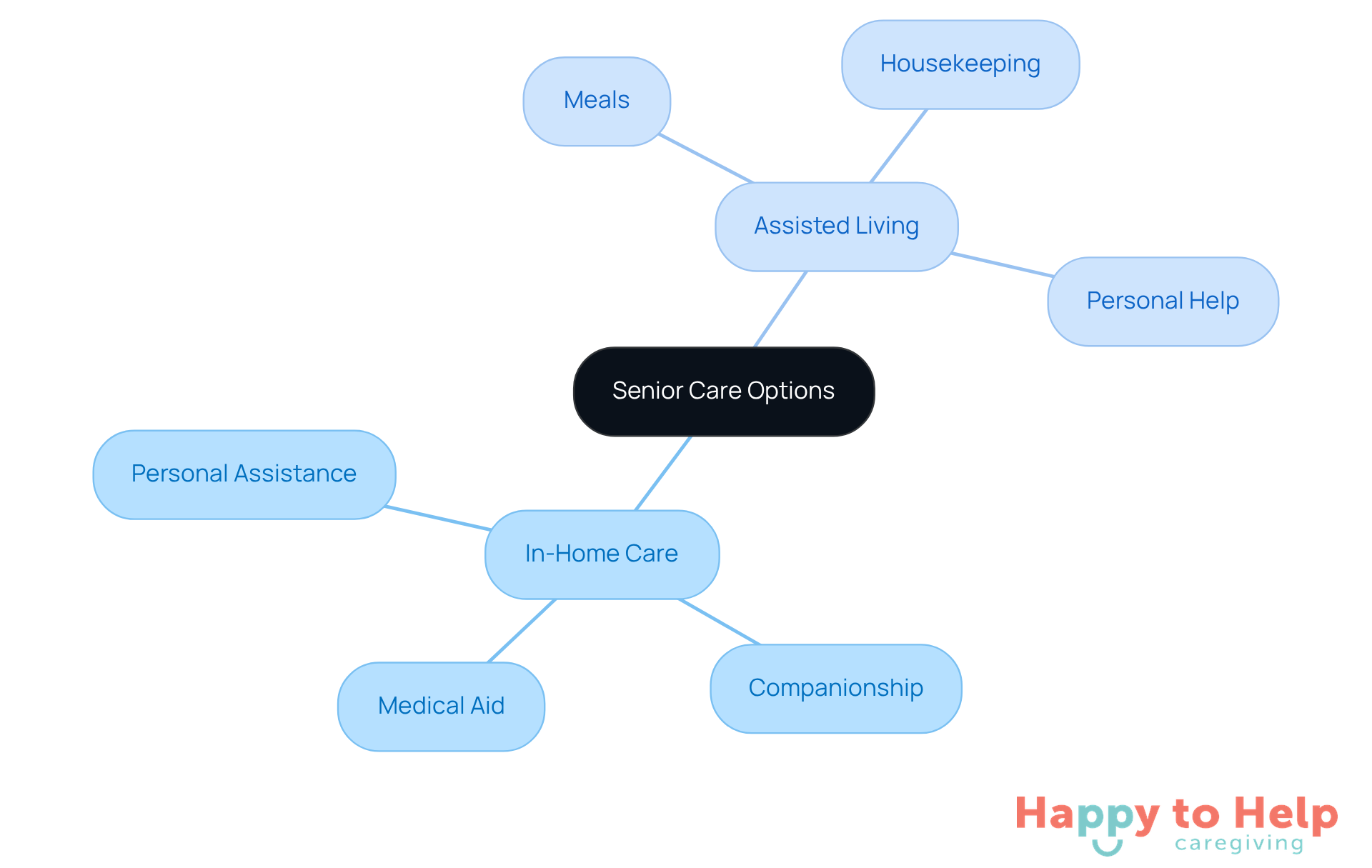
In-home support presents a significant solution for seniors striving to maintain their independence. This variety of services, offered directly in individuals' residences, allows them to receive assistance with daily activities while still enjoying the comfort of home. Services can include personal assistance, companionship, and medical aid, all tailored to meet specific needs.
On the other hand, assisted living centers offer a different approach. These facilities provide a community environment where seniors can access various support services, such as meals, housekeeping, and personal help. While both in-home support and assisted living aim to enhance the quality of life for seniors, they do so in fundamentally different settings, each with its own level of assistance and independence.
Understanding these options is crucial for caregivers. By recognizing the unique benefits of in-home support and assisted living, caregivers can make informed decisions that best suit the needs of their loved ones.
Services Offered by In-Home Care Providers
Caring for seniors can be a daunting task for family caregivers, especially when considering senior care in Boerne, Texas. They often face challenges in providing the necessary support for daily activities, which can lead to stress and burnout.
In-home assistance providers, like Happy to Help Caregiving, offer a solution for senior care in Boerne Texas by delivering a range of services tailored to meet the unique needs of seniors. These services include:
- Companionship assistance
- Help with activities of daily tasks (ADTs) such as bathing and dressing
- Post-hospital recovery aid
- Respite services for family caregivers
- Palliative treatment
The key benefit of in-home assistance is its ability to provide personalized support that aligns with the client's lifestyle and preferences. This ensures that help is delivered in a familiar and comfortable setting, which is often lacking in assisted housing facilities where assistance tends to be more uniform. By choosing senior care in Boerne Texas, caregivers can alleviate some of their burdens while ensuring their loved ones receive the care they deserve.
Pros and Cons of Assisted Living Facilities
The Challenges of Assisted Housing Centers
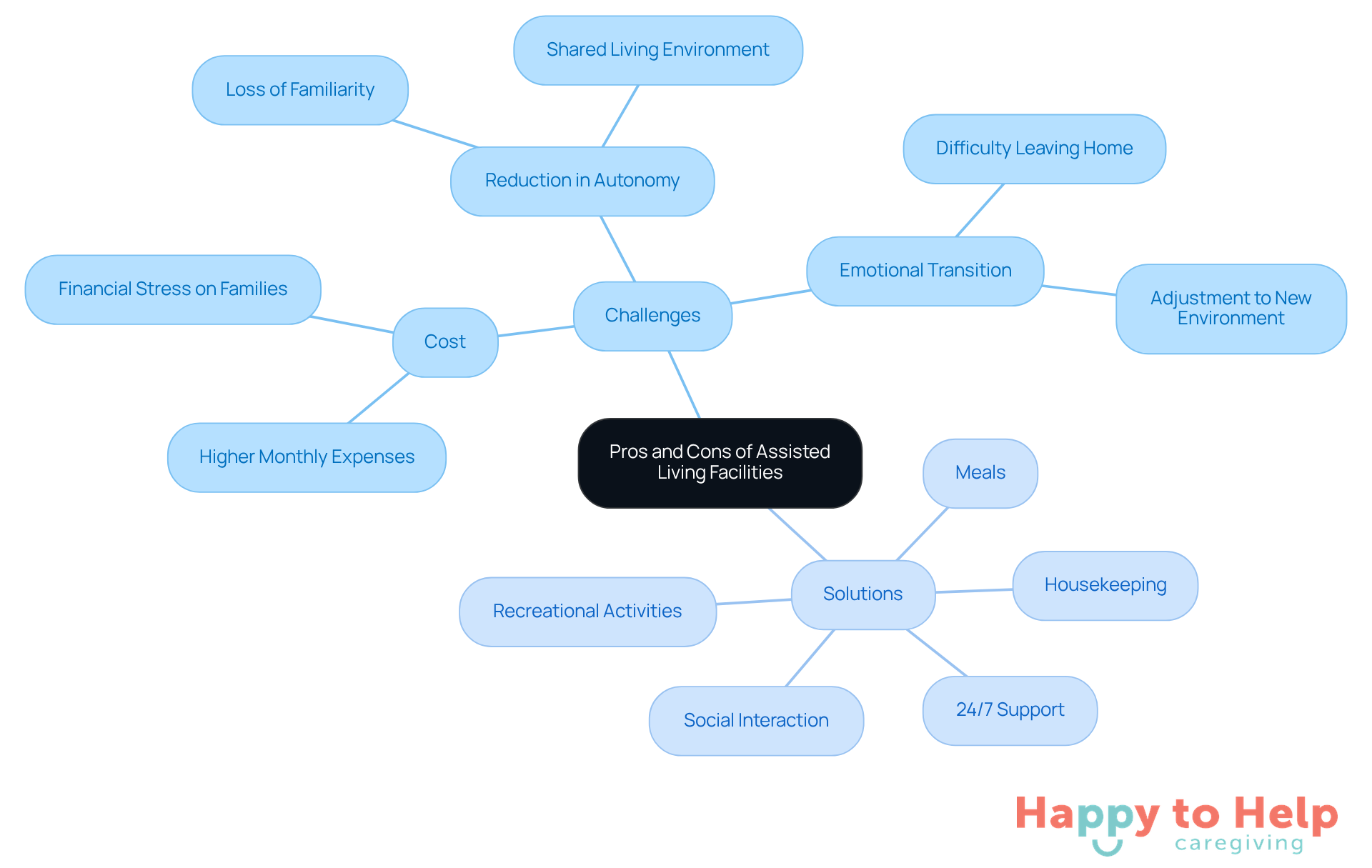
Assisted housing centers present a significant challenge for many caregivers and their loved ones. While these facilities offer essential support, they can also be more expensive than in-home care options. This financial burden can create stress for families already facing the complexities of caregiving.
Moreover, residents often experience a reduction in autonomy due to the shared living environment. Leaving behind a familiar home and community can be emotionally taxing, making the transition to assisted living particularly difficult for some individuals.
Finding Solutions
Despite these challenges, assisted housing centers provide valuable amenities that can enhance residents' quality of life. Facilities typically offer round-the-clock support, social interaction opportunities, meals, housekeeping, and recreational activities. These services can significantly improve safety and security, making the environment more conducive to well-being.
Caregivers should weigh these benefits against the potential drawbacks. By understanding the full scope of what assisted housing offers, families can make informed decisions that prioritize both care and comfort for their loved ones.
Choosing the Right Option: In-Home Care vs. Assisted Living
Choosing between in-home support and assisted living presents a significant challenge for families. Caregivers often grapple with understanding the extent of assistance needed, the individual's health condition, personal preferences, and financial implications. This decision can be overwhelming, especially when considering the emotional well-being of the senior involved.
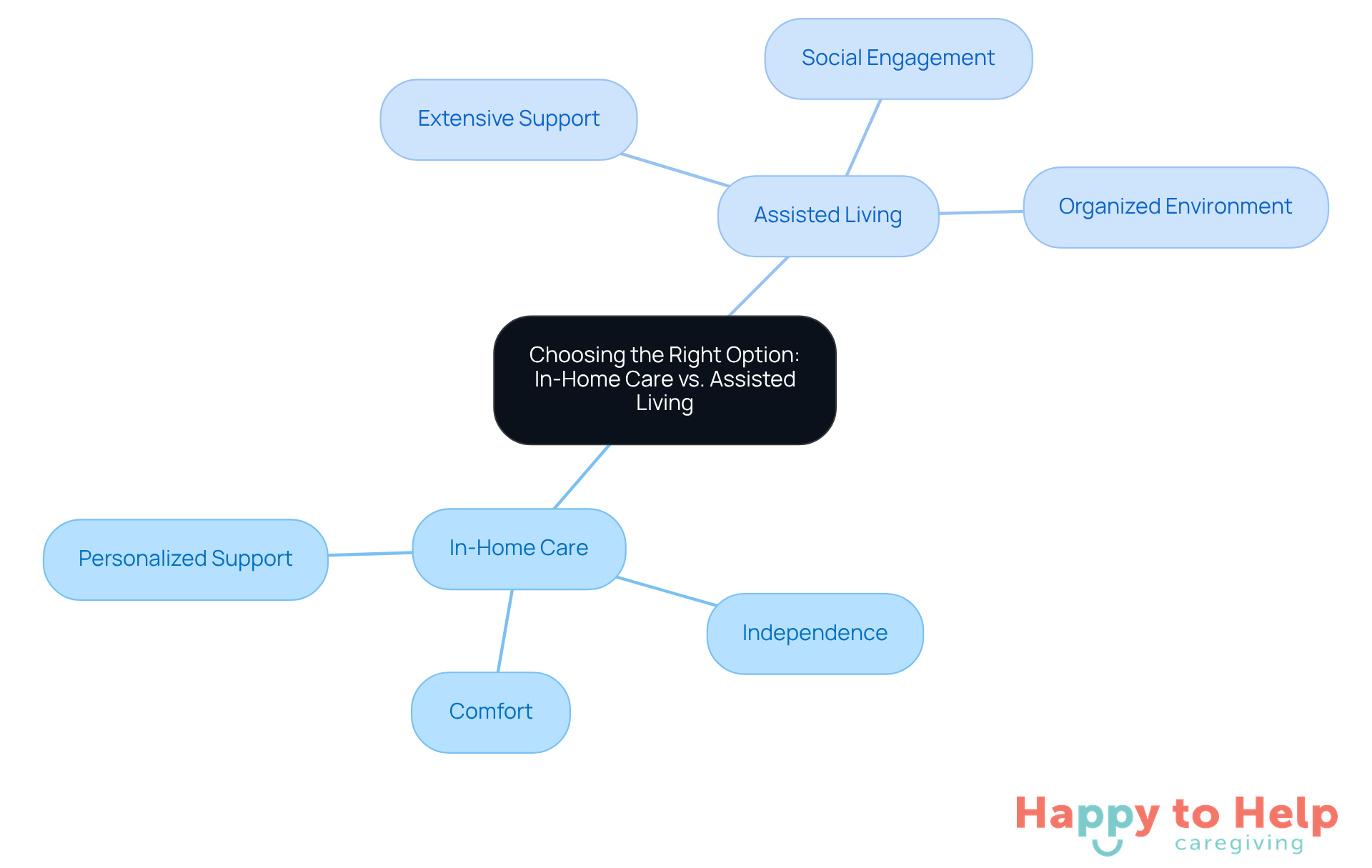
For seniors requiring minimal assistance, in-home care can be an ideal solution. It offers personalized support tailored to their specific needs, fostering independence and comfort in familiar surroundings. Conversely, assisted living may be more suitable for those needing extensive support and social engagement, as these facilities provide organized environments with round-the-clock staff and a variety of shared activities.
Families should carefully evaluate the services offered by each option. In-home assistance typically includes:
- Companionship
- Meal preparation
- Help with daily activities
While assisted living provides amenities and social opportunities. Understanding potential future support needs is crucial, as many families face complex decisions regarding increasing assistance requirements. Statistics reveal that 84% of family caregivers value their loved one's autonomy, yet 53% prefer in-home support over senior living facilities, highlighting the need for clarity in available options.
Real-life experiences illustrate this decision-making process. Many families feel overwhelmed, with 41% unsure about what to seek in a senior support experience. Engaging with elder support consultants can provide valuable insights, emphasizing the importance of aligning assistance options with each individual's unique situation. Ultimately, the decision should prioritize the comfort and well-being of the senior, ensuring that the chosen care solution addresses both immediate and future needs.
Moving Forward with In-Home Care vs. Assisted Living:
Choosing the right care option for seniors is a significant challenge that requires careful consideration of the distinct benefits of in-home care and assisted living. Each option aims to enhance the quality of life for seniors, yet they cater to different needs and preferences. In-home care offers personalized support within the comfort of one’s home, promoting independence, while assisted living provides a structured environment with comprehensive services and social engagement opportunities.
Evaluating individual circumstances is crucial. Factors such as the level of assistance required, emotional well-being, and financial implications play a vital role in this decision. In-home care excels in offering tailored services like companionship and help with daily activities. In contrast, assisted living centers provide essential amenities, including meals and round-the-clock support. Statistics show a clear preference among many families for maintaining autonomy, with a significant number favoring in-home care over assisted living.
Ultimately, prioritizing the senior's comfort and specific needs is key. Engaging with elder support consultants can provide clarity and guidance in navigating these complex decisions. By carefully weighing the options and considering the unique circumstances of the individual, families can ensure that their loved ones receive the most appropriate and compassionate care, fostering a fulfilling and dignified lifestyle.
https://iframe.tely.ai/cta/eyJhcnRpY2xlX2lkIjogIjY5MjUxM2VlOTBhOWVkYjRlNmUxMTAyNCIsICJjb21wYW55X2lkIjogIjY4ZWU1ZGNhNzMxNzYyNTU3ZjNjOTVjMSIsICJpbmRleCI6IG51bGwsICJ0eXBlIjogImFydGljbGUifQ==Frequently Asked Questions
What is in-home care?
In-home care refers to a variety of services provided directly in individuals' residences to assist seniors with daily activities, allowing them to maintain their independence while enjoying the comfort of home.
What types of services are included in in-home care?
In-home care services can include personal assistance, companionship, and medical aid, all tailored to meet the specific needs of seniors.
What is assisted living?
Assisted living refers to facilities that provide a community environment where seniors can access various support services, such as meals, housekeeping, and personal help.
How do in-home care and assisted living differ?
In-home care provides support directly in the senior's home, allowing for more independence, while assisted living offers a communal setting with various support services, which may involve less independence.
Why is it important for caregivers to understand in-home care and assisted living?
Understanding these options helps caregivers recognize the unique benefits of each type of support, enabling them to make informed decisions that best suit the needs of their loved ones.
List of Sources
- Understanding In-Home Care and Assisted Living
- The Future of Aging: Is In-Home Care the New Standard? - WorldHealth.net (https://worldhealth.net/news/future-of-aging-is-in-home-care-new-standard)
- 5 Benefits of Senior In-Home Care in 2025 | Valley Home Care (https://valleyhca.com/the-top-5-benefits-of-in-home-senior-care-for-aging-loved-ones-in-2025)
- Future of Assisted Living: How Value-Based Care is Changing Operations for HumanGood, Lifespark (https://seniorhousingnews.com/2025/09/17/future-of-assisted-living-how-value-based-care-is-changing-operations-for-humangood-lifespark)
- 9 Trends Reshaping Assisted Living in 2025 (And What to Do About Them) (https://assistedlivinginvesting.net/blog/9-trends-reshaping-assisted-living-in-2025-and-what-to-do-about-them)
- 3 in 4 Americans prefer receiving long-term care at home (https://insurancenewsnet.com/oarticle/3-in-4-americans-prefer-receiving-long-term-care-at-home)
- Services Offered by In-Home Care Providers
- How Home Care Agencies Can Prepare Now to Secure a Strong Start in 2025 (https://aaniie.com/news/how-home-care-agencies-can-prepare-now-to-secure-a-strong-start-in-2025)
- Home Care Industry Trends to Watch in 2025 (https://firstlighthomecare.com/blog/home-care-industry-trends)
- State of home care in 2025 (https://mcknightshomecare.com/state-of-home-care-in-2025)
- Most Americans expect to experience a long-term care event, and nearly 3 in 4 want in-home care if it happens to them - according to Northwestern Mutual Planning & Progress Study (https://news.northwesternmutual.com/2025-10-07-Most-Americans-expect-to-experience-a-long-term-care-event,-and-nearly-3-in-4-want-in-home-care-if-it-happens-to-them-according-to-Northwestern-Mutual-Planning-Progress-Study)
- The Future of Private Home Care: What to Expect in 2025 (https://anodyne-services.com/2024/08/14/the-future-of-private-home-care-what-to-expect-in-2025)
- Pros and Cons of Assisted Living Facilities
- ‘Change in air’ for senior living and care industry in 2025 (https://mcknightsseniorliving.com/news/change-in-air-for-senior-living-and-care-industry-in-2025)
- New NIC-NORC Study Shows Wellness, Health Benefits of Senior Living (https://seniorhousingnews.com/2025/09/09/new-nic-norc-study-shows-wellness-health-benefits-of-senior-living)
- In most states, assisted living is a better financial deal for older adults than aging in place at home: study (https://mcknightsseniorliving.com/news/in-most-states-assisted-living-is-a-better-financial-deal-for-older-adults-than-aging-in-place-at-home-study)
- The senior living market can't keep up with demand as boomers age (https://cnbc.com/2025/08/19/senior-living-housing-market-cant-keep-up-with-demand.html)
- The Pros and Cons of Assisted Living (https://health.usnews.com/best-assisted-living/slideshows/how-assisted-living-improves-quality-of-life)
- Choosing the Right Option: In-Home Care vs. Assisted Living
- The Pros and Cons of Living at Home vs. Assisted Living | Loretto (https://lorettocny.org/news-resources/blog/the-pros-and-cons-of-living-at-home-vs-going-into-assisted-living)
- Families Prefer In-Home Care To Senior Living – Yet Struggle To Identify Needed Support (https://homehealthcarenews.com/2025/11/families-prefer-in-home-care-to-senior-living-yet-struggle-to-identify-needed-support)
- Most Americans expect to need long-term care in the future, and they don’t want that care in assisted living (https://mcknightsseniorliving.com/news/most-americans-expect-to-need-long-term-care-in-the-future-and-they-dont-want-that-care-in-assisted-living)
- Comparing in-home care to retirement communities for seniors (https://fellowshipsquareseniorliving.org/campus/az/phoenix/our-blog/posts/2023/1/31/senior-living-vs-in-home-care-how-to-decide)
- Navigating Senior Care: What Adult Caregivers need to know before choosing senior living or in-home care | Delaware LIVE News (https://delawarelive.com/adult-caregivers-navigating-senior-care-what-families-need-to-know-before-choosing-senior-living-or-in-home-care)