

Active service-area notice
Happy to Help does not currently list Connecticut as an active service area. This article is general educational information. For local care availability, browse our active service areas.
Browse active service areasFor families in our service areas
For families in our service areas, this guide explains in-home care and how non-medical in-home caregiving can support care planning in East Idaho, Treasure Valley & Magic Valley, Northern Wasatch, North Central West Virginia, and Northeast Ohio.
Understanding In-Home Care vs. Assisted Living:
Choosing the right care option for seniors is a pivotal decision that significantly impacts their quality of life and well-being. Families often face the challenge of balancing the desire for independence among older adults with the need for support and safety. This dilemma can lead to confusion and stress, making it essential to carefully evaluate available options.
In-home care services have surged in popularity, providing personalized assistance in the comfort of familiar surroundings. However, while this option promotes independence, it may lack the social engagement and comprehensive support found in assisted living facilities. Families must weigh these pros and cons to ensure the best possible outcome for their loved ones.
To navigate this decision effectively, consider the following factors:
- Level of Independence: Assess how much assistance your loved one requires.
- Social Interaction: Evaluate the importance of social engagement in their daily life.
- Care Needs: Determine if specialized medical care is necessary.
By understanding these elements, families can make informed choices that enhance their loved ones' quality of life.
Understanding In-Home Care and Assisted Living
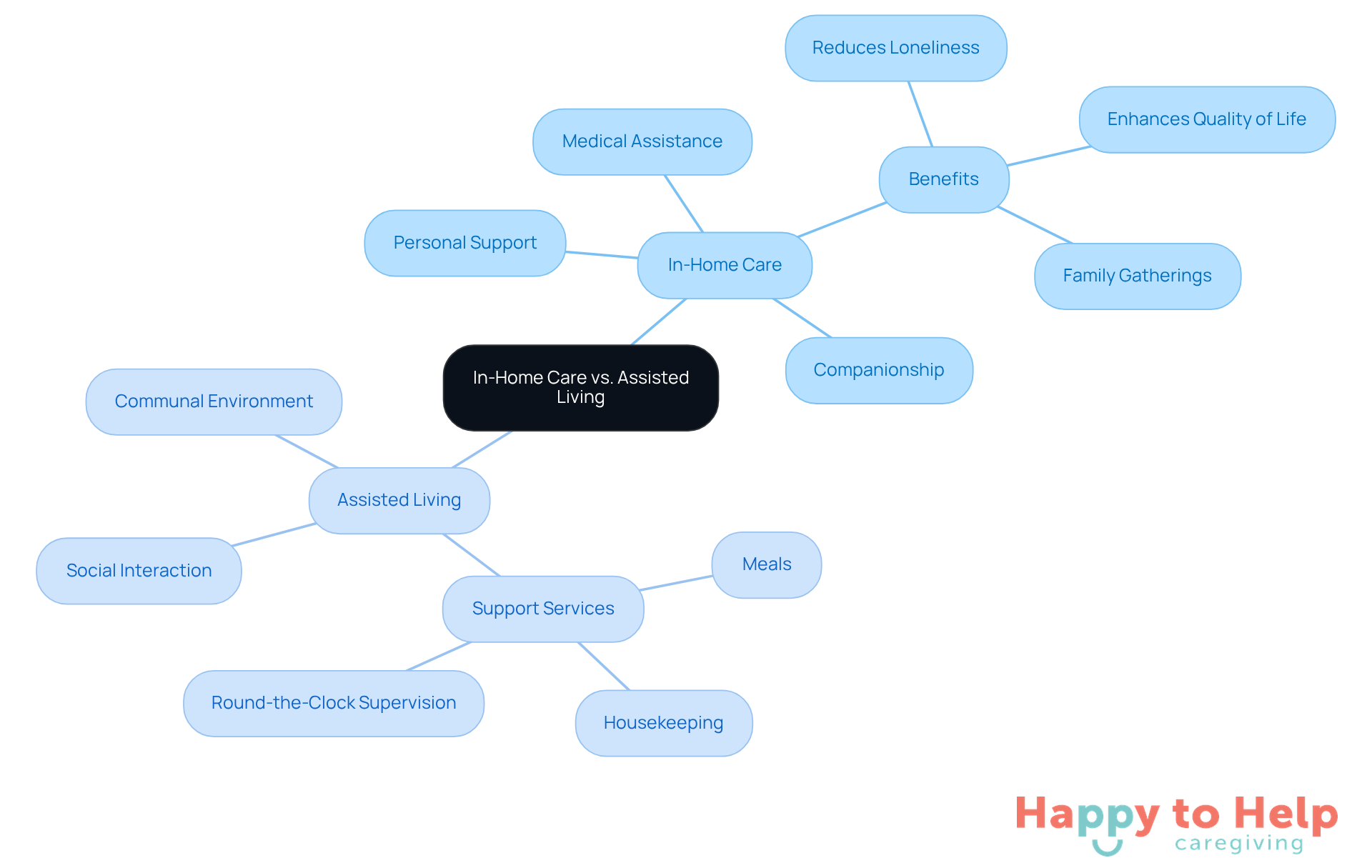
In-home assistance addresses a significant problem faced by many seniors: the challenge of maintaining independence while needing support with daily tasks. This service range includes personal support, companionship, and medical assistance, all tailored to individual needs. In contrast, assisted care facilities provide a communal environment where seniors benefit from various support services, such as meals, housekeeping, and round-the-clock supervision. While at-home support focuses on personalized attention, assisted living encourages social interaction and community involvement.
Statistics reveal that about 81% of older adults prefer to live at home, highlighting the increasing demand for in-home care services. A case study of the Sfugaras household illustrates this trend; they remodeled their home to create a senior suite for Fay, who is coping with Alzheimer's. Steve Sfugaras noted, "Observing her during a gathering or a birthday, and she's with everyone and the kids, I could see she's very happy." This approach not only enhances Fay's quality of life but also fosters gatherings that are vital for her emotional well-being.
Experts in elder support emphasize that at-home assistance can significantly reduce feelings of loneliness and improve overall health outcomes for seniors. For instance, Home Instead states, "Home support providers collaborate closely with seniors and their relatives to create customized assistance plans that address their unique requirements and preferences." By offering personalized care, home-based services like those from Happy to Help Caregiving ensure that seniors can thrive in their own homes, making this option increasingly attractive compared to assisted living facilities.
Additionally, at-home support can alleviate caregiver fatigue through respite services, providing essential breaks for family members who assist. This financial benefit, combined with the emotional and physical support offered through senior care in Milford Connecticut, makes home-based care an appealing choice for families.
Benefits and Challenges of In-Home Care
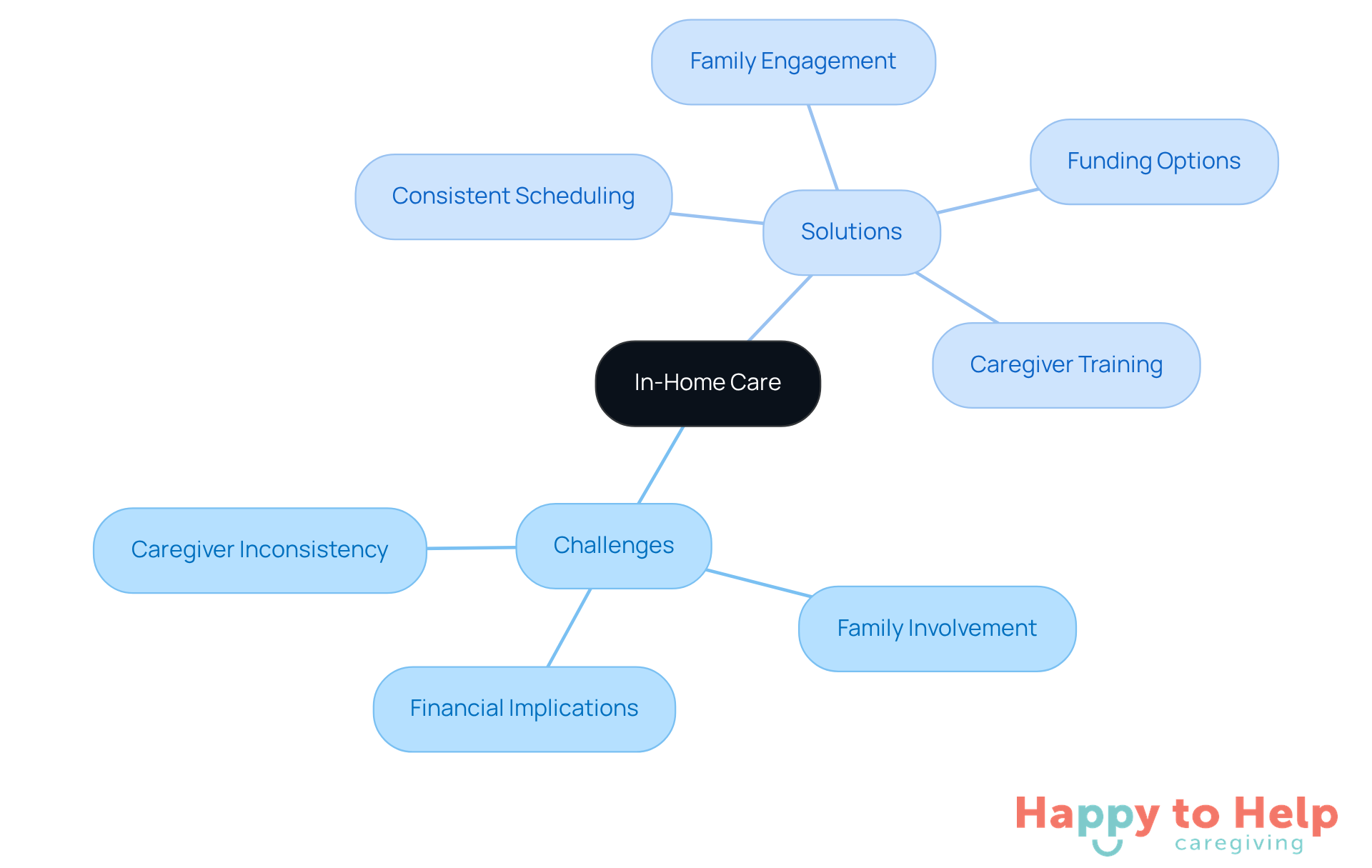
In-home support presents several challenges that can impact both caregivers and those receiving care. One significant issue is caregiver inconsistency, which can disrupt the continuity of care and lead to feelings of uncertainty for the individual. Additionally, the involvement of family members in support decisions can complicate the caregiving process, as differing opinions may arise. Financial implications also pose a concern, as the cost of in-home assistance can strain household budgets.
To address these challenges, it’s crucial to implement effective strategies. First, establishing a consistent schedule for caregivers can help mitigate inconsistency and foster a sense of stability. Engaging family members in regular discussions about care plans ensures that everyone is on the same page, promoting a collaborative approach. Furthermore, exploring various funding options or assistance programs can alleviate some financial burdens associated with in-home care.
Moreover, ensuring that caregivers are well-trained and thoroughly screened is essential for delivering safe and effective assistance. This not only protects the individual receiving care but also enhances the overall quality of support provided. By focusing on these solutions, households can create a more supportive and effective in-home care environment.
Benefits and Challenges of Assisted Living
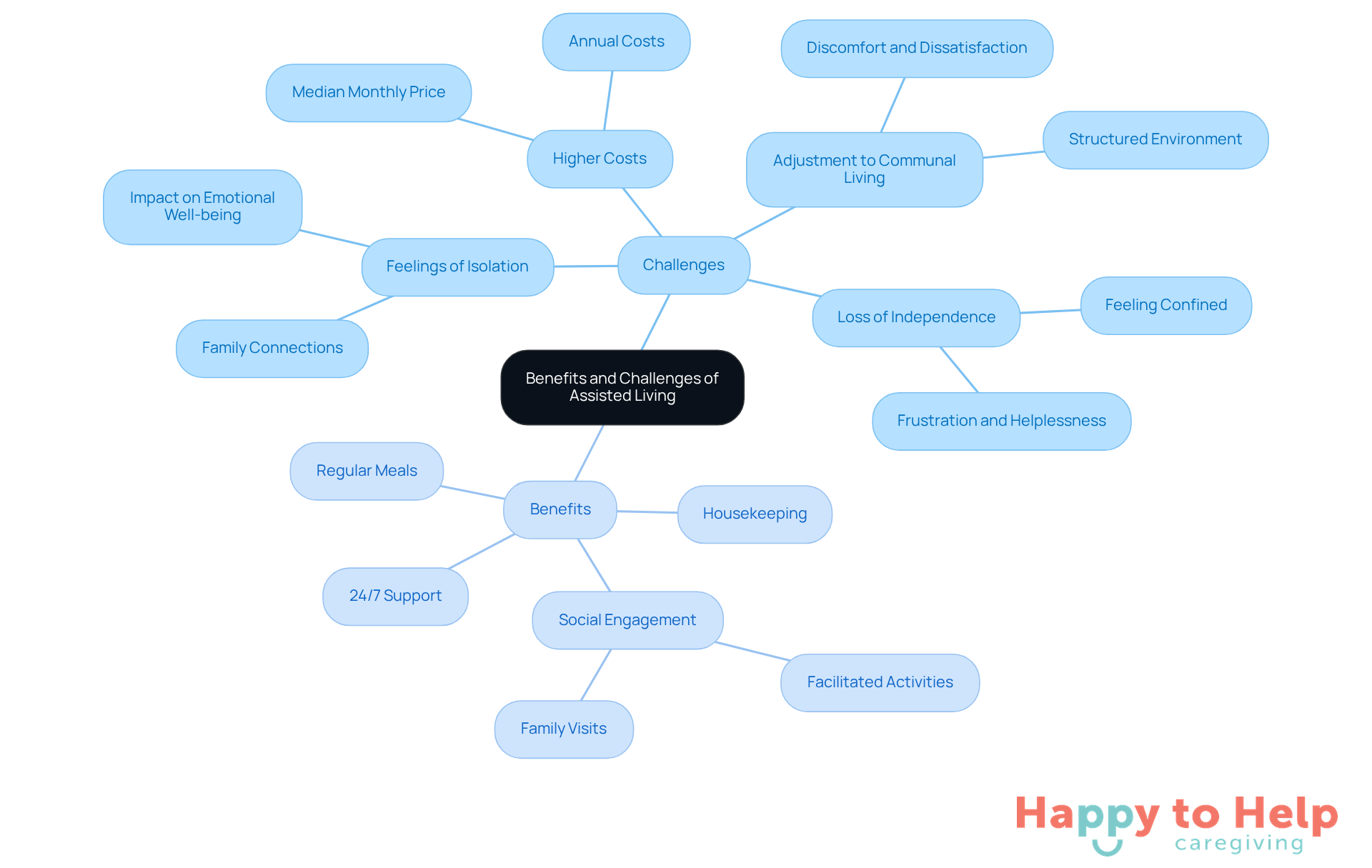
Problem: Assisted care facilities present several challenges for residents and their families. The higher costs associated with residing in these facilities can be a significant burden. Additionally, many residents experience feelings of isolation from their families, which can impact their emotional well-being. The adjustment to communal living arrangements may not suit everyone, leading to discomfort and dissatisfaction.
Agitate: These challenges can lead to a loss of independence for residents, as they may feel confined compared to living at home. The structured environment, while beneficial for safety and well-being, can sometimes feel restrictive. This situation can create a sense of frustration and helplessness among residents, making the transition to assisted living more difficult.
Solution: Despite these challenges, assisted care facilities offer numerous advantages that can enhance the quality of life for residents. With 24/7 access to support, opportunities for social engagement, and regular meals and housekeeping, residents can enjoy a more structured and supportive environment. Caregivers can help ease the transition by encouraging family visits and facilitating social activities within the facility. By focusing on the positive aspects of assisted living, caregivers can help residents adapt and thrive in their new surroundings.
Comparative Analysis: Choosing Between In-Home Care and Assisted Living
Choosing between in-home support and assisted living can be a daunting task for caregivers. The problem lies in evaluating various factors, such as the level of assistance needed, the individual's health condition, financial resources, and personal preferences. As support needs increase, costs can escalate quickly, creating a significant financial burden.
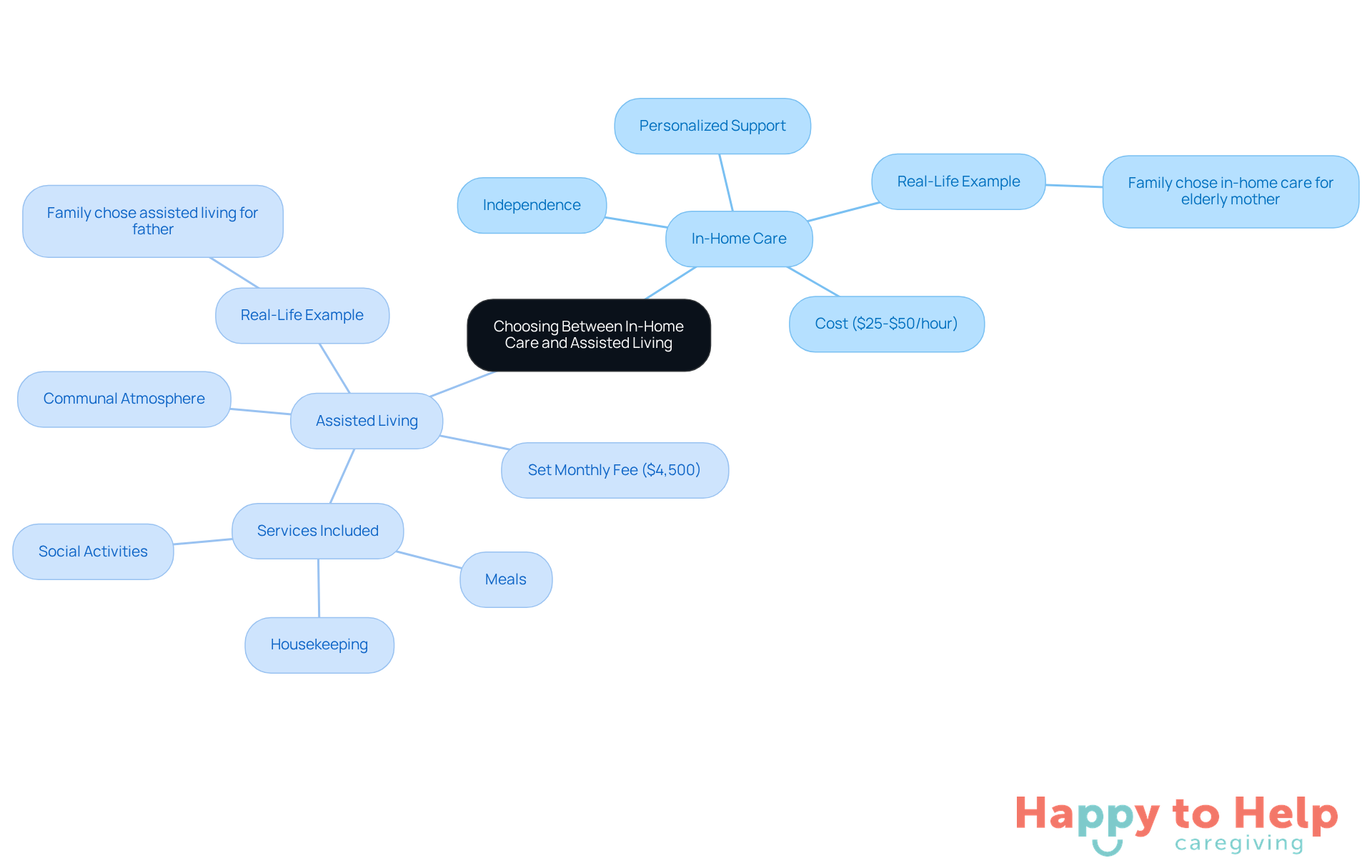
In-home assistance is often preferred by seniors who value their independence and wish to stay in a familiar environment. This option allows for personalized support tailored to individual needs, fostering comfort and security. However, the average hourly rate for in-home care ranges from $25 to $50, which can lead to substantial monthly expenses, especially if round-the-clock care is required.
Conversely, assisted living facilities typically charge a set monthly fee, averaging around $4,500. This fee covers various services, including meals, housekeeping, and social activities, providing families with a clearer understanding of their financial commitments. Moreover, assisted living offers a communal atmosphere that encourages social engagement, which can be beneficial for seniors who may experience loneliness at home.
Real-life examples highlight these dynamics:
- One family opted for in-home care for their elderly mother, prioritizing her wish to remain at home despite rising costs.
- Another family chose assisted living for their father, who required more extensive support due to health issues and appreciated the social opportunities available in a community setting.
Ultimately, the decision should reflect the senior's lifestyle, health needs, and family dynamics. By carefully considering these factors, caregivers can ensure that the chosen option aligns with the senior's overall well-being.
Your Path Forward
Choosing the right senior care option in Milford, Connecticut, presents a significant challenge for families. The decision between in-home care and assisted living can greatly affect the quality of life for older adults. While in-home care offers personalized support in the comfort of home, assisted living provides a structured environment that encourages social interaction and community engagement. Understanding these differences is crucial for families navigating the complexities of senior care.
Statistics show a growing preference for in-home care, with many seniors expressing a desire to remain in their homes. Personal stories, like that of the Sfugaras household, highlight how tailored at-home assistance can boost emotional well-being and support independence. On the other hand, assisted living facilities offer benefits such as:
- 24/7 support
- Socialization opportunities
Though they come with challenges like higher costs and potential feelings of isolation.
Ultimately, the choice between in-home care and assisted living should be based on individual needs, preferences, and financial considerations. Families should carefully weigh the pros and cons of each option, considering factors like:
- The level of support needed
- The importance of maintaining independence versus the advantages of communal living
By making informed decisions, caregivers can ensure their loved ones receive the best possible care tailored to their unique circumstances.
https://iframe.tely.ai/cta/eyJhcnRpY2xlX2lkIjogIjY5MjEwYTliOTkzNGY1N2M4NjJjMTA5NyIsICJjb21wYW55X2lkIjogIjY4ZWU1ZGNhNzMxNzYyNTU3ZjNjOTVjMSIsICJpbmRleCI6IG51bGwsICJ0eXBlIjogImFydGljbGUifQ==Frequently Asked Questions
What is in-home care?
In-home care provides support to seniors who need assistance with daily tasks while maintaining their independence. It includes personal support, companionship, and medical assistance tailored to individual needs.
How does in-home care differ from assisted living?
In-home care focuses on personalized attention and support within the senior's own home, while assisted living facilities offer a communal environment with services such as meals, housekeeping, and round-the-clock supervision, encouraging social interaction and community involvement.
What do statistics say about seniors' preferences for living arrangements?
Approximately 81% of older adults prefer to live at home, indicating a growing demand for in-home care services.
Can you provide an example of in-home care's impact?
The Sfugaras household remodeled their home to create a senior suite for Fay, who has Alzheimer’s. This arrangement improved her quality of life and allowed her to participate in family gatherings, enhancing her emotional well-being.
What benefits does in-home care provide to seniors?
In-home care can reduce feelings of loneliness, improve overall health outcomes, and allow seniors to thrive in their own homes. Customized assistance plans are developed to meet the unique requirements and preferences of seniors.
How does in-home care help family caregivers?
In-home care can alleviate caregiver fatigue by offering respite services, providing essential breaks for family members who assist with care.
What are the financial advantages of in-home care?
In-home care can be financially beneficial for families, as it may reduce costs compared to assisted living facilities while providing emotional and physical support for seniors.
List of Sources
- Understanding In-Home Care and Assisted Living
- The senior population is booming. Caregiving is struggling to keep up (https://cnbc.com/2025/11/21/senior-caregiving-labor.html)
- Place-Agnostic Models Signal New Era For Home-Based Care, Senior Living (https://homehealthcarenews.com/2025/11/place-agnostic-models-signal-new-era-for-home-based-care-senior-living)
- Home Care Industry Trends to Watch in 2025 (https://firstlighthomecare.com/blog/home-care-industry-trends)
- Families caring for older adults at home say aging in place should not be taken lightly, but may be worth it (https://cbsnews.com/newyork/news/aging-in-place-home-remodeling-cost-of-caregiving)
- Why Senior Home Care is More Important Than Ever (https://homeinstead.com/home-care/usa/la/carencro/347/news-and-media/senior-home-care-is-more-important-than-ever)
- Benefits and Challenges of In-Home Care
- The Benefits of In-Home Care for Seniors - Consumer Directed Choices (https://cdchoices.org/2023/11/27/the-benefits-of-in-home-care-for-seniors)
- 5 Benefits of Senior In-Home Care in 2025 | Valley Home Care (https://valleyhca.com/the-top-5-benefits-of-in-home-senior-care-for-aging-loved-ones-in-2025)
- Overcoming Challenges In Home-Based Care For Medically Intensive Patients (https://homehealthcarenews.com/2025/09/overcoming-challenges-in-home-based-care-for-medically-intensive-patients)
- 'More pressure on families.' Nearly half of US states are on the brink of a caregiving emergency (https://usatoday.com/story/news/health/2025/05/21/columbia-university-state-caregiving-study/83651201007)
- Disruption Redefines Home-Based Care: Providers Confront Challenges, Seize New Opportunities (https://homehealthcarenews.com/2025/10/disruption-redefines-home-based-care-providers-confront-challenges-seize-new-opportunities)
- Benefits and Challenges of Assisted Living
- Opinion | The unexpected benefits of moving to a long-term care facility (https://washingtonpost.com/opinions/2025/10/30/nursing-home-assisted-living-social-benefits-research)
- FastStats (https://cdc.gov/nchs/fastats/residential-care-communities.htm)
- Assisted living facilities face challenges as senior population grows (https://laist.com/shows/take-two/assisted-living-facilities-face-challenges-as-senior-population-grows)
- Facts & Figures (https://ahcancal.org/Assisted-Living/Facts-and-Figures/Pages/default.aspx)
- Assisted living statistics (https://consumeraffairs.com/assisted-living/statistics.html)
- Comparative Analysis: Choosing Between In-Home Care and Assisted Living
- Most Americans expect to need long-term care in the future, and they don’t want that care in assisted living (https://mcknightsseniorliving.com/news/most-americans-expect-to-need-long-term-care-in-the-future-and-they-dont-want-that-care-in-assisted-living)
- Assisted Living Gains Momentum in Senior Care Preferences (https://wealthtender.com/insights/elderly-care-choices)
- The Pros and Cons of Living at Home vs. Assisted Living | Loretto (https://lorettocny.org/news-resources/blog/the-pros-and-cons-of-living-at-home-vs-going-into-assisted-living)
- 61 Assisted Living Statistics Operators Should Know | Aline (https://alineops.com/blog/assisted-living-statistics)
- Navigating Senior Care: What Adult Caregivers need to know before choosing senior living or in-home care | Delaware LIVE News (https://delawarelive.com/adult-caregivers-navigating-senior-care-what-families-need-to-know-before-choosing-senior-living-or-in-home-care)