Internet Safety Tips for Adults: A Comparison with Seniors

For families in our service areas
For families in our service areas, this guide explains caregiving and how non-medical in-home caregiving can support care planning in East Idaho, Treasure Valley & Magic Valley, Northern Wasatch, North Central West Virginia & Southwestern Pennsylvania, and Northeast Ohio.
The Importance of Internet Safety Tips for Adults: A
Online safety is a pressing concern that affects everyone, but there's a noticeable gap in awareness and preparedness between adults and seniors. As technology evolves, older individuals often find themselves at a disadvantage, facing increased risks from cybercriminals who take advantage of their limited familiarity with digital tools. This situation not only puts seniors at risk but also highlights the need for better education across all age groups.
To bridge this gap, we must empower older adults to navigate the digital landscape safely. This article will provide essential internet safety tips tailored for both demographics, addressing the unique challenges seniors face and offering strategies that adults can use to enhance their online security. By equipping all age groups with the knowledge and tools to defend against the ever-evolving threats of the internet, we can create a safer online environment for everyone.
Understanding Online Safety Awareness: Adults vs. Seniors
Online safety awareness presents a significant challenge, particularly when comparing younger individuals to older adults. The problem lies in the differences in technology familiarity, cognitive abilities, and social behaviors. Older individuals often have limited experience with technology, making them more vulnerable to fraudulent schemes and phishing attempts.
Research shows that 66% of individuals aged 65 and above have encountered scams online. In contrast, 73% of U.S. individuals have faced some form of internet scam or attack. This highlights a broader issue affecting various demographics. Furthermore, older adults frequently exhibit reduced confidence in their digital skills, which can hinder their ability to recognize and respond to threats effectively.
Cybersecurity professionals note that older adults tend to be more trusting, making them prime targets for cybercriminals. For instance, 40% of Americans view internet scams as a significant concern on dating or cryptocurrency platforms, reflecting societal anxiety about trust and fraud.
To address these challenges, it’s crucial to develop targeted strategies that include internet safety tips for adults, catering to the unique needs of each demographic. Empowering seniors with the knowledge and tools necessary to follow internet safety tips for adults while navigating the digital landscape safely is essential. As Rebecca Law states, "It’s crucial to empower them with the knowledge and tools needed to protect themselves online." By focusing on education and practical solutions, we can help older adults engage with technology more confidently.

Essential Online Safety Tips for Adults
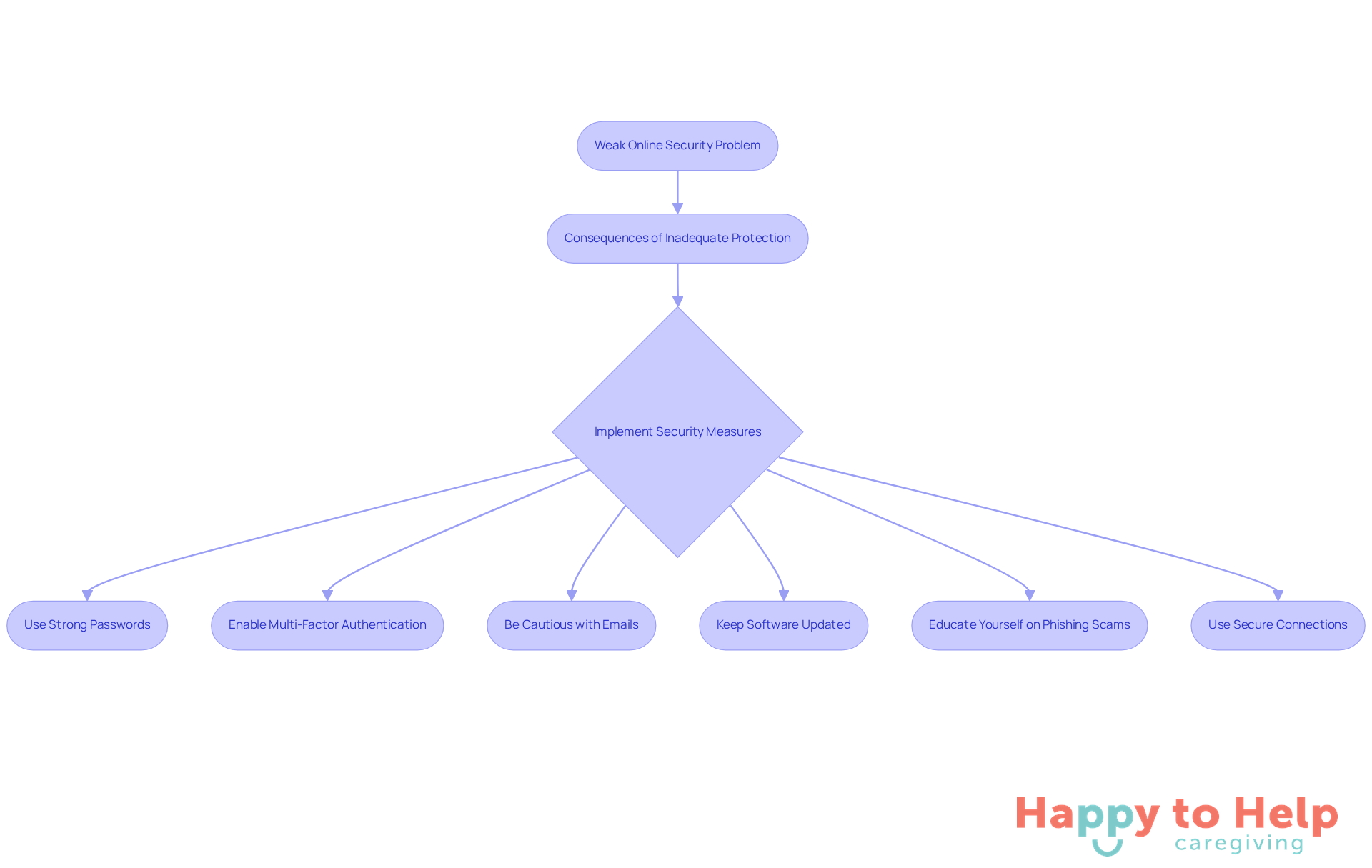
Problem: Weak Online Security
In today's digital landscape, weak online security poses significant risks. Cybercriminals exploit vulnerabilities, often targeting individuals with easily guessable passwords or unprotected accounts. This can lead to unauthorized access and identity theft, making it crucial to implement internet safety tips for adults as proactive measures.
Agitate: The Consequences of Inadequate Protection
Without strong security practices, individuals are at a heightened risk of falling victim to cyberattacks. Studies reveal that over 99% of compromised accounts lack multi-factor authentication (MFA), highlighting the necessity of robust security measures. Furthermore, outdated software can serve as an easy target for attackers, leaving sensitive information exposed.
Solution: Implementing Effective Security Measures
- Use Strong Passwords: Create complex passwords that include a mix of letters, numbers, and symbols. Avoid using easily guessable information such as birthdays. According to internet safety tips for adults, a strong password should be at least 12 to 15 characters long, and using phrases can enhance security.
- Enable Multi-Factor Authentication (MFA): This adds an extra layer of security by requiring a second form of verification, such as a text message or authentication app. MFA is crucial for protecting sensitive accounts, and implementing internet safety tips for adults indicates that enabling it can deter up to 96% of bulk phishing attempts. As of 2025, MFA has become a standard practice, significantly reducing the risk of unauthorized access.
- Be Cautious with Emails: Always verify the sender's email address and avoid clicking on links or downloading attachments from unknown sources. To combat cybercriminals who often use phishing tactics to steal login credentials, it is essential to follow internet safety tips for adults.
- Keep Software Updated: Regularly update your operating system, browsers, and applications to protect against vulnerabilities. Staying current with software is vital for security, and following internet safety tips for adults can help prevent attackers from exploiting outdated programs.
- Educate Yourself on Phishing Scams: Familiarize yourself with common phishing tactics to better recognize suspicious communications. Understanding these threats can empower you to avoid falling victim to scams.
- Use Secure Connections: Avoid public Wi-Fi for sensitive transactions and consider using a Virtual Private Network (VPN) for added security. This helps protect your data from potential interception by malicious actors.
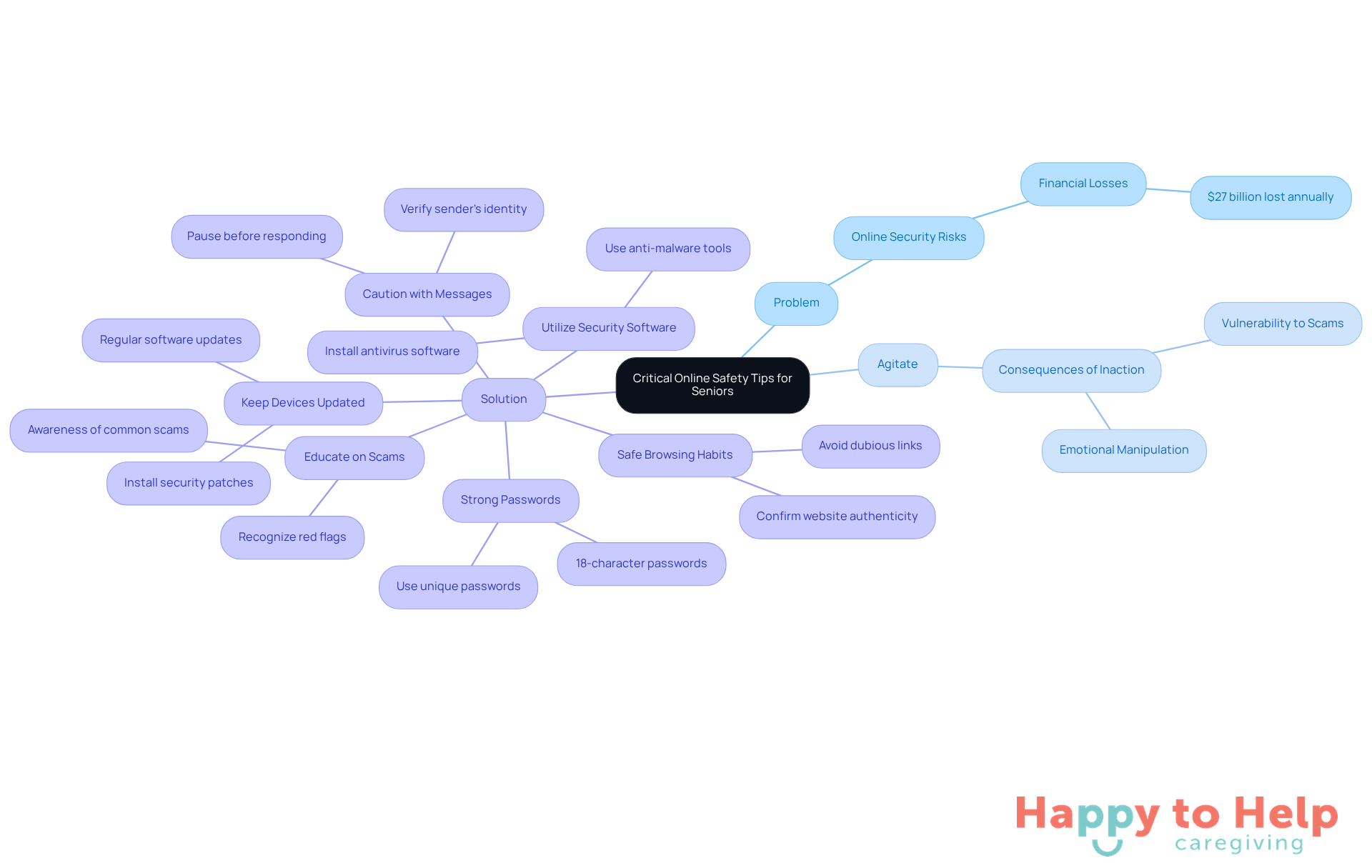
Critical Online Safety Tips for Seniors
Problem: Online Security Risks for Seniors
Seniors face significant challenges in maintaining their online security. With the rise of digital communication, they are increasingly targeted by scammers and cybercriminals. In fact, older adults in the U.S. lose an estimated $27 billion annually to financial abuse, highlighting the severity of the issue.
Agitate: The Consequences of Inaction
Without proper precautions, seniors can easily fall victim to scams that exploit their trust and vulnerability. It is crucial for older adults to be aware of internet safety tips for adults, as scammers often use urgency and impersonation tactics to manipulate victims. As Soo-Lynn Getz notes, "The power of that pause could support an older adult in stopping the emotional response to act without thinking."
Solution: Practical Steps for Enhanced Security
- Use Strong and Unique Passwords: Seniors should create distinct passwords for each account, steering clear of easily guessable personal information. A password of 18 characters can take trillions of years to crack, significantly enhancing security.
- Be Cautious of Uninvited Messages: Encourage older adults to take a moment before replying to emails or messages from unfamiliar senders, especially those asking for personal details.
- Keep Devices Updated: Regularly updating software and applications is essential for protecting against security vulnerabilities. This practice helps ensure that devices are equipped with the latest security patches, reducing the risk of exploitation.
- Educate on Common Scams: Familiarize older adults with prevalent scams targeting their demographic, such as lottery scams, tech support fraud, and grandparent scams. Awareness of these tactics can empower older adults with internet safety tips for adults to recognize and avoid potential threats.
- Utilize Security Software: Recommend the installation of antivirus and anti-malware software to provide an additional layer of protection. This software can help detect and neutralize threats before they compromise personal information.
- Promote Safe Browsing Habits: Suggest to older adults to refrain from clicking on dubious links and to confirm the authenticity of websites prior to providing personal details. Community vigilance is also essential in preventing scams, as collective awareness can help safeguard older adults from digital threats.
Comparative Analysis of Online Safety Strategies: Effectiveness for Adults and Seniors
When it comes to safety approaches for adults and the elderly, a significant problem arises: the increasing vulnerability of seniors to online scams. As their digital activities grow-shopping, banking, and more-they become prime targets for fraudsters. In 2024 alone, Americans over 60 lost nearly USD $5 billion to internet fraud, highlighting the urgent need for effective digital safety measures.
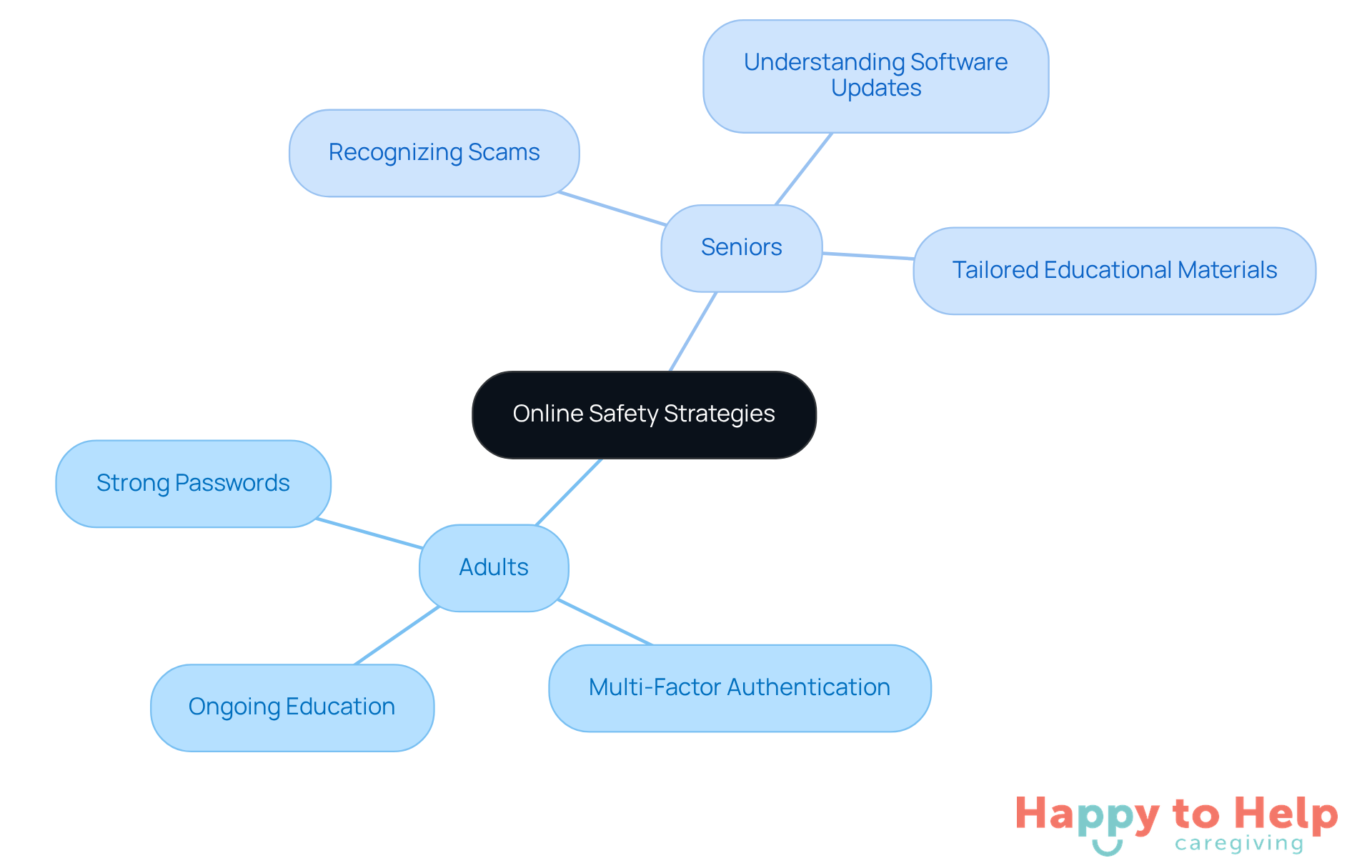
Adults generally benefit from a proactive approach that includes internet safety tips for adults, such as:
- Strong passwords
- Multi-factor authentication
- Ongoing education about emerging threats
Their familiarity with technology enables them to implement these strategies effectively. However, older adults often require more foundational support. They need to focus on recognizing scams and understanding the importance of software updates.
To address these challenges, caregivers can take several actionable steps. First, both groups should prioritize strong passwords, but older adults may need additional assistance in creating and managing them. Educational materials tailored for seniors can significantly improve their understanding of internet safety tips for adults, thereby bridging the technology gap.
Moreover, following internet safety tips for adults, such as using a VPN on public Wi-Fi and enabling two-factor authentication, is essential for enhancing online security for everyone. Collaboration with law enforcement is also crucial in combating evolving scam tactics that specifically target older individuals. Ultimately, a one-size-fits-all approach is ineffective; strategies must be adapted to meet the specific needs and capabilities of each demographic.
Making the Right Choice
The exploration of internet safety highlights a significant problem: the stark contrast in awareness and vulnerability between adults and seniors. Both groups face serious online threats, but seniors often navigate the digital landscape with less confidence and experience, making them prime targets for cybercriminals. This situation calls for urgent action to empower older adults with tailored internet safety tips, enabling them to recognize and mitigate risks effectively.
Key insights reveal the importance of strong passwords, multi-factor authentication, and ongoing education about emerging threats. Adults can implement these strategies with relative ease due to their familiarity with technology. In contrast, seniors need foundational support, such as understanding common scams and the necessity of regular software updates. This comparative analysis underscores the need for distinct approaches that cater to the unique challenges faced by each demographic.
Ultimately, enhancing online safety awareness is not just an individual responsibility; it’s a collective effort. Communities, caregivers, and cybersecurity professionals must collaborate to ensure that both adults and seniors are equipped with the knowledge and tools necessary to navigate the digital world safely. By prioritizing education and support, society can significantly reduce the risks associated with online scams and fraud, safeguarding the well-being of all users across age groups.
https://iframe.tely.ai/cta/eyJhcnRpY2xlX2lkIjogIjY5M2Y1MDdkMmI4ODNiM2YwNWZiOTk3MCIsICJjb21wYW55X2lkIjogIjY4ZWU1ZGNhNzMxNzYyNTU3ZjNjOTVjMSIsICJpbmRleCI6IG51bGwsICJ0eXBlIjogImFydGljbGUifQ==Frequently Asked Questions
What are the main challenges faced by older adults regarding online safety?
Older adults often have limited experience with technology, making them more vulnerable to fraudulent schemes and phishing attempts. They also tend to exhibit reduced confidence in their digital skills, which hinders their ability to recognize and respond to threats effectively.
How prevalent are online scams among older adults?
Research shows that 66% of individuals aged 65 and above have encountered scams online, highlighting their vulnerability in the digital space.
How does the experience of older adults with online scams compare to younger individuals?
In contrast to older adults, 73% of U.S. individuals across various demographics have faced some form of internet scam or attack, indicating that online scams are a broader issue affecting many age groups.
Why are older adults considered prime targets for cybercriminals?
Older adults tend to be more trusting and may lack the necessary knowledge to recognize scams, making them prime targets for cybercriminals.
What societal concerns are reflected in attitudes towards internet scams?
A significant concern exists around internet scams, particularly on dating or cryptocurrency platforms, with 40% of Americans viewing these scams as a major issue. This reflects broader societal anxiety about trust and fraud in online interactions.
What strategies can help improve online safety awareness among older adults?
Developing targeted strategies that include internet safety tips specifically for adults is crucial. Empowering seniors with knowledge and tools to navigate the digital landscape safely is essential for enhancing their online safety awareness.
What is the importance of education in online safety for older adults?
Education is vital for helping older adults engage with technology more confidently. By focusing on practical solutions and providing the necessary knowledge, we can better protect them from online threats.
List of Sources
- Understanding Online Safety Awareness: Adults vs. Seniors
- The top 20 expert quotes from the Cyber Risk Virtual Summit (https://diligent.com/resources/blog/top-20-quotes-cyber-risk-virtual-summit)
- Online Scams and Attacks in America Today (https://pewresearch.org/internet/2025/07/31/online-scams-and-attacks-in-america-today)
- Cybersecurity Awareness Month: Helping Older Adults Avoid Online Scams (https://about.fb.com/news/2025/10/cybersecurity-awareness-month-helping-older-adults-avoid-online-scams)
- Older Adults Being Targeted By the Rise of Cybercrime (https://cybersecurityasia.net/rise-cyber-crime-targeting-older-adults)
- 2025 Cybersecurity Guide for Seniors (https://floridaseniorconsulting.com/cybersecurity-guide-for-seniors-2025)
- Essential Online Safety Tips for Adults
- 70+ Password Statistics for 2025 (https://spacelift.io/blog/password-statistics)
- 7 Reasons Why You Need MFA Security in 2025 (https://splashtop.com/blog/why-you-need-MFA-security)
- The importance of Multi-Factor Authentication (MFA) (https://csacyber.com/blog/the-importance-of-multi-factor-authentication-mfa)
- How to Create Strong Passwords and Protect Your Online Accounts (https://ncoa.org/article/how-to-create-strong-passwords-a-simple-guide)
- 36 Must-Know Password Statistics for 2025 | Huntress (https://huntress.com/blog/password-statistics)
- Critical Online Safety Tips for Seniors
- False alarm, real scam: how scammers are stealing older adults’ life savings (https://ftc.gov/news-events/data-visualizations/data-spotlight/2025/08/false-alarm-real-scam-how-scammers-are-stealing-older-adults-life-savings)
- 18 World Password Day Quotes from Industry Experts in 2023 (https://solutionsreview.com/identity-management/world-password-day-quotes-from-industry-experts)
- Scams Targeting Older Adults | FDIC.gov (https://fdic.gov/consumer-resource-center/2025-07/scams-targeting-older-adults)
- What Are the Top Payment Scams Affecting Older Adults? (https://ncoa.org/article/what-are-the-top-online-scams-targeting-older-adults)
- How Americans View Data Privacy (https://pewresearch.org/internet/2023/10/18/how-americans-view-data-privacy)
- Comparative Analysis of Online Safety Strategies: Effectiveness for Adults and Seniors
- Cybersecurity Awareness Month: Helping Older Adults Avoid Online Scams (https://about.fb.com/news/2025/10/cybersecurity-awareness-month-helping-older-adults-avoid-online-scams)
- 2025 Cybersecurity Guide for Seniors (https://floridaseniorconsulting.com/cybersecurity-guide-for-seniors-2025)
- Online safety tips for seniors in 2025 - Comparitech (https://comparitech.com/blog/information-security/online-safety-tips-for-seniors)