Is Agitation a Symptom of Dementia? Understanding Key Differences

For families in our service areas
For families in our service areas, this guide explains dementia care and how non-medical in-home caregiving can support care planning in East Idaho, Treasure Valley & Magic Valley, Northern Wasatch, North Central West Virginia, and Northeast Ohio.
The Importance of Is Agitation a Symptom of Dementia?
Understanding the complexities of dementia presents a significant challenge for caregivers, particularly when it comes to managing agitation. This behavior, marked by restlessness and emotional distress, often signals deeper issues that require careful navigation. For caregivers, recognizing agitation as a symptom of dementia is crucial; it can lead to critical insights that enhance their approach to care.
However, distinguishing agitation from other overlapping behavioral signs can be daunting. Caregivers must ask: how can they effectively identify agitation and manage it? To tackle this issue, it’s essential to implement practical strategies. Here are some actionable tips:
- Observe Patterns: Keep a journal to track when agitation occurs and any potential triggers.
- Create a Calm Environment: Minimize noise and distractions to help soothe the individual.
- Engage in Gentle Activities: Activities like walking or listening to music can help redirect focus and reduce distress.
By understanding the nuances of agitation and employing these strategies, caregivers can provide more effective support, ultimately improving the quality of life for those affected by dementia.
Define Agitation in Dementia
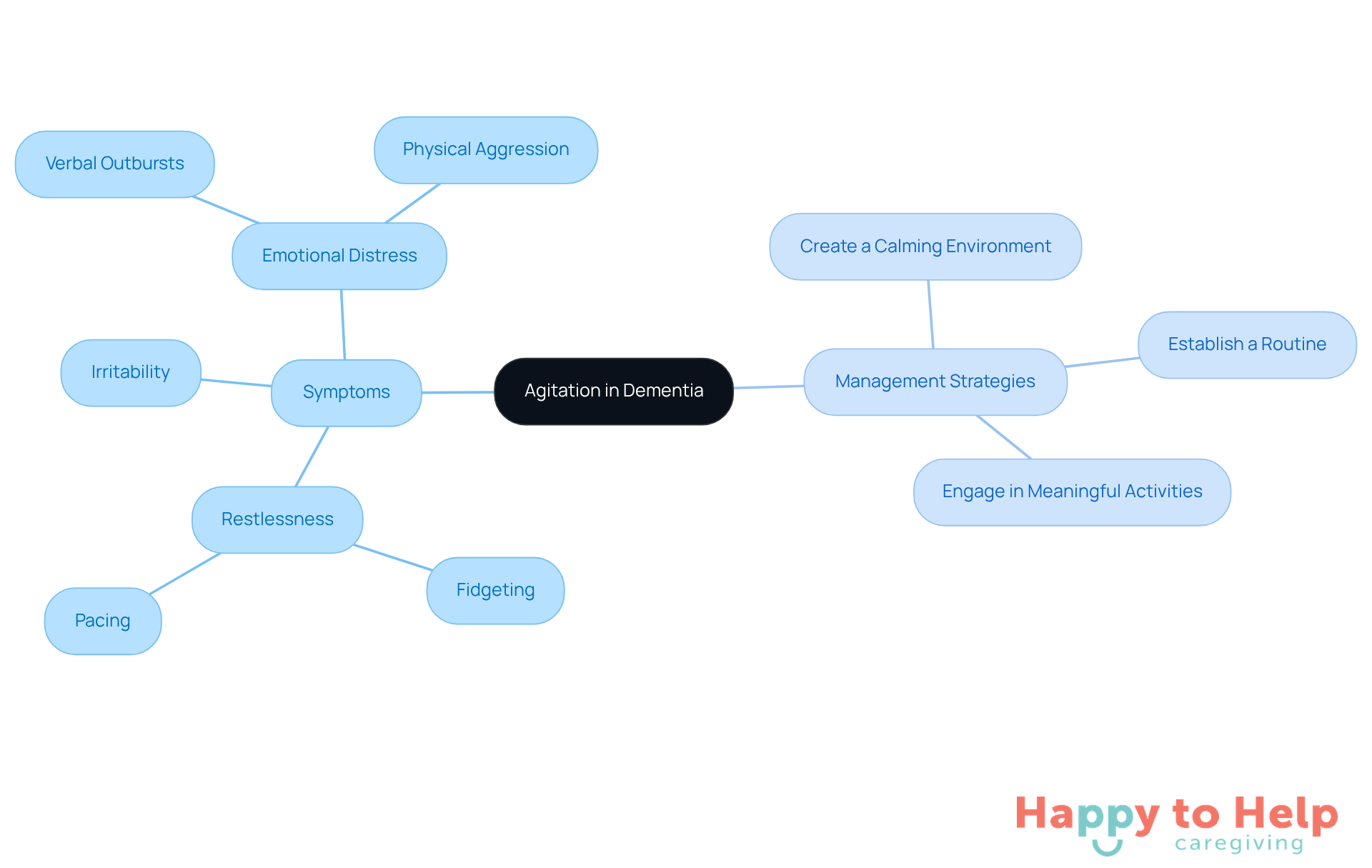
A significant challenge for caregivers is understanding whether agitation is a symptom of dementia, as it encompasses a range of behaviors that indicate increased restlessness, irritability, and emotional distress. Common manifestations include fidgeting, pacing, verbal outbursts, and sometimes physical aggression. According to the Alzheimer's Society, restlessness can be characterized by repetitive movements, such as tapping fingers or walking back and forth.
Understanding if agitation is a symptom of dementia is crucial, as it often reflects unmet needs or discomfort rather than mere frustration. This complexity makes it essential for caregivers to observe and interpret these behaviors carefully. By recognizing the underlying causes of agitation, caregivers can better address the needs of those they care for, especially when determining if agitation is a symptom of dementia.
To manage agitation effectively, caregivers can implement several strategies:
- Establish a routine: Consistency can help reduce anxiety and confusion.
- Create a calming environment: Minimize noise and distractions to promote a sense of safety.
- Engage in meaningful activities: Activities that stimulate the mind can redirect focus and reduce restlessness.
By being proactive and attentive, caregivers can significantly improve the quality of life for individuals experiencing agitation in dementia.
Explore Other Behavioral Symptoms of Dementia
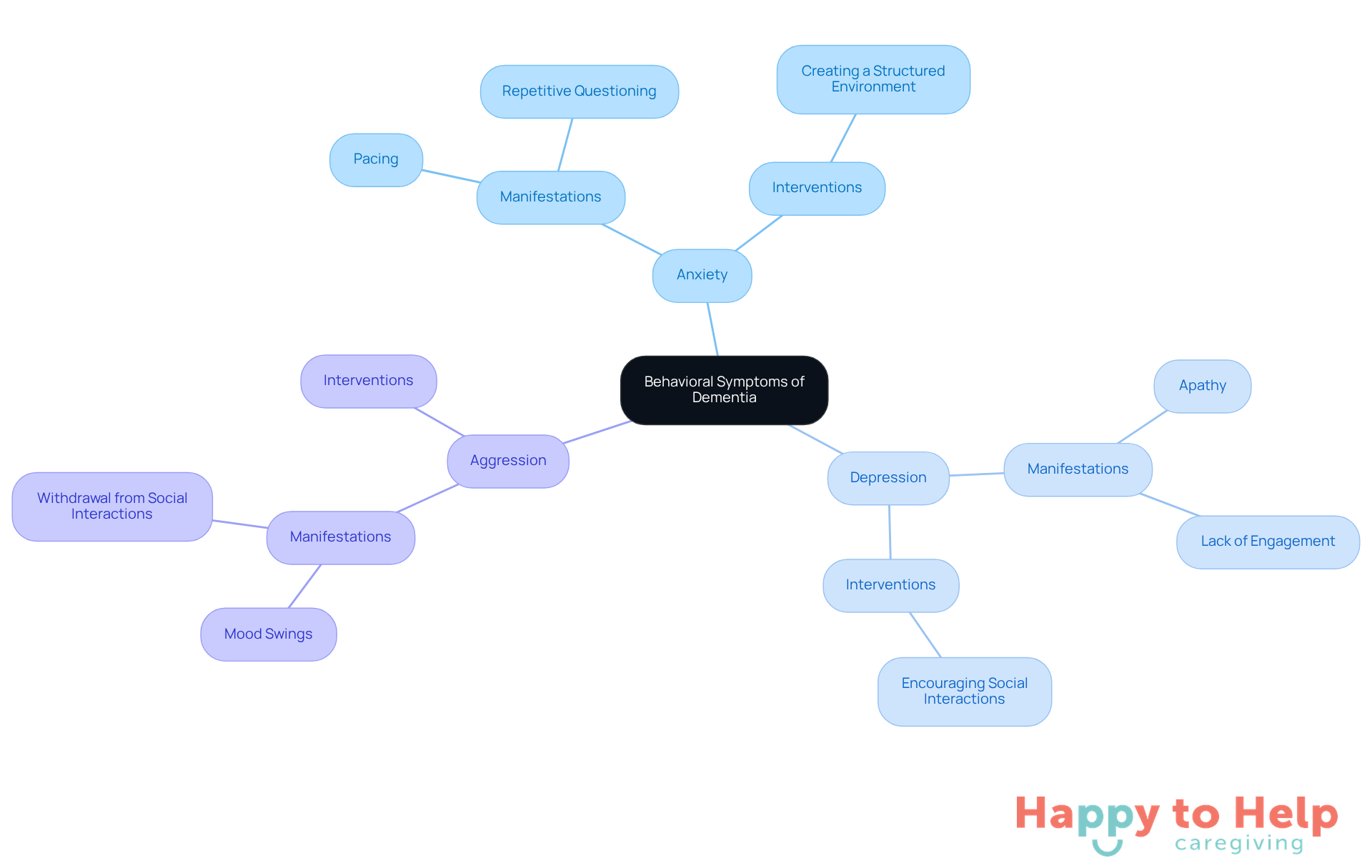
People with cognitive impairment often exhibit behavioral signs such as anxiety, depression, and aggression. These symptoms can manifest as confusion, mood swings, and withdrawal from social interactions, complicating the caregiving process.
For instance, anxiety may lead to pacing or repetitive questioning, while depression can result in apathy and a lack of engagement. Recognizing these symptoms is crucial, as they often overlap with agitation, leading to the important question of whether agitation is a symptom of dementia, making it essential for caregivers to be vigilant.
To address these challenges, caregivers should implement tailored interventions. This includes:
- Creating a structured environment to reduce anxiety
- Encouraging social interactions to combat withdrawal
By understanding and recognizing these signs, caregivers can provide more effective support and improve the quality of care.
Identify Causes and Triggers of Agitation
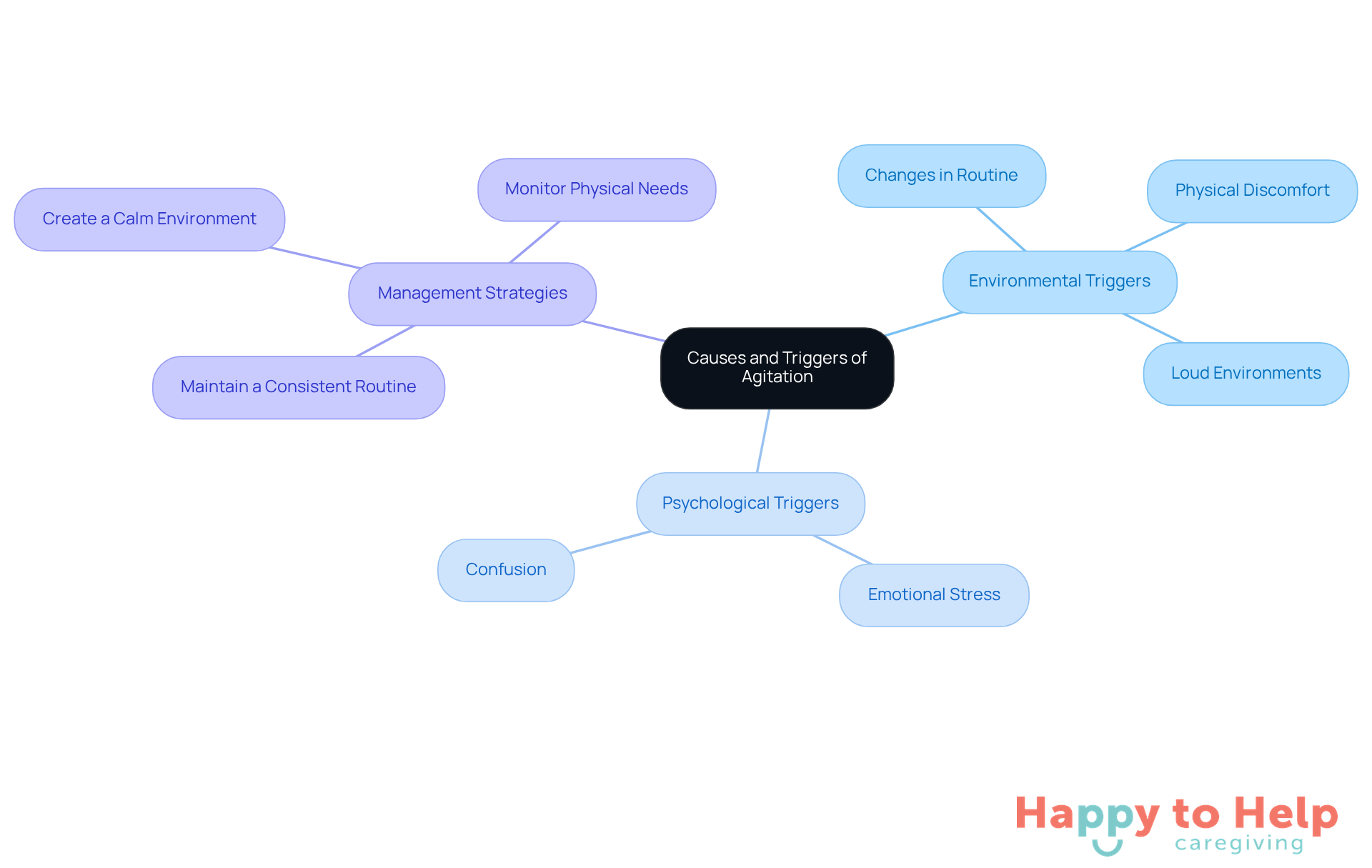
A significant challenge for caregivers is understanding whether agitation is a symptom of dementia in patients. Various environmental and psychological triggers can lead to this distress, including changes in routine, physical discomfort, and emotional stress. For instance, a sudden shift in daily activities or exposure to loud environments can cause confusion and anxiety, resulting in increased restlessness.
Research indicates that approximately 76% of individuals with Alzheimer's disease experience restlessness, often exacerbated by pain, hunger, and fatigue. This highlights the importance of caregivers in recognizing these triggers. By addressing them promptly, caregivers can significantly reduce the frequency and intensity of distress episodes.
To effectively manage agitation, caregivers can implement several strategies:
- Maintain a consistent routine: A steady schedule can provide a sense of security for dementia patients.
- Create a calm environment: Reducing noise and distractions can help minimize confusion and anxiety.
- Monitor physical needs: Regularly check for signs of pain, hunger, or fatigue to address these issues before they escalate.
Real-life examples show that caregivers who uphold a steady routine and foster a tranquil atmosphere can effectively lessen restlessness, improving the overall well-being of their loved ones. Understanding if agitation is a symptom of dementia is crucial for caregivers, as it enables them to apply strategies that create a more stable and supportive environment for individuals with cognitive impairments.
Compare Management Strategies for Agitation and Other Symptoms
Restlessness in individuals experiencing cognitive decline presents a significant challenge for caregivers. Research indicates that approximately 50% of individuals with Alzheimer’s dementia experience restlessness, prompting the inquiry: is agitation a symptom of dementia, which leads to increased burden and psychological stress for support providers. This issue not only affects the quality of care but also the emotional well-being of caregivers.
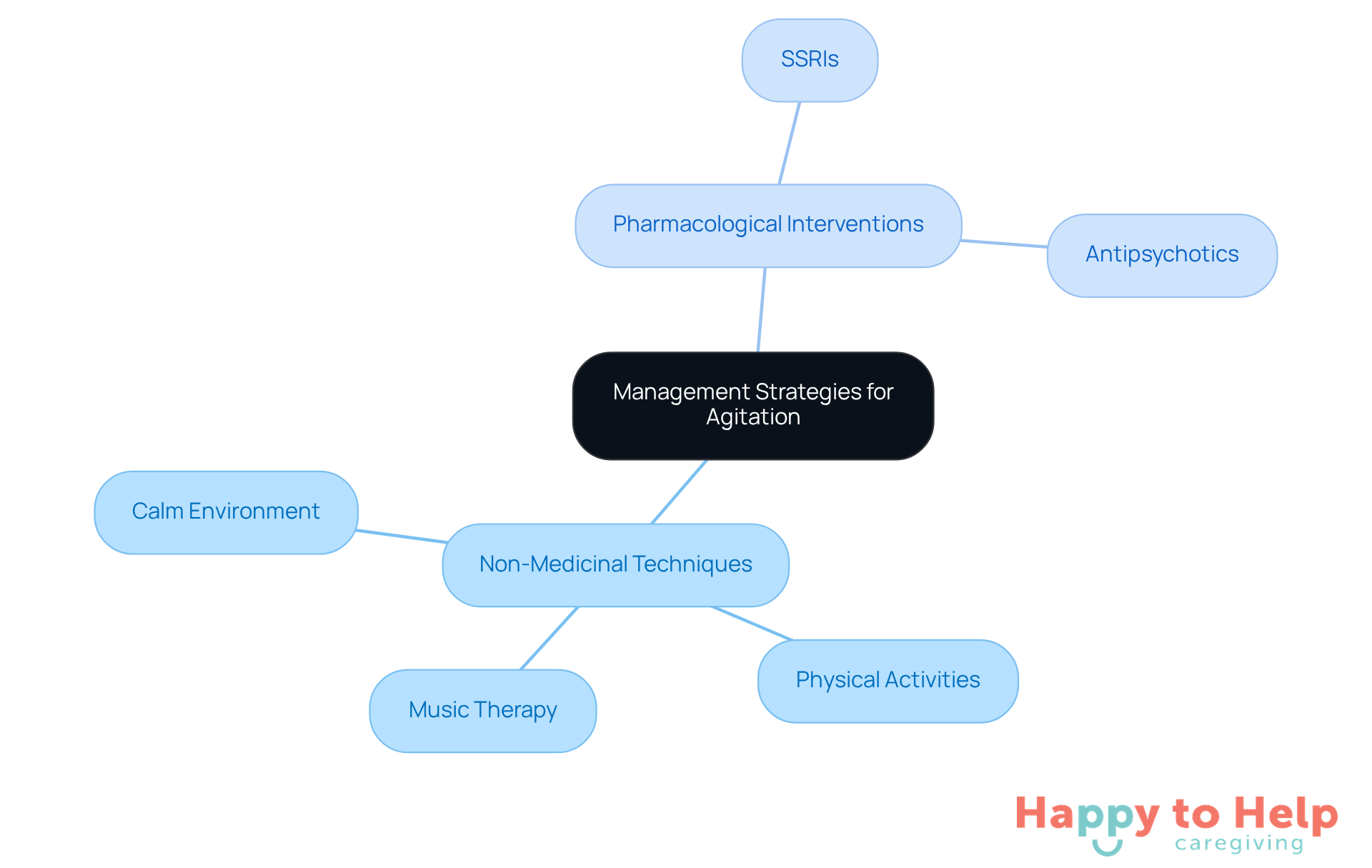
To address this problem, it’s essential to explore both medicinal and non-medicinal management techniques. Non-drug approaches, such as:
- Creating a calm environment
- Engaging in physical activities
- Utilizing music therapy
have shown promise in alleviating restlessness without the side effects associated with medications. These methods can significantly enhance the quality of life for both patients and caregivers.
On the other hand, pharmacological interventions, including:
- Selective serotonin reuptake inhibitors (SSRIs)
- Antipsychotics
may be necessary in more severe cases. While these medications can be effective, they often carry greater safety risks compared to non-drug strategies. Therefore, it’s crucial to tailor the choice of strategy to the individual’s needs, weighing the potential benefits against the risks.
Current studies underscore the importance of an integrated treatment approach that combines both medicinal and non-medicinal methods. This comprehensive strategy not only improves outcomes for patients but also alleviates the emotional toll on caregivers. Additionally, enhancing education and resources for caregivers is vital in helping them understand if agitation is a symptom of dementia and manage it effectively.
Your Path Forward
Understanding whether agitation is a symptom of dementia presents a significant challenge for caregivers. Agitation often indicates unmet needs or discomfort, rather than simple frustration. This makes it crucial for caregivers to accurately recognize and interpret these behaviors. By doing so, they can provide better support and enhance the quality of life for individuals experiencing cognitive decline.
The article explores the nature of agitation, examining its manifestations, potential causes, and management strategies. Establishing routines, creating calming environments, and engaging in meaningful activities are essential to alleviate agitation. Moreover, it highlights the overlap between agitation and other behavioral symptoms of dementia, stressing the importance for caregivers to remain vigilant and responsive to the unique challenges each individual presents.
Ultimately, understanding agitation within the broader context of dementia care is vital. By employing both non-medicinal and pharmacological strategies tailored to individual needs, caregivers can effectively manage agitation. This proactive approach not only benefits patients but also eases the emotional burden on caregivers, fostering a more supportive and compassionate caregiving environment.
https://iframe.tely.ai/cta/eyJhcnRpY2xlX2lkIjogIjY5NDBhMjI3NmYzZjk5NzYxYTM2ZTNkNCIsICJjb21wYW55X2lkIjogIjY4ZWU1ZGNhNzMxNzYyNTU3ZjNjOTVjMSIsICJpbmRleCI6IG51bGwsICJ0eXBlIjogImFydGljbGUifQ==Frequently Asked Questions
What is agitation in dementia?
Agitation in dementia refers to a range of behaviors that indicate increased restlessness, irritability, and emotional distress. Common manifestations include fidgeting, pacing, verbal outbursts, and sometimes physical aggression.
How can agitation be characterized?
According to the Alzheimer's Society, agitation can be characterized by repetitive movements, such as tapping fingers or walking back and forth.
Why is it important for caregivers to understand agitation in dementia?
Understanding if agitation is a symptom of dementia is crucial because it often reflects unmet needs or discomfort rather than mere frustration. This understanding helps caregivers to observe and interpret these behaviors carefully.
What strategies can caregivers use to manage agitation in individuals with dementia?
Caregivers can manage agitation by establishing a routine, creating a calming environment to minimize noise and distractions, and engaging individuals in meaningful activities that stimulate the mind.
How can caregivers improve the quality of life for individuals experiencing agitation in dementia?
By being proactive and attentive to the needs of individuals, caregivers can significantly improve their quality of life and reduce agitation.
List of Sources
- Define Agitation in Dementia
- Understanding and Managing Agitation in Dementia: A Trauma-Informed and Pharmacologic Approach | AssuredPartners (https://assuredpartners.com/news-insights/webinars/healthcare/2025/understanding-and-managing-agitation-in-dementia-a-trauma-informed-and-pharmacologic-approach)
- New Survey Reveals Critical Gaps in Awareness and Understanding of Agitation in Alzheimer’s Dementia - Alliance for Aging Research (https://agingresearch.org/news/new-survey-reveals-critical-gaps-in-awareness-and-understanding-of-agitation-in-alzheimers-dementia)
- Study: Synthetic THC May Reduce Agitation in Patients with Alzheimer’s Dementia (https://tuftsmedicine.org/about-us/news/study-synthetic-thc-may-reduce-agitation-patients-alzheimers-dementia)
- Clinical Trial Shows Synthetic Cannabis Reduces Agitation in Alzheimer’s Disease (https://hopkinsmedicine.org/news/newsroom/news-releases/2024/10/clinical-trial-shows-synthetic-cannabis-reduces-agitation-in-alzheimers-disease)
- Widespread Misunderstanding of Agitation in Alzheimer Dementia Leaves US Caregivers Struggling (https://hmpgloballearningnetwork.com/site/altc/news/widespread-misunderstanding-agitation-alzheimer-dementia-leaves-us-caregivers)
- Identify Causes and Triggers of Agitation
- Staff and residents are ‘scared to death’ of violent patients at dementia care homes (https://npr.org/sections/shots-health-news/2024/08/08/nx-s1-5066969/dementia-violence-violent-patient-nursing-homes)
- Publication Highlights Person-Centered Approach to Managing Agitation in Alzheimer’s Disease (https://geron.org/News-Events/GSA-News/Press-Room/Press-Releases/publication-highlights-person-centered-approach-to-managing-agitation-in-alzheimers-disease)
- Agitation in Dementia: Real-World Impact and Burden on Patients and the Healthcare System - PMC (https://pmc.ncbi.nlm.nih.gov/articles/PMC8461728)
- New Survey Reveals Critical Gaps in Awareness and Understanding of Agitation in Alzheimer’s Dementia - Alliance for Aging Research (https://agingresearch.org/news/new-survey-reveals-critical-gaps-in-awareness-and-understanding-of-agitation-in-alzheimers-dementia)
- Widespread Misunderstanding of Agitation in Alzheimer Dementia Leaves US Caregivers Struggling (https://hmpgloballearningnetwork.com/site/altc/news/widespread-misunderstanding-agitation-alzheimer-dementia-leaves-us-caregivers)
- Compare Management Strategies for Agitation and Other Symptoms
- Non-drug therapies show real promise in calming agitation in Alzheimer’s (https://news-medical.net/news/20250528/Non-drug-therapies-show-real-promise-in-calming-agitation-in-Alzheimere28099s.aspx)
- The effectiveness of non-pharmacological interventions using information and communication technologies for behavioral and psychological symptoms of dementia: A systematic review and meta-analysis (https://sciencedirect.com/science/article/pii/S0020748922002218)
- Non-pharmacological interventions for agitation in dementia: systematic review of randomised controlled trials | The British Journal of Psychiatry | Cambridge Core (https://cambridge.org/core/journals/the-british-journal-of-psychiatry/article/nonpharmacological-interventions-for-agitation-in-dementia-systematic-review-of-randomised-controlled-trials/6EEAE41E1FA6AE868BE97D18A02FF443)
- Expert Consensus Highlights Evidence-Based Recommendations for Managing Agitation in Alzheimer Dementia (https://hmpgloballearningnetwork.com/site/altc/news/expert-consensus-highlights-evidence-based-recommendations-managing-agitation)
- New Survey Reveals Critical Gaps in Awareness and Understanding of Agitation in Alzheimer’s Dementia - Alliance for Aging Research (https://agingresearch.org/news/new-survey-reveals-critical-gaps-in-awareness-and-understanding-of-agitation-in-alzheimers-dementia)