

For families in our service areas
For families in our service areas, this guide explains home care and how non-medical in-home caregiving can support care planning in East Idaho, Treasure Valley & Magic Valley, Northern Wasatch, North Central West Virginia, and Northeast Ohio.
Understanding Looking for Home Care? Essential Steps
The growing number of seniors needing assistance at home poses a significant challenge for families and caregivers. As the demand for home care services rises, it’s crucial to understand the various options available to ensure the well-being of loved ones. Families often find themselves overwhelmed by the complexity of navigating this landscape.
How can they find the right support that meets their needs while reducing the stress of caregiving? This guide outlines essential steps family caregivers can take to secure effective home care. By empowering caregivers with practical solutions, we aim to help them make informed decisions that promote their loved ones’ health and happiness.
Understand Home Care Services
For those looking for home care, the options available present a vital solution to the challenges faced by caregivers as the senior population continues to grow. With forecasts indicating that 80 million individuals will be 65 and older by 2050, the demand for support services is expected to rise significantly. This situation poses a problem: approximately 70% of seniors will require some form of assistance during their lifetime, which can place immense pressure on family caregivers.
The implications of this growing need are profound. Caregivers often experience feelings of isolation and stress, struggling to balance their responsibilities while ensuring their loved ones receive the care they need. This is where seniors looking for home care can find options that offer a range of services designed to alleviate these pressures and enhance their quality of life.
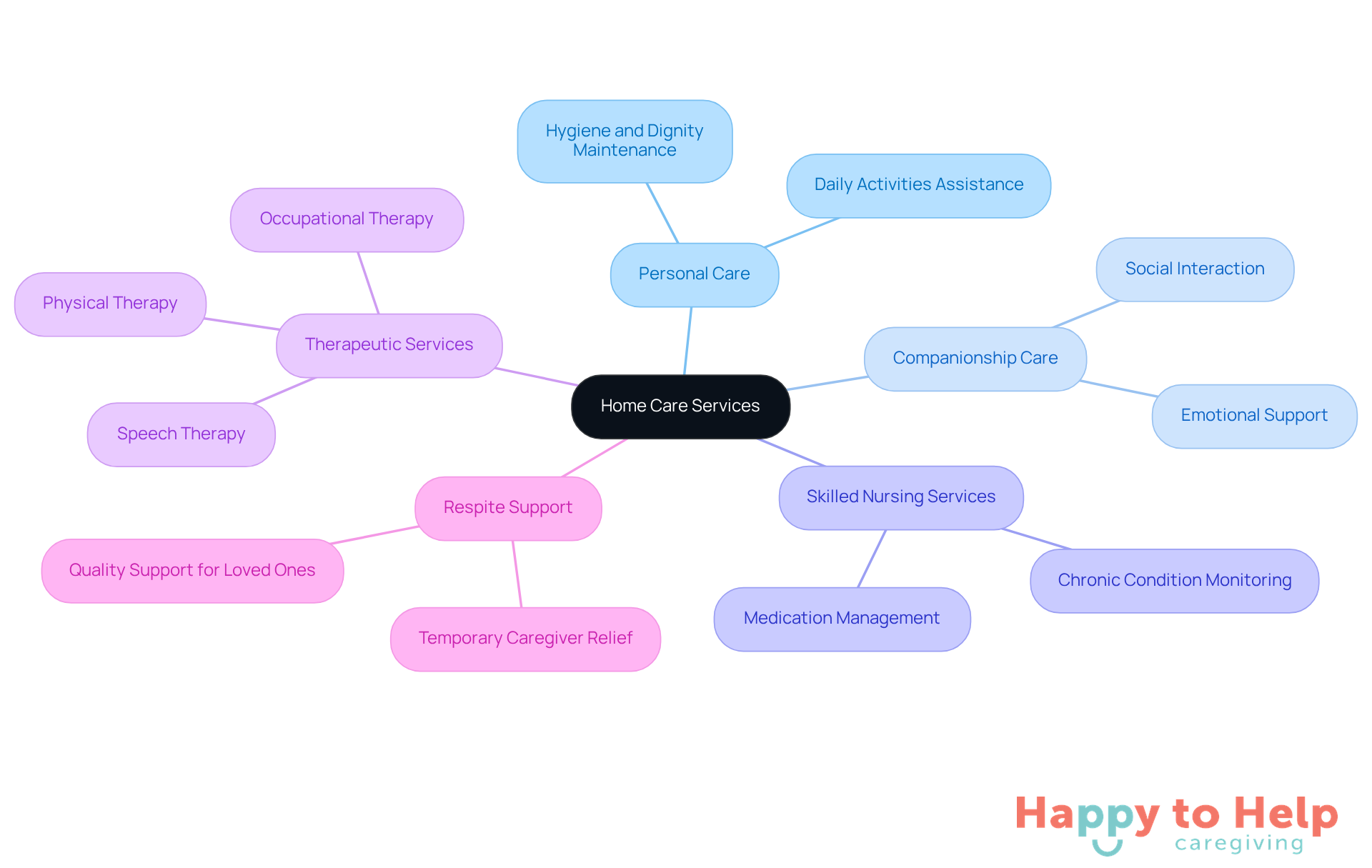
Key Areas of Home Assistance:
- Personal Care: Assistance with daily activities like bathing, dressing, grooming, and meal preparation, essential for maintaining hygiene and dignity.
- Companionship Care: Providing social interaction and emotional support to reduce feelings of loneliness and promote well-being.
- Skilled Nursing Services: Medical assistance from licensed professionals, including medication management and chronic condition monitoring.
- Therapeutic Services: Physical, occupational, or speech therapy aimed at aiding recovery from illness or injury.
- Respite Support: Temporary relief for family caregivers, allowing them to take necessary breaks while ensuring quality support for their loved ones.
Caregivers looking for home care should consider personalized support plans that effectively address the unique needs of seniors. By understanding the various categories of home assistance, families can better assess their loved ones' needs and select the most suitable services. This proactive approach not only promotes independence but also enhances overall well-being, ensuring that seniors can thrive in the comfort of their own homes.
Identify Key Factors for Choosing a Provider
When looking for home care, families often face the challenge of ensuring their loved ones receive the best possible support. This decision can significantly impact the quality of care and overall well-being of those in need.
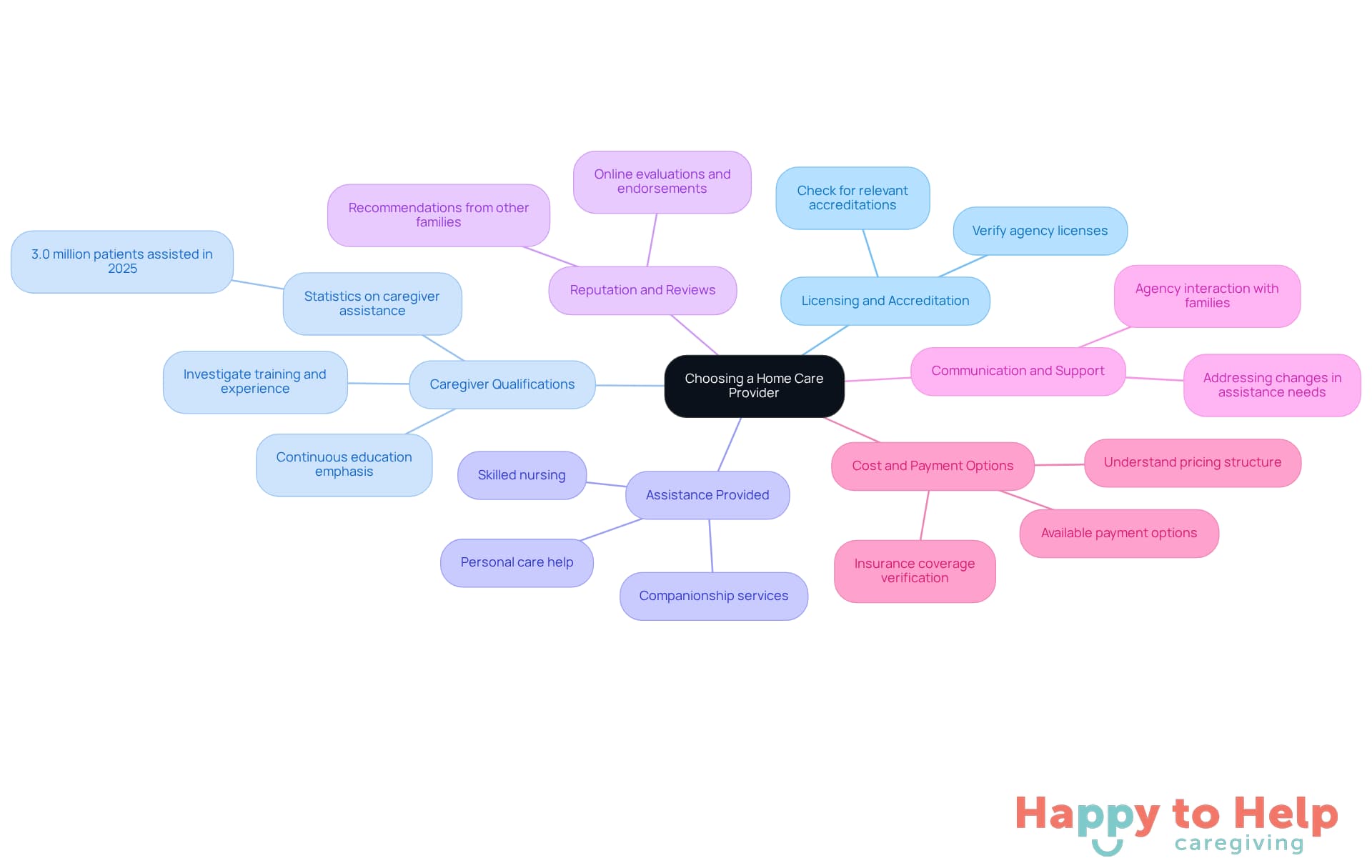
Key Factors to Consider:
-
Licensing and Accreditation: Verify that the agency holds the necessary licenses and accreditations from relevant authorities. This guarantees adherence to industry standards and demonstrates a dedication to quality service.
-
Caregiver Qualifications: Investigate the training and experience of caregivers. Organizations that emphasize continuous education and specialized training, like those provided by the Center for Caregiver Advancement, showcase a commitment to high-quality standards. In 2025, statistics show that around 3.0 million patients obtained assistance from home health agencies, highlighting the importance of well-trained caregivers in addressing varied client requirements.
-
Assistance Provided: Ensure that the agency delivers the specific support needed by your loved one, whether it involves personal care help, skilled nursing, or companionship. Customized offerings are crucial for tackling personal health issues and preferences.
-
Reputation and Reviews: Investigate the agency's standing through online evaluations, endorsements, and recommendations from other households. Positive feedback and a strong track record are indicators of reliability and quality service.
-
Communication and Support: Assess how the agency interacts with families and addresses issues or changes in assistance needs. Effective communication fosters trust and ensures that relatives stay informed about their loved one's treatment.
-
Cost and Payment Options: Understand the agency's pricing structure and available payment options, including insurance coverage and financial assistance programs. Clarity in costs helps prevent unforeseen expenses and enables families to plan appropriately.
By thoroughly assessing these factors, families looking for home care can make informed choices that align with their loved one's unique needs and preferences, ensuring they receive the best possible support.
Communicate and Collaborate with Your Care Team
To ensure effective care, families often face significant challenges. Poor communication and lack of information can lead to misunderstandings and inadequate support for their loved ones. This can result in feelings of frustration and helplessness for both families and caregivers.
To address these issues, families should consider the following actionable solutions:
- Establish Clear Communication: Arrange regular check-ins with caregivers to discuss the support plan, any changes in the family member's condition, and any concerns that arise.
- Share Information: Provide caregivers with comprehensive details about the family member's medical history, preferences, and daily routines to facilitate personalized support.
- Encourage Feedback: Create a welcoming atmosphere where caregivers feel at ease sharing observations and suggestions about the support provided.
- Involve Healthcare Professionals: Collaborate with doctors, nurses, and therapists to ensure a cohesive approach to support that addresses all aspects of the individual's health.
- Utilize Technology: Leverage tools such as management applications or online communication platforms to streamline updates and maintain transparency among all parties involved.
By fostering a collaborative relationship with the care team, families can enhance the quality of care and ensure their loved one's needs are met effectively.

Moving Forward with Looking for Home Care? Essential Steps
Navigating the landscape of home care services presents a significant challenge for family caregivers seeking the best support for their loved ones. As the senior population continues to grow, the implications of this challenge become increasingly critical. Understanding the various types of assistance available empowers families to make informed decisions that enhance their loved ones' well-being and independence.
Key aspects of home care include:
- The necessity of personalized support plans
- Effective communication with the care team
Families should consider factors such as:
- Caregiver qualifications
- Agency reputation
- Tailored assistance
By focusing on these elements, they can select the right services that align with their loved ones' unique needs. Additionally, fostering collaboration with caregivers and healthcare professionals can significantly improve the quality of care provided.
Caring for aging family members can feel daunting, yet it also presents an opportunity to ensure they receive the compassionate support they deserve. By taking proactive steps to understand home care options and building strong communication channels with care providers, families can create a nurturing environment that allows seniors to thrive at home. Embracing these essential strategies not only alleviates caregiver stress but also enriches the lives of those receiving care. Thoughtful planning and collaboration are vital in the realm of home care.
Frequently Asked Questions
What is the significance of home care services for seniors?
Home care services provide essential support to seniors, addressing the challenges faced by caregivers as the senior population grows. With forecasts indicating a significant increase in the number of seniors, the demand for these services is expected to rise.
How many seniors are expected to require assistance during their lifetime?
Approximately 70% of seniors will require some form of assistance during their lifetime.
What challenges do caregivers face when providing care to seniors?
Caregivers often experience feelings of isolation and stress as they struggle to balance their responsibilities while ensuring their loved ones receive the necessary care.
What are the key areas of home assistance available for seniors?
The key areas of home assistance include:
- Personal Care: Assistance with daily activities like bathing, dressing, grooming, and meal preparation.
- Companionship Care: Providing social interaction and emotional support.
- Skilled Nursing Services: Medical assistance from licensed professionals, including medication management.
- Therapeutic Services: Physical, occupational, or speech therapy for recovery.
- Respite Support: Temporary relief for family caregivers.
Why is it important for caregivers to consider personalized support plans?
Personalized support plans address the unique needs of seniors, allowing families to assess their loved ones' requirements and select suitable services, which promotes independence and enhances overall well-being.
How do home care services benefit seniors?
Home care services enhance seniors' quality of life by providing necessary assistance, promoting independence, and ensuring they can thrive in the comfort of their own homes.
List of Sources
- Understand Home Care Services
- Home Health Care Trends for 2025 (https://carevoyant.com/home-health-blog/home-health-care-trends-2025)
- Home Care Industry Trends to Watch in 2025 (https://firstlighthomecare.com/blog/home-care-industry-trends)
- 6 Benefits of Home Care and Home Health Care (https://aplaceformom.com/caregiver-resources/articles/benefits-of-home-care)
- How 3 Top Trends Have Shaped Home-Based Care This Year (https://homehealthcarenews.com/2025/08/how-3-top-trends-have-shaped-home-based-care-this-year)
- White Paper: The Future of Home Care: A 2025 Survey of the Home Care Industry & Future Trends (https://axiscare.com/white-papers/access-home-care-industry-survey-and-trends-report)
- Identify Key Factors for Choosing a Provider
- Choosing a Home Care Provider: 8 Essential Steps | AdvisaCare (https://advisacare.com/how-to-choose-the-right-home-care-provider-for-your-loved-one)
- US News & World Report Highlights CCA's Caregiver Training (https://advancecaregivers.org/report-us-news-world-report-highlights-ccas-caregiver-training)
- FastStats (https://cdc.gov/nchs/fastats/home-health-care.htm)
- Top 5 Questions for Home Care & Private Duty in 2025 | Collier Home Care (https://collierhomecare.com/blog/the-top-5-questions-to-ask-when-choosing-a-care-provider-in-2025)
- Choosing the Right Home Healthcare Provider: A Step-by-Step Guide - Family Home Health (https://familyhomehealthnetwork.com/choosing-the-right-home-healthcare-provider-a-step-by-step-guide)
- Communicate and Collaborate with Your Care Team
- Why It’s Time for In-Home Care to Catch Up to the Value-Based Care Movement - MedCity News (https://medcitynews.com/2025/10/why-its-time-for-in-home-care-to-catch-up-to-the-value-based-care-movement)
- How to Improve Care Team Communication in Home Care (https://carevoyant.com/home-health-blog/how-to-improve-care-team-communication-in-home-care)
- 2025 home care trends include tightened EVV oversight, investments in caregiver training (https://mcknightshomecare.com/2025-home-care-trends-include-tightened-evv-oversight-investments-in-caregiver-training)
- Overcoming Challenges In Home-Based Care For Medically Intensive Patients (https://homehealthcarenews.com/2025/09/overcoming-challenges-in-home-based-care-for-medically-intensive-patients)