
What to Expect
Caring for someone with Alzheimer's disease can be an incredibly challenging journey. Caregivers often face emotional hurdles, including feelings of stress and burnout. It’s essential to recognize these feelings and understand that you’re not alone in this experience.
Hallucinations can be particularly distressing for both patients and caregivers. Understanding the nature of these hallucinations is crucial. They can stem from various factors, including medication side effects or the progression of the disease. By acknowledging this, caregivers can approach the situation with compassion and patience.
Implementing calming routines can make a significant difference. Simple activities, like listening to soothing music or engaging in gentle exercises, can help create a peaceful environment. Distraction techniques, such as offering a favorite activity or a comforting object, can also redirect attention away from distressing experiences.
Seeking professional help is another vital step. Don’t hesitate to reach out to healthcare providers who can offer guidance and support tailored to your unique situation. This not only enhances the quality of life for the individual but also provides much-needed relief for caregivers.
Remember, it’s okay to ask for help. You’re doing an incredible job, and taking care of yourself is just as important as caring for your loved one. Together, we can navigate this journey with compassion and understanding.
What You Need to Know About Manage Hallucinations and Alzheimer
Hallucinations can deeply affect the lives of individuals living with Alzheimer's disease, bringing distress not just to them but also to their caregivers. It's heart-wrenching to know that nearly half of dementia patients may experience these unsettling episodes. This reality makes it essential for caregivers to understand how to manage these challenges effectively.
In this article, we’ll explore compassionate strategies and insights that caregivers can use to navigate these difficult experiences. By fostering a supportive environment, we can enhance the quality of life for those affected. But how can caregivers strike a balance between compassion and the need for effective intervention when faced with the unpredictable nature of hallucinations?
It's a tough journey, but remember, you’re not alone. Many caregivers share similar feelings of stress and burnout. Together, we can find ways to support each other and create a nurturing atmosphere for our loved ones.
Understand Hallucinations in Alzheimer's Disease
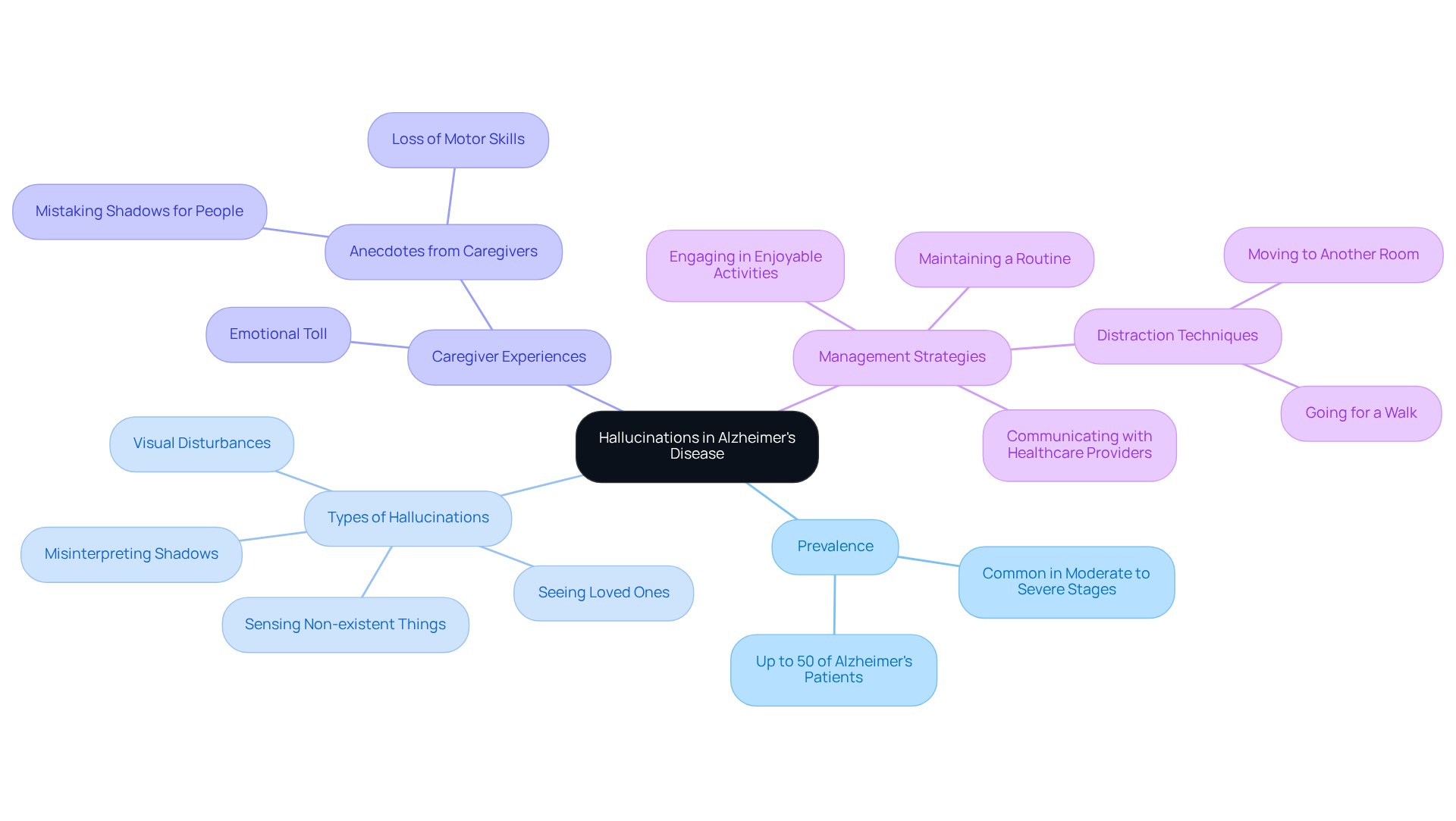
Hallucinations and Alzheimer's disease can be deeply unsettling, both for those experiencing them and for their caregivers. These sensory phenomena, which occur without any external stimulus, often present as visual or auditory perceptions. It’s important to remember that hallucinations and Alzheimer's are symptoms of the disease, not reflections of reality. In fact, recent studies indicate that up to 50 percent of people with dementia may face such challenges, underscoring the significance of this issue in 2025.
Caregivers, it’s essential to recognize that these episodes stem from changes in brain chemistry and structure as Alzheimer's progresses. Familiarizing yourself with the different types of hallucinations—like seeing loved ones who have passed away, misinterpreting shadows, or sensing things that aren’t there—can help you respond with greater empathy and effectiveness. For instance, one caregiver shared how their spouse mistook shadows for people, while another noted that their mother struggled with motor skills during these episodes. These stories highlight the varied impacts on daily life.
To manage these sensory experiences, maintaining a consistent routine can be incredibly beneficial. This approach may help reduce the frequency of episodes. Additionally, engaging your loved ones in enjoyable activities can serve as a comforting distraction during these moments. Not only does this alleviate distress, but it also nurtures a sense of connection and comfort. Remember to communicate any sensory experiences to healthcare providers, as their guidance can be invaluable in navigating these symptoms.
By understanding the nature of hallucinations and Alzheimer's and implementing these supportive strategies, you can significantly enhance the quality of life for those affected by dementia. You’re not alone in this journey; compassionate care and understanding can make a world of difference.
Identify Causes and Triggers of Hallucinations
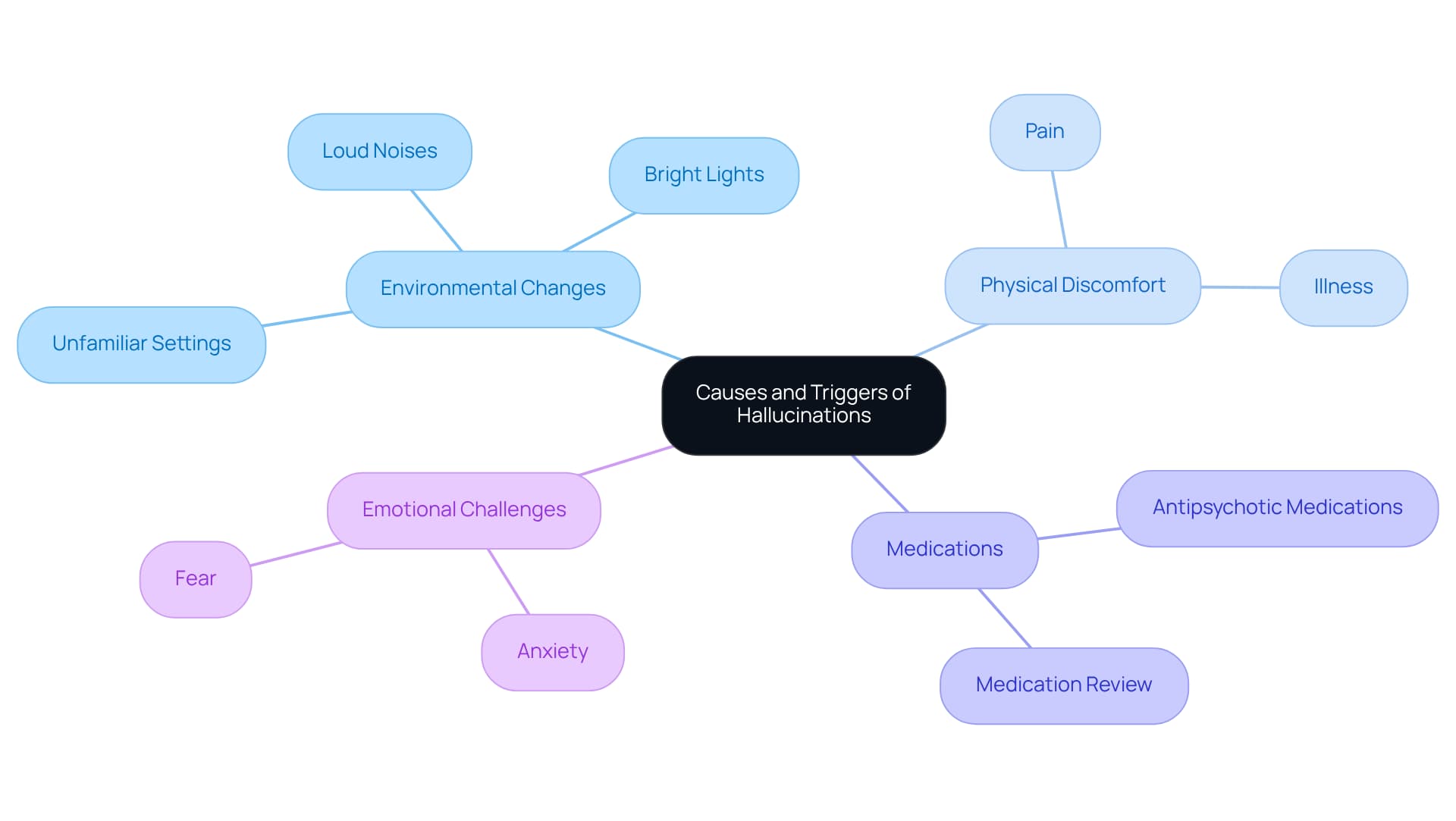
Hallucinations and Alzheimer's can be deeply distressing for patients, as well as their caregivers. These experiences, including hallucinations and Alzheimer's, can be triggered by various factors, especially environmental changes and sensory overload. Imagine the confusion that can arise from loud noises, bright lights, or unfamiliar settings. It’s no wonder that these situations can exacerbate feelings of anxiety and fear.
Physical discomfort, such as pain or illness, can further heighten confusion and alter perceptions, potentially resulting in hallucinations and Alzheimer's. As a caregiver, it’s essential to recognize these emotional challenges. Creating a calm and familiar environment can make a world of difference. By minimizing sensory overload—keeping noise levels low and ensuring soft, warm lighting—you can help soothe their minds.
Regularly reviewing medications with healthcare professionals is also crucial. Some drugs, particularly those for Parkinson's disease, may increase the likelihood of visual disturbances. Addressing any underlying medical conditions is vital, as they can trigger or worsen perceptual disturbances, including hallucinations and Alzheimer's.
Consider implementing environmental modifications, such as reducing clutter and using gentle lighting. These small changes can significantly alleviate distress and promote a sense of safety for individuals facing these challenges. Remember, you’re not alone in this journey. With compassion and understanding, you can create a nurturing space that helps both you and your loved one navigate these difficult moments together.
Implement Effective Response Strategies for Caregivers
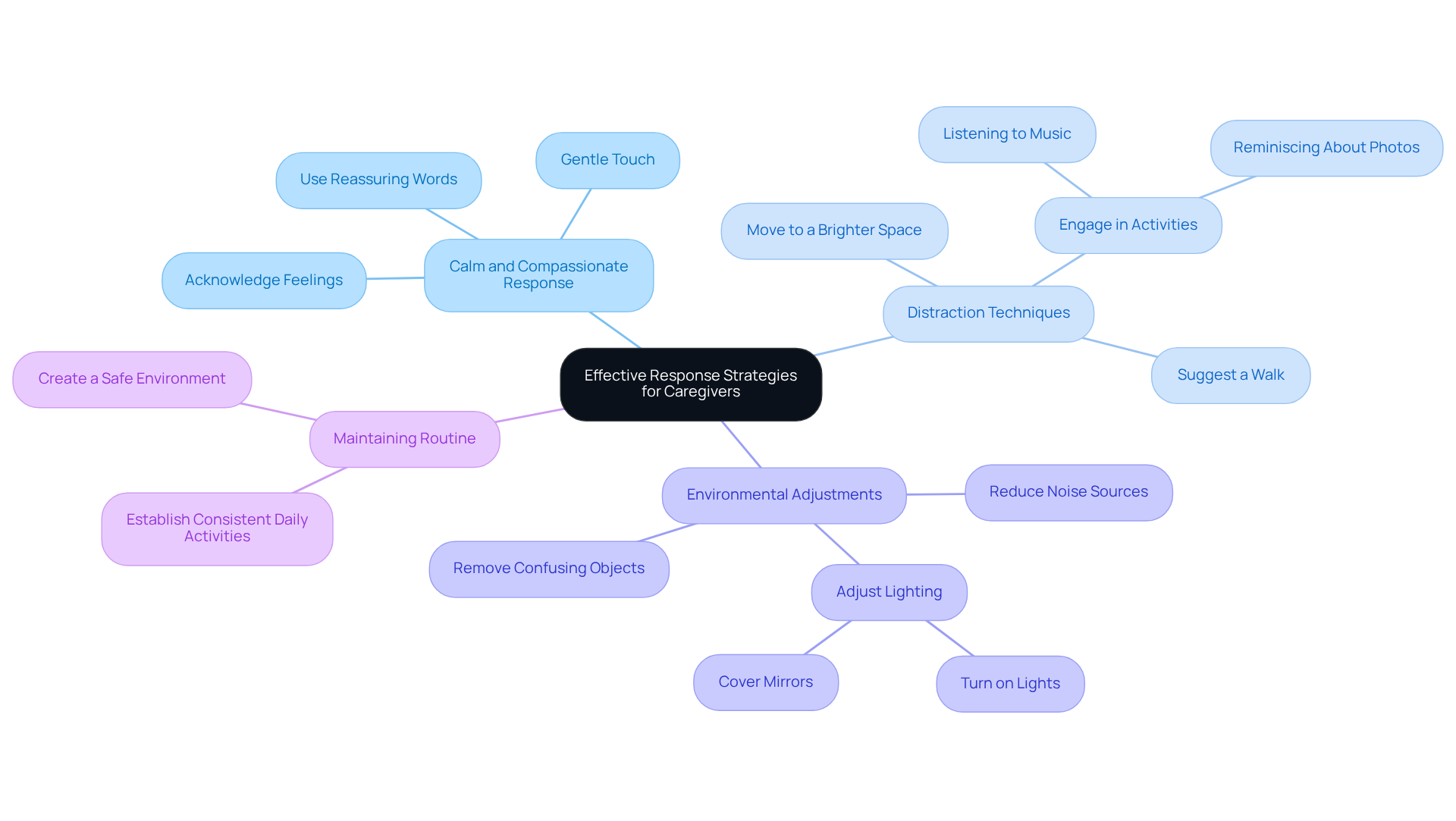
When someone with Alzheimer's experiences hallucinations and Alzheimer's, it’s crucial for their supporters to respond with calmness and compassion. Arguing or trying to convince them that what they see isn’t real can heighten their distress. Instead, acknowledging their feelings can make a world of difference. A simple, heartfelt response like, "I understand that you see someone; I'm here with you," can create a comforting atmosphere that helps ease their anxiety.
Distraction techniques can be particularly effective in these moments. Engaging the person in another activity—like listening to music or reminiscing about a cherished photo—can help shift their focus away from the delusion. For example, suggesting a walk or moving to a brighter space with others can provide comfort and reduce feelings of isolation.
It’s also important for caregivers to assess whether the experience is troubling for the individual or for themselves. This understanding can guide their response. Making environmental adjustments, such as turning on lights to minimize shadows or covering mirrors that might confuse them, can be beneficial. Identifying and reducing noise sources that could lead to misperceptions is another helpful strategy.
Maintaining a consistent routine is essential, as it fosters a sense of safety and predictability, which can help lessen the frequency of these episodes. Research indicates that up to 35 percent of individuals with Alzheimer's may experience hallucinations and Alzheimer's, highlighting the importance of effective support strategies. By implementing these approaches, caregivers can significantly improve the quality of life for both themselves and their loved ones, ensuring a more peaceful and supportive caregiving experience.
Seek Professional Help and Treatment Options
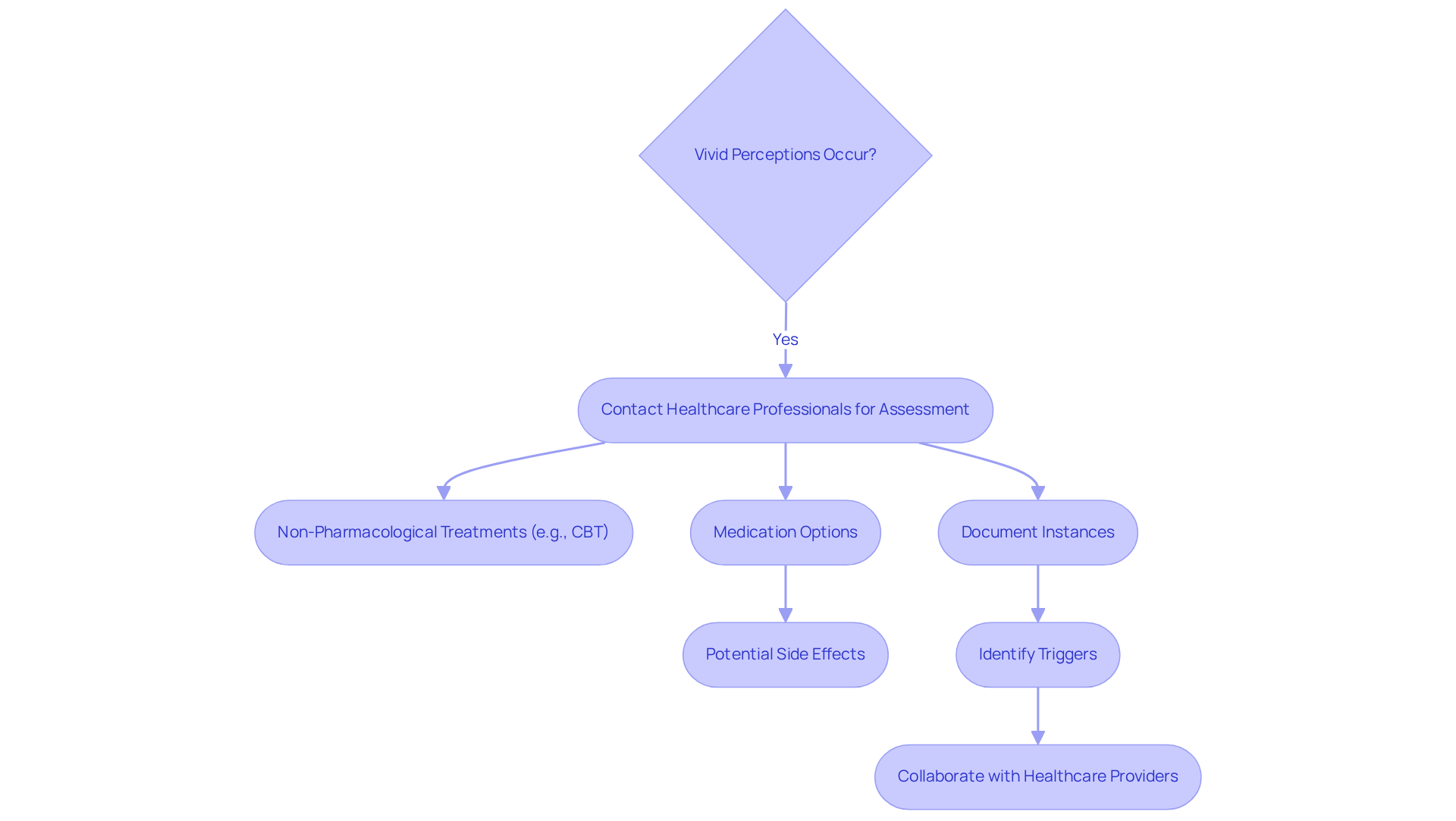
When vivid perceptions occur frequently or lead to distress, it’s crucial for caregivers to reach out to healthcare professionals for a thorough assessment. This step can help uncover any underlying medical issues or necessary adjustments in medication. Treatment options often include non-pharmacological methods, such as cognitive behavioral therapy (CBT), which has proven effective in managing symptoms for patients experiencing hallucinations and Alzheimer's. For instance, CBT can help patients reshape their perceptions and reduce anxiety tied to sensory experiences. In some cases, medications specifically designed to address perceptual disturbances may be required, though they can carry significant side effects, including an increased risk of cardiovascular incidents.
Caregivers play a vital role in this journey. By carefully documenting instances of false perceptions, identifying triggers, and noting responses, they can provide invaluable information to healthcare providers. This detailed record can greatly assist in crafting effective treatment plans tailored to the individual’s needs. Additionally, offering reassurance in a calm manner—using comforting words and gentle touch—can help redirect attention and ease anxiety. Modifying the environment, such as covering mirrors and adjusting lighting, can also reduce confusion.
By supporting their loved ones and collaborating with healthcare providers, caregivers can ensure that appropriate strategies are in place to enhance the quality of life for those experiencing perceptual disturbances. It’s important to remember that up to 50 percent of patients with late-stage Alzheimer's disease may experience both hallucinations and Alzheimer's, underscoring the necessity for effective management strategies. Together, we can navigate these challenges with compassion and care.
Key Takeaways for Caregivers
Understanding and managing hallucinations in individuals with Alzheimer's disease is a vital part of caregiving. It can deeply affect both patients and their caregivers. Recognizing that these sensory experiences are symptoms of the disease, not reflections of reality, allows caregivers to approach the situation with empathy and informed strategies. This compassionate understanding forms the foundation for effective support.
Several key strategies can help manage hallucinations:
- Maintaining a consistent routine
- Creating a calm environment
- Using distraction techniques
It’s also crucial to seek professional help to address underlying medical issues and adjust medications when necessary. By documenting occurrences and identifying triggers, caregivers can provide valuable insights to healthcare professionals, ensuring tailored treatment plans that enhance the quality of life for those affected.
Navigating the challenges of hallucinations in Alzheimer's requires a blend of compassion, knowledge, and proactive management. Caregivers are encouraged to embrace these strategies and foster a nurturing environment. This approach can lead to a more peaceful and supportive experience for both themselves and their loved ones. By taking these steps, caregivers can profoundly impact the lives of those facing the complexities of Alzheimer's disease.
https://iframe.tely.ai/cta/eyJhcnRpY2xlX2lkIjogIjY5MDk0MjlmMTgyOGQ3Nzg1OTRlMzQwOCIsICJjb21wYW55X2lkIjogIjY4ZWU1ZGNhNzMxNzYyNTU3ZjNjOTVjMSIsICJpbmRleCI6IG51bGwsICJ0eXBlIjogImFydGljbGUifQ==Frequently Asked Questions
What are hallucinations in the context of Alzheimer's disease?
Hallucinations in Alzheimer's disease are sensory phenomena that occur without any external stimulus, often presenting as visual or auditory perceptions. They are symptoms of the disease and not reflections of reality.
How common are hallucinations among people with dementia?
Recent studies indicate that up to 50 percent of people with dementia may experience hallucinations.
What causes hallucinations in individuals with Alzheimer's?
Hallucinations stem from changes in brain chemistry and structure as Alzheimer's disease progresses.
What types of hallucinations might someone with Alzheimer's experience?
Individuals may experience various types of hallucinations, such as seeing loved ones who have passed away, misinterpreting shadows, or sensing things that aren’t there.
How can caregivers respond to hallucinations in their loved ones?
Caregivers can respond with greater empathy and effectiveness by familiarizing themselves with the different types of hallucinations and understanding their impacts on daily life.
What strategies can help manage hallucinations in Alzheimer's patients?
Maintaining a consistent routine and engaging loved ones in enjoyable activities can help reduce the frequency of hallucinations and serve as comforting distractions.
Why is it important to communicate sensory experiences to healthcare providers?
Communicating sensory experiences to healthcare providers is important because their guidance can be invaluable in navigating these symptoms and improving care.
How can understanding hallucinations enhance the quality of life for those affected by dementia?
By understanding the nature of hallucinations and implementing supportive strategies, caregivers can significantly enhance the quality of life for individuals affected by dementia, providing compassionate care and understanding.