Manage Sudden Agitation in Elderly: Effective Caregiver
For families in our service areas
For families in our service areas, this guide explains caregiver support and how non-medical in-home caregiving can support care planning in East Idaho, Treasure Valley & Magic Valley, Northern Wasatch, North Central West Virginia, and Northeast Ohio.
The Importance of Manage Sudden Agitation in Elderly:
Sudden agitation in elderly individuals presents a significant challenge for caregivers. This issue often arises unexpectedly, causing distress for both the caregiver and the individual. Understanding the underlying causes - ranging from cognitive decline to environmental stressors - equips caregivers with essential tools to navigate these turbulent moments effectively.
What strategies can caregivers implement to manage agitation while fostering a sense of calm and security in their loved ones? Exploring actionable techniques and creating supportive environments can greatly enhance the quality of care for those facing this complex issue. By addressing the problem head-on and providing practical solutions, caregivers can improve their approach to this challenging aspect of caregiving.
Understand Agitation: Definition and Causes in the Elderly
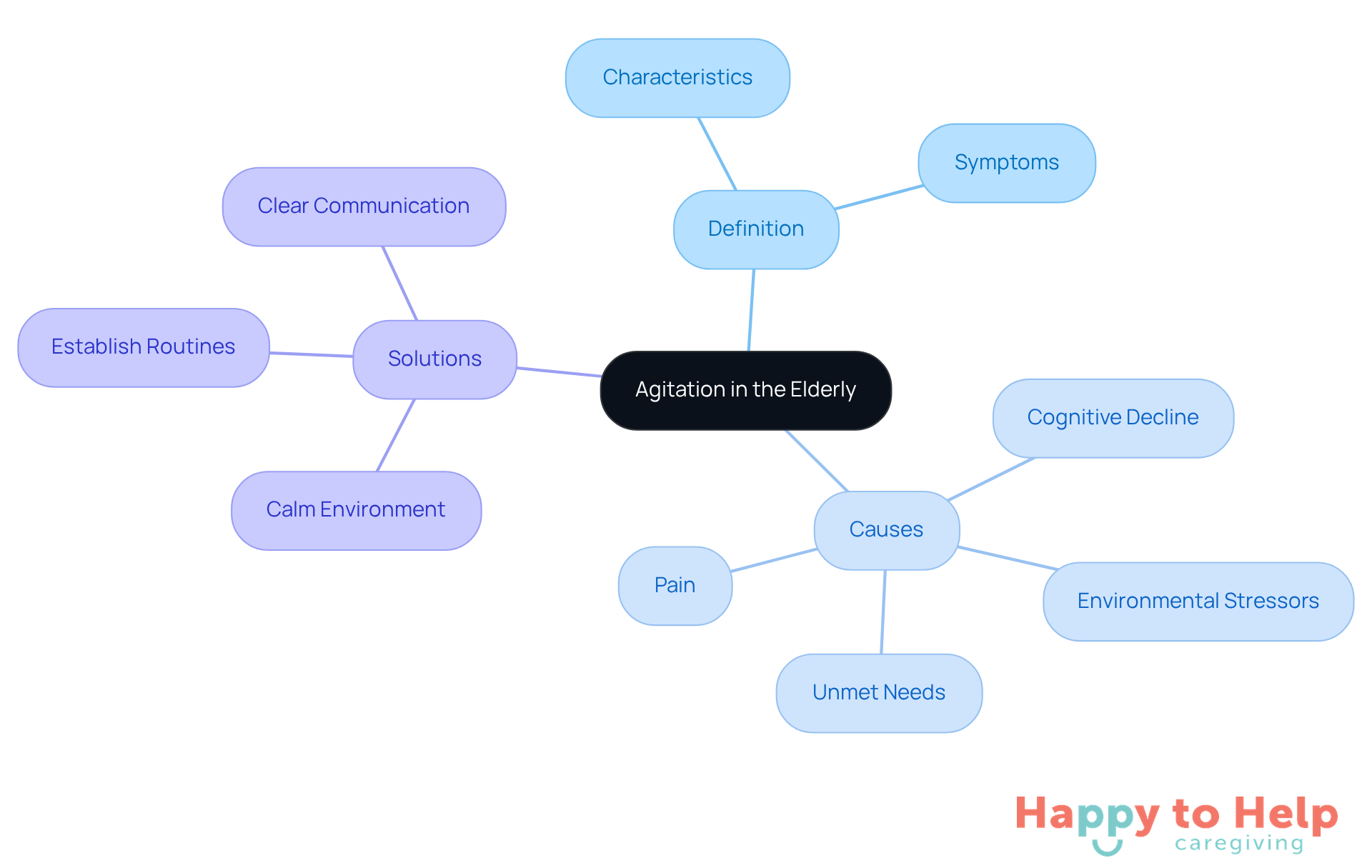
Sudden agitation in elderly individuals presents a significant challenge for caregivers. It is characterized by excessive motor activity, restlessness, and emotional distress, often manifesting as pacing, verbal outbursts, or even physical aggression. Understanding the common causes, such as cognitive decline, pain, environmental stressors, and unmet needs, is crucial for effective management of sudden agitation in elderly.
For instance, a senior with dementia may become agitated due to confusion in a noisy environment or discomfort from an untreated medical condition. Recognizing these triggers is essential for caregivers to develop effective strategies.
To address agitation, caregivers can implement several practical solutions:
- Create a calm environment: Reduce noise and distractions to help seniors feel more secure.
- Establish routines: Consistent daily schedules can provide a sense of stability.
- Communicate clearly: Use simple language and maintain a calm demeanor to ease confusion.
By understanding the underlying causes and employing these strategies, caregivers can significantly improve the quality of life for elderly individuals who face sudden agitation in elderly.
Implement Effective Strategies for Immediate Management of Agitation
A significant challenge for caregivers is the sudden agitation in elderly individuals, particularly those with Alzheimer’s dementia. Research shows that around 50% of patients with this condition experience sudden agitation, which can lead to increased distress for both the individual and the caregiver.
The sudden agitation in elderly not only affects their emotional well-being but also complicates caregiving efforts. Caregivers often find themselves in stressful situations, struggling to maintain a calm environment while addressing the needs of their loved ones.
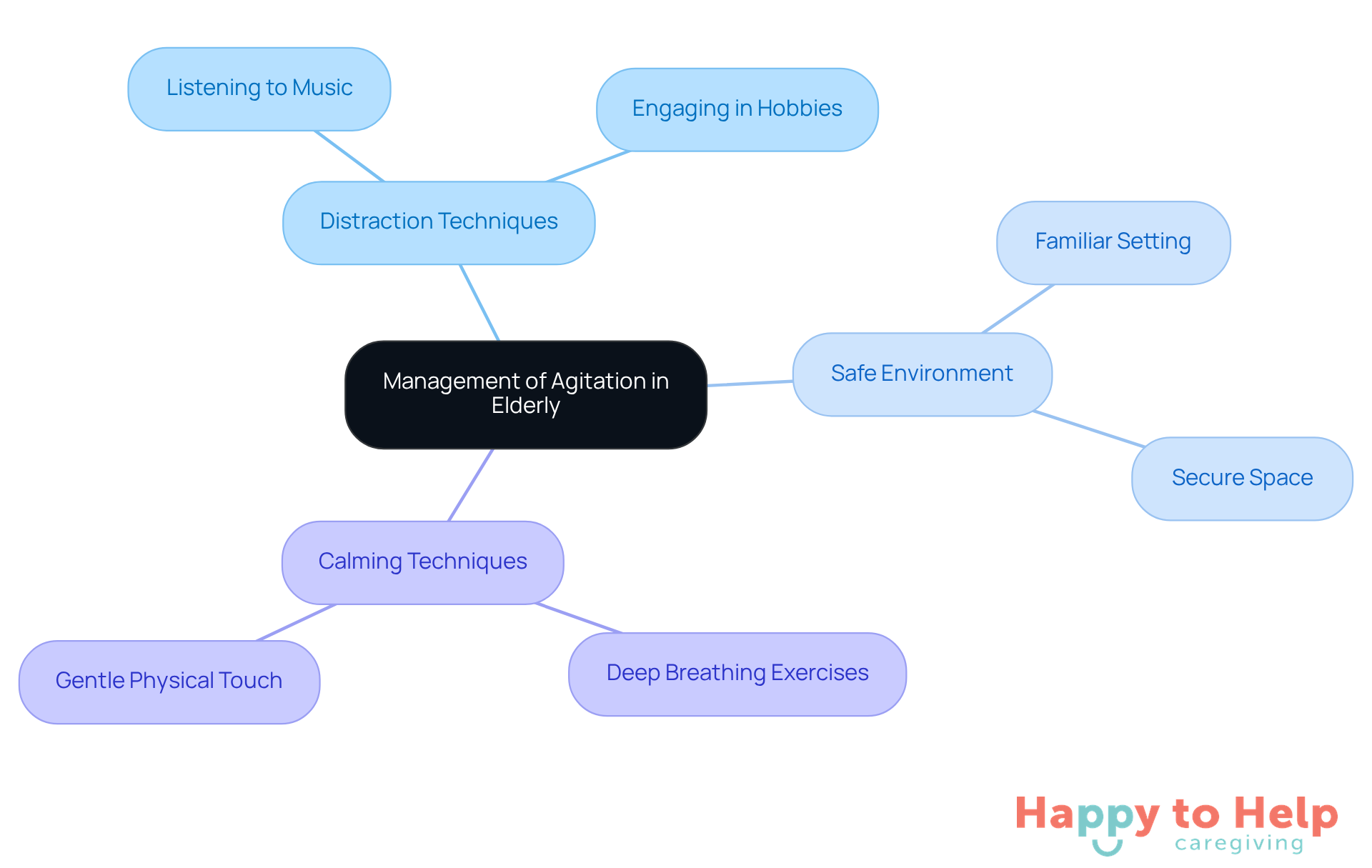
Solution: To effectively manage unrest, caregivers should prioritize a calm demeanor and soothing tones. Here are some actionable strategies:
- Distraction Techniques: Redirecting an agitated individual to calming activities, such as listening to music or engaging in a favorite hobby, can significantly alleviate distress.
- Safe Environment: Creating a familiar and secure setting helps reduce anxiety and promotes a sense of safety.
- Calming Techniques: Incorporating deep breathing exercises or gentle physical touch can provide comfort and reassurance.
As Amy Tan wisely stated, "If you can’t change your fate, change your attitude." This highlights the importance of maintaining a positive outlook in caregiving. Case studies, like "Managing Emotional Strain with Inspirational Quotes," demonstrate how these strategies can foster meaningful connections, ultimately reducing distress and encouraging calmness.
Create a Supportive Environment to Reduce Agitation Triggers
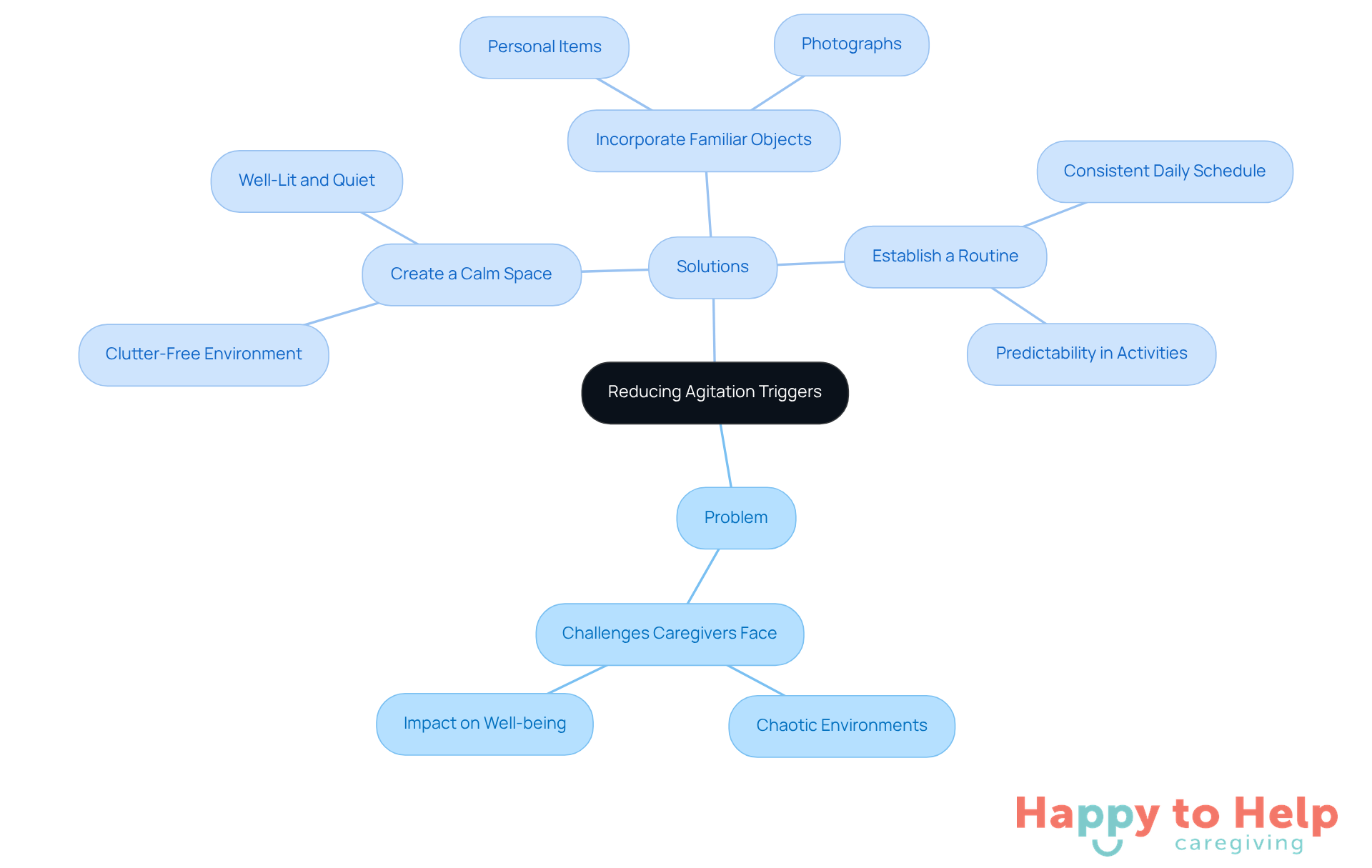
Problem: Caregivers often face the challenge of managing distress triggers in their environments, which can significantly impact the well-being of those they care for.
A chaotic or uncomfortable space can trigger sudden agitation in elderly individuals, heightening anxiety and confusion and making it difficult for them to feel secure. Without a supportive environment, caregivers may struggle to provide the comfort and stability that their loved ones need.
Solution: To create a more supportive atmosphere, caregivers should focus on the following actionable steps:
- Create a Calm Space: Ensure the environment is clutter-free, well-lit, and quiet. This helps to minimize distractions and promotes relaxation.
- Incorporate Familiar Objects: Displaying personal items and photographs can provide comfort and foster a sense of belonging.
- Establish a Routine: Implementing a consistent daily schedule for meals and activities can enhance predictability, which is crucial for reducing anxiety and confusion.
By taking these steps, caregivers can significantly lessen triggers of distress and create a nurturing environment that supports the emotional well-being of seniors, helping to reduce sudden agitation in elderly.
Enhance Communication and Emotional Support to Mitigate Agitation
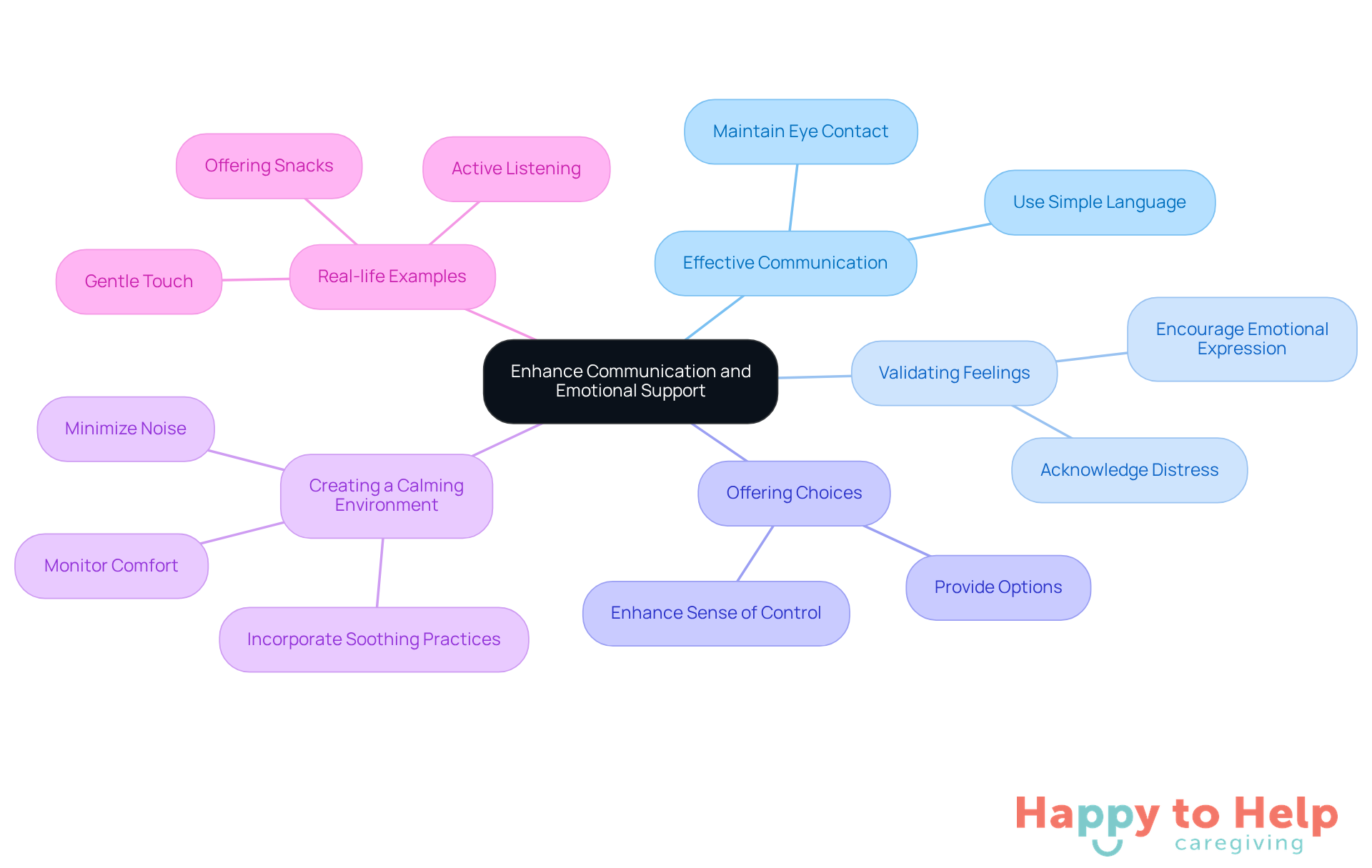
Effective communication is crucial for addressing the distress that arises from sudden agitation in elderly individuals. Caregivers face the challenge of ensuring that their interactions are both clear and supportive. When caregivers use simple, straightforward language and maintain eye contact, they demonstrate attentiveness and engagement, which can significantly reduce feelings of anxiety.
Validating feelings is a powerful technique that caregivers can employ. Acknowledging an individual's distress fosters understanding and connection. For example, saying, "I see that you're upset; it's okay to feel that way," not only reassures the individual but also encourages emotional expression.
Another common issue is the sense of helplessness that many seniors feel, which can result in sudden agitation in elderly. Caregivers can alleviate this by offering choices, such as allowing seniors to select between two options or decide what to wear. This simple act can enhance their sense of control. Additionally, incorporating calming practices - like playing soothing music or engaging in familiar activities - creates a reassuring atmosphere that helps reduce unease.
Establishing a serene environment is essential. Minimizing noise and clutter can help lessen stressors that provoke unrest. Caregivers should also monitor personal comfort by checking for pain, hunger, and fatigue, which are critical in managing restlessness effectively.
Real-life examples highlight the effectiveness of these strategies. Caregivers who actively listen and respond with empathy often report improved interactions with seniors who exhibit sudden agitation in elderly. Techniques such as gentle touch or offering snacks can divert attention from distressing feelings, promoting a sense of safety and comfort. By fostering an environment of emotional support and understanding, caregivers can significantly enhance the quality of life for elderly individuals who are facing sudden agitation in elderly.
Moving Forward with Manage Sudden Agitation in Elderly:
Understanding and managing sudden agitation in elderly individuals presents a significant challenge for caregivers. This agitation can lead to increased distress for both the elderly and their caregivers, impacting the quality of life for everyone involved. Recognizing the underlying causes is essential for effective intervention.
To address this issue, caregivers can implement several key strategies:
- Establishing a calm and structured atmosphere is crucial.
- Enhancing communication and employing distraction techniques can also be effective.
- Creating a familiar and safe space.
- Maintaining consistent routines.
- Validating feelings can alleviate agitation and promote a sense of security.
Moreover, caregivers should prioritize their own emotional resilience. A positive attitude can profoundly influence the caregiving experience, making it easier to manage challenging situations.
Ultimately, addressing sudden agitation requires a multifaceted approach that emphasizes understanding, empathy, and effective communication. By adopting these strategies, caregivers not only improve immediate situations but also foster a more compassionate environment that respects the dignity and needs of elderly individuals. The journey of caregiving is undoubtedly challenging, yet with the right tools and mindset, it can lead to rewarding connections and enhanced well-being for both caregivers and those they care for.
https://iframe.tely.ai/cta/eyJhcnRpY2xlX2lkIjogIjY5M2Y1MDg4MTQ3ZTIwZjE1ODJjOWRkZSIsICJjb21wYW55X2lkIjogIjY4ZWU1ZGNhNzMxNzYyNTU3ZjNjOTVjMSIsICJpbmRleCI6IG51bGwsICJ0eXBlIjogImFydGljbGUifQ==Frequently Asked Questions
What is agitation in the elderly?
Agitation in the elderly is characterized by excessive motor activity, restlessness, and emotional distress, which may manifest as pacing, verbal outbursts, or physical aggression.
What are common causes of sudden agitation in elderly individuals?
Common causes include cognitive decline, pain, environmental stressors, and unmet needs.
How can cognitive decline lead to agitation in seniors?
Seniors with cognitive decline, such as those with dementia, may become agitated due to confusion, especially in noisy or chaotic environments.
What practical solutions can caregivers implement to manage agitation?
Caregivers can create a calm environment, establish consistent routines, and communicate clearly using simple language.
Why is it important to recognize triggers of agitation in the elderly?
Recognizing triggers is essential for caregivers to develop effective strategies to manage agitation and improve the quality of life for elderly individuals.
List of Sources
- Understand Agitation: Definition and Causes in the Elderly
- Frontiers | Agitation and Dementia: Prevention and Treatment Strategies in Acute and Chronic Conditions (https://frontiersin.org/journals/neurology/articles/10.3389/fneur.2021.644317/full)
- Agitation in Dementia: Real-World Impact and Burden on Patients and the Healthcare System - PMC (https://pmc.ncbi.nlm.nih.gov/articles/PMC8461728)
- New Survey Reveals Critical Gaps in Awareness and Understanding of Agitation in Alzheimer’s Dementia - Alliance for Aging Research (https://agingresearch.org/news/new-survey-reveals-critical-gaps-in-awareness-and-understanding-of-agitation-in-alzheimers-dementia)
- 2025 News - University of Maryland School of Medicine Launches Groundbreaking Study on THC/CBD Therapy for Dementia-Related Agitation at End of Life | University of Maryland School of Medicine (https://medschool.umaryland.edu/news/2025/university-of-maryland-school-of-medicine-launches-groundbreaking-study-on-thccbd-therapy-for-dementia-related-agitation-at-end-of-life.html)
- Non-drug therapies show real promise in calming agitation in Alzheimer’s (https://news-medical.net/news/20250528/Non-drug-therapies-show-real-promise-in-calming-agitation-in-Alzheimere28099s.aspx)
- Implement Effective Strategies for Immediate Management of Agitation
- 11 Inspirational Quotes for Dementia Caregivers - Gateway 2 Counseling (https://gateway2counseling.com/2018/12/14/11-inspirational-quotes-for-dementia-caregivers)
- Caregiver Dementia Quotes (Encouragement For Dementia Caregivers) (https://optoceutics.com/caregiver-dementia-quotes-encouragement-dementia-caregivers?srsltid=AfmBOorjldRbEcyqZa7EoCFYctpmUBJJTgsZy7qRxAtF7TLyNayoGpXC)
- The Real-World Burden of Dementia-Related Agitation: Insights, Impacts, and Innovations (https://psychiatryadvisor.com/cch/dementia-related-agitation-alzheimer-disease-brexpiprazole)
- Non-drug therapies show real promise in calming agitation in Alzheimer’s (https://news-medical.net/news/20250528/Non-drug-therapies-show-real-promise-in-calming-agitation-in-Alzheimere28099s.aspx)
- Expert Consensus Highlights Evidence-Based Recommendations for Managing Agitation in Alzheimer Dementia (https://hmpgloballearningnetwork.com/site/altc/news/expert-consensus-highlights-evidence-based-recommendations-managing-agitation)
- Create a Supportive Environment to Reduce Agitation Triggers
- Innovative Approaches in Memory Care for Seniors | Aviva Senior Living (https://avivaseniorlife.org/news/innovative-approaches-in-memory-care-for-seniors)
- The Impact of a Calm Environment on Persons with Dementia (https://heartsfordementia.com/news/the-impact-of-a-calm-environment-on-persons-with-dementia)
- Behavioral Strategies for Managing Agitation in Dementia Patients - Supportive Care (https://thesupportivecare.com/blog/behavioral-strategies-for-managing-agitation-in-dementia-patients)
- WHO calls for urgent transformation of care and support systems for older people (https://who.int/news/item/01-10-2024-who-calls-for-urgent-transformation-of-care-and-support-systems-for-older-people)
- Enhance Communication and Emotional Support to Mitigate Agitation
- Effective Communication Strategies for Older Adults: Evidence-Based Approaches that Improve Care (https://medtigo.com/news/effective-communication-strategies-for-older-adults-evidence-based-approaches-that-improve-care)
- Anxiety & Agitation | Alzheimer's Association (https://alz.org/help-support/caregiving/stages-behaviors/anxiety-agitation)
- Communication tips for caregivers of elders (https://uhc.com/news-articles/healthy-living/communication-tips-for-caregivers-of-elderly-parents)
- New report gives healthcare providers fresh guidance on communicating with older adults (https://mcknights.com/news/new-report-gives-healthcare-providers-fresh-guidance-on-communicating-with-older-adults)
- Coping With Agitation, Aggression, and Sundowning in Alzheimer's Disease (https://nia.nih.gov/health/alzheimers-changes-behavior-and-communication/coping-agitation-aggression-and-sundowning)