Master ADLs for Elderly Care: Essential Strategies for Family

For families in our service areas
For families in our service areas, this guide explains caregiver support and how non-medical in-home caregiving can support care planning in East Idaho, Treasure Valley & Magic Valley, Northern Wasatch, North Central West Virginia, and Northeast Ohio.
Understanding Master ADLs for Elderly Care: Essential
Understanding the daily challenges faced by elderly individuals is vital for effective caregiving. Caregivers often encounter significant hurdles when assisting their loved ones with Activities of Daily Living (ADLs) and Instrumental Activities of Daily Living (IADLs). These benchmarks not only reflect an individual’s ability to maintain independence but also highlight the support they may require.
As the aging population grows, the responsibility of family caregivers intensifies. They frequently grapple with the emotional and physical demands of this role, which can lead to stress and burnout. This situation raises an important question: How can caregivers navigate the complexities of ADLs and IADLs to enhance the quality of life for their loved ones while ensuring their dignity and independence?
To address these challenges, caregivers can implement several practical strategies:
- Understanding the specific ADLs and IADLs relevant to their loved ones is crucial.
- Seeking assistance from healthcare professionals can provide valuable insights and resources.
- Regular communication with family members can also help distribute caregiving responsibilities, alleviating some of the emotional burden.
By recognizing the challenges and actively seeking solutions, caregivers can significantly improve the quality of life for elderly individuals while maintaining their dignity and independence.
Define Activities of Daily Living (ADLs) and Instrumental Activities of Daily Living (IADLs)
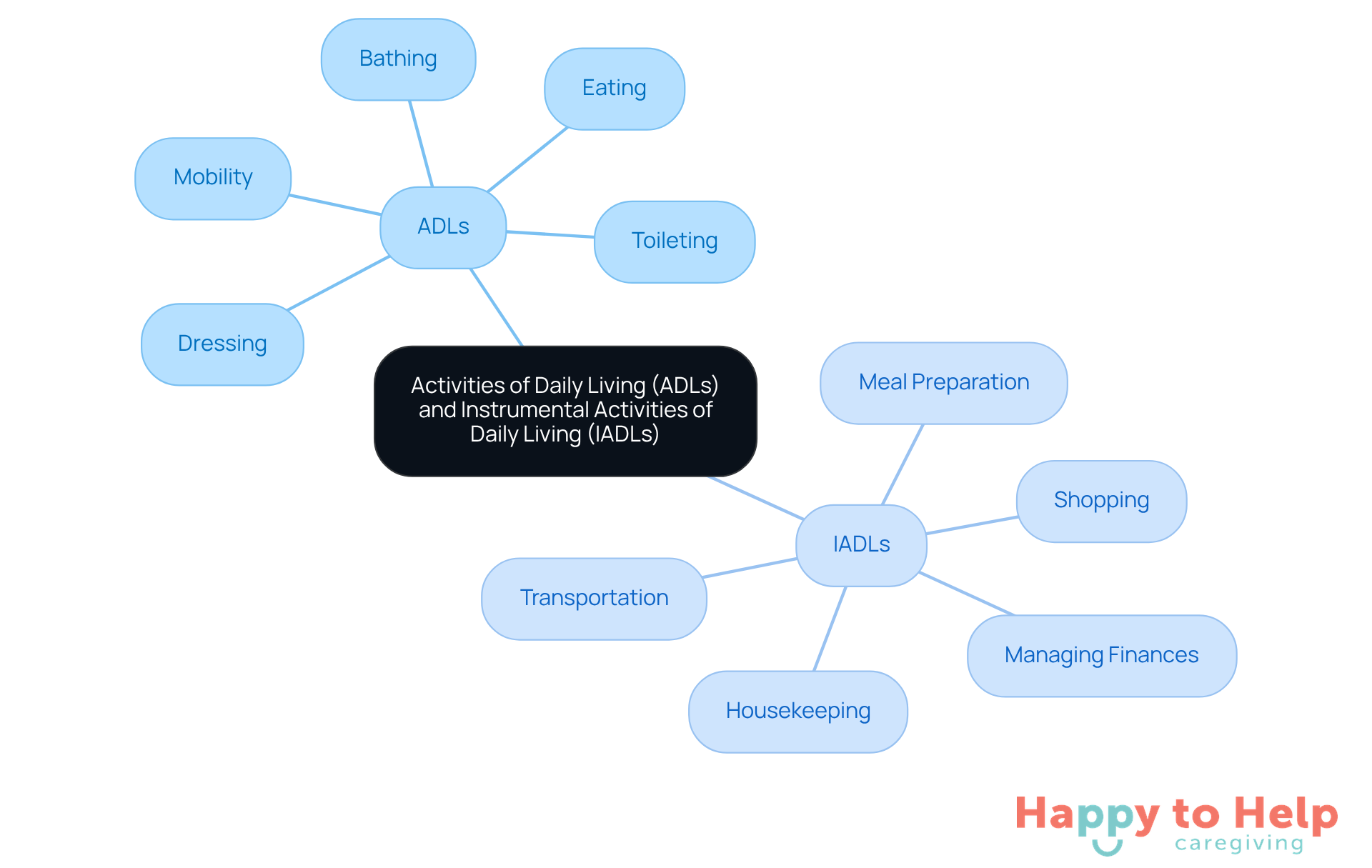
Activities of Daily Living (ADLs) for elderly individuals refer to the essential self-care tasks they perform daily to maintain their health and well-being. These include:
- Bathing: The ability to wash oneself.
- Dressing: Selecting and putting on appropriate clothing.
- Eating: The ability to feed oneself.
- Toileting: Managing personal hygiene and using the restroom.
- Mobility: Moving from one place to another, including transferring from bed to chair.
On the other hand, Instrumental Activities of Daily Living (IADLs) encompass more complex tasks that support an individual's independence. These include:
- Managing finances: Paying bills and budgeting.
- Shopping: Purchasing groceries and other necessities.
- Meal preparation: Planning and cooking meals.
- Housekeeping: Maintaining a clean living environment.
- Transportation: Navigating public transport or driving.
Understanding these distinctions is crucial for caregivers, as it helps identify specific areas where assistance is needed, ultimately promoting better care strategies. Recent statistics reveal that about 31.1% of retired adults aged 65 and older require help with ADLs, highlighting the increasing demand for caregiver support.
Regular evaluations of both ADLs and IADLs are vital for elderly care. They enable caregivers to adjust care plans to meet the evolving needs of seniors. Focused physical and occupational therapy can significantly improve an individual's functional status, aiding in the recovery of lost ADLs and IADLs, which are crucial for elderly care. The Katz ADL scale serves as a valuable tool that emphasizes fundamental ADLs, but it does not encompass IADLs, underscoring the importance of comprehensive evaluations for elderly care.
Moreover, caregiver burden is a significant concern. The emotional and physical demands of caregiving can affect the well-being of family members providing support. By recognizing these challenges and implementing effective strategies, caregivers can enhance their support and improve the quality of life for those they care for.
Assess ADLs and IADLs: Importance and Methods
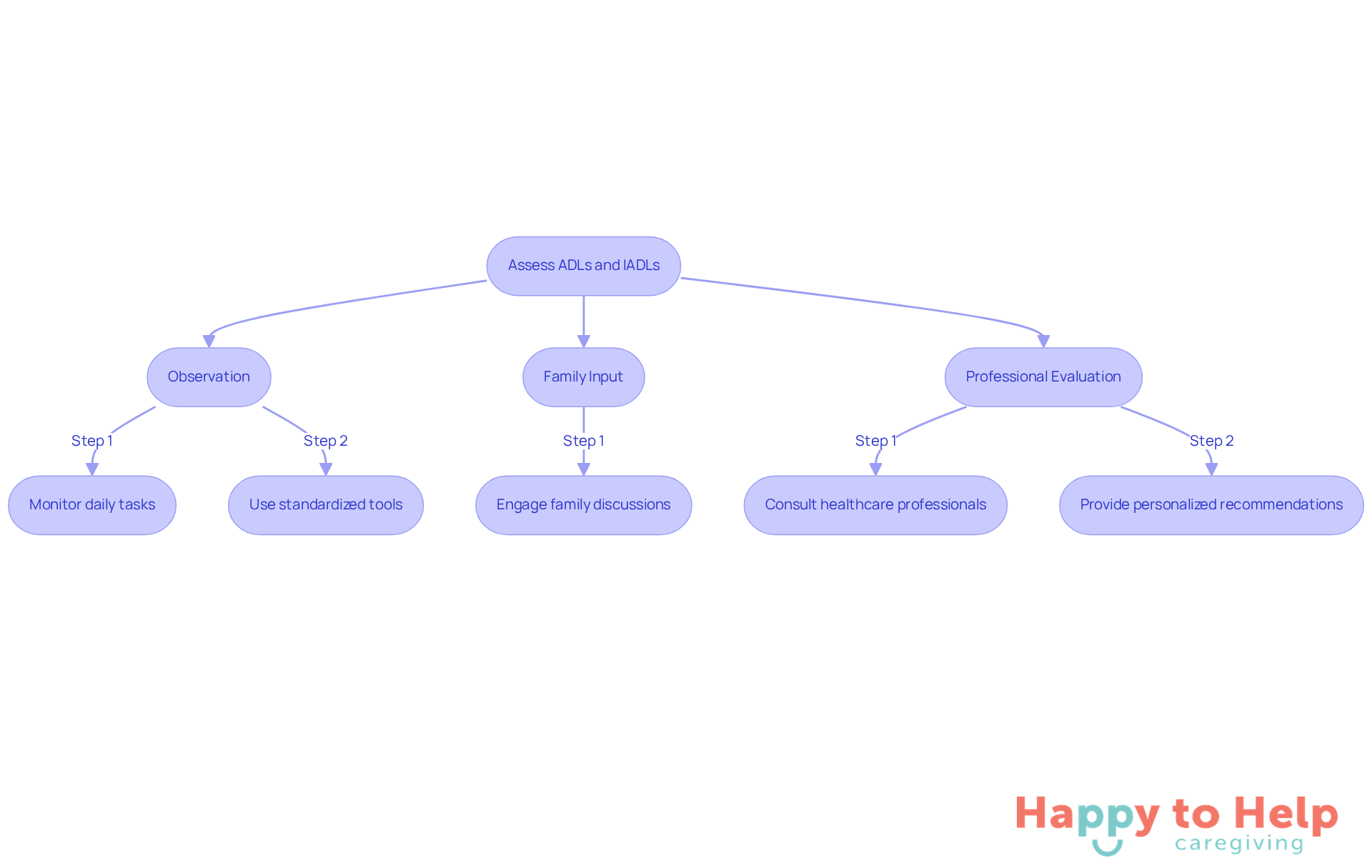
Evaluating seniors' ability to perform Activities of Daily Living (ADLs) and Instrumental Activities of Daily Living (IADLs) is crucial for understanding their care needs, especially when considering ADL for elderly. Chronic illnesses and cognitive impairments can significantly hinder their ability to manage these tasks, making it essential for caregivers to assess these capabilities effectively.
To address this challenge, consider the following methods:
- Observation: Monitor how your loved one handles daily tasks. Look for any difficulties they encounter, as this can reveal areas where they may need additional support. Utilize standardized assessment tools like the Katz Index of Independence in Activities of Daily Living for ADL for elderly and the Lawton-Brody IADL Scale for IADLs. These structured assessments provide a reliable framework for evaluating functional abilities and identifying specific needs related to ADL for elderly.
- Family Input: Engage family members in discussions about the elder's capabilities and challenges. Their insights can offer valuable perspectives on the individual's daily functioning and preferences.
- Professional Evaluation: Consult healthcare professionals, such as occupational or physical therapists, who can conduct thorough assessments. They can provide personalized recommendations and develop appropriate care plans tailored to the individual's unique circumstances.
Regular assessments are vital for tracking changes in abilities over time, enabling caregivers to adjust their ADL for elderly support strategies accordingly. Additionally, using assistive devices, like long-handled shoe horns and reacher tools, can help older adults accomplish routine activities more efficiently.
By employing these methods, caregivers can enhance the quality of care while enabling older adults to maintain their independence and dignity.
Implement Strategies to Support ADLs and IADLs in Daily Care
Supporting adl for elderly and instrumental activities of daily living (IADLs) can be challenging for caregivers. Many seniors struggle with maintaining independence, which can lead to feelings of frustration and decreased self-worth. Caregivers need effective strategies to enhance the quality of life for their loved ones while promoting autonomy.
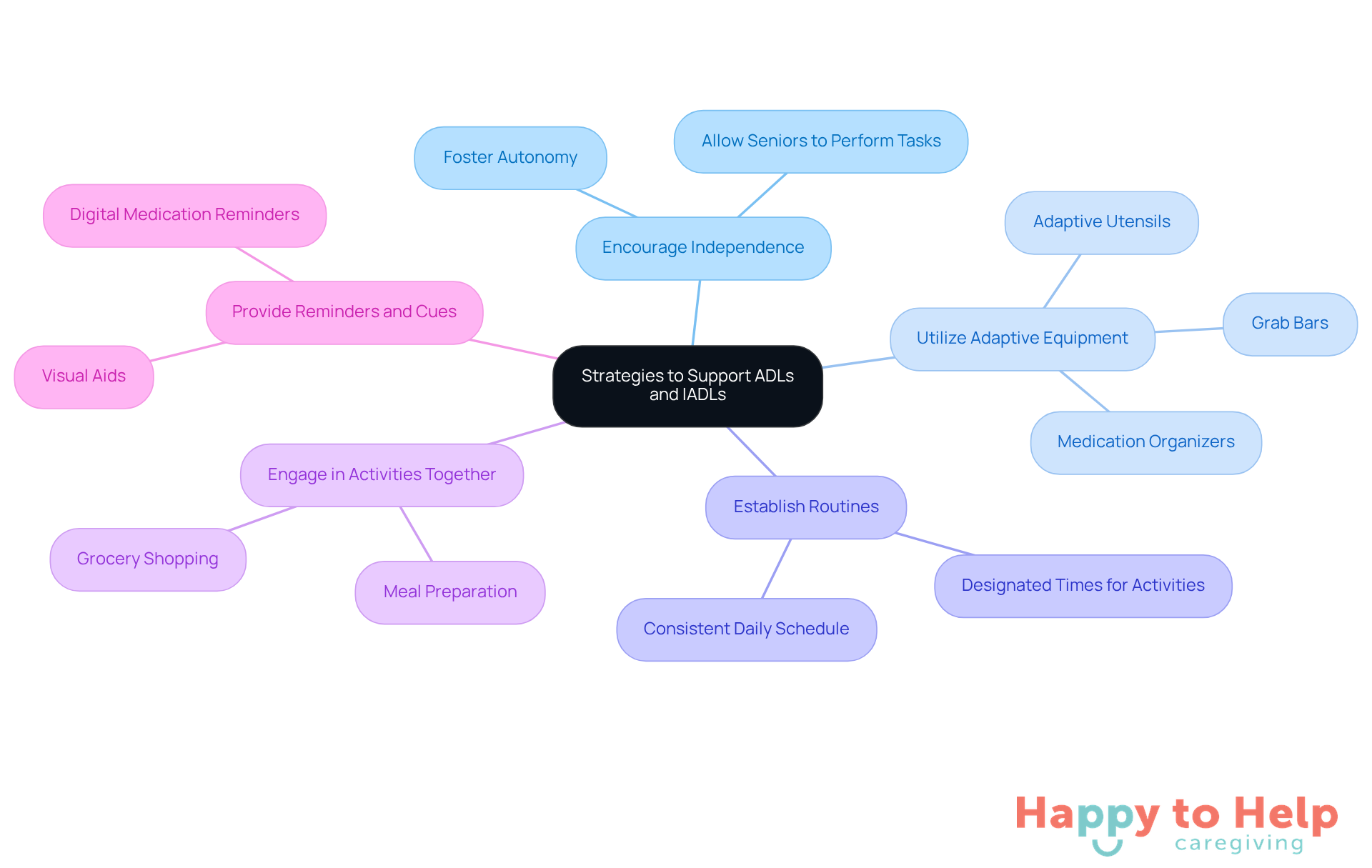
To address these challenges, caregivers can implement several key strategies:
- Encourage Independence: Allow seniors to perform tasks independently whenever possible, providing assistance only when necessary. This approach fosters a sense of autonomy and self-worth.
- Utilize Adaptive Equipment: Introduce tools designed to simplify routine activities. For example, grab bars in the bathroom can prevent falls, adaptive utensils can make eating easier, and medication organizers can streamline medication management. These devices not only enhance safety but also promote independence.
- Establish Routines: Create a consistent daily schedule that includes designated times for meals, personal care, and activities. Routines help older adults anticipate activities, minimizing anxiety and confusion.
- Engage in Activities Together: Participate in activities such as meal preparation or grocery shopping with your loved one. This not only provides necessary assistance but also fosters social interaction and enjoyment, enhancing emotional well-being and reducing feelings of isolation.
- Provide Reminders and Cues: Use visual aids or reminders to assist elderly individuals in recalling important tasks, such as taking medications or preparing meals. Digital medication reminders, like smartphone applications or smart speakers, can significantly decrease the risk of medication mistakes, a major cause of avoidable hospital admissions among older adults.
By implementing these strategies, caregivers can effectively meet the needs of seniors, ensuring their independence and dignity while enhancing their overall quality of life with adl for elderly.
Moving Forward with Master ADLs for Elderly Care: Essential
Family caregivers face significant challenges when it comes to supporting elderly individuals in their daily lives. Understanding and mastering Activities of Daily Living (ADLs) and Instrumental Activities of Daily Living (IADLs) is crucial for enhancing the well-being of seniors. Neglecting these essential tasks can lead to a decline in independence and dignity for loved ones, which is a concern that caregivers must address.
To effectively tackle this issue, caregivers need to assess both ADLs and IADLs. Evaluation methods such as:
- Observation
- Family input
- Professional assessments
are vital in identifying specific needs. By recognizing these needs, caregivers can adapt their support strategies accordingly. Implementing practical strategies like:
- Encouraging independence
- Utilizing adaptive equipment
- Establishing routines
can significantly improve the quality of life for seniors.
Ultimately, caregiving is not just about providing assistance; it’s about fostering an environment where elderly individuals feel empowered and valued. By prioritizing the assessment and support of ADLs and IADLs, caregivers can make a lasting impact. This approach ensures that their loved ones maintain autonomy and experience a fulfilling life. Embracing these practices not only enhances the well-being of seniors but also alleviates caregiver burden, creating a healthier dynamic in family care relationships.
https://iframe.tely.ai/cta/eyJhcnRpY2xlX2lkIjogIjY5MjI0ZjU4NGZjYWRhOTUwOGRlNDNiZSIsICJjb21wYW55X2lkIjogIjY4ZWU1ZGNhNzMxNzYyNTU3ZjNjOTVjMSIsICJpbmRleCI6IG51bGwsICJ0eXBlIjogImFydGljbGUifQ==Frequently Asked Questions
What are Activities of Daily Living (ADLs)?
Activities of Daily Living (ADLs) are essential self-care tasks that elderly individuals perform daily to maintain their health and well-being. These include bathing, dressing, eating, toileting, and mobility.
What are Instrumental Activities of Daily Living (IADLs)?
Instrumental Activities of Daily Living (IADLs) are more complex tasks that support an individual's independence. These include managing finances, shopping, meal preparation, housekeeping, and transportation.
Why is it important to understand the distinction between ADLs and IADLs?
Understanding the distinction between ADLs and IADLs is crucial for caregivers as it helps identify specific areas where assistance is needed, promoting better care strategies for the elderly.
What percentage of retired adults aged 65 and older require help with ADLs?
Approximately 31.1% of retired adults aged 65 and older require help with Activities of Daily Living (ADLs).
Why are regular evaluations of ADLs and IADLs important?
Regular evaluations of both ADLs and IADLs are vital for elderly care as they enable caregivers to adjust care plans to meet the evolving needs of seniors.
How can physical and occupational therapy impact ADLs and IADLs?
Focused physical and occupational therapy can significantly improve an individual's functional status, aiding in the recovery of lost ADLs and IADLs, which are crucial for elderly care.
What is the Katz ADL scale?
The Katz ADL scale is a valuable tool that emphasizes fundamental Activities of Daily Living (ADLs) but does not encompass Instrumental Activities of Daily Living (IADLs), highlighting the need for comprehensive evaluations in elderly care.
What is caregiver burden?
Caregiver burden refers to the emotional and physical demands that caregiving places on family members, which can affect their well-being. Recognizing these challenges is important for enhancing support and improving the quality of life for those being cared for.
List of Sources
- Define Activities of Daily Living (ADLs) and Instrumental Activities of Daily Living (IADLs)
- Why Activities of Daily Living Are Important for Living Independently (https://health.usnews.com/senior-care/caregiving/articles/activities-of-daily-living-for-seniors)
- What Are Activities of Daily Living? (https://my.clevelandclinic.org/health/articles/activities-of-daily-living-adls)
- Importance of Activities of Daily Living | Peace Village (https://peacevillage.org/news/importance-adls)
- ADLs vs IADLs: What’s the Difference? (https://mooringspark.org/news/adls-vs-iadls-whats-the-difference)
- Tracking ADLs and IADLs helps caregivers adapt | BEACON Senior News - Western Colorado (https://westerncolorado.beaconseniornews.com/2025/09/03/545288/tracking-adls-and-iadls-helps-caregivers-adapt)
- Assess ADLs and IADLs: Importance and Methods
- ADLs Vs IADLs: Why Are They Important? | CarePatrol (https://carepatrol.com/blog/adls-vs-iadls-why-are-they-important)
- The Impact of Individualized Support Plans on Daily Living Skills (https://heartwisesupport.org/post/the-impact-of-individualized-support-plans-on-daily-living-skills)
- How to Measure Senior Independence with ADLs and IADLs (https://floridaseniorconsulting.com/how-to-measure-senior-independence-with-activities-of-daily-living-adls-and-instrumental-activities-of-daily-living-iadls)
- Why Activities of Daily Living Are Important for Living Independently (https://health.usnews.com/senior-care/caregiving/articles/activities-of-daily-living-for-seniors)
- Why Are ADLs and IADLs Significant for Seniors? (https://alternativeseniorcare.net/why-are-adls-and-iadls-significant-for-seniors)
- Implement Strategies to Support ADLs and IADLs in Daily Care
- Adaptive Equipment for Seniors Comfort Safety & Independence (https://dmeofamericainc.com/blogs/news/adaptive-equipment-for-seniors-comfort-safety-independence?srsltid=AfmBOortRIYnfA9yALQ7Rpvhn4zCI3mG1BXW-yOAYORsXz2hSTUx1IVF)
- Best Assistive Technology for Seniors Aging in Place - Caring.com (https://caring.com/resources/assisted-devices-for-seniors)
- Adaptive Equipment for Daily Living: Tools for Independence - United Cerebral Palsy (https://ucp.org/adaptive-equipment-for-daily-living-tools-for-independence)
- The Best Assistive Technology for Aging in Place: A Caregiver’s Guide (https://asksamie.com/blogs/answers-for-accessibility/assistive-technology-aging-in-place?srsltid=AfmBOoqEn2KqOHGwW45is5t9AJYLxbLe7evmOSWQXJXyF\_ZsSFEjMjhR)
- Enhancing Independence: Daily Living Aids for Older Adults | Juniper Senior Living (https://junipercommunities.com/enhancing-independence-daily-living-aids-for-older-adults)