Master Home Care Scheduling: 5 Steps for Family Caregivers

For families in our service areas
For families in our service areas, this guide explains home care and how non-medical in-home caregiving can support care planning in East Idaho, Treasure Valley & Magic Valley, Northern Wasatch, North Central West Virginia, and Northeast Ohio.
Understanding Master Home Care Scheduling: 5 Steps
Effective home care scheduling is a critical challenge for family caregivers. It not only influences the quality of care provided but also impacts the well-being of both caregivers and their loved ones. When caregivers struggle with scheduling, they often experience increased stress and communication breakdowns, which can lead to unmet needs for those they care for.
The implications of poor scheduling are significant. Caregivers may find themselves overwhelmed, unable to provide the compassionate and efficient care that their loved ones deserve. This raises an important question: How can family caregivers develop a flexible and effective schedule that adapts to the ever-changing needs of those they care for?
The solution lies in mastering the art of scheduling. By implementing structured yet adaptable scheduling techniques, caregivers can significantly reduce stress and enhance communication. Here are some actionable tips to help caregivers create a more effective home care schedule:
- Prioritize tasks: Identify the most critical needs of your loved one and schedule those first.
- Use technology: Leverage apps and tools designed for caregiving to streamline scheduling and reminders.
- Communicate regularly: Keep an open line of communication with family members and healthcare providers to adjust the schedule as needed.
By focusing on these strategies, caregivers can ensure that the unique needs of each individual are met with compassion and efficiency.
Understand the Importance of Home Care Scheduling
Home care scheduling is crucial for ensuring that support providers deliver consistent and reliable assistance to clients. Without effective planning, caregivers face significant challenges, including worker burnout and increased stress levels. Research indicates that individuals with manageable routines experience lower stress and higher job satisfaction.
Effective home care scheduling not only balances workloads but also ensures adequate time off, which is essential for caregiver well-being. Moreover, home care scheduling with a well-organized timetable enhances communication among family members, support personnel, and healthcare professionals, which leads to improved care outcomes. For instance, adaptable schedules enable support providers to visit clients when they are most alert and receptive, fostering a more positive caregiving experience.
As Katie Ortell, Owner-CEO of All About You Home Health Services, notes, 'When home care scheduling is arranged with adaptability, support providers arrive during the times when patients are attentive, open, and physically at ease.' By prioritizing efficient planning, family caregivers can create a more structured and supportive environment for their loved ones, ultimately enhancing their quality of life.
Furthermore, with 87% of senior citizens on at least one prescription medication, effective home care scheduling becomes vital in managing medication times and ensuring that clients receive the appropriate assistance at the right moments.

Assess Individual Care Needs and Preferences
Creating an effective home care scheduling starts with identifying the challenges that caregivers face. Many caregivers experience significant stress and shifts in their identities, which can impact their ability to provide support. Understanding these emotional challenges is essential for developing a sustainable caregiving approach.
Engaging in open conversations with your loved one is vital. This dialogue helps uncover their needs, preferences, and specific activities they enjoy. Consider their daily routines, medical requirements, and personal interests. Pay attention to both their physical and emotional needs, which may include:
- Assistance with daily living tasks
- Medication management
- Opportunities for social interaction
Involving other family members in this assessment can provide diverse perspectives, ensuring a comprehensive understanding of the recipient's needs. Statistics indicate that family supporters provide an average of 27 hours of unpaid assistance weekly. This highlights the importance of teamwork and shared responsibility in creating effective support plans.
To address these challenges, caregivers can record insights from their conversations, establishing a customized support plan for home care scheduling that encourages independence and enhances overall well-being. By prioritizing the preferences and involvement of the recipient and their family, providers can foster a supportive environment that respects individual choices and promotes a sense of agency.
Additionally, employing effective communication strategies fosters trust and understanding, further enhancing the caregiving relationship. By implementing these actionable solutions, caregivers can navigate their roles more effectively and improve their own well-being.

Develop a Flexible and Efficient Care Schedule
Caregivers often face significant challenges in managing their responsibilities, leading to stress and disruptions in their daily lives. Nearly 70% of working-age caregivers remain employed, with 50% reporting issues such as arriving late or reducing hours due to their caregiving duties. This situation can create a cycle of anxiety and overwhelm, making it crucial to find effective solutions.
To address these challenges, developing a flexible and efficient home care scheduling is essential. Start by listing all critical caregiving tasks, including:
- Personal assistance
- Meal preparation
- Medication management
- Companionship activities
Utilize home care scheduling tools to organize these responsibilities, ensuring they align with the recipient's preferences and daily routines. When assigning tasks, consider the availability of family members and professional caregivers to ensure effective home care scheduling.
Adaptability is key; be ready to adjust the timetable in response to unexpected medical appointments or changes in the recipient's condition. Regular communication with everyone involved is vital to ensure effective home care scheduling and to keep all parties informed about the schedule and any modifications. This proactive approach not only enhances the quality of care but also helps alleviate the stress that many caregivers experience due to financial and time constraints.
Moreover, leveraging technology for home care scheduling can simplify the process, making it easier to manage tasks and communicate changes. By implementing these strategies, caregivers can handle their responsibilities more effectively, ensuring their loved ones receive the necessary support while also maintaining their own well-being.

Utilize Technology for Enhanced Scheduling and Communication
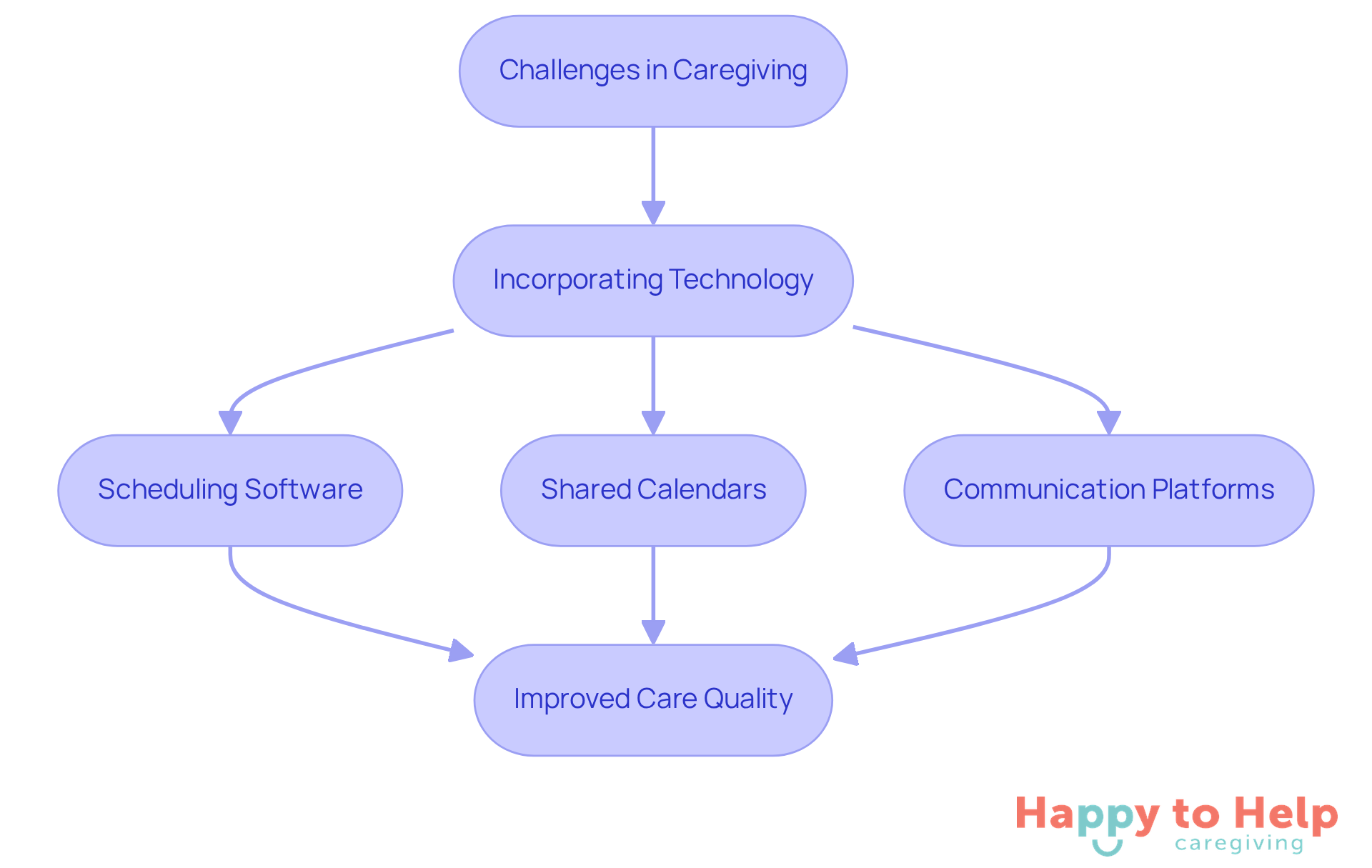
Caregivers often face challenges in planning and communication, which can lead to misunderstandings and increased stress. Without effective coordination, managing appointments, medication schedules, and caregiving tasks becomes overwhelming. This lack of organization not only affects the caregivers but also impacts the quality of support provided to loved ones.
Incorporating technology into your caregiving routine can address these issues effectively. Support staff planning software or applications enable home care scheduling by allowing you to create, share, and adjust timetables with ease. These tools often include reminders, task lists, and communication platforms that promote collaboration among family members and support providers. For instance, shared calendars keep everyone informed about appointments and caregiving tasks, fostering transparency and reducing the likelihood of misunderstandings.
Studies show that efficient planning software can enhance service quality by 20%, as caregivers become more coordinated and informed. Additionally, the telehealth market is projected to grow from $176.24 billion in 2024 to $227.18 billion in 2025, reflecting the increasing reliance on technology in caregiving. By adopting these technological solutions, you can simplify home care scheduling, reduce stress, and ultimately improve the support quality offered to your loved ones.
Regularly Review and Adjust the Care Schedule
Problem: Caregivers often struggle with support plans that fail to meet their loved ones' needs effectively. Without regular evaluations, these plans can become outdated, leading to dissatisfaction and inadequate care.
Agitate: This lack of adaptability can significantly impact the quality of life for those receiving care. For instance, if certain tasks consistently take longer than anticipated or if the recipient expresses unhappiness, it’s crucial to address these issues promptly. Engaging in open discussions with all involved can provide valuable insights and suggestions for improvement.
Solution: To combat these challenges, caregivers should implement home care scheduling, setting aside time weekly or monthly to assess the current schedule's efficiency. Consider the recipient's health condition, feedback from support providers, and any changes in daily routines or preferences. This flexible approach not only keeps the home care scheduling relevant but also enhances the overall quality of life. Research shows that adaptable timing can lead to better health outcomes, as caregivers can visit when symptoms are most visible, ensuring timely interventions.
Moreover, with only 11.9% of older adults receiving Home-Based Primary Assistance (HBPA) getting primary services at home, effective home care scheduling is more critical than ever. By prioritizing regular adjustments, families can create a more responsive caregiving environment. Additionally, the estimated yearly growth rate of expenditure on home healthcare between 2025 and 2026 is 7.1%, highlighting the increasing demand for flexible home support solutions. As emphasized by the Centers for Medicare & Medicaid Services (CMS) in the Calendar Year (CY) 2025 Final Rule for Home Health Agencies, adapting care plans to meet changing needs is essential for delivering quality care.

Making the Right Choice
Effective home care scheduling presents a significant challenge for caregivers, often leading to burnout and stress. This issue not only affects the quality of care provided but also impacts the well-being of both caregivers and their loved ones. Without a structured approach, caregivers may struggle to balance their responsibilities, resulting in a less positive caregiving experience.
To address these challenges, caregivers must prioritize effective scheduling practices. Key strategies include:
- Assessing individual care needs
- Developing flexible schedules
- Leveraging technology
- Regularly reviewing care plans
Engaging in open conversations with recipients and family members is crucial for creating personalized support plans that respect individual preferences. Additionally, utilizing technology can streamline communication and scheduling tasks, making it easier for caregivers to manage their responsibilities effectively.
In light of the increasing demand for home care solutions, implementing these strategies can create a supportive environment that meets the needs of loved ones while enhancing caregivers' quality of life. By embracing structured planning and adaptability, caregivers can ensure a more responsive and fulfilling caregiving journey, ultimately leading to better health outcomes for those receiving care.
https://iframe.tely.ai/cta/eyJhcnRpY2xlX2lkIjogIjY5MmY5MThlY2E4MDg5MWIwMmZiMDBiZiIsICJjb21wYW55X2lkIjogIjY4ZWU1ZGNhNzMxNzYyNTU3ZjNjOTVjMSIsICJpbmRleCI6IG51bGwsICJ0eXBlIjogImFydGljbGUifQ==Frequently Asked Questions
Why is home care scheduling important?
Home care scheduling is crucial for ensuring consistent and reliable assistance to clients, helping to prevent caregiver burnout and stress. It leads to lower stress levels and higher job satisfaction for caregivers.
How does effective home care scheduling benefit caregivers?
Effective home care scheduling balances workloads and ensures adequate time off for caregivers, which is essential for their well-being. It also enhances communication among family members, support personnel, and healthcare professionals, improving care outcomes.
What role does adaptability play in home care scheduling?
Adaptable scheduling allows support providers to visit clients when they are most alert and receptive, creating a more positive caregiving experience and enhancing the overall quality of care.
What should be considered when assessing individual care needs?
When assessing care needs, it is important to identify the emotional challenges caregivers face, engage in open conversations with the loved one to understand their needs and preferences, and consider their daily routines, medical requirements, and personal interests.
How can family involvement improve home care scheduling?
Involving other family members in the assessment of care needs provides diverse perspectives, ensuring a comprehensive understanding of the recipient's needs and fostering teamwork and shared responsibility in creating effective support plans.
What are some common needs that should be addressed in home care scheduling?
Common needs include assistance with daily living tasks, medication management, and opportunities for social interaction.
How can caregivers enhance their own well-being while providing support?
Caregivers can enhance their well-being by recording insights from conversations with their loved ones, establishing customized support plans, prioritizing the recipient's preferences, and employing effective communication strategies to foster trust and understanding.
List of Sources
- Understand the Importance of Home Care Scheduling
- 7 Ways AutoScheduling Can Take the Stress Out of Scheduling for Your Home Care Business | Aaniie, formerly Smartcare Software (https://aaniie.com/news/ways-auto-scheduling-take-stress-out-of-scheduling-for-home-care-business)
- How Flexible Scheduling Improves The Home Care Experience For Families – CCN – Columbus County News (https://columbuscountynews.com/2025/12/how-flexible-scheduling-improves-the-home-care-experience-for-families)
- The evolution of scheduling: How tech optimizes home-based care (https://mcknightshomecare.com/the-evolution-of-scheduling-how-tech-optimizes-home-based-care)
- Nursing Homes Lean on a Supply Chain Mindset and the Scheduler Role for Chaos Control (https://skillednursingnews.com/2025/11/nursing-homes-lean-on-a-supply-chain-mindset-and-the-scheduler-role-for-chaos-control)
- HHCN FUTURE - Demand and Disruption: Executive Outlook on At-Home Care (https://homehealthcarenews.com/2025/10/hhcn-future-demand-and-disruption-executive-outlook-on-at-home-care)
- Assess Individual Care Needs and Preferences
- The Importance of Communication with Your Live-In Caregiver (https://traditionshhs.com/the-importance-of-communication-with-your-live-in-caregiver)
- Family Caregiver Support, Education Needs Growing (https://hospicenews.com/2025/11/11/family-caregiver-support-education-needs-growing)
- Caregiving can test you, body and soul. It can also unlock a new sense of self (https://npr.org/2025/04/01/nx-s1-5336314/caregiver-caregiving-identity-family-support-burnout)
- The Importance of Effective Communication in Caregiving (https://familycaregiversonline.net/the-importance-of-effective-communication-in-caregiving)
- The Importance of Caregiver-Client Relationships in Senior Well-Being (https://homeinstead.com/home-care/usa/in/goshen/588/news-and-media/the-importance-of-caregiver-client-relationships-in-senior-well-being)
- Develop a Flexible and Efficient Care Schedule
- The need for caregiving benefits may have reached a fever pitch (https://hrdive.com/news/sandwich-generation-needs-caregiving-benefits/802864)
- Caregiving Statistics US 2025: Insights for Family Caregivers (https://zencaregiving.org/caregiving-statistics-us-2025)
- Caregiver Statistics: Demographics (https://caregiver.org/resource/caregiver-statistics-demographics)
- A Better Solution Home Care (https://abs.care/Home-Care-Staffing-Shortages-How-They-Impact-Home-Care-Services)
- Utilize Technology for Enhanced Scheduling and Communication
- The Best Apps for Caregivers: 7 Recommendations (https://carescout.com/resources/the-best-apps-for-caregivers-7-tools-to-make-caregiving-easier)
- 2025 Home Care Trends: How AI & Tech are Reshaping the Industry (https://blog.allgeo.com/top-2025-home-care-trends)
- The Tech-Enabled Evolution of Home-Based Care - THL (https://thl.com/articles/the-tech-enabled-evolution-of-home-based-care)
- Technology Use Among Older Adults and Their Caregivers: Cross-Sectional Survey Study - PMC (https://pmc.ncbi.nlm.nih.gov/articles/PMC11084119)
- 10 Best Apps for Caregivers to Simplify Daily Tasks - Happy To Help (https://happytohelpcaregiving.com/10-best-apps-for-caregivers-to-simplify-daily-tasks)
- Regularly Review and Adjust the Care Schedule
- How Flexible Scheduling Improves The Home Care Experience For Families – CCN – Columbus County News (https://columbuscountynews.com/2025/12/how-flexible-scheduling-improves-the-home-care-experience-for-families)
- Top Home Care Trends For 2025 (https://homehealthcarenews.com/2025/01/top-home-care-trends-for-2025)
- As Family Caregiving Grows, So Does the Need for Reform - Medicare Rights Center (https://medicarerights.org/medicare-watch/2025/08/14/as-family-caregiving-grows-so-does-the-need-for-reform)
- Home Care Predictions Shaping 2025 and Beyond (https://caresmartz360.com/blog/home-care/home-care-predictions-shaping-2025-and-beyond)
- The Home Healthcare Outlook for 2025 - Alora Health (https://alorahealth.com/blog-the-home-healthcare-outlook-for-2025)