For families in our service areas
For families in our service areas, this guide explains in-home care and how non-medical in-home caregiving can support care planning in East Idaho, Treasure Valley & Magic Valley, Northern Wasatch, North Central West Virginia, and Northeast Ohio.
Understanding Master In Home Care and Assistance: A
In-home care and assistance serve as a crucial lifeline for many seniors, tackling the significant issue of loneliness that impacts over 40% of older adults today. This model not only fosters independence but also boosts emotional well-being, providing families with a financially viable alternative to institutional care.
However, caregivers face numerous challenges, from emotional strain to the complexities of personalized care. These difficulties raise important questions about the effectiveness of current support systems. What strategies can caregivers implement to navigate these hurdles while ensuring their loved ones receive the compassionate care they deserve?
To address these challenges, caregivers can adopt several practical solutions:
- Establishing a support network can alleviate emotional strain.
- Connecting with other caregivers or joining support groups can provide valuable insights and encouragement.
- Utilizing technology, such as video calls or health monitoring apps, can enhance communication and ensure seniors feel connected.
Moreover, prioritizing self-care is essential for caregivers. Taking time for personal well-being not only improves their ability to provide care but also sets a positive example for their loved ones. Simple practices like regular exercise, mindfulness, and seeking respite care can make a significant difference.
By implementing these strategies, caregivers can effectively navigate the complexities of in-home care, ensuring that their loved ones receive the compassionate support they need.
Understanding In-Home Care: Definitions and Importance
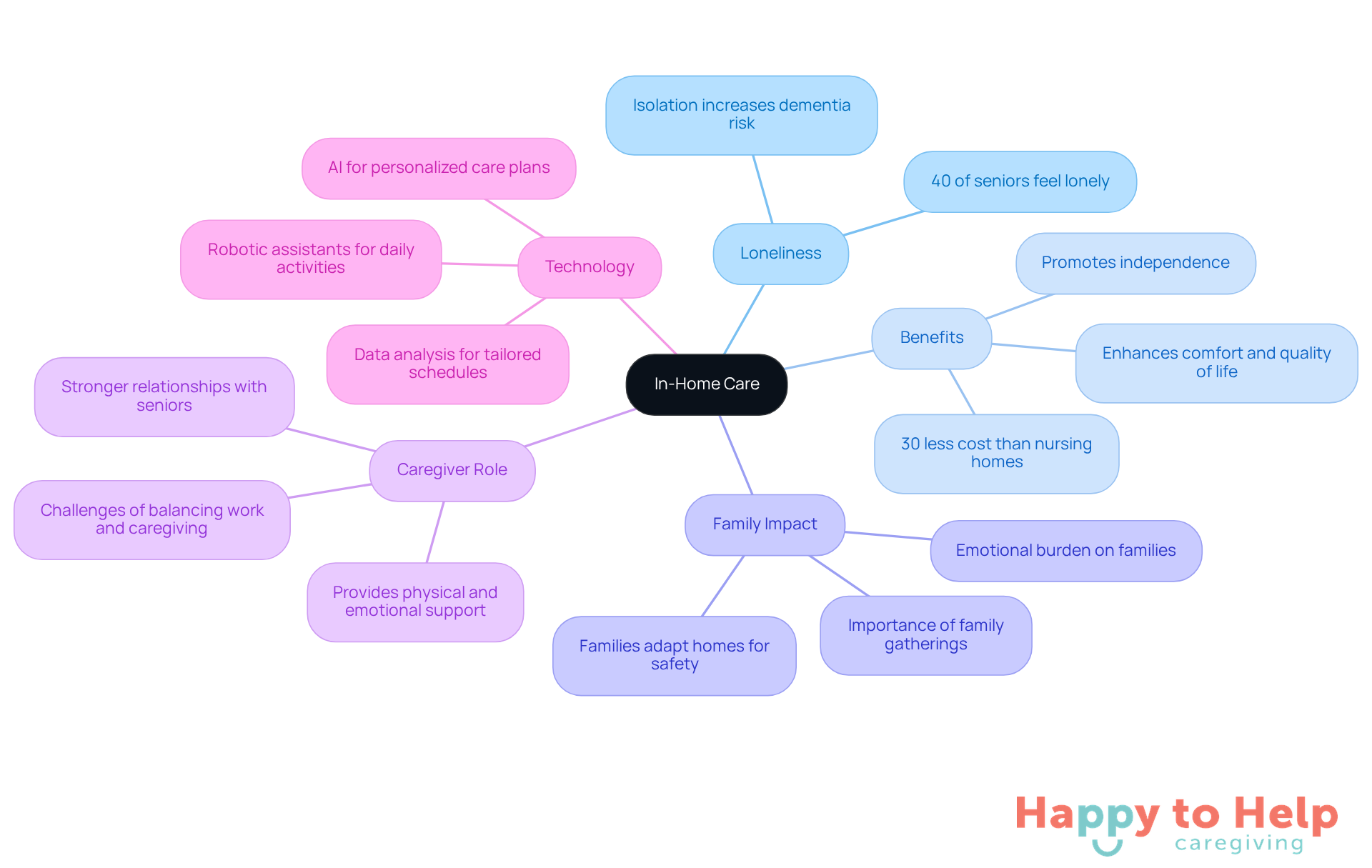
In-home assistance presents a significant challenge for caregivers, particularly in addressing the loneliness that many seniors experience. Over 40% of seniors report feeling lonely regularly, which can have profound implications for their mental health and overall well-being. This emotional burden not only affects the individuals receiving care but also weighs heavily on their families, who often feel helpless watching their loved ones struggle.
To combat these issues, in home care and assistance provides a viable solution, allowing seniors to remain in familiar environments while receiving the support they need. This model not only promotes independence but also enhances comfort, significantly improving clients' quality of life. Moreover, the average annual cost of home healthcare is over 30% less than that of a shared room in a nursing home, making it a financially sound choice for families.
Caregivers play a crucial role in this dynamic, providing both physical support and emotional companionship. This dual support is essential for maintaining mental well-being. For example, families like the Sfugaras have adapted their homes to ensure safety and comfort for their loved ones, fostering meaningful interactions that can alleviate feelings of isolation.
Steve Sfugaras shared the emotional difficulty of witnessing his mother's decline due to Alzheimer's, underscoring the personal challenges families face. By recognizing the significance of in home care and assistance, caregivers can understand their vital contributions to enhancing independence and mental health.
Furthermore, advancements in technology, such as AI algorithms and large-scale data analysis, are being utilized to create customized schedules for patients. This personalization not only improves care but also enhances outcomes, making in home care and assistance an increasingly effective solution for families.
Exploring In-Home Care Services: Types and Benefits
In home care and assistance services address significant challenges faced by caregivers, providing specialized support tailored to distinct needs.
Problem: Caregivers often struggle with feelings of isolation and exhaustion. Nearly one-third of adults aged 50-80 report feelings of loneliness, and many families feel overwhelmed by caregiving duties.
Agitate: This situation can lead to caregiver burnout, impacting both the caregiver's well-being and the quality of care provided to loved ones. As the demand for in home care and assistance grows, finding effective solutions becomes increasingly crucial.
Solution: In-home care services provide a range of options to alleviate these pressures:
-
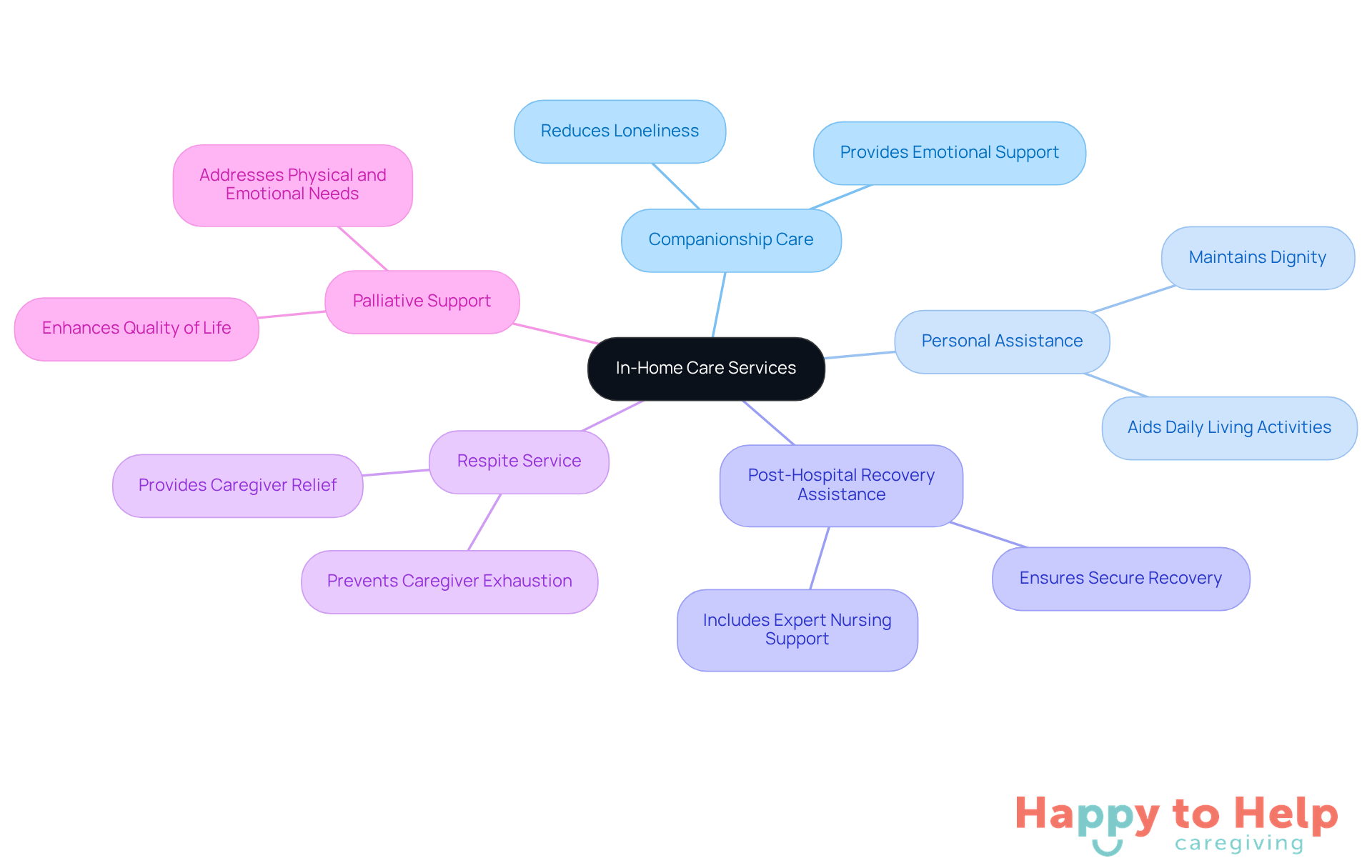
Companionship Care: This service offers essential emotional support and social interaction, significantly reducing feelings of loneliness among seniors. With 82% of seniors preferring to stay in their homes, companionship support is vital for improving mental well-being and fostering a sense of belonging.
-
Personal Assistance: Focused on aiding with daily living activities, personal assistance includes help with bathing, dressing, and meal preparation, ensuring clients maintain their dignity and independence.
-
Post-Hospital Recovery Assistance: Crucial for individuals transitioning home after surgery or illness, this service guarantees a secure recovery environment, often including expert nursing support and therapy to promote healing and avoid hospital readmission.
-
Respite Service: Designed to provide short-term relief for family caregivers, respite services allow them to recharge while ensuring their loved ones receive attentive care. This service is essential in preventing caregiver exhaustion.
-
Palliative Support: This assistance enhances the quality of life for individuals with serious illnesses by addressing their physical, emotional, and spiritual needs, enabling them to live as fully as possible.
Each service type in home care and assistance offers unique advantages, including promoting independence, enhancing safety, and providing peace of mind for families. Understanding these services allows caregivers to align their abilities with the specific needs of those they assist, ultimately fostering a supportive and nurturing atmosphere.
Assessing Needs and Developing Personalized Care Plans
Evaluating customer requirements is a significant challenge for caregivers providing in-home support. Without a clear understanding of an individual's needs, the quality of in-home care and assistance may suffer, leading to decreased independence and overall well-being.
To address this issue, caregivers can follow these key steps:
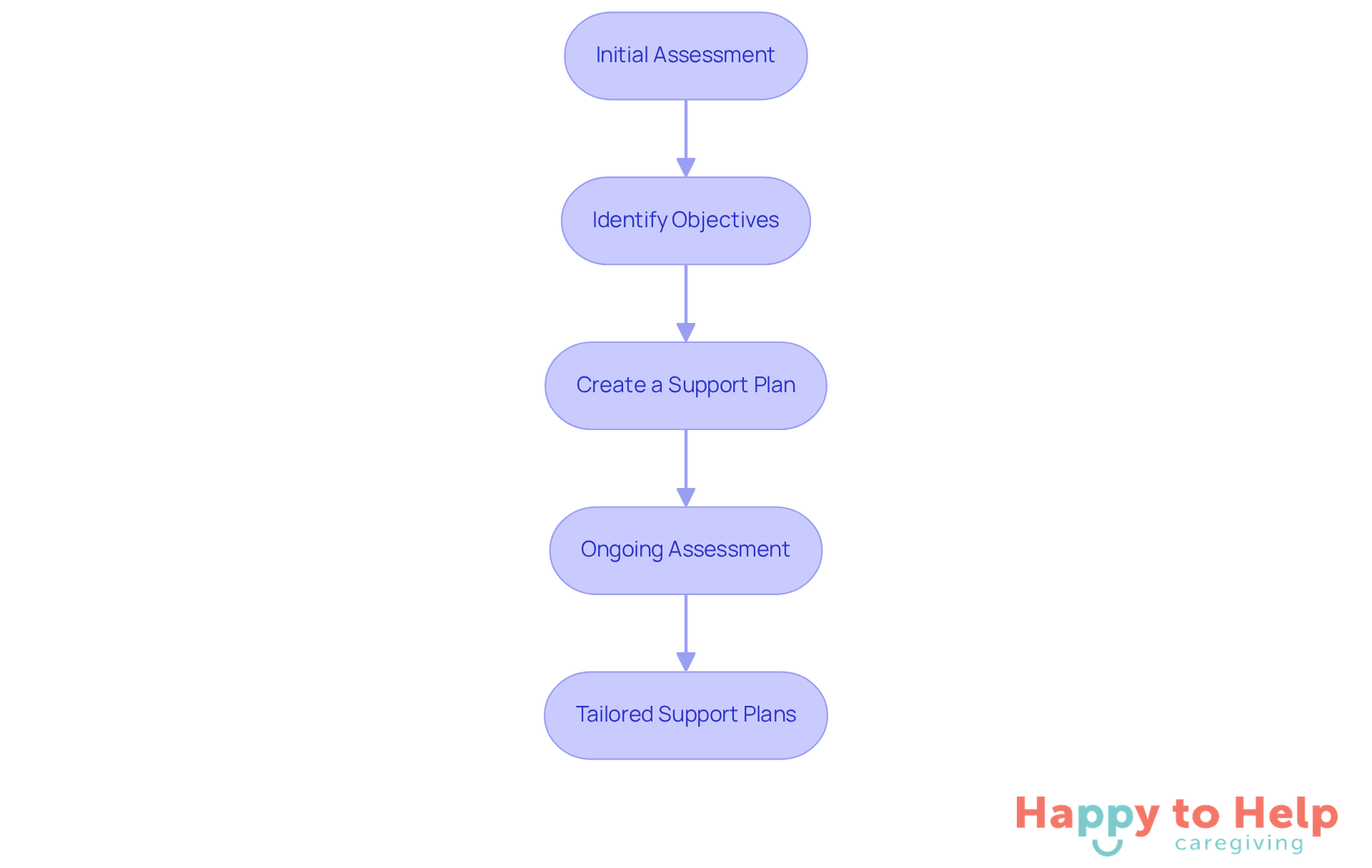
- Initial Assessment: Conduct a thorough evaluation of the individual's physical, emotional, and social requirements. This process often includes discussions with family members and healthcare providers to gather comprehensive insights.
- Identify Objectives: Collaborate with the individual and their family to set practical and attainable goals, focusing on enhancing independence and improving quality of life.
- Create a Support Plan: Design a customized support plan that outlines specific services to be offered, timelines, and essential modifications based on the individual's changing requirements. Research shows that individualized treatment plans significantly enhance patient outcomes, particularly for those receiving in-home care and assistance, with home patients experiencing a 30% improvement in condition management over six months, as highlighted in various studies.
- Ongoing Assessment: Continuously observe and evaluate the support plan to ensure it aligns with the individual's requirements and preferences, making modifications as necessary. Regular evaluations can lead to a 25% enhancement in anxiety and depression scores, emphasizing the importance of tailoring support to individual situations, as evidenced by a systematic review in the Journal of Community Health Nursing.
By implementing these steps, caregivers can create tailored support plans that not only address immediate needs but also foster long-term wellness. This approach ensures clients receive the compassionate assistance they deserve. As emphasized by the Visiting Nurse Association Health Group, comprehensive assessments are crucial for developing effective care plans tailored to each individual's unique needs.
Navigating Caregiver Challenges: Strategies for Success
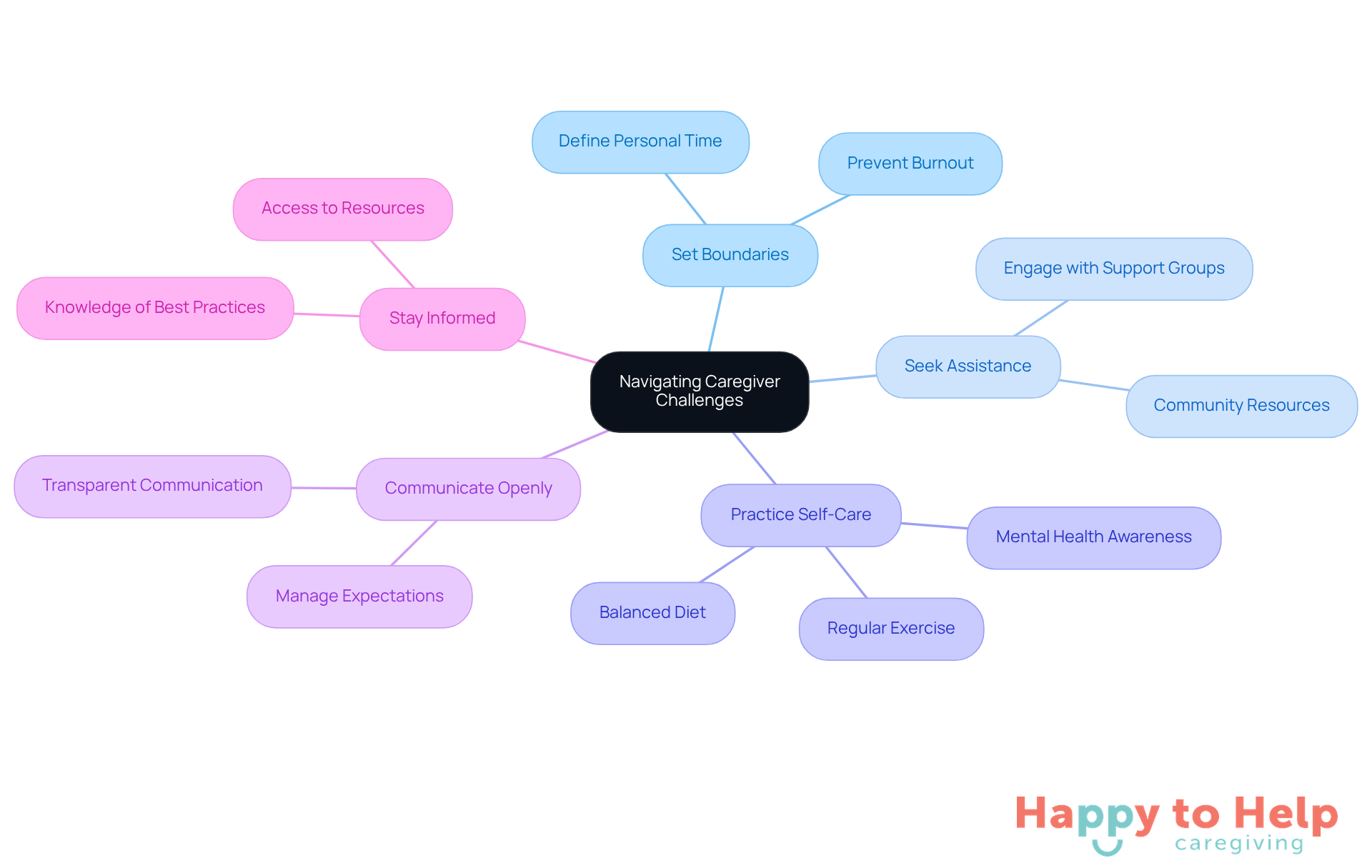
Caregiving can be both fulfilling and challenging. Many caregivers struggle with the emotional and physical demands of their responsibilities, which can lead to burnout and mental health issues. To navigate these difficulties effectively, caregivers can adopt several strategies:
-
Set Boundaries: Clearly define the line between caregiving responsibilities and personal time. This practice is essential for preventing burnout and maintaining mental health.
-
Seek Assistance: Engage with support groups designed for those who provide care. Research indicates that these groups can significantly alleviate feelings of isolation and provide valuable coping strategies. As Jerry Bishop, chairman of the Well Spouse Association, noted, "Knowing you're not alone makes a huge difference." Caregivers who participate in support networks report improved emotional well-being and a greater sense of community.
-
Practice Self-Care: Prioritize personal health by incorporating regular exercise, a balanced diet, and sufficient rest into your routine. Self-care is not selfish; it is a necessary component of effective caregiving. Research indicates that 40% to 70% of those providing care exhibit clinically significant symptoms of depression, and participating in self-care activities can help alleviate these effects.
-
Communicate Openly: Foster transparent communication with clients and their families. Deborah Derrickson Kossmann highlights the significance of communication with the support network for those providing care, stating, "Recognize your own limits in providing support and be able to negotiate clearly with your support system for the assistance you need to help do the job." This approach helps address concerns and manage expectations, creating a more harmonious caregiving environment.
-
Stay Informed: Continuously seek knowledge about caregiving best practices and available resources. Being well-informed enhances your skills and confidence, enabling you to provide better care. Furthermore, pursuing therapy or counseling can be a valuable support for those providing care, aiding them in managing the emotional strain of their duties.
By implementing these strategies, caregivers can effectively manage their responsibilities while ensuring their own well-being, ultimately leading to a more positive caregiving experience.
Your Path Forward
In-home care and assistance represent a vital support system for both seniors and their caregivers, addressing the emotional and physical challenges that arise in caregiving. Caregivers often face significant stress, which can lead to burnout and negatively impact their ability to provide quality care. This situation not only affects the caregivers but also the seniors who rely on them for support.
By allowing seniors to remain in familiar surroundings while receiving personalized care, this model enhances their quality of life and alleviates the burden on families. The significance of in-home care extends beyond mere assistance; it fosters independence and combats feelings of loneliness, which are prevalent among the elderly. Without proper support, caregivers may struggle to balance their responsibilities, leading to feelings of isolation and frustration.
To address these challenges, it is essential to adopt effective strategies. Caregivers should consider:
- Setting boundaries to protect their time and energy.
- Seeking support from family, friends, or professional networks to provide much-needed relief.
- Prioritizing self-care; caregivers must take time for themselves to recharge and maintain their well-being.
The article highlights various aspects of in-home care, including:
- The types of services available.
- The importance of personalized care plans.
- Strategies for caregivers to manage their responsibilities effectively.
Key services such as companionship care, personal assistance, and respite support play crucial roles in enhancing the well-being of seniors while providing essential relief for caregivers. Furthermore, thorough assessments are necessary to develop tailored care plans, ensuring that individual needs are met and promoting overall mental health.
By implementing these practices, caregivers can improve their own well-being while delivering high-quality care to their loved ones. The importance of in-home care and assistance cannot be overstated; it is a compassionate solution that enriches the lives of seniors and empowers caregivers to navigate their roles with confidence and resilience. Embracing these insights and strategies can lead to a more fulfilling caregiving experience for all involved.
https://iframe.tely.ai/cta/eyJhcnRpY2xlX2lkIjogIjY5MjBmZDU3N2I4YTJhOGJkNzc1MGJjOSIsICJjb21wYW55X2lkIjogIjY4ZWU1ZGNhNzMxNzYyNTU3ZjNjOTVjMSIsICJpbmRleCI6IG51bGwsICJ0eXBlIjogImFydGljbGUifQ==Frequently Asked Questions
What is in-home care?
In-home care refers to assistance provided to seniors in their own homes, allowing them to receive support while remaining in a familiar environment.
Why is in-home care important for seniors?
In-home care is important because it addresses issues like loneliness, promotes independence, enhances comfort, and significantly improves the quality of life for seniors.
How prevalent is loneliness among seniors?
Over 40% of seniors report feeling lonely regularly, which can have serious implications for their mental health and overall well-being.
What are the financial benefits of in-home care?
The average annual cost of home healthcare is over 30% less than that of a shared room in a nursing home, making it a more financially sound choice for families.
What role do caregivers play in in-home care?
Caregivers provide both physical support and emotional companionship, which are essential for maintaining the mental well-being of seniors.
How can families adapt their homes for in-home care?
Families can modify their homes to ensure safety and comfort for their loved ones, fostering meaningful interactions that help alleviate feelings of isolation.
What personal challenges do families face in the context of in-home care?
Families often experience emotional difficulties, such as witnessing the decline of a loved one, which can be particularly challenging in cases of conditions like Alzheimer's.
How is technology being utilized in in-home care?
Advancements in technology, such as AI algorithms and large-scale data analysis, are being used to create customized care schedules for patients, improving care and outcomes.
List of Sources
- Understanding In-Home Care: Definitions and Importance
- 5 Benefits of Senior In-Home Care in 2025 | Valley Home Care (https://valleyhca.com/the-top-5-benefits-of-in-home-senior-care-for-aging-loved-ones-in-2025)
- Families caring for older adults at home say aging in place should not be taken lightly, but may be worth it (https://cbsnews.com/newyork/news/aging-in-place-home-remodeling-cost-of-caregiving)
- State of home care in 2025 (https://mcknightshomecare.com/state-of-home-care-in-2025)
- New Study Explores the Need for Expanded Long-Term Care Services to Support Aging-in-Place | Johns Hopkins Bloomberg School of Public Health (https://publichealth.jhu.edu/2025/new-study-explores-the-need-for-expanded-long-term-care-services-to-support-aging-in-place)
- Exploring In-Home Care Services: Types and Benefits
- State of home care in 2025 (https://mcknightshomecare.com/state-of-home-care-in-2025)
- Home Care Industry Trends to Watch in 2025 (https://firstlighthomecare.com/blog/home-care-industry-trends)
- 2025 Home Care Statistics: Trends & Insights To Know (https://premierhcinc.com/blog/home-care-statistics)
- Disruption Redefines Home-Based Care: Providers Confront Challenges, Seize New Opportunities (https://homehealthcarenews.com/2025/10/disruption-redefines-home-based-care-providers-confront-challenges-seize-new-opportunities)
- Types of Home Care Services in 2025 (https://websterhc.com/breaking-down-the-different-types-of-home-care-services-in-2025)
- Assessing Needs and Developing Personalized Care Plans
- Customized Care at Home: The Benefits of Personalized Care Plans - VNA Health Group (https://vnahg.org/customized-care-at-home-the-benefits-of-personalized-care-plans)
- The Future of Private Home Care: What to Expect in 2025 (https://anodyne-services.com/2024/08/14/the-future-of-private-home-care-what-to-expect-in-2025)
- Home Care Impact on Recovery of Patient (A Statistics Report) (https://lovinghomecareinc.com/home-care-recovery-statistics)
- AI must optimize home care, continuity, and early detection for older adults (https://news-medical.net/news/20251007/AI-must-optimize-home-care-continuity-and-early-detection-for-older-adults.aspx)
- Navigating Caregiver Challenges: Strategies for Success
- Caregiver Burnout and Strategies to Help (https://health.usnews.com/senior-care/articles/caregiver-burnout-and-strategies-to-help)
- Caregiver Statistics: Health, Technology, and Caregiving Resources (https://caregiver.org/resource/caregiver-statistics-health-technology-and-caregiving-resources)
- Caring For the Caregiver: Preventing Burnout - AMHC (https://amhc.org/news/caregiver)
- HHS Backs AI Innovation for America’s Caregivers | HHS.gov (https://hhs.gov/press-room/hhs-backs-ai-innovation-for-americas-caregivers.html)
- Caregiving’s Mental Health Crisis (https://forbes.com/sites/otsuka/2025/10/02/caregivings-mental-health-crisis)