Master In-Home Care for Post-Surgery Recovery: A Step-by-Step

For families in our service areas
For families in our service areas, this guide explains in-home care and how non-medical in-home caregiving can support care planning in East Idaho, Treasure Valley & Magic Valley, Northern Wasatch, North Central West Virginia, and Northeast Ohio.
Master In-Home Care for Post-Surgery at a Glance
In-home care is essential for post-surgery recovery, offering personalized assistance that not only supports physical healing but also nurtures emotional well-being. This approach recognizes the unique challenges caregivers face, amplifying feelings of stress and burnout that can arise during this time. Tailored care, safety modifications at home, and effective caregiver coordination are vital components that contribute to improved recovery outcomes. They create a supportive healing environment where individuals can thrive.
Imagine the peace of mind that comes from knowing your loved one is receiving compassionate care in the comfort of their own home. This personalized support makes a world of difference, fostering both physical recovery and emotional resilience. Caregivers play a crucial role, and their coordination with healthcare professionals ensures that every aspect of recovery is addressed with the utmost care.
Ultimately, in-home care not only enhances recovery but also reassures families that their loved ones are in a nurturing environment. This holistic approach to healing is a testament to the power of individualized care, where every detail is thoughtfully considered to promote well-being. You are not alone in this journey; support is available, and together we can navigate the path to recovery with compassion and understanding.
Understanding Master In-Home Care for Post-Surgery
In-home care has emerged as a vital component of post-surgery recovery. It offers personalized support that significantly enhances healing outcomes. By allowing individuals to recuperate in the comfort of their own homes, this approach addresses not only physical needs but also fosters emotional well-being. Tailored assistance and the establishment of trusting relationships with caregivers play a crucial role in this process.
However, navigating the complexities of in-home care can pose challenges. Families often wonder how they can create the safest and most effective environment for their loved ones. This guide delves into essential strategies for mastering in-home care.
- Preparing the home for recovery
- Selecting the right caregivers
We aim to ensure a smooth and successful healing journey.
Understand the Role of In-Home Care in Post-Surgery Recovery
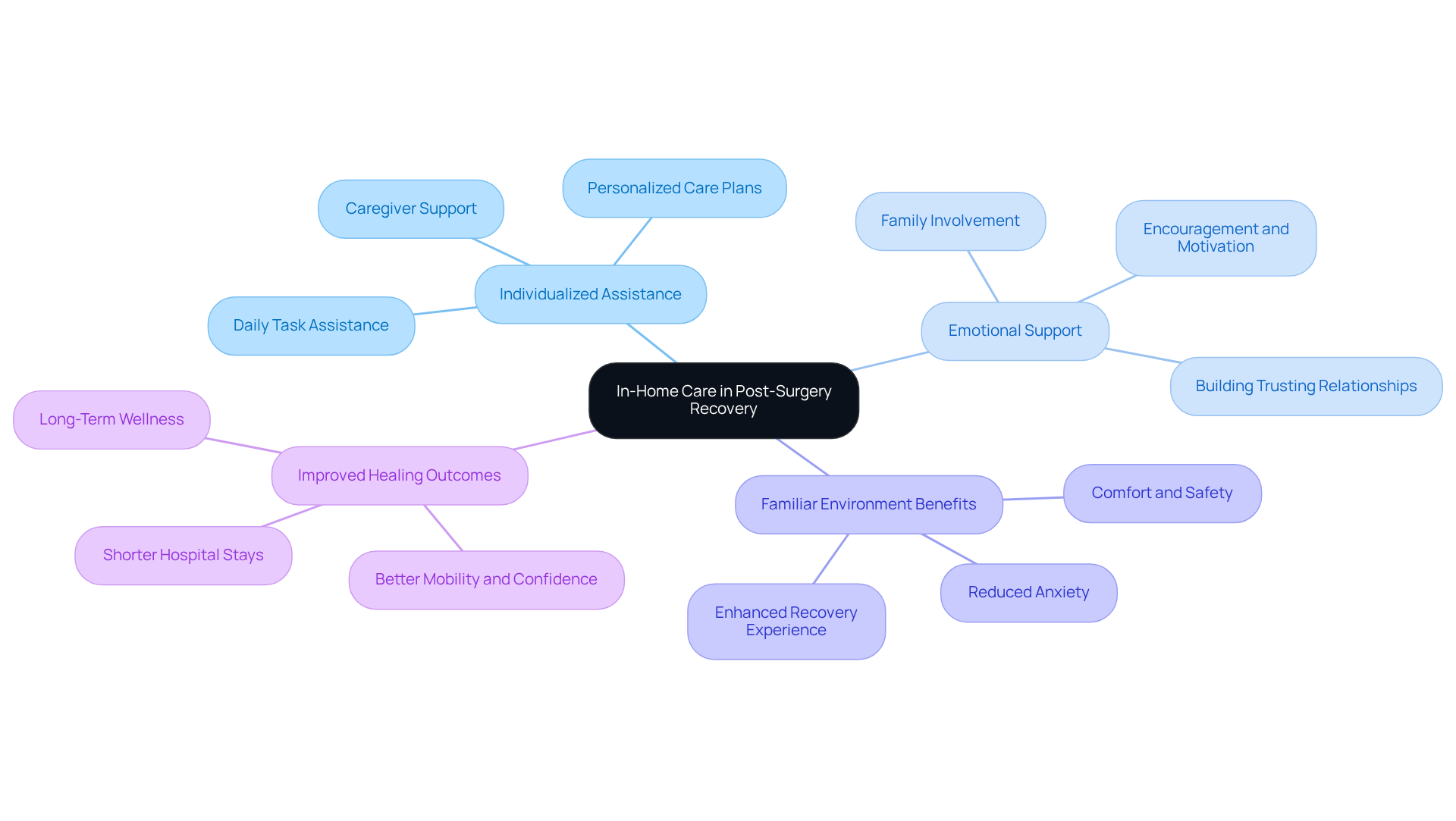
In-home care for post-surgery recovery is crucial for healing, as it offers individualized assistance tailored to each person's specific needs. Recovering at home, in a familiar environment, can significantly reduce anxiety and promote healing. Caregivers provide support with daily tasks, medication administration, and emotional encouragement, ensuring individuals adhere to their healing plans. This comprehensive approach not only addresses physical needs but also fosters a sense of safety and comfort, which is vital for emotional well-being during recovery.
Data suggests that individuals in specialized programs, like the SNF at Home initiative, often experience shorter hospital stays and improved healing outcomes. For instance, Sarah, who underwent knee replacement surgery, received personalized assistance that enhanced her mobility and confidence, illustrating the transformative impact of tailored support.
Moreover, building trusting relationships between caregivers and patients is essential for emotional support, further underscoring the importance of family involvement in the healing journey. As Thinn Aye, owner of Alondra Home Care, beautifully expresses, 'With in-home care for post-surgery recovery, you can navigate the post-surgery phase with confidence and support.
Prepare Your Home for Recovery: Essential Modifications and Safety Measures
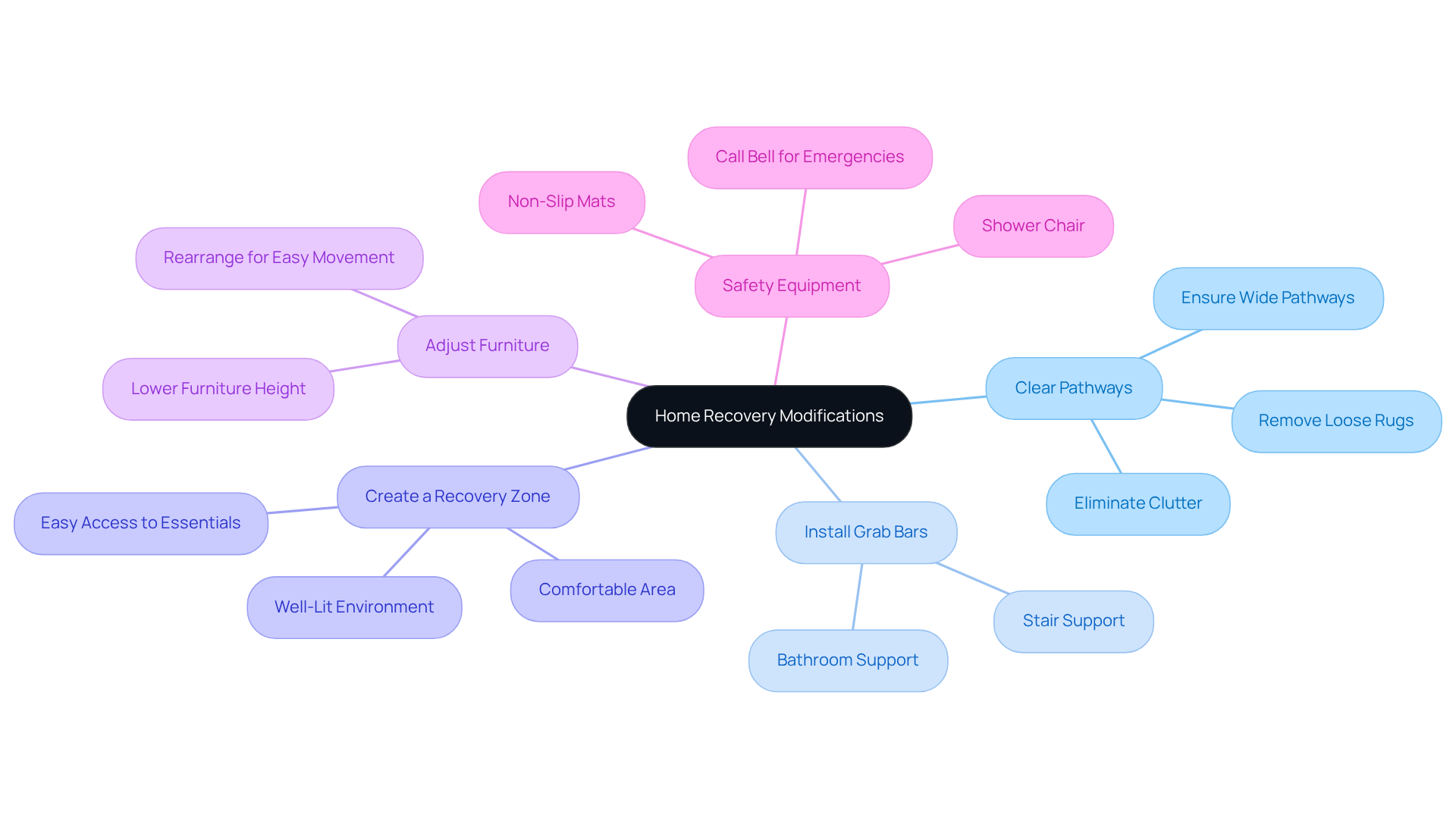
To ensure a smooth recovery at home, it’s important to consider some essential modifications that can significantly improve in-home care for post-surgery recovery, enhancing both safety and comfort.
-
Clear Pathways: Start by eliminating clutter, loose rugs, and any obstacles that could lead to tripping hazards. It’s vital that pathways are wide enough to accommodate mobility aids if necessary, allowing for safe movement.
-
Install Grab Bars: Positioning grab bars in the bathroom and near stairs can provide essential support, making it easier for loved ones to navigate their surroundings safely.
-
Create a Recovery Zone: Designate a comfortable area stocked with easy access to essentials like medications, water, and snacks. This space should be well-lit and equipped with necessary items such as pillows and blankets, creating a nurturing environment for healing.
-
Adjust Furniture: Rearranging furniture to facilitate easy movement and access to frequently used items is crucial. If needed, consider lowering furniture height to assist those with mobility challenges, ensuring they feel comfortable and secure.
-
Safety Equipment: Equipping the home with vital safety items, including a shower chair, non-slip mats, and a call bell for emergencies, can provide peace of mind for both caregivers and those recovering.
Implementing these safety measures is essential, especially since falls in the home represent over 60% of incidents among the elderly, which highlights the importance of in-home care for post-surgery recovery. This highlights the significance of in-home care for post-surgery recovery in ensuring a safe environment during healing. Additionally, studies show that upgrading lighting in critical areas can lead to a 43% reduction in falls, further emphasizing the need for thoughtful modifications.
As Jacqueline Ortiz, Chief Community Health Impact Officer, beautifully states, "The downstream impact of keeping even one individual fall-free in their home is unbelievable. In addition to health, you’re preserving independence." Your efforts in creating a safe and nurturing space are invaluable, and they truly make a difference.
Select and Coordinate Caregivers: Finding the Right Support for Your Needs
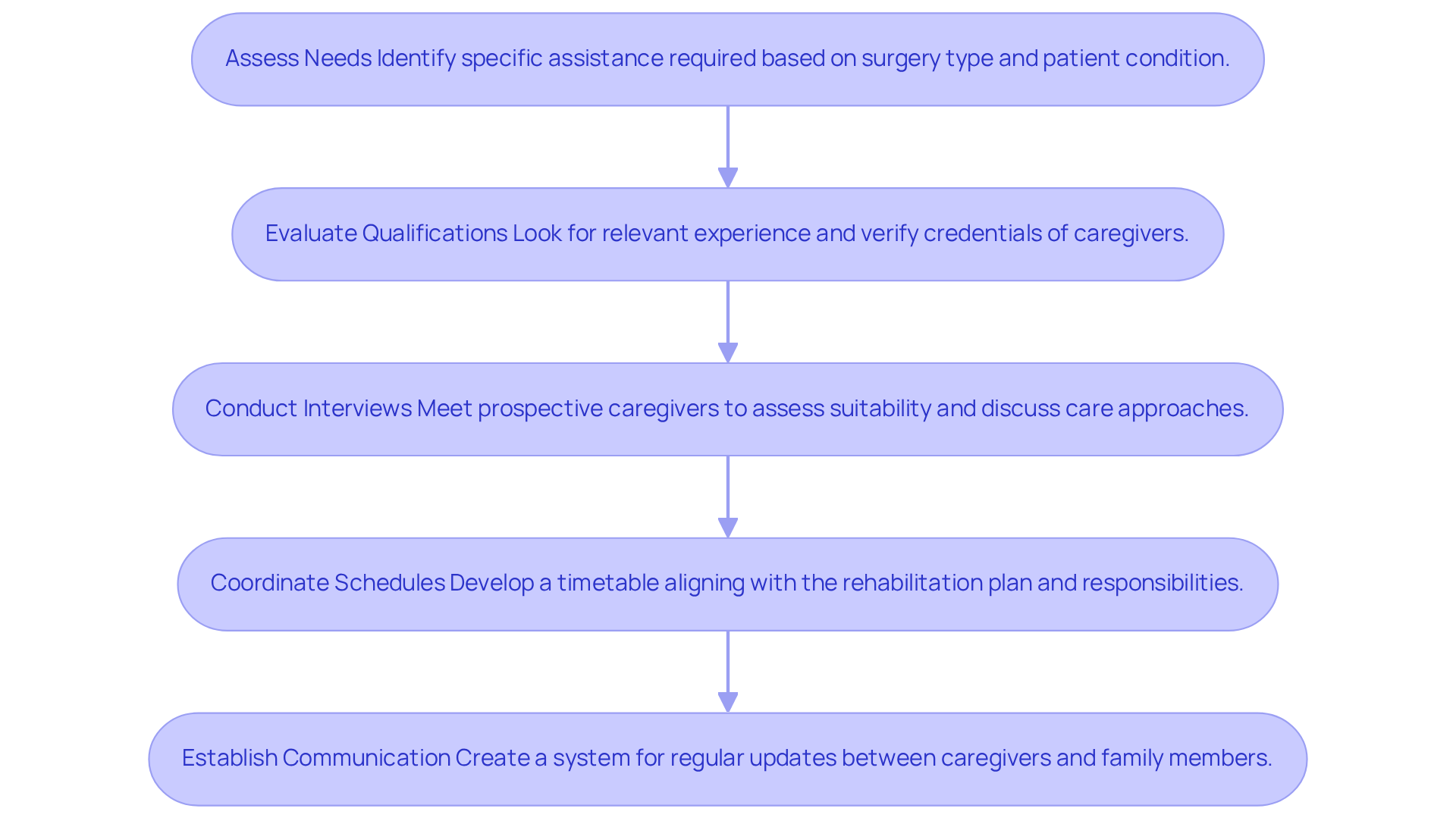
Selecting the right caregivers is essential for effective in-home care for post-surgery recovery, and it involves several key steps that can significantly impact the healing journey.
-
Assess Needs: Begin by identifying the specific assistance required based on the type of surgery and the patient’s condition. This may include support with mobility, medication management, or personal assistance tasks. According to U.S. News & World Report, having a thoughtful strategy for in-home care for post-surgery recovery is vital for well-being, especially for seniors.
-
Evaluate Qualifications: Look for individuals who have relevant experience and specialized training in post-surgery care. It’s important to verify their credentials and ask for references to ensure they have a proven track record in similar situations. As Maryellen O’Connell, RN, highlights, "A supporter plays a crucial role in assisting the individual, both physically and emotionally, throughout the surgery and recovery process."
-
Conduct Interviews: Meet with prospective caregivers to assess their suitability. Engage in discussions about their approach to care, ensuring they grasp the individual’s unique needs and preferences. Trust your instincts when selecting a provider, considering their experience, qualifications, and references.
-
Coordinate Schedules: Once you’ve chosen your support staff, develop a timetable that aligns with the individual’s rehabilitation plan. Clearly outline each attendant’s responsibilities and ensure they understand the patient’s preferences, fostering a comfortable environment. Research indicates that effective coordination among support providers significantly enhances recovery outcomes.
-
Establish Communication: Create a system for regular updates between caregivers and family members. This allows for monitoring the patient’s progress and addressing any concerns promptly. Transparency about the caregiver’s background is crucial; families should feel secure in their caregiver choices.
By following these steps, families can find the right in-home care for post-surgery recovery for their loved ones during this critical period. With the median cost for nonmedical home assistance being approximately $30 per hour, it’s important to assess financial situations and explore funding options to ease potential burdens.
Manage Care Effectively: Communication and Monitoring for Optimal Recovery
To manage in-home care for post-surgery recovery effectively, it’s essential to consider strategies that not only address physical needs but also nurture emotional well-being.
-
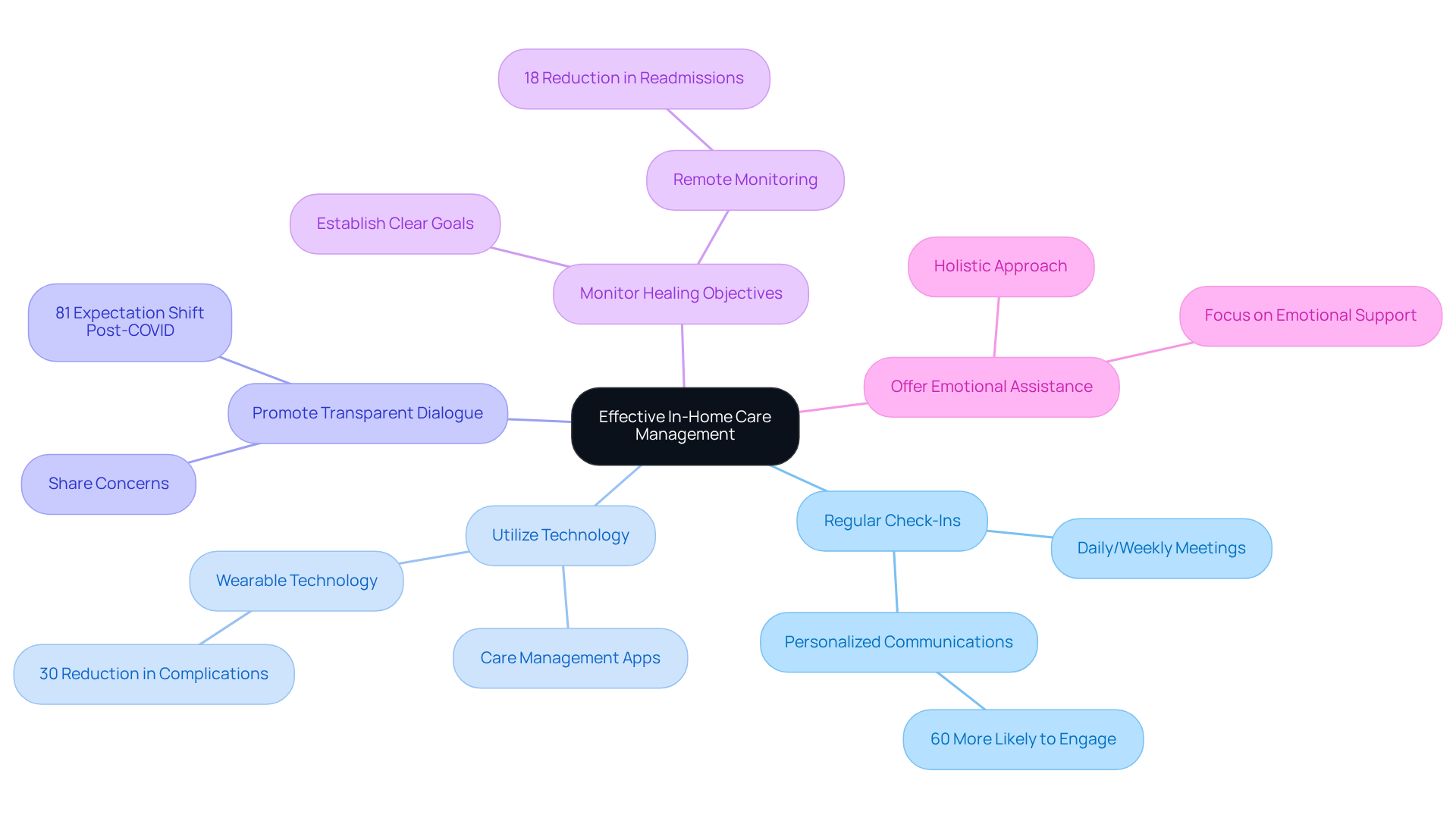
Regular Check-Ins: Arrange daily or weekly meetings with those providing care. These discussions about the individual's progress and any changes in their condition are vital. Regular communication is crucial. Studies show that patients receiving personalized communications are 60% more likely to engage with recommended clinical programs, significantly enhancing recovery outcomes.
-
Utilize Technology: Implement tools such as care management apps or shared online notes. Keeping track of medications, appointments, and support notes ensures that everyone involved is informed and aligned. This reduces the risk of miscommunication and errors. For instance, wearable technology can decrease the occurrence of post-surgical complications by up to 30% by monitoring vital signs and alerting health professionals of any alarming changes, enabling prompt interventions.
-
Promote Transparent Dialogue: Create a space where caregivers and family members can share concerns or observations about the individual's healing. This proactive approach helps recognize potential issues early, which is crucial for efficient management of recovery. Notably, 81% of individuals express that their expectations for healthcare communications have shifted since the COVID-19 pandemic, highlighting the need for adaptable communication strategies.
-
Monitor Healing Objectives: Establish clear healing objectives and frequently assess the individual's progress towards these goals. Remote monitoring, which has been shown to reduce hospital readmissions by 18% among surgical patients using wearable devices, provides real-time data on activity levels and healing metrics. This allows for adjustments to the treatment plan as needed based on their recovery journey.
-
Offer Emotional Assistance: It’s important that caregivers focus not only on physical well-being but also on providing emotional support. This holistic approach to in-home care for post-surgery recovery helps patients navigate the challenges of healing, fostering a positive environment. As Dr. Maria Patel notes, wearable technology enhances a doctor's reach beyond hospital walls, underscoring the importance of integrating technology into both emotional and physical care.
Taking the Next Steps
In-home care plays a pivotal role in post-surgery recovery, offering tailored support that fosters healing in a familiar and comforting environment. Caregivers provide individualized assistance, addressing not only physical needs but also enhancing emotional well-being. This support allows individuals to navigate their recovery with confidence and security.
Preparing the home for recovery is essential. Key insights from this guide emphasize the importance of making necessary modifications and implementing safety measures. Creating a designated recovery zone, ensuring clear pathways, and selecting the right caregivers are crucial steps that significantly impact healing outcomes. Effective communication and monitoring strategies further enhance the recovery process, ensuring that both physical and emotional needs are met throughout the healing journey.
The significance of in-home care for post-surgery recovery cannot be overstated. By investing in a supportive environment and the right caregiving team, individuals can truly optimize their recovery experience. This is a call to action for families to prioritize these elements, ensuring that loved ones receive the best care possible during this critical healing period. Embracing these practices will not only improve recovery outcomes but also preserve the independence and dignity of those recovering at home.
https://iframe.tely.ai/cta/eyJhcnRpY2xlX2lkIjogIjY4ZjU4MmY0YmViZmI0NWI4NzRlODEzNiIsICJjb21wYW55X2lkIjogIjY4ZWU1ZGNhNzMxNzYyNTU3ZjNjOTVjMSIsICJpbmRleCI6IG51bGwsICJ0eXBlIjogImFydGljbGUifQ==Frequently Asked Questions
Why is in-home care important for post-surgery recovery?
In-home care is crucial for healing as it offers individualized assistance tailored to each person's specific needs, helping to reduce anxiety and promote healing in a familiar environment.
What types of support do caregivers provide during post-surgery recovery?
Caregivers provide support with daily tasks, medication administration, and emotional encouragement, ensuring individuals adhere to their healing plans.
How does in-home care impact emotional well-being during recovery?
In-home care fosters a sense of safety and comfort, which is vital for emotional well-being during recovery, as it addresses both physical and emotional needs.
What evidence supports the effectiveness of in-home care programs like SNF at Home?
Data suggests that individuals in specialized programs like SNF at Home often experience shorter hospital stays and improved healing outcomes.
Can you provide an example of how in-home care can aid recovery?
For instance, Sarah, who underwent knee replacement surgery, received personalized assistance that enhanced her mobility and confidence, illustrating the transformative impact of tailored support.
Why is building a trusting relationship between caregivers and patients important?
Building trusting relationships between caregivers and patients is essential for emotional support, which underscores the importance of family involvement in the healing journey.
What does Thinn Aye, owner of Alondra Home Care, say about in-home care for post-surgery recovery?
Thinn Aye expresses that with in-home care for post-surgery recovery, individuals can navigate the post-surgery phase with confidence and support.