Master Instrumental ADLs: Essential Skills for Family Caregivers

For families in our service areas
For families in our service areas, this guide explains caregiver support and how non-medical in-home caregiving can support care planning in East Idaho, Treasure Valley & Magic Valley, Northern Wasatch, North Central West Virginia, and Northeast Ohio.
The Importance of Master Instrumental ADLs: Essential
Understanding the nuances of Instrumental Activities of Daily Living (IADLs) presents a significant challenge for family caregivers. These tasks, which include managing finances and preparing meals, are not just about physical assistance; they also involve recognizing the emotional and psychological impacts on seniors. Caregivers often find themselves in a difficult position: how can they provide the necessary help while promoting autonomy and dignity for those they care for?
This balancing act is crucial. When caregivers offer too much assistance, they risk undermining the independence of seniors, which can lead to feelings of helplessness and decreased quality of life. Conversely, providing too little support can leave seniors struggling with essential tasks, impacting their overall well-being. So, what can caregivers do to navigate this complex landscape?
One effective approach is to focus on empowering seniors through education and encouragement. Here are some actionable tips:
- Encourage Participation: Involve seniors in decision-making about their daily activities. This fosters a sense of control and independence.
- Set Realistic Goals: Help seniors set achievable goals for their IADLs, gradually increasing their responsibilities as they gain confidence.
- Provide Resources: Share tools and resources that can assist seniors in managing their tasks, such as budgeting apps or meal planning guides.
By implementing these strategies, caregivers can enhance the independence and quality of life for seniors, ensuring they feel valued and respected in their daily lives.
Define Instrumental Activities of Daily Living (IADLs)
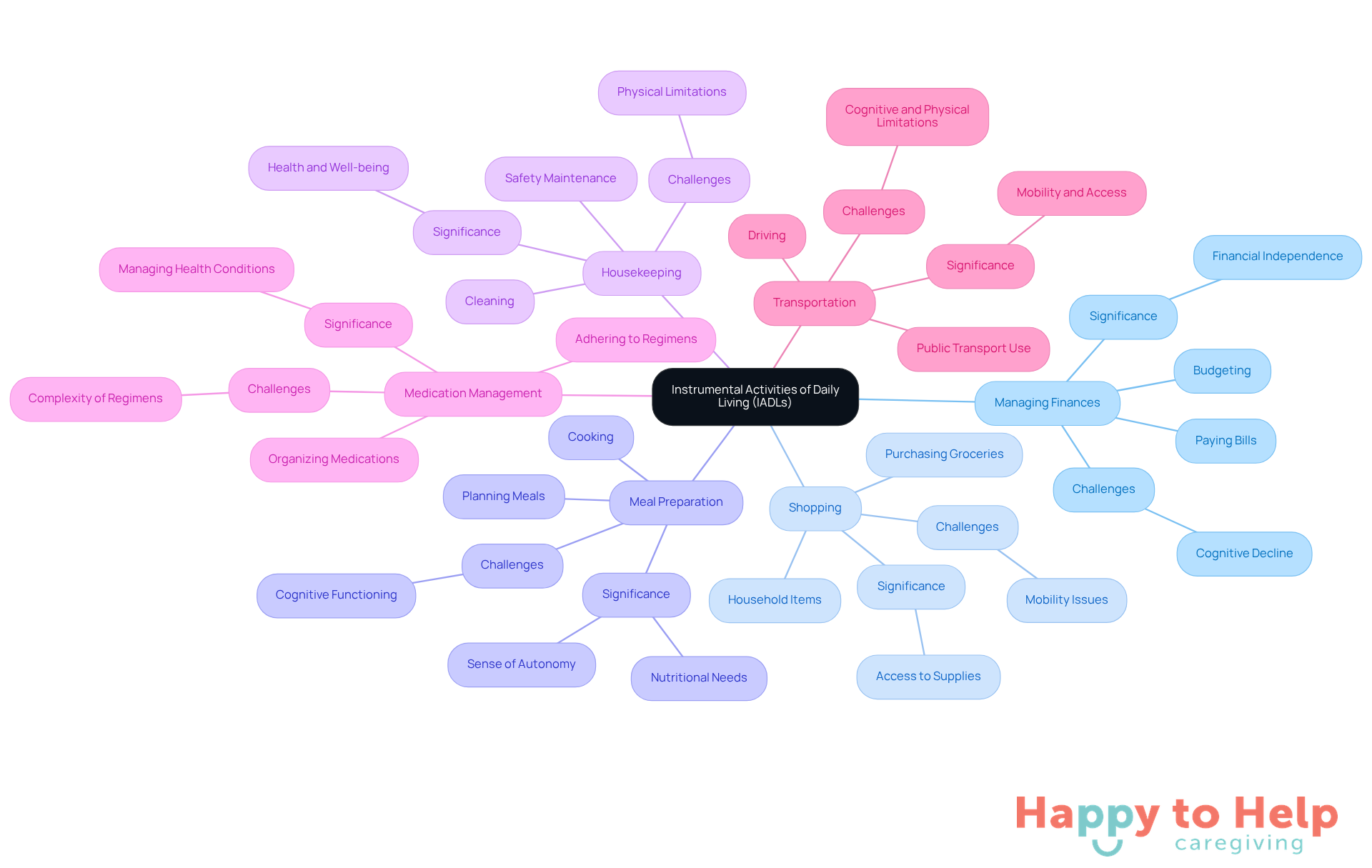
Instrumental ADLs are essential for individuals to maintain independent living within their communities. Unlike basic Activities of Daily Living (ADLs), which include fundamental self-care tasks like bathing and eating, instrumental ADLs involve more complex activities that require cognitive function and organizational skills. Key IADLs include:
- Managing finances: Budgeting and paying bills are crucial for financial independence.
- Shopping: Purchasing groceries and household items ensures individuals have necessary supplies for daily living.
- Meal preparation: Planning and cooking meals support nutritional needs and foster a sense of autonomy.
- Housekeeping: Maintaining a clean and safe living environment is vital for health and well-being.
- Medication management: Organizing and adhering to prescribed medication regimens is essential for managing health conditions.
- Transportation: Utilizing public transport or driving allows for mobility and access to community resources.
The challenges associated with instrumental ADLs cannot be overstated. Research indicates that older adults often face difficulties with instrumental ADLs prior to encountering issues with basic ADLs. This early identification is crucial for timely intervention. For example, a study revealed that 69.5% of participants reported new difficulties with at least one IADL over a decade, highlighting the prevalence of these challenges among the elderly. Furthermore, older Americans and females show higher rates of IADL impairments, emphasizing the varying impact across demographics.
Effective management of daily living activities, particularly instrumental ADLs, is especially important in home caregiving environments. Caregivers who assist with IADLs not only help preserve their clients' autonomy but also enhance their overall quality of life. By providing support in these areas, caregivers can significantly reduce feelings of isolation and promote a sense of security and comfort in familiar surroundings. Thus, understanding and supporting instrumental ADLs is a vital component of effective caregiving for seniors and individuals with disabilities.
Recognize the Importance of IADLs in Caregiving
Instrumental ADLs present significant challenges for seniors, impacting their independence and overall quality of life. When seniors struggle with these activities, it can lead to a loss of autonomy, affecting their self-esteem and dignity.
Promoting independence is essential for seniors to live autonomously, and mastery of instrumental ADLs plays a crucial role in this. It fosters a sense of control and dignity, which is crucial for their self-esteem.
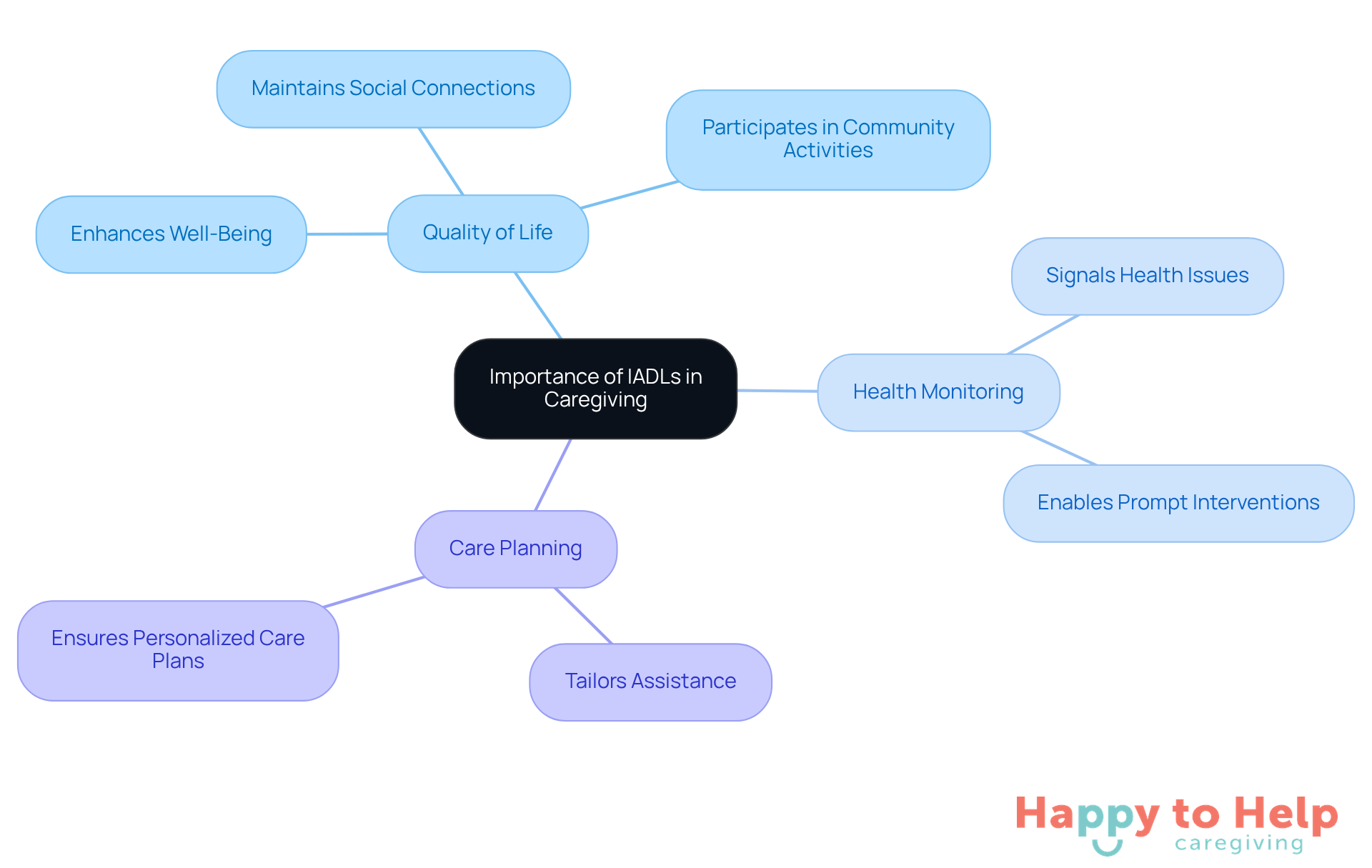
- Quality of Life: Engaging in IADLs significantly enhances well-being. It allows seniors to maintain social connections and participate in community activities, both vital for mental health.
- Health Monitoring: A decline in the ability to perform IADLs can signal potential health issues. Recognizing these signs early enables prompt interventions, preventing further complications.
- Care Planning: Understanding a senior's IADL capabilities is vital for caregivers. This knowledge helps tailor assistance and resources effectively, ensuring personalized care plans that meet individual needs.
By focusing on instrumental ADLs, caregivers can enhance the quality of life for seniors, promoting a more self-sufficient lifestyle. This approach not only enhances health outcomes but also fosters greater satisfaction in daily activities.
Assess IADLs: Methods and Tools for Caregivers
Evaluating instrumental ADLs poses a significant challenge for caregivers, who need to understand a person's functional capabilities to tailor care strategies effectively. Without proper evaluation, caregivers may struggle to address the unique needs of those they assist, which can lead to inadequate support and diminished quality of life.
Statistics reveal that 65% of caregivers assist with instrumental ADLs, highlighting the necessity for effective evaluation tools. Research shows that successful execution of daily living activities is closely linked to overall health and independence. This underscores the importance of thorough assessments, as they can serve as critical health indicators, predicting mild cognitive impairments and mortality in older adults, as noted by expert Marzieh Pashmdarfard.
To tackle these challenges, caregivers can employ several practical strategies:
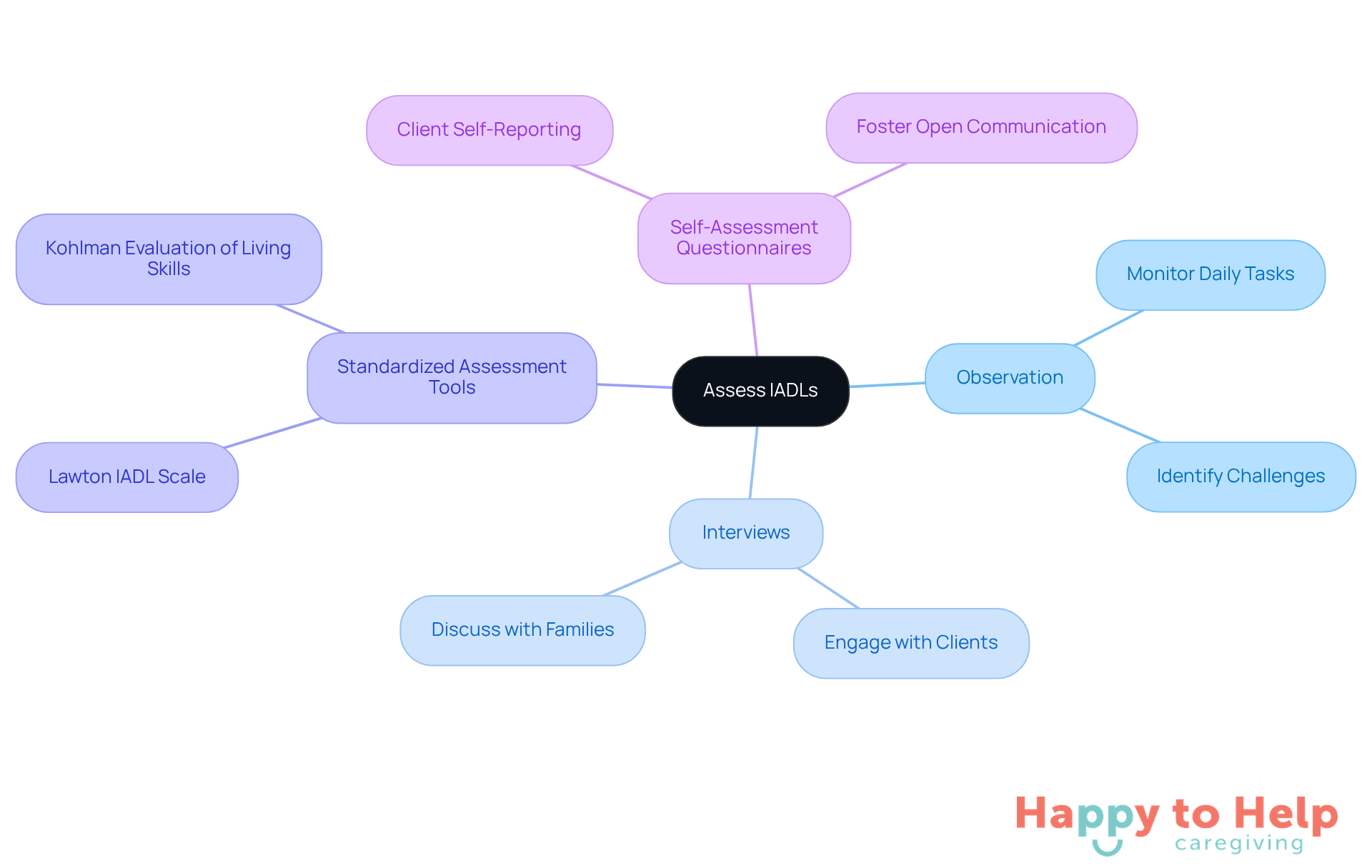
- Observation: Caregivers should observe clients during daily tasks to assess their capabilities and pinpoint specific challenges.
- Interviews: Engaging in discussions with individuals and their families can provide valuable insights into daily routines and obstacles, helping caregivers understand the context of the individual's needs.
- Utilizing standardized assessment tools like the Lawton IADL Scale is instrumental for the systematic evaluation of specific tasks, such as managing finances, shopping, and meal preparation. This scale is widely recognized for its effectiveness in assessing performance in instrumental ADLs.
- Self-Assessment Questionnaires: Providing clients with questionnaires encourages them to self-report their abilities and challenges, fostering open communication about their needs and preferences.
By implementing these strategies, caregivers can ensure they are effectively addressing the unique needs of those they assist, ultimately leading to more effective care planning.
Support Independence: Strategies for Assisting with IADLs
Assisting individuals with instrumental ADLs presents a significant challenge for caregivers: finding the right balance between providing support and encouraging independence. This struggle can lead to feelings of overwhelm for both caregivers and clients, making it essential to implement effective strategies.
To address this issue, consider the following actionable solutions:
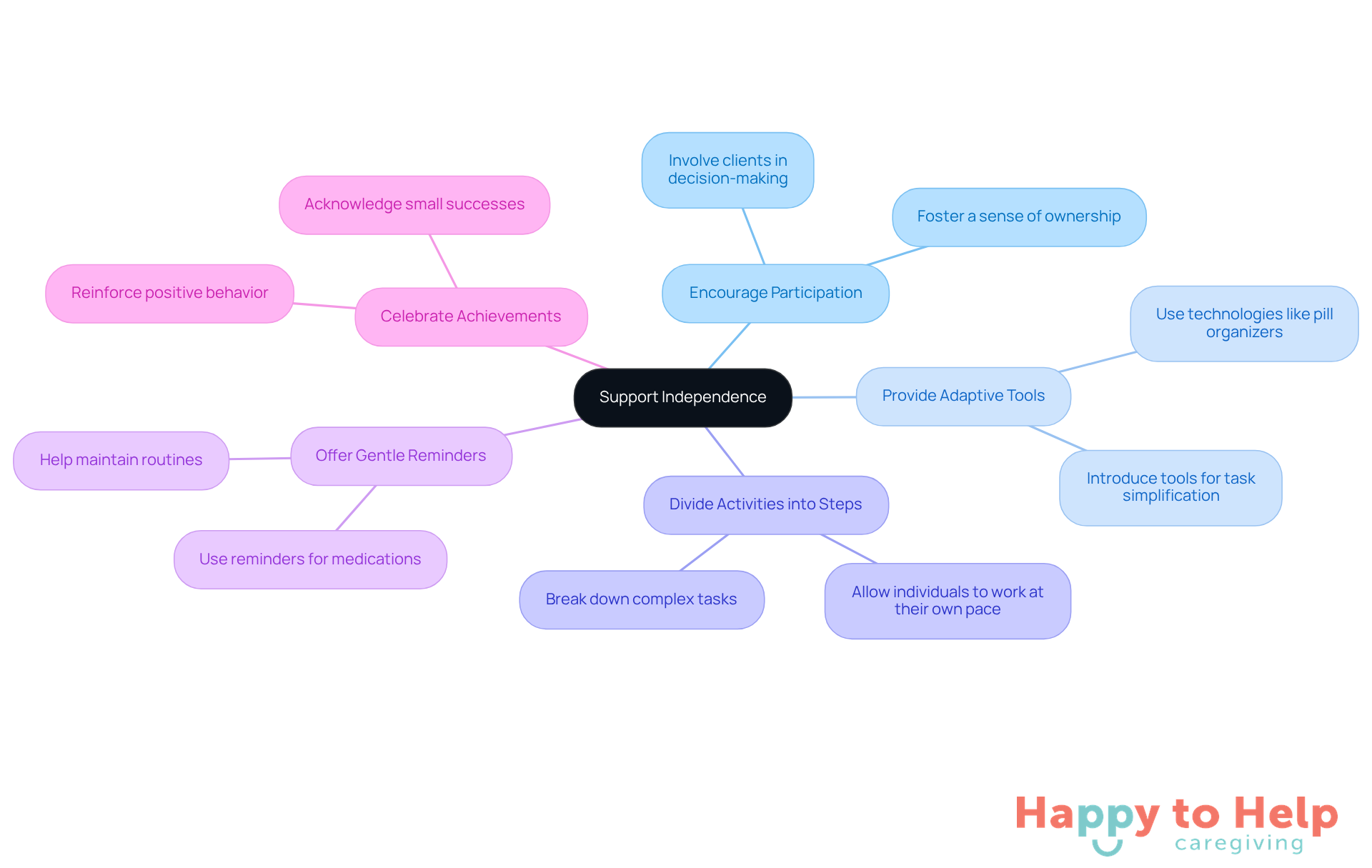
- Encourage Participation: Involve clients in decision-making about their care and daily activities. This fosters a sense of ownership and promotes independence.
- Provide Adaptive Tools: Introduce tools and technologies that simplify tasks, such as pill organizers for medication management or shopping apps for grocery lists.
- Divide Activities into Steps: Break down complex activities into manageable steps, allowing individuals to complete tasks at their own pace.
- Offer Gentle Reminders: Use reminders for important tasks like taking medications or attending appointments, helping individuals maintain their routines without feeling overwhelmed.
- Celebrate Achievements: Acknowledge and celebrate small successes in completing instrumental ADLs. This reinforces positive behavior and boosts confidence.
By employing these strategies, caregivers can effectively support their clients in maintaining independence while ensuring their safety and well-being.
Moving Forward with Master Instrumental ADLs: Essential
Mastering instrumental activities of daily living (IADLs) poses a significant challenge for family caregivers, impacting their ability to support seniors' independence and quality of life. These complex tasks - managing finances, shopping, meal preparation, and medication management - are essential for maintaining autonomy. Without proper understanding and support, caregivers may struggle to empower their clients, which can diminish the seniors' sense of dignity.
The implications of these challenges are profound. Often, difficulties with IADLs precede issues with basic activities of daily living (ADLs), underscoring the need for early identification and intervention. Caregivers are crucial in enhancing seniors' quality of life by employing effective assessment methods and support strategies. Techniques such as observation, interviews, and standardized tools like the Lawton IADL Scale can help caregivers grasp the unique needs of those they assist. Additionally, involving clients in their care and providing adaptive tools can significantly promote independence and confidence.
To truly master instrumental ADLs, caregivers must focus on enabling seniors to lead fulfilling, autonomous lives. By prioritizing support for IADLs, caregivers can make a meaningful impact on their clients' well-being and overall life satisfaction. As the demand for caregiving continues to rise, embracing these essential skills will be vital for fostering independence and enhancing the quality of care for seniors in our communities.
https://iframe.tely.ai/cta/eyJhcnRpY2xlX2lkIjogIjY5MjRmMWUxZWM0Y2FiOGU3NGVjMDBlMiIsICJjb21wYW55X2lkIjogIjY4ZWU1ZGNhNzMxNzYyNTU3ZjNjOTVjMSIsICJpbmRleCI6IG51bGwsICJ0eXBlIjogImFydGljbGUifQ==Frequently Asked Questions
What are Instrumental Activities of Daily Living (IADLs)?
Instrumental Activities of Daily Living (IADLs) are complex activities that individuals need to perform to maintain independent living within their communities. They require cognitive function and organizational skills, unlike basic Activities of Daily Living (ADLs), which involve fundamental self-care tasks.
What are some examples of IADLs?
Key examples of IADLs include managing finances (budgeting and paying bills), shopping for groceries and household items, meal preparation (planning and cooking meals), housekeeping (maintaining a clean living environment), medication management (organizing and adhering to medication regimens), and transportation (utilizing public transport or driving).
Why are IADLs important for independent living?
IADLs are crucial for independent living as they support an individual's ability to manage their daily life, maintain financial independence, ensure proper nutrition, and foster a clean and safe living environment, all of which contribute to overall well-being and autonomy.
What challenges do older adults face with IADLs?
Older adults often face difficulties with IADLs before encountering issues with basic ADLs. Research indicates that a significant percentage of older adults report new difficulties with at least one IADL over time, highlighting the prevalence of these challenges, especially among older Americans and females.
How can caregivers assist with IADLs?
Caregivers can assist with IADLs by providing support in areas such as managing finances, shopping, meal preparation, and medication management. This assistance helps preserve the clients' autonomy and enhances their overall quality of life, reducing feelings of isolation and promoting a sense of security in familiar surroundings.
List of Sources
- Define Instrumental Activities of Daily Living (IADLs)
- Measuring the Activities of Daily Living: Comparisons Across National Surveys (https://aspe.hhs.gov/reports/measuring-activities-daily-living-comparisons-across-national-surveys-0)
- Importance of Activities of Daily Living | Peace Village (https://peacevillage.org/news/importance-adls)
- The Prevalence and Trends of Instrumental Activities of Daily Living Impairments in the United States from 2008–2018 - PMC (https://pmc.ncbi.nlm.nih.gov/articles/PMC10200247)
- Incident Instrumental Activities of Daily Living Difficulty in Older Adults: Which Comes First? Findings From the Advanced Cognitive Training for Independent and Vital Elderly Study - PMC (https://pmc.ncbi.nlm.nih.gov/articles/PMC7642324)
- ADLs vs IADLs: What’s the Difference? (https://mooringspark.org/news/adls-vs-iadls-whats-the-difference)
- Recognize the Importance of IADLs in Caregiving
- Independence and older adults: Importance and promoting it (https://medicalnewstoday.com/articles/independence-and-the-elderly)
- Tech tools promote independence, seniors say (https://mcknightsseniorliving.com/news/tech-tools-promote-independence-seniors-say)
- Activities of Daily Living: As Seniors Become Unable to Perform Basic Self-Care, Families are Faced with Tough Decisions - Home (https://agingoptions.com/uncategorized/activities-of-daily-living-as-seniors-become-unable-to-perform-basic-self-care-families-are-faced-with-tough-decisions)
- New Report Reveals Crisis Point for America’s 63 million Family Caregivers (https://press.aarp.org/2025-07-24-New-Report-Reveals-Crisis-Point-for-Americas-63-million-Family-Caregivers)
- Prevalence and determinants of activity of daily living and instrumental activity of daily living among elderly in India - BMC Geriatrics (https://bmcgeriatr.biomedcentral.com/articles/10.1186/s12877-021-02659-z)
- Assess IADLs: Methods and Tools for Caregivers
- New instrument can assess assisted living residents' ADL skills (https://mcknightsseniorliving.com/news/new-instrument-can-assess-assisted-living-residents-adl-skills)
- New Report Reveals Crisis Point for America’s 63 million Family Caregivers (https://press.aarp.org/2025-07-24-New-Report-Reveals-Crisis-Point-for-Americas-63-million-Family-Caregivers)
- Assessment tools to evaluate Activities of Daily Living (ADL) and Instrumental Activities of Daily Living (IADL) in older adults: A systematic review - PMC (https://pmc.ncbi.nlm.nih.gov/articles/PMC7320974)
- Study: Best Tech to Help Older Adults Age in Place (https://leadingage.org/study-best-tech-to-help-older-adults-age-in-place)
- Activities of Daily Living - StatPearls - NCBI Bookshelf (https://ncbi.nlm.nih.gov/books/NBK470404)
- Support Independence: Strategies for Assisting with IADLs
- Recognize IADLs to Support Independence - Seniors Guide (https://seniorsguide.com/aging-in-place/recognize-iadls-to-support-independence)
- Why Activities of Daily Living Are Important for Living Independently (https://health.usnews.com/senior-care/caregiving/articles/activities-of-daily-living-for-seniors)
- Master ADLs for Elderly Care: Essential Strategies for Family Caregivers - Happy To Help (https://happytohelpcaregiving.com/master-ad-ls-for-elderly-care-essential-strategies-for-family-caregivers)
- The Art of Daily Living: Helping with ADLs Made Easy (https://homecarepgh.com/blog-posts/assistance-with-adls)
- Elderly Care Statistics (https://rosewood-nursing.com/post/elderly-care-statistics)