
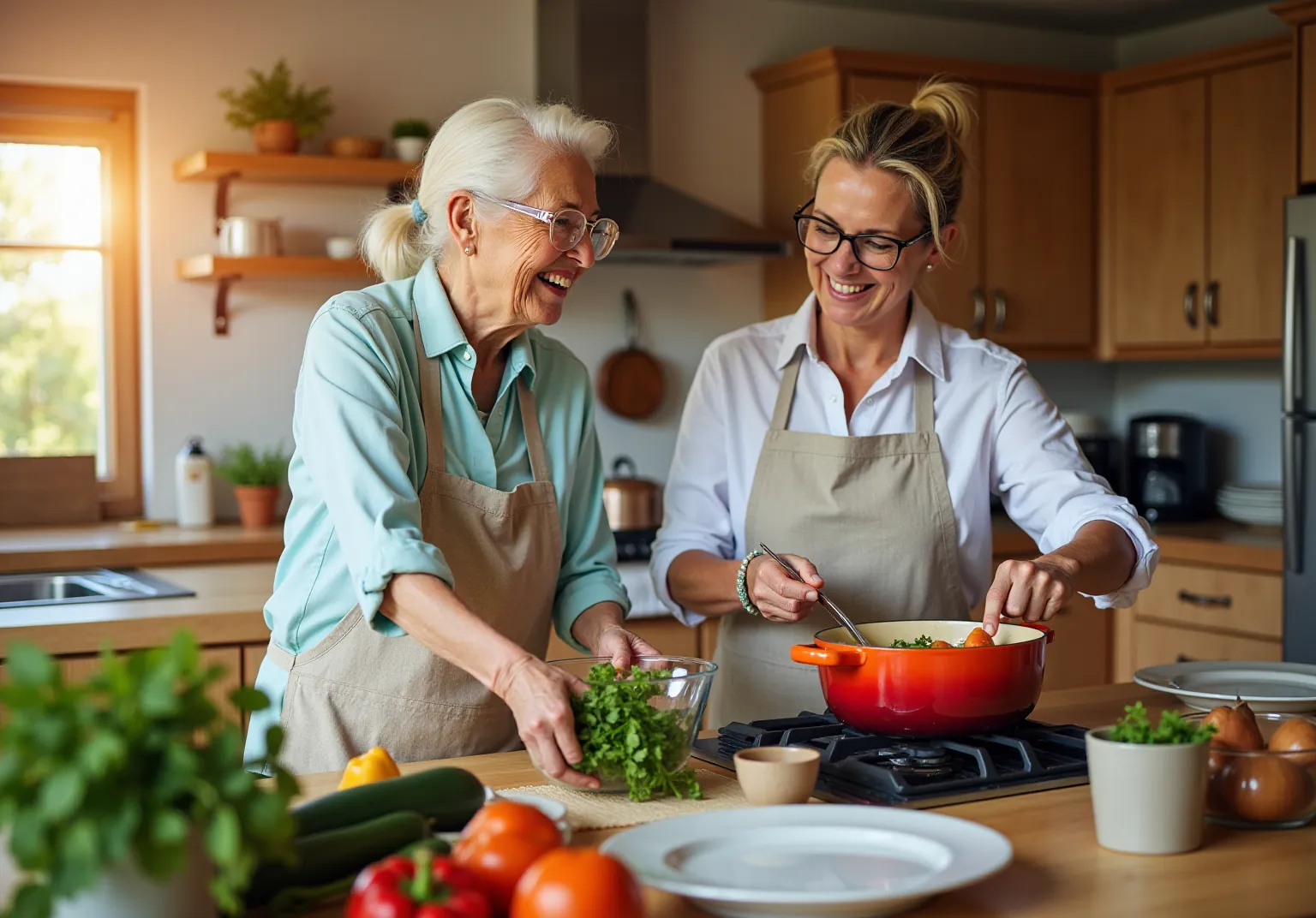
For families in our service areas
For families in our service areas, this guide explains caregiver support and how non-medical in-home caregiving can support care planning in East Idaho, Treasure Valley & Magic Valley, Northern Wasatch, North Central West Virginia, and Northeast Ohio.
Understanding Master Meal Prep
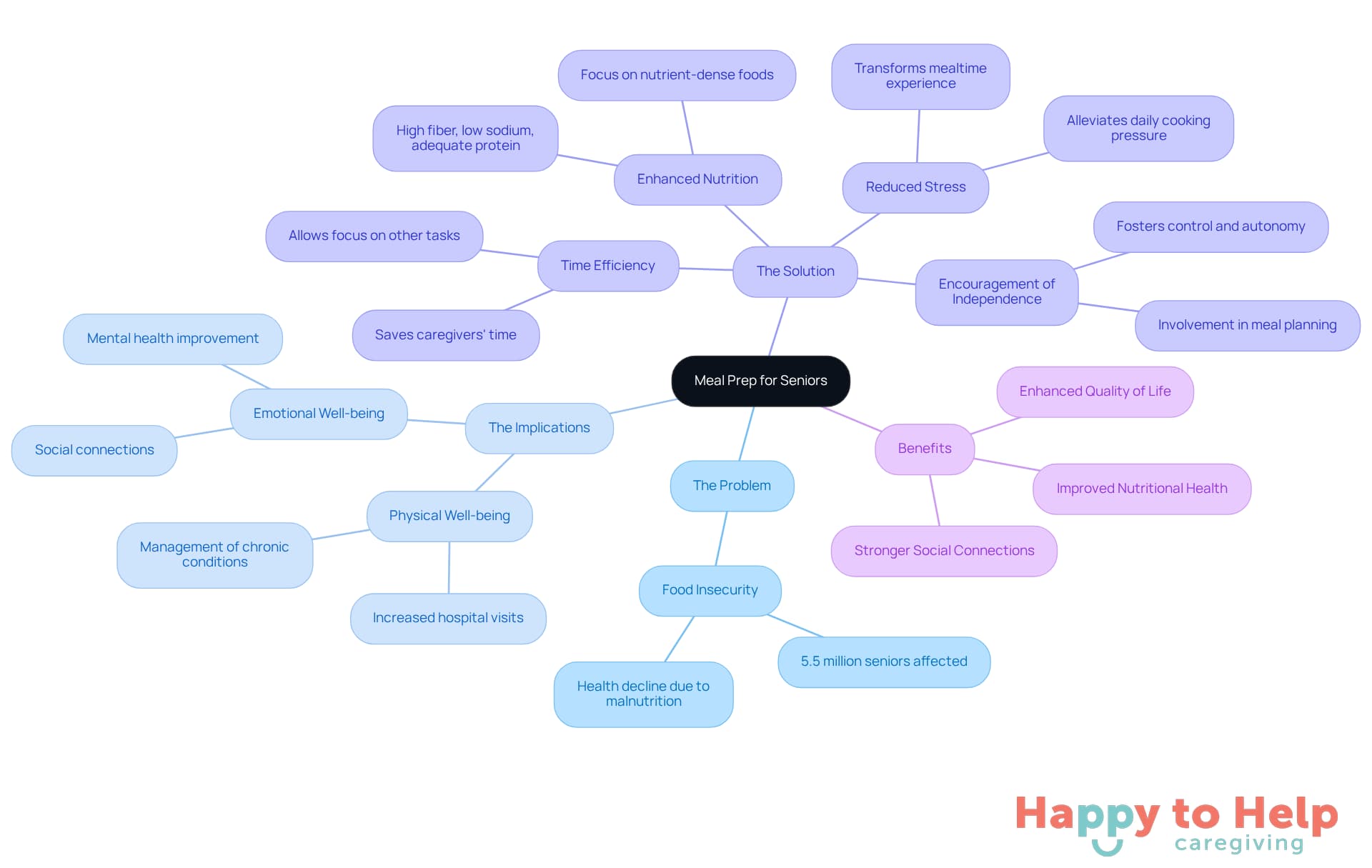
Meal preparation for seniors is not just a culinary task; it’s a vital lifeline that ensures elderly individuals receive the nutrition essential for optimal health. With around 5.5 million seniors facing food insecurity, the stakes are high. Malnutrition can lead to severe health consequences and a diminished quality of life.
So, what can caregivers do? They can transform meal prep into an empowering experience that nourishes while fostering independence and joy in the dining process. Here are some strategies to consider:
- Plan meals together: Involve seniors in the meal planning process. This not only gives them a sense of control but also allows them to express their preferences.
- Simplify cooking: Use easy-to-follow recipes and consider meal kits that require minimal preparation. This can make cooking less daunting and more enjoyable.
- Focus on nutrition: Ensure meals are balanced and cater to any dietary restrictions. This is crucial for maintaining health and preventing malnutrition.
By implementing these strategies, caregivers can create a positive dining experience that enhances the quality of life for seniors.
Understand Meal Prep for Seniors: Importance and Benefits
Meal prep for seniors goes beyond just cooking; it’s a vital strategy to ensure that elderly adults receive balanced nutrition tailored to their specific health needs. The challenge is significant: many seniors face malnutrition, which can lead to serious health issues. Efficient food preparation can help prevent this, manage chronic conditions, and enhance overall well-being.
The Problem: Approximately 5.5 million senior citizens frequently experience food insecurity, highlighting the need for accessible, nutritious options. Without proper nutrition, older adults may struggle with their health, leading to increased hospital visits and a decline in quality of life.
The Implications: Malnutrition can severely impact physical and emotional well-being. Research shows that home-delivered meals significantly reduce hunger and malnutrition, fostering social connections and improving mental health. This underscores the importance of meal prep for seniors within caregiving.
The Solution: Here are some actionable strategies for caregivers:
- Enhanced Nutrition: Meal preparation allows caregivers to focus on nutrient-dense foods that meet seniors' dietary needs, such as high fiber, low sodium, and adequate protein. Prioritizing these foods is crucial for maintaining health and preventing malnutrition.
- Time Efficiency: Preparing meals in advance saves caregivers valuable time during the week, enabling them to focus on other essential tasks or enjoy quality moments with their loved ones.
- Reduced Stress: Having meals ready alleviates the daily pressure of cooking, transforming mealtime into a more enjoyable experience for both older adults and caregivers. This structured approach promotes self-care and a sense of accomplishment.
- Encouragement of Independence: Involving older adults in meal planning empowers them, fostering a sense of control and autonomy. This independence is vital for their overall quality of life, allowing them to engage in activities they enjoy, such as spending time with family or pursuing hobbies.
In conclusion, meal prep for seniors not only supports nutritional health but also enhances the emotional and social well-being of older adults, making it a cornerstone of effective caregiving.
Assess Dietary Needs and Preferences: The First Step
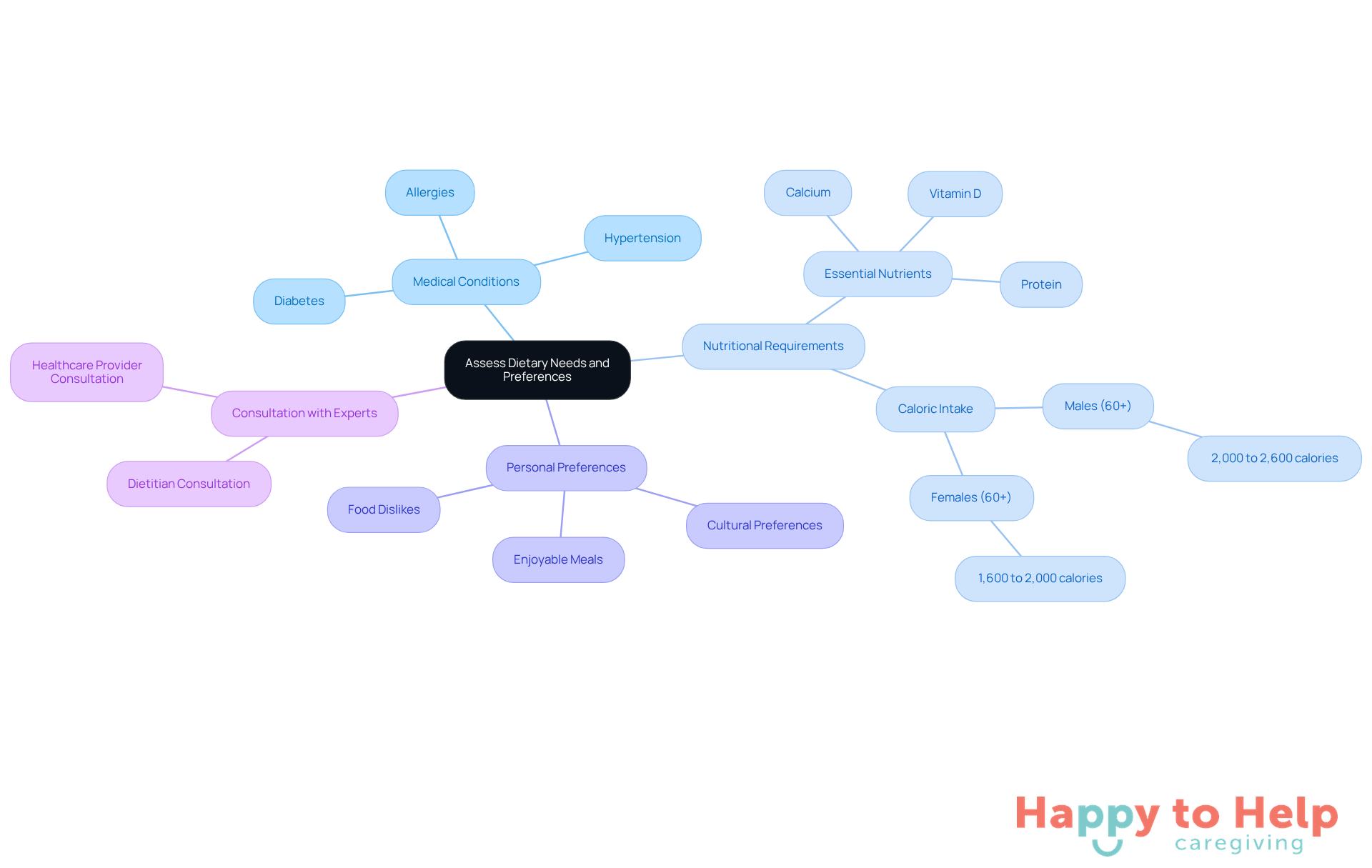
Before starting meal prep for seniors, caregivers face a significant challenge: ensuring the nutritional needs and preferences of the elderly individuals they support are met. Neglecting this can lead to health complications and decreased quality of life.
-
Medical Conditions: It's crucial to identify any health issues, such as diabetes, hypertension, or allergies, that may affect dietary choices.
-
Nutritional Requirements: Caregivers must understand the specific nutritional needs based on age, activity level, and health status. Focus on essential nutrients like calcium, vitamin D, and protein to support overall health.
-
Personal Preferences: Engaging in discussions about food choices with the elder is vital. This ensures that meals are not only nutritious but also enjoyable. Consider cultural preferences and dislikes to create a more personalized dining plan.
-
Consultation with Experts: If needed, caregivers should consult with a dietitian or healthcare provider. This collaboration can help customize meal prep for seniors that effectively meet the elderly person's health requirements.
Plan Your Meals: Create a Weekly Menu and Shopping List
Once dietary needs are assessed, caregivers often face the challenge of creating a suitable weekly menu. This task can be daunting, especially when considering the diverse dietary requirements of seniors. Without a well-structured plan, nutritional deficiencies may arise, impacting overall health and well-being.
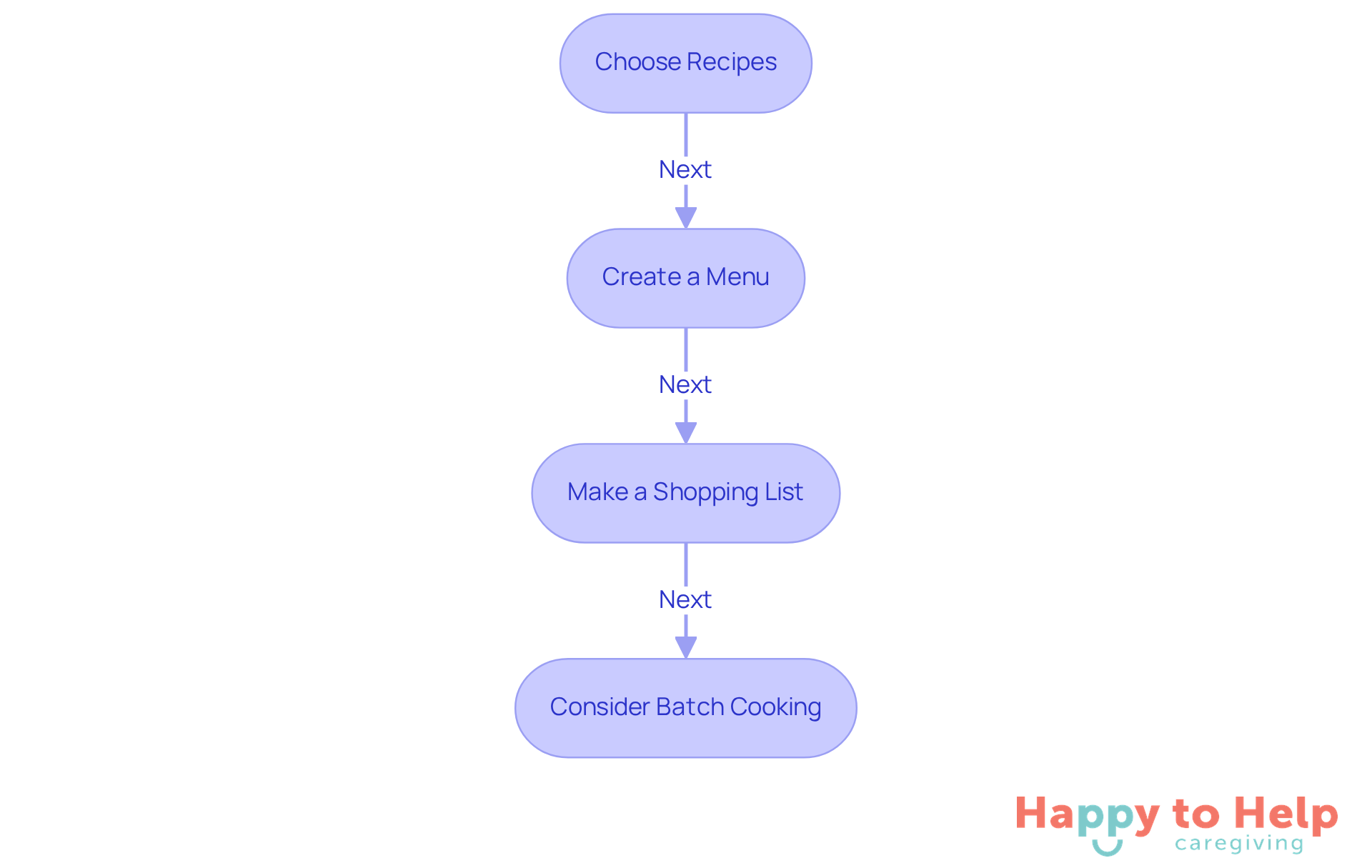
To tackle this issue, caregivers can follow these steps:
- Choose Recipes: Select a diverse range of recipes that cater to the identified dietary needs and preferences. Aim for a balanced mix of proteins, vegetables, and whole grains to ensure nutritional adequacy.
- Create a Menu: Draft a weekly plan that outlines dishes for breakfast, lunch, dinner, and snacks. Incorporate variety to keep dishes interesting and enjoyable, enhancing the dining experience for seniors. Consider including foods that promote hydration, such as soups or dishes with high water content.
- Make a Shopping List: Based on the menu, compile a comprehensive shopping list of all necessary ingredients. Organize the list by category-such as produce, dairy, and grains-to streamline the shopping process and reduce time spent in stores. Incorporate nutritious convenience items like pre-cut vegetables or ready-to-eat choices to simplify meal preparation.
- Consider Batch Cooking: Identify recipes suitable for batch cooking, such as soups, stews, or casseroles. Preparing larger quantities allows for easy storage and reheating, making mealtime more convenient on busy days. This method not only saves time but also helps manage waste and budget effectively. Additionally, ensure that dishes are rich in protein and consider including fortified products to support vitamin B12 consumption, which is vital for seniors.
Cook and Store Meals: Batch Cooking and Proper Storage Techniques
With a menu and shopping list in hand, caregivers face the challenge of efficiently cooking and storing meals. Proper meal prep for seniors is crucial to ensure food safety and quality, especially for older adults who may be more vulnerable to foodborne illnesses.
-
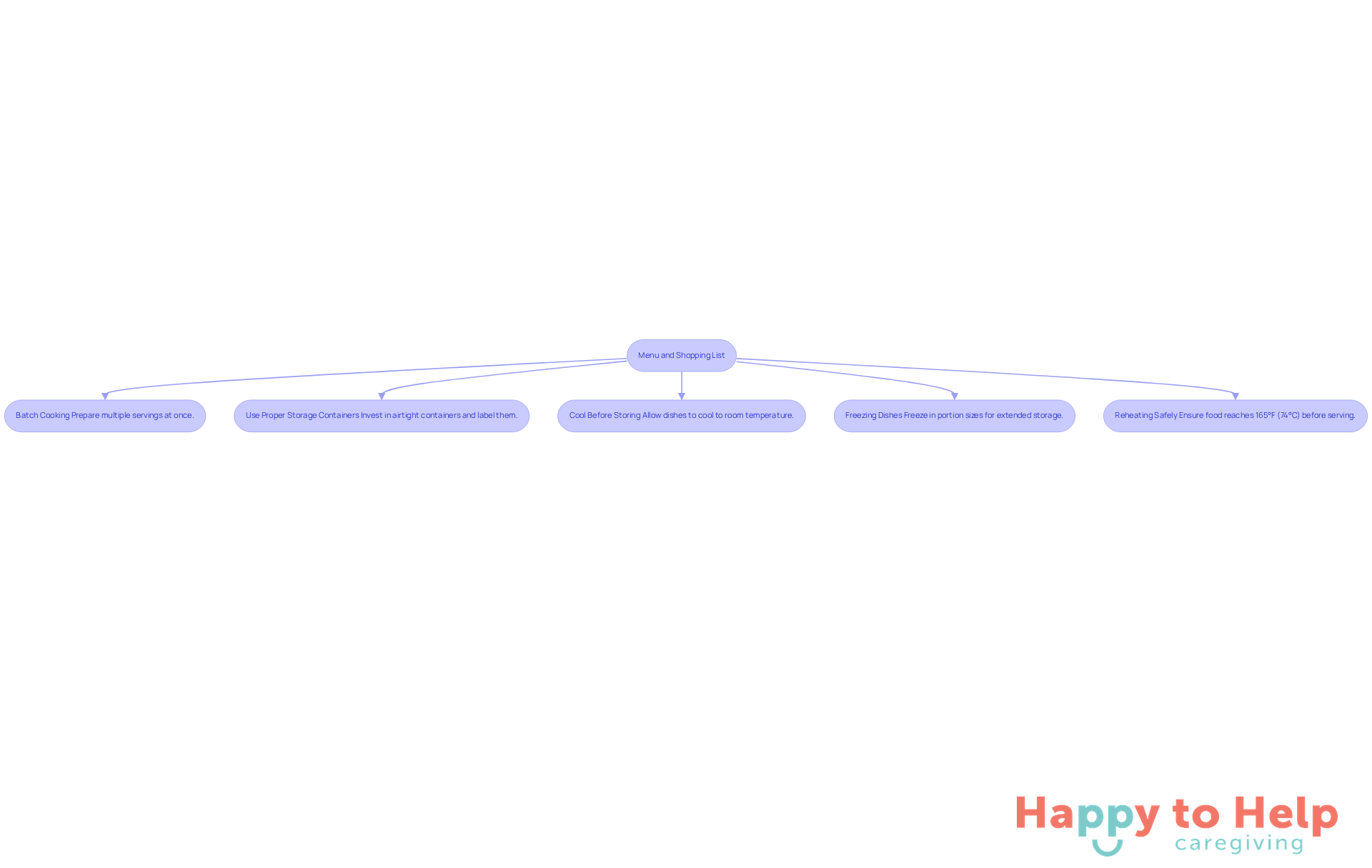
Batch Cooking: One effective solution is batch cooking, where multiple servings of dishes are prepared at once. This can include cooking grains, proteins, and vegetables in bulk. For instance, making a large pot of soup or a casserole allows for easy portioning and storage, saving time and effort in the long run.
-
Use Proper Storage Containers: Investing in airtight containers is essential to keep food fresh. Label each container with the date and contents to easily track freshness and avoid waste. This simple step can significantly reduce the risk of spoilage.
-
Cool Before Storing: Allowing cooked dishes to cool to room temperature before refrigerating or freezing is another important practice. This helps prevent condensation, which can lead to spoilage and affect the quality of the food.
-
Freezing Dishes: For extended storage, freezing dishes in portion sizes is highly recommended. Soups, stews, and casseroles freeze well and can be reheated easily. A full freezer can preserve items in a frozen state for up to 48 hours during a power failure, while a half-full freezer will sustain safe temperatures for approximately 24 hours. Importantly, freezing does not diminish the nutritional quality of items, including meats, poultry, and produce, allowing caregivers to provide healthy, home-cooked meals at their convenience.
-
Reheating Safely: When reheating food, it’s crucial to ensure it reaches an internal temperature of 165°F (74°C) to effectively kill any bacteria. Be aware that freezer burn, which appears as dry, grayish spots on frozen items, can affect taste and texture but does not pose a health risk. By following proper food storage methods, caregivers can enhance meal prep for seniors and promote the health and safety of older adults.
Involve Caregivers: Enhancing the Meal Prep Experience
Involving caregivers in the meal prep process can significantly enhance the experience for seniors.
Problem: Many older adults face feelings of loneliness and disengagement, particularly during meal times. This can lead to decreased appetite and overall well-being.
Agitate: Loneliness is an increasing issue among seniors, and studies show that those who eat alone often consume less food and fewer healthy options. This lack of social interaction can exacerbate feelings of isolation, making it crucial to find ways to engage seniors during meal preparation.
Solution:
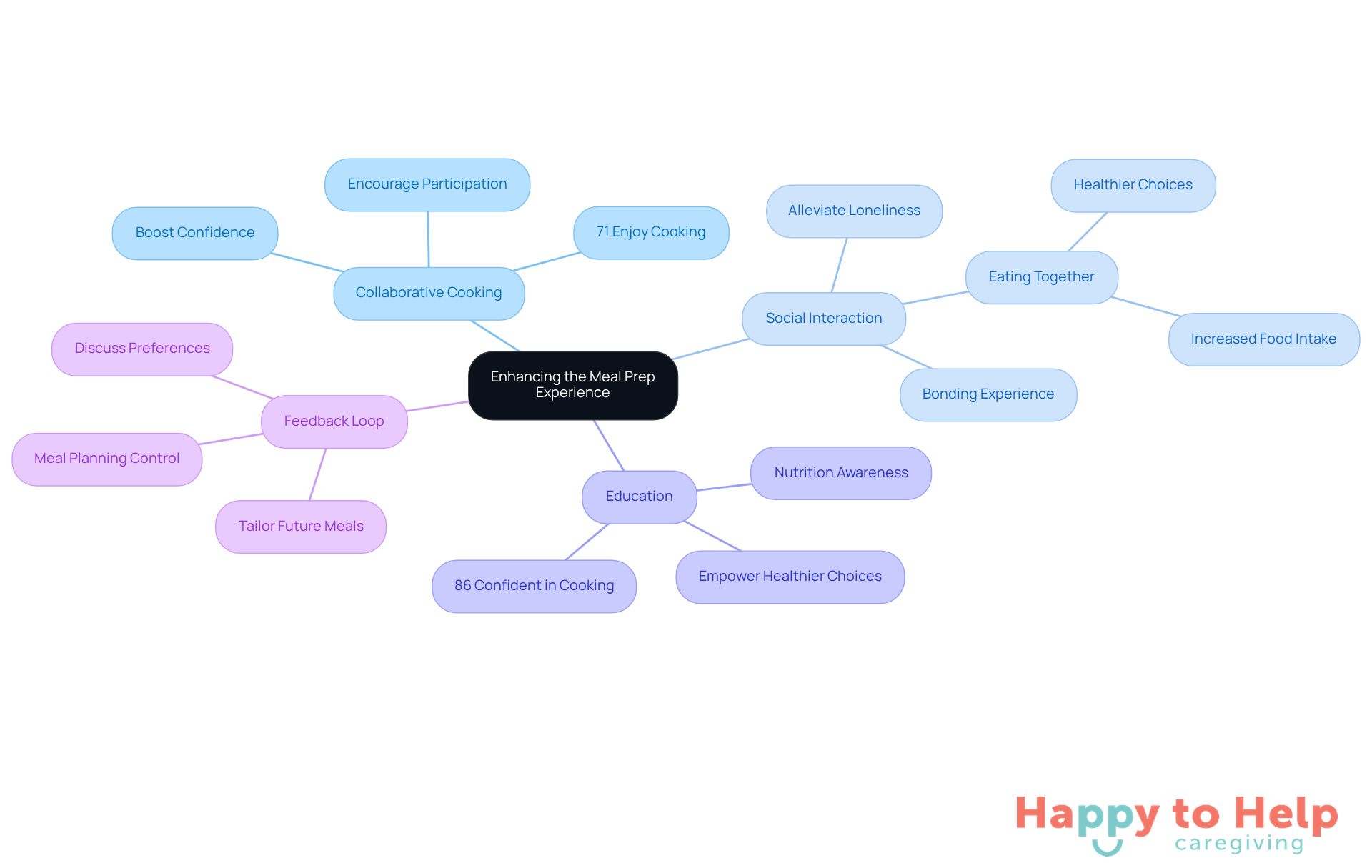
- Collaborative Cooking: Encourage seniors to actively participate in meal preparation tasks, such as washing vegetables, stirring pots, or setting the table. This involvement not only boosts their confidence but also enhances their enjoyment of the culinary process. In fact, 71% of individuals aged 50-80 enjoy cooking, indicating that many older adults are eager to engage in food preparation activities.
- Social Interaction: Utilize food preparation as a valuable opportunity for social interaction. Preparing meals together fosters a bonding experience that can alleviate feelings of loneliness.
- Education: Caregivers can inform seniors about nutrition and culinary methods, empowering them to make healthier choices. A significant 86% of older adults express confidence in cooking with basic ingredients, suggesting a strong desire to learn and engage in the kitchen. Dr. Lakelyn Eichenberger emphasizes the importance of providing healthy food options for older adults, highlighting the caregiver's role in this process.
- Feedback Loop: After dining, engage in discussions about what the senior liked or disliked. This feedback loop is crucial for improving future dining plans, ensuring that dishes are tailored to their tastes. Consistently integrating their feedback can lead to a more enjoyable dining experience, strengthening their sense of control in food preparation. Additionally, meal planning allows seniors to have a say in when and how they eat, further empowering them in their meal choices.
Moving Forward with Master Meal Prep
Mastering meal preparation for seniors is not just about cooking; it’s a vital part of effective caregiving that ensures older adults get the nutrition they need to thrive. The challenge lies in addressing malnutrition and loneliness, which can significantly impact seniors’ quality of life. By focusing on meal prep, caregivers can enhance both the physical health and emotional well-being of those they support.
Caregivers face the problem of assessing dietary needs and planning meals that cater to seniors’ specific requirements. This can be overwhelming, but implementing proper cooking and storage techniques can make a significant difference. Emphasizing nutrient-dense foods, engaging seniors in the cooking process, and fostering social interactions during mealtime are essential strategies. These practices not only combat malnutrition but also help alleviate feelings of isolation, promoting better health outcomes.
To tackle these challenges, caregivers can adopt several practical solutions:
- Prioritize nutrition by incorporating a variety of nutrient-rich foods into meal plans.
- Encourage seniors to participate in meal preparation, which empowers them and fosters a sense of independence.
- Create opportunities for social interaction during meals to enhance the dining experience and strengthen connections.
Ultimately, meal prep for seniors is a powerful tool that caregivers can utilize to improve overall well-being. By focusing on nutrition and encouraging active participation, caregivers can create a more enjoyable and fulfilling dining experience. This approach not only meets immediate dietary needs but also nurtures lasting connections, making it an indispensable aspect of compassionate caregiving.
https://iframe.tely.ai/cta/eyJhcnRpY2xlX2lkIjogIjY5MjEwZjkwMzc5NWM5NDI2NDE4ZjBlZCIsICJjb21wYW55X2lkIjogIjY4ZWU1ZGNhNzMxNzYyNTU3ZjNjOTVjMSIsICJpbmRleCI6IG51bGwsICJ0eXBlIjogImFydGljbGUifQ==Frequently Asked Questions
Why is meal prep important for seniors?
Meal prep is important for seniors as it ensures they receive balanced nutrition tailored to their specific health needs, helping to prevent malnutrition, manage chronic conditions, and enhance overall well-being.
What challenges do seniors face regarding nutrition?
Seniors often face food insecurity, with approximately 5.5 million experiencing this issue. Without proper nutrition, they may struggle with health, leading to increased hospital visits and a decline in quality of life.
How does malnutrition affect seniors?
Malnutrition can severely impact both physical and emotional well-being, leading to increased hunger, health complications, and a decline in quality of life.
What are some benefits of home-delivered meals for seniors?
Home-delivered meals can significantly reduce hunger and malnutrition, foster social connections, and improve mental health, highlighting the importance of meal prep for seniors.
What strategies can caregivers use for effective meal prep?
Caregivers can focus on nutrient-dense foods, save time by preparing meals in advance, reduce stress by having meals ready, and encourage independence by involving seniors in meal planning.
How can caregivers assess dietary needs and preferences for seniors?
Caregivers should identify any medical conditions, understand nutritional requirements based on age and health status, engage in discussions about food preferences, and consult with experts if necessary.
What nutritional requirements should caregivers focus on for seniors?
Caregivers should focus on essential nutrients like calcium, vitamin D, and protein to support seniors' overall health.
Why is it important to consider personal preferences in meal prep for seniors?
Considering personal preferences ensures that meals are not only nutritious but also enjoyable, enhancing the dining experience and overall satisfaction for seniors.
List of Sources
- Understand Meal Prep for Seniors: Importance and Benefits
- New study looks at nostalgia, comfort in food preparation for older adults (https://news.wsu.edu/press-release/2025/02/11/new-study-looks-at-nostalgia-comfort-in-food-preparation-for-older-adults)
- Five Key Benefits of Home-Delivered Meals for Seniors (https://caseworthy.com/articles/five-benefits-of-home-delivered-meals-for-seniors)
- The Benefits of Meal Planning For Older Adults (https://homeinstead.com/home-care/usa/la/carencro/347/news-and-media/the-benefits-of-meal-planning-for-older-adults)
- New study confirms: Home-delivered meals a ‘lifeline’ for older adults (https://mcknightshomecare.com/news/new-study-confirms-home-delivered-meals-a-lifeline-for-older-adults)
- Findings From New Study Reinforce That Home-Delivered Meals Provide Critical Health and Social Benefits to Older Adults and Caregivers (https://mealsonwheelsamerica.org/news/findings-from-new-study-reinforce-that-home-delivered-meals-provide-critical-health-and-social-benefits-to-older-adults-and-caregivers)
- Assess Dietary Needs and Preferences: The First Step
- 5 Key Nutrition Considerations for Senior Living (https://providermagazine.com/Issues/2025/Fall/Pages/5-Key-Nutrition-Considerations-for-Senior-Living.aspx)
- Top Habits and Trends for Healthy Aging: 2025 U.S. News & World Report Healthy Aging Survey (https://health.usnews.com/wellness/aging/articles/healthy-aging-survey)
- Food and nutrition for older adults (https://medicalnewstoday.com/articles/food-for-elderly)
- Top 20 Famous Quotes about Nutrition - Become A Nutritionist (https://becomeanutritionist.org/blog/top-20-famous-quotes-about-nutrition)
- The changing nutritional needs of older adults and how to meet them (https://heart.org/en/news/2024/12/18/the-changing-nutritional-needs-of-older-adults-and-how-to-meet-them)
- Plan Your Meals: Create a Weekly Menu and Shopping List
- How to Make Senior Mealtime Stress-Free in 2025 (https://gogograndparent.com/blog/how-to-make-senior-mealtime-stress-free-in-2025)
- Meal Planning for Seniors for National Nutrition Month - AmeriCare Plus (https://americarepluspc.com/nutrition-diet/meal-planning-for-seniors-for-national-nutrition-month)
- Seniors' Guide to Healthy Meal Planning on a Budget (https://seniorhelpers.com/az/west-valley/resources/blogs/seniors-guide-to-healthy-meal-planning-on-a-budget)
- Nutrition tips to help older adults put together healthy meals (https://deseret.com/lifestyle/2025/04/29/nutrition-tips-for-those-55-and-older)
- New Free Meal Programs for Seniors Launched in 2025 – State-by-State Guide - NewsBreak (https://newsbreak.com/news/4264884654204-new-free-meal-programs-for-seniors-launched-in-2025-state-by-state-guide)
- Cook and Store Meals: Batch Cooking and Proper Storage Techniques
- Batch Cooking Basics: Fuel Once, Eat Well All Week (https://nordoniahills.news/batch-cooking-basics-fuel-once-eat-well-all-week)
- Effective Meal Preparation Tips for Seniors to Simplify Cooking (https://careandsupportcompanions.co.uk/f/effective-meal-preparation-tips-for-seniors-to-simplify-cooking)
- News Archive : News & Events : Aster Aging, Inc. (https://asteraz.org/news/news-archive.html/article/2025/04/23/freezing-and-food-safety-a-smart-guide-for-seniors)
- 6 strategies to keep costs down while maintaining a healthful diet (https://dailynews.com/2025/03/19/6-strategies-to-keep-costs-down-while-maintaining-a-healthful-diet)
- A Modern Senior’s Guide to Meal Prepping for Busy Weeks | Cholla Medical Group (https://chollamedicalgroup.com/a-modern-seniors-guide-to-meal-prepping-for-busy-weeks)
- Involve Caregivers: Enhancing the Meal Prep Experience
- Home Instead® and Joy Bauer Celebrate the Power of Cooking for Longevity (https://honorcare.com/news/home-instead-and-joy-bauer-celebrate-the-power-of-cooking-for-longevity)
- 4 Benefits of Meal Prep for Seniors - Thrive USA Home Care (https://thriveusahomecare.com/4-benefits-of-meal-prep-for-seniors)
- 55+ Cooking Statistics for the Foodie + Home Chef [2025] – Instacart (https://instacart.com/company/ideas/cooking-statistics)
- The Joy of Cooking and its Benefits for Older Adults (https://ihpi.umich.edu/national-poll-healthy-aging/reports-and-resources/joy-cooking-and-its-benefits-older-adults)
- Famous Quotes on Nutrition and Well-Being - Center for the Advancement of Well-Being (https://wellbeing.gmu.edu/famous-quotes-on-nutrition-and-well-being)