

For families in our service areas
For families in our service areas, this guide explains caregiver support and how non-medical in-home caregiving can support care planning in East Idaho, Treasure Valley & Magic Valley, Northern Wasatch, North Central West Virginia, and Northeast Ohio.
Why Master Private Duty Caregiver Agencies: Matters
As the need for personalized home care continues to surge, families face a significant challenge: selecting the right private duty caregiver agency. This decision is crucial, as it directly impacts the quality of non-medical support their loved ones receive.
Navigating the complexities of these agencies can be daunting. Families often struggle to find services that not only provide companionship and personal care but also address the emotional well-being of seniors. This lack of clarity can lead to stress and uncertainty, making it difficult to foster a nurturing environment that promotes independence.
So, how can families ensure they make informed choices? Here are some actionable tips:
- Research: Look for agencies with strong reputations and positive reviews.
- Interview: Meet potential caregivers to assess their compatibility with your loved one.
- Ask Questions: Inquire about the agency's training programs and caregiver qualifications.
By taking these steps, families can feel more confident in their decisions, ensuring that their loved ones receive the personalized care they deserve.
Define Private Duty Caregiver Agencies
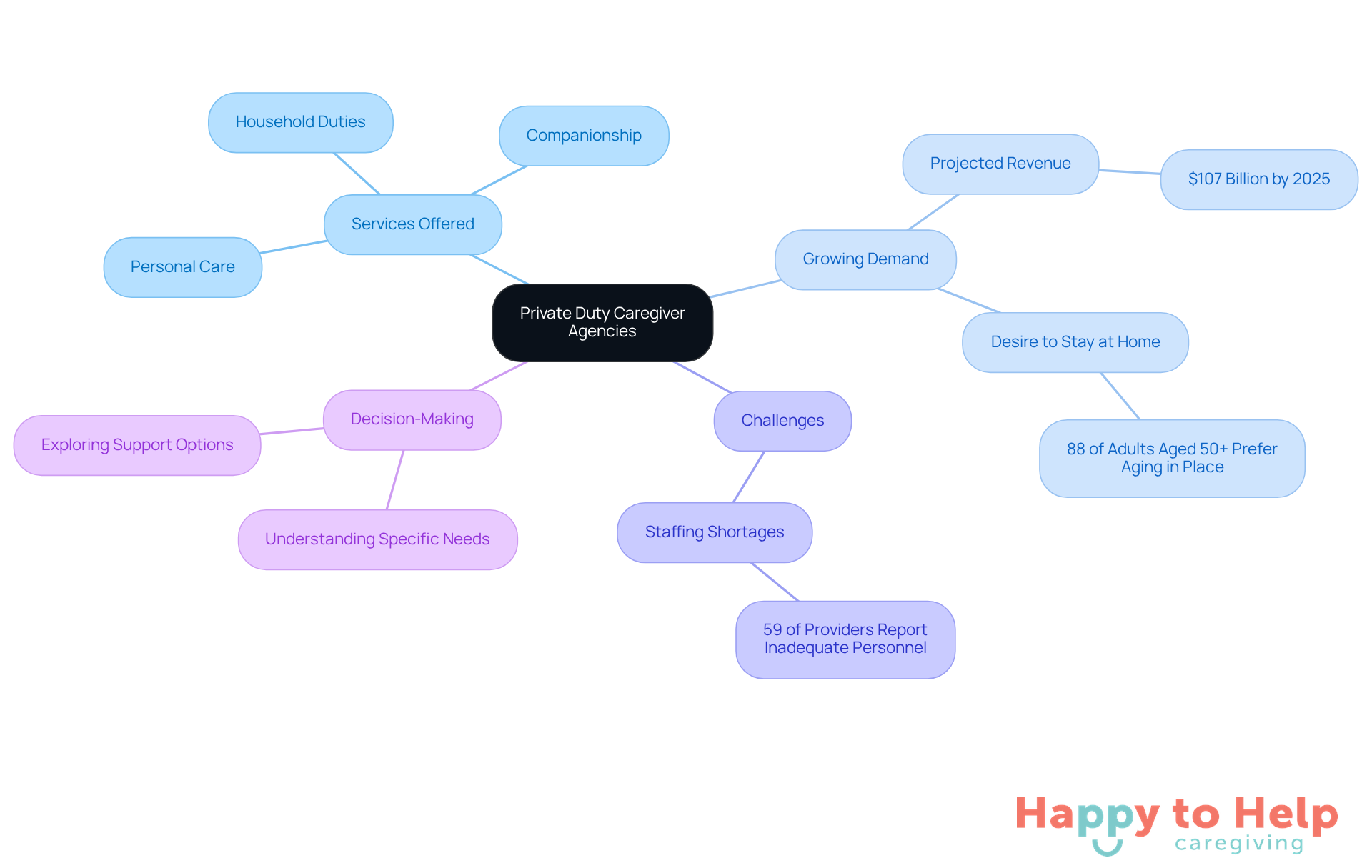
Private duty caregiver agencies play a crucial role in offering non-medical assistance to individuals in their homes. These specialized entities employ skilled caregivers who assist with essential daily living tasks, such as personal care, companionship, and household duties. Unlike home health organizations that may offer medical care, private duty caregiver agencies focus on enhancing the quality of life for seniors and those with specific needs.
The growing demand for these services presents a significant challenge. In 2025, the U.S. home care sector is projected to generate over $107 billion in revenue, reflecting a substantial increase in the need for non-medical support. Furthermore, 88% of adults aged 50 and older express a desire to remain at home for as long as possible, underscoring the importance of fostering a safe and nurturing environment.
However, families must also be aware of the current challenges in the home support landscape. A staggering 59% of home care providers report operating with inadequate personnel, which highlights the urgency of securing reliable assistance. To navigate these complexities, families should prioritize understanding the specific needs of their loved ones and explore various support options available to them.
In summary, as the demand for private duty caregiver agencies rises, it is essential for families to make informed decisions regarding their care options. By recognizing the unique requirements of their loved ones and being mindful of the staffing shortages in the sector, they can ensure that they choose the right type of support to promote independence and comfort at home.
Explore Services Offered by Private Duty Caregiver Agencies
Private duty caregiver agencies address a significant problem: the loneliness and isolation that many seniors and individuals with special needs experience. These feelings can lead to serious mental health issues, impacting overall quality of life. In fact, studies show that companionship care can significantly alleviate these feelings, leading to improved mental health outcomes for seniors.
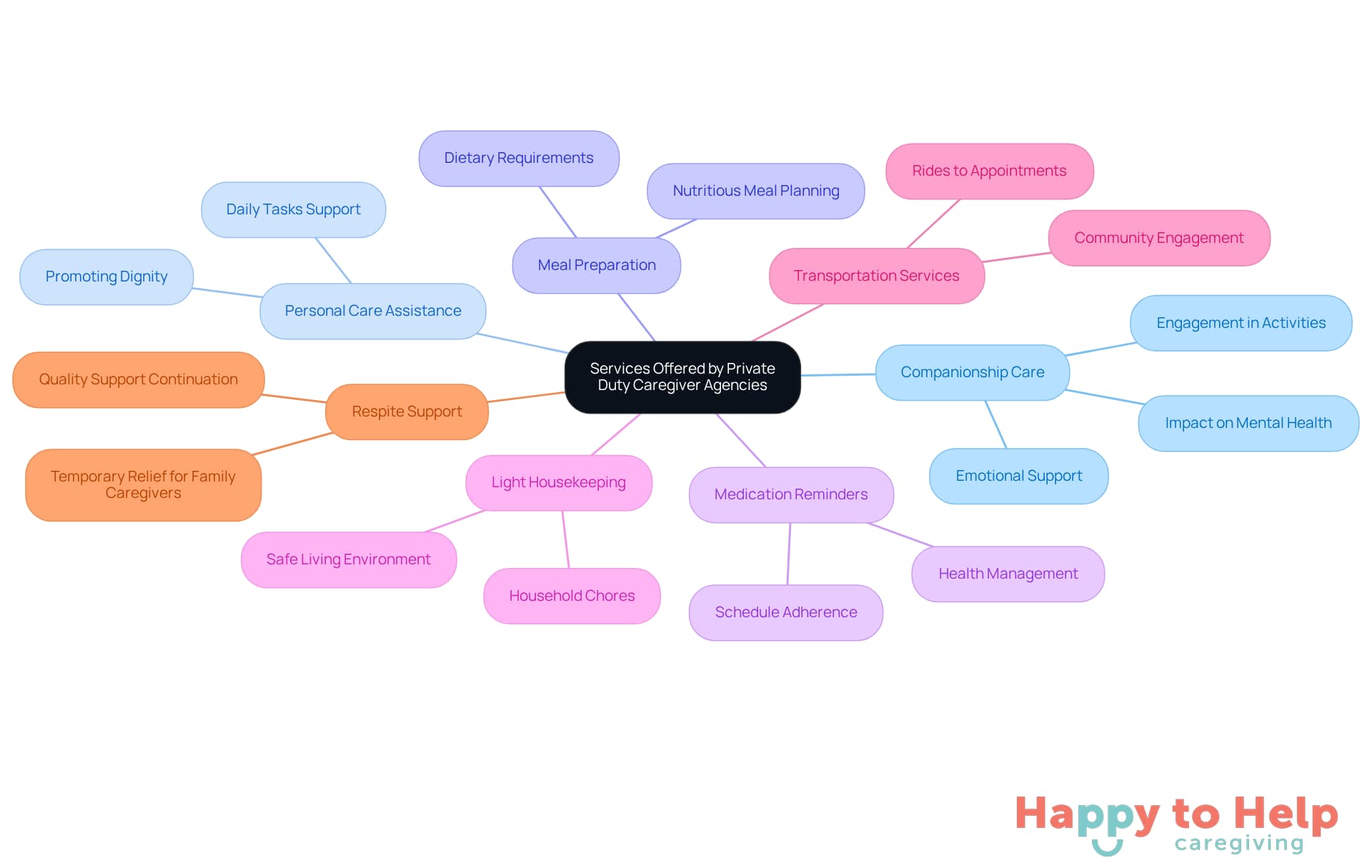
To combat this issue, agencies offer a thorough array of services tailored to meet the distinct needs of their clients, ensuring a nurturing atmosphere. Key services include:
- Companionship Care: This service provides emotional support and engages clients in enjoyable activities, which has been shown to significantly reduce feelings of loneliness. A report indicates that over 70% of caregivers support the proposed Medicare expansion policy, highlighting the growing recognition of the importance of companionship care.
- Personal Care Assistance: Caregivers assist with essential daily tasks such as bathing, dressing, grooming, and other personal hygiene needs, promoting dignity and comfort.
- Meal Preparation: Caregivers plan and prepare nutritious meals tailored to clients' dietary requirements, ensuring they receive the necessary nutrition for their health.
- Medication Reminders: This program helps clients follow their medication schedules, reducing the chances of missed doses and encouraging better health management.
- Light Housekeeping: Caregivers assist with household chores, including laundry and cleaning, helping to maintain a safe and tidy living environment.
- Transportation Services: Offering rides to appointments or social events, assistants help clients stay connected and engaged with their communities.
- Respite Support: This assistance provides temporary relief for family caregivers, allowing them to take essential breaks while ensuring their loved ones continue to receive quality support.
Understanding private duty caregiver agencies is crucial for families as they navigate selecting the right agency that aligns with their loved one's specific needs. The focus on companionship support indicates an increasing acknowledgment of its significance, with caregivers frequently sharing testimonials about the profound effect of social interaction on their clients' well-being. For instance, many caregivers note that companionship not only improves their clients' mood but also leads to better overall health outcomes.
Navigate the Hiring Process for Private Duty Caregivers
Choosing a private duty assistant from private duty caregiver agencies is a crucial decision that requires careful consideration to ensure the best fit for your loved one. The challenge lies in navigating this process effectively. Here’s how to tackle it:
-
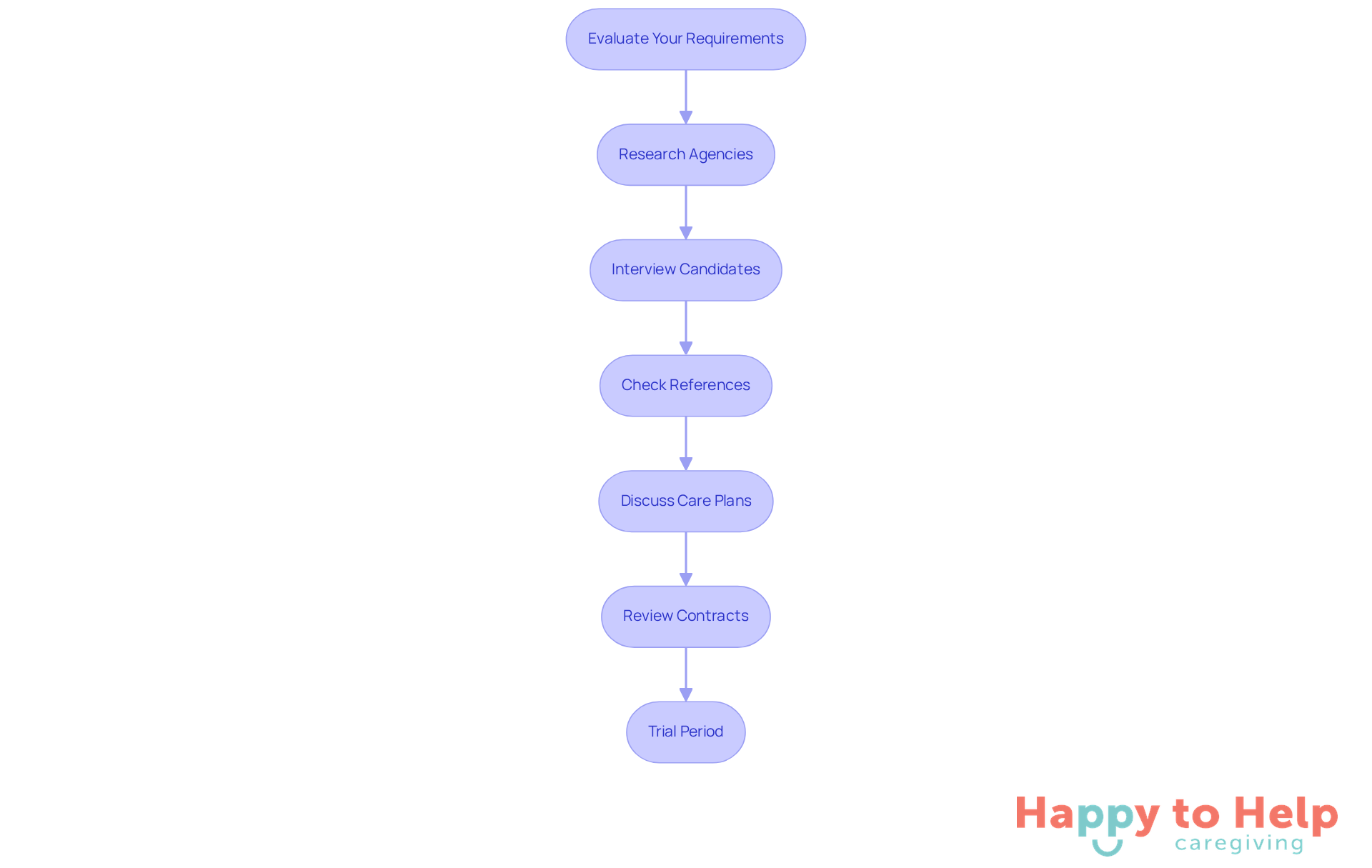
Evaluate Your Requirements: Begin by identifying the specific care needs of your loved one, covering physical, emotional, and social aspects. Understanding these needs will help you communicate clearly with potential assistants.
-
Research private duty caregiver agencies to find reputable support options in your area. Look into reviews and testimonials to assess their reliability and the quality of care they provide. Agencies with a solid track record typically have well-trained and experienced staff.
-
Interview Candidates: Conduct thorough interviews with prospective support providers. Ask about their experience, training, and approach to care. This is your chance to gauge their compatibility with your loved one’s personality and preferences. For example, those experienced with specific conditions like dementia can offer tailored support.
-
Check References: Request and verify references from previous clients or employers. This step is essential for ensuring the provider's credibility and reliability. Families often feel reassured knowing that others have had positive experiences with the provider.
-
Discuss Care Plans: Have a conversation about how the assistant will meet your loved one's specific needs and preferences. This should cover daily routines, activities, and any special requirements necessary for their well-being.
-
Review Contracts: Carefully examine the terms of service provided by the agency. Make sure you understand the payment structure, cancellation policies, and any other important details that could influence your decision.
-
Trial Period: Consider implementing a trial period to evaluate the provider's compatibility with your loved one. This allows both parties to adjust and ensures that the support provider can meet the evolving needs of your family member.
By following these steps, families can feel more confident in their hiring decisions, ensuring that their loved ones receive the compassionate and personalized care they deserve. Testimonials from families highlight the importance of selecting individuals who not only possess the necessary skills but also demonstrate compassion and understanding, making them feel like honorary family members.
Develop a Personalized Care Plan with Your Agency
Developing a personalized care plan with private duty caregiver agencies can be challenging. Caregivers often face difficulties in understanding their loved one's unique needs and preferences, which can lead to inadequate support and frustration.
To address this issue, follow these important steps:
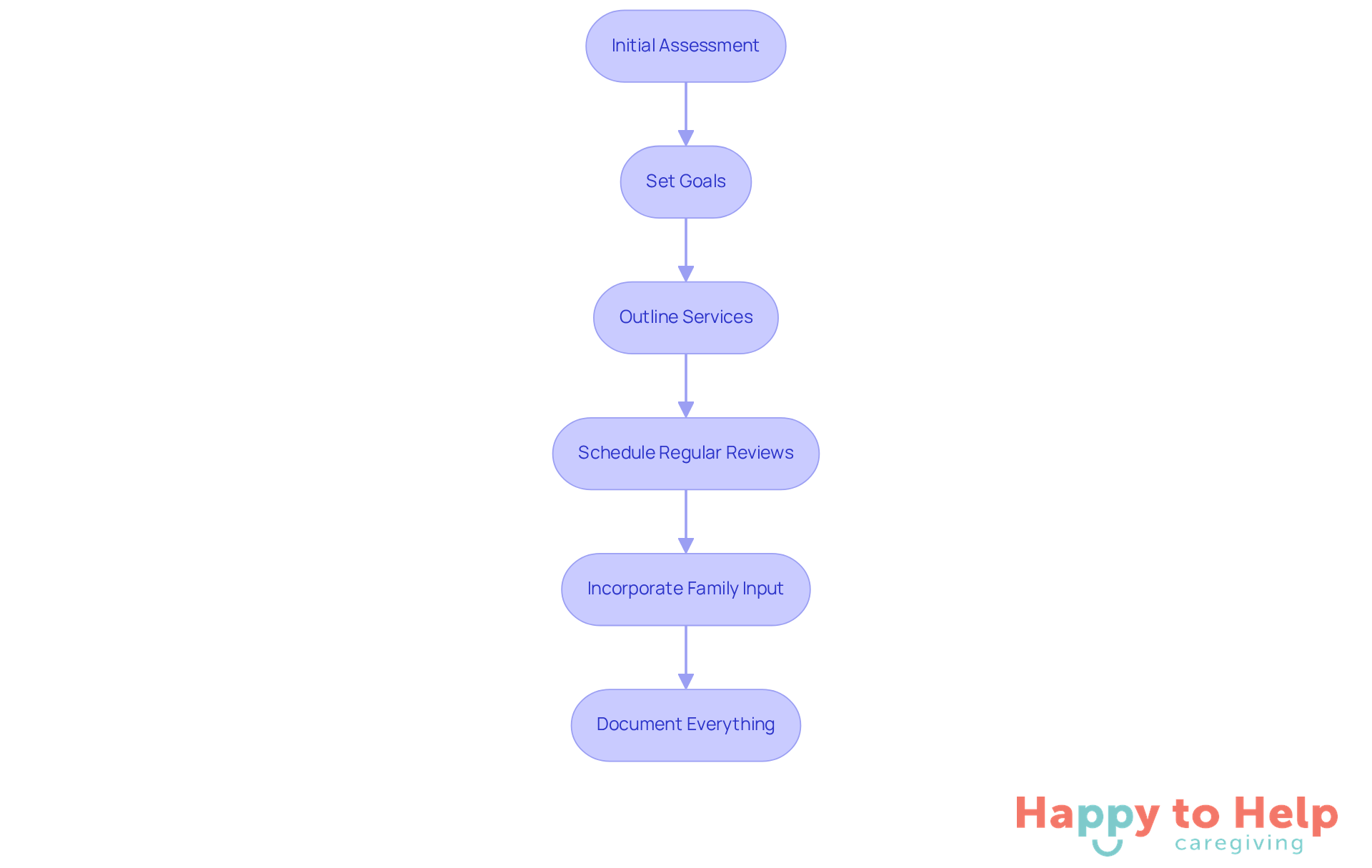
- Initial Assessment: The organization will typically carry out an evaluation of your loved one's health, lifestyle, and preferences to gather necessary information.
- Set Goals: Work together with the organization to define clear, attainable objectives for care, concentrating on improving quality of life and independence.
- Outline Services: Specify which services will be included in the care plan, such as personal care, companionship, or meal preparation.
- Schedule Regular Reviews: Plan for regular check-ins with the agency to assess the effectiveness of the care plan and make adjustments as needed.
- Incorporate Family Input: Ensure that family members are involved in the care planning process to address any concerns and preferences.
- Document Everything: Keep a written record of the care plan, including schedules, tasks, and any changes made over time.
By implementing these steps, caregivers can create a well-developed personalized care plan that not only addresses immediate needs but also adapts to changes in health and circumstances. This ensures ongoing support for your loved one.
Your Path Forward
Choosing the right private duty caregiver agency is a significant challenge for families seeking non-medical support for their loved ones. This decision impacts not only the physical care but also the emotional well-being of seniors and individuals with special needs. Without proper guidance, families may struggle to find the right fit, which can lead to inadequate support and diminished quality of life.
The implications of this challenge are profound. Companionship, personal care, and tailored support are essential for enhancing the quality of life. Families often face difficulties in navigating the range of services offered by various agencies, which can lead to confusion and frustration. Moreover, the hiring process requires careful evaluation and communication to ensure a suitable match between caregivers and clients.
To address these challenges, families can take proactive steps:
- Conducting thorough research on available agencies is crucial.
- Engaging in open dialogues with potential caregivers helps clarify expectations and needs.
- Developing customized care plans ensures that the evolving requirements of loved ones are met effectively.
In a landscape where the demand for non-medical home care is growing, these steps are vital. By prioritizing informed decision-making and fostering a nurturing environment, families can promote independence and well-being for their loved ones. Ultimately, the choice of a private duty caregiver agency shapes the quality of life, making it a decision that deserves careful consideration.
https://iframe.tely.ai/cta/eyJhcnRpY2xlX2lkIjogIjY5MmY5MTlhNWE2YzBkMzU2MDcwMDMwMiIsICJjb21wYW55X2lkIjogIjY4ZWU1ZGNhNzMxNzYyNTU3ZjNjOTVjMSIsICJpbmRleCI6IG51bGwsICJ0eXBlIjogImFydGljbGUifQ==Frequently Asked Questions
What are private duty caregiver agencies?
Private duty caregiver agencies provide non-medical assistance to individuals in their homes, employing skilled caregivers to help with daily living tasks such as personal care, companionship, and household duties.
How do private duty caregiver agencies differ from home health organizations?
Unlike home health organizations that may offer medical care, private duty caregiver agencies focus solely on enhancing the quality of life for seniors and individuals with specific needs through non-medical support.
What is the projected revenue for the U.S. home care sector in 2025?
The U.S. home care sector is projected to generate over $107 billion in revenue in 2025, indicating a significant increase in the demand for non-medical support services.
What percentage of adults aged 50 and older want to remain at home?
88% of adults aged 50 and older express a desire to remain at home for as long as possible, highlighting the importance of creating a safe and nurturing environment.
What challenge do home care providers currently face?
59% of home care providers report operating with inadequate personnel, which emphasizes the urgency of securing reliable assistance in the home support landscape.
How can families navigate the complexities of home care?
Families should prioritize understanding the specific needs of their loved ones and explore various support options available to ensure they choose the right type of assistance.
Why is it important for families to make informed decisions regarding care options?
As the demand for private duty caregiver agencies rises, making informed decisions allows families to recognize their loved ones' unique requirements and be mindful of staffing shortages, promoting independence and comfort at home.
List of Sources
- Define Private Duty Caregiver Agencies
- Comparing Private Duty Nursing and Home Health Care (https://apex-health.com/blog/home-health-care-vs-private-nursing)
- Home Care Industry Overview and Statistics (https://ankota.com/home-care-industry-overview-and-statistics)
- 10 Must-Know U.S. Home Care Industry Stats for 2025 - North American Community Hub (https://nchstats.com/us-home-care-industry-stats)
- 52 Eye-Opening Home Health Statistics: Insights for 2025 (https://boosthomehealth.com/home-health-statistics)
- The Future of Private Home Care: What to Expect in 2025 (https://anodyne-services.com/2024/08/14/the-future-of-private-home-care-what-to-expect-in-2025)
- Explore Services Offered by Private Duty Caregiver Agencies
- FastStats (https://cdc.gov/nchs/fastats/home-health-care.htm)
- Home Care Industry Overview and Statistics (https://ankota.com/home-care-industry-overview-and-statistics)
- 10 Must-Know U.S. Home Care Industry Stats for 2025 - North American Community Hub (https://nchstats.com/us-home-care-industry-stats)
- News Releases (https://hcaoa.org/news-releases.html)
- In-Home Care for Seniors - Caregiving News and Tips (https://aarp.org/caregiving/home-care)
- Navigate the Hiring Process for Private Duty Caregivers
- The Caregiving Landscape: Data & Insights on the Caregiver Experience in the U.S. (https://caregiveraction.org/caregiver-statistics)
- Flexible Private Caregiving for Evolving Daily Needs (https://phoenixhomehc.com/news/how-does-private-duty-caregiving-adapt-to-my-loved-ones-needs)
- The Strategies At-Home Care Providers Use To Attract, Retain The Next Generation Of Workers (https://homehealthcarenews.com/2025/05/the-strategies-at-home-care-providers-use-to-attract-retain-the-next-generation-of-workers)
- Hiring an In-Home Caregiver - Private Home Care (https://aarp.org/caregiving/home-care/hiring-caregiver)
- Caregiver Statistics: Demographics (https://caregiver.org/resource/caregiver-statistics-demographics)
- Develop a Personalized Care Plan with Your Agency
- Empowering aging: How AI and value-based care are making senior living more personalized and affordable (https://mcknights.com/marketplace/marketplace-experts/empowering-aging-how-ai-and-value-based-care-are-making-senior-living-more-personalized-and-affordable)
- ‘We’re Back, Baby’: 6 Senior Living Leaders Predict Memory Care’s Future (https://seniorhousingnews.com/2025/10/17/were-back-baby-6-senior-living-leaders-predict-memory-cares-future)
- 2025: AI enhances personalized care; caregiver experience in the spotlight (https://healthcareitnews.com/news/2025-ai-enhances-personalized-care-caregiver-experience-spotlight)
- How Personalized Health Care Is Changing The Role Of Home Care Providers (https://homehealthcarenews.com/2024/03/how-personalized-health-care-is-changing-the-role-of-home-care-providers)
- You’re not alone in caregiving (https://health.ucdavis.edu/news/headlines/youre-not-alone-in-caregiving/2025/11)