

For families in our service areas
For families in our service areas, this guide explains home care and how non-medical in-home caregiving can support care planning in East Idaho, Treasure Valley & Magic Valley, Northern Wasatch, North Central West Virginia, and Northeast Ohio.
The Importance of Master Short Term Home Care for
Navigating the complexities of post-medical recovery can be overwhelming for families, especially when caring for elderly loved ones. Short-term home care has emerged as a vital resource, offering tailored support that not only facilitates healing in the comfort of familiar surroundings but also empowers seniors to regain their independence while receiving essential care.
Yet, with the growing demand for these services, families often find themselves asking: how can they ensure they access the right support for their loved ones? This article explores the emotional challenges caregivers face, amplifying feelings of stress and burnout, while providing solutions through the compassionate services available.
We’ll delve into the benefits of short-term home care and outline practical steps to master this journey, illuminating a path toward a more manageable and fulfilling recovery for seniors and their families. Together, we can navigate this journey with understanding and support, ensuring that every step taken is one of care and compassion.
Define Short-Term Home Care for the Elderly
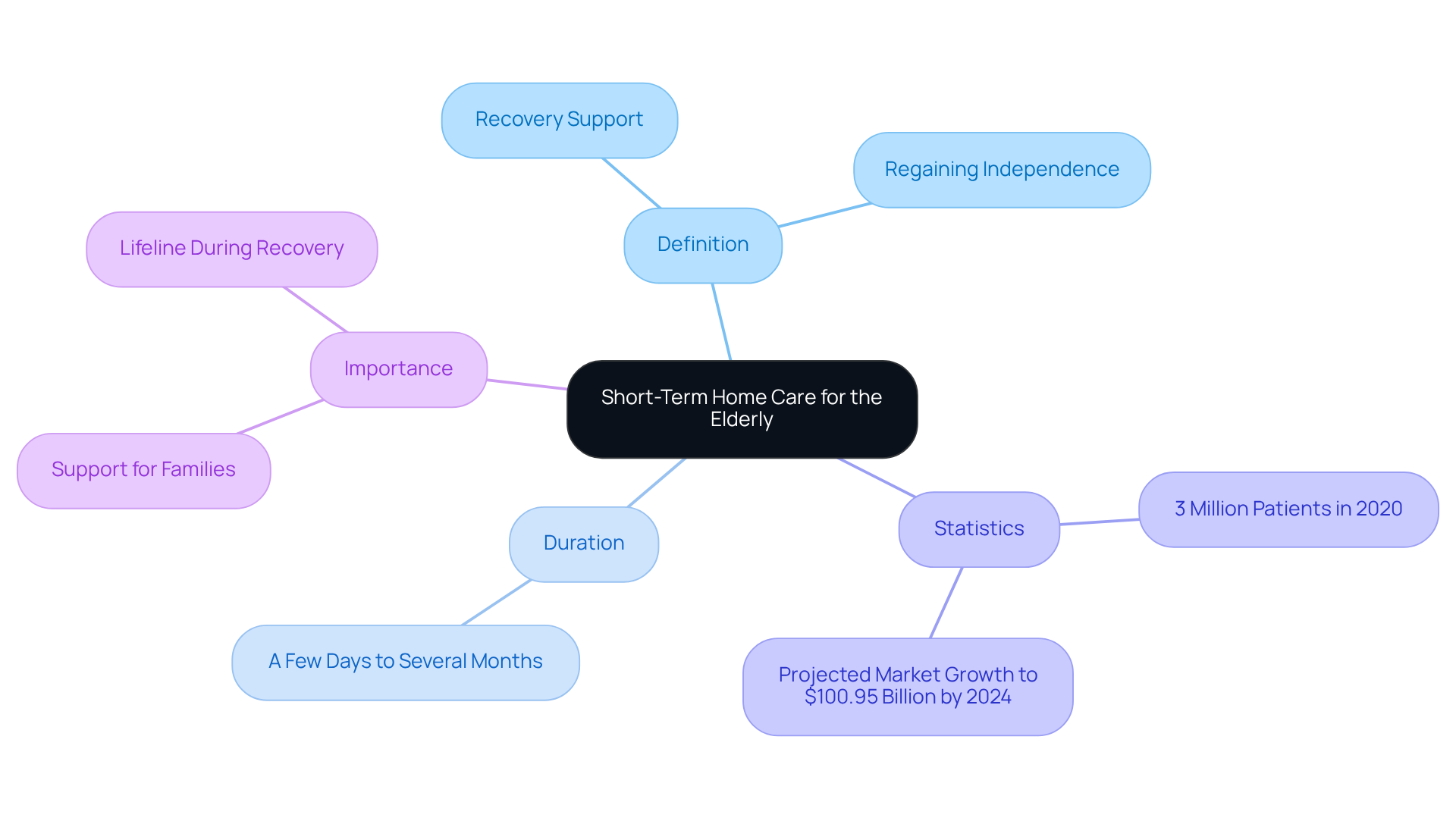
Short-term home care for elderly individuals is designed to provide temporary support to seniors who need help after a medical event, such as surgery, illness, or injury. This kind of assistance is designed to make recovery and rehabilitation easier, allowing individuals to heal in the comfort of their own homes. It’s a way to help them regain their independence while ensuring they receive the essential medical and personal support they need.
Typically, this support lasts anywhere from a few days to several months, depending on how quickly the individual recovers. It’s important for families to understand that this type of assistance is different from long-term care, which is meant for ongoing, chronic conditions that require continuous help.
Recent statistics show that around 3 million patients received in-home health assistance in 2020. This highlights just how much people are relying on these support systems. Looking ahead, the domestic health assistance sector is projected to grow significantly, with estimates reaching $100.95 billion by 2024. This growth reflects the increasing need for such support as our elderly population continues to expand.
As families navigate the challenges of post-medical recovery, the importance of short-term support options becomes even more crucial. It’s a lifeline for those who are trying to balance care with their own lives, offering reassurance and comfort during a time that can feel overwhelming.
Explore Services Offered in Short-Term Home Care
Short term home care for elderly offers a range of customized support options designed to meet the unique needs of elderly individuals. As the demand for short term home care for elderly continues to rise - especially with the aging baby boomer demographic - families are increasingly recognizing the importance of personalized care solutions that prioritize the well-being of their loved ones.
-
Personal Care is essential, providing assistance with daily activities like bathing, dressing, and grooming. This support helps seniors maintain their dignity and comfort, which is so important as they navigate their golden years.
-
Companionship plays a crucial role too. By offering social interaction and emotional support, caregivers can help alleviate feelings of loneliness, which is vital for mental well-being.
-
When it comes to Post-Hospital Recovery Assistance, the transition back to independence can be daunting. Help with medication management, mobility support, and rehabilitation exercises can make this journey smoother, allowing seniors to regain their strength and confidence.
-
Meal Preparation ensures that seniors receive nutritious meals tailored to their dietary needs, promoting overall health and wellness. Meanwhile, Light Housekeeping support helps maintain a tidy and secure living space, easing the burden on both seniors and their caregivers.
-
Transportation is another key service, assisting seniors in attending medical appointments or social activities. This support is vital for maintaining social connections and accessing necessary healthcare.
Moreover, advancements in technology, such as telehealth options and smart home devices, are enhancing the caregiving experience. These innovations simplify the process for family members, allowing them to provide better support for their loved ones. Short term home care for elderly not only aids recovery but also significantly improves the quality of life for seniors, making their transition back to independence more manageable and supportive.
As families face the pressures of seeking in-home assistance, turning to support agencies can alleviate this burden. This ensures that seniors receive the individualized attention they truly deserve, fostering a nurturing environment where they can thrive.
Understand the Benefits of Short-Term Home Care
Short-term home care for elderly individuals offers a wealth of benefits for them and their families, making it important to recognize how these advantages can ease emotional burdens.
-
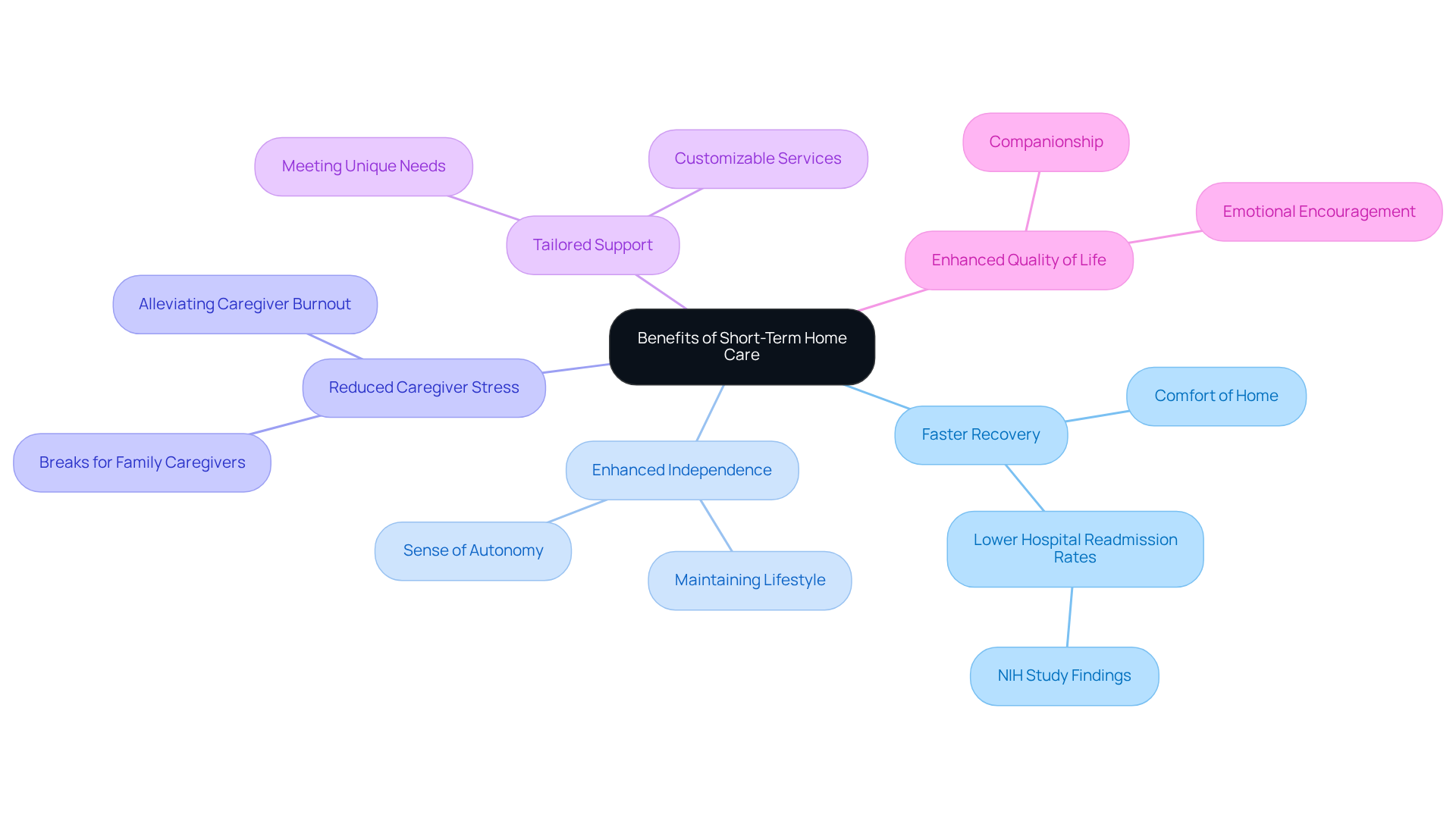
Faster Recovery: Imagine the comfort of recovering in a familiar space. Personalized care at home allows seniors to bounce back more quickly from medical events. Research shows that those receiving in-home assistance have lower hospital readmission rates. A study by the National Institutes of Health highlights that these individuals fare significantly better than those without support, underscoring the effectiveness of this approach.
-
Enhanced Independence: Staying in their own homes while receiving essential support fosters a sense of autonomy and dignity for seniors during their recovery. It’s about allowing them to maintain their lifestyle, which can be incredibly empowering.
-
Reduced Caregiver Stress: Family caregivers often face immense pressure. Short-term assistance provides them with the much-needed breaks, knowing their loved ones are in capable hands. This support is crucial in alleviating caregiver burnout, a common struggle for many families.
-
Tailored Support: Each individual has unique needs, and that’s where customizable services shine. By ensuring that assistance is relevant and effective, we can significantly improve the quality of care provided.
-
Enhanced Quality of Life: Engaging caregivers not only offer physical support but also companionship and emotional encouragement. This connection can greatly uplift the spirits of seniors during their recovery journey.
These benefits highlight the vital role of short-term support as a compassionate resource for families navigating the challenges of elderly care. Ultimately, this leads to better health outcomes and a richer quality of life for everyone involved.
Access Short-Term Home Care Services Effectively
Finding the right short term home care for elderly loved ones can feel overwhelming, but you’re not alone. Here are some essential steps to help you navigate this journey with care and confidence:
-
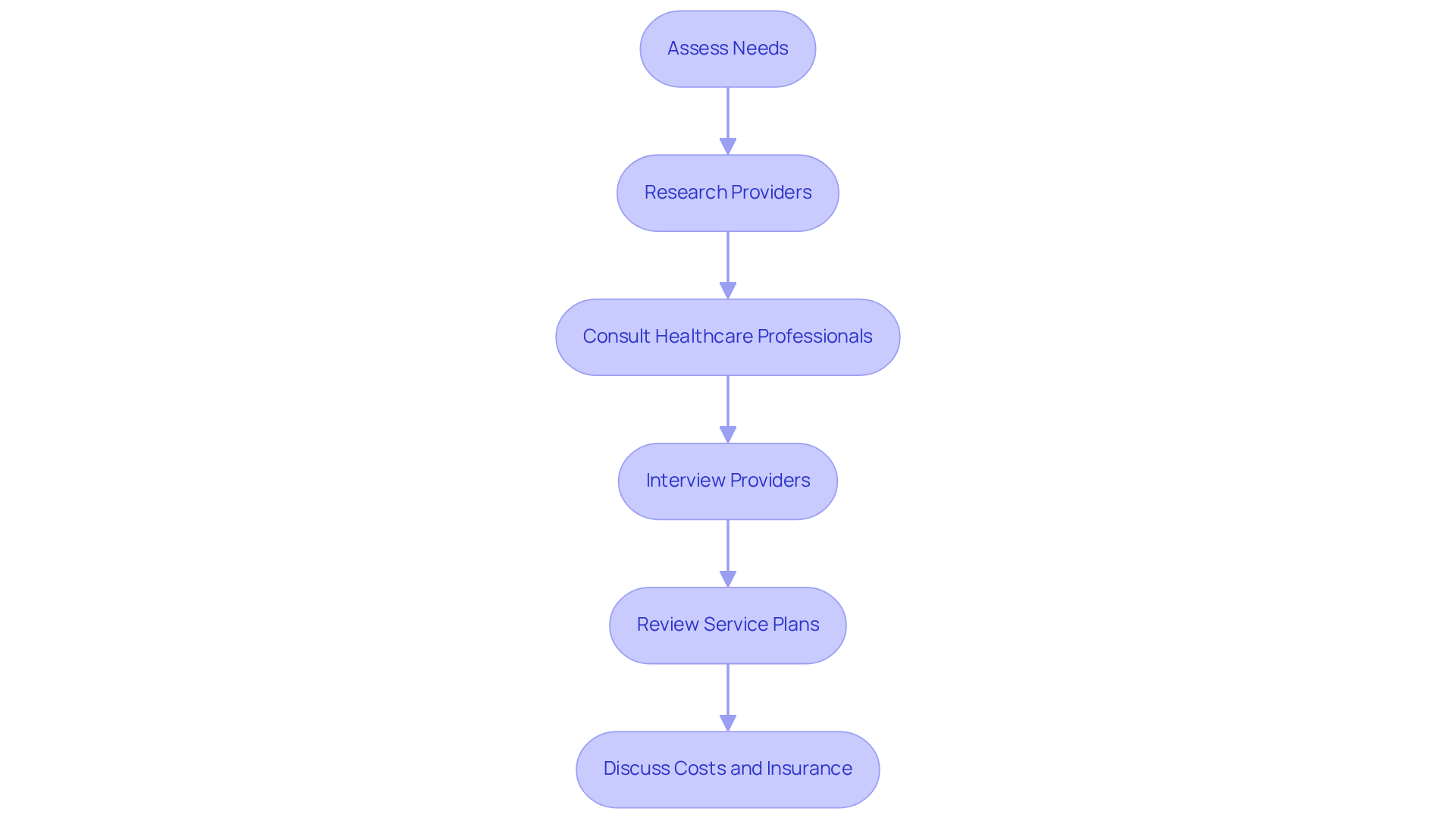
Assess Needs: Start by taking a moment to evaluate the specific support your elderly loved one requires. Consider their medical conditions and daily living needs. With the number of individuals aged 85 and older expected to rise significantly, understanding these needs is vital for their well-being.
-
Research Providers: Look for trustworthy agencies that specialize in temporary assistance. Take your time to search for evaluations, qualifications, and a variety of services they offer. As the demand for domestic assistance grows, finding a reliable provider is more important than ever.
-
Consult Healthcare Professionals: Reach out to doctors or discharge planners who can recommend suitable home assistance options tailored to your loved one’s health status. Their insights can be invaluable in guiding you toward informed decisions.
-
Interview Providers: Meet with potential providers to discuss their experience and support philosophy. It’s essential to ensure they align with your loved one’s needs. This personal connection can significantly impact the quality of care they receive.
-
Review Service Plans: Make sure the agency provides a detailed service plan that outlines the services to be delivered and the expected outcomes. A well-structured plan can help you feel more secure in your choice, knowing your loved one will receive the support they need.
-
Discuss Costs and Insurance: Take the time to understand the pricing structure and explore whether insurance or Medicare can cover any expenses related to short-term residential support. With many families increasingly utilizing long-term support insurance, clarifying accepted policies and coverage options is essential.
By following these steps, you can confidently find the right short term home care for elderly that caters to your loved one’s unique needs. Remember, you’re taking a significant step toward ensuring their comfort and well-being.
Key Takeaways for Caregivers
Short-term home care for the elderly is more than just a service; it’s a vital support system that allows seniors to recover from medical events in the comfort of their own homes. This type of care not only aids in rehabilitation but also nurtures independence and dignity during a vulnerable time. Recognizing the significance of this service can empower families to make informed decisions that positively influence their loved ones' recovery journeys.
The article explores various aspects of short-term home care, shining a light on essential services like:
- Personal care
- Companionship
- Post-hospital recovery assistance
- Meal preparation
- Light housekeeping
- Transportation
Each of these services plays a crucial role in enhancing the quality of life for seniors, ensuring they receive the personalized support necessary for a smooth transition back to independence. Moreover, the benefits highlighted-such as faster recovery, enhanced independence, and reduced caregiver stress-underscore the importance of these services in promoting both physical and emotional well-being.
As families navigate the complexities of finding appropriate short-term home care, it’s important to:
- Assess needs
- Research providers
- Consult healthcare professionals
- Review service plans
By taking these proactive steps, families can secure the right support for their elderly loved ones, ultimately leading to better health outcomes and a more fulfilling quality of life. Embracing short-term home care not only addresses immediate needs but also reinforces the value of compassion and connection in the caregiving process.
https://iframe.tely.ai/cta/eyJhcnRpY2xlX2lkIjogIjY5MWZkYzVhNzJkZTk4NjA5OWQwYjBhOCIsICJjb21wYW55X2lkIjogIjY4ZWU1ZGNhNzMxNzYyNTU3ZjNjOTVjMSIsICJpbmRleCI6IG51bGwsICJ0eXBlIjogImFydGljbGUifQ==Frequently Asked Questions
What is short-term home care for the elderly?
Short-term home care for the elderly provides temporary support to seniors after a medical event, such as surgery, illness, or injury, to aid in their recovery and rehabilitation at home.
How long does short-term home care typically last?
Short-term home care usually lasts from a few days to several months, depending on the individual's recovery speed.
How does short-term home care differ from long-term care?
Short-term home care is designed for temporary assistance following medical events, while long-term care is intended for ongoing, chronic conditions that require continuous support.
What are the current statistics on in-home health assistance for the elderly?
In 2020, around 3 million patients received in-home health assistance, indicating a significant reliance on these support systems.
What is the projected growth for the domestic health assistance sector?
The domestic health assistance sector is projected to grow significantly, with estimates reaching $100.95 billion by 2024.
Why is short-term home care important for families?
Short-term home care is crucial for families navigating post-medical recovery challenges, as it provides essential support, reassurance, and comfort during a potentially overwhelming time.