Navigate Assistance Paying Medical Bills: A Step-by-Step Guide

For families in our service areas
For families in our service areas, this guide explains caregiving and how non-medical in-home caregiving can support care planning in East Idaho, Treasure Valley & Magic Valley, Northern Wasatch, North Central West Virginia, and Northeast Ohio.
Understanding Navigate Assistance Paying Medical
Understanding medical bills can feel like navigating a complex maze, especially when financial strain looms large. Nearly 80% of healthcare debt reports contain inaccuracies, making it crucial for individuals to manage their medical expenses effectively. This guide provides a step-by-step approach to deciphering those daunting invoices and exploring various assistance options that can alleviate the burden.
How can one effectively advocate for their financial well-being amidst the challenges of healthcare costs?
Understand Your Medical Bills
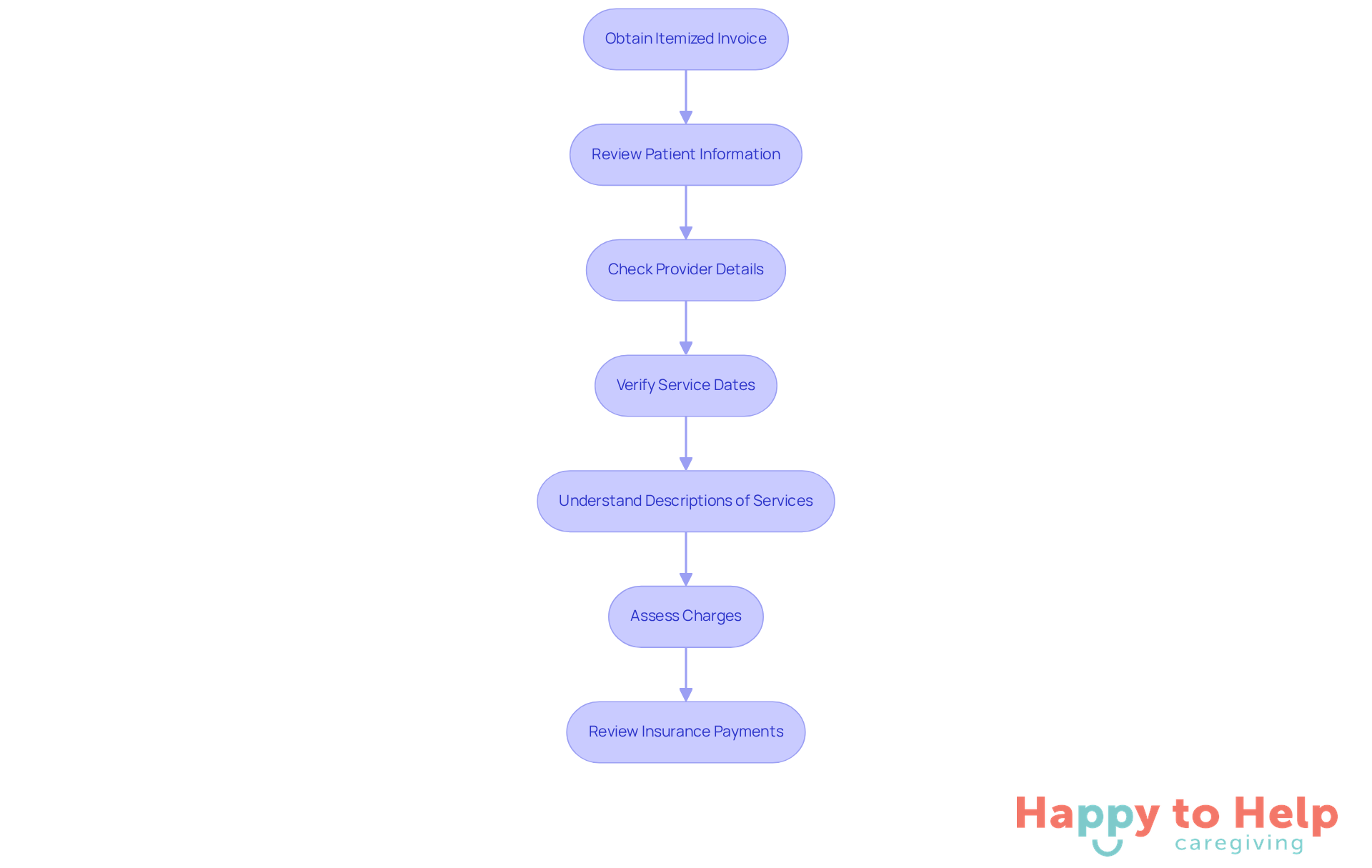
To effectively manage your healthcare charges, start by obtaining a detailed itemized invoice from your provider. This document should include:
- Patient Information: Your name, address, and account number.
- Provider Details: The name and contact information of the healthcare provider.
- Service Dates: When each service was provided.
- Descriptions of Services: Clear descriptions of each service or procedure performed.
- Charges: The total charges for each service, including any adjustments made by your insurance.
- Insurance Payments: The amount covered by your insurance and any remaining balance you owe.
Familiarize yourself with common billing terms, such as 'Explanation of Benefits (EOB)', which outlines what your insurance covers versus what you owe. Understanding these elements will help you identify any errors or unexpected charges, setting the stage for further action.
Research shows that nearly 80% of healthcare debt reports include inaccuracies, leading to unnecessary financial pressure. In the U.S., Americans collectively owe at least $220 billion in healthcare debt, underscoring the importance of being proactive in managing these expenses. With recent changes in debt protections related to healthcare, families face growing challenges in securing assistance paying medical bills. By staying informed and vigilant, you can better advocate for your economic well-being.
Explore Available Assistance Options
Understanding your medical invoices is just the beginning; the next crucial step is to explore various support options, such as assistance paying medical bills, that can alleviate financial strain. Here are some key avenues to consider:
-
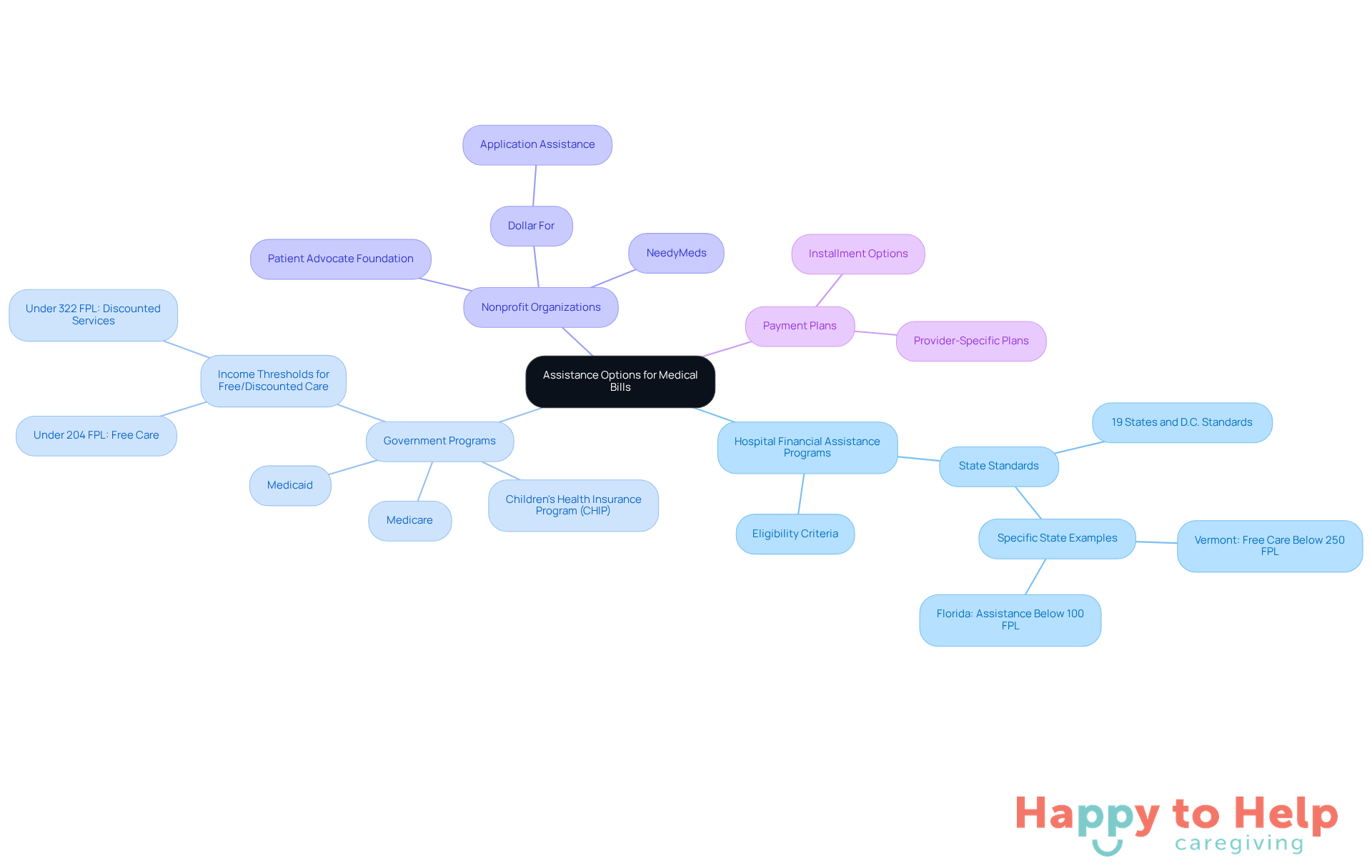
Hospital Financial Assistance Programs: Many hospitals offer financial assistance or charity care programs for low-income patients. In fact, around 19 states and the District of Columbia have set standards for these programs, helping to bridge gaps in federal law. This ensures that numerous individuals can access necessary care without incurring overwhelming debt. It’s wise to check your hospital’s website or reach out to their billing department for specific details on eligibility and application processes.
-
Government Programs: Programs such as Medicaid, Medicare, and the Children's Health Insurance Program (CHIP) provide essential coverage for eligible individuals. Starting in 2025, households earning under 204% of the Federal Poverty Level will qualify for free care, while those earning under 322% may receive discounted services. Keep in mind that these trends can vary by state, with different limits for financial support. For comprehensive information on eligibility and benefits, visit official resources like USAGov.
-
Nonprofit Organizations: Organizations like the Patient Advocate Foundation and NeedyMeds are crucial in offering resources and support for healthcare expenses. They can assist you in navigating the application process for various programs, including those providing assistance paying medical bills, ensuring you receive the help you need.
-
Payment Plans: Many healthcare providers offer payment plans that allow patients to settle their bills in manageable installments. This option can significantly ease the financial burden, making it simpler to handle medical expenses over time.
By thoroughly researching these options, you can greatly reduce your financial burden and secure the support necessary for your healthcare needs.
Apply for Financial Assistance
Applying for assistance paying medical bills can be a daunting task, especially when facing financial strain due to medical expenses. Without the right support, caregivers may feel overwhelmed and uncertain about their options. However, by following a clear process, you can navigate this challenge effectively.
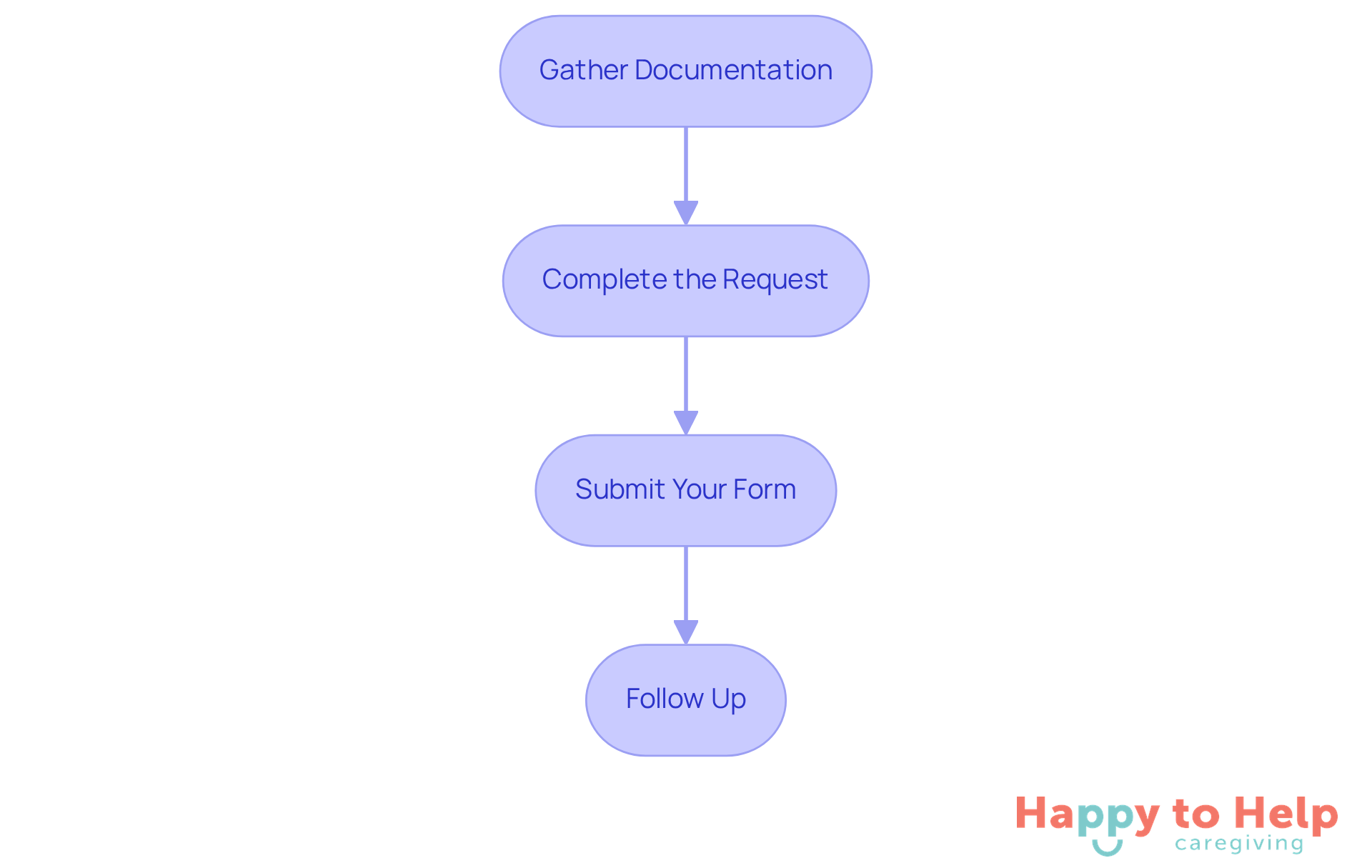
Step 1: Gather Documentation
Start by collecting essential documents such as proof of income, recent tax returns, and relevant healthcare bills. These documents are crucial for supporting your request. For instance, you may need to provide your last two pay stubs, a copy of your tax return, and any outstanding medical bills.
Step 2: Complete the Request
Next, access the financial assistance section of your hospital's website or contact their financial counselor to obtain the request form. Make sure to fill it out thoroughly, including all required information. The average duration for processing these requests can vary, typically taking between two to four weeks.
Step 3: Submit Your Form
Once your form is complete, submit it along with the necessary documentation. Depending on the hospital's policy, you can usually do this online, by mail, or in person.
Step 4: Follow Up
After submitting your application, reach out to the hospital's funding office to confirm they received it and inquire about the expected timeline for a decision. Keeping a record of all communications can be beneficial. If you encounter language barriers, consider contacting the No Surprises Help Desk, which offers support in over 350 languages.
By being proactive and organized, you can significantly improve your chances of securing the financial support you need.
Follow Up and Understand Next Steps
Navigating financial assistance can be challenging for caregivers, especially after submitting an application. It's crucial to follow up and understand the next steps to secure the support you need.
-
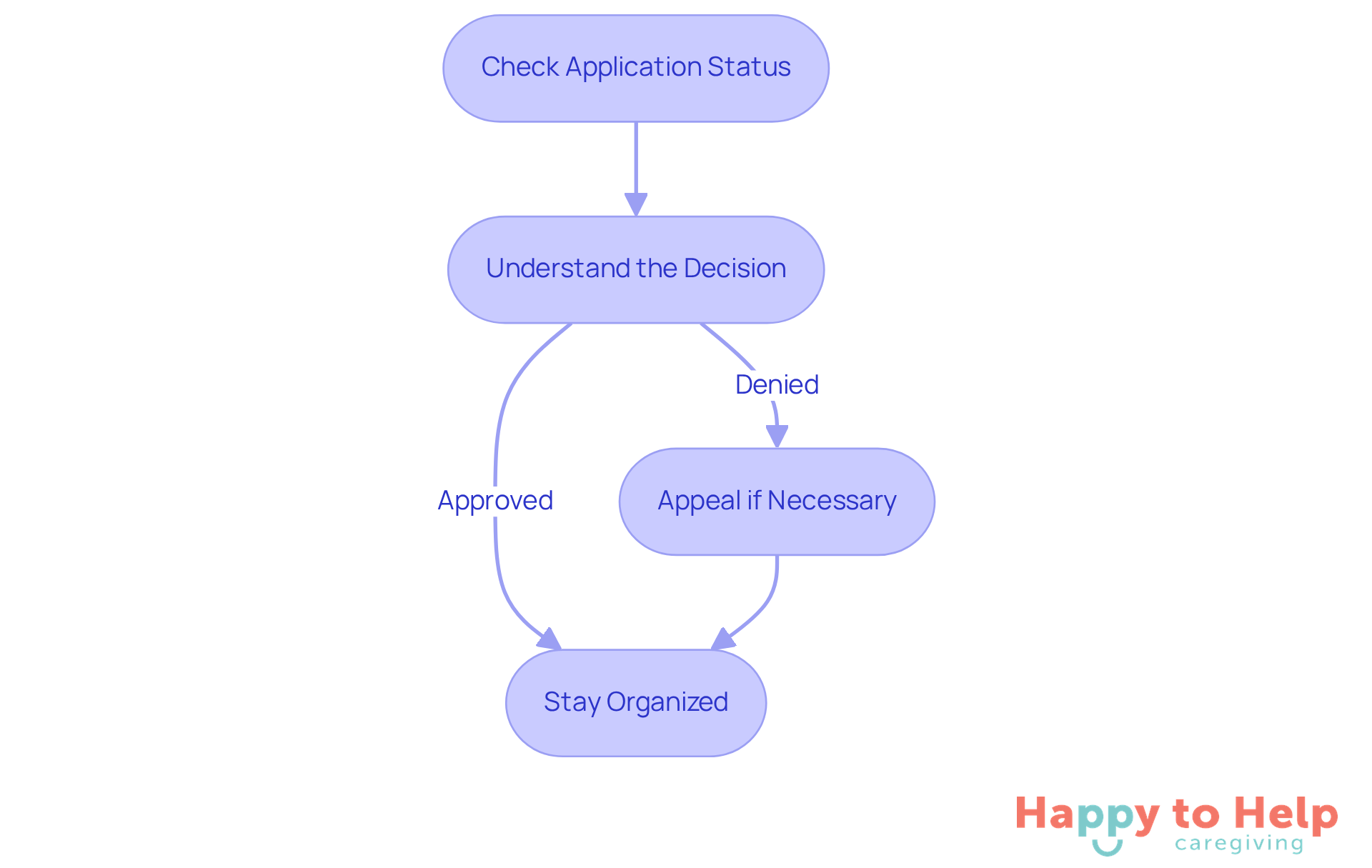
Check Application Status: Reach out to the financial assistance office to inquire about your application status. Being polite yet persistent is key, as these offices often handle numerous requests.
-
Understand the Decision: Once you receive a decision, review it thoroughly. If approved, familiarize yourself with the terms of the assistance. If denied, seek clarification on the reasons and identify any documentation needed for a potential appeal.
-
Appeal if Necessary: If you believe your request was unfairly rejected, inquire about the appeals procedure. Gather any additional documentation that may strengthen your case and submit it according to the provided instructions. Statistics indicate that appeal rates for rejected submissions can vary, with some sources noting that around 25% of appeals are successful. Being proactive can significantly improve your chances of success.
-
Stay Organized: Keep all correspondence and documentation related to your application in one place. This organization will help you track your progress and provide necessary information for any further actions.
By staying engaged and informed throughout this process, you can navigate the financial assistance landscape more effectively, ensuring that you secure the support needed for medical bills and other expenses.
Key Takeaways for Caregivers
Understanding and managing medical bills can be a daunting task. This challenge is crucial for safeguarding financial well-being, as navigating healthcare charges often leads to confusion and stress. Without proper knowledge, individuals may struggle to keep up with their medical expenses, which can result in significant financial strain.
To tackle this issue, it’s essential to be informed about your medical invoices and explore available assistance options. Key strategies include:
- Obtaining detailed itemized bills
- Familiarizing yourself with common billing terms
- Researching various assistance programs - such as hospital financial aid, government initiatives, and nonprofit organizations - can also provide valuable support.
The guide outlines a clear process for applying for financial assistance. Start by gathering necessary documentation and follow up on your applications. Each step is vital in ensuring that you secure the support needed to alleviate the burden of medical expenses.
Ultimately, being proactive and organized can significantly impact your ability to manage healthcare costs. Staying informed about available resources and advocating for yourself or loved ones in the face of medical debt is crucial. By taking these steps, you can navigate your financial obligations more effectively and contribute to a larger movement toward affordable healthcare for all.
https://iframe.tely.ai/cta/eyJhcnRpY2xlX2lkIjogIjY5MjNiOWIyMGIyOGE3ZDViMzI0YThhNyIsICJjb21wYW55X2lkIjogIjY4ZWU1ZGNhNzMxNzYyNTU3ZjNjOTVjMSIsICJpbmRleCI6IG51bGwsICJ0eXBlIjogImFydGljbGUifQ==Frequently Asked Questions
What should I obtain to manage my healthcare charges effectively?
You should obtain a detailed itemized invoice from your healthcare provider.
What information is included in the itemized invoice?
The itemized invoice should include your patient information, provider details, service dates, descriptions of services, charges for each service, and insurance payments.
What is an 'Explanation of Benefits (EOB)'?
An Explanation of Benefits (EOB) is a document that outlines what your insurance covers and what you owe.
Why is it important to understand my medical bills?
Understanding your medical bills helps you identify any errors or unexpected charges, which is essential for managing your healthcare expenses.
How prevalent are inaccuracies in healthcare billing?
Research shows that nearly 80% of healthcare debt reports include inaccuracies.
What is the total amount of healthcare debt owed by Americans?
Americans collectively owe at least $220 billion in healthcare debt.
What challenges do families face regarding medical bills?
Families face growing challenges in securing assistance to pay medical bills due to recent changes in debt protections related to healthcare.
How can being informed help me with my medical bills?
Staying informed allows you to better advocate for your economic well-being and manage your healthcare expenses proactively.
List of Sources
- Understand Your Medical Bills
- The Burden of Medical Debt in the United States | KFF (https://kff.org/health-costs/the-burden-of-medical-debt-in-the-united-states)
- Medical debt and collections in the United States - PMC (https://pmc.ncbi.nlm.nih.gov/articles/PMC12394938)
- Federal Court Reverses Federal Medical Debt Protections - Medicare Rights Center (https://medicarerights.org/medicare-watch/2025/07/31/federal-court-reverses-federal-medical-debt-protections)
- Millions Could See Medical Debt Added to Credit Reports Under Trump Plan (https://newsweek.com/millions-could-see-medical-debt-added-to-credit-reports-10952250)
- Explore Available Assistance Options
- House budget committee advances $234M bill aiming to provide relief to hospitals (https://wbjournal.com/article/house-budget-committee-advances-234m-bill-aiming-to-provide-relief-to-hospitals)
- Medical Bill Help from Southcoast Hospitals Group - St. Luke's Hospital – Dollar For (https://dollarfor.org/medical-debt-help-new-bedford-southcoast-hospitals-group---st.-lukes-hospital)
- State Options for Making Hospital Financial Assistance Programs More Accessible (https://commonwealthfund.org/blog/2024/state-options-making-hospital-financial-assistance-programs-more-accessible)
- Tax-exempt Hospitals Provided $149 Billion in Total Benefits to Their Communities | AHA (https://aha.org/guidesreports/2025-09-10-tax-exempt-hospitals-provided-149-billion-total-benefits-their-communities)
- Hospital Charity Care: How It Works and Why It Matters | KFF (https://kff.org/health-costs/hospital-charity-care-how-it-works-and-why-it-matters)
- Apply for Financial Assistance
- New FAFSA data shows increased access to financial aid for homeless and foster youth in 2023–24 (https://schoolhouseconnection.org/article/new-fafsa-data-shows-increased-access-to-financial-aid-for-homeless-and-foster-youth-in-202324)
- Apply for medical bill financial assistance | CMS (https://cms.gov/medical-bill-rights/help/guides/financial-assistance)
- 2025 FAFSA Statistics | Bankrate (https://bankrate.com/loans/student-loans/fafsa-statistics)
- Financial Aid Statistics [2025]: Average Aid per Student (https://educationdata.org/financial-aid-statistics)
- Famous Quotes on Financial Stability and Well-Being - Center for the Advancement of Well-Being (https://wellbeing.gmu.edu/famous-quotes-on-financial-stability-and-well-being)
- Follow Up and Understand Next Steps
- UPDATE: State legislation extends financial aid deadline when FAFSA is delayed (https://edsource.org/updates/fafsa-delays-will-soon-trigger-financial-aid-extensions)
- California Increases Financial Aid Application Rate (https://ppic.org/blog/california-increases-financial-aid-application-rate)
- Applying for college financial aid? Here’s what’s different about this year’s FAFSA (https://pbs.org/newshour/education/applying-for-college-financial-aid-heres-whats-different-about-this-years-fafsa)
- Key FAFSA Changes for 2025 You Need to Know (https://discoveryfcu.org/news/key-fafsa-changes-for-2025-you-need-to-know)
- 72 Scholarship Statistics: 2025 Data, Facts & Analysis | Research.com (https://research.com/research/scholarship-statistics)