
Quick Guide to Navigate Dementia Care in Boerne:
Navigating dementia care in Boerne can be an emotional journey for families. It’s essential to understand the various types and symptoms of dementia, as well as the challenges caregivers face. Recognizing these hurdles is the first step toward finding the right support.
Caregivers often experience stress and burnout, feeling overwhelmed by their responsibilities. It’s important to acknowledge these feelings and know that you are not alone. There are resources available to help you through this challenging time.
Exploring different care options can provide relief and peace of mind. Developing personalized care plans tailored to the needs of your loved one can make a significant difference. This approach not only supports individuals with dementia but also nurtures the well-being of caregivers.
Remember, recognizing the condition and its impact is crucial. The support systems in place can help you navigate this journey with compassion and understanding. You are doing your best, and there are people ready to assist you every step of the way.
Why Navigate Dementia Care in Boerne: Matters
Navigating the complexities of dementia care can feel overwhelming for families. The myriad of cognitive impairments disrupts daily life, creating a landscape of uncertainty and concern. Understanding the different types of dementia and their symptoms is crucial. This knowledge empowers caregivers to provide the necessary support while also addressing their own emotional and physical challenges.
How can families in Boerne effectively balance the needs of their loved ones with their own well-being? It’s a delicate dance, one that requires compassion and understanding. Exploring the best care options available can alleviate some of the burdens, offering hope and reassurance in what can often feel like an isolating journey.
Clarify Dementia: Types and Symptoms
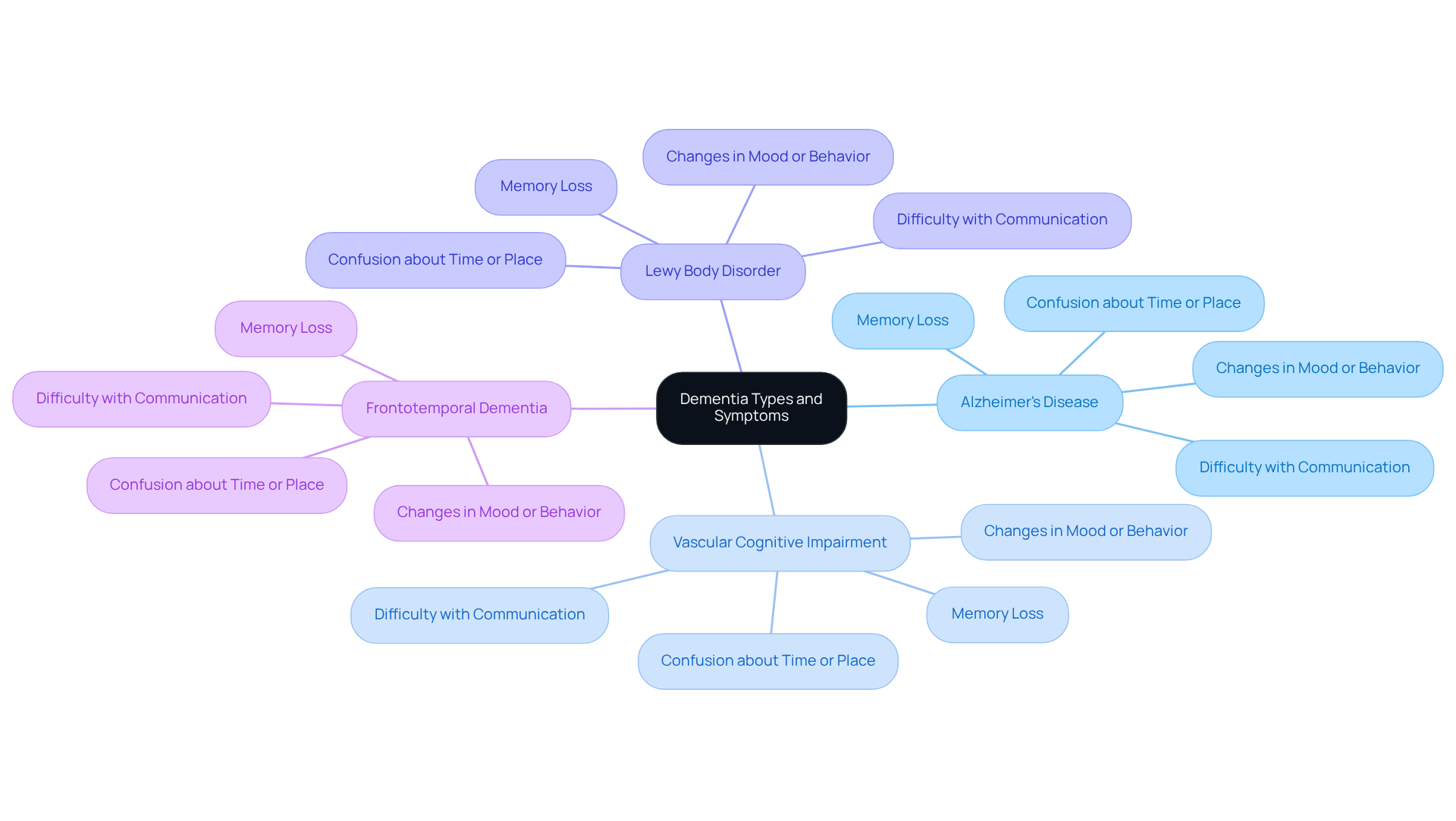
This condition serves as an umbrella term for various cognitive impairments that can significantly disrupt daily life. It’s essential to understand the most common types, as they each present unique challenges:
- Alzheimer's Disease: This type is often marked by memory loss, confusion, and changes in behavior, which can be distressing for both the individual and their loved ones.
- Vascular Cognitive Impairment: Frequently resulting from strokes, this condition can hinder reasoning and planning abilities, leaving caregivers feeling overwhelmed.
- Lewy Body Disorder: Individuals may experience visual hallucinations and fluctuations in attention, adding to the emotional strain on families.
- Frontotemporal Dementia: This type tends to impact personality and behavior more than memory, which can be particularly challenging for caregivers.
Common symptoms across these conditions include:
- Memory loss
- Difficulty with communication
- Changes in mood or behavior
- Confusion about time or place
Recognizing these symptoms early is crucial. It can lead to timely interventions and better management of the condition, ultimately providing relief and support for caregivers. Remember, you are not alone in this journey; there are resources available to help navigate these challenges with compassion and understanding.
Address Caregiver Challenges: Emotional and Physical Demands
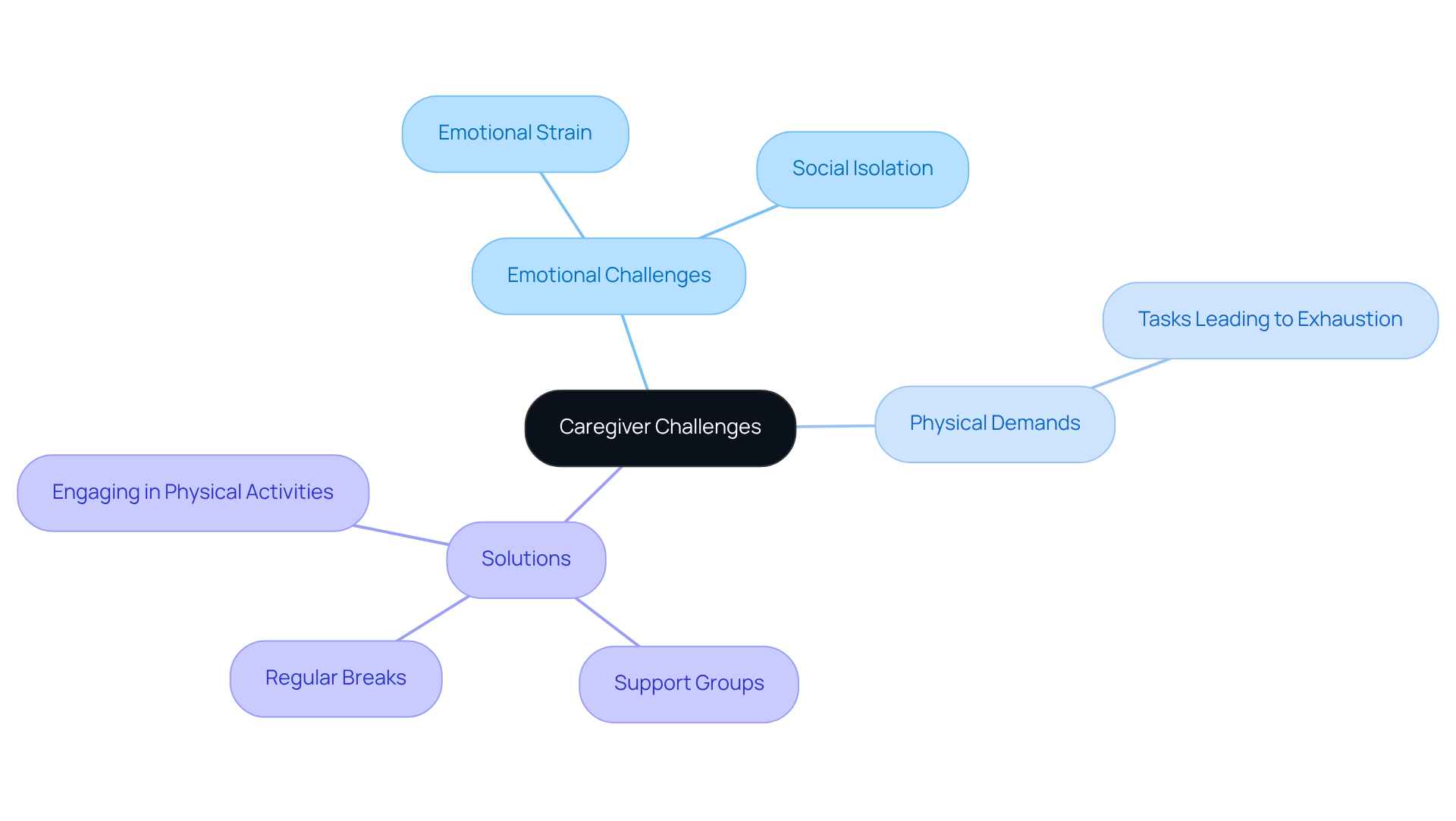
Caregivers often face significant emotional challenges. They may experience:
- Emotional Strain: Feelings of sadness, frustration, or helplessness are common as they witness their loved one's decline.
- Physical Demands: Tasks such as lifting, bathing, and assisting with mobility can lead to physical exhaustion.
- Social Isolation: The demands of caregiving can lead to feelings of isolation, which can impact mental health.
To navigate these challenges, caregivers can:
- Seek support groups for emotional relief.
- Take regular breaks to recharge.
- Engage in physical activities to maintain their health.
Recognizing these challenges is the first step toward effective caregiving and self-care. Remember, you are not alone in this journey; support and resources are available to help you thrive.
Explore Care Options in Boerne: In-Home and Facility-Based Services
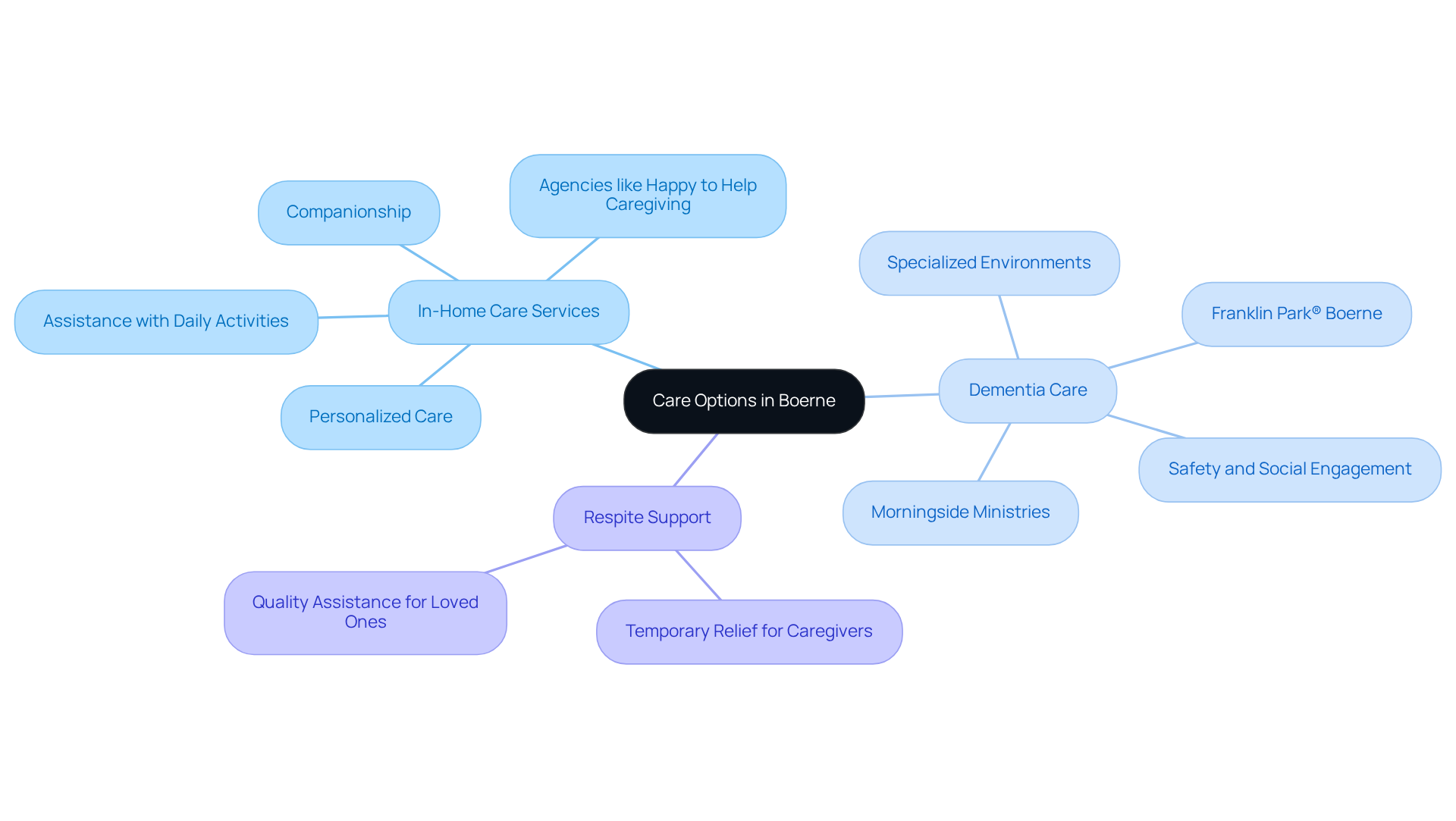
In Boerne, families face the emotional challenge of finding the right care for their loved ones, and it's important to know there are several nurturing options available:
-
In-Home Care Services can provide a comforting solution. Agencies like Happy to Help Caregiving offer personalized care right in the home. This includes companionship, personal care, and assistance with daily activities, allowing your loved one to feel safe and supported in familiar surroundings.
-
For those dealing with memory issues, dementia care in Boerne offers specialized environments. These facilities focus on safety and social engagement, ensuring that individuals with dementia receive the structured dementia care in Boerne that they need. Notable examples of dementia care in Boerne include Franklin Park® Boerne and Morningside Ministries, where compassionate staff are dedicated to enhancing the quality of life for residents.
-
Additionally, Respite Support can be a lifeline for primary caregivers. This service provides temporary relief, allowing caregivers to take much-needed breaks while ensuring their loved ones continue to receive quality assistance.
Every choice presents its own advantages. It's essential for families to evaluate their loved one's needs, preferences, and budget. Remember, making a decision about care is a journey, and it's okay to seek support along the way.
Develop Personalized Care Plans: Communicate Needs Effectively
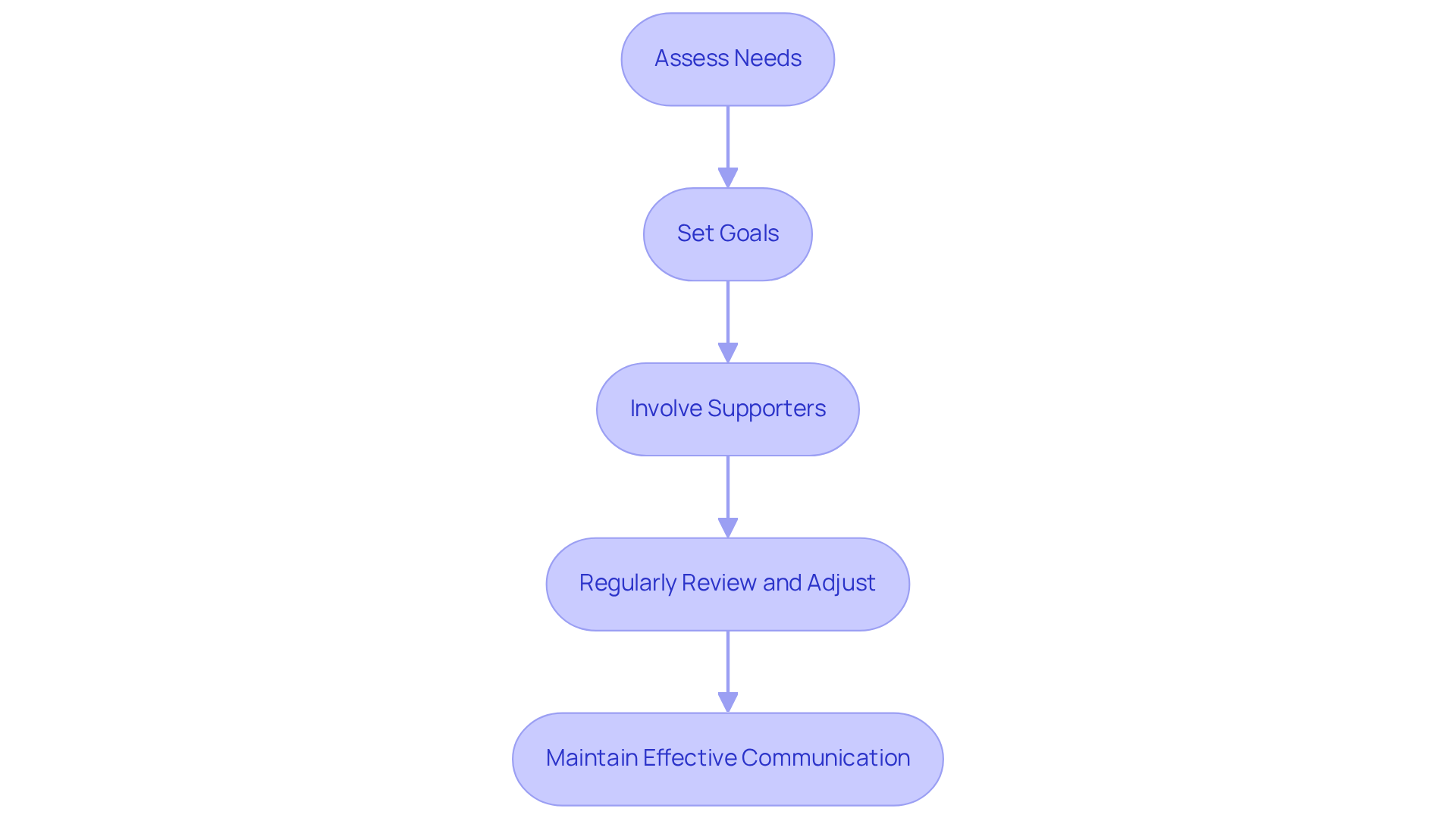
To develop a personalized care plan, families should:
-
Assess Needs: Begin by identifying the specific needs of the individual. This includes medical, emotional, and social aspects that are vital for their well-being.
-
Set Goals: Establish clear and attainable objectives for support. Focus on enhancing quality of life and maintaining independence, which are crucial for fostering a sense of self.
-
Involve Supporters: It's essential to ensure that all supporters are informed and included in the planning process. This collaboration promotes consistency in care, creating a unified support system.
-
Regularly Review and Adjust: Remember, care plans should be dynamic. Regular reviews allow for adjustments that adapt to changing needs and circumstances, ensuring the plan remains relevant and effective.
Effective communication is key. Families should maintain open lines of dialogue with all caregivers and healthcare providers. This ensures everyone is on the same page, fostering a supportive environment where the individual feels cared for and understood.
Making the Right Choice
Navigating dementia care in Boerne requires a comprehensive understanding of the condition, the challenges faced by caregivers, and the available care options. This journey is not just about logistics; it’s about recognizing the emotional weight that caregivers carry. The various types of dementia and their symptoms can significantly impact both the individuals affected and their families. By clarifying these aspects, families can better prepare for the emotional and physical demands that caregiving entails.
Essential strategies for caregivers include:
- Seeking support
- Maintaining personal health
- Developing personalized care plans
Effective communication among all parties involved in the caregiving process is crucial. Families are encouraged to explore local resources, such as in-home care services and facility-based options, to find the best fit for their loved ones' needs. Each choice presents unique benefits, and understanding these can lead to informed decisions that enhance the quality of care.
The significance of compassion and support cannot be overstated in the realm of dementia care. Families must remember that they are not alone in this journey. By utilizing available resources and fostering open communication, caregivers can create a nurturing environment that prioritizes the well-being of their loved ones. Taking proactive steps today can lead to a more manageable and fulfilling caregiving experience tomorrow.
https://iframe.tely.ai/cta/eyJhcnRpY2xlX2lkIjogIjY5MDJhYWYxY2FhYzMzMjQ0NDhhNDI4NCIsICJjb21wYW55X2lkIjogIjY4ZWU1ZGNhNzMxNzYyNTU3ZjNjOTVjMSIsICJpbmRleCI6IG51bGwsICJ0eXBlIjogImFydGljbGUifQ==Frequently Asked Questions
What is dementia?
Dementia is an umbrella term for various cognitive impairments that can significantly disrupt daily life.
What are the most common types of dementia?
The most common types of dementia include Alzheimer's Disease, Vascular Cognitive Impairment, Lewy Body Disorder, and Frontotemporal Dementia, each presenting unique challenges.
What are the key characteristics of Alzheimer's Disease?
Alzheimer's Disease is often marked by memory loss, confusion, and changes in behavior, which can be distressing for both the individual and their loved ones.
How does Vascular Cognitive Impairment affect individuals?
Vascular Cognitive Impairment frequently results from strokes and can hinder reasoning and planning abilities, leaving caregivers feeling overwhelmed.
What symptoms are associated with Lewy Body Disorder?
Individuals with Lewy Body Disorder may experience visual hallucinations and fluctuations in attention, adding emotional strain on families.
What impact does Frontotemporal Dementia have on individuals?
Frontotemporal Dementia tends to impact personality and behavior more than memory, which can be particularly challenging for caregivers.
What are common symptoms of dementia?
Common symptoms across different types of dementia include memory loss, difficulty with communication, changes in mood or behavior, and confusion about time or place.
Why is it important to recognize dementia symptoms early?
Recognizing dementia symptoms early is crucial as it can lead to timely interventions and better management of the condition, ultimately providing relief and support for caregivers.
Are there resources available for those affected by dementia?
Yes, there are resources available to help navigate the challenges of dementia with compassion and understanding.