

Active service-area notice
Happy to Help does not currently list CA and San Diego as active service areas. This article is general educational information. For local care availability, browse our active service areas.
Browse active service areasFor families in our service areas
For families in our service areas, this guide explains caregiver support and how non-medical in-home caregiving can support care planning in East Idaho, Treasure Valley & Magic Valley, Northern Wasatch, North Central West Virginia, and Northeast Ohio.
Why Navigate Elderly Care in San Diego, CA: Matters
Navigating the complex landscape of elderly care in San Diego poses significant challenges for family caregivers. With an estimated 820,000 seniors expected in the county by 2029, the need for understanding available resources is critical. Caregivers often find themselves overwhelmed, trying to sift through numerous options while managing their own emotional and physical well-being.
This situation can lead to stress and uncertainty, making it difficult for caregivers to ensure their loved ones receive the necessary support. So, how can caregivers effectively navigate these challenges? This guide offers essential resources, effective communication strategies, and practical tips for evaluating and adjusting care services. By equipping caregivers with the right tools, we aim to help them navigate this complex journey with confidence.
Understand the Landscape of Elderly Care Services in San Diego
In San Diego, navigating the elderly care San Diego CA landscape can be challenging for caregivers. With a growing senior population, understanding available resources is crucial for ensuring that older adults receive the assistance they need. By 2029, the number of senior citizens in San Diego County is expected to reach 820,000, making it essential to comprehend the options available.
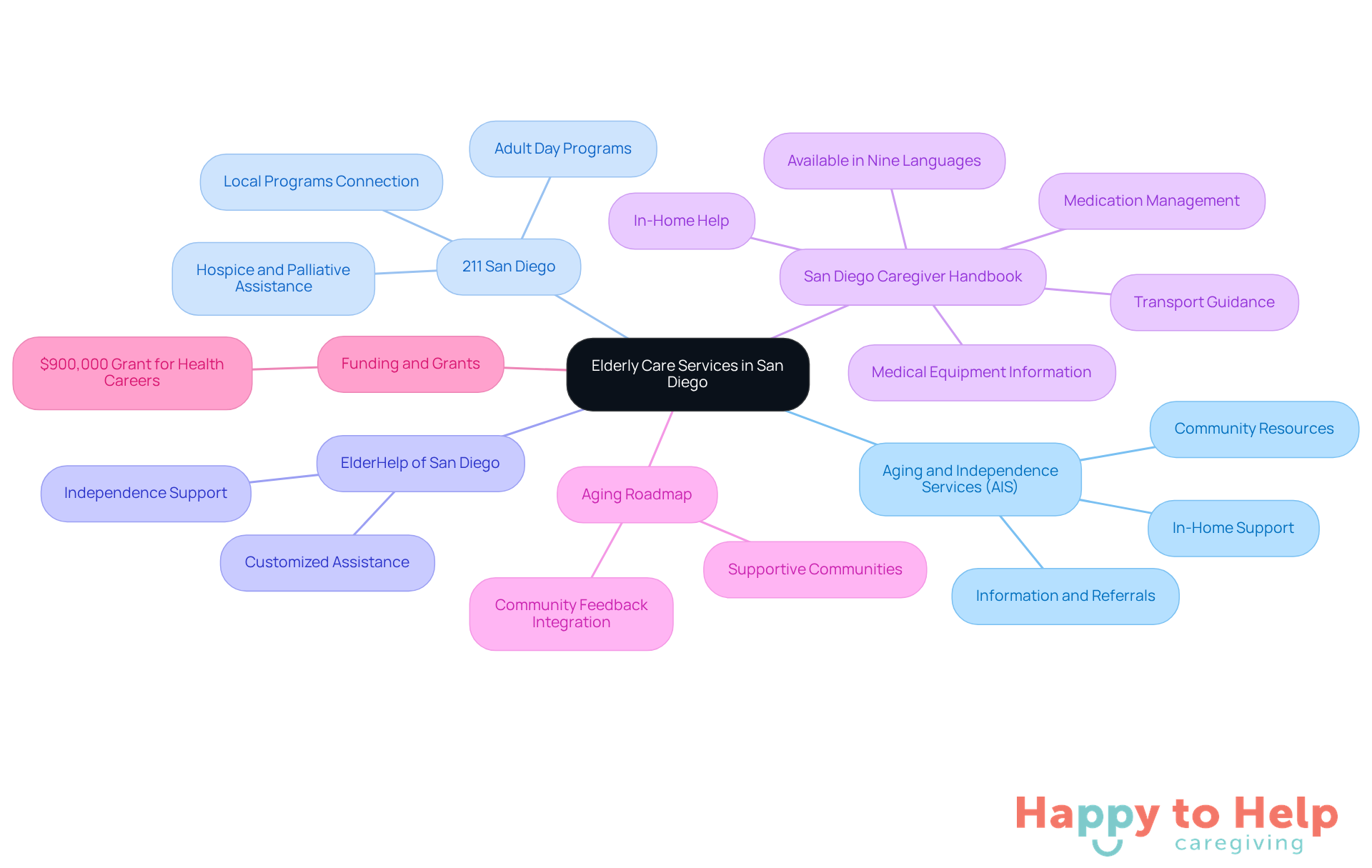
Key Resources for Elder Support:
- Aging and Independence Services (AIS): This county program provides information and referrals for older adults, including in-home support and community resources. Families can contact AIS at (858) 495-5885 for assistance.
- 211 San Diego: An essential resource that connects families with local programs and support for older adults, including adult day programs, hospice, and palliative assistance.
- ElderHelp of San Diego: This organization offers customized assistance to help seniors maintain their independence and dignity at home.
- San Diego Caregiver Handbook: A comprehensive resource for caregivers, offering guidance on transport, medical equipment, in-home help, and medication management. This handbook is available in nine languages and can be requested via email.
The Aging Roadmap, updated annually, aims to create supportive communities for older adults. It aligns programs and resources based on community feedback, ensuring equitable opportunities for all ages. This roadmap illustrates the commitment of local resources to adapt to the increasing needs of seniors, making it easier for families to find the right assistance for their loved ones.
Additionally, San Diego County has received a $900,000 grant to promote careers in health and human assistance, further enhancing the resources available for senior support. By leveraging these resources, caregivers can better navigate the complexities of elderly care San Diego CA, ensuring that seniors receive the support they deserve.
Explore Available Elderly Care Services
Caring for elderly family members can be a significant challenge for many caregivers. The emotional and physical demands can lead to caregiver burnout, making it essential to seek support services that can alleviate some of this pressure.
In San Diego, several elderly care services can help address these challenges:
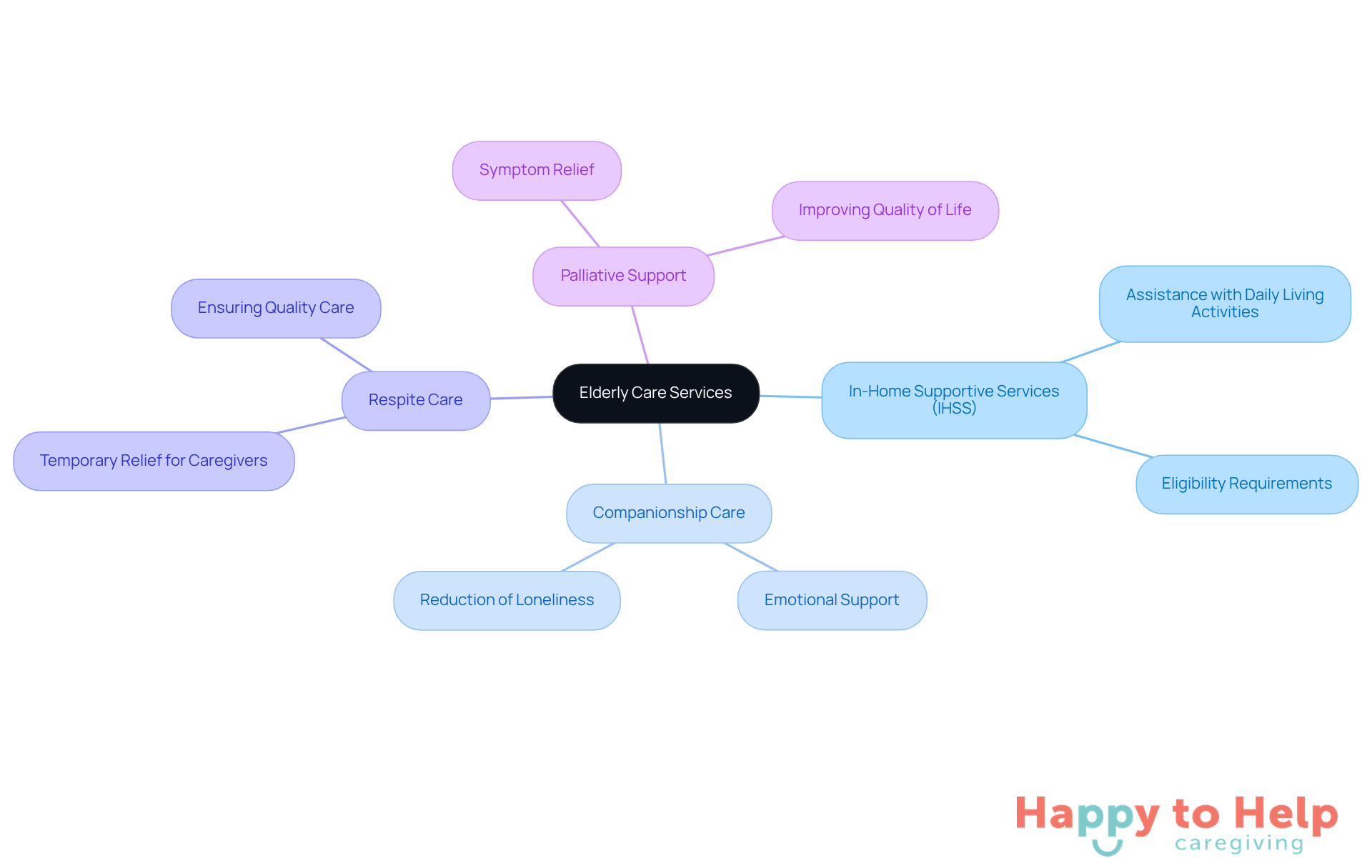
- In-Home Supportive Services (IHSS): This service assists eligible seniors with daily living activities such as bathing, grooming, and meal preparation.
- Companionship Care: Focused on providing emotional support, this service helps alleviate feelings of loneliness among seniors.
- Respite Care: Offering temporary relief for primary caregivers, respite care allows them to take necessary breaks while ensuring their loved ones are well cared for.
- Palliative Support: This specialized assistance aims to relieve symptoms and stress associated with serious illness, ultimately improving the quality of life for seniors.
Families should carefully evaluate their relatives' specific needs to determine which services are most suitable. By utilizing these resources, caregivers can find the support they need to maintain their well-being while providing care.
Communicate Effectively with Care Providers
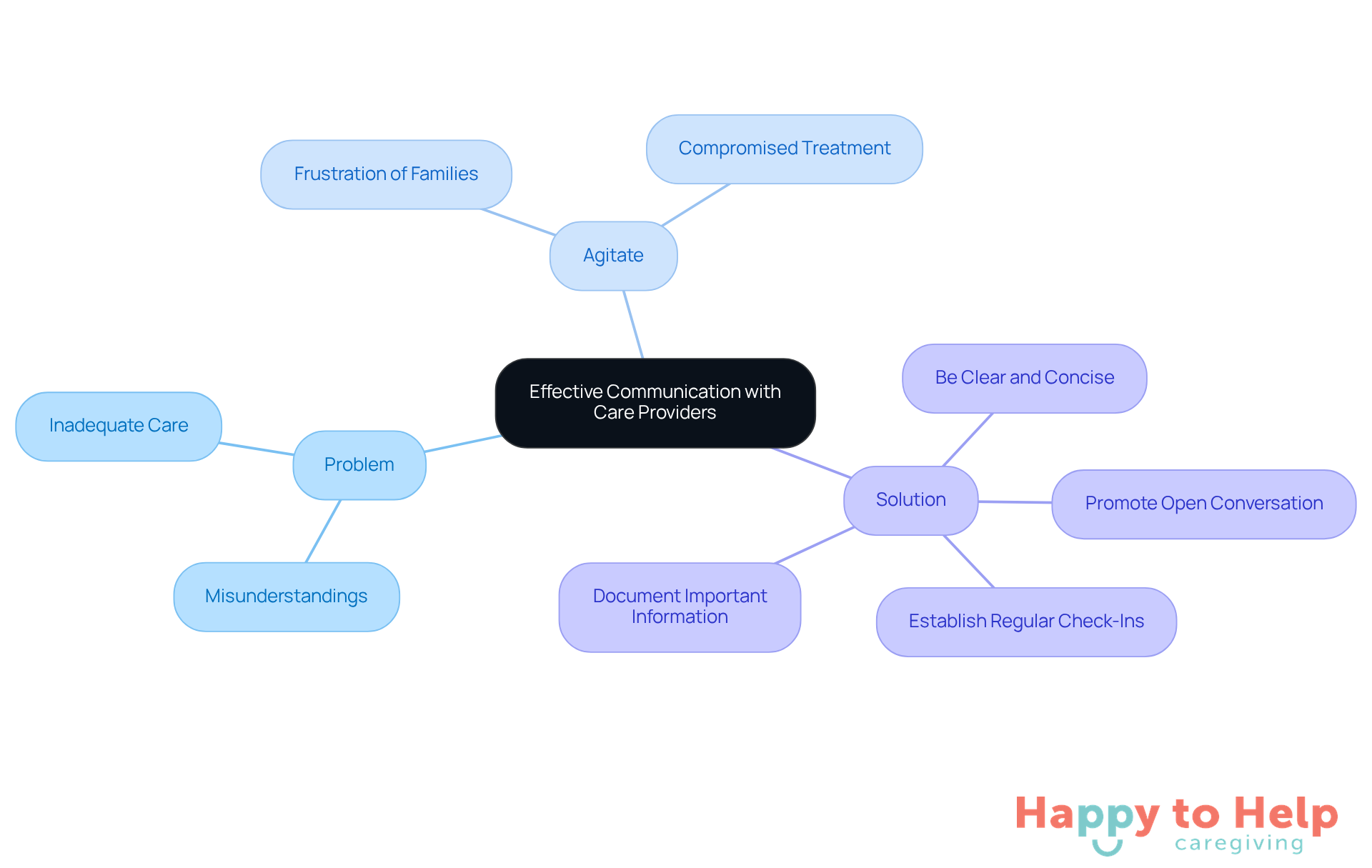
Problem: Effective communication with care providers is crucial for ensuring that your loved one's needs are met. Without clear communication, misunderstandings can arise, leading to inadequate care.
Agitate: This lack of clarity can result in caregivers not fully understanding your family member's preferences or condition, which may compromise their treatment and overall satisfaction. Families may feel frustrated and helpless when they cannot convey important information effectively.
Solution: Here are actionable steps to enhance communication with care providers:
- Be Clear and Concise: Use straightforward language to articulate your loved one's needs and preferences. Avoid jargon that may lead to misunderstandings.
- Establish Regular Check-Ins: Schedule consistent meetings or calls with caregivers to review progress and discuss any changes in your family member's condition. This practice promotes accountability and ensures everyone is aligned on objectives.
- Promote Open Conversation: Foster an environment where caregivers feel comfortable expressing their observations and concerns about your loved one's treatment. This two-way communication is vital for addressing issues promptly and effectively.
- Document Important Information: Maintain a comprehensive record of treatment plans, medications, and any changes in health status. Sharing this information with caregivers helps them provide knowledgeable and attentive support.
According to the Gerontological Society of America, effective communication improves understanding, adherence to treatment, and overall patient satisfaction. By prioritizing open communication, families can significantly enhance the quality of support their relatives receive, ensuring that their needs are addressed with compassion and understanding. As Nicole M. Clagett observes, "As a family caregiver, providing the best support for your dear one involves more than just employing a paid caregiver; it necessitates a collaboration grounded in clear and continuous communication.
Evaluate and Adjust Care Services as Needed
To effectively evaluate and adjust care services for your loved one, caregivers face several challenges that can impact the quality of support provided.
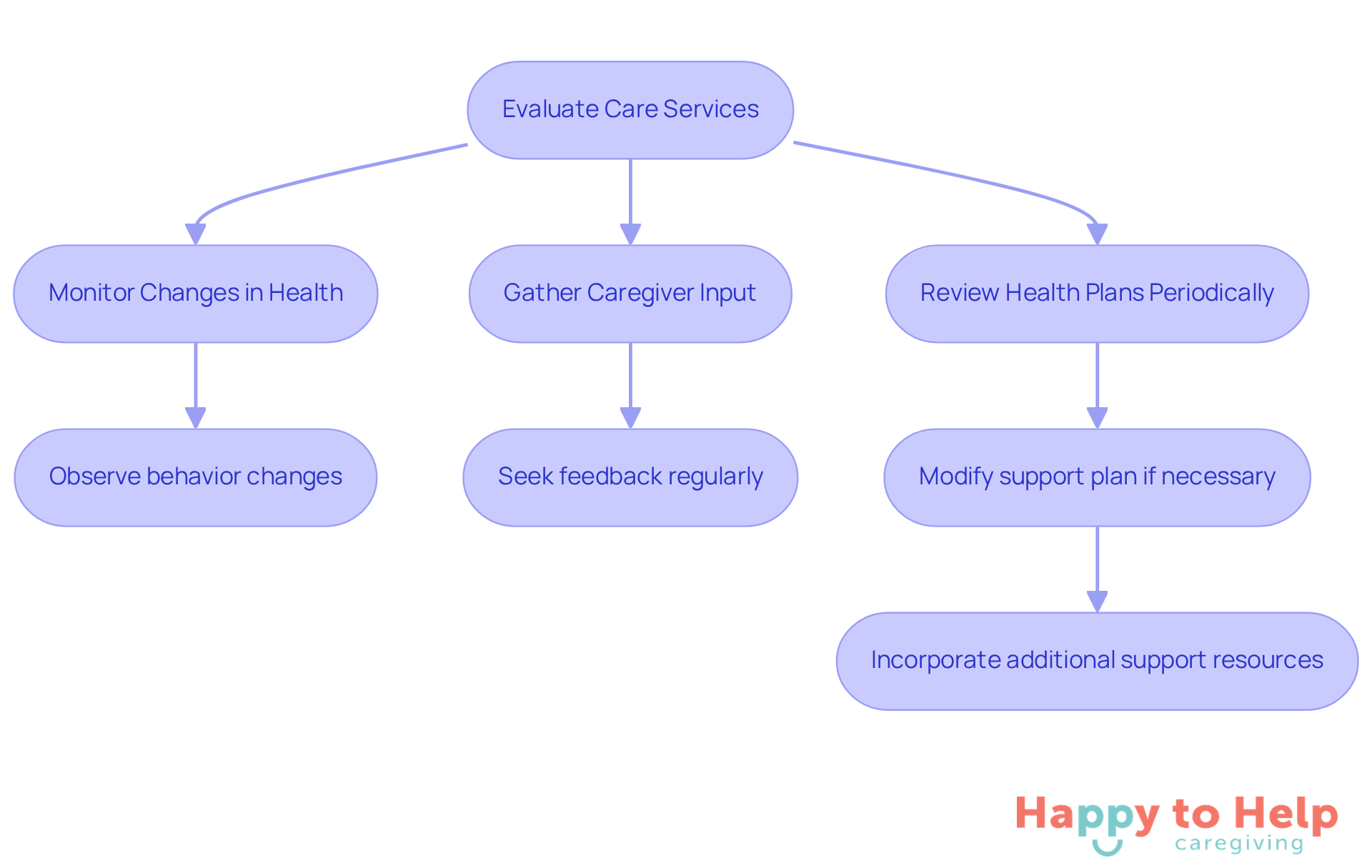
Problem: Monitoring Changes in Health
Vigilantly observing any shifts in your family member's physical or mental health is crucial. These changes may necessitate modifications in their support plan. Caregiver insights can be invaluable here. One caregiver noted, "Noticing small changes in behavior can be crucial. It frequently suggests a requirement for a different method in support."
Agitate: The Importance of Caregiver Input
Frequent interaction with caregivers is essential to gather their perspectives on your family member's support. Their observations can highlight areas needing enhancement, ensuring that support remains aligned with your loved one's evolving needs. According to a recent study, families that actively seek caregiver feedback report a 30% increase in satisfaction with support services.
Solution: Review Health Plans Periodically
Establish a routine to review health plans every few months or after significant health changes. For instance, if a cherished individual faces a decrease in mobility, it might be essential to modify their support plan to incorporate additional physical help or therapy.
Be Open to Change
If a specific assistance is not adequately meeting your dear one's needs, take the initiative to explore alternative options or additional support resources. For example, if companionship support is insufficient, consider integrating social activities or community resources to enhance engagement.
By actively engaging in the evaluation of care services, families can ensure that their loved ones receive the most effective and compassionate care possible, fostering a supportive environment that promotes well-being and independence.
Taking the Next Steps
Navigating the complexities of elderly care in San Diego presents a significant challenge for caregivers. As the senior population grows, many families struggle to access the vital resources and services necessary for ensuring their loved ones receive the care they deserve. This lack of knowledge can lead to stress and uncertainty, making it crucial for caregivers to familiarize themselves with local programs like:
- Aging and Independence Services
- 211 San Diego
- ElderHelp
To alleviate these challenges, caregivers should prioritize:
- Effective communication with care providers
- Regularly evaluating care services
- Flexibility in adjusting support plans, as needs can change over time
- Utilizing in-home support, companionship care, and respite options to significantly reduce caregiver stress and prevent burnout
Additionally, fostering open dialogue with caregivers and reviewing health plans can enhance satisfaction and outcomes for everyone involved.
Ultimately, caring for elderly family members is about more than just providing assistance; it’s about creating a nurturing environment that prioritizes well-being and dignity. By actively seeking resources, maintaining clear communication, and adapting to changing needs, families can navigate the landscape of elderly care in San Diego with confidence. Embracing these strategies not only benefits seniors but also empowers caregivers to fulfill their vital roles with compassion and resilience.
https://iframe.tely.ai/cta/eyJhcnRpY2xlX2lkIjogIjY5MjNiOWFjODU4ZTE0MmJhNzFkNjljNSIsICJjb21wYW55X2lkIjogIjY4ZWU1ZGNhNzMxNzYyNTU3ZjNjOTVjMSIsICJpbmRleCI6IG51bGwsICJ0eXBlIjogImFydGljbGUifQ==Frequently Asked Questions
What is the current state of elderly care services in San Diego?
Navigating elderly care services in San Diego can be challenging for caregivers due to a growing senior population. By 2029, the number of seniors in San Diego County is expected to reach 820,000, making it essential to understand the available resources.
What are some key resources for elderly support in San Diego?
Key resources include: - Aging and Independence Services (AIS), which provides information and referrals for older adults. - 211 San Diego, connecting families with local programs and support. - ElderHelp of San Diego, offering customized assistance for seniors. - The San Diego Caregiver Handbook, a comprehensive resource for caregivers available in nine languages.
How can families contact Aging and Independence Services (AIS)?
Families can contact AIS at (858) 495-5885 for assistance with resources and support for older adults.
What is the purpose of the San Diego Caregiver Handbook?
The San Diego Caregiver Handbook offers guidance on transport, medical equipment, in-home help, and medication management to support caregivers in their roles.
What is the Aging Roadmap and how does it benefit seniors?
The Aging Roadmap is an annually updated resource that aims to create supportive communities for older adults by aligning programs and resources based on community feedback, ensuring equitable opportunities for all ages.
How is San Diego County enhancing resources for senior support?
San Diego County has received a $900,000 grant to promote careers in health and human assistance, which aims to enhance the resources available for senior support.
Why is understanding elderly care resources important for caregivers?
Understanding available elderly care resources is crucial for caregivers to navigate the complexities of care and ensure that seniors receive the assistance they need.
List of Sources
- Understand the Landscape of Elderly Care Services in San Diego
- County Programs and Partnerships Building a Stronger Environment for Older Adults (https://countynewscenter.com/county-programs-and-partnerships-building-a-stronger-environment-for-older-adults)
- News & Notes (https://sandiegocounty.gov/content/sdc/hhsa/programs/ais/News-and-Notes.html)
- Facts & Figures - San Diego Seniors Community Foundation (https://sdscf.org/facts-figures)
- San Diego County updates its plan for supporting a growing older adult population - San Diego City Wire (https://sandiegocitywire.com/san-diego-county-updates-its-plan-for-supporting-a-growing-older-adult-population)
- News Report: San Diego Seniors Community Foundation to Begin No Senior Alone Initiative - San Diego Seniors Community Foundation (https://sdscf.org/news-report-san-diego-seniors-community-foundation-to-begin-no-senior-alone-initiative)
- Explore Available Elderly Care Services
- Compassionate Companion Care for Elderly | Aging Safe (https://findinghomecare.net/companion-care-for-elderly)
- The 2025-26 Budget: In-Home Supportive Services (https://lao.ca.gov/Publications/Report/5009)
- Visiting Angels Central San Diego (https://visitingangels.com/centralsandiego/elderly-companion-care)
- Companion Care in San Diego - Senior Helpers (https://seniorhelpers.com/ca/san-diego-metro/services/companion-care)
- Scott Coop - Stock Quotes (https://scottcoop.com/markets/stocks.php?article=getnews-2025-4-11-golden-years-home-care-enhances-elder-care-with-compassionate-companion-care-in-san-diego)
- Communicate Effectively with Care Providers
- New report gives healthcare providers fresh guidance on communicating with older adults (https://mcknights.com/news/new-report-gives-healthcare-providers-fresh-guidance-on-communicating-with-older-adults)
- IGNITE the Communication with Caregivers (https://gotrkc.org/news/details/ignite-the-communication-with-caregivers)
- Harmonizing care: a guide for family caregivers to communicate with professional aides. (https://abc11.com/post/harmonizing-care-guide-family-caregivers-communicate-professional-aides/15045721)
- Clearer Conversations, Better Care: New Guide Highlights Best Practices for Communicating with Older Adults (https://geron.org/News-Events/GSA-News/Press-Room/Press-Releases/clearer-conversations-better-care-new-guide-highlights-best-practices-for-communicating-with-older-adults)
- Evaluate and Adjust Care Services as Needed
- Warning From Older Adults: Care for Aging in America Needs Urgent Rethinking (https://johnahartford.org/newsroom/view/warning-from-older-adults-care-for-aging-in-america-needs-urgent-rethinking)
- The senior population is booming. Caregiving is struggling to keep up (https://cnbc.com/2025/11/21/senior-caregiving-labor.html)
- New Study Reveals Surprising Truths About Senior Care Quality Across U.S. (https://myfox8.com/business/press-releases/ein-presswire/846196327/new-study-reveals-surprising-truths-about-senior-care-quality-across-u-s)
- FastStats (https://cdc.gov/nchs/fastats/older-american-health.htm)