Navigate Financial Aid for Seniors: Essential Strategies

For families in our service areas
For families in our service areas, this guide explains caregiver support and how non-medical in-home caregiving can support care planning in East Idaho, Treasure Valley & Magic Valley, Northern Wasatch, North Central West Virginia & Southwestern Pennsylvania, and Northeast Ohio.
What You Need to Know About Navigate Financial Aid
Navigating the complex landscape of financial aid for seniors presents a significant challenge for caregivers. With numerous options available - from Social Security benefits to state assistance programs - understanding these resources is crucial. This knowledge empowers caregivers to make informed decisions that can greatly enhance their loved ones' quality of life.
However, financial burdens such as debt and unexpected medical expenses are on the rise. This situation raises an important question: how can caregivers effectively navigate these challenges to secure the necessary support for seniors? By addressing these issues head-on, caregivers can find actionable solutions that will help alleviate some of the stress associated with financial planning.
Explore Financial Aid Options for Seniors
Understanding financial aid for seniors is crucial for caregivers who want to enhance the quality of life for their family members. Caregivers often face the challenge of navigating various support systems, which can be overwhelming. However, knowing where to look can make a significant difference.
-
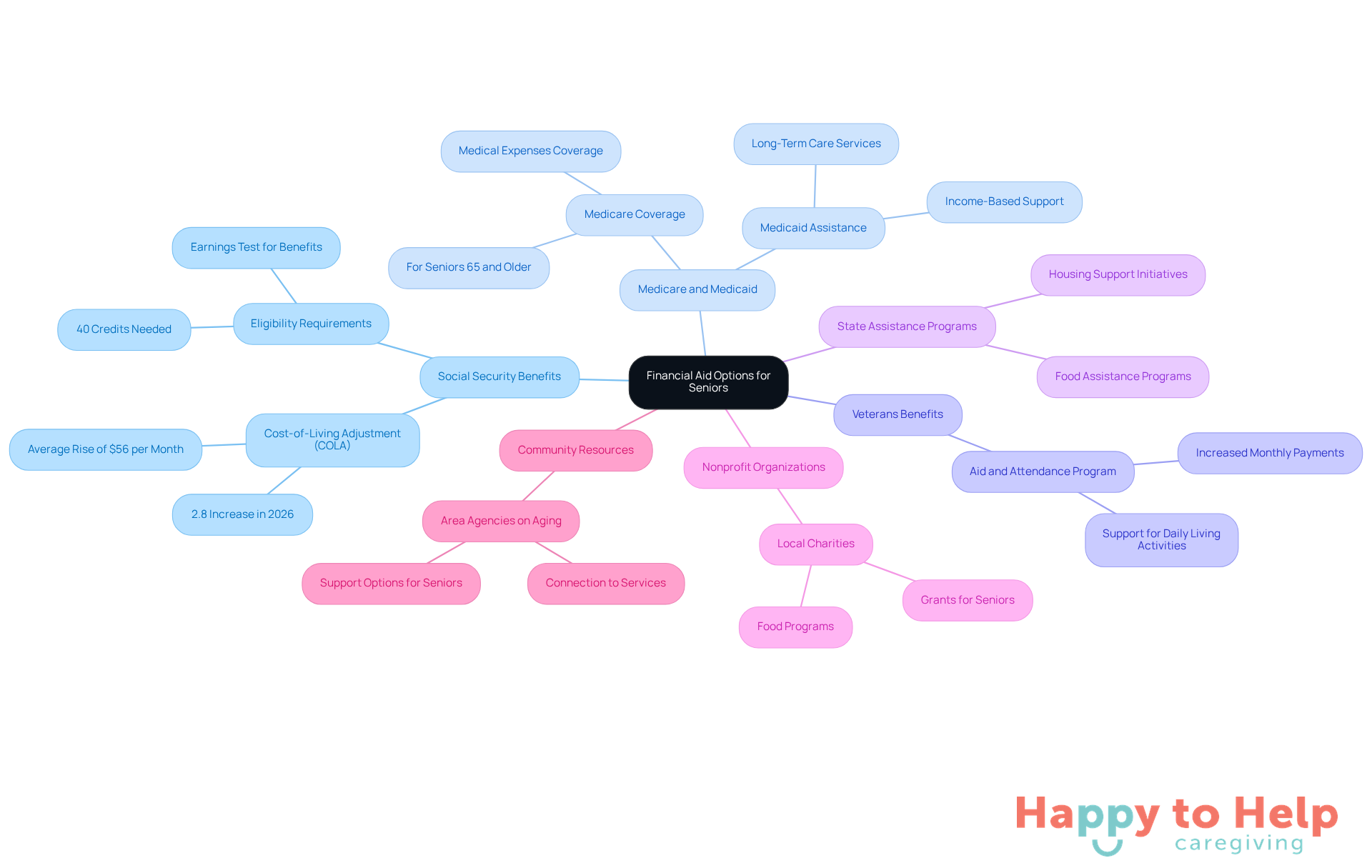
Social Security Benefits: One of the first steps is ensuring seniors receive their full Social Security benefits, a primary income source. In 2026, benefits will increase by 2.8%, translating to an average rise of about $56 per month for nearly 71 million beneficiaries. This adjustment is vital for maintaining purchasing power as living costs rise.
-
Medicare and Medicaid: Caregivers must familiarize themselves with Medicare and Medicaid, as these programs cover a range of medical expenses. Medicare primarily serves seniors aged 65 and older, while Medicaid offers assistance based on income and needs, often covering long-term care services that Medicare does not.
-
Veterans Benefits: For veterans, additional financial support is available through programs like Aid and Attendance, which provides increased monthly payments for those needing help with daily living activities. This benefit can significantly ease financial burdens for eligible veterans and their families.
-
State Assistance Programs: Each state has specific programs designed to support elderly individuals, including food assistance and housing support. Investigating these local initiatives can uncover valuable resources tailored to the unique needs of seniors in different areas.
-
Nonprofit Organizations: Many local charities focus on providing financial support or resources for elderly individuals. These organizations often offer grants, food programs, and additional services that can help alleviate economic pressure.
-
Community Resources: Area Agencies on Aging serve as vital community resources, assisting caregivers in exploring support options for the elderly. These agencies can connect families with various services, ensuring seniors receive the help they need.
By leveraging financial aid for seniors, caregivers can better support their loved ones, ensuring they have access to the necessary resources for a comfortable and dignified life.
Identify Common Debt Challenges for Seniors
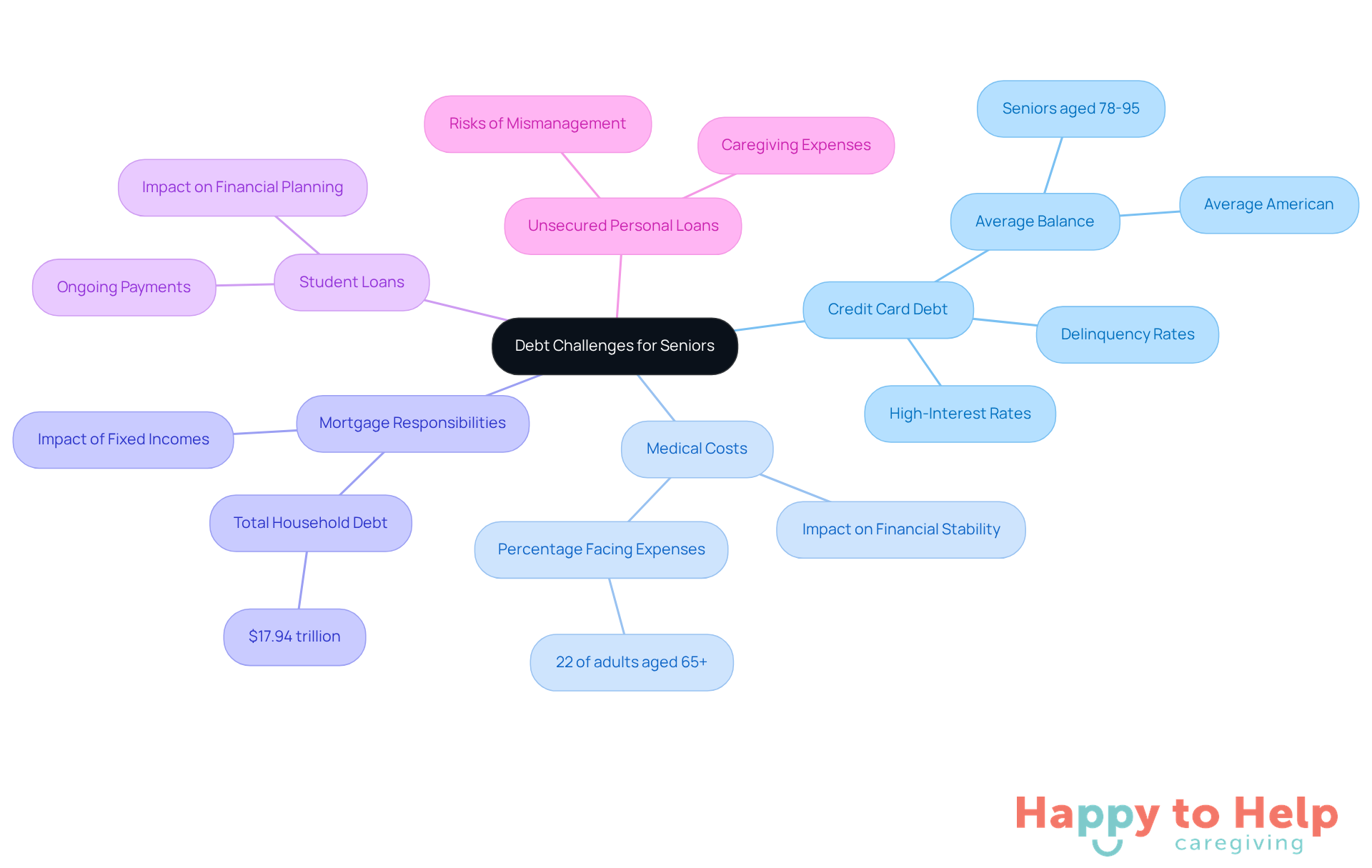
Seniors often face significant financial challenges that can impact their economic stability, which is why financial aid for seniors is essential. High-interest credit card debt is a prevalent issue, with many elderly individuals accumulating balances that can quickly escalate. As of 2025, seniors aged 78-95 carry an average credit card balance of $5,649, which can be particularly burdensome on fixed incomes. Additionally, unforeseen medical costs can lead to substantial financial strain, with approximately 22% of adults aged 65 and older reporting financial obligations from medical or dental expenses. This highlights the urgent need for effective financial management strategies.
Alongside credit and medical liabilities, many seniors struggle with mortgage responsibilities. With total household debt in the U.S. reaching $17.94 trillion as of Q3 2024, mortgage payments can become a heavy burden, especially if income decreases due to retirement or health issues. Furthermore, some seniors are still repaying student loans, either for their own education or for their children, adding another layer of complexity to their financial situation.
Unsecured personal loans also pose risks, potentially leading to economic difficulties if not managed effectively. Family supporters may incur expenses related to caregiving, which can further complicate financial obligations. This underscores the importance of proactive monetary planning.
To navigate these challenges, seniors can benefit from financial aid for seniors through comprehensive financial management strategies. Here are some actionable tips:
- Create a budget that accounts for all income and expenses, prioritizing essential costs.
- Seek financial advice from professionals who specialize in elder financial planning.
- Explore financial aid for seniors that can assist with medical expenses or debt management.
By addressing these various debt types with a structured approach, seniors can enhance their financial security and navigate their economic landscape with confidence.
Access Government Programs and Support Organizations
-
Problem: The Need for Support
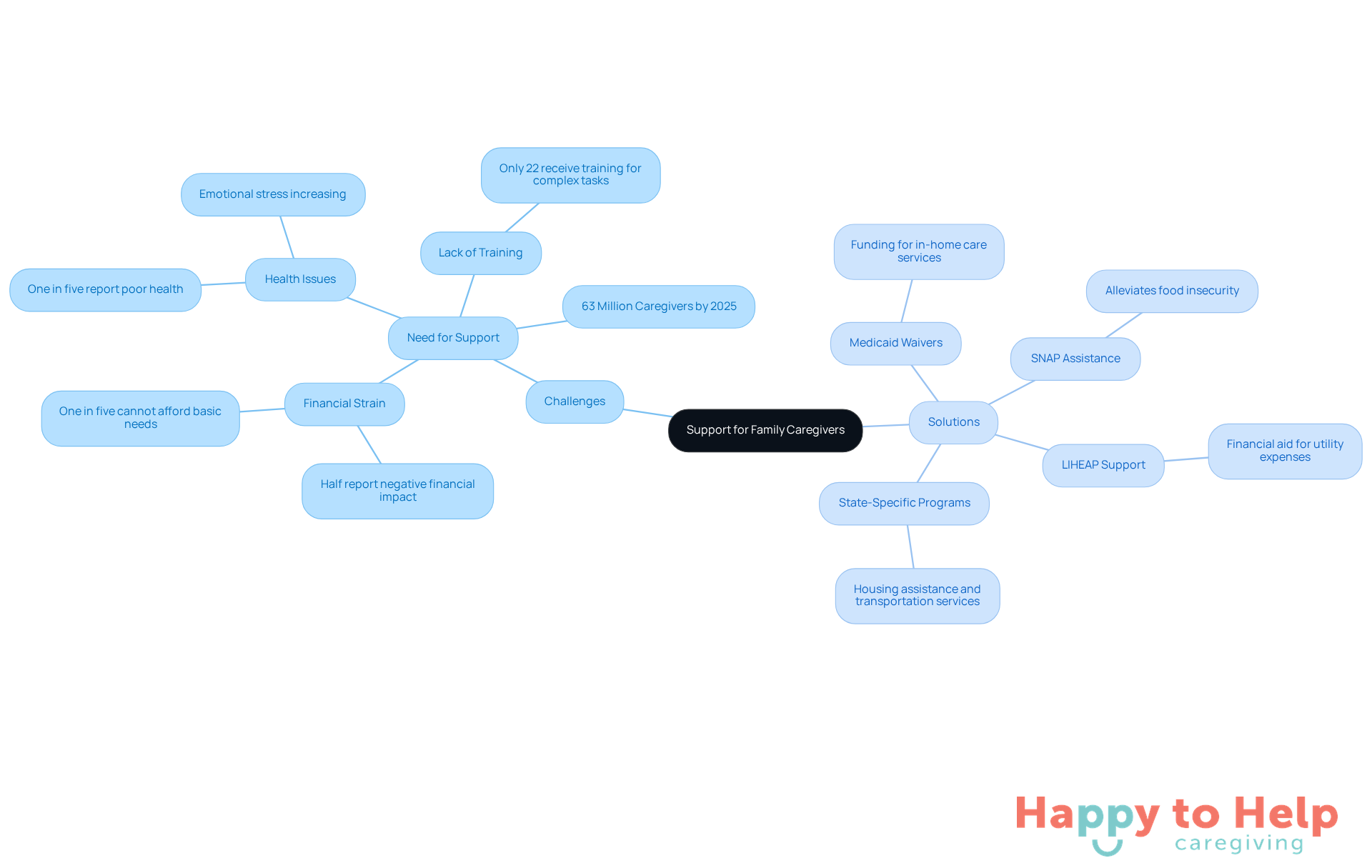
Family caregivers face significant challenges in managing their responsibilities. With an estimated 63 million family caregivers in the U.S. by 2025, according to AARP and the National Alliance for Caregiving, the demand for support is critical. -
Agitate: Navigating Resources
Finding the right resources can be overwhelming. Caregivers often struggle to access essential services that can ease their burden. This is where organizations like Area Agencies on Aging come into play. They connect older adults to local resources, including financial aid for seniors and support services, helping them maintain their independence. AARP's case study illustrates how these agencies enhance the quality of life for older adults by effectively linking them to necessary resources. -
Solution: Medicaid Waivers
Caregivers should consider exploring Medicaid waivers, which can provide substantial funding for in-home care services. These waivers aim to improve the quality of life for older adults by offering financial aid for seniors to cover various caregiving costs, making it easier for families to manage care at home. With half of caregivers facing negative financial impacts, these waivers can serve as a vital lifeline. -
Solution: SNAP Assistance
Helping older adults apply for the Supplemental Nutrition Assistance Program (SNAP) is crucial. This program alleviates food insecurity, ensuring that older adults have access to nutritious food, which is essential for their overall well-being. AARP reports that one in five caregivers struggle to afford basic needs like food, highlighting the importance of such programs. -
Solution: LIHEAP Support
Caregivers can also assist older adults in applying for the Low-Income Home Energy Assistance Program (LIHEAP), which provides financial aid for utility expenses. This support is especially vital during extreme weather, ensuring that elderly individuals can afford heating or cooling in their homes. -
Solution: State-Specific Programs
Investigating state-specific initiatives is essential for caregivers seeking additional assistance for elderly individuals. These programs may offer housing assistance, transportation services, and other resources tailored to the unique needs of older adults in their communities. By leveraging these local resources, caregivers can significantly enhance the quality of life for their loved ones.
Develop Financial Planning Strategies for Seniors
-
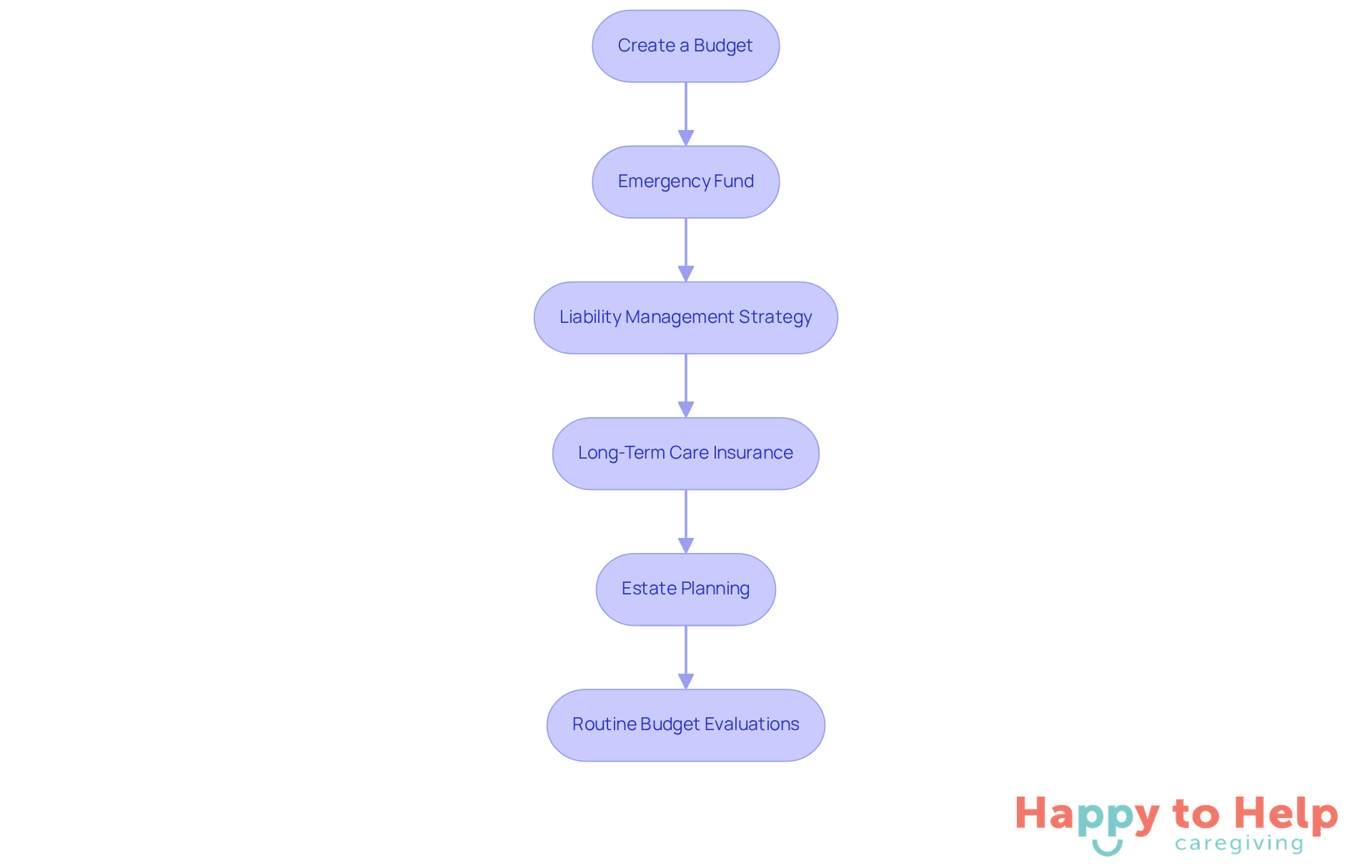
Create a Budget: Many older adults struggle with managing their finances effectively. Without a clear budget, they may find themselves living beyond their means. As John C. Maxwell aptly puts it, "A budget is telling your money where to go instead of wondering where it went." Helping seniors formulate a budget that accurately reflects their income and expenses, along with understanding financial aid for seniors, can empower them to take control of their financial situation.
-
Emergency Fund: Unexpected expenses can be a significant burden for seniors. In fact, nearly 40% of Americans are unprepared for a $400 emergency expense. With average household spending rising by 51% from 2013 to 2023, establishing an emergency fund that covers three to six months of living expenses is crucial. This safety net can provide peace of mind and financial stability during challenging times.
-
Liability Management Strategy: Many older adults carry some form of debt, with 67% of Americans in this situation. This can lead to stress and financial instability. By offering financial aid for seniors to help them formulate a liability management strategy, they can systematically address their current obligations, alleviating financial pressure and promoting a sense of security.
-
Long-Term Care Insurance: The potential costs of caregiving can be daunting for older adults. Discussing the benefits of long-term care insurance can help protect their assets and offer financial aid for seniors, providing peace of mind for the future. This proactive approach ensures that they are prepared for any caregiving needs that may arise.
-
Estate Planning: Estate planning is essential for safeguarding assets and ensuring that an individual’s wishes are respected. Providing financial aid for seniors can help older adults in creating or updating their estate plans, fostering open communication among family members, especially during the holidays. This dialogue can address long-term care and legacy planning, ensuring everyone is on the same page.
-
Routine Budget Evaluations: Financial situations can change, making it important for seniors to adapt their budgets accordingly. Suggesting routine budget evaluations allows them to modify their plans as needed. This practice not only helps maintain financial health but also empowers seniors to navigate evolving needs and challenges.
Taking the Next Steps
Navigating financial aid for seniors presents a significant challenge for caregivers who strive to enhance the lives of their loved ones. The financial burdens faced by seniors - such as high-interest debt, medical expenses, and housing costs - can be overwhelming. Understanding the various support systems available, including Social Security benefits, Medicare, Medicaid, and state-specific programs, is crucial for caregivers. This knowledge empowers them to provide essential resources, ensuring seniors can maintain a dignified and comfortable lifestyle.
To tackle these financial challenges, caregivers should create structured financial management strategies. This includes:
- Budgeting
- Establishing emergency funds
- Considering long-term care insurance
These approaches not only foster financial security but also equip caregivers with the necessary tools to support their loved ones effectively.
The importance of accessing financial aid resources cannot be overstated. Caregivers are encouraged to actively seek out programs and support organizations tailored to seniors' needs. By doing so, they can significantly enhance the quality of life for the elderly, ensuring that financial challenges do not overshadow their well-being. Taking proactive steps in financial planning and management can lead to a more secure future for seniors, allowing them to enjoy their golden years with peace of mind.
https://iframe.tely.ai/cta/eyJhcnRpY2xlX2lkIjogIjY5M2Y1MDgyMTQ3ZTIwZjE1ODJjOWRkOSIsICJjb21wYW55X2lkIjogIjY4ZWU1ZGNhNzMxNzYyNTU3ZjNjOTVjMSIsICJpbmRleCI6IG51bGwsICJ0eXBlIjogImFydGljbGUifQ==Frequently Asked Questions
Why is understanding financial aid for seniors important for caregivers?
Understanding financial aid for seniors is crucial for caregivers as it helps enhance the quality of life for their family members, enabling them to navigate various support systems effectively.
What are Social Security benefits, and how do they affect seniors?
Social Security benefits are a primary income source for seniors. In 2026, these benefits will increase by 2.8%, resulting in an average rise of about $56 per month for nearly 71 million beneficiaries, which is vital for maintaining purchasing power as living costs rise.
What is the difference between Medicare and Medicaid?
Medicare primarily serves seniors aged 65 and older, covering a range of medical expenses, while Medicaid offers assistance based on income and needs, often covering long-term care services that Medicare does not.
What financial support options are available for veterans?
Veterans can access additional financial support through programs like Aid and Attendance, which provides increased monthly payments for those needing help with daily living activities, easing financial burdens for eligible veterans and their families.
What types of state assistance programs exist for seniors?
Each state has specific programs designed to support elderly individuals, including food assistance and housing support, which can provide valuable resources tailored to the unique needs of seniors.
How can nonprofit organizations assist elderly individuals?
Local charities often focus on providing financial support or resources for elderly individuals, offering grants, food programs, and additional services to alleviate economic pressure.
What role do Area Agencies on Aging play in supporting caregivers?
Area Agencies on Aging serve as vital community resources that assist caregivers in exploring support options for the elderly, connecting families with various services to ensure seniors receive the help they need.
List of Sources
- Explore Financial Aid Options for Seniors
- Social Security Announces 2.8 Percent Benefit Increase for 2026 (https://ssa.gov/news/en/press/releases/2025-10-24.html)
- 6 Big Social Security Changes for 2026 (https://aarp.org/social-security/biggest-2026-changes)
- Cost-of-Living Adjustment (COLA) Information (https://ssa.gov/cola)
- Social Security Update (https://ssa.gov/news/en/newsletter)
- Identify Common Debt Challenges for Seniors
- 2025 Average Credit Card Debt Statistics: What to Know (https://ramp.com/blog/credit-card-statistics)
- Debt Quotes That Can Teach You About Money Management (https://nationaldebtrelief.com/blog/financial-wellness/financial-education/interesting-debt-quotes-teaches-lot-money-management)
- Examining the Consequences of Health Care Debt Among Older Adults - Medicare Rights Center (https://medicarerights.org/medicare-watch/2024/08/22/examining-the-consequences-of-health-care-debt-among-older-adults)
- 30 Debt Quotes: Showing Empathy and the Burden of Debt | PDCflow Blog (https://pdcflow.com/debt-collection/30-debt-quotes-showing-empathy-burden-of-debt)
- Access Government Programs and Support Organizations
- VA extends ‘legacy’ caregiver benefits through 2028 (https://militarytimes.com/news/your-military/2025/11/20/va-extends-legacy-caregiver-benefits-through-2028)
- Caregiving in the US 2025 (https://aarp.org/pri/topics/ltss/family-caregiving/caregiving-in-the-us-2025)
- New Report Reveals Crisis Point for America’s 63 million Family Caregivers - Massachusetts Healthy Aging Collaborative (https://mahealthyagingcollaborative.org/new-report-reveals-crisis-point-for-americas-63-million-family-caregivers)
- Develop Financial Planning Strategies for Seniors
- Top 150 Financial Planning Quotes [2025] (https://digitaldefynd.com/IQ/financial-planning-quotes)
- 5 Mark Cuban Quotes Every Retiree Should Live By (https://kiplinger.com/retirement/happy-retirement/mark-cuban-quotes-every-retiree-should-live-by)
- US Emergency Savings Fund Statistics (https://remitly.com/blog/finance/us-emergency-savings-statistics)
- 7 Quotes from Warren Buffett on How Retirees Should “Invest” in What Matters the Most (https://keenwealthadvisors.com/insights/7-quotes-from-warren-buffett-on-how-retirees-should-invest-in-what-matters-the-most)
- Budgeting Statistics 2025 (https://wallethub.com/edu/budgeting-statistics/146387)