

For families in our service areas
For families in our service areas, this guide explains caregiving and how non-medical in-home caregiving can support care planning in East Idaho, Treasure Valley & Magic Valley, Northern Wasatch, North Central West Virginia, and Northeast Ohio.
The Importance of Navigate Financial Assistance
Understanding the landscape of financial assistance for seniors is essential. Many older adults are grappling with rising living costs and healthcare expenses, leading to significant concerns about their financial stability. This guide aims to provide a comprehensive roadmap to navigate the various programs available.
However, the complexity of eligibility criteria and application processes can leave many feeling overwhelmed. Seniors and their caregivers often struggle to access the support they need, which can lead to missed opportunities for assistance. How can they effectively overcome these challenges?
To address these issues, we will outline practical solutions that caregivers can implement. By breaking down the available resources and simplifying the application process, we can help ensure that seniors receive the financial support they deserve.
Understand Available Financial Assistance Programs
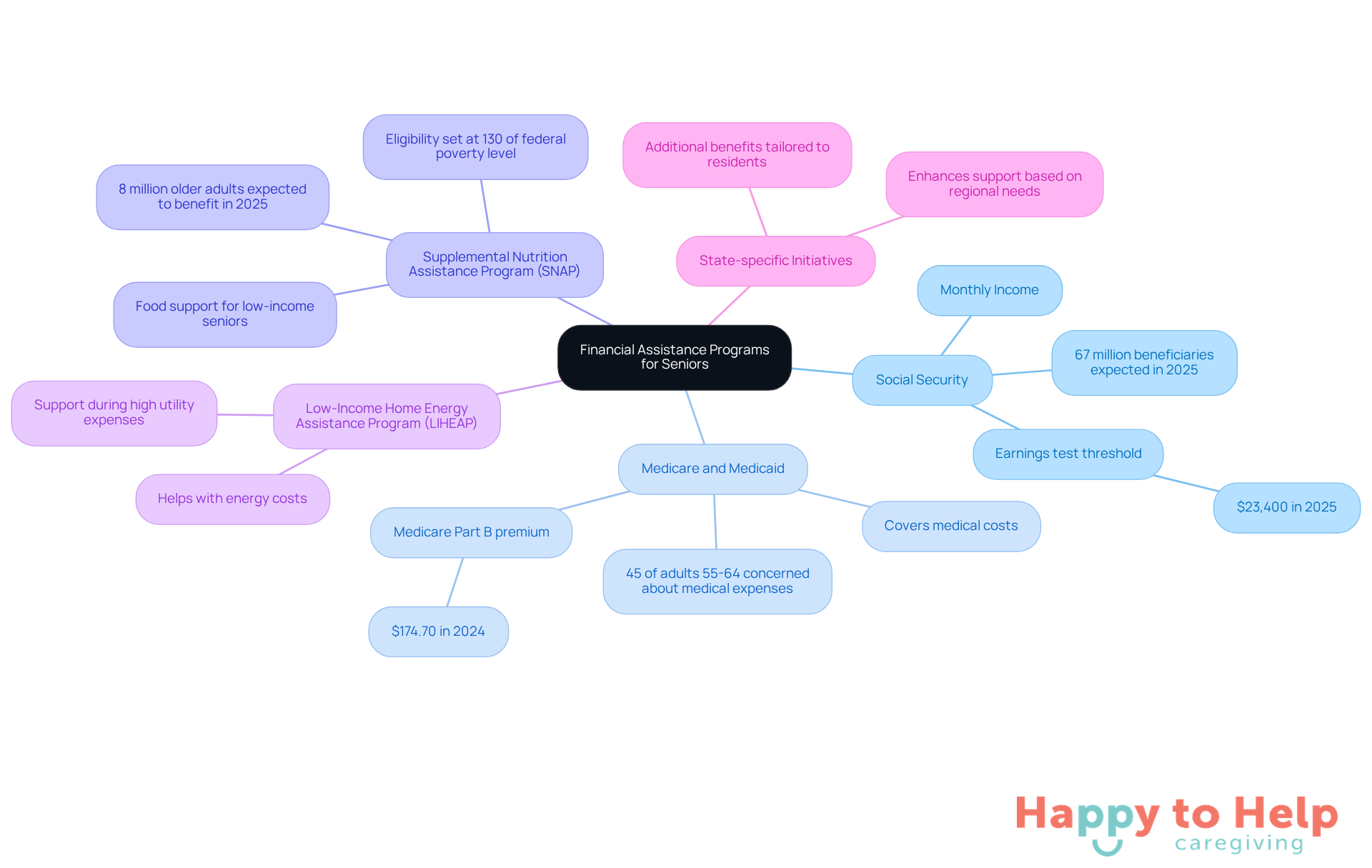
Understanding the various types of financial assistance for seniors that are available is crucial. Many face significant challenges, particularly concerning housing and healthcare costs. For instance, 22% of individuals aged 55 and above worry about paying rent or needing assistance with mortgage payments. This highlights the importance of programs that provide financial assistance for seniors.
Key programs to explore include:
- Social Security: This program provides monthly income to eligible seniors, with approximately 67 million Americans expected to receive benefits in 2025. It plays a vital role in providing financial assistance for seniors, ensuring their financial stability.
- Medicare and Medicaid: These health insurance schemes cover medical costs for older adults. Notably, 45% of adults between 55 and 64 express concerns about medical expenses, highlighting the essential role that financial assistance for seniors plays in alleviating financial strain.
- Supplemental Nutrition Assistance Program (SNAP): This program offers food support to low-income elderly individuals, with nearly 8 million older adults anticipated to benefit in 2025. Understanding the eligibility criteria, which is set at 130% of the federal poverty level, is essential for accessing this support.
- Low-Income Home Energy Assistance Program (LIHEAP): This initiative helps with energy costs, providing crucial support during periods of high utility expenses.
- State-specific initiatives: Many states offer financial assistance for seniors through additional benefits tailored to their residents, enhancing the support available to older adults based on regional needs.
To identify initiatives that may be relevant to your situation, consider using tools like USAGov's Benefit Finder. This resource can guide you through available options and help ensure you receive the support you need.
Identify Specific Programs for Seniors
Understanding the common categories of support available is crucial for caregivers. Many face the challenge of finding specific services tailored to the elderly, which can be overwhelming. This lack of clarity can lead to missed opportunities for financial assistance for seniors, which could significantly improve their quality of life.
To address this issue, here are some notable programs that provide targeted support:
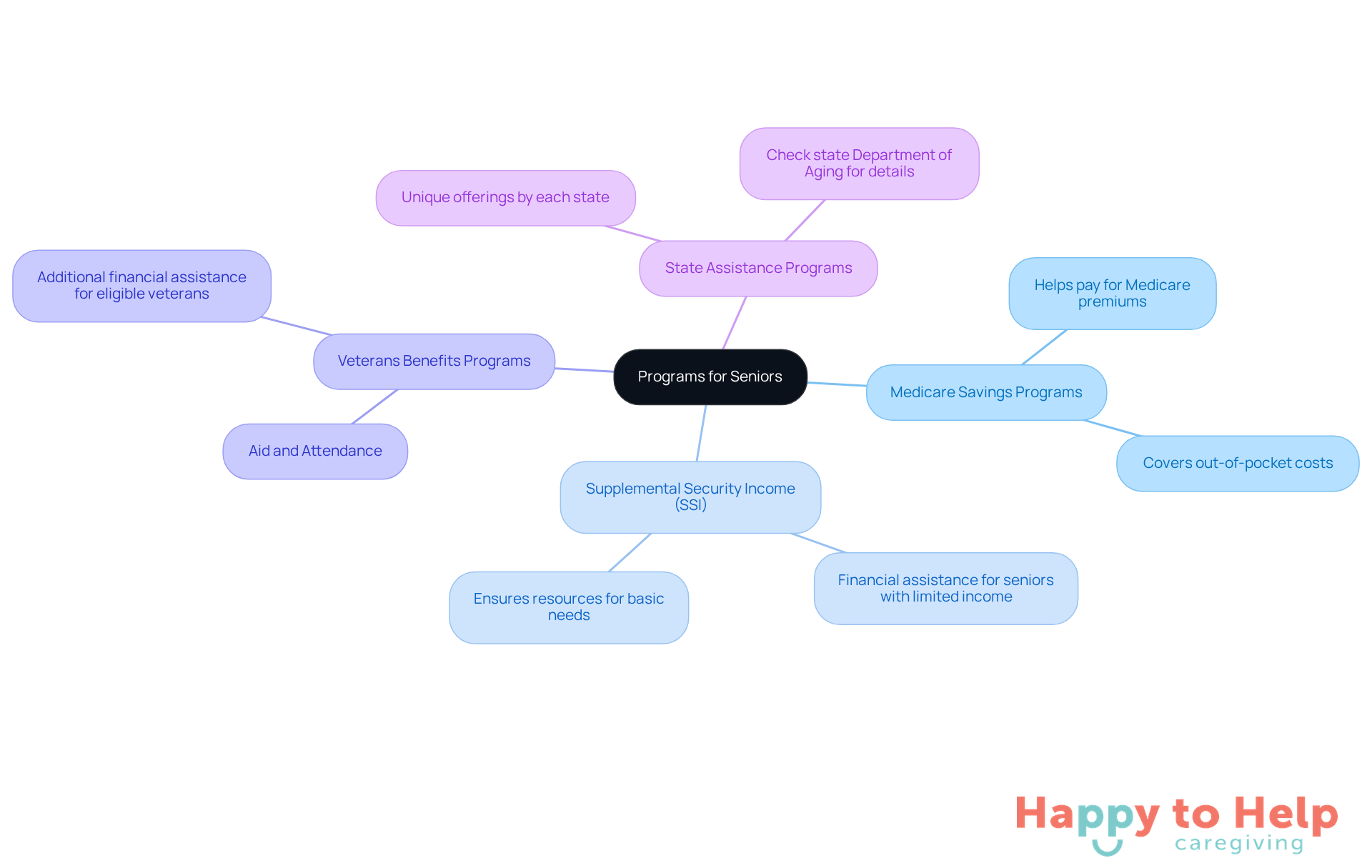
- Medicare Savings Programs: These programs help pay for Medicare premiums and out-of-pocket costs, easing the financial burden on seniors.
- Supplemental Security Income (SSI): This program provides financial assistance for seniors with limited income, ensuring they have the resources they need.
- Veterans Benefits programs: These programs, such as Aid and Attendance, provide eligible veterans with additional financial assistance for seniors.
- State Assistance Programs: Each state has unique offerings; it’s essential to check your state’s Department of Aging website for specific details.
Additionally, researching local nonprofits and community organizations can uncover further support options. For more resources, consider visiting NCOA's resources. By leveraging these programs, caregivers can better support the elderly in their care.
Gather Required Documentation for Applications
Before applying for financial support, caregivers often face the challenge of compiling the necessary documentation. This can be a daunting task, and without the right papers, the process may become lengthy and frustrating, potentially leading to delays or even denials of assistance.
To enhance your chances of approval, it’s essential to gather the following commonly required documents:
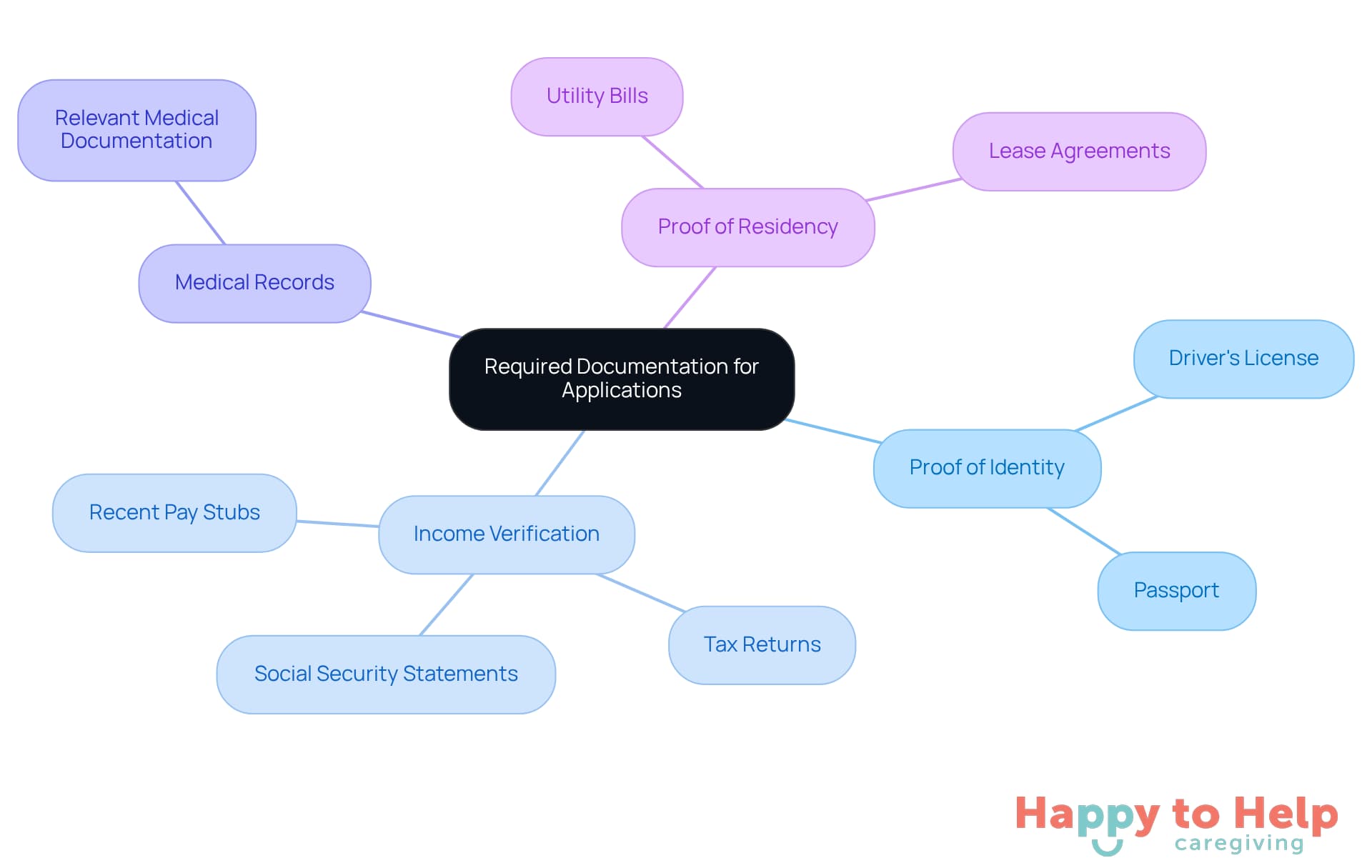
- Proof of Identity: A driver's license or passport can confirm your identity.
- Income Verification: Recent pay stubs, tax returns, or Social Security statements are crucial to demonstrate your financial situation.
- Medical Records: If applying for health-related support, include relevant medical documentation to bolster your application.
- Proof of Residency: Utility bills or lease agreements can serve as evidence of your current living situation.
Ensure that all documents are current and accurately reflect your financial circumstances. According to recent statistics, applicants who submit complete and well-organized documentation have a significantly higher success rate in securing financial assistance.
To simplify the application process, consider using a checklist that outlines all necessary documents and steps for applying for elder benefits. This proactive approach not only streamlines your efforts but also increases your likelihood of receiving the support you need.
Review Eligibility Criteria for Each Program
When it comes to financial assistance for seniors, many caregivers face a significant challenge: understanding eligibility criteria. This can be particularly daunting for those supporting elderly individuals in obtaining financial assistance for seniors who may need help navigating these complex systems.
Key Factors to Consider:
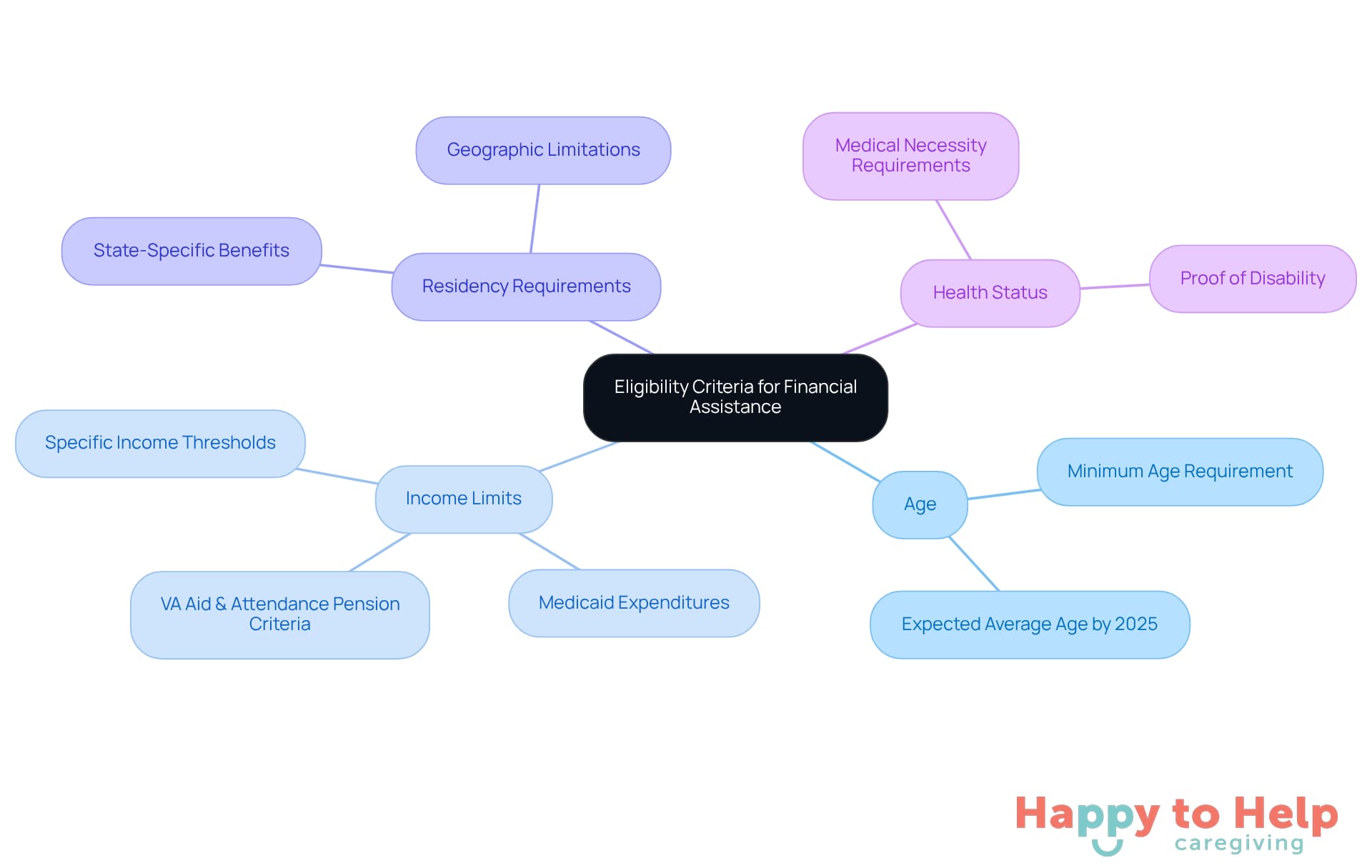
- Age: Most programs require applicants to be at least 60 years old, focusing on supporting seniors. By 2025, the average age of candidates for assistance initiatives is expected to be around 70 years, indicating that many older adults seek help later in life.
- Income Limits: Various initiatives set specific income thresholds aimed at assisting low-income elderly individuals. For example, Medicaid spending in 2021 was approximately $339 billion for those eligible due to age or disability, showcasing the substantial financial support available. Programs like the VA Aid & Attendance Pension also have distinct income criteria that applicants must meet to qualify for benefits.
- Residency Requirements: Some benefits are limited to residents of certain states or counties, which can impact eligibility based on geographic location. For instance, specific initiatives may only be available to seniors living in South Carolina.
- Health Status: Certain initiatives may require proof of disability or medical necessity, ensuring that support is directed to those who need it most.
To navigate these challenges effectively, caregivers should check specific guidelines on relevant websites or consult with local agencies for the most accurate and comprehensive eligibility information. Understanding these criteria is crucial for accessing financial assistance for seniors. As Robin Rudowitz noted, more than half of Medicaid expenditures are directed towards individuals qualified through non-MAGI pathways, underscoring the importance of comprehending these services for older adults in need.
Complete and Submit Applications for Assistance
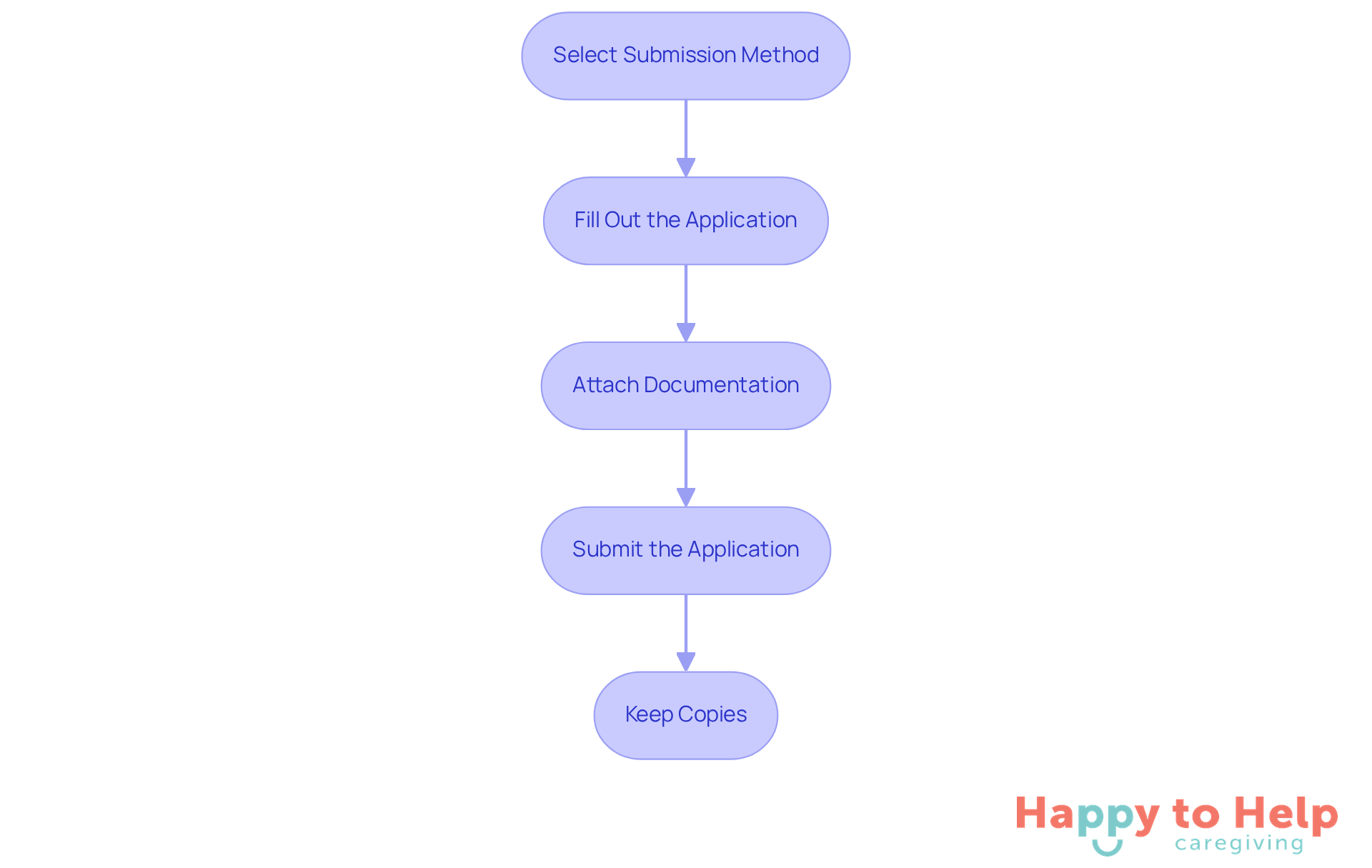
With your documentation prepared and eligibility verified, you can move forward to finalize requests for senior assistance. However, many seniors face challenges in this process, particularly when it comes to submitting applications. Here’s a step-by-step guide to help you navigate the process effectively:
-
Select the Submission Method: Many services now offer online submissions, which often have higher success rates than paper forms. However, some programs still require traditional paper forms, so verify the specific requirements for each. It's crucial to recognize that many seniors struggle with online submissions due to limited internet access or skills, which can hinder their ability to complete requests successfully.
-
Fill Out the Application: Ensure that all information is accurate and complete. Mistakes can lead to delays or denials, so double-check for any required signatures and fields.
-
Attach Documentation: Include all necessary documents as outlined in the submission instructions. This may include proof of income, identification, and any other relevant paperwork.
-
Submit the Application: Follow the submission guidelines carefully, whether you are applying online or by mail. For online submissions, ensure you receive a confirmation of your request.
-
Keep Copies: Always retain duplicates of your submission and supporting documents for your records. This is crucial in case you need to reference them later or if any issues arise.
For further assistance with the enrollment process, consider contacting local aging services or organizations that focus on benefits for older adults, such as the National Council on Aging (NCOA). They can provide expert advice and support to ensure your submission is completed accurately and efficiently. As Kathleen Romig from the Center on Budget and Policy Priorities noted, the new in-person verification requirements can be particularly challenging for many elderly individuals, especially those living in rural areas.
Troubleshoot Common Application Issues
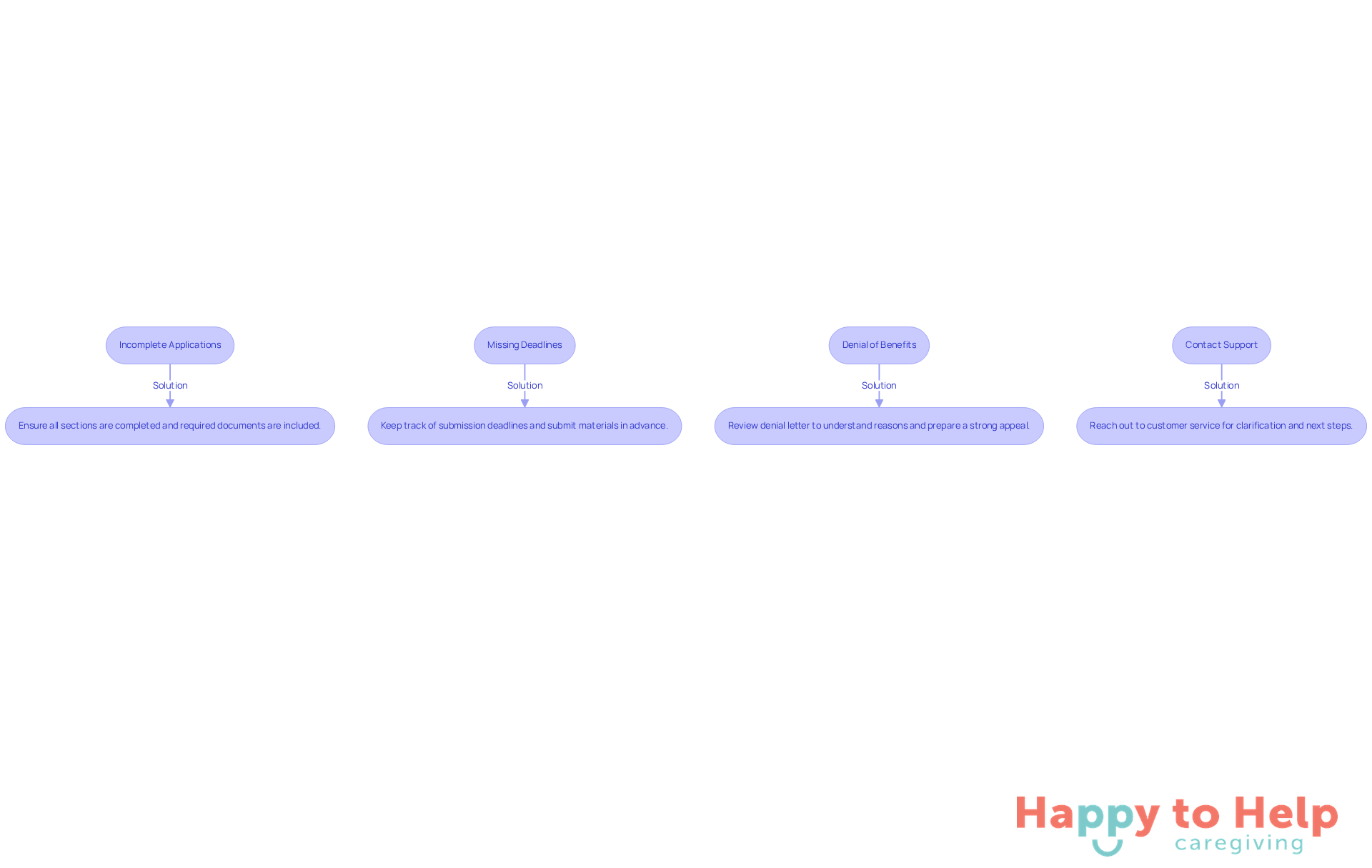
Navigating the procedure for financial assistance for seniors can be challenging, and encountering issues is not uncommon. Here are some effective troubleshooting tips to help you overcome these challenges:
- Incomplete Applications: One major hurdle is submitting incomplete applications. Ensure that every section of your application is thoroughly completed and that all required documents are included. Incomplete submissions are a leading cause of denial, so double-checking your entry can save time and frustration.
- Missing Deadlines: Another common issue is missing deadlines. Stay organized by keeping track of submission deadlines. Submitting your materials well in advance can prevent last-minute issues and ensure your submission is reviewed on time.
- Denial of Benefits: If your application is denied, it’s crucial to carefully review the denial letter. Understanding the specific reasons for the denial will guide you in preparing a strong appeal. Statistics indicate that many seniors successfully appeal denials by addressing the outlined issues, with a significant percentage of appeals resulting in favorable outcomes.
- Contact Support: Don’t hesitate to reach out to the program’s customer service for clarification or help. They can provide valuable insights and help you understand the next steps in the process.
As Eleanor Roosevelt once said, "Today is the oldest you've ever been and the youngest you'll ever be again." By following these tips, you can enhance your chances of successfully navigating the application process for financial assistance for seniors and securing the support you need.
Your Path Forward
Understanding and accessing financial assistance for seniors presents a significant challenge that can impact their well-being and security. Many older adults face financial burdens that can be alleviated through various programs designed to support them. By effectively navigating these options, seniors and their caregivers can significantly improve their quality of life.
Programs such as:
- Social Security
- Medicare
- SNAP
- State-specific initiatives
provide crucial support. However, gathering necessary documentation, understanding eligibility criteria, and submitting applications can be daunting tasks. Each of these steps is vital in securing the financial assistance needed for housing, healthcare, and daily living expenses.
To tackle these challenges, caregivers must take proactive steps. Engaging with local organizations and utilizing online tools can enhance the chances of success in obtaining assistance. By recognizing and utilizing available resources, caregivers can ensure that seniors receive the support they need. This assistance fosters a sense of dignity and security, enabling the elderly population to live their lives with greater peace of mind.
https://iframe.tely.ai/cta/eyJhcnRpY2xlX2lkIjogIjY5Mjc5NGYyMWE3YzlhYWNlNmI1NGZiNiIsICJjb21wYW55X2lkIjogIjY4ZWU1ZGNhNzMxNzYyNTU3ZjNjOTVjMSIsICJpbmRleCI6IG51bGwsICJ0eXBlIjogImFydGljbGUifQ==Frequently Asked Questions
What types of financial assistance programs are available for seniors?
Various financial assistance programs for seniors include Social Security, Medicare and Medicaid, Supplemental Nutrition Assistance Program (SNAP), Low-Income Home Energy Assistance Program (LIHEAP), and state-specific initiatives.
How does Social Security assist seniors?
Social Security provides monthly income to eligible seniors, with approximately 67 million Americans expected to receive benefits in 2025, helping ensure their financial stability.
What role do Medicare and Medicaid play in financial assistance for seniors?
Medicare and Medicaid cover medical costs for older adults, alleviating financial strain, especially since 45% of adults aged 55 to 64 express concerns about medical expenses.
What is the Supplemental Nutrition Assistance Program (SNAP)?
SNAP offers food support to low-income elderly individuals, with nearly 8 million older adults anticipated to benefit in 2025. Eligibility is set at 130% of the federal poverty level.
What is the Low-Income Home Energy Assistance Program (LIHEAP)?
LIHEAP helps seniors with energy costs, providing crucial support during periods of high utility expenses.
How can seniors find state-specific financial assistance programs?
Many states offer unique financial assistance programs for seniors. It is essential to check your state’s Department of Aging website for specific details.
What are Medicare Savings Programs?
Medicare Savings Programs help pay for Medicare premiums and out-of-pocket costs, easing the financial burden on seniors.
What is Supplemental Security Income (SSI)?
SSI provides financial assistance for seniors with limited income, ensuring they have the necessary resources.
Are there financial assistance programs specifically for veterans?
Yes, Veterans Benefits programs, such as Aid and Attendance, provide additional financial assistance for eligible veterans.
How can caregivers find more resources for supporting seniors?
Caregivers can research local nonprofits and community organizations for further support options and consider visiting resources like NCOA for additional information.
List of Sources
- Understand Available Financial Assistance Programs
- Congress Funds Aging Services through September 2025 (https://ncoa.org/article/congress-wraps-up-key-unfinished-funding-work-for-aging-services)
- Biggest Social Security Changes for 2025 (https://aarp.org/social-security/2025-changes)
- Financial Assistance for Seniors: Programs & Debt Relief (https://debt.org/advice/financial-assistance-for-senior-citizens)
- Monthly Statistical Snapshot, August 2025 (https://ssa.gov/policy/docs/quickfacts/stat\_snapshot)
- 2025 Budget Impacts: House Bill Would Cut Assistance and Raise Costs for Seniors (https://cbpp.org/research/federal-budget/2025-budget-impacts-house-bill-would-cut-assistance-and-raise-costs-for)
- Identify Specific Programs for Seniors
- Social Security Announces 2.8 Percent Benefit Increase for 2026 (https://ssa.gov/news/en/press/releases/2025-10-24.html)
- Social Security beneficiaries will soon receive 2026 benefit notices. Here are the changes to watch for next year (https://cnbc.com/2025/11/21/social-security-2026-benefit-amounts-will-be-affected-by-these-changes.html)
- Fast Facts & Figures About Social Security, 2025 (https://ssa.gov/policy/docs/chartbooks/fast\_facts/2025/fast\_facts25.html)
- SSI Monthly Statistics, August 2025 (https://ssa.gov/policy/docs/statcomps/ssi\_monthly)
- Monthly Statistical Snapshot, August 2025 (https://ssa.gov/policy/docs/quickfacts/stat\_snapshot)
- Gather Required Documentation for Applications
-
Best Practices
Case Studies (https://ors.od.nih.gov/OD/OQM/benchmarking/bestpractice/Pages/case_studies.aspx) -
A Step-by-Step Guide to Applying for Low-Income Senior Housing (https://comfortcaresl.com/a-step-by-step-guide-to-applying-for-low-income-senior-housing)
-
72 Scholarship Statistics: 2025 Data, Facts & Analysis | Research.com (https://research.com/research/scholarship-statistics)
-
Offering Home Health Care Services: A Case Study (https://syscreations.com/case\_studies/home-health-care-services)
-
Financial Aid Statistics [2025]: Average Aid per Student (https://educationdata.org/financial-aid-statistics)
- Review Eligibility Criteria for Each Program
- How to Find Financial Assistance for In-Home Care? (https://lovinghomecareinc.com/financial-assistance-for-in-home-care)
- 5 Key Facts About Medicaid Eligibility for Seniors and People with Disabilities | KFF (https://kff.org/medicaid/5-key-facts-about-medicaid-eligibility-for-seniors-and-people-with-disabilities)
- Complete and Submit Applications for Assistance
-
Best Practices
Case Studies (https://ors.od.nih.gov/OD/OQM/benchmarking/bestpractice/Pages/case_studies.aspx) -
New Social Security rules will create hurdles for millions of seniors, report finds (https://npr.org/2025/04/08/nx-s1-5356476/social-security-new-rules)
-
20 Inspirational Senior Care Quotes (https://1plus1cares.com/20-inspirational-senior-care-quotes)
-
Supplemental Nutrition Assistance Program (SNAP) - Key Statistics and Research | Economic Research Service (https://ers.usda.gov/topics/food-nutrition-assistance/supplemental-nutrition-assistance-program-snap/key-statistics-and-research)
-
Monthly Statistical Snapshot, August 2025 (https://ssa.gov/policy/docs/quickfacts/stat\_snapshot)
- Troubleshoot Common Application Issues
- 20 Inspirational Senior Care Quotes (https://1plus1cares.com/20-inspirational-senior-care-quotes)
- Why SSDI Applications Are Denied in 2025 & How to Appeal - Tabak Law, LLC (https://tabakattorneys.com/why-most-ssdi-applications-are-denied-in-2025-and-how-to-appeal-successfully)
- (https://belleviecare.co.uk/support-advice/60-elderly-care-quotes-to-lift-your-spirits)
- 15 Good Quotes for Seniors That Will Brighten Your Day in 2025 (https://arhomecare.com/15-good-quotes-for-seniors-that-will-brighten-your-day-in-2025)
- 12 Motivational Quotes for Caregivers (https://ultimatecareny.com/resources/motivational-quotes-for-caregivers)