

Active service-area notice
Happy to Help does not currently list San Diego as an active service area. This article is general educational information. For local care availability, browse our active service areas.
Browse active service areasFor families in our service areas
For families in our service areas, this guide explains caregiver support and how non-medical in-home caregiving can support care planning in East Idaho, Treasure Valley & Magic Valley, Northern Wasatch, North Central West Virginia, and Northeast Ohio.
Why Navigate San Diego Elder Care: Steps Matters
As the population of older adults in San Diego continues to surge, family caregivers face a complex elder care landscape. This situation presents a significant problem: understanding the array of available services and community resources is essential for those supporting aging relatives. However, navigating this environment can be challenging, leaving caregivers wondering how to ensure their loved ones receive the best possible care while managing their own emotional and physical well-being.
The implications of this challenge are profound. Caregivers often feel overwhelmed, balancing their responsibilities with the need for self-care. This emotional strain can impact their ability to provide effective support, ultimately affecting the quality of life for both seniors and their families.
So, what can caregivers do? This guide offers actionable steps and insights to empower them in making informed decisions. By understanding available resources and implementing practical strategies, caregivers can enhance their loved ones' quality of life while also taking care of their own well-being.
Understand the Landscape of Elder Care in San Diego
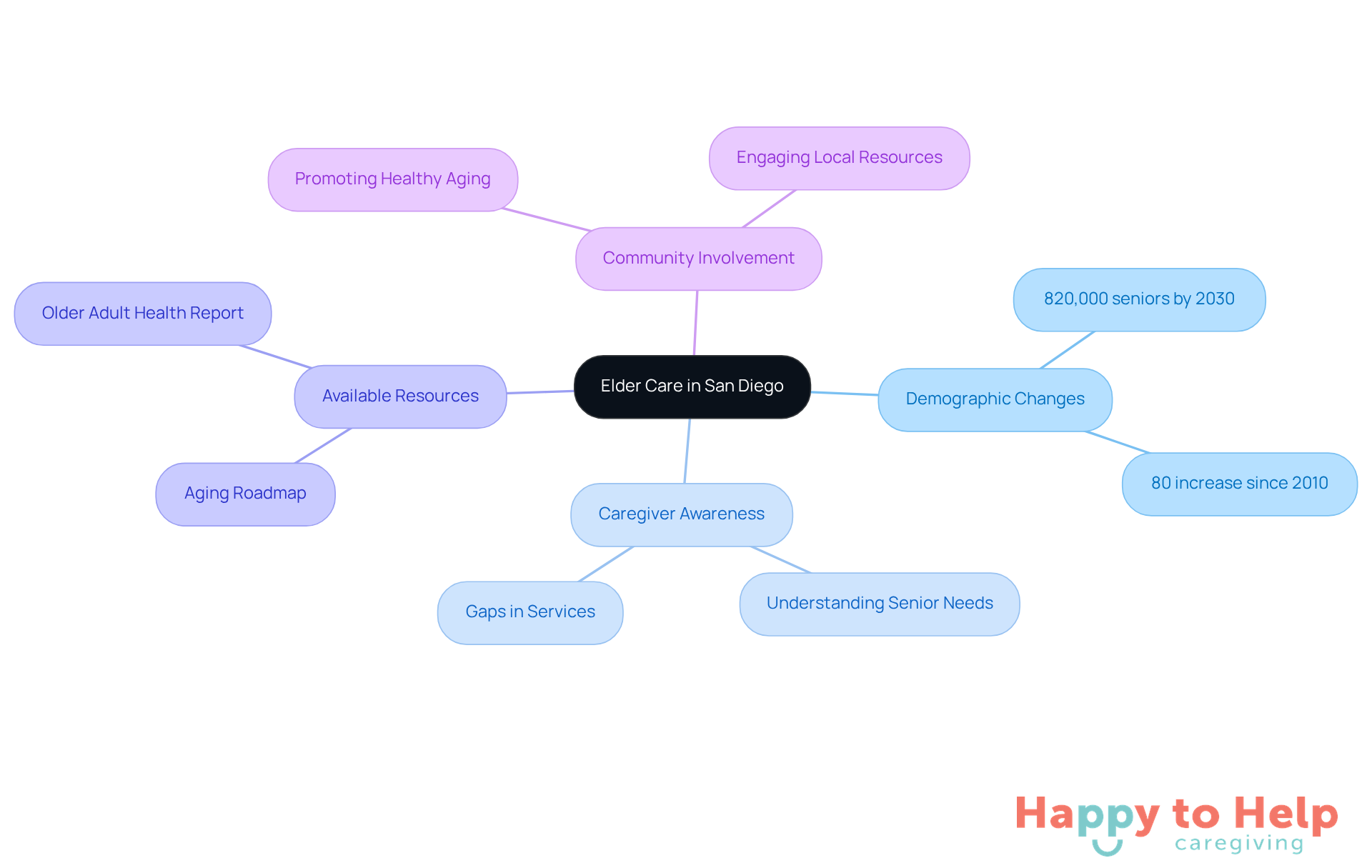
San Diego elder care faces a significant challenge due to a rapidly growing population of older adults. Projections indicate that by 2030, over 820,000 individuals aged 60 and older will reside in the area. This demographic shift creates a pressing need for family caregivers to understand the San Diego elder care environment, including available services and community resources.
The implications of this change are profound. Caregivers must be aware of the specific needs of seniors and the gaps in services that may exist. Familiarizing themselves with local aging reports, such as the Older Adult Health in San Diego County report, can provide valuable insights into health trends and service deficiencies in San Diego elder care.
To effectively support their relatives, caregivers should take actionable steps. Resources like the Aging Roadmap from Live Well San Diego outline strategies for promoting healthy aging, which are essential for effective San Diego elder care. These resources emphasize the importance of community involvement and access to health services, which are crucial for enhancing the quality of life for older adults.
By understanding these dynamics, caregivers can make informed choices regarding support options. Engaging with local resources not only empowers caregivers but also fosters a supportive community for seniors.
Explore Different Types of Elder Care Services
Caring for elderly family members can be a daunting task, often leaving caregivers feeling overwhelmed. The emotional and physical demands of caregiving can lead to feelings of isolation and stress. Understanding the types of San Diego elder care support services available can help alleviate some of these burdens.
-
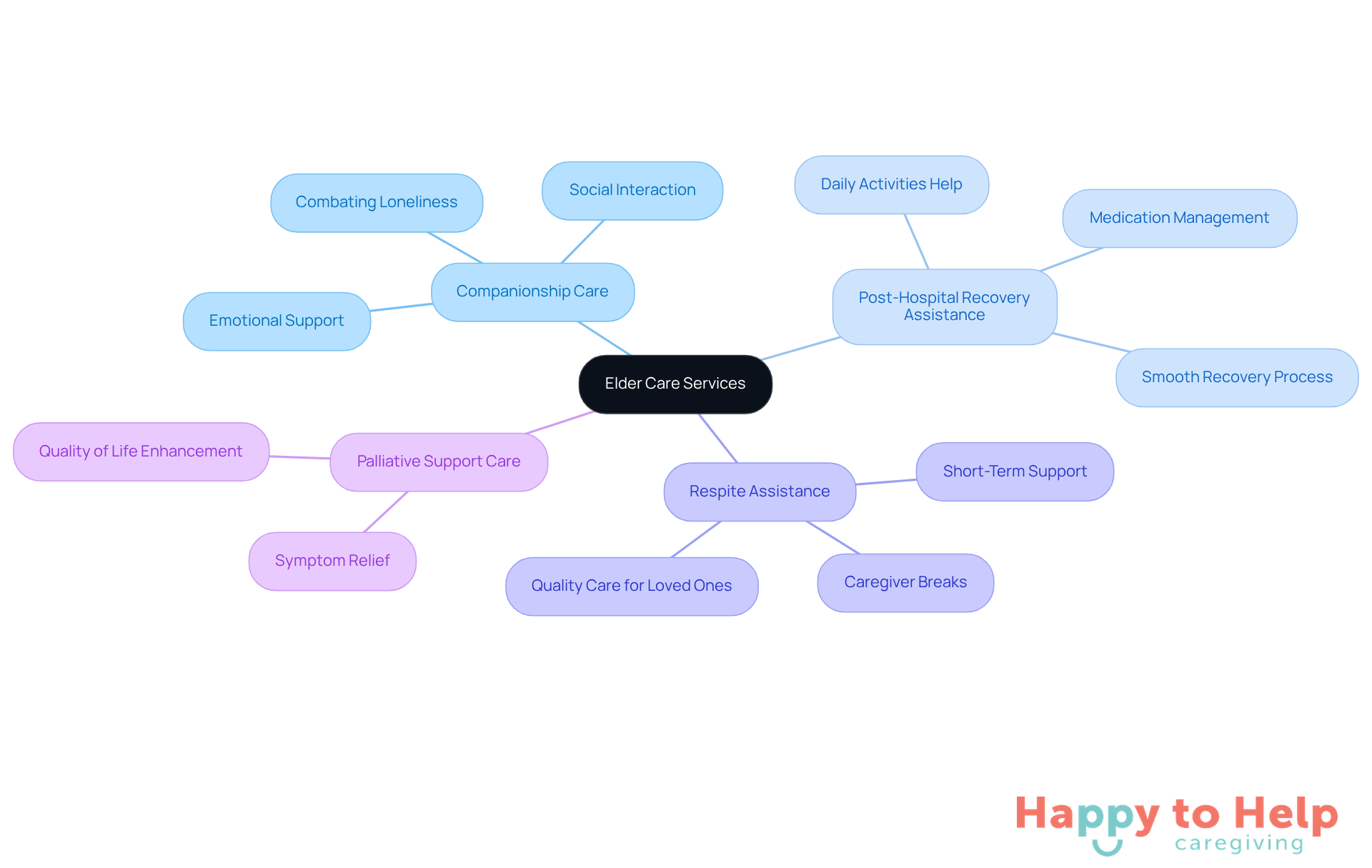
Companionship Care provides essential emotional support and social interaction, helping to combat loneliness and isolation. This service is crucial for maintaining mental well-being.
-
Post-Hospital Recovery Assistance is tailored for individuals recovering from surgery or illness. It includes help with daily activities and medication management, ensuring a smoother recovery process.
-
Respite Assistance offers short-term support, allowing family caregivers to take a much-needed break while ensuring their loved ones receive quality care.
-
Palliative Support Care focuses on individuals with serious illnesses, providing relief from symptoms and enhancing their quality of life.
Caregivers should carefully evaluate which type of service aligns best with their family member's needs. Considerations should include health status, personal preferences, and financial resources. By utilizing San Diego elder care services, caregivers can find the support they need, which ultimately improves the quality of life for both themselves and their loved ones.
Assess Your Loved One's Care Needs
Assessing your loved one's care needs can be challenging. Caregivers often face the problem of understanding the specific support required for their loved ones, which can lead to feelings of uncertainty and stress. To address this, consider the following steps:
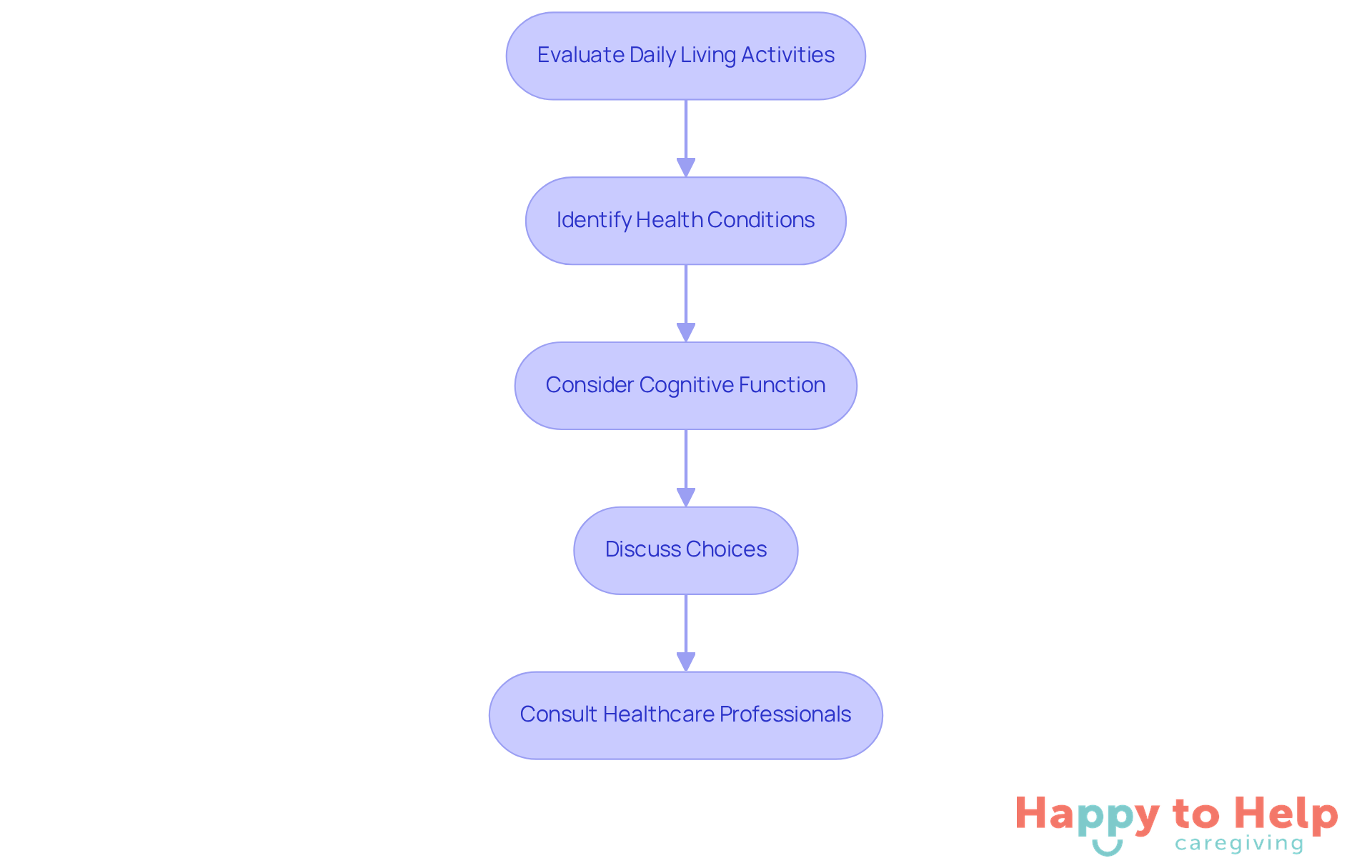
- Evaluate Daily Living Activities: Observe their ability to perform activities of daily living (ADLs) such as bathing, dressing, and eating. Tools like the Katz ADL scale can help quantify their capabilities.
- Identify Health Conditions: Take note of any chronic conditions or recent health changes that may require additional support.
- Consider Cognitive Function: Evaluate their cognitive abilities, including memory and decision-making skills, which can influence their support needs.
- Discuss Choices: Involve your cherished one in discussions regarding their preferences for support, including their wish for autonomy and particular activities they appreciate.
- Consult Healthcare Professionals: Involve doctors or geriatric care managers to gain insights into your loved one's health status and care requirements.
By thoroughly assessing these areas, caregivers can create a clearer picture of the support needed, ultimately leading to better care outcomes.
Research and Evaluate Caregiving Agencies
When researching caregiving agencies, caregivers often face the challenge of finding the right support for their loved ones. This can lead to stress and uncertainty, especially when the well-being of family members is at stake. To navigate this process effectively, follow these essential steps:
-
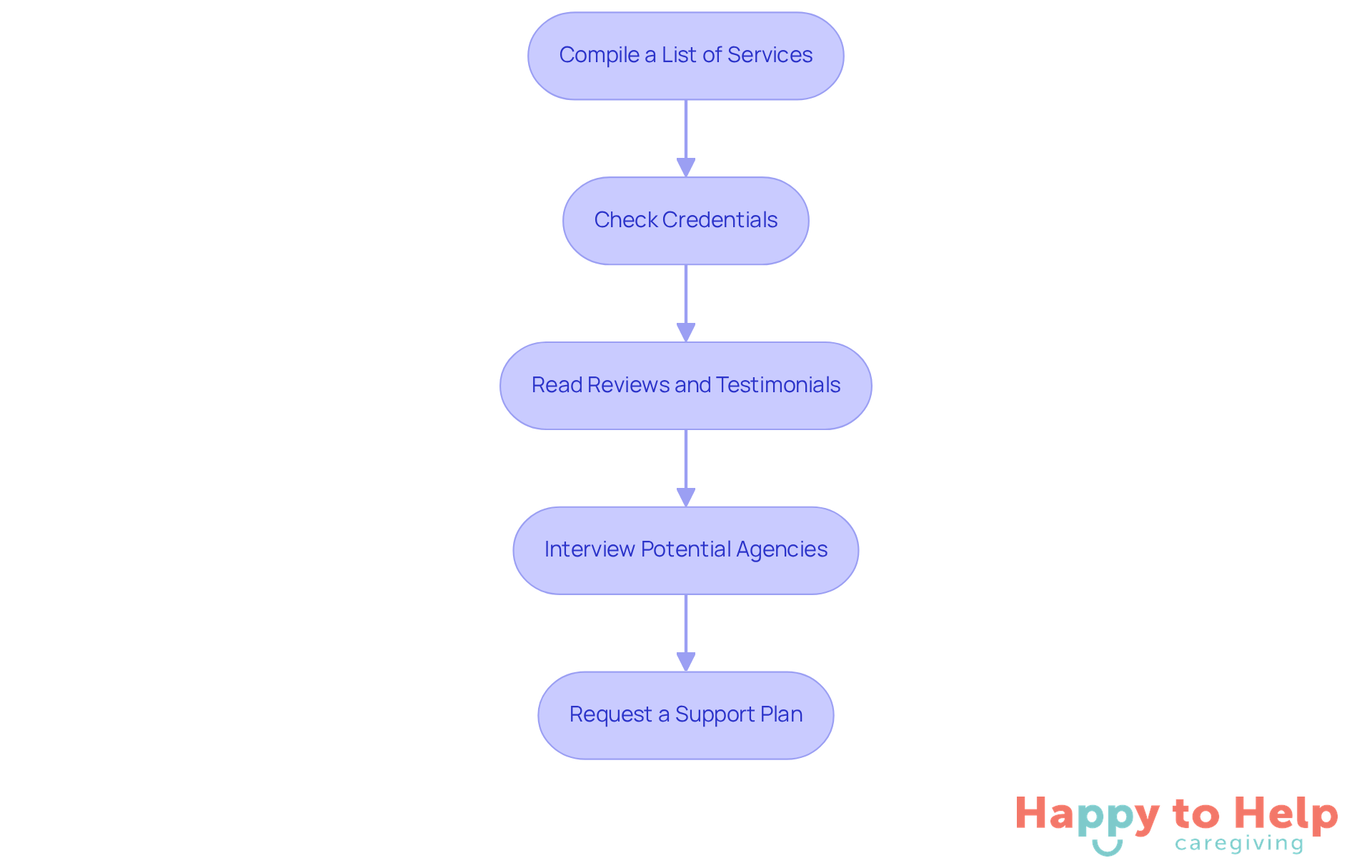
Compile a List of Services: Start by gathering a comprehensive list of local caregiving services through online searches, referrals, and community resources. In 2025, San Diego elder care includes numerous licensed caregiving organizations, each providing a variety of services tailored to personal needs. Notably, there are approximately 2,702 home health organizations listed in California, with many focused on San Diego elder care.
-
Check Credentials: It's crucial to ensure that the organizations are licensed and accredited by relevant state bodies. This verification guarantees that the organization meets established safety and quality standards, which is vital for the well-being of your loved ones. Starting in 2025, organizations must adhere to state rules requiring training for caregivers, ensuring a standard of quality support.
-
Read Reviews and Testimonials: Explore feedback from other families to assess the organization's reputation and quality of service. In 2025, many organizations in the San Diego elder care sector have received favorable ratings, with average scores around 4.5 stars. This reflects their commitment to compassionate and effective caregiving. Testimonials often highlight the importance of individualized support strategies and the emotional assistance provided by caregivers.
-
Interview Potential Agencies: Prepare a list of questions to ask during interviews, such as:
- What types of services do you offer?
- How do you screen and train your caregivers?
- What is your process for matching caregivers with clients?
Engaging directly with organization representatives can provide insight into their operations and service philosophy. Industry leaders emphasize that a suitable match between caregiver and client is essential for effective support.
-
Request a Support Plan: Ask for a sample support plan to understand how the organization tailors services to meet personal requirements. This step is crucial in ensuring that the organization can provide the specific assistance needed for your family member’s situation. A well-organized support plan should address not only medical needs but also emotional and social aspects of care.
By conducting thorough research and assessments, caregivers can confidently select an agency that aligns with their family member's specific support needs, fostering a nurturing and supportive environment.
Develop a Personalized Care Plan
Creating an effective personalized care plan for your elderly loved one can be challenging in the context of San Diego elder care. In San Diego elder care, caregivers often struggle with gathering the right information and setting appropriate goals, which can lead to inadequate support and decreased quality of life.
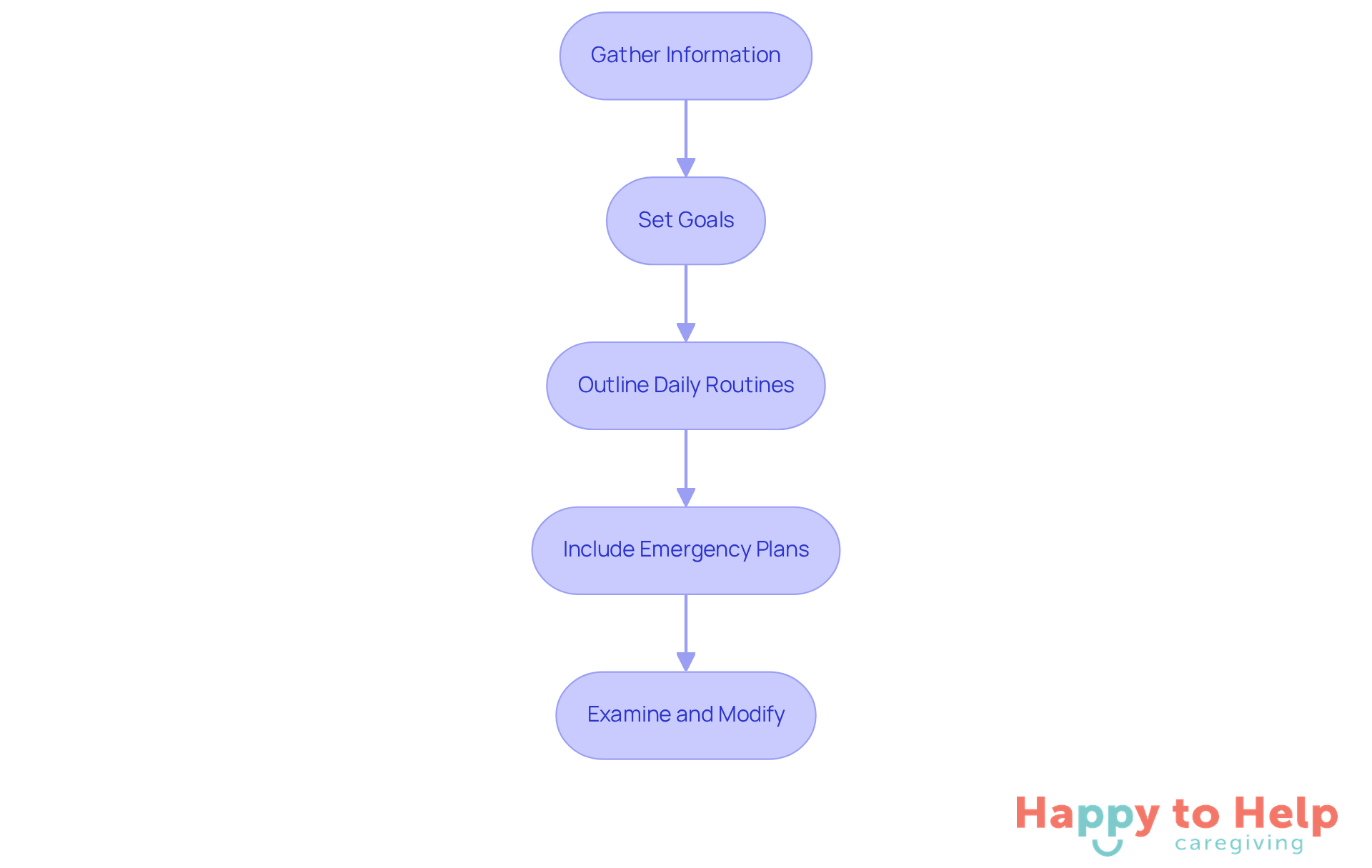
To address these challenges, consider the following actionable steps:
- Gather Information: Compile detailed medical histories, current medications, and treatment preferences from your family member and their healthcare providers. This foundational knowledge is crucial for customizing San Diego elder care services.
- Set Goals: Establish clear, achievable goals that prioritize enhancing quality of life and fostering independence. For instance, goals might include improving mobility, managing chronic conditions, or ensuring regular social interaction.
- Outline Daily Routines: Develop a structured schedule that incorporates daily activities, meal times, and necessary medical appointments. This routine helps maintain a sense of normalcy and predictability for your cherished one.
- Include Emergency Plans: Prepare contingency plans for emergencies, detailing contact information for healthcare providers and family members. This ensures swift action can be taken when needed, enhancing safety and peace of mind.
- Examine and Modify: Regularly evaluate the support plan with your loved one and their caregivers to ensure it stays effective and pertinent. Be open to making adjustments based on changing needs or preferences.
In 2025, numerous insurance plans, including Medicare, broaden coverage for a wider array of home health services, which can offer financial assistance for tailored support plans. Additionally, AI-powered monitoring systems are enhancing individualized support by ensuring timely interventions. A well-organized support plan for San Diego elder care not only addresses immediate needs but also anticipates future changes, providing a comprehensive roadmap for continuous assistance. By setting thoughtful care goals and considering successful personalized care plan examples, families can significantly improve the well-being and independence of their elderly loved ones.
Key Takeaways for Caregivers
Navigating the complexities of elder care in San Diego presents a significant challenge for family caregivers. As the population of older adults continues to grow, the need for comprehensive knowledge about available resources and services becomes increasingly critical. Caregivers must recognize the unique needs of seniors to provide effective support, which can greatly enhance their quality of life.
Understanding the various types of elder care services is essential. These include:
- Companionship care
- Post-hospital recovery assistance
- Respite support
By assessing individual care needs and researching caregiving agencies, caregivers can make informed decisions that align with their loved ones' requirements. Developing a personalized care plan is crucial, ensuring that all aspects of an elderly person's well-being are addressed, from medical needs to emotional support.
Ultimately, the journey of caregiving in San Diego is both rewarding and challenging. By actively engaging with local resources, staying informed about current trends, and fostering a supportive network, family caregivers can significantly impact the lives of their elderly loved ones. Embracing these steps not only enhances the caregiving experience but also contributes to a more compassionate and connected community for seniors.
https://iframe.tely.ai/cta/eyJhcnRpY2xlX2lkIjogIjY5MjNiNTcyZTUyZmU2NjM2Njg4Njc2MyIsICJjb21wYW55X2lkIjogIjY4ZWU1ZGNhNzMxNzYyNTU3ZjNjOTVjMSIsICJpbmRleCI6IG51bGwsICJ0eXBlIjogImFydGljbGUifQ==Frequently Asked Questions
What is the current landscape of elder care in San Diego?
San Diego elder care is facing challenges due to a rapidly growing population of older adults, with projections indicating that over 820,000 individuals aged 60 and older will reside in the area by 2030. This demographic shift creates a need for family caregivers to understand the available services and community resources.
Why is it important for caregivers to understand the needs of seniors in San Diego?
Caregivers must be aware of the specific needs of seniors and the service gaps that may exist to effectively support their relatives. Familiarizing themselves with local aging reports can provide insights into health trends and service deficiencies in elder care.
What resources can caregivers utilize to support healthy aging?
Resources like the Aging Roadmap from Live Well San Diego outline strategies for promoting healthy aging, emphasizing community involvement and access to health services, which are essential for enhancing the quality of life for older adults.
What types of elder care services are available in San Diego?
Available elder care services in San Diego include: - Companionship Care for emotional support and social interaction. - Post-Hospital Recovery Assistance for individuals recovering from surgery or illness. - Respite Assistance for short-term support to give family caregivers a break. - Palliative Support Care for individuals with serious illnesses to relieve symptoms and enhance quality of life.
How can caregivers choose the right type of elder care service?
Caregivers should evaluate which type of service aligns best with their family member's needs by considering factors such as health status, personal preferences, and financial resources. Utilizing elder care services can improve the quality of life for both caregivers and their loved ones.
List of Sources
- Understand the Landscape of Elder Care in San Diego
- Nearly One Million Older Adults Living In San Diego By 2030 | News | SDSU (https://sdsu.edu/news/2022/10/nearly-one-million-older-adults-living-san-diego-by-2030)
- Opinion: San Diego's Senior Population Is Growing Rapidly. How Do We Plan to House Them? (https://voiceofsandiego.org/2025/03/28/san-diego-housing-senior-population-boom-stipend-homeless)
- San Diego County updates its plan for supporting a growing older adult population - San Diego City Wire (https://sandiegocitywire.com/san-diego-county-updates-its-plan-for-supporting-a-growing-older-adult-population)
- California Families Will Face Major Care Challenges as Baby Boomers Age (https://timesofsandiego.com/health/2025/02/09/california-families-will-face-major-care-challenges-as-baby-boomers-age)
- Can We Get Ready for the Senior Population Boom? (https://voiceofsandiego.org/2025/08/23/can-we-get-ready-for-the-senior-population-boom)
- Explore Different Types of Elder Care Services
- Home Care Industry Trends to Watch in 2025 (https://firstlighthomecare.com/blog/home-care-industry-trends)
- AI Care Companions for Seniors (https://health.usnews.com/senior-care/articles/ai-care-companions-for-seniors)
- The Value of Companion Care for Seniors- Home Care Powered By AUAF (https://homecare-aid.com/the-value-of-companion-care-for-seniors)
- Trends in Senior Care: What to Expect in 2025 (https://agingconnections.org/blog/trends-in-senior-care-what-to-expect-in-2025)
- The Future of Senior Care: What to Expect in 2025 and Beyond (https://arhomecare.com/the-future-of-senior-care-what-to-expect-in-2025-and-beyond)
- Assess Your Loved One's Care Needs
- Family Caregiver Support, Education Needs Growing (https://hospicenews.com/2025/11/11/family-caregiver-support-education-needs-growing)
- Warning From Older Adults: Care for Aging in America Needs Urgent Rethinking (https://johnahartford.org/newsroom/view/warning-from-older-adults-care-for-aging-in-america-needs-urgent-rethinking)
- The declining population will make it even harder to care for elders (https://npr.org/2025/11/02/nx-s1-5535648/population-elderly-caregivers)
- WHO calls for urgent transformation of care and support systems for older people (https://who.int/news/item/01-10-2024-who-calls-for-urgent-transformation-of-care-and-support-systems-for-older-people)
- Caregiving in the US 2025 (https://aarp.org/pri/topics/ltss/family-caregiving/caregiving-in-the-us-2025)
- Research and Evaluate Caregiving Agencies
- Home Health Agency Utilization Trends 2014-2023 - California Association For Health Services At Home (https://cahsah.org/news/home-health-agency-utilization-trends-2014-2023)
- San Diego Home Care News | At Home Nursing Care | At Home Nursing Care (San Diego, CA) (https://athomenursingcare.com/news)
- Read Home Care and Senior Care News by A Caring Touch Home Care (https://acaringtouchhomecare.com/news)
- 2025 California Legislative Session Wins (https://caregiver.org/news/2025-california-legislative-session-wins)
- California's Care Workforce (https://ppic.org/publication/californias-care-workforce)
- Develop a Personalized Care Plan
- The Future of Home Health Care: Trends to Watch in 2025 (https://synchronyfl.com/the-future-of-home-health-care-trends-to-watch-in-2025)
- 2025: AI enhances personalized care; caregiver experience in the spotlight (https://healthcareitnews.com/news/2025-ai-enhances-personalized-care-caregiver-experience-spotlight)
- How Personalized Care Models Are Transforming Senior Living in 2025 (https://stpetersassistedliving.com/blog/how-personalized-care-models-are-revolutionizing-senior-living-in-2025)
- The declining population will make it even harder to care for elders (https://news.wfsu.org/all-npr-news/2025-11-02/the-declining-population-will-make-it-even-harder-to-care-for-elders)
- HealthFORCE, AAPA, and West Health Release “Aging Well with AI” – First in a Two-Part Series on AI and the Healthcare Workforce (https://aapa.org/news-central/2025/10/healthforce-aapa-and-west-health-release-aging-well-with-ai-first-in-a-two-part-series-on-ai-and-the-healthcare-workforce)