
Understanding Your Options
Navigating senior care in Manhattan Beach, California, can feel overwhelming. Families often face emotional challenges as they seek the best support options for their loved ones. Whether it’s in-home care, assisted living facilities, skilled nursing, or memory support programs, understanding these choices is crucial.
By taking the time to assess individual care needs and preferences, families can find the right fit. It’s important to research providers and consider logistics and financial aspects. This process can help ease the stress and uncertainty that often accompany these decisions.
Remember, you’re not alone in this journey. Many families share similar experiences, and there are compassionate services available to support you. By making informed decisions, you can enhance the well-being of your loved ones, ensuring they receive the care they deserve.
Take a moment to reflect on the support available. With the right resources, you can navigate this path with confidence and peace of mind.
The Importance of Navigate Senior Care in Manhattan
In Manhattan Beach, California, the landscape of senior care reflects the rich diversity of its community, offering a variety of options designed to meet the unique needs of older adults. Families often find themselves navigating a complex journey, filled with emotional challenges and concerns. It’s completely understandable to feel overwhelmed when considering in-home care, assisted living, or specialized facilities that prioritize both independence and safety.
With so many choices available, how can you ensure that the care selected aligns perfectly with your loved one’s needs and preferences? This guide is here to help. We aim to demystify the process, providing valuable insights and support that empower families to make informed decisions. Together, we can enhance the quality of life for those we care about most.
Understand Available Senior Care Options in Manhattan Beach
In Manhattan Beach, California, older adults have a range of support options available for senior care that are designed to meet their unique needs. It’s essential to understand these choices, as they can significantly impact the well-being of both seniors and their families.
-
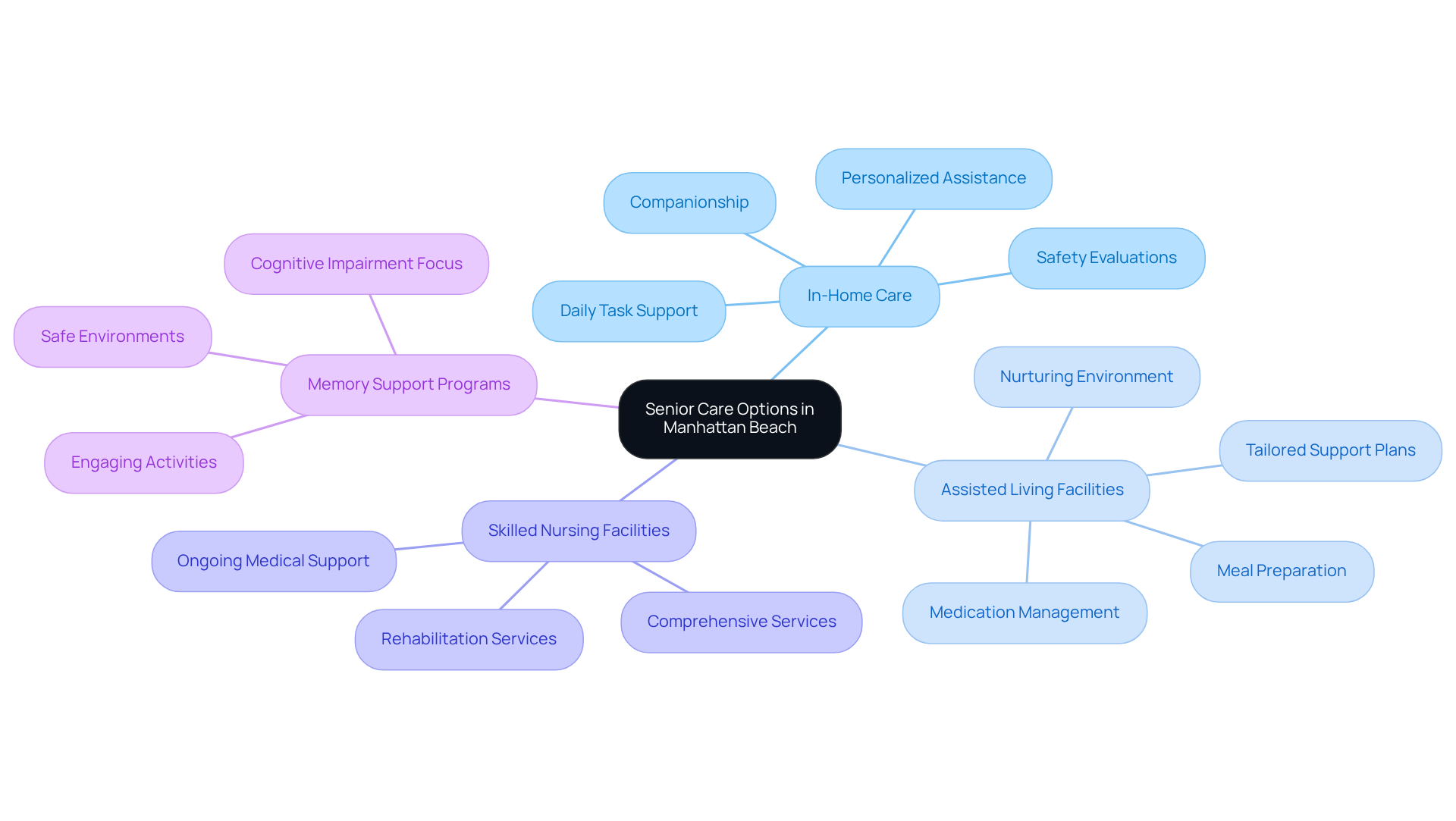
In-Home Care offers a comforting solution, allowing seniors to receive personalized assistance right in their own homes. Caregivers provide companionship, personal help, and support with daily tasks, ensuring that older adults can maintain their independence while getting the assistance they need. The strong connections formed with caregivers not only provide practical help but also emotional support, which is crucial for enhancing the quality of life.
-
Assisted Living Facilities create a nurturing environment where elderly individuals can receive help with daily living tasks, like meal preparation and medication management, all while enjoying a sense of independence. By 2025, many options for senior care in Manhattan Beach, California, will cater to diverse needs, offering tailored support plans that truly enhance residents' lives.
-
For those requiring more intensive medical care, Skilled Nursing Facilities are available. These facilities provide comprehensive services, including rehabilitation and ongoing medical support, ensuring that seniors receive the care they need.
-
Memory Support programs are also vital for individuals facing Alzheimer’s or other forms of dementia. These specialized facilities focus on creating a safe and engaging environment, addressing the unique challenges that come with cognitive impairments.
In-home assistance services often include safety evaluations of seniors' homes to identify potential hazards, ensuring a secure living environment. Caregivers are available at various times throughout the day, offering the flexibility needed to meet personal requirements.
By understanding these options, families can make informed decisions about the best type of support for their loved ones, ensuring that their needs and preferences are prioritized. Remember, you’re not alone in this journey; compassionate care is just around the corner.
Assess Individual Care Needs and Preferences
To effectively assess care needs, it’s important to approach the process with compassion and understanding. Here are some steps to guide you:
-
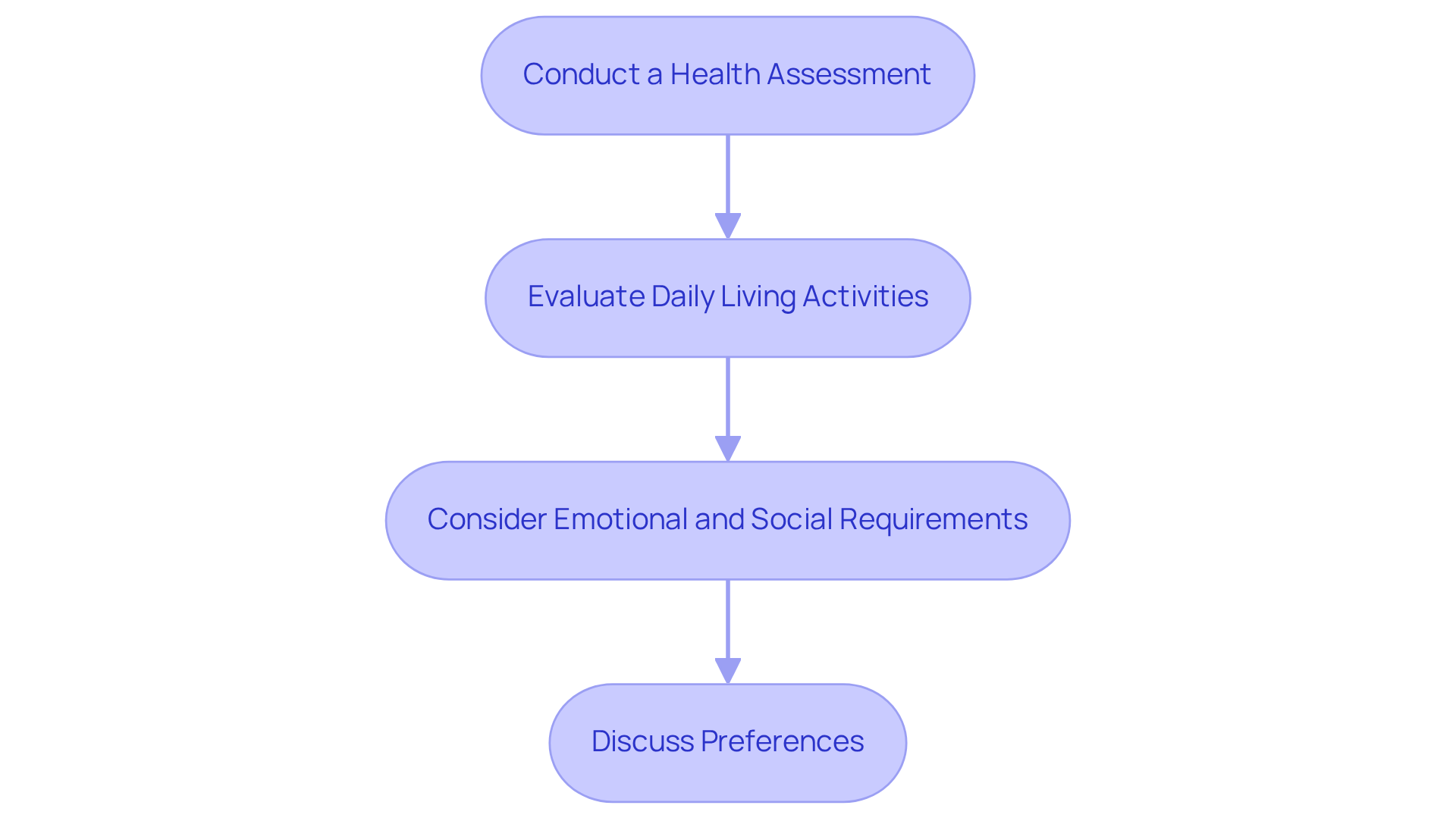
Conduct a Health Assessment: Take the time to review the individual’s medical history, current health conditions, and medications with a healthcare professional. This step is crucial in understanding their unique needs.
-
Evaluate Daily Living Activities: Identify which daily tasks the elderly individual can manage on their own and which ones may require assistance. Think about activities like bathing, dressing, and meal preparation. Recognizing these needs can help in providing the right support.
-
Consider Emotional and Social Requirements: It’s essential to evaluate the elderly individual’s desire for companionship and social interaction. Feelings of isolation can be overwhelming, so understanding their emotional needs is key to their well-being.
-
Discuss Preferences: Engage the elder in heartfelt conversations about their choices regarding support, routines, and living arrangements. This not only empowers them but also fosters a sense of control over their life.
By taking these thoughtful steps, you can develop a personalized support plan that addresses both physical and emotional needs, ensuring that the individual feels cared for and valued.
Evaluate and Compare Senior Care Providers
When it comes to finding the right support for your loved ones, it’s crucial to approach the process with care and organization. Here are some thoughtful steps to help you navigate this important journey:
-
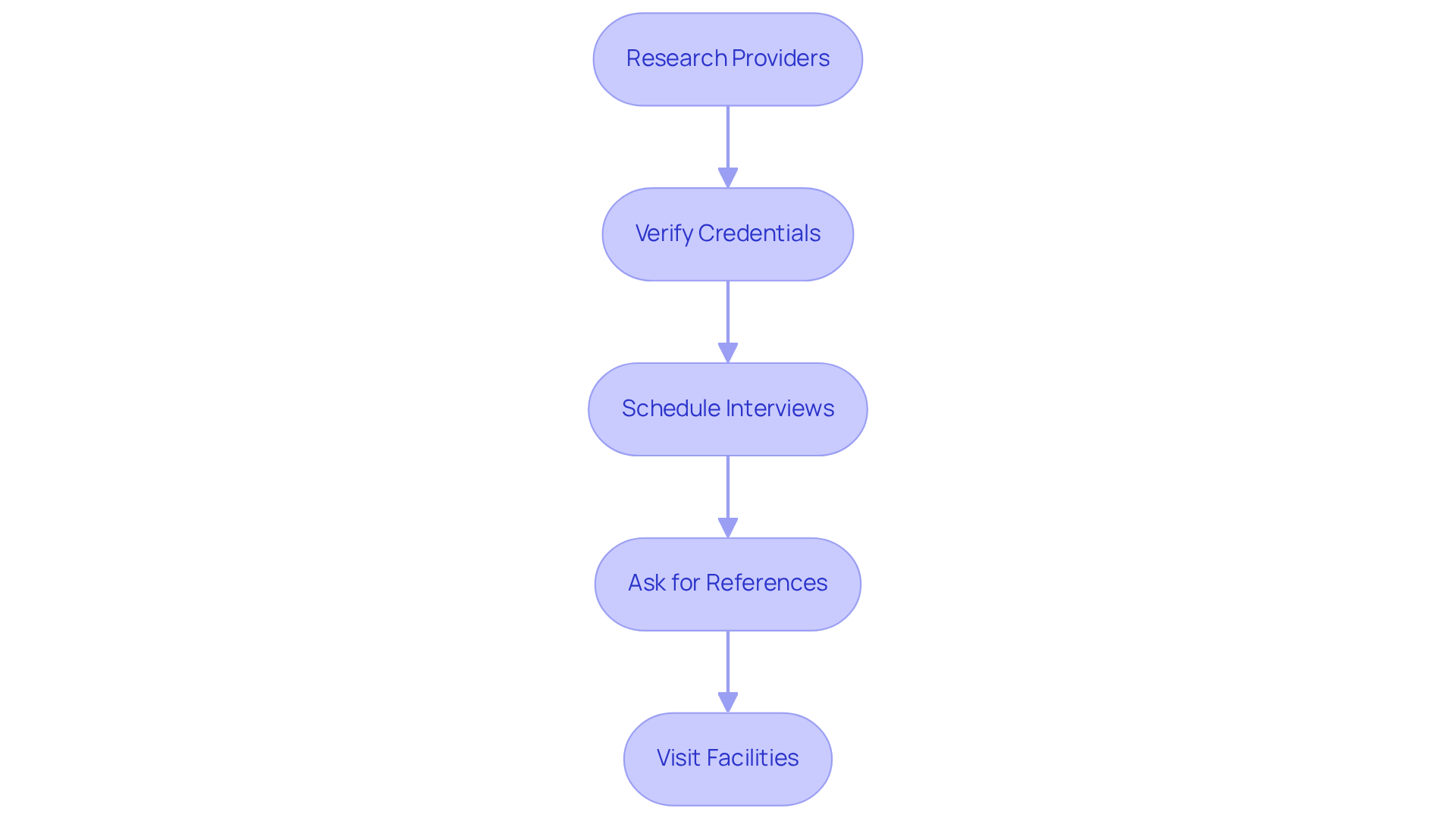
Research Providers: Start by looking for local agencies and facilities. Online platforms like Yelp or Google can be invaluable for reading reviews and checking ratings. Hearing about the experiences of other families can provide insights that help you feel more confident in your choices. Remember, as experts in the field often remind us, evaluating agencies based on their successful outcomes is key to making informed decisions.
-
Verify Credentials: It’s essential to ensure that caregivers have the necessary licenses, insurance, and training specific to elderly assistance. In California, for instance, caregiver training typically includes vital certifications in first aid and CPR, which prepare them for various situations. With the demand for home health and personal support aides expected to rise by 17 percent from 2024 to 2034, it’s more important than ever to seek out qualified providers.
-
Schedule Interviews: Take the time to meet with potential providers. Discuss their services, treatment plans, and staff qualifications. This personal interaction allows you to gauge their responsiveness and commitment to quality care, which can be reassuring during such a significant decision.
-
Ask for References: Don’t hesitate to request testimonials from other families who have used the agency’s services. Positive feedback from previous clients can be a strong indicator of reliability and effectiveness, giving you peace of mind.
-
Visit Facilities: If you’re considering assisted living or skilled nursing options, visiting the facilities is a must. Pay attention to the environment, cleanliness, and how staff interact with residents. This firsthand experience can help you determine if it aligns with your expectations for care.
By thoughtfully comparing providers and confirming their credentials, you can make choices that prioritize the well-being and comfort of your loved ones. As industry leaders emphasize, verifying caregiver qualifications isn’t just a formality; it’s a vital step in ensuring quality and safety in elder support.
Consider Logistics and Financial Aspects of Care
Navigating the logistics and financial aspects of senior care can feel overwhelming for families. It’s essential to approach this journey with care and understanding. Here are some key points to consider:
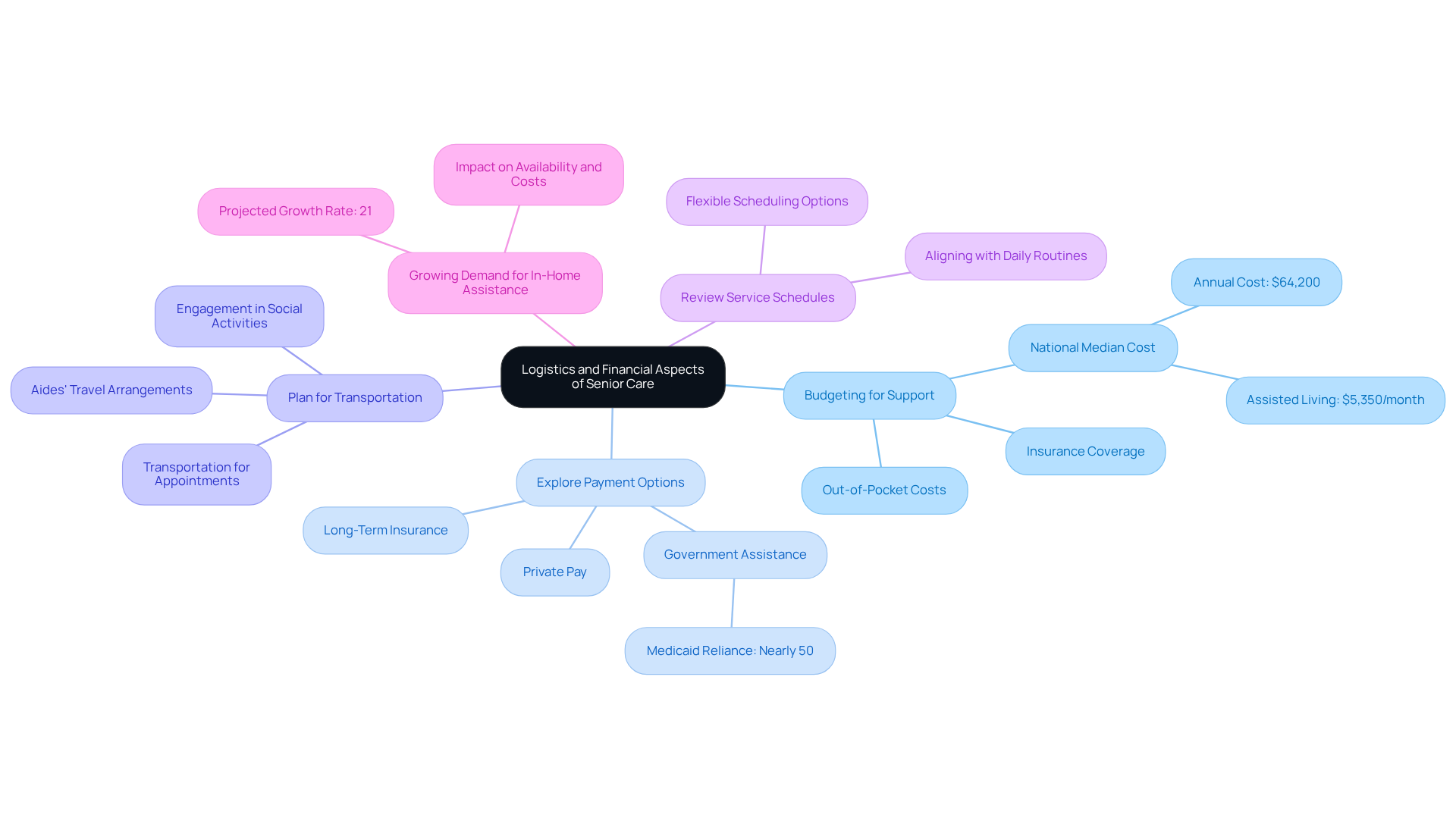
Budgeting for Support: Start by evaluating your financial capacity for support services. Look into insurance coverage and potential out-of-pocket costs. Did you know that the national median cost for assisted living services is around $5,350 monthly? That adds up to about $64,200 annually. This highlights just how crucial thorough financial planning is.
Explore Payment Options: Take the time to investigate various payment methods for in-home support. Options like private pay, long-term insurance, and government assistance programs can make a significant difference. It’s worth noting that nearly half of assisted living residents rely on Medicaid for daily services. Understanding eligibility and benefits can ease some of the financial burdens.
Plan for Transportation: If you decide on in-home assistance, think about how aides will travel to your home. Also, consider whether transportation will be needed for medical appointments or social activities. Keeping older adults engaged and connected is vital for their well-being.
Review Service Schedules: Engage in conversations with providers about flexible scheduling options. This ensures that the support aligns with both your household's needs and the elderly person's daily routine, fostering a sense of stability and comfort.
Consider the Growing Demand for In-Home Assistance: With a projected growth rate of 21% for home health occupations over the next decade, it’s important to be aware of the increasing demand for in-home support services. This may affect availability and costs, so staying informed is key.
By addressing these logistical and financial factors, families can ease the transition into senior support, ultimately enhancing the quality of life for their loved ones. As AARP highlights, 88% of adults aged 50 and older wish to remain at home for as long as possible. This makes in-home care a vital option for many families, providing the compassionate support they need.
Key Takeaways for Caregivers
Understanding the diverse senior care options in Manhattan Beach is essential for families looking to support their loved ones. With services ranging from in-home care to assisted living facilities, it’s important to recognize each individual’s unique needs. By doing this, families can ensure their loved ones receive the right care that not only enhances their quality of life but also helps maintain their independence.
Throughout this article, we’ve shared key insights on:
- Assessing individual care needs
- Evaluating potential providers
- Considering the financial and logistical aspects of senior care
Personalized assessments are crucial; they form the foundation for creating tailored support plans. Moreover, researching and comparing different care providers empowers families to make informed decisions, ensuring that their chosen facility or service meets their expectations for quality and safety.
Navigating senior care in Manhattan Beach requires thoughtful consideration and proactive planning. Families are encouraged to have open conversations about care preferences and explore various options that best suit their loved ones' needs. By taking these steps, they can create a supportive environment that prioritizes well-being and enhances the overall experience of aging gracefully.
https://iframe.tely.ai/cta/eyJhcnRpY2xlX2lkIjogIjY5MDU0ZGIyMTdlZDRkODRiODFjNTFiZCIsICJjb21wYW55X2lkIjogIjY4ZWU1ZGNhNzMxNzYyNTU3ZjNjOTVjMSIsICJpbmRleCI6IG51bGwsICJ0eXBlIjogImFydGljbGUifQ==Frequently Asked Questions
What senior care options are available in Manhattan Beach?
In Manhattan Beach, seniors have several care options including In-Home Care, Assisted Living Facilities, Skilled Nursing Facilities, and Memory Support programs.
What is In-Home Care?
In-Home Care allows seniors to receive personalized assistance in their own homes, providing companionship, help with daily tasks, and emotional support while maintaining independence.
What services do Assisted Living Facilities provide?
Assisted Living Facilities offer support with daily living tasks such as meal preparation and medication management, while promoting a sense of independence for elderly individuals.
What type of care do Skilled Nursing Facilities offer?
Skilled Nursing Facilities provide comprehensive medical services, including rehabilitation and ongoing medical support for seniors who require more intensive care.
What are Memory Support programs?
Memory Support programs are specialized facilities designed for individuals with Alzheimer’s or other forms of dementia, focusing on creating a safe and engaging environment to address cognitive impairments.
How do in-home assistance services ensure safety for seniors?
In-home assistance services often include safety evaluations of seniors' homes to identify potential hazards, ensuring a secure living environment.
How flexible are caregiver services in In-Home Care?
Caregivers in In-Home Care are available at various times throughout the day, offering the flexibility needed to meet the personal requirements of seniors.
Why is it important to understand senior care options?
Understanding senior care options helps families make informed decisions about the best type of support for their loved ones, ensuring that their needs and preferences are prioritized.