
For families in our service areas
For families in our service areas, this guide explains home care and how non-medical in-home caregiving can support care planning in East Idaho, Treasure Valley & Magic Valley, Northern Wasatch, North Central West Virginia, and Northeast Ohio.
Why Private Home Care Agencies vs. Nursing Matters
Choosing the right care option for a loved one can be a daunting task. Caregivers often face the challenge of weighing the differences between private home care agencies and nursing homes. Each choice carries unique benefits and challenges that can significantly impact both the individual receiving care and their family.
The implications of this decision are profound. Families may feel overwhelmed by the emotional and financial burdens associated with each option. Understanding these factors is crucial for ensuring that loved ones receive the best possible care.
So, what can caregivers do? First, consider the personalized support that home care can provide. This option often enhances the quality of life for individuals, allowing them to remain in a familiar environment. Additionally, it can be more cost-effective than nursing homes, which often come with higher fees.
As families navigate this critical decision, they should prioritize factors such as:
- The level of care needed
- The preferences of their loved one
- The financial implications of each option
By focusing on these elements, caregivers can make informed choices that lead to better outcomes for their loved ones.
Define Private Home Care Agencies and Traditional Nursing Homes
Caregivers often face significant challenges when supporting individuals who require assistance at home. Many struggle with the lack of tailored, non-medical support that can enhance autonomy and improve quality of life. This gap can lead to increased stress for caregivers and a diminished quality of care for those in need.
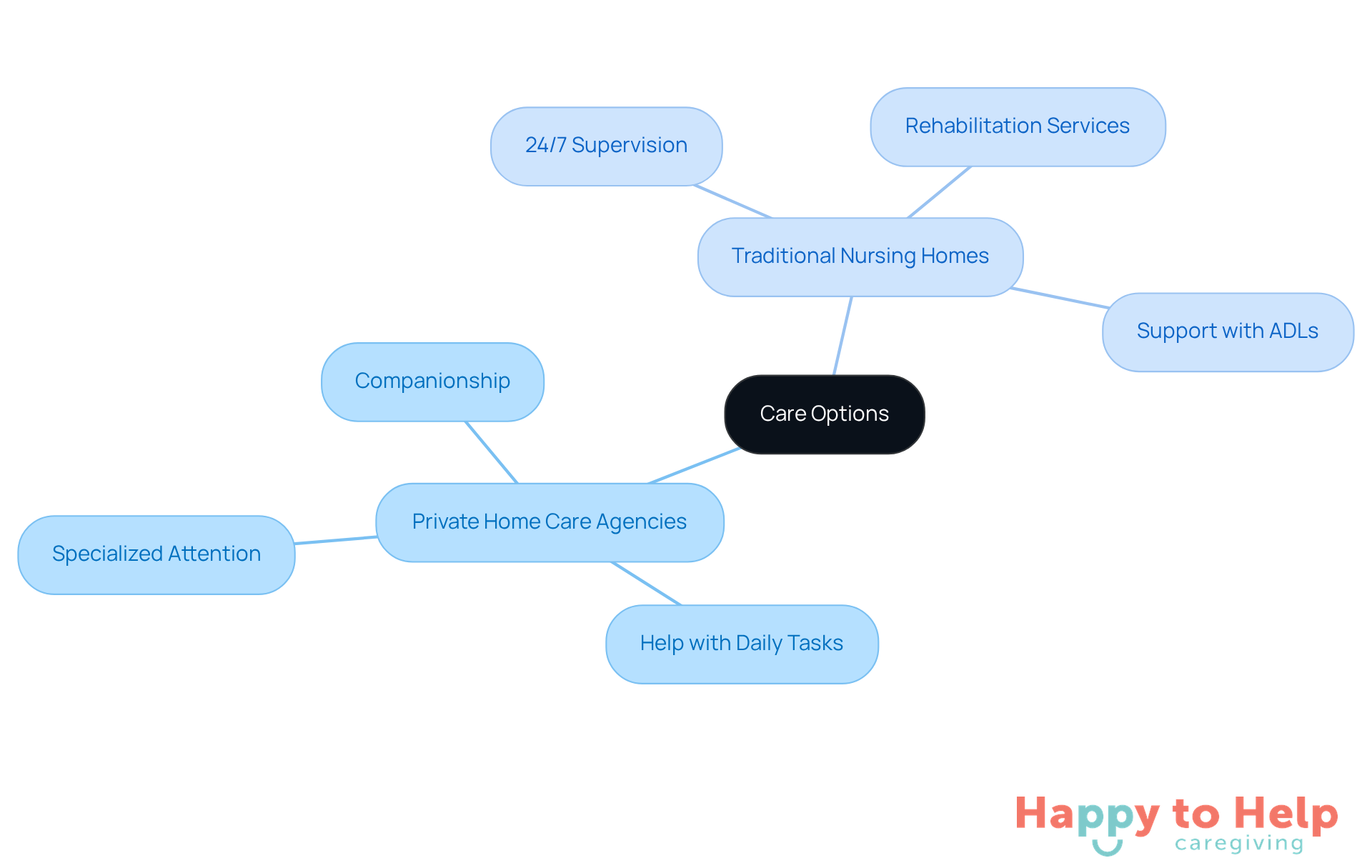
Private home care agencies offer a solution by providing personalized support in the comfort of individuals' own homes. Their services typically include:
- Companionship
- Help with daily tasks
- Specialized attention for seniors and individuals with disabilities
This approach not only alleviates some of the burdens on caregivers but also fosters a sense of independence for those receiving care.
In contrast, traditional nursing residences, or skilled nursing facilities, cater to individuals requiring a higher level of medical assistance. These facilities offer:
- 24/7 supervision
- Rehabilitation services
- Support with activities of daily living (ADLs) in a shared living environment
While this institutional setting is essential for those needing intensive medical care, it may not be the best fit for everyone.
By understanding the differences between these options, caregivers can make informed decisions that best suit the needs of their loved ones. Emphasizing the importance of tailored support can lead to better outcomes for both caregivers and those they care for.
Compare Services Offered by Home Care Agencies and Nursing Homes
Caregivers often face significant challenges when it comes to providing the best support for their loved ones. Finding suitable care options can be overwhelming, especially when considering the diverse needs of each individual.
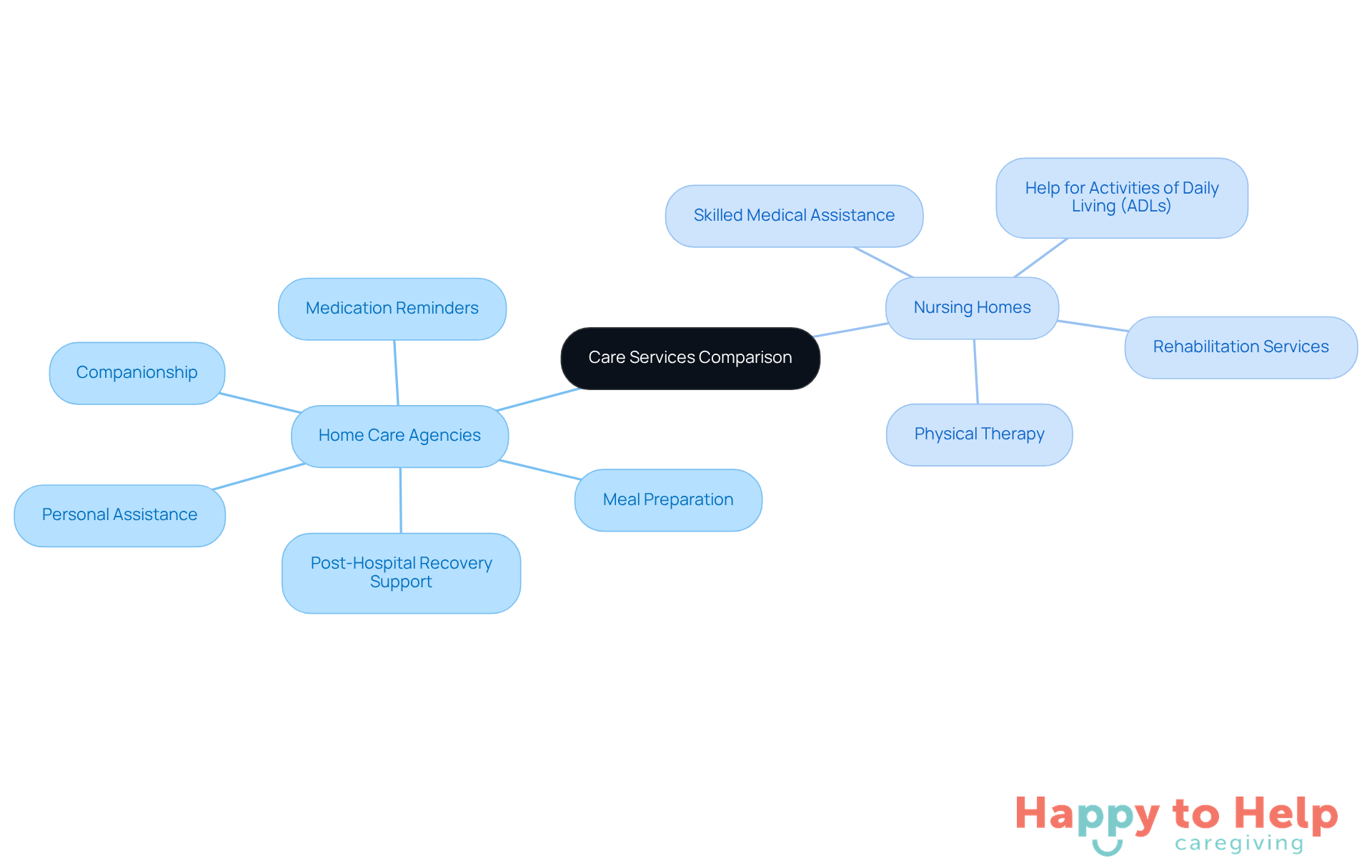
Private home care agencies provide a variety of services customized to meet personal needs, including:
- Companionship
- Personal assistance
- Meal preparation
- Medication reminders
- Support for post-hospital recovery
These services are designed to foster independence and comfort within the familiar environment of the client's home. In contrast, assisted living facilities provide extensive medical support, including:
- Skilled medical assistance
- Physical therapy
- Rehabilitation services
- Help for activities of daily living (ADLs)
While nursing facilities provide a structured setting with round-the-clock assistance, private home care agencies excel in offering personalized and adaptable options. This adaptability is crucial, as it allows families to modify support plans in response to changing health conditions or preferences. As a result, clients receive the most suitable assistance at all times.
Significantly, over three million patients utilize health services at home each year, underscoring the growing preference for at-home assistance. Industry specialists emphasize the importance of advocacy in enhancing the visibility and support for residential services, which are increasingly recognized as vital components of the healthcare continuum.
In summary, caregivers can find effective solutions by considering private home care agencies that offer personalized support, ensuring their loved ones receive the best possible assistance.
Evaluate Emotional and Practical Impacts on Families
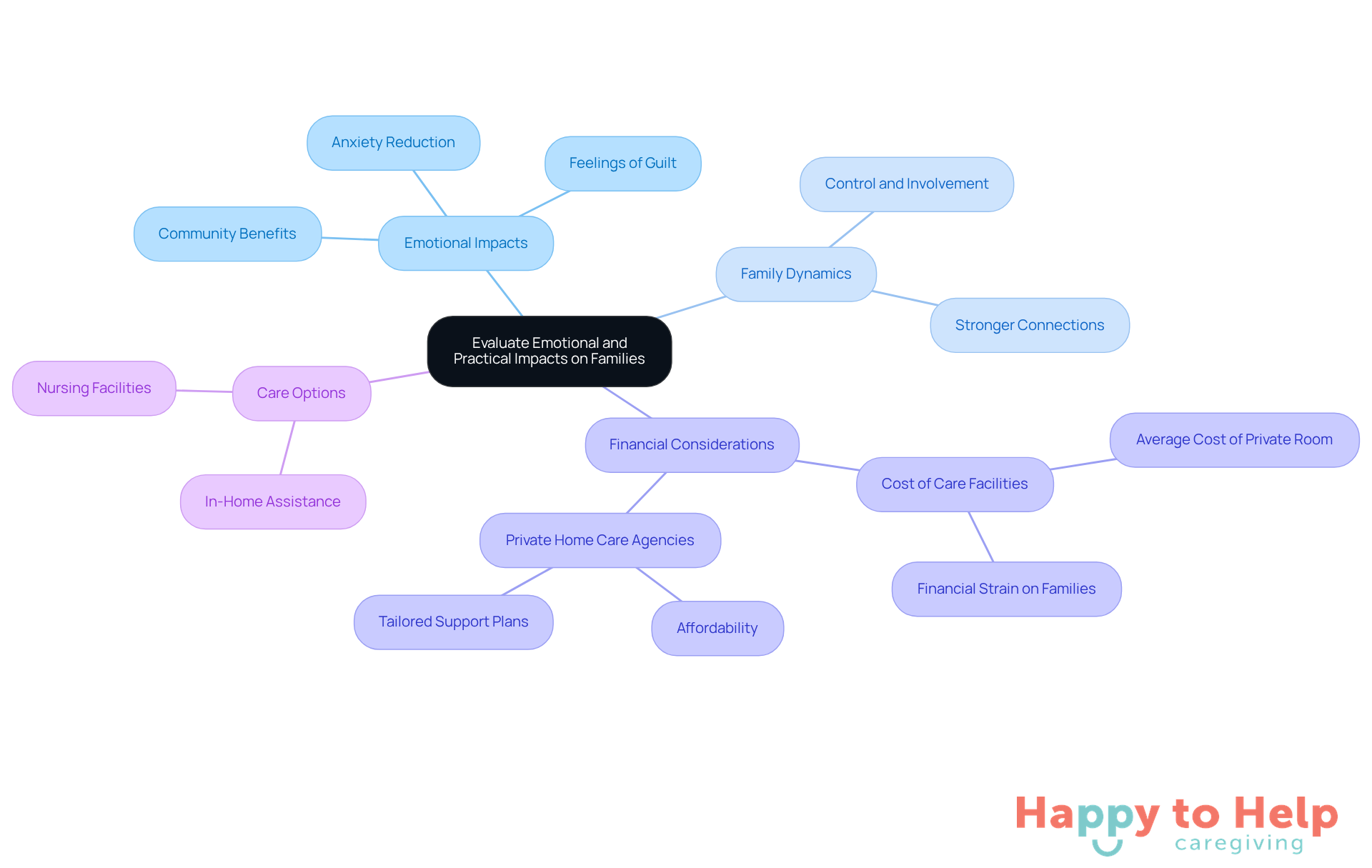
Choosing between residential assistance and nursing facilities presents a significant challenge for families, impacting both family dynamics and emotional health. The problem lies in the emotional toll this decision can take. Home assistance allows individuals to stay in familiar surroundings, which can greatly reduce anxiety and feelings of isolation. Families often feel a greater sense of control and involvement in their loved one's care when they choose at-home assistance, fostering stronger connections and collaboration.
On the other hand, care facilities can evoke feelings of guilt and sorrow, as relatives may view this choice as a loss of autonomy for their loved ones. However, these facilities can also offer a sense of community and opportunities for social interaction, which may be beneficial for some individuals. Understanding these emotional dynamics is crucial for families as they navigate their caregiving options, ensuring they make informed decisions that align with their loved ones' needs and preferences.
To illustrate, case studies show that families opting for in-home assistance often report enhanced emotional well-being and satisfaction. This highlights the importance of tailored support plans that fit personal lifestyles. Surveys indicate that many families find private home care agencies to be a more rewarding choice for domestic support services. Notably, data reveals that 75% of caregiver relatives experience stress or anxiety at least monthly, underscoring the emotional impact of caregiving.
Furthermore, the financial aspect cannot be overlooked. The average cost of a private room in a nursing facility is $9,034, which poses a significant financial consideration for families when weighing their assistance options. By recognizing these factors, families can better navigate their choices and seek solutions through private home care agencies that prioritize emotional health and financial stability.
Analyze Financial Considerations for Home Care vs. Nursing Homes
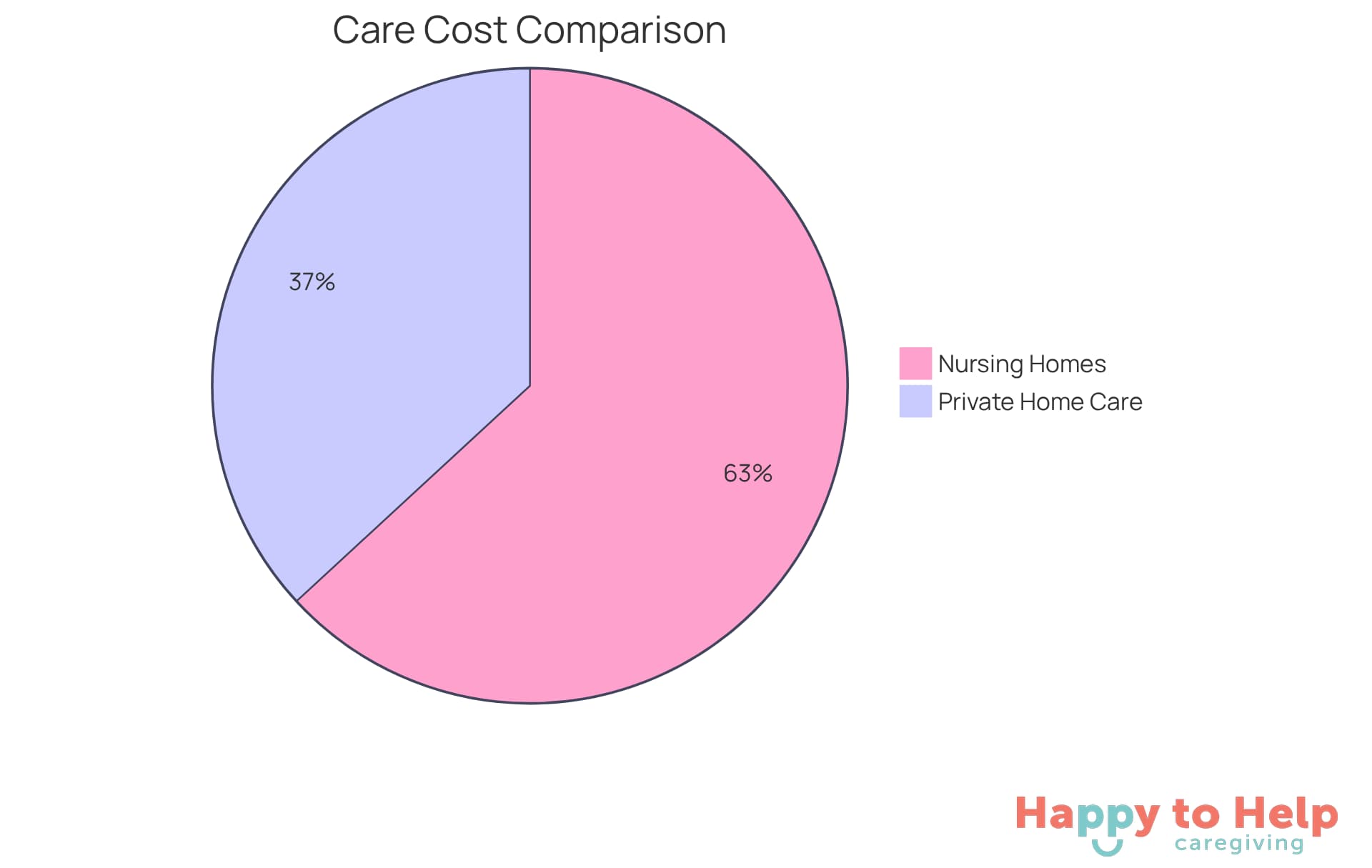
Financial factors play a critical role in the decision-making process for families evaluating support options provided by private home care agencies. Families often face the challenge of understanding the costs associated with private home care agencies, which typically range from $3,000 to $8,000 each month. On average, families can expect to pay about $6,292 monthly for 44 hours of support. This variation in cost is influenced by the level of care required and the number of hours needed.
In contrast, care facilities demand a more substantial financial commitment. The average monthly expense for a semi-private room can range from $9,555 to $10,965. Families must also be vigilant about potential hidden costs associated with assisted living facilities. These can include additional charges for specialized services, such as memory support, or amenities that may not be included in the standard rate.
For instance, while a support plan through private home care agencies for 44 hours of at-home assistance costs around $6,292 each month, households can save significantly compared to the higher costs of nursing home services, which can exceed $12,000 monthly for extensive support. Furthermore, families should consider the possibility of tax deductions related to in-home support expenses, which can provide valuable financial relief.
Understanding these financial implications is essential for families to select a support option that aligns with their budget and long-term financial goals. This ensures that their loved ones receive the necessary assistance without compromising financial stability.
Assess Regulatory Standards and Compliance in Care Options
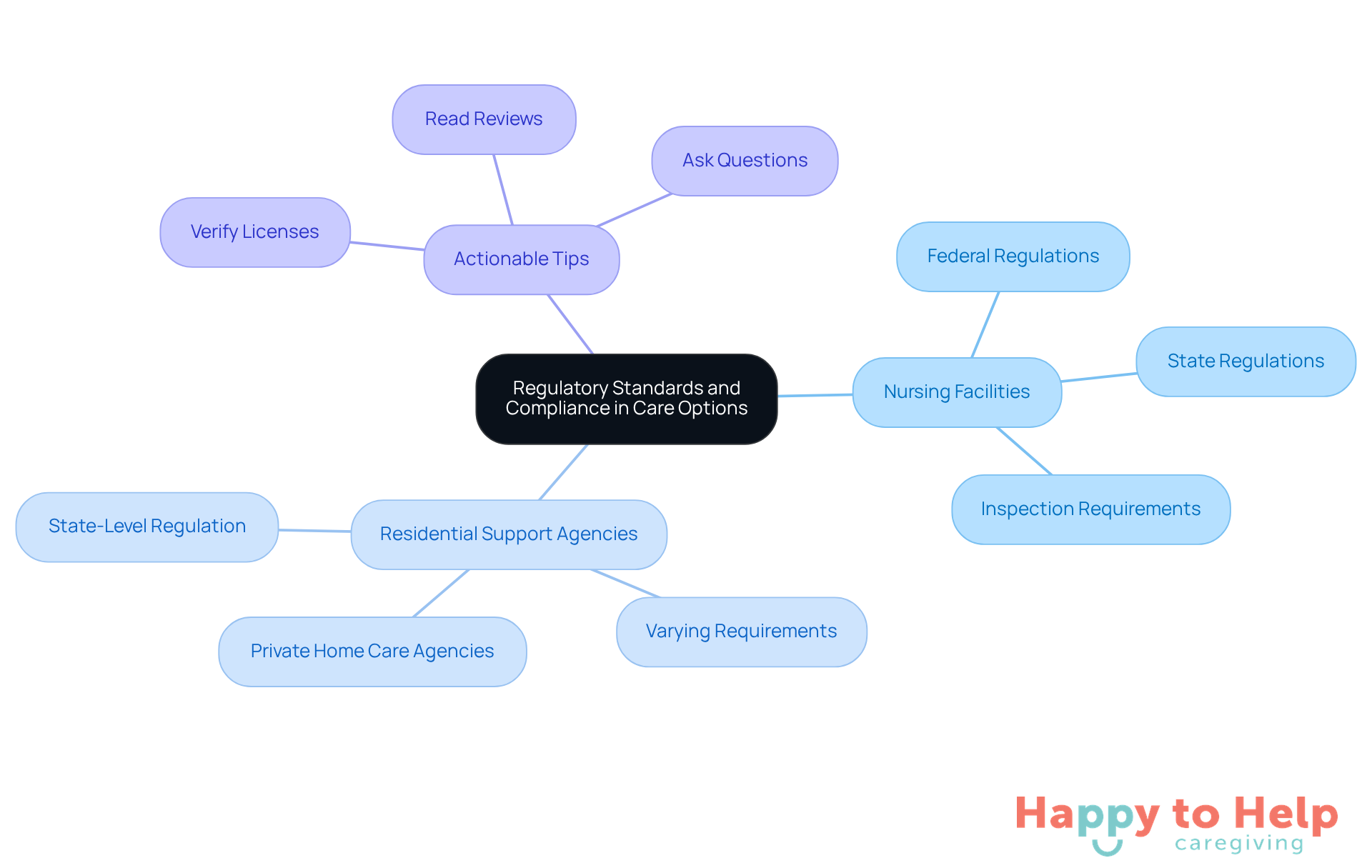
Regulatory standards and compliance present a significant challenge for families seeking care options. The differences between residential support agencies and assisted living facilities can be confusing and may impact the quality of care received. Nursing facilities face stringent federal and state regulations, ensuring they meet specific standards for safety, staffing, and quality of service. These facilities undergo regular inspections and must comply with comprehensive guidelines to maintain their licenses.
In contrast, residential support agencies are regulated at the state level, with varying requirements that may not be as strict as those for nursing facilities. While many private home care agencies strive to adhere to high standards, families must be vigilant. Conducting thorough research is essential to ensure that the private home care agencies they select are reputable and compliant with applicable regulations. Here are some actionable tips for families:
- Verify Licenses: Always check if the agency is licensed and in good standing with state regulations.
- Read Reviews: Look for feedback from other families to gauge the agency's reputation.
- Ask Questions: Don’t hesitate to inquire about the agency’s compliance with safety and staffing standards.
By taking these steps, families can make informed decisions and ensure their loved ones receive the best possible care.
Your Path Forward
Choosing between private home care agencies and nursing homes is a significant decision for families seeking the best support for their loved ones. The problem lies in understanding the unique advantages of each option, which can greatly impact the quality of care. Families must navigate the balance between personalized care at home and the structured environment of nursing facilities.
The implications of this choice are profound. Private home care agencies offer tailored services that promote independence and comfort, enhancing family dynamics and emotional well-being. In contrast, nursing homes provide comprehensive medical support but may evoke feelings of guilt due to their institutional nature. Families often grapple with the emotional weight of this decision, as well as the practical aspects of care.
Financial considerations also play a crucial role. Private home care can often be a more affordable option, allowing families to maintain financial stability while ensuring quality care. This solution not only addresses the immediate needs of loved ones but also alleviates financial stress.
To navigate this challenging decision, families are encouraged to evaluate their options thoroughly. By prioritizing the unique needs of their loved ones and advocating for suitable care solutions, they can approach this choice with confidence. Ultimately, the goal is to ensure that their loved ones receive the best possible support, enhancing their quality of life in a way that feels right for everyone involved.
https://iframe.tely.ai/cta/eyJhcnRpY2xlX2lkIjogIjY5NDFmMzQ5MTE4MTVjMDQxY2UzNWU1MSIsICJjb21wYW55X2lkIjogIjY4ZWU1ZGNhNzMxNzYyNTU3ZjNjOTVjMSIsICJpbmRleCI6IG51bGwsICJ0eXBlIjogImFydGljbGUifQ==Frequently Asked Questions
What are private home care agencies?
Private home care agencies provide personalized support to individuals in their own homes, offering services such as companionship, help with daily tasks, and specialized attention for seniors and individuals with disabilities.
How do private home care agencies benefit caregivers?
These agencies alleviate some of the burdens on caregivers by providing tailored support, which helps enhance the autonomy and quality of life for those receiving care.
What services do traditional nursing homes offer?
Traditional nursing homes, or skilled nursing facilities, offer 24/7 supervision, rehabilitation services, and support with activities of daily living (ADLs) in a shared living environment.
Who might benefit more from private home care agencies versus nursing homes?
Individuals who require less intensive medical care and prefer to maintain their independence may benefit more from private home care agencies, while those needing a higher level of medical assistance may be better suited for nursing homes.
What types of services do private home care agencies provide?
Services offered by private home care agencies include companionship, personal assistance, meal preparation, medication reminders, and support for post-hospital recovery.
How do home care agencies adapt to changing needs?
Private home care agencies excel in offering personalized and adaptable options, allowing families to modify support plans in response to changing health conditions or preferences.
What is the growing trend in home care services?
Over three million patients utilize health services at home each year, indicating a growing preference for at-home assistance and the importance of advocacy for residential services in the healthcare continuum.
List of Sources
- Define Private Home Care Agencies and Traditional Nursing Homes
- Is Private Pay Home Care Cheaper Than Nursing Homes (https://havenhome.us/is-private-pay-home-care-cheaper-than-nursing-homes)
- In-Home Care vs. Nursing Homes | Village Caregiving (https://villagecaregiving.com/blog/in-home-care-vs-nursing-home)
- Nursing Homes vs Home Care Comparison (https://seniorliving.org/compare/nursing-home-vs-home-care)
- 5 Key Facts About Nursing Facilities and Medicaid | KFF (https://kff.org/medicaid/5-key-facts-about-nursing-facilities-and-medicaid)
- What to Know About Home Care Services (Published 2023) (https://nytimes.com/2023/12/02/health/home-care-explainer.html)
- Compare Services Offered by Home Care Agencies and Nursing Homes
- State of home care in 2025 (https://mcknightshomecare.com/state-of-home-care-in-2025)
- What’s Next For Home Health As The Industry Faces Its Biggest Test Yet (https://homehealthcarenews.com/2025/10/whats-next-for-home-health-as-the-industry-faces-its-biggest-test-yet)
- U.S. News to Debut Best Home Health Ratings in 2026 (https://usnews.com/info/blogs/press-room/articles/2025-11-03/u-s-news-to-debut-best-home-health-ratings-in-2026)
- Home Care Industry Trends to Watch in 2025 (https://firstlighthomecare.com/blog/home-care-industry-trends)
- CMS Makes Updates to Nursing Home Care Compare and Five Star (https://ahcancal.org/News-and-Communications/Blog/Pages/CMS-Makes-Updates-to-Nursing-Home-Care-Compare-and-Five-Star-.aspx)
- Evaluate Emotional and Practical Impacts on Families
- New Report Reveals Crisis Point for America’s 63 million Family Caregivers (https://press.aarp.org/2025-07-24-New-Report-Reveals-Crisis-Point-for-Americas-63-million-Family-Caregivers)
- The Benefits of Choosing Home Care Over a Nursing Facility (https://apluspersonalhomecare.com/the-benefits-of-choosing-home-care-over-a-nursing-facility)
- In-Home Care vs. Nursing Homes | Village Caregiving (https://villagecaregiving.com/blog/in-home-care-vs-nursing-home)
- New study looks at home care versus nursing care (https://whec.com/top-news/new-study-looks-at-home-care-versus-nursing-care)
- Family caregivers prefer in-home care over senior living, new industry report finds (https://mcknightshomecare.com/news/family-caregivers-prefer-in-home-care-over-senior-living-new-industry-report-finds)
- Analyze Financial Considerations for Home Care vs. Nursing Homes
- Home care costs NYS 30% less per person than nursing home care, new report shows (https://localsyr.com/news/local-news/home-care-costs-nys-30-less-per-person-than-nursing-home-care-new-report-shows)
- Home Care Costs in 2025: A State-by-State Guide (https://aplaceformom.com/caregiver-resources/articles/in-home-care-costs)
- Nursing Homes vs Home Care Comparison (https://seniorliving.org/compare/nursing-home-vs-home-care)
- Cost of Home Care vs. Nursing Homes (https://aplaceformom.com/caregiver-resources/articles/home-care-vs-nursing-home-costs)
- Home Care vs Nursing Homes: Cost, Independence & Quality of Life Compared (https://rightathome.net/long-beach/blog/home-care-vs-nursing-care)
- Assess Regulatory Standards and Compliance in Care Options
- HHS’ Cleanup of Federal Nursing Home Minimum Staffing Standards Rule Expands Access to Rural and Tribal Health Care | HHS.gov (https://hhs.gov/press-room/hhs-cleanup-federal-nursing-home-minimum-staffing-standards-rule-expands-access-rural-tribal-health-care.html)
- CMS repeals minimum staffing requirements for skilled nursing, long-term care facilities | AHA News (https://aha.org/news/headline/2025-12-02-cms-repeals-minimum-staffing-requirements-skilled-nursing-long-term-care-facilities)
- Regulatory Compliance Tops 2025 Priorities For Home- And Community-Based Service Providers (https://homehealthcarenews.com/2025/06/regulatory-compliance-tops-2025-priorities-for-home-and-community-based-service-providers)
- CMS Publishes Final Rule Implementing a Minimum Staffing Standard in Nursing Homes (https://theconsumervoice.org/news/cms-publishes-final-rule-implementing-a-minimum-staffing-standard-in-nursing-homes)