The Importance of Recognizing the Beginning Stages of
Recognizing the early signs of Parkinson's Disease presents a significant challenge for caregivers. This progressive condition often begins with subtle symptoms that can greatly affect daily life. Caregivers play a crucial role in identifying these signs, as timely intervention can lead to improved quality of care.
However, amidst the emotional and physical challenges of caregiving, how can caregivers effectively spot these early indicators? This article explores the critical signs and stages of Parkinson's, providing caregivers with essential knowledge. By understanding these early signs, caregivers can foster a supportive environment for their loved ones, ultimately enhancing their overall well-being.
Understand Parkinson's Disease
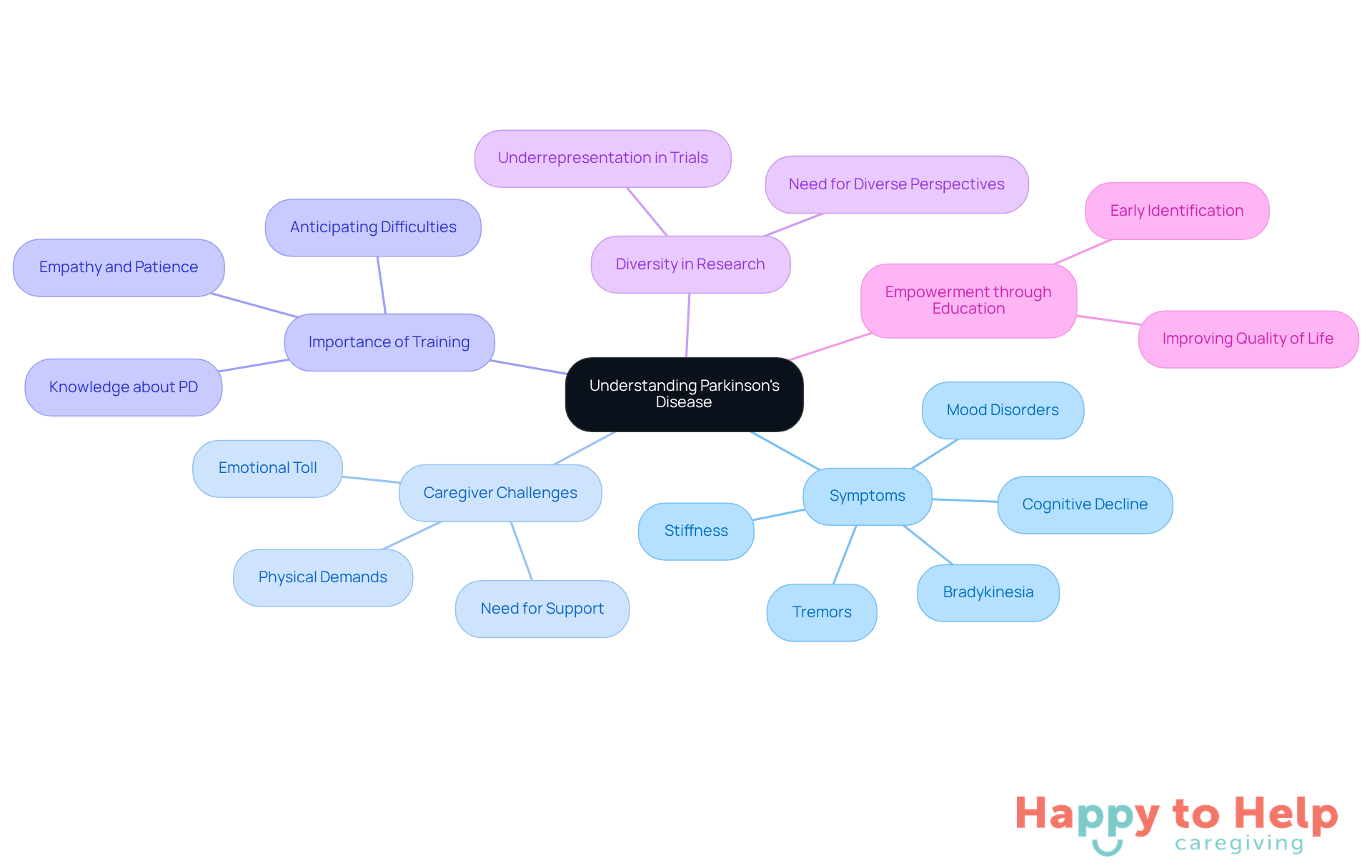
Parkinson's Disease (PD) presents significant challenges for caregivers, primarily due to its progressive nature and the impact on movement. The degeneration of dopamine-producing nerve cells in the brain leads to symptoms like tremors, stiffness, and bradykinesia, which can complicate daily care. Neurologists emphasize that recognizing these signs early is crucial for effective management and intervention during the beginning stages of Parkinson's.
The implications of these challenges are profound. Caregivers often struggle with not only the physical demands of caring for someone with PD but also the emotional toll it takes. Recent research highlights that the loss of dopamine affects not just motor functions but also contributes to non-motor issues, such as mood disorders and cognitive decline. This multifaceted nature of PD underscores the need for caregivers to be well-informed.
To address these challenges, caregiver training is essential. By equipping caregivers with knowledge about PD, they can foster an environment of empathy and patience. Understanding the signs and root causes of the disease, especially in the beginning stages of Parkinson's, enables caregivers to anticipate difficulties and respond appropriately, ultimately improving the quality of life for both themselves and their loved ones.
Moreover, it’s crucial to recognize that only 17% of US clinical trials related to PD reported racial and ethnic demographics. This statistic highlights the urgent need for diverse representation in research and caregiving practices. Incorporating insights from neurologists can further enhance caregivers' understanding, as they provide authoritative perspectives on the disease's progression and management strategies.
In summary, empowering caregivers through education and support not only aids in early identification and intervention but also enriches the caregiving experience, leading to better outcomes for those affected by Parkinson's Disease.
Identify Early Signs and Symptoms
Initial Indications of the Disease
Caregivers face the challenge of recognizing subtle signs of disease that can easily be overlooked. These early indicators can significantly impact the quality of care provided during the beginning stages of Parkinson's.
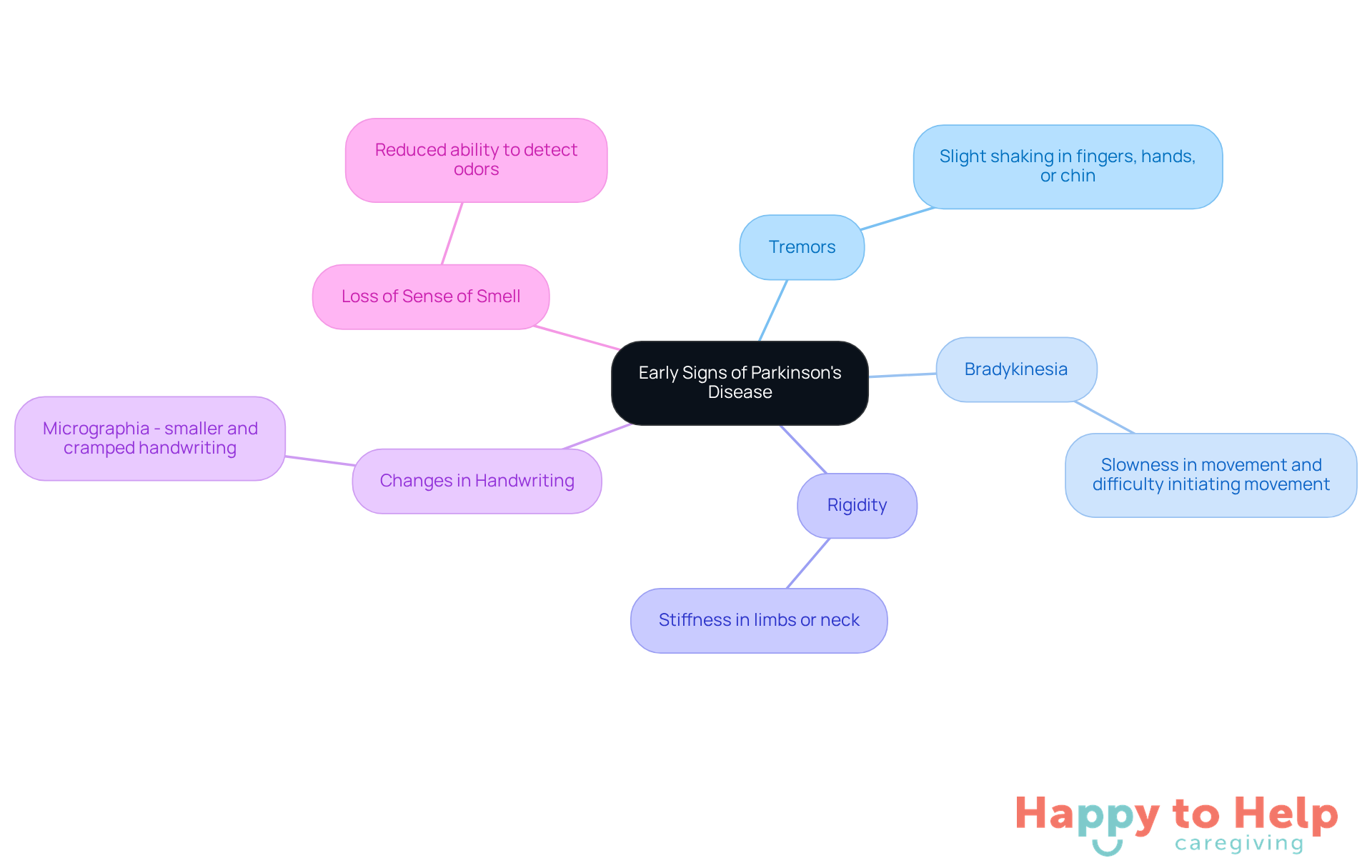
- Tremors: A slight shaking or tremor in the fingers, hands, or chin, often noticeable when at rest.
- Bradykinesia: Slowness in movement, which may manifest as difficulty in initiating movement or a noticeable decrease in the speed of daily activities.
- Rigidity: Stiffness in the limbs or neck, which can lead to discomfort and reduced range of motion.
- Changes in handwriting: Known as micrographia, where handwriting becomes smaller and more cramped.
- Loss of sense of smell: A reduced ability to detect odors can be an early indicator.
It is crucial to recognize these signs in the beginning stages of Parkinson's. Caregivers should actively monitor for these changes and consult healthcare professionals if they notice any concerning symptoms. By staying vigilant, caregivers can ensure timely intervention and support.
Learn About the Progression of Parkinson's Disease
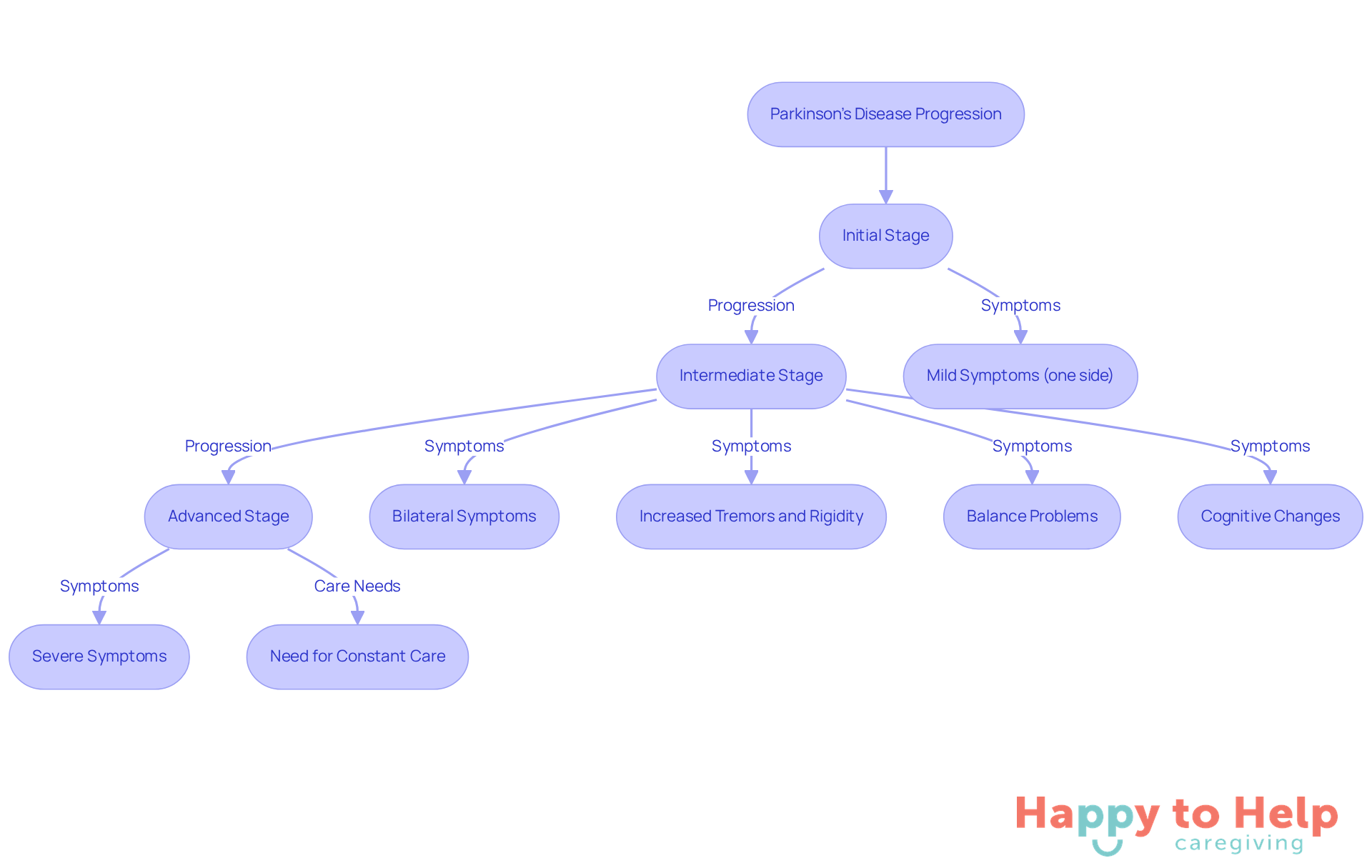
Parkinson's Disease presents significant challenges for caregivers as it advances through distinct phases, each marked by increasing severity of symptoms. Initially, signs may be mild and localized to one side of the body, which can indicate the beginning stages of Parkinson's. However, in the beginning stages of Parkinson's, as the disease progresses, symptoms often become bilateral, complicating mobility and daily activities.
Problem: Caregivers must recognize that the rate of progression varies among individuals, leading to a range of challenges. Common changes include:
- Increased tremors and rigidity: These symptoms can intensify, making daily tasks more difficult. For example, a 75-year-old man with Parkinson's may struggle with pronounced rigidity and tremors that hinder routine activities.
- Balance problems: As the disease advances, individuals often face stability challenges, increasing the risk of falls. In stage 3, while some may still manage daily activities, they often require support to prevent falls due to bradykinesia and loss of balance.
- Cognitive changes: Memory issues and mood fluctuations can complicate caregiving. Neurologists note that cognitive variability is common; some patients experience significant changes, while others maintain cognitive function longer.
Solution: Understanding these facets of Parkinson's Disease enables caregivers to anticipate and respond effectively to the changing needs of their loved ones. By fostering a nurturing environment, caregivers can better navigate the difficulties posed by this condition.
Recognize the Five Stages of Parkinson's Disease
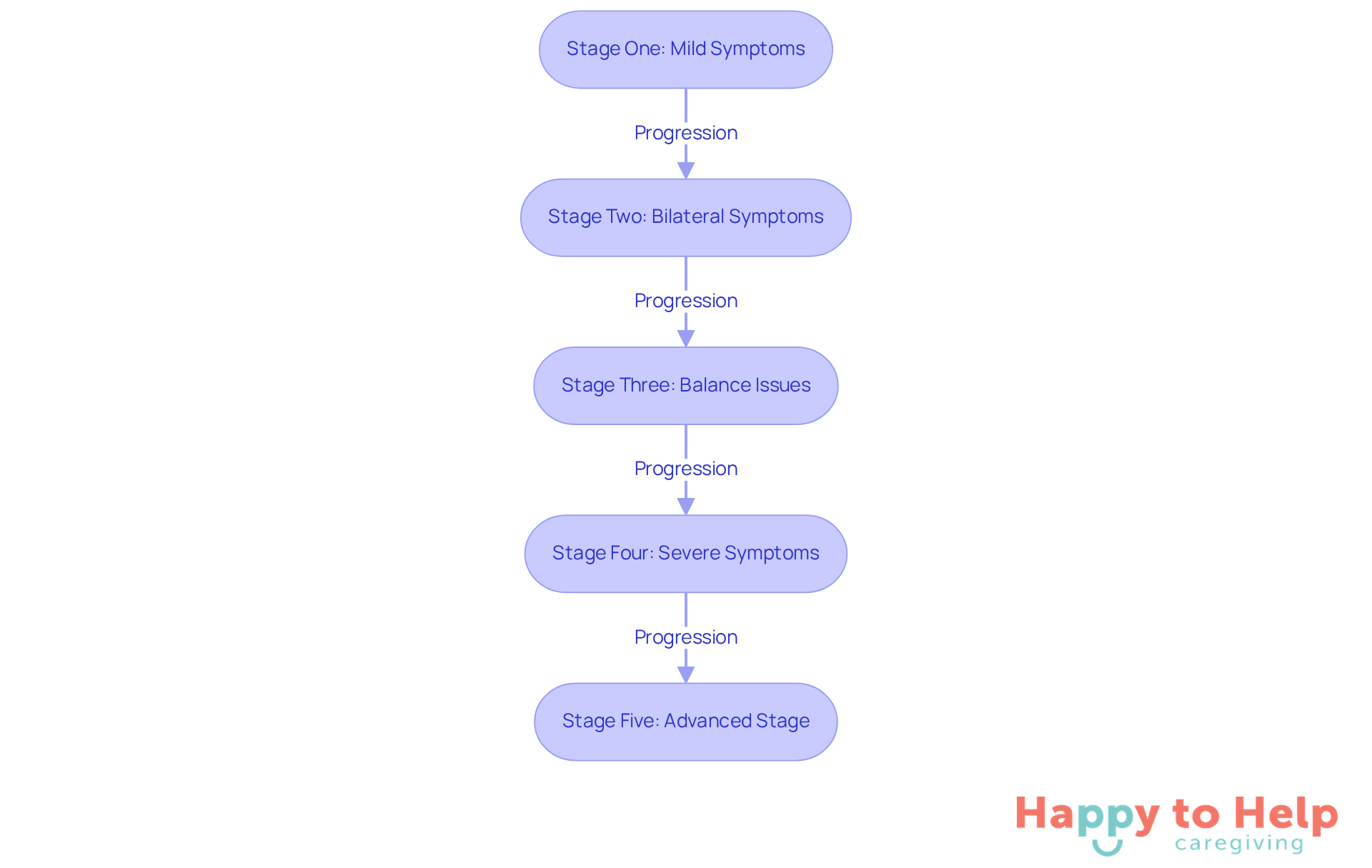
Understanding the beginning stages of Parkinson's is crucial for caregivers in managing the disease's progression. The disease is often categorized into five stages, as defined by the Hoehn and Yahr scale, which can present significant challenges in caregiving.
- Stage One: Symptoms are mild and typically affect only one side of the body. Daily activities are generally unaffected, but caregivers should remain vigilant for any changes.
- Stage Two: Symptoms become bilateral, with noticeable tremors and rigidity. Daily tasks may take longer to complete, requiring caregivers to adjust their support strategies.
- Stage Three: Balance issues arise, and individuals may start to experience falls. This mid-stage often demands increased supervision and safety measures.
- Stage Four: Symptoms are severe, and individuals may require assistance with daily activities. Caregivers should prepare for the possibility that their loved ones may be unable to live alone.
- Stage Five: This is the most advanced stage, where individuals may be unable to walk or stand without assistance. Caregivers must be ready to provide comprehensive support.
By understanding the beginning stages of Parkinson's, caregivers can provide appropriate support and plan for future care needs. This knowledge empowers them to create a safe and supportive environment for those affected by Parkinson's.
Key Takeaways for Caregivers
Recognizing the early signs and stages of Parkinson's Disease poses a significant challenge for caregivers. This difficulty can lead to delays in necessary interventions, ultimately affecting the quality of life for both caregivers and their loved ones. Without timely recognition of symptoms, such as tremors, bradykinesia, and rigidity, caregivers may struggle to provide the support needed as the disease progresses.
The implications of this challenge are profound. Each stage of Parkinson's presents unique hurdles, from mild symptoms in the early stages to severe limitations in advanced stages. Caregivers who lack knowledge about these indicators may find it hard to create a nurturing environment that anticipates the needs of their loved ones. This can result in increased stress and frustration for both parties, complicating the caregiving experience.
To address these issues, empowering caregivers through education and awareness is essential. By understanding the nuances of Parkinson's Disease, caregivers can recognize early symptoms and respond effectively. This proactive approach not only aids in early recognition but also fosters a deeper understanding of the emotional and physical demands of caregiving.
Here are some actionable tips for caregivers:
- Educate Yourself: Familiarize yourself with the symptoms and stages of Parkinson's Disease.
- Create a Support Network: Connect with other caregivers and professionals for guidance and support.
- Practice Self-Care: Prioritize your well-being to maintain the energy and resilience needed for caregiving.
Embracing this knowledge can lead to improved outcomes for individuals with Parkinson's, underscoring the vital role caregivers play in managing this challenging condition.
https://iframe.tely.ai/cta/eyJhcnRpY2xlX2lkIjogIjY5MjI2NTFiZDQwYzk1M2M1MjExZGE2ZSIsICJjb21wYW55X2lkIjogIjY4ZWU1ZGNhNzMxNzYyNTU3ZjNjOTVjMSIsICJpbmRleCI6IG51bGwsICJ0eXBlIjogImFydGljbGUifQ==Frequently Asked Questions
What is Parkinson's Disease (PD)?
Parkinson's Disease is a progressive neurological disorder characterized by the degeneration of dopamine-producing nerve cells in the brain, leading to symptoms such as tremors, stiffness, and bradykinesia.
What are the main challenges faced by caregivers of individuals with Parkinson's Disease?
Caregivers face significant challenges due to the physical demands of caring for someone with PD, as well as the emotional toll it takes on them. The progressive nature of the disease complicates daily care.
Why is early recognition of Parkinson's Disease symptoms important?
Early recognition of symptoms is crucial for effective management and intervention during the beginning stages of Parkinson's, which can lead to better outcomes for both caregivers and those affected.
What non-motor issues are associated with Parkinson's Disease?
In addition to motor symptoms, the loss of dopamine in Parkinson's Disease can contribute to non-motor issues such as mood disorders and cognitive decline.
How can caregiver training help those caring for individuals with Parkinson's Disease?
Caregiver training equips individuals with knowledge about PD, enabling them to foster an environment of empathy and patience, anticipate difficulties, and respond appropriately to challenges.
What is the significance of diverse representation in Parkinson's Disease research?
Only 17% of US clinical trials related to PD reported racial and ethnic demographics, highlighting the urgent need for diverse representation in research and caregiving practices to ensure comprehensive understanding and support.
How can neurologists contribute to the understanding of Parkinson's Disease for caregivers?
Neurologists provide authoritative insights on the disease's progression and management strategies, enhancing caregivers' understanding and ability to care for those affected by Parkinson's Disease.
What is the overall goal of empowering caregivers through education and support regarding Parkinson's Disease?
Empowering caregivers through education and support aids in early identification and intervention, enriching the caregiving experience and leading to better outcomes for those affected by Parkinson's Disease.
List of Sources
- Understand Parkinson's Disease
- Parkinson's Research News (https://sciencedaily.com/news/health\_medicine/parkinson's\_disease)
- Generating diverse patient insights to inform the development of a clinical study - COUCH Health (https://couch.health/case\_studies/generating-diverse-patient-insights-to-inform-the-development-of-a-clinical-study)
- Identify Early Signs and Symptoms
- Parkinson Disease - StatPearls - NCBI Bookshelf (https://ncbi.nlm.nih.gov/books/NBK470193)
- Clinical Characteristics in Early Parkinson’s Disease in a Central California Population-Based Study - PMC (https://pmc.ncbi.nlm.nih.gov/articles/PMC3643967)
- The Clinical Profile of Tremor in Parkinson's Disease (https://movementdisorders.onlinelibrary.wiley.com/doi/10.1002/mdc3.13845)
- Learn About the Progression of Parkinson's Disease
- Research News (https://michaeljfox.org/research-news)
- 5 Stages of Parkinson’s Progression | MyParkinsonsTeam (https://myparkinsonsteam.com/resources/understanding-the-progression-of-parkinsons-disease)
- Generating diverse patient insights to inform the development of a clinical study - COUCH Health (https://couch.health/case\_studies/generating-diverse-patient-insights-to-inform-the-development-of-a-clinical-study)
- Assignment 2 Due Day 10.docx - Physical Therapist Assistant Program PTAP 1350 Assignment #2 Read the case study and answer the questions that follow. A | Course Hero (https://coursehero.com/file/55190772/Assignment-2-Due-Day-10docx)
- 23 quotes about Parkinson’s disease | Interviews | Parkinson’s Life (https://parkinsonseurope.org/parkinsonslife/23-powerful-quotes-about-parkinsons-disease)