Should You Tell Someone with Alzheimer's? Comparing Communication

For families in our service areas
For families in our service areas, this guide explains alzheimer's care and how non-medical in-home caregiving can support care planning in East Idaho, Treasure Valley & Magic Valley, Northern Wasatch, North Central West Virginia & Southwestern Pennsylvania, and Northeast Ohio.
Understanding Should You Tell Someone with Alzheimer
Communication with individuals affected by Alzheimer's disease presents significant challenges that can greatly impact their quality of life. Caregivers often find themselves navigating a complex emotional landscape, striving to foster meaningful connections. These difficulties can lead to feelings of frustration and helplessness, making it essential to address them effectively.
To enhance understanding and emotional well-being for both patients and caregivers, tailored communication strategies are crucial. Caregivers must consider how to disclose a diagnosis compassionately, ensuring that the information is conveyed without causing distress. This article explores various methods that can be employed to facilitate compassionate communication, providing caregivers with the tools they need to connect meaningfully with their loved ones.
Understanding Communication in Dementia Care
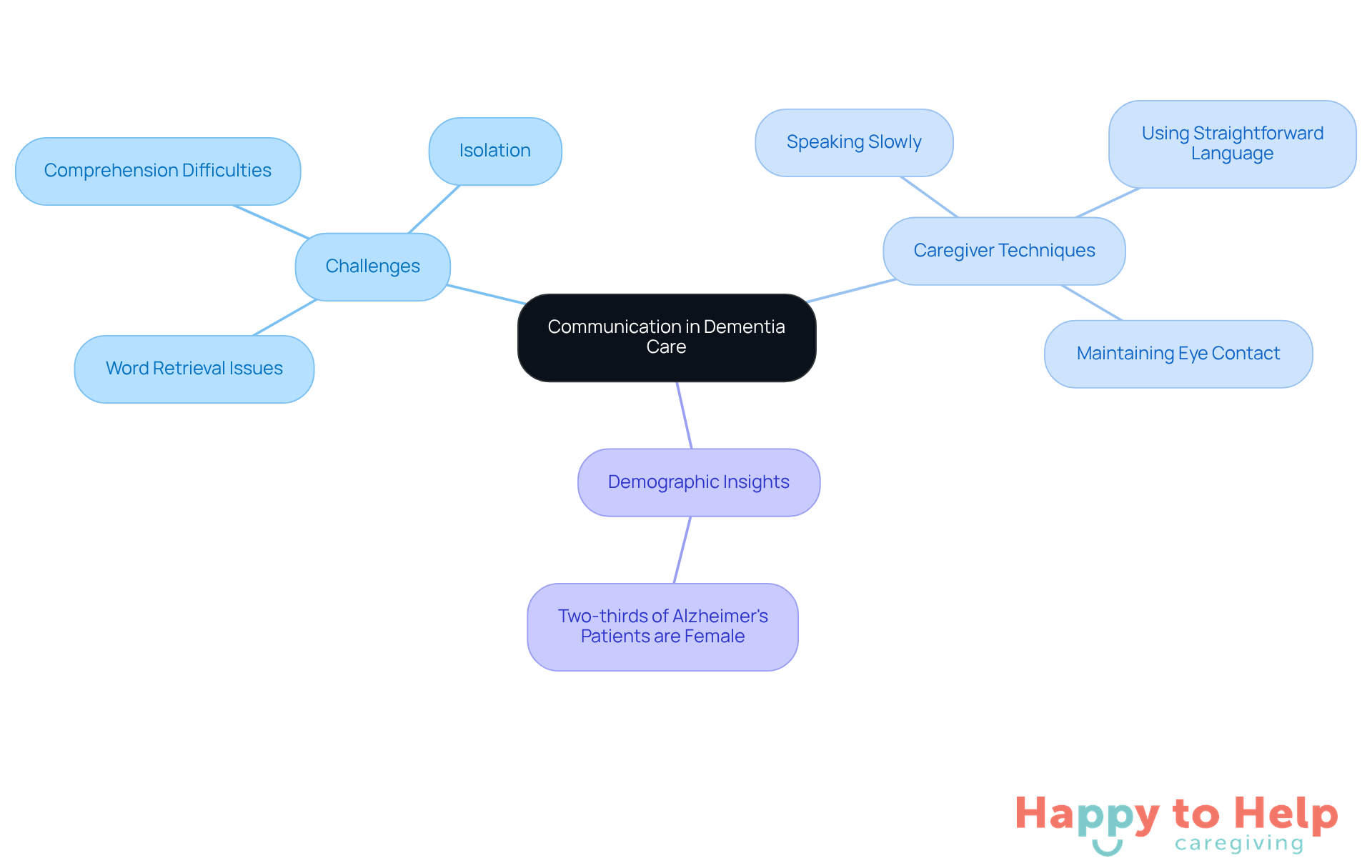
Communication with individuals affected by dementia, particularly Alzheimer's disease, presents a significant challenge due to cognitive decline. Patients often struggle with word retrieval, comprehension, and articulating their thoughts as the disease progresses. This creates frustration and isolation, impacting their overall quality of life.
Caregivers play a crucial role in addressing these challenges. By adjusting their interaction methods, they can foster meaningful connections. Techniques such as:
- Speaking slowly
- Using straightforward language
- Maintaining eye contact
are essential. Research shows that effective communication can alleviate feelings of frustration among dementia patients. For instance, those who practice redirection and active listening create a supportive environment that encourages engagement and reduces anxiety.
As Patty O’Brian notes, "Redirection enables you to steer the course of the situation," highlighting the importance of adapting communication strategies. Additionally, it's important to recognize that nearly two-thirds of the seven million Americans with Alzheimer's disease are female, which underscores the demographic impact on caregiving dynamics.
By understanding and applying these communication methods, caregivers can significantly enhance their experience and the well-being of those they assist.
Comparing Approaches to Disclosing an Alzheimer's Diagnosis
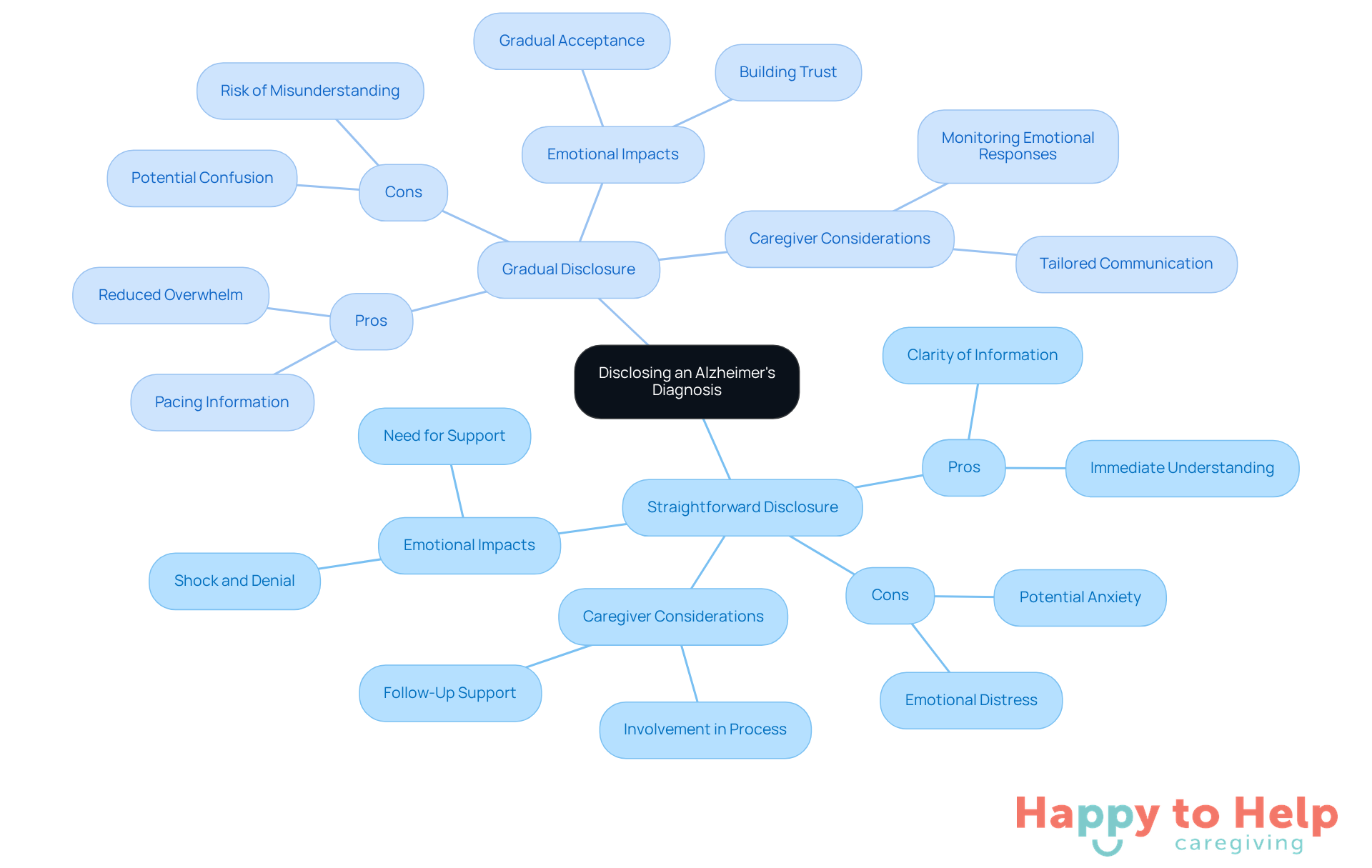
A significant challenge for caregivers arises when considering whether they should tell someone with Alzheimer's that they have it, as this revelation carries unique emotional consequences for both the individual and their family. The problem lies in how this information is communicated, particularly regarding the question of should you tell someone with Alzheimer's that they have it, which can greatly affect the emotional well-being of everyone involved.
A common approach is to provide a clear and straightforward explanation of the diagnosis. This method uses simple language to enhance understanding, prioritizing clarity. However, it can inadvertently induce anxiety or distress in the patient, complicating the emotional landscape further.
Alternatively, some caregivers advocate for a gradual disclosure strategy. By sharing information incrementally, individuals can absorb the diagnosis at their own pace, potentially reducing feelings of overwhelm. Yet, this approach requires careful management to prevent misunderstandings, which can lead to additional stress.
Ultimately, the chosen method should reflect the person's cognitive abilities, emotional state, and the specific context of the conversation, particularly in addressing the question of should you tell someone with Alzheimer's that they have it. This ensures that the interaction remains compassionate and supportive. Research shows that involving caregivers in the disclosure process can enhance understanding and provide essential emotional support. Families often experience significant emotional impacts when receiving such news, making this involvement crucial.
To foster a more compassionate atmosphere, caregivers should customize their interaction approaches to meet the distinct needs of the patient and their family. This tailored approach aids in improving acceptance and adjustment to the diagnosis.
Evaluating Emotional Responses to Communication Strategies
The emotional reactions of people with Alzheimer's to different interaction methods present a significant challenge for caregivers. While some individuals may find direct and clear communication reassuring, others might feel anxiety or confusion from the same approach. This inconsistency can complicate interactions and hinder effective communication.
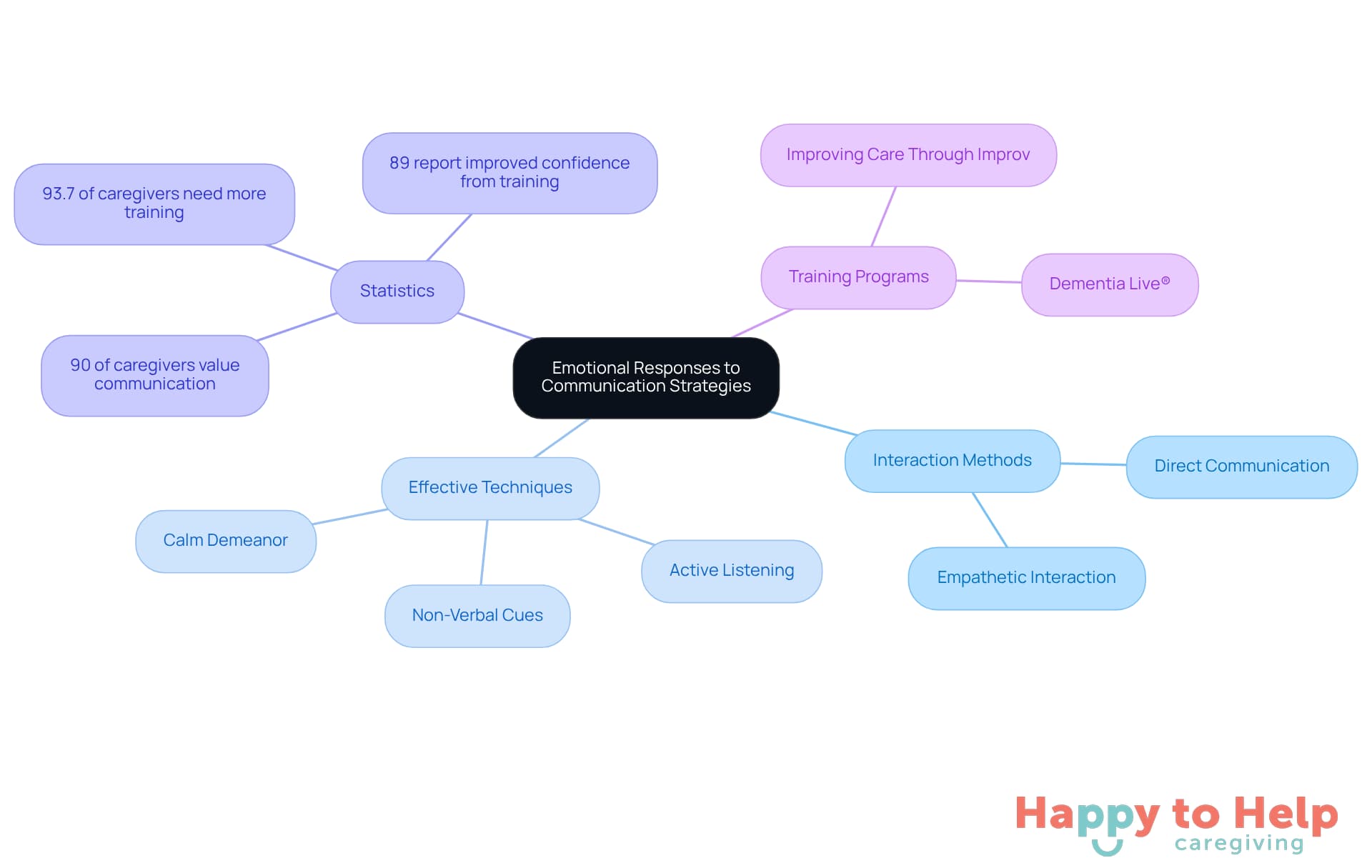
Research indicates that empathetic interaction-one that acknowledges feelings and validates experiences-tends to elicit more positive responses from individuals with dementia. Caregivers must recognize these emotional reactions and adjust their approaches accordingly. Effective techniques include:
- Active listening
- Maintaining a calm demeanor
- Utilizing non-verbal cues
These strategies can strengthen emotional connections and create a supportive atmosphere that promotes well-being and reduces anxiety. For instance, speaking with affection and firmness, while varying intonation, can enhance understanding and emotional engagement.
Emma Rodero, a lecturer at UPF, emphasizes that the most effective way to communicate with people with Alzheimer's is to speak with both affection and firmness, using varied intonation and a medium tone. Statistics reveal that 90% of caregivers acknowledge the essential role of interaction in supporting Alzheimer's patients. Furthermore, 93.7% of informal supporters express a need for additional training in effective interaction techniques.
Programs such as "Improving Care Through Improv" offer valuable training for support providers, equipping them with practical skills to enhance their interactions and improve the overall care experience for individuals living with dementia.
Choosing the Right Communication Approach for Individual Needs
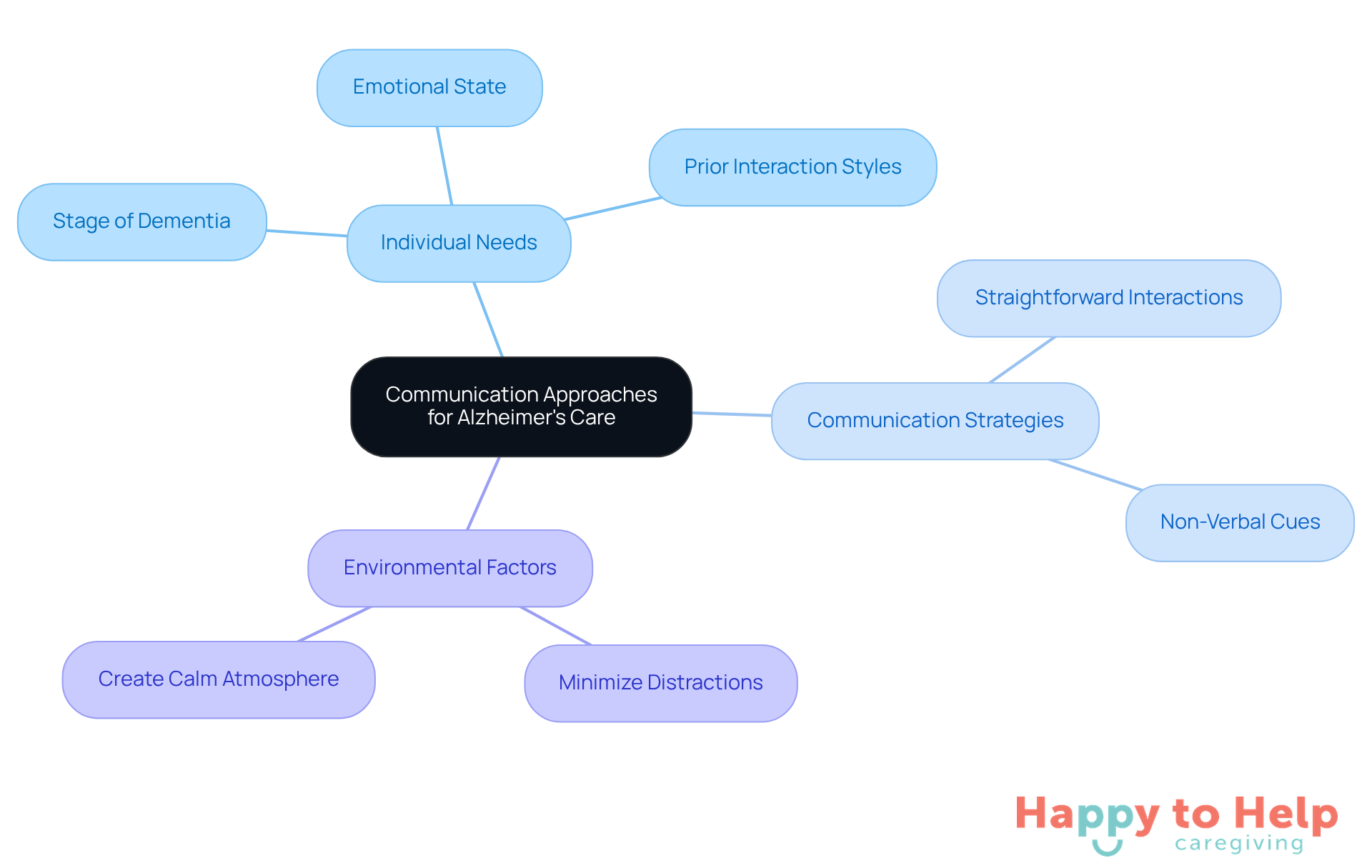
Selecting the appropriate method of interaction for people with Alzheimer's presents a significant challenge for caregivers. Each individual has distinct needs, preferences, and cognitive skills that must be considered. Factors such as the stage of dementia, emotional state, and prior interaction styles can greatly influence the effectiveness of communication.
Caregivers may find that individuals in the early phases of Alzheimer's benefit from straightforward interactions. In contrast, those in advanced stages often respond better to non-verbal signals and established routines. This discrepancy highlights the importance of tailoring communication strategies to the individual's current condition.
Additionally, the environment plays a crucial role in effective communication. Caregivers should aim to minimize distractions and create a calm atmosphere to facilitate better interactions. By adopting a flexible and responsive approach, caregivers can significantly enhance their communication effectiveness.
To improve the quality of life for those they care for, caregivers should:
- Assess the individual's stage of dementia and adapt their communication style accordingly.
- Utilize non-verbal cues and routines for those in advanced stages.
- Ensure a distraction-free environment to foster calm interactions.
By implementing these strategies, caregivers can navigate the complexities of communication with individuals with Alzheimer's more effectively.
Taking the Next Steps
Effective communication with individuals affected by Alzheimer's disease presents a significant challenge for caregivers, impacting the quality of life and emotional well-being of both patients and their families. This challenge can lead to feelings of frustration and helplessness, making it crucial for caregivers to develop effective strategies to navigate these difficulties.
To address this issue, caregivers can employ several practical communication techniques. Key strategies include:
- Using straightforward language
- Maintaining eye contact
- Practicing active listening
Additionally, caregivers should consider the individual's cognitive abilities and emotional state, tailoring their approach accordingly. Gradual disclosure of an Alzheimer's diagnosis can also help manage the emotional impact on both the patient and their family, fostering a more supportive environment.
Ultimately, personalized communication strategies are vital in dementia care. Caregivers are encouraged to assess individual needs and adapt their methods to ensure understanding and engagement. By prioritizing effective communication, caregivers can significantly enhance the experiences of those living with Alzheimer's, promoting dignity and connection that are essential in this journey.
https://iframe.tely.ai/cta/eyJhcnRpY2xlX2lkIjogIjY5MjRmMWZlZWM0Y2FiOGU3NGVjMDBmZiIsICJjb21wYW55X2lkIjogIjY4ZWU1ZGNhNzMxNzYyNTU3ZjNjOTVjMSIsICJpbmRleCI6IG51bGwsICJ0eXBlIjogImFydGljbGUifQ==Frequently Asked Questions
What challenges do individuals with dementia face in communication?
Individuals with dementia, particularly Alzheimer's disease, face challenges such as difficulty with word retrieval, comprehension, and articulating thoughts, which can lead to frustration and isolation.
How can caregivers improve communication with dementia patients?
Caregivers can improve communication by speaking slowly, using straightforward language, and maintaining eye contact to foster meaningful connections.
What techniques can help alleviate frustration in dementia patients?
Techniques such as redirection and active listening can create a supportive environment that encourages engagement and reduces anxiety in dementia patients.
Why is redirection important in dementia care communication?
Redirection is important because it allows caregivers to steer the course of a situation, helping to adapt communication strategies to better suit the needs of the patient.
What demographic information is relevant to dementia caregiving?
Nearly two-thirds of the seven million Americans with Alzheimer's disease are female, which highlights the demographic impact on caregiving dynamics.
How does effective communication affect the quality of life for dementia patients?
Effective communication can alleviate feelings of frustration among dementia patients, significantly enhancing their overall quality of life and well-being.
List of Sources
- Understanding Communication in Dementia Care
- New Alzheimer’s Association Report Finds Patient-Physician Communication About Cognitive Concerns Needs Improvement as New Treatments Become Available (https://alz.org/news/2023/new-alzheimer-s-association-report-finds-patient-physician-communication-about-cognitive-concerns-ne)
- Alzheimer’s Disease Can Cause These 7 Communication Challenges | St. Vincent's Medical Center (https://stvincents.org/about-us/news-press/news-detail?articleId=52049&publicid=395)
- Study offers guidance for communicating with loved ones living with dementia (https://news-medical.net/news/20250827/Study-offers-guidance-for-communicating-with-loved-ones-living-with-dementia.aspx)
- Bridging the gap: Dementia communication strategies - Harvard Health (https://health.harvard.edu/mind-and-mood/bridging-the-gap-dementia-communication-strategies)
- Dementia Treatment Aided by Communication Partner, Study Finds (https://nucats.northwestern.edu/about/news/2022/dementia-communication-partner.html)
- Comparing Approaches to Disclosing an Alzheimer's Diagnosis
- Experts Share National Guidelines for Evaluating Patients Suspected of Having Alzheimer’s Disease | Mass General Brigham (https://massgeneralbrigham.org/en/about/newsroom/press-releases/national-guidelines-for-evaluating-suspected-alzheimers-disease)
- Breaking down new dementia diagnosis guidelines - James L. West (https://jameslwest.org/new-dementia-diagnosis-guidelines)
- Four Communication Strategies Improve Dementia Diagnosis Delivery | www.PhysiciansWeekly.com (https://physiciansweekly.com/post/simple-tools-to-improve-your-delivery-of-dementia-diagnosis)
- Barriers and Best Practices in Disclosing a Dementia Diagnosis: A Clinician Interview Study - PMC (https://pmc.ncbi.nlm.nih.gov/articles/PMC9729996)
- Evaluating Emotional Responses to Communication Strategies
- Empathy in Dementia Care: Why It Matters and How to Strengthen It (https://blog.ageucate.com/empathy-in-dementia-care-why-it-matters-and-how-to-strengthen-it)
- Most effective way to communicate with Alzheimer's patients identified (https://medicalxpress.com/news/2024-11-effective-communicate-alzheimer-patients.html)
- Empathy’s Influence: Dementia Patients Supporting Caregivers (https://caes.ucdavis.edu/news/empathys-influence-dementia-patients-supporting-caregivers)
- Improv training: A new approach to dementia care | Emory University | Atlanta GA (https://news.emory.edu/stories/2025/01/hs_improving_dementia_care_through_improv_15-01-2025/story.html)
- Most effective way to communicate with Alzheimer's patients identified (https://uab.cat/web/newsroom/news-detail/most-effective-way-to-communicate-with-alzheimer-s-patients-identified-1345830290613.html?detid=1345932039583)
- Choosing the Right Communication Approach for Individual Needs
- Study offers guidance for communicating with loved ones living with dementia (https://news-medical.net/news/20250827/Study-offers-guidance-for-communicating-with-loved-ones-living-with-dementia.aspx)
- Communication | Alzheimer's Association (https://alz.org/help-support/caregiving/daily-care/communications)
- Communication Difficulties as a Result of Dementia - PMC (https://pmc.ncbi.nlm.nih.gov/articles/PMC6195406)
- Communication Toolkit for Alzheimer’s Disease: Diagnosis (https://medical.lilly.com/us/diseases/disease-education-resources/neuroscience/alzheimers-disease/education-resources/communication-toolkit-for-alzheimers-disease-diagnosis)
- Four Communication Strategies Improve Dementia Diagnosis Delivery | www.PhysiciansWeekly.com (https://physiciansweekly.com/post/simple-tools-to-improve-your-delivery-of-dementia-diagnosis)