Smart Home for Seniors: Enhance Safety and Comfort at Home
For families in our service areas
For families in our service areas, this guide explains caregiving and how non-medical in-home caregiving can support care planning in East Idaho, Treasure Valley & Magic Valley, Northern Wasatch, North Central West Virginia, and Northeast Ohio.
Why Smart Home Matters
Aging in place presents unique challenges for seniors, particularly concerning safety and independence within their own homes. Many older adults grapple with mobility issues and the complexities of managing their living environments. This can lead to a heightened risk of accidents and feelings of isolation, significantly impacting their quality of life.
Fortunately, the rise of smart home technology offers a solution. These innovations equip seniors with tools that enhance both safety and comfort. However, with various options available, families may wonder how to choose the right technologies. It's essential to empower elderly loved ones while addressing potential concerns about usability and cost.
Understanding Smart Home Technology for Seniors
A smart home for seniors utilizes intelligent living technology to address a significant problem: the safety and autonomy of older adults in their homes. As many seniors face mobility challenges, they often struggle to manage their living environments effectively. This can lead to feelings of isolation and increased risk of accidents.
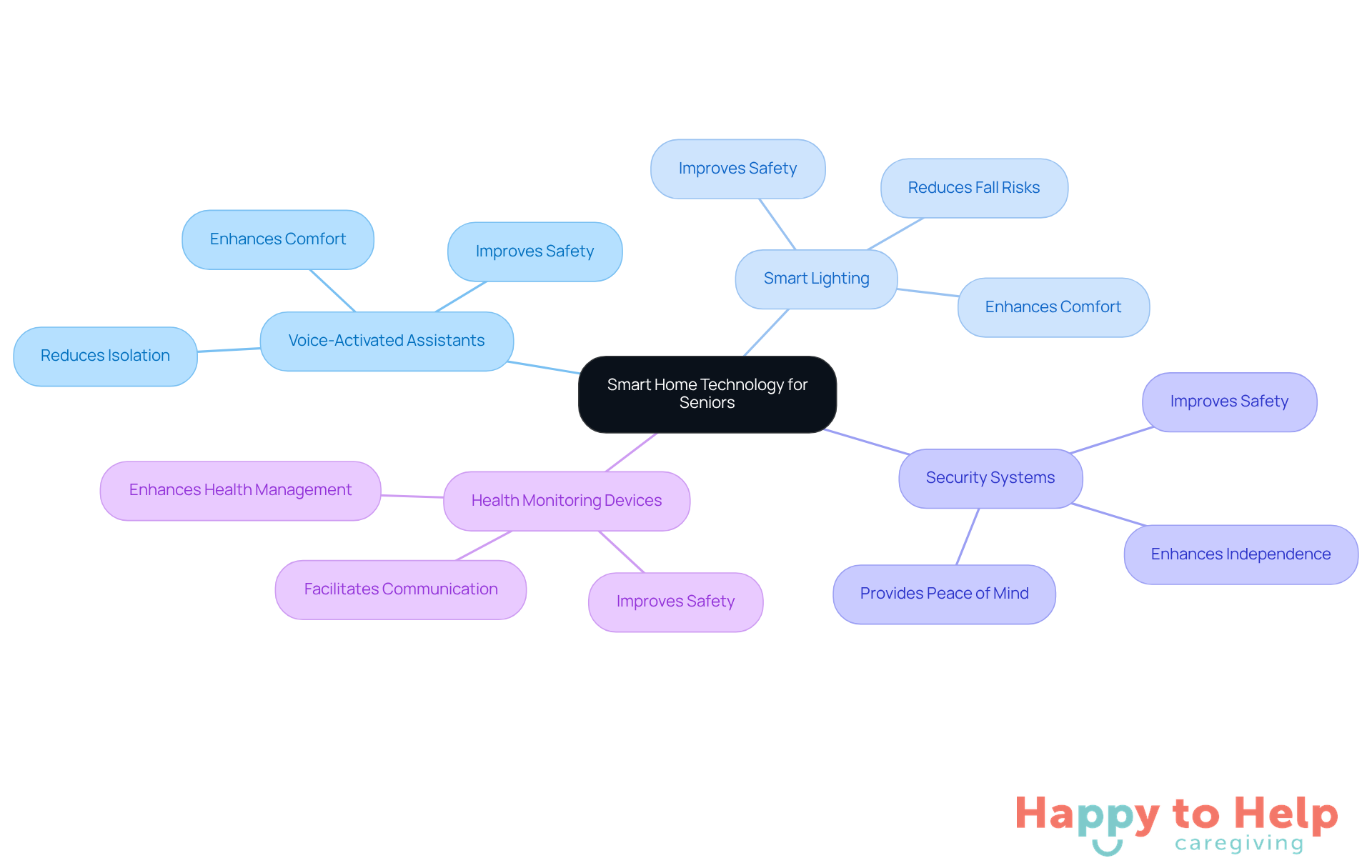
The implications of these challenges are profound. Without adequate support, older adults may experience a decline in their quality of life, feeling unsafe and disconnected from their loved ones. However, a smart home for seniors offers a viable solution. Key components such as voice-activated assistants, smart lighting, security systems, and health monitoring devices work together to enhance safety and comfort.
For instance, voice-activated assistants empower seniors to control lighting and appliances effortlessly, creating a more navigable living space. Advanced sensors monitor health metrics and provide real-time alerts to caregivers during emergencies, significantly improving safety by enabling immediate responses to potential health issues. Recent studies show that nearly 50% of seniors are now utilizing voice-activated assistants, highlighting a growing trend towards embracing technology for enhanced independence.
Effective applications of intelligent household devices in a smart home for seniors have proven their efficacy in senior care. Intelligent lighting systems can automatically adjust based on movement, reducing fall risks in dimly lit areas. Additionally, security systems equipped with motion detectors and instant notifications ensure that elderly individuals feel safe in their residences, providing reassurance for both them and their families.
Gerontologists emphasize that integrating these technologies not only enhances safety but also combats loneliness by facilitating communication with loved ones. As intelligent dwelling technology continues to advance, it promises to improve the lives of older adults, making a smart home for seniors a more viable and empowering choice for aging in place.
However, families must consider the financial implications of adopting these technologies. The cost of basic DIY systems typically ranges from $500 to $1,000, while professional installations can exceed $3,000. Understanding these costs is essential for families looking to enhance the safety and comfort of their elderly loved ones.
Benefits of Smart Home Technology for Seniors
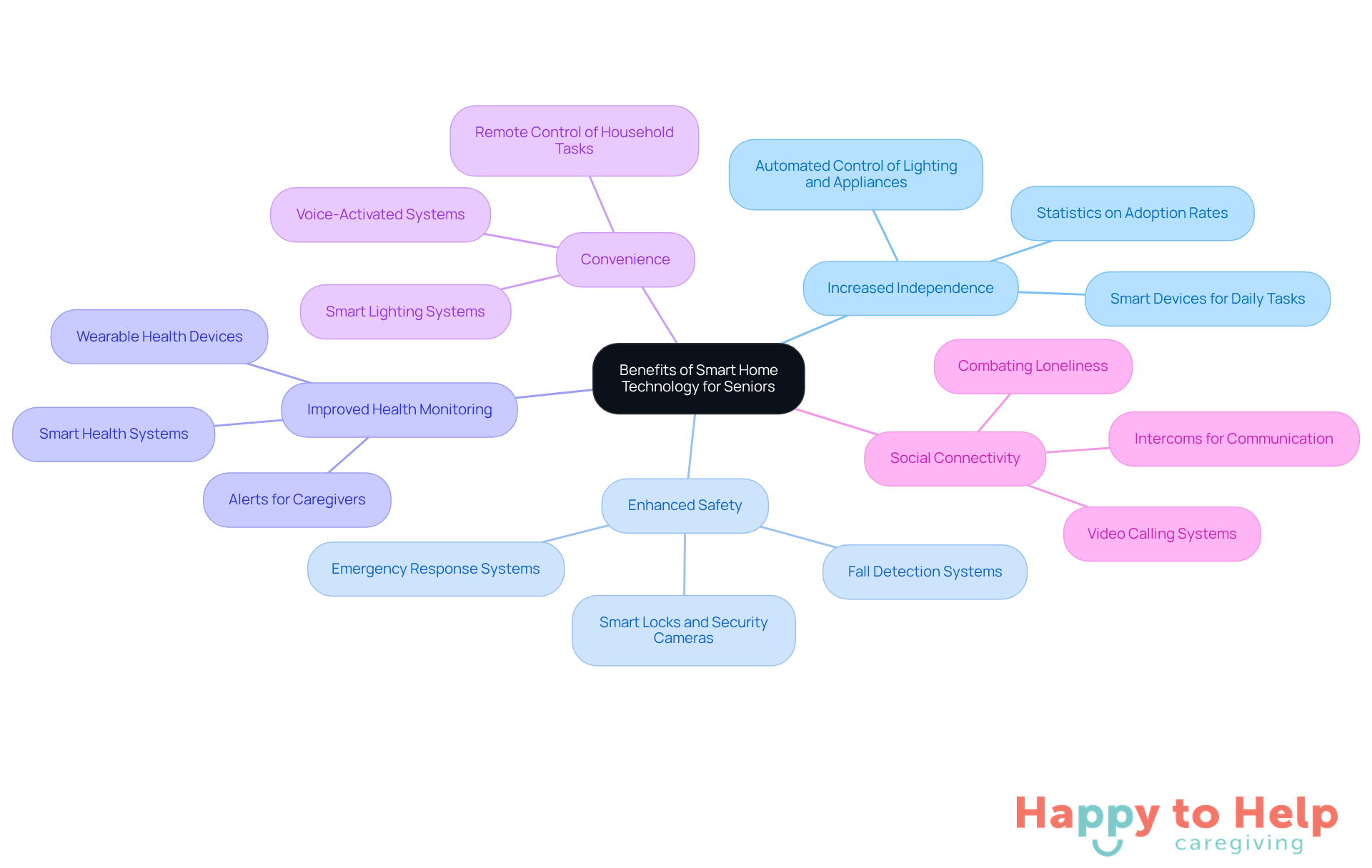
Elderly individuals often face significant challenges in maintaining their independence and safety at home. These challenges can lead to feelings of isolation and a decline in quality of life. Fortunately, smart home for seniors technology offers practical solutions that can greatly enhance their living experience.
-
Increased Independence: Smart devices empower seniors to manage daily tasks independently, fostering autonomy and self-sufficiency. Automated systems can control lighting and appliances, allowing older adults to navigate their homes with ease. According to CarePatrol of North Central Ohio, the rise of smart home for seniors tools has transformed how they manage everyday activities.
-
Enhanced Safety: Safety is a primary concern for many elderly individuals. In a smart home for seniors, devices such as smart locks, security cameras, and fall detection systems provide essential safety measures. For instance, fall detection tools can automatically alert emergency services if a fall is detected, offering peace of mind for both seniors and their families. Case studies highlight how these technologies significantly improve safety.
-
Improved Health Monitoring: Health monitoring is crucial for timely intervention. In a smart home for seniors, wearable health devices and smart health systems track vital signs and medication schedules, ensuring caregivers receive alerts when necessary. This proactive approach aids in early detection of health issues, allowing for prompt action. Statistics indicate that health monitoring systems effectively track vital signs, enhancing the independence of older adults.
-
Convenience: Voice-activated systems simplify daily tasks, making it easier for seniors to operate their smart home for seniors by adjusting lighting or controlling appliances effortlessly. This feature is particularly beneficial for those with mobility challenges, enhancing their comfort at home. The anticipated adoption rate of smart home technology, including the smart home for seniors, is projected to reach nearly 50% of US households by 2025, underscoring its growing importance.
-
Social Connectivity: Intelligent gadgets also improve communication with family and friends, helping to alleviate feelings of isolation. Video calling systems and intercoms allow elderly individuals to stay connected, fostering a sense of community. CarePatrol emphasizes that these devices can combat loneliness by facilitating easier social interaction.
While these technologies enhance safety and convenience, it’s essential to address potential concerns regarding privacy, ease of use, and cost. By providing a balanced perspective, family caregivers can better support their loved ones in adopting intelligent household technology. Overall, these advancements significantly contribute to the well-being of older adults, allowing them to thrive in a smart home for seniors.
Choosing and Integrating Smart Devices for Safety and Accessibility
When choosing a smart home for seniors, caregivers often encounter specific challenges. Many seniors face mobility issues or health concerns that can make utilizing a smart home for seniors daunting. This can lead to feelings of frustration and isolation, as they may struggle to access the benefits that smart devices can offer.
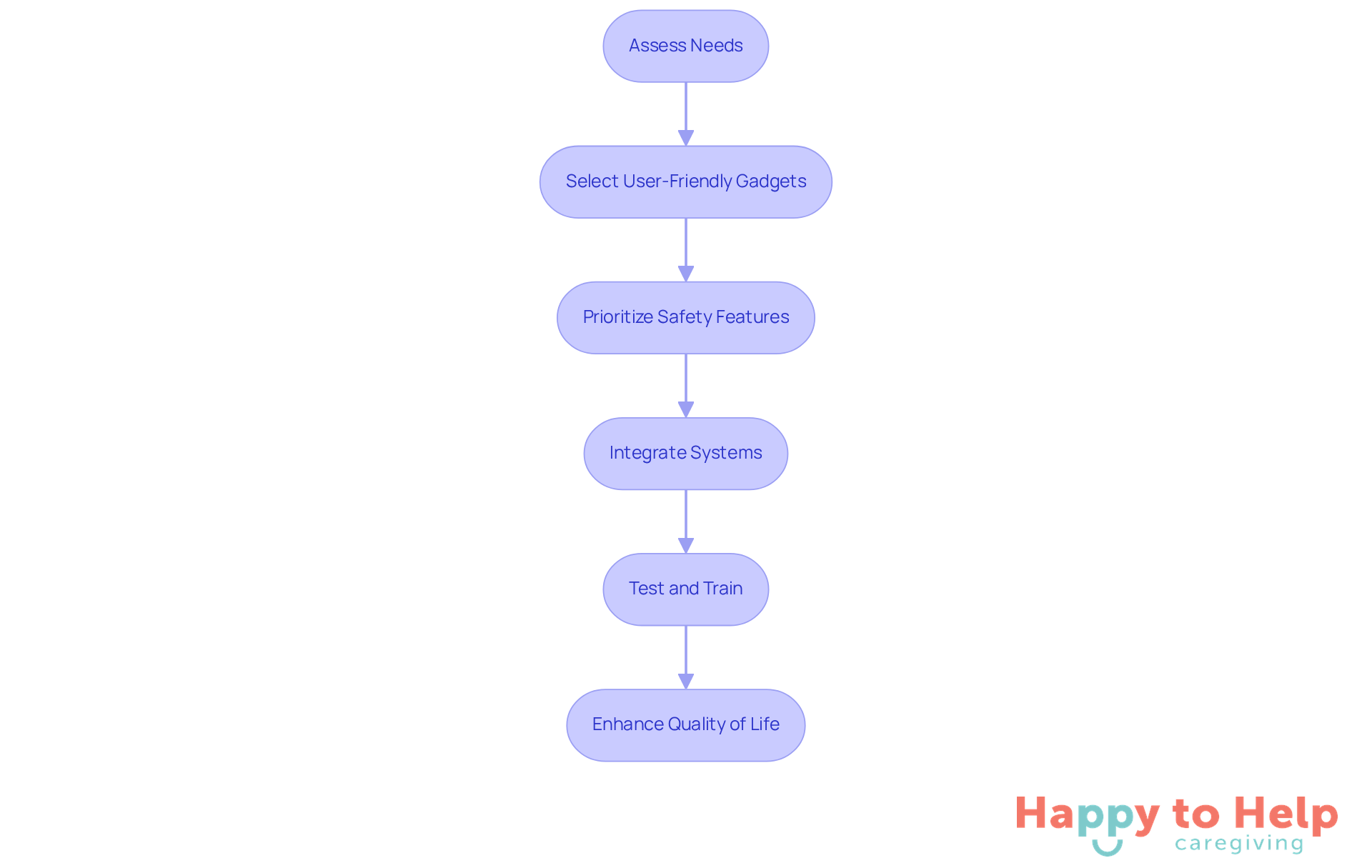
To address these challenges, it’s essential to first assess the needs of a smart home for seniors. Identify the specific difficulties the senior faces, such as mobility limitations or health-related issues. Once you understand their needs, you can move on to selecting the right technology.
Next, choose user-friendly gadgets. Opt for devices with simple interfaces and voice control capabilities that are ideal for a smart home for seniors. This ensures ease of use, allowing seniors to interact with technology without unnecessary complications.
Safety is paramount in a smart home for seniors, so prioritize safety features. Look for gadgets that provide emergency alerts, fall detection, and remote monitoring capabilities. These features can significantly enhance the well-being of seniors living in a smart home for seniors and provide peace of mind for caregivers.
Additionally, it’s important to integrate systems. Ensure that the devices can communicate with one another for seamless operation. For instance, an intelligent doorbell can notify a caregiver when someone is at the entrance, enhancing security and responsiveness.
Finally, don’t forget to test and train. After installation, hold training sessions with the elderly to help them get acquainted with the technology. This ensures they feel comfortable and confident using it, ultimately improving their quality of life.
Maintaining and Supporting Smart Home Systems for Seniors
To effectively maintain and support a smart home for seniors, caregivers face a significant challenge: many older adults struggle with using these technologies, which can impact their safety and independence. As smart home for seniors devices become more prevalent, with nearly 50% of U.S. households expected to adopt them by 2025, it is crucial to ensure that seniors can navigate these systems.
-
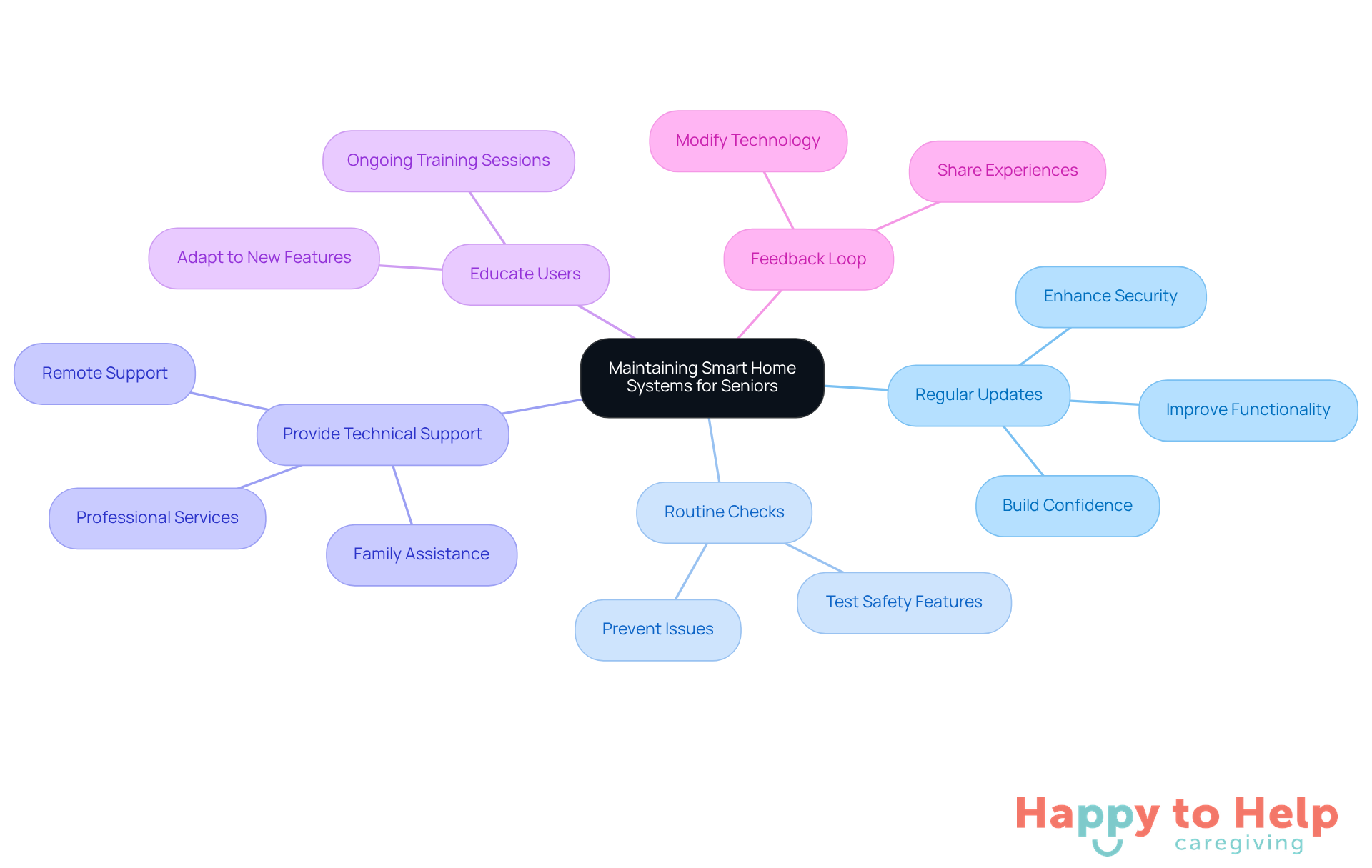
Regular Updates: Keeping all devices and applications updated to their latest versions is essential for enhancing security and functionality. Frequent updates help safeguard against vulnerabilities and ensure that equipment functions seamlessly. According to a 2022 AARP study, learning to handle intelligent technology is a priority for older adults, making updates vital for their confidence in utilizing these systems.
-
Routine Checks: Conduct periodic tests on equipment to confirm they are functioning correctly, particularly safety features like alarms and sensors. This proactive approach can prevent potential issues before they arise, ensuring that seniors feel secure in their smart home for seniors.
-
Provide Technical Support: Establish a reliable support system for troubleshooting issues, whether through family members or professional services. This guarantees that older adults have access to assistance when necessary, fostering confidence in utilizing their smart home for seniors. For instance, remote technical support can help seniors manage issues without feeling overwhelmed.
-
Educate Users: Offer ongoing training sessions to help seniors adapt to new features and updates. This education enables them to utilize their devices efficiently in a smart home for seniors, thereby improving their independence and comfort in their living environment. As Sean Hordes, a licensed social worker, states, "Technology can be a helpful tool to support your safety and independence, allowing you to continue living comfortably in your residence for as long as you’d like."
-
Feedback Loop: Encourage older individuals to share their experiences with the technology. This feedback can lead to modifications and enhancements in their intelligent living arrangements, ensuring it meets their changing requirements. Additionally, incorporating waterproof personal emergency response systems can significantly enhance safety, offering peace of mind for both elderly individuals and their families.
By implementing these strategies, families can significantly enhance the safety and comfort of their loved ones, allowing seniors to enjoy the benefits of a smart home for seniors while maintaining their independence.
Key Takeaways for Caregivers
Smart home technology for seniors addresses a significant problem: the safety, comfort, and independence of older adults in their living spaces. Many seniors face challenges related to mobility and isolation, which can hinder their autonomy. This is where smart home technology comes into play, offering a solution that integrates intelligent devices like voice-activated assistants, health monitoring systems, and automated safety features.
By adopting these technologies, seniors can enjoy a more connected and secure home environment. The benefits are clear:
- Increased independence
- Enhanced safety measures
- Improved health monitoring
- Greater social connectivity
Caregivers should prioritize selecting user-friendly devices and ensuring seamless integration of technology. Ongoing support and education are essential for seniors to navigate these systems confidently.
Understanding the financial implications and focusing on safety features are also crucial for families considering these advancements. Embracing smart home technology goes beyond mere convenience; it fosters a sense of security and enhances the quality of life for seniors.
As technology continues to evolve, families are encouraged to explore the latest trends and innovations in smart home devices tailored for the elderly. By doing so, they can create a nurturing environment that allows their loved ones to thrive, ensuring that aging in place is both safe and fulfilling.
https://iframe.tely.ai/cta/eyJhcnRpY2xlX2lkIjogIjY5MmZiYWFjYzM1NzFiMDAzM2U2NjQxZSIsICJjb21wYW55X2lkIjogIjY4ZWU1ZGNhNzMxNzYyNTU3ZjNjOTVjMSIsICJpbmRleCI6IG51bGwsICJ0eXBlIjogImFydGljbGUifQ==Frequently Asked Questions
What is the purpose of smart home technology for seniors?
Smart home technology for seniors aims to enhance safety and autonomy for older adults, addressing mobility challenges and helping them manage their living environments effectively.
What are some common challenges faced by seniors in their homes?
Seniors often face mobility challenges, which can lead to feelings of isolation, increased risk of accidents, and a decline in their quality of life without adequate support.
What are key components of a smart home for seniors?
Key components include voice-activated assistants, smart lighting, security systems, and health monitoring devices, all of which work together to enhance safety and comfort.
How do voice-activated assistants benefit seniors?
Voice-activated assistants empower seniors to control lighting and appliances effortlessly, creating a more navigable living space and promoting independence.
What role do health monitoring devices play in a smart home for seniors?
Health monitoring devices track health metrics and provide real-time alerts to caregivers during emergencies, significantly improving safety by enabling immediate responses to potential health issues.
What recent trends have been observed regarding technology use among seniors?
Recent studies show that nearly 50% of seniors are now utilizing voice-activated assistants, indicating a growing trend towards embracing technology for enhanced independence.
How do intelligent lighting systems enhance safety for seniors?
Intelligent lighting systems can automatically adjust based on movement, reducing fall risks in dimly lit areas, thereby enhancing safety for seniors.
What security features are beneficial for seniors living alone?
Security systems equipped with motion detectors and instant notifications provide reassurance and safety for elderly individuals, ensuring they feel secure in their residences.
How does smart home technology help combat loneliness among seniors?
Integrating these technologies facilitates communication with loved ones, helping to combat loneliness and improve social connections for older adults.
What are the financial implications of adopting smart home technology for seniors?
Basic DIY systems typically cost between $500 and $1,000, while professional installations can exceed $3,000, making it essential for families to understand these costs when enhancing the safety and comfort of their elderly loved ones.
List of Sources
- Understanding Smart Home Technology for Seniors
- Embracing Technology: How Smart Home Devices Enhance Senior Living in 2025 (https://carepatrol.com/lorain-medina-wooster-mansfield/embracing-technology-how-smart-home-devices-enhance-senior-living-in-2025)
- Smart Surveillance Boosts Safety, Connection for Seniors Aging at Home (https://ltcnews.com/articles/smart-surveillance-boosts-safety-seniors-aging-at-home)
- Smart Home Technologies for Aging in Place (https://agesafeamerica.com/home-safety-hub/articles/smart-home-technologies-for-aging-in-place-enhancing-safety-and-independence)
- SeniorTalk — Smart Home Innovations for Seniors: Empowering Aging in Place (https://senior-talk.com/blog/smart-home-innovations-for-seniors-empowering-aging-in-place)
- Smart Home Technology for Older Adults (https://agetechcollaborative.org/insights/smart-home-tech-for-older-adults)
- Benefits of Smart Home Technology for Seniors
- ‘Smart home’ tech the answer for aging in place, older adults say (https://mcknightsseniorliving.com/news/smart-home-tech-the-answer-for-aging-in-place-older-adults-say)
- Empowering Aging: How Technology Enhances Independence and Safety for Older Adults - Summit Professional Education (https://summit-education.com/blog/general/empowering-aging-how-technology-enhances-independence-and-safety-for-older-adults)
- Smart Home Technologies for Aging in Place (https://agesafeamerica.com/home-safety-hub/articles/smart-home-technologies-for-aging-in-place-enhancing-safety-and-independence)
- Embracing Technology: How Smart Home Devices Enhance Senior Living in 2025 (https://carepatrol.com/lorain-medina-wooster-mansfield/embracing-technology-how-smart-home-devices-enhance-senior-living-in-2025)
- Smart Home Technology for Older Adults (https://agetechcollaborative.org/insights/smart-home-tech-for-older-adults)
- Choosing and Integrating Smart Devices for Safety and Accessibility
- Smart Home Solutions That Make Daily Life Easier for Older Adults (https://stayathomehc.com/best-smart-home-devices-for-seniors-make-life-easier-and-safer)
- The Best Smart Home Devices to Help Aging in Place (https://nytimes.com/wirecutter/reviews/smart-home-for-seniors)
- Empowering Aging: How Technology Enhances Independence and Safety for Older Adults - Summit Professional Education (https://summit-education.com/blog/general/empowering-aging-how-technology-enhances-independence-and-safety-for-older-adults)
- Technology to Help Older Adults Live Independently (https://carescout.com/resources/smart-technology-and-home-devices-helping-older-adults-live-independently)
- 8 Best Smart Home Devices for Seniors: A 2025 Safety Guide (https://arhomecare.com/8-best-smart-home-devices-for-seniors-a-2025-safety-guide)
- Maintaining and Supporting Smart Home Systems for Seniors
- Smart Home Technology for Older Adults (https://agetechcollaborative.org/insights/smart-home-tech-for-older-adults)
- Smart Home Technologies for Aging in Place (https://agesafeamerica.com/home-safety-hub/articles/smart-home-technologies-for-aging-in-place-enhancing-safety-and-independence)
- Technology to Help Older Adults Live Independently (https://carescout.com/resources/smart-technology-and-home-devices-helping-older-adults-live-independently)
- ‘Smart home’ tech the answer for aging in place, older adults say (https://mcknightsseniorliving.com/news/smart-home-tech-the-answer-for-aging-in-place-older-adults-say)
- Innovative new technology helps seniors age in place (https://universityofcalifornia.edu/news/innovative-new-technology-helps-seniors-age-place)