Smart Home for the Elderly: Comparing Benefits and Drawbacks
For families in our service areas
For families in our service areas, this guide explains caregiving and how non-medical in-home caregiving can support care planning in East Idaho, Treasure Valley & Magic Valley, Northern Wasatch, North Central West Virginia, and Northeast Ohio.
Understanding Smart Home for the Elderly: Comparing
The landscape of elderly care is changing, and it’s heartening to see smart home technology stepping in as a promising alternative to traditional caregiving models. This innovative approach brings forth a variety of devices aimed at enhancing safety and independence for our beloved seniors. Yet, it also stirs up important questions about usability and privacy that we must consider.
As families navigate the benefits of automation, they often find themselves weighing it against the personal touch that human caregivers provide. It’s a delicate balance, one that seeks to meet both the emotional and physical needs of our loved ones. What are the true implications of bringing smart home solutions into the lives of the elderly? Can technology genuinely complement the invaluable support that traditional care offers?
These questions resonate deeply with many caregivers, who often feel the weight of stress and burnout. It’s crucial to acknowledge these emotional challenges and explore the support available. By integrating smart technology thoughtfully, we can foster a nurturing environment that respects the dignity and independence of seniors while also providing peace of mind to their families.
Let’s embark on this journey together, finding ways to blend innovation with compassion, ensuring that our elderly loved ones receive the care they truly deserve.
Understanding Smart Home Technology and Traditional Care Models
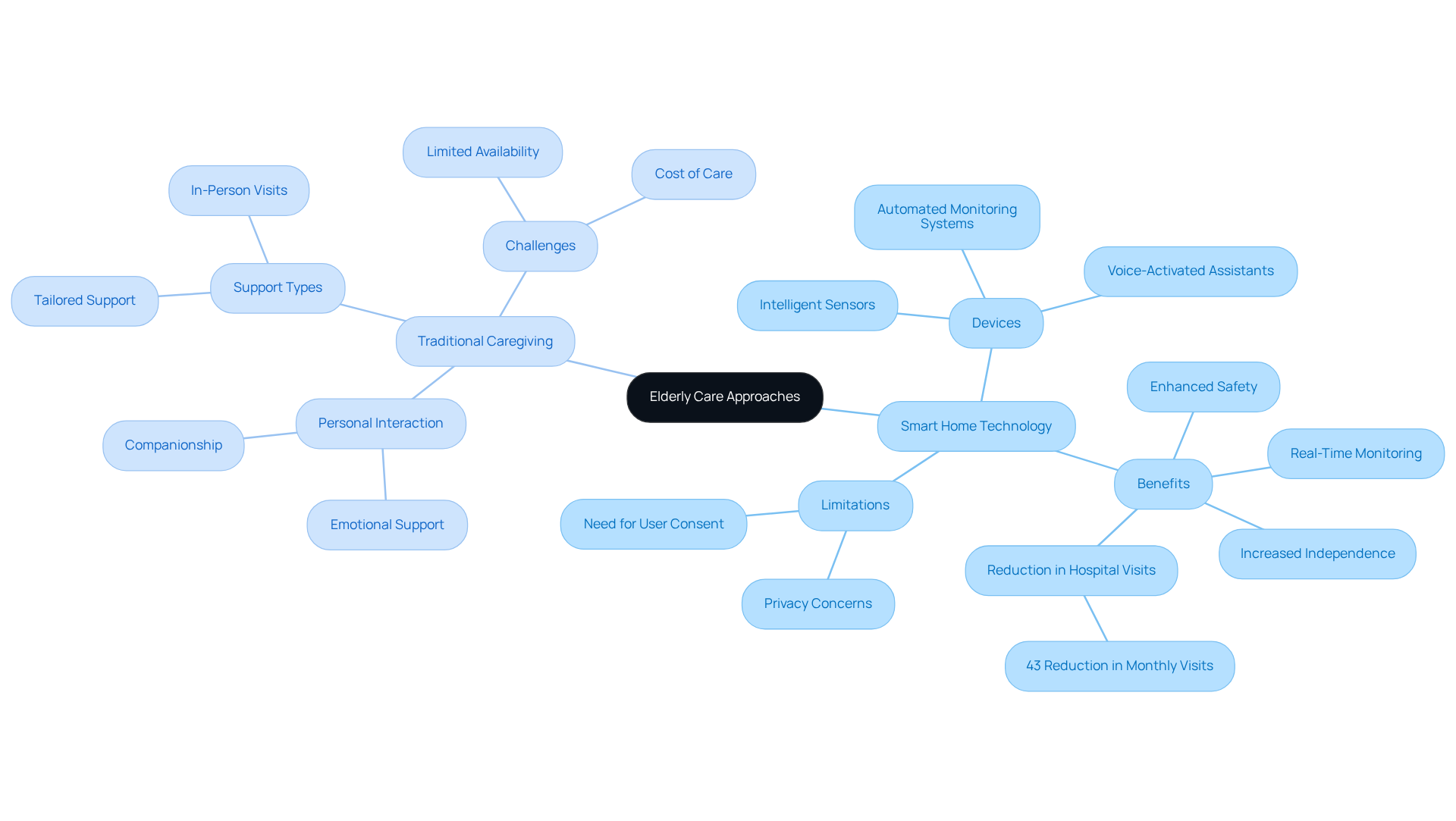
Smart home for the elderly technology provides a variety of devices and systems aimed at enhancing the safety, comfort, and independence of older adults living at home. These innovations include intelligent sensors, voice-activated assistants, and automated systems that monitor health and safety conditions. In contrast, traditional caregiving relies on human caregivers who provide direct support and companionship to elderly individuals. While conventional caregiving emphasizes personal interaction and emotional support, a smart home for the elderly focuses on automation and remote monitoring, allowing seniors to maintain their independence while ensuring their safety.
Both approaches aim to improve the quality of life for seniors, though they do so in different ways. Traditional care models typically involve in-person visits from caregivers, fostering personal connections and tailored support. On the other hand, intelligent home systems operate continuously, offering real-time information and notifications to family members or caregivers. For example, studies show that incorporating intelligent monitoring systems has led to a 43% reduction in monthly hospital visits for geriatric patients, underscoring the potential of technology to enhance health outcomes.
Experts in caregiving remind us that "Technology today can offer caregivers oversight into the lives of aging loved ones without being intrusive and helps them age in place." This dual approach-merging the emotional support of traditional caregiving with the effectiveness of a smart home for the elderly-can create a comprehensive care strategy that addresses both the physical and emotional needs of seniors. Moreover, a smart home for the elderly can track health habits, such as missed medications and nighttime bathroom visits, showcasing its practical applications in caregiving.
Understanding these differences, along with the potential limitations of advanced home systems-like privacy concerns and the need for user consent-is crucial for families as they navigate the best care options for their loved ones. By blending the warmth of personal care with the efficiency of technology, we can foster a nurturing environment that truly supports our aging loved ones.
Benefits of Smart Home Technology for Seniors
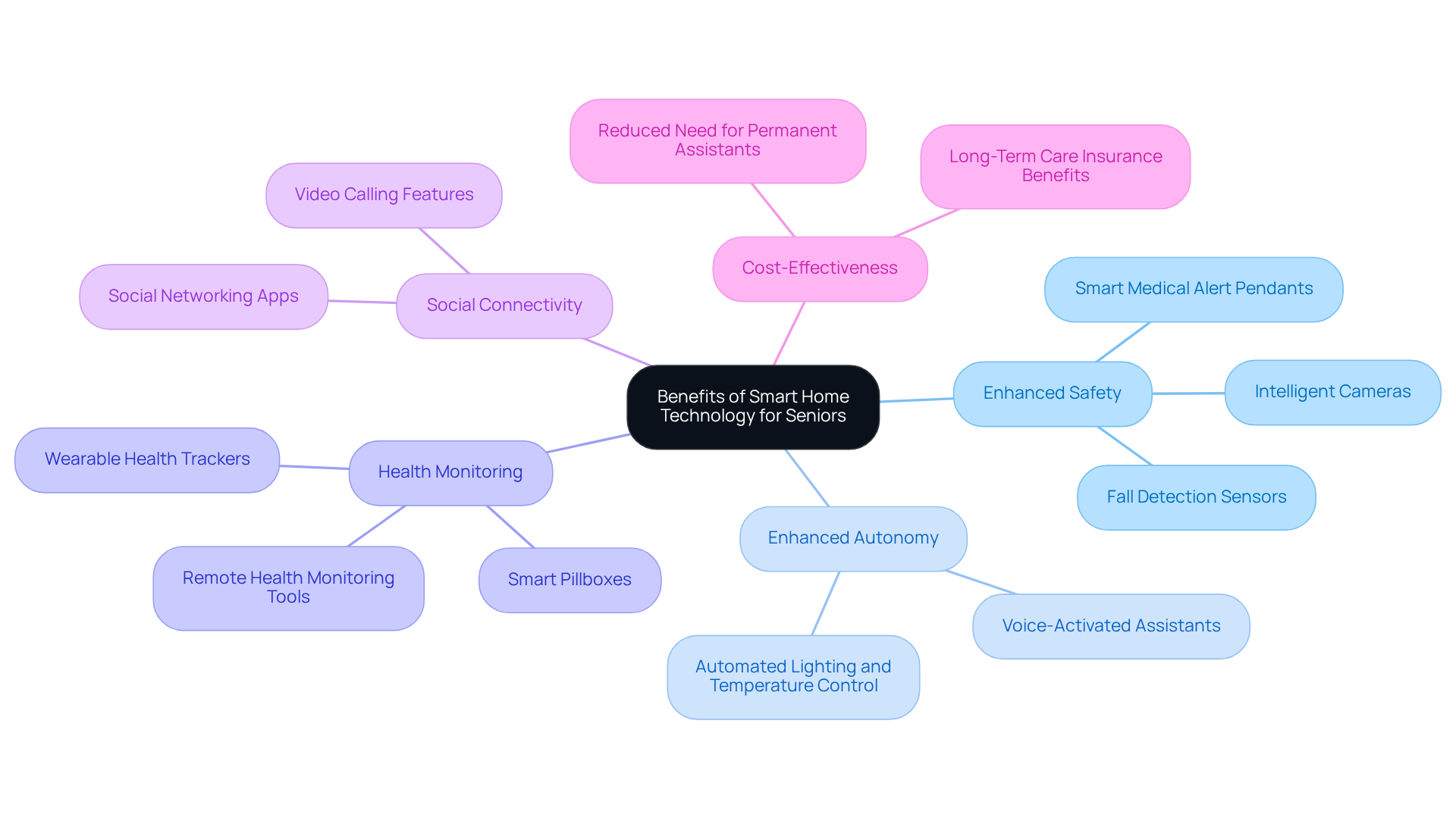
Smart home for the elderly technology brings a wealth of benefits, and it’s heartening to see how it can truly enhance the lives of seniors.
-
Enhanced Safety: Imagine the peace of mind that comes with devices like fall detection sensors and intelligent cameras. They can alert caregivers or family members in emergencies, ensuring that help is always just a moment away.
-
Enhanced Autonomy: Automation can be a game-changer. By adjusting lighting or temperature with ease, older adults can manage their surroundings independently, reducing the need for constant support.
-
Health Monitoring: Wearable devices and smart health monitors play a crucial role in tracking vital signs and medication adherence. This proactive approach to health management empowers seniors to take charge of their well-being.
-
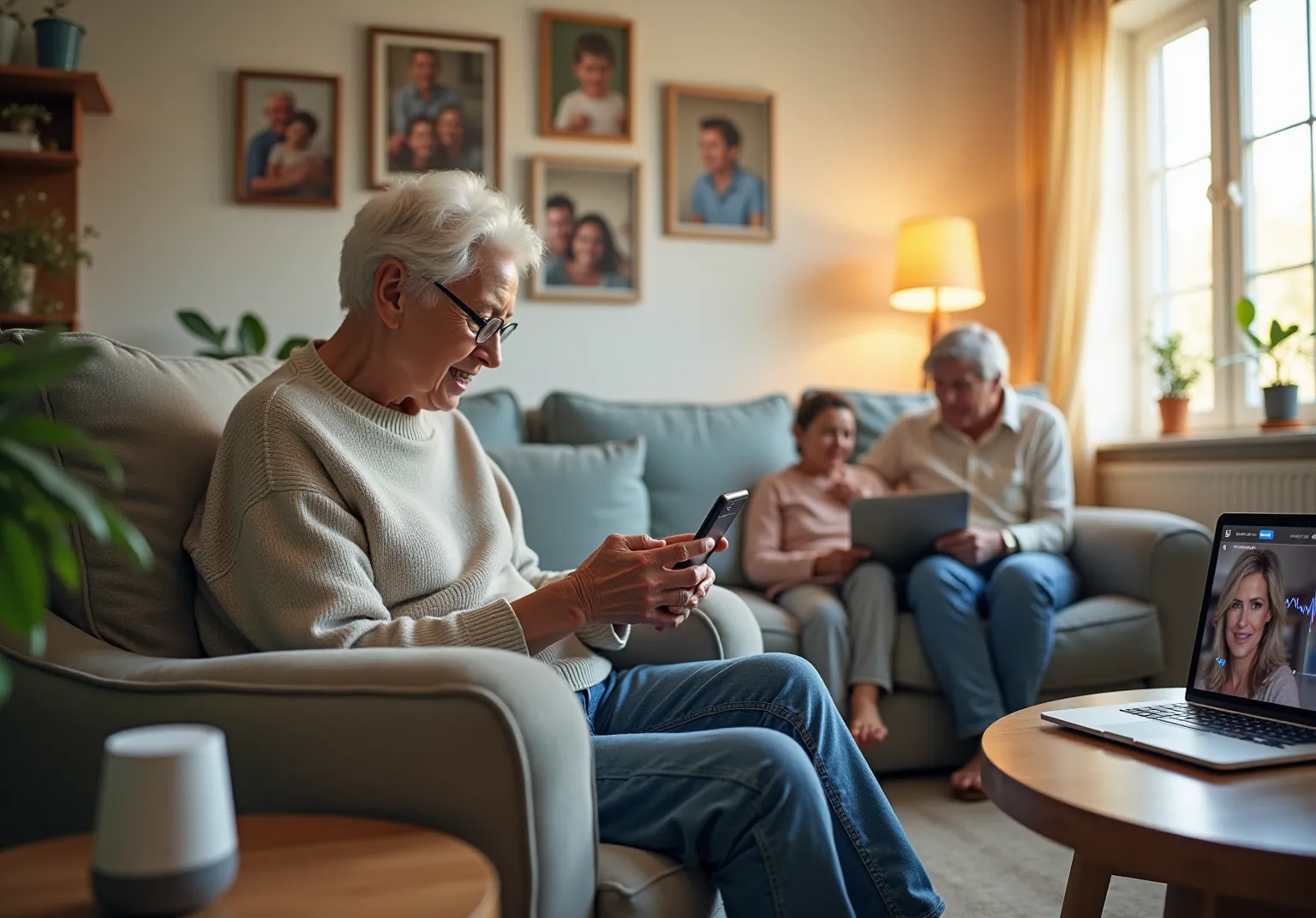
Social Connectivity: Staying connected is vital. Video calling features and social networking apps help elderly individuals maintain relationships with family and friends, combating feelings of loneliness and isolation.
-
Cost-Effectiveness: While the initial investment might seem high, home automation can lessen the need for permanent assistants, potentially lowering long-term care costs.
These advantages illustrate how a smart home for the elderly can promote independence while ensuring their safety and well-being. It’s a comforting thought that with the right tools, they can enjoy a fulfilling life at home.
Advantages of Traditional Caregiving Approaches
Traditional caregiving approaches offer several significant advantages that are especially beneficial for seniors:
-
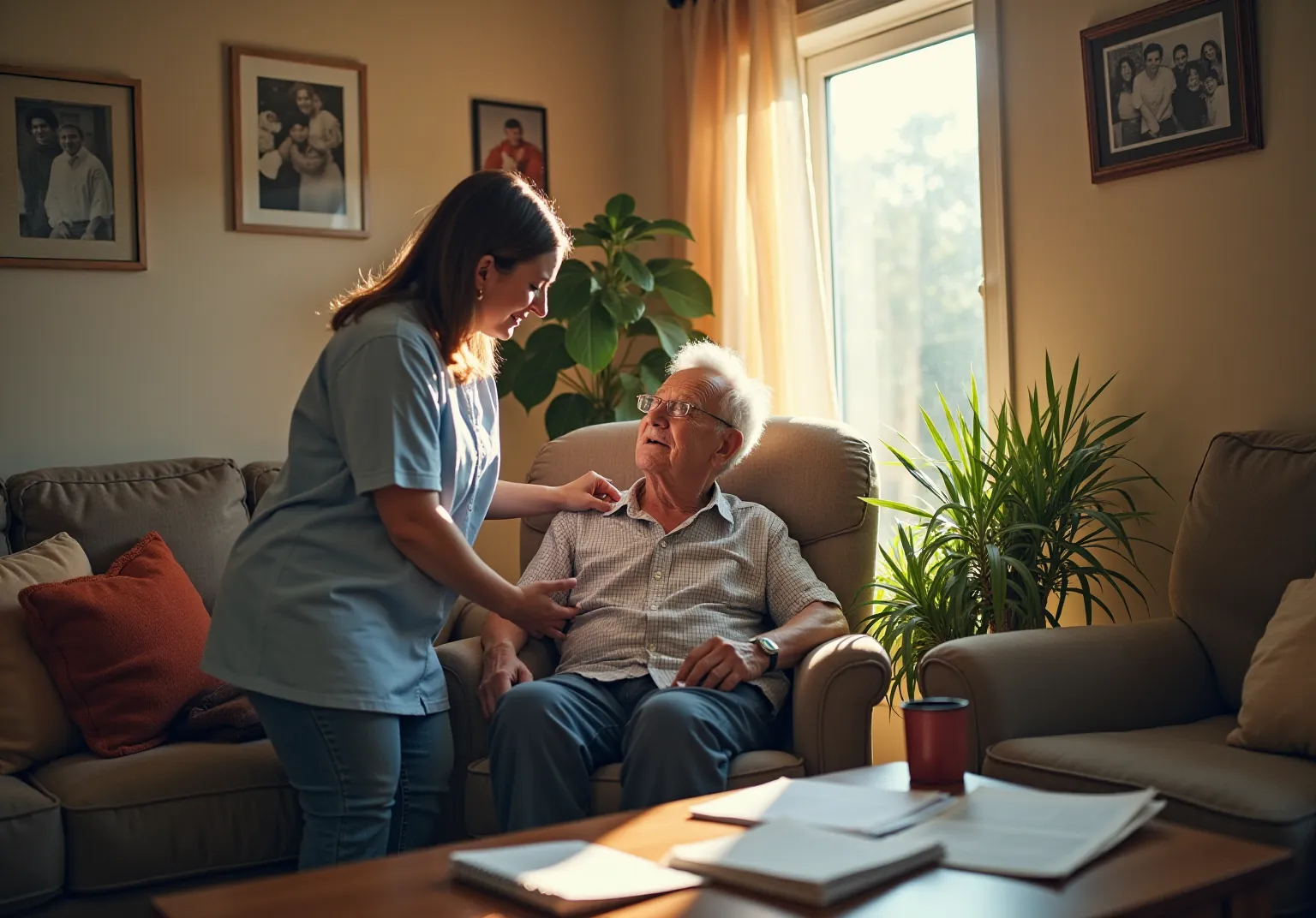
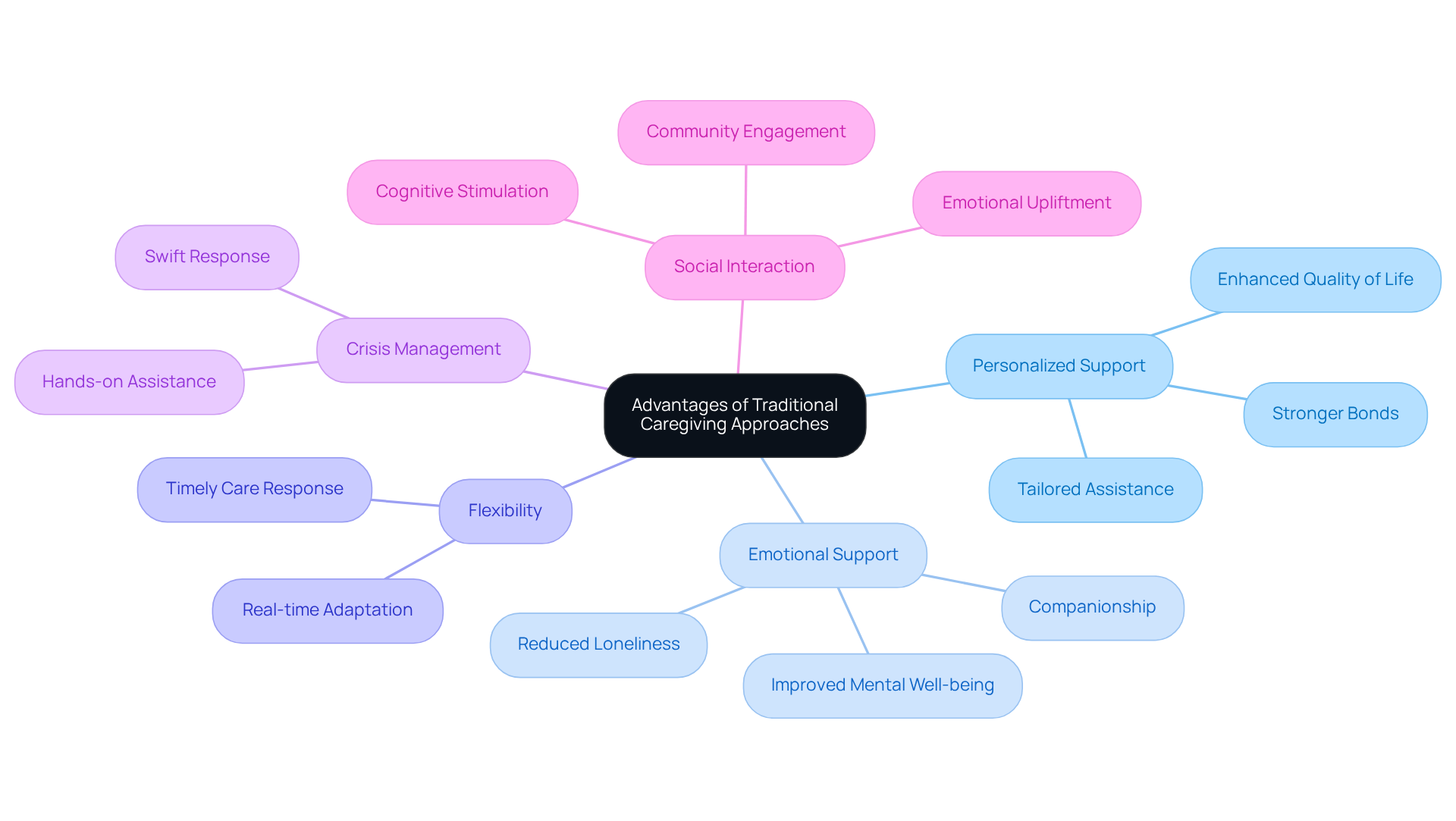
Personalized Support: Human providers truly shine when it comes to tailoring their assistance to meet the unique needs and preferences of each individual. This customized approach fosters stronger bonds and a deeper understanding of the elderly's needs, ultimately enhancing their overall quality of life.
-
Emotional Support: The companionship provided by caregivers is invaluable. Regular interactions not only help reduce feelings of loneliness but also significantly boost the mental well-being of older adults. Research shows that those who maintain strong social ties experience lower levels of stress and depression. This highlights just how crucial emotional support is in elderly care. For example, loneliness can negatively impact physical health, increasing the risk of conditions like heart disease and high blood pressure.
-
Flexibility: Unlike technology, traditional providers can adapt their services based on real-time observations and interactions. This flexibility allows them to respond to urgent needs as they arise, ensuring that elderly individuals receive timely and appropriate care.
-
Crisis Management: In emergencies, human providers can respond swiftly and effectively, offering hands-on assistance that smart devices simply cannot replicate. Their ability to assess situations and respond appropriately is vital for the safety and well-being of older adults.
-
Social Interaction: Regular visits from support providers help alleviate feelings of isolation and loneliness, promoting a sense of community and belonging. Engaging in social activities, whether through conversation or shared interests, can significantly enhance older adults' emotional well-being and cognitive abilities. As highlighted in the case study 'Companionship and Care: Transforming Elder Lives with Emotional and Daily Support,' providers play a crucial role in uplifting the emotional health of older adults through consistent engagement.
These advantages underscore the essential role of human interaction in caregiving, particularly for seniors who often need more than just physical assistance. The emotional and social benefits provided by caregivers are vital in enhancing the overall well-being of elderly individuals. As Edward Albert wisely stated, "The simple act of caring is heroic," reminding us of the profound impact caregivers have on the lives of those they support.
Drawbacks of Smart Home Technology and Traditional Care
Both smart home technology and traditional caregiving approaches have their own challenges that can weigh heavily on families:
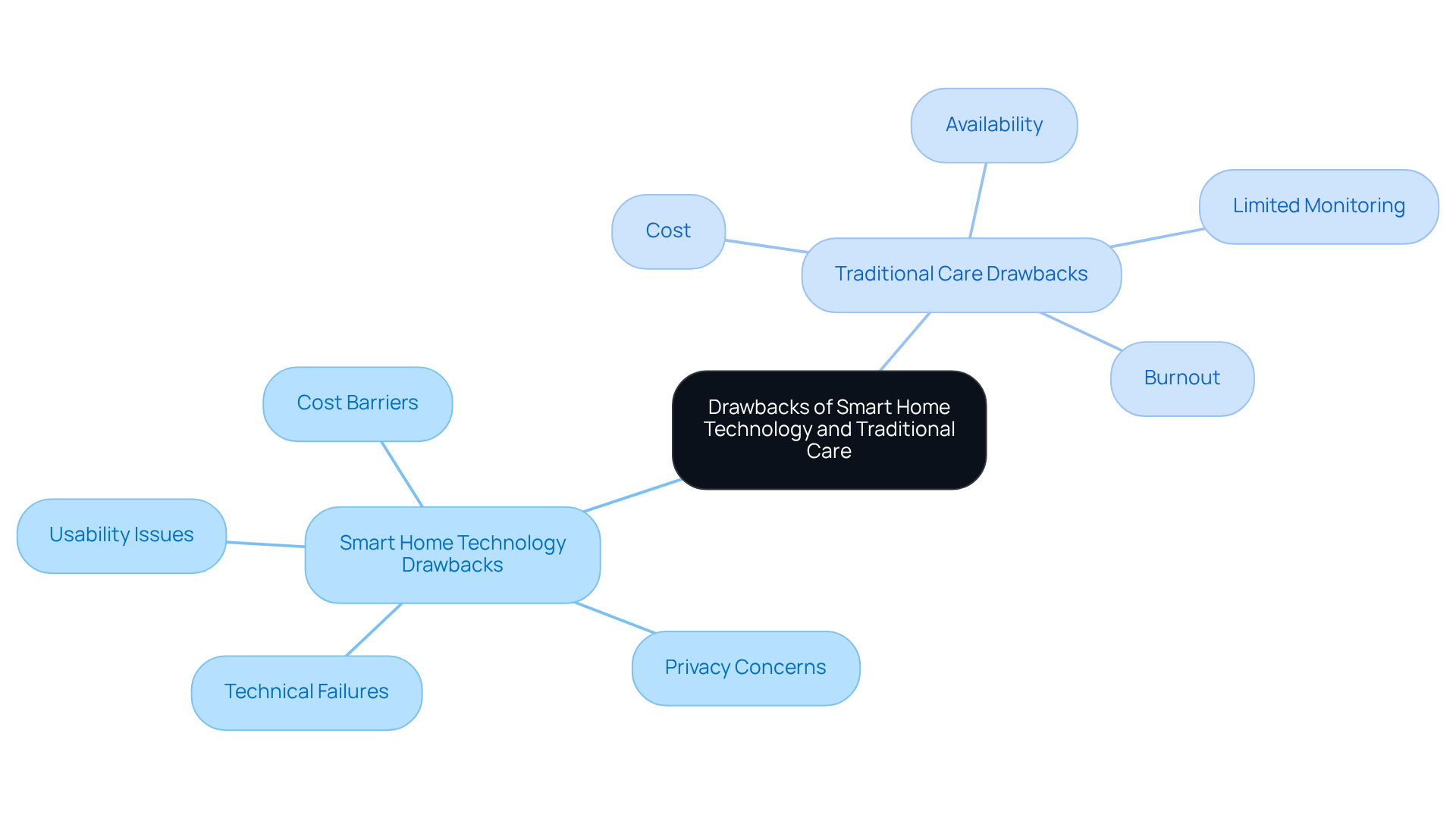
Smart Home Technology Drawbacks:
- Usability Issues: Many older adults may find smart devices complex, which can lead to frustration and underutilization. It’s important to recognize that not everyone is comfortable with technology.
- Privacy Concerns: The presence of cameras and monitoring devices can raise significant privacy issues. This can understandably discourage seniors from embracing these innovations, as their comfort and dignity are paramount.
- Technical Failures: Relying on digital systems means that any malfunction or connectivity issue can disrupt care and safety. This unpredictability can be a source of anxiety for families.
- Cost Barriers: The initial investment for smart home technology can be prohibitive for some families, especially those on fixed incomes. It’s essential to consider the financial strain this may impose.
Traditional Care Drawbacks:
- Cost: Employing assistants can be expensive, particularly for families needing full-time support. This financial burden can add to the stress already felt by caregivers.
- Availability: There may be a shortage of qualified personnel, leading to inconsistent support or reliance on less experienced staff. Families deserve reliable care for their loved ones.
- Limited Monitoring: Traditional caregiving may not provide the same level of continuous monitoring that smart home technology can offer. This lack of oversight can be concerning for families wanting the best smart home for the elderly for their loved ones.
- Burnout: Family caregivers often experience stress and burnout, which can impact the quality of care provided. It’s crucial to acknowledge this emotional toll and seek support.
Understanding these drawbacks is vital for families as they navigate the complexities of caregiving options, such as the smart home for the elderly, for their loved ones. Remember, you’re not alone in this journey; support is available, and there are compassionate solutions to help ease the burden.
Taking the Next Steps
Exploring smart home technology alongside traditional caregiving models reveals a deeply nuanced landscape of elderly care. It's clear that while smart home solutions bring remarkable advancements in safety, autonomy, and health monitoring, traditional caregiving holds an irreplaceable place in providing personalized support and emotional connection. The blend of these two approaches offers a wonderful opportunity to enhance the quality of life for seniors, allowing them to truly thrive in their own homes.
Key insights shed light on the strengths and weaknesses of both systems. Smart homes empower independence through automation and real-time health tracking, yet they can also present challenges related to usability and privacy. On the other hand, traditional caregiving shines in delivering tailored emotional support, though it can be hindered by cost and availability issues. Understanding these dynamics is essential for families as they navigate the best care options for their loved ones.
Ultimately, the journey toward optimal elderly care lies in striking a balance between technology and human interaction. Embracing smart home features can significantly uplift the lives of seniors, while the compassionate touch of caregivers ensures their emotional and social needs are met. By considering the individual circumstances and preferences of elderly individuals, families can create a supportive environment that honors both independence and connection.
https://iframe.tely.ai/cta/eyJhcnRpY2xlX2lkIjogIjY5MTkxNDE4YTc1MDljMjI3ODFlOWZiYyIsICJjb21wYW55X2lkIjogIjY4ZWU1ZGNhNzMxNzYyNTU3ZjNjOTVjMSIsICJpbmRleCI6IG51bGwsICJ0eXBlIjogImFydGljbGUifQ==Frequently Asked Questions
What is smart home technology for the elderly?
Smart home technology for the elderly includes various devices and systems designed to enhance the safety, comfort, and independence of older adults living at home. This technology features intelligent sensors, voice-activated assistants, and automated systems that monitor health and safety conditions.
How does smart home technology differ from traditional caregiving?
Traditional caregiving relies on human caregivers who provide direct support and companionship, focusing on personal interaction and emotional support. In contrast, smart home technology emphasizes automation and remote monitoring, allowing seniors to maintain independence while ensuring their safety.
What are the benefits of using smart home technology for seniors?
Smart home technology can improve the quality of life for seniors by offering continuous operation, real-time information, and notifications to family members or caregivers. Studies indicate that incorporating intelligent monitoring systems can significantly reduce hospital visits among geriatric patients.
Can smart home technology replace traditional caregivers?
While smart home technology can enhance care by providing oversight and monitoring, it does not replace the emotional support and personal interaction that traditional caregivers offer. A combination of both approaches can create a more comprehensive care strategy.
What practical applications does smart home technology have in caregiving?
Smart home technology can track health habits, such as missed medications and nighttime bathroom visits, which helps caregivers monitor the well-being of seniors and respond to their needs effectively.
What are some potential limitations of smart home technology for the elderly?
Potential limitations include privacy concerns and the necessity for user consent, which families need to consider when navigating care options for their loved ones.
How can a dual approach to caregiving benefit seniors?
A dual approach, which merges the emotional support of traditional caregiving with the efficiency of smart home technology, can create a nurturing environment that addresses both the physical and emotional needs of seniors.