For families in our service areas
For families in our service areas, this guide explains dementia care and how non-medical in-home caregiving can support care planning in East Idaho, Treasure Valley & Magic Valley, Northern Wasatch, North Central West Virginia & Southwestern Pennsylvania, and Northeast Ohio.
The Importance of Smartwatches
Caring for seniors with dementia presents significant challenges, especially regarding their safety and well-being. Caregivers often experience anxiety about ensuring their loved ones are secure and comfortable. This concern can be overwhelming, as the complexities of dementia require constant attention and support.
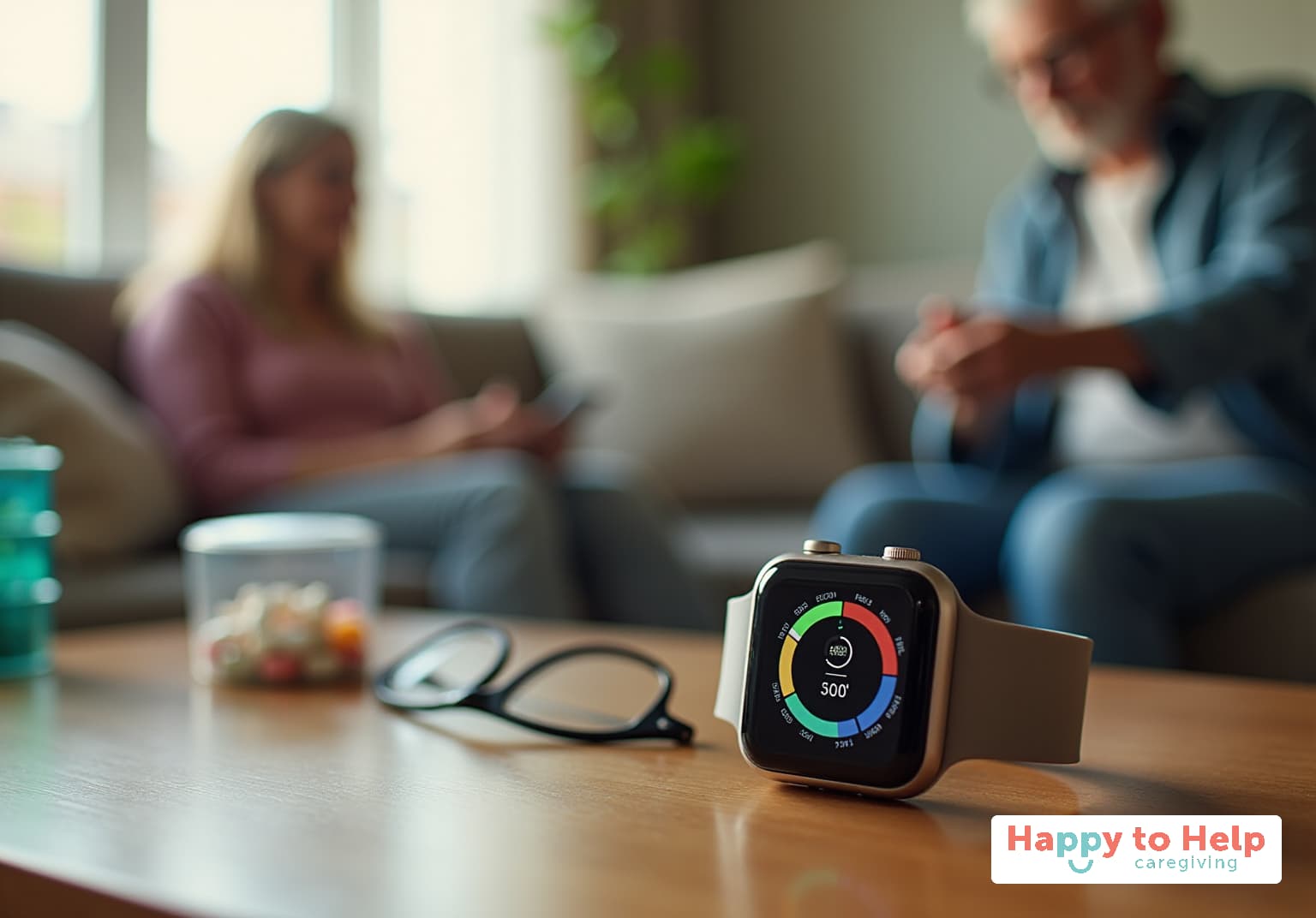
Smartwatches designed specifically for seniors offer innovative features that can help alleviate this caregiver anxiety. These devices not only enhance the quality of life for elderly individuals but also provide peace of mind for those who care for them. However, with a plethora of options available, caregivers may find it difficult to determine which smartwatch best meets the unique needs of their loved ones.
This article explores essential features and compares top smartwatch models, providing insights that empower caregivers to make informed decisions. By understanding the available options, caregivers can choose devices that truly support the well-being of seniors with dementia.
Key Features of Smartwatches for Seniors with Dementia
Caring for elderly individuals with dementia presents unique challenges, particularly in ensuring their safety and well-being. Caregivers often worry about monitoring their loved ones' movements and health, which can lead to anxiety and stress.
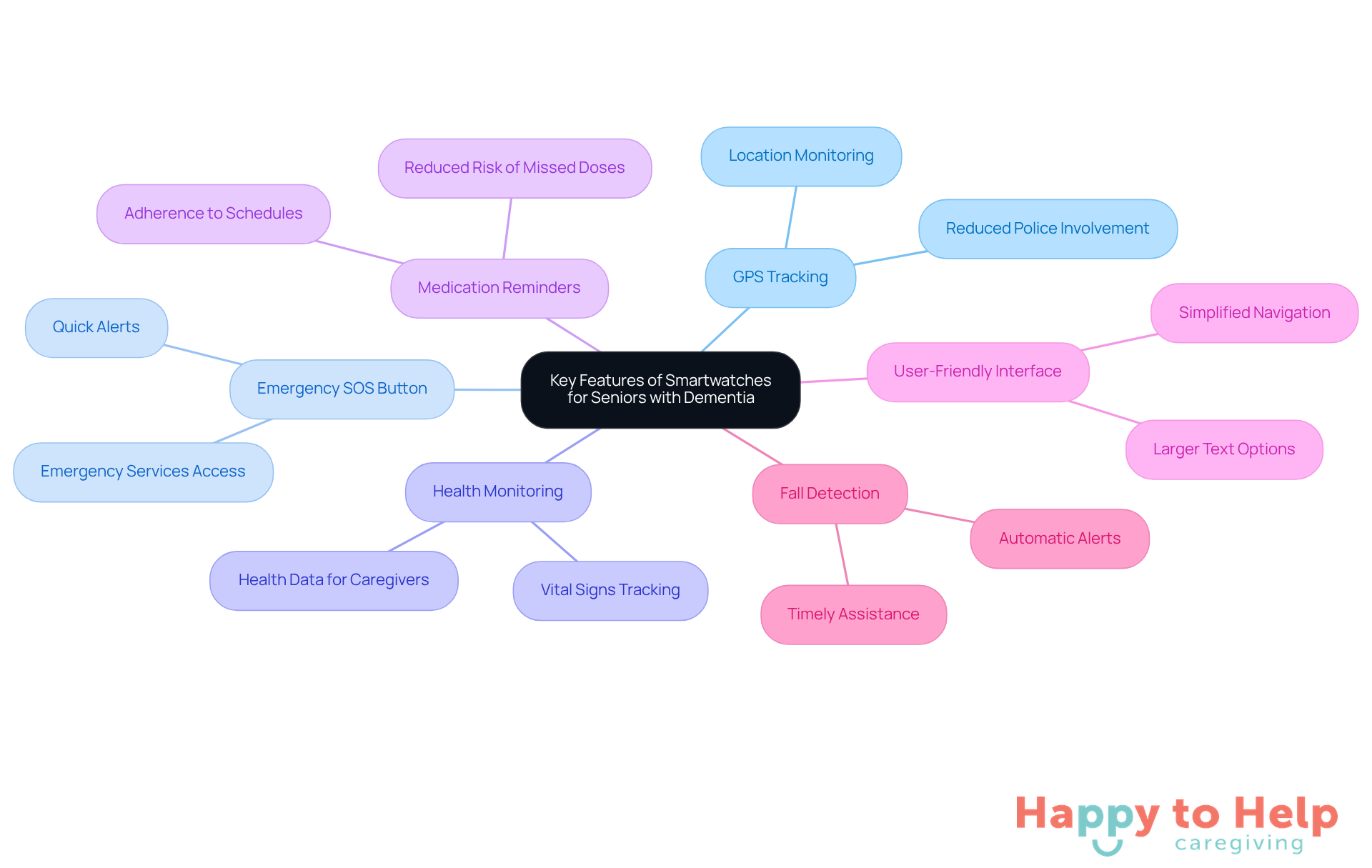
Watches for seniors with dementia, designed specifically for this demographic, offer practical solutions to these concerns. Here are some key features that enhance safety and usability:
- GPS Tracking: This essential feature allows caregivers to monitor the location of seniors, ensuring they can track movements and maintain safety.
- Emergency SOS Button: A vital tool that enables elderly individuals to quickly alert caregivers or emergency services in distressing situations.
- Health Monitoring: Many smartwatches come equipped with sensors to track heart rate, blood pressure, and other vital signs, providing caregivers with valuable health data.
- Medication Reminders: These reminders help older adults adhere to their medication schedules, reducing the risk of missed doses.
- User-Friendly Interface: Simplified menus and larger text make navigation easier for older adults, minimizing frustration.
- Fall Detection: Advanced models can detect falls and automatically notify caregivers, ensuring timely assistance.
Together, these features create a safer and more autonomous living environment for older adults experiencing cognitive decline, including the use of watches for seniors with dementia.
Comparison of Top Smartwatch Models for Seniors
Caring for seniors with dementia presents unique challenges, particularly when it comes to ensuring their safety and well-being. Caregivers often face the daunting task of monitoring their loved ones, which can be stressful and overwhelming. Watches for seniors with dementia are designed to provide essential features that address these concerns.
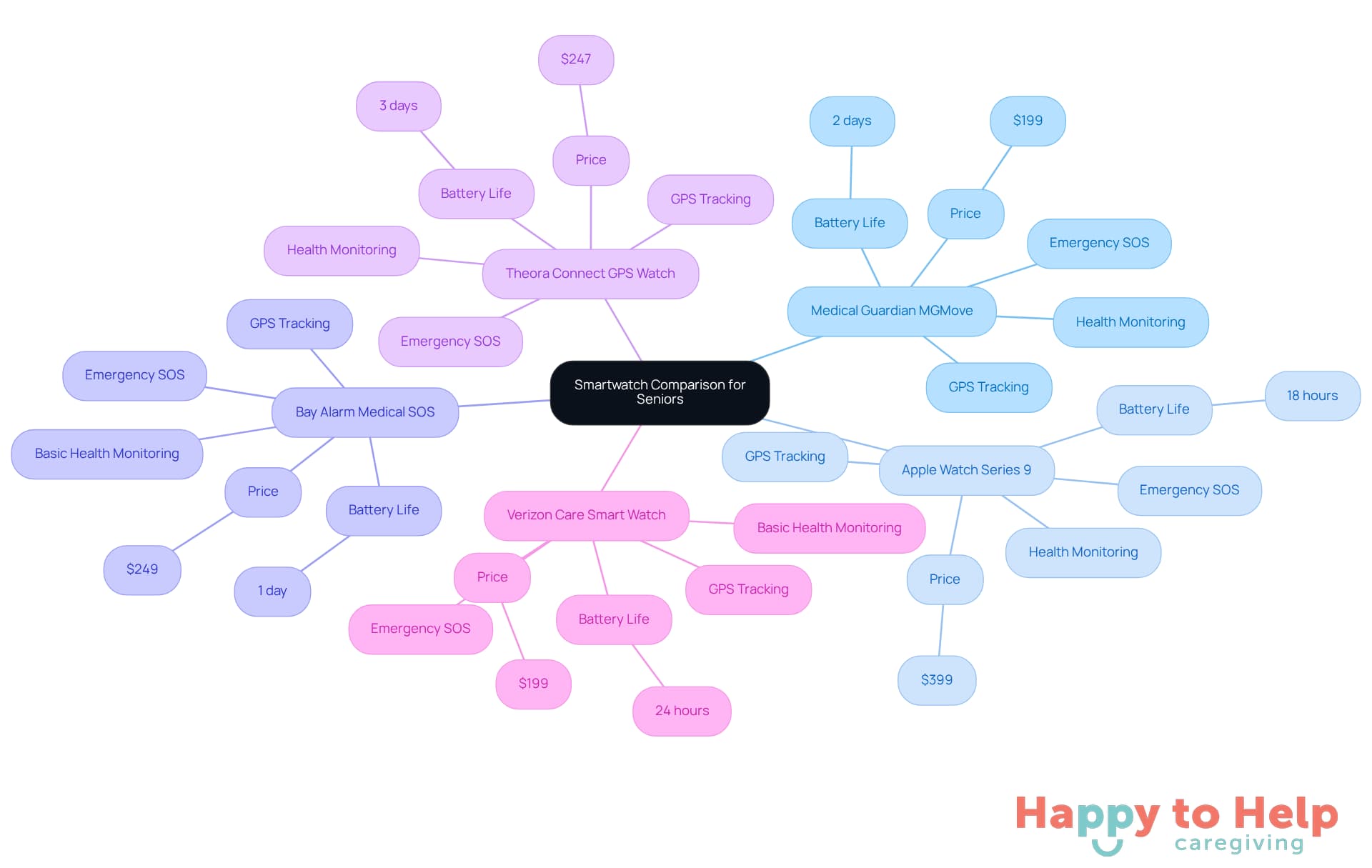
Here’s a comparison of some of the top smartwatch models for seniors with dementia:
- Medical Guardian MGMove: GPS Tracking, Emergency SOS, Health Monitoring, 2 days Battery Life, $199
- Apple Watch Series 9: GPS Tracking, Emergency SOS, Health Monitoring, 18 hours Battery Life, $399
- Bay Alarm Medical SOS: GPS Tracking, Emergency SOS, Basic Health Monitoring, 1 day Battery Life, $249
- Theora Connect GPS Watch: GPS Tracking, Emergency SOS, Health Monitoring, 3 days Battery Life, $247
- Verizon Care Smart Watch: GPS Tracking, Emergency SOS, Basic Health Monitoring, 24 hours Battery Life, $199
Each model offers unique features tailored to the needs of seniors. For instance, the Medical Guardian MGMove is praised for its user-friendly design and long battery life, making it an excellent choice for caregivers seeking reliability. On the other hand, the Apple Watch Series 9 provides advanced health monitoring capabilities, though it comes at a higher price point. By considering these options, caregivers can find a smartwatch that best meets the needs of their loved ones.
Enhancing Safety and Usability with Smartwatches
Smartwatches for seniors with dementia significantly enhance safety and usability through various innovative features.
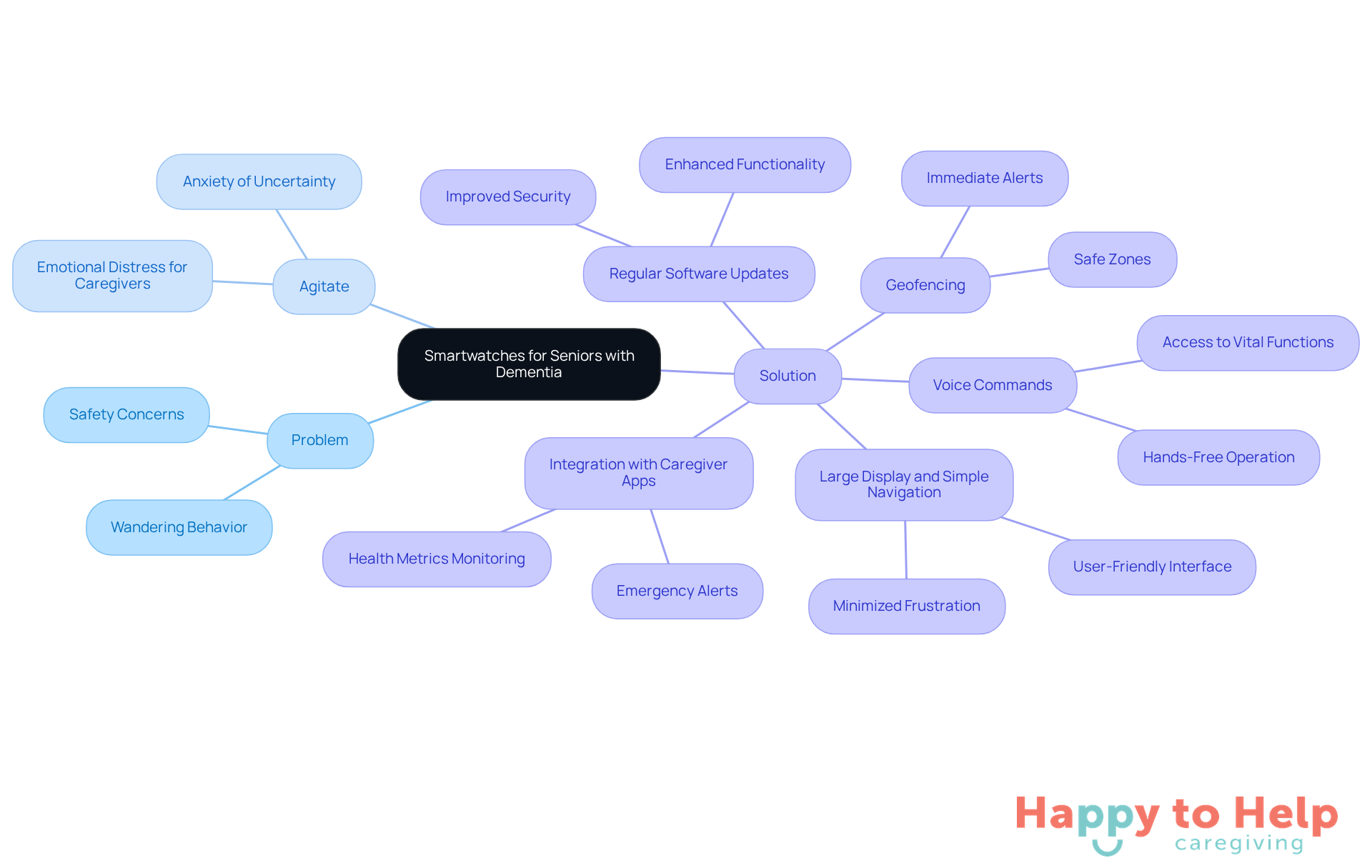
Problem: Caregivers face the challenge of ensuring the safety of seniors who may wander due to dementia. With over 55 million people worldwide living with this condition, using watches for seniors with dementia to monitor wandering behavior is crucial for their safety.
Agitate: The implications of wandering can be severe, leading to distress for both seniors and caregivers. The anxiety of not knowing where a loved one is can be overwhelming, making it essential to have reliable solutions in place.
Solution: Smartwatches offer several features that address these concerns effectively:
- Geofencing: Caregivers can establish safe zones and receive immediate alerts if a senior wanders outside these designated areas, providing invaluable peace of mind.
- Voice Commands: Many smartwatches come equipped with voice command features, allowing older adults to use the device hands-free. This is especially beneficial for individuals with mobility difficulties, enabling access to vital functions without physical effort. Dr. Matthew Lee Smith highlights that watches for seniors with dementia are technological solutions that help older adults maintain their independence.
- Large Display and Simple Navigation: A bigger screen paired with straightforward navigation ensures that older adults can easily access functionalities without confusion, minimizing frustration and improving user experience.
- Regular Software Updates: Manufacturers frequently provide updates that enhance functionality and security, ensuring the device remains effective and up-to-date over time.
- Integration with Caregiver Apps: Certain smartwatches allow caregivers to monitor health metrics and receive alerts through dedicated applications, facilitating better communication and care management. Features like emergency buttons and automatic fall detection can alert caregivers or emergency services in case of a fall, further enhancing safety.
These enhancements not only improve the usability of watches for seniors with dementia but also empower older adults to maintain their independence while ensuring their safety. For instance, a smartwatch with voice commands enables an elderly person to call for assistance or check the time without navigating through menus, making it a practical device for everyday life. As the global population ages, incorporating such technology becomes increasingly vital in supporting the well-being of older adults. The article has garnered significant interest, with over 10,105 views, underscoring the relevance of this topic in today's caregiving landscape.
Guidelines for Choosing the Right Smartwatch
Selecting watches for seniors with dementia can be challenging. Caregivers often face the problem of finding a device that meets safety and usability needs while also being easy for seniors to operate. This challenge can lead to frustration and concern for the well-being of loved ones.
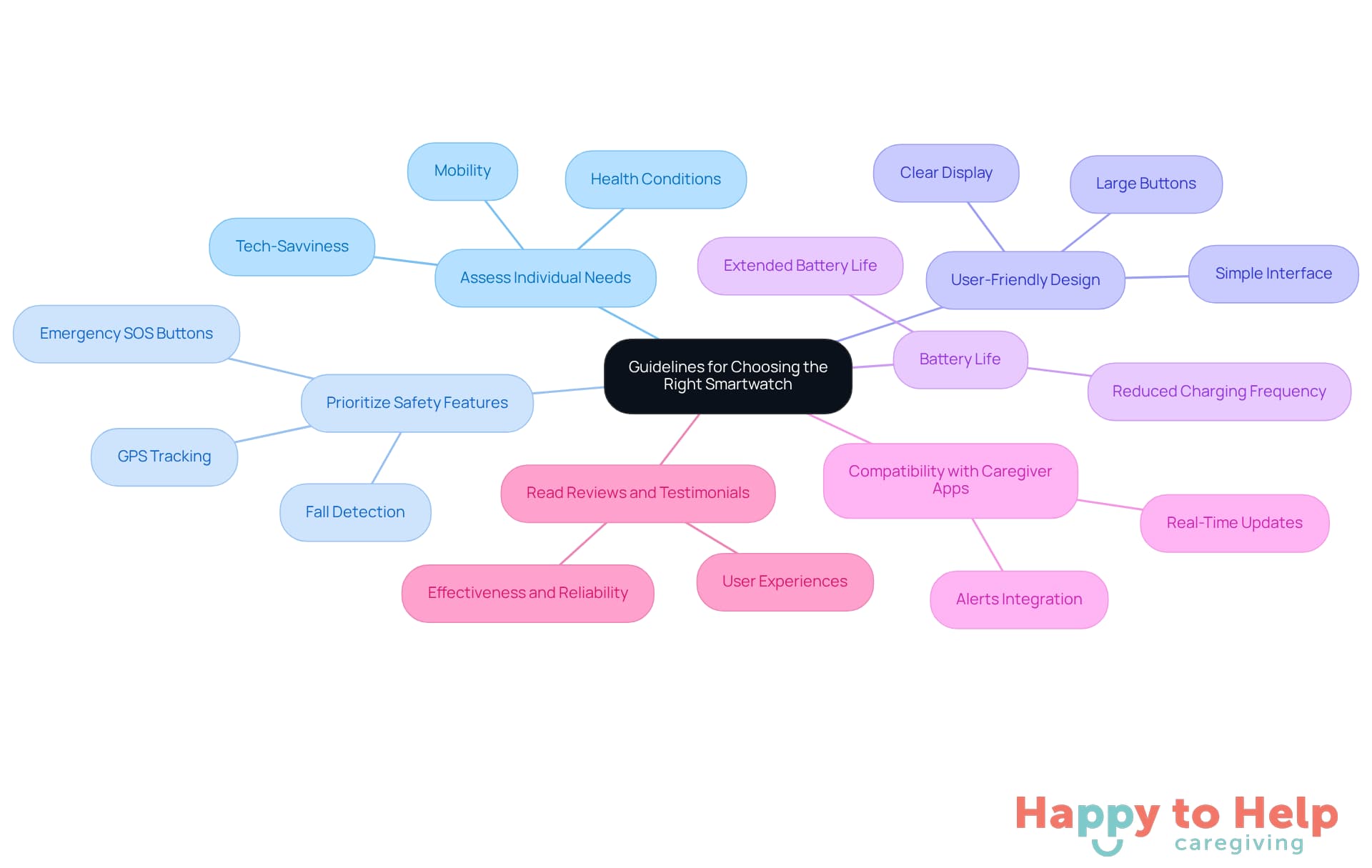
To address these concerns, consider the following guidelines:
- Assess Individual Needs: Evaluate the specific needs of the senior, including health conditions, mobility, and tech-savviness.
- Prioritize Safety Features: Look for models with GPS tracking, emergency SOS buttons, and fall detection capabilities.
- User-Friendly Design: Choose a smartwatch with a simple interface, large buttons, and a clear display to facilitate ease of use.
- Battery Life: Opt for devices with extended battery life to reduce the need for frequent charging, which can be a hindrance for some older adults.
- Compatibility with Caregiver Apps: Ensure the smartwatch can integrate with caregiver monitoring apps for real-time updates and alerts.
- Read Reviews and Testimonials: Research user experiences to gauge the effectiveness and reliability of the smartwatch.
By following these guidelines, families can select a smartwatch that not only meets safety and health monitoring needs but also enhances the overall quality of life for seniors with dementia.
Key Takeaways for Caregivers
Smartwatches tailored for seniors with dementia address a significant problem: the safety and independence of these individuals, which can be a source of worry for caregivers. As the elderly population grows, caregivers face unique challenges in ensuring their loved ones remain safe while promoting autonomy.
These devices, equipped with features like GPS tracking, emergency SOS buttons, and health monitoring capabilities, serve as vital tools that enhance safety and ease caregivers' concerns. The thoughtful design and user-friendly interfaces allow older adults to navigate technology with minimal frustration, creating a more seamless experience.
Choosing the right smartwatch is crucial. Caregivers must consider individual needs, safety features, and usability. By comparing various models, caregivers can find devices that cater to specific requirements, such as long battery life and advanced health monitoring. This knowledge empowers them to make informed decisions that can significantly improve the quality of life for seniors with dementia.
Investing in the right smartwatch not only provides peace of mind but also supports the autonomy of seniors. By prioritizing safety and usability, caregivers can foster a more secure environment for their loved ones, ultimately enhancing their overall well-being. Embracing technology like smartwatches is essential for families navigating dementia care.
https://iframe.tely.ai/cta/eyJhcnRpY2xlX2lkIjogIjY5NDBhMjJlOTc5ZjhiMGM0MmQzYjU3YyIsICJjb21wYW55X2lkIjogIjY4ZWU1ZGNhNzMxNzYyNTU3ZjNjOTVjMSIsICJpbmRleCI6IG51bGwsICJ0eXBlIjogImFydGljbGUifQ==Frequently Asked Questions
What challenges do caregivers face when caring for seniors with dementia?
Caregivers often worry about monitoring their loved ones' movements and health, which can lead to anxiety and stress.
What are some key features of smartwatches designed for seniors with dementia?
Key features include GPS tracking, an emergency SOS button, health monitoring, medication reminders, a user-friendly interface, and fall detection.
How does GPS tracking benefit caregivers of seniors with dementia?
GPS tracking allows caregivers to monitor the location of seniors, ensuring they can track movements and maintain safety.
What is the purpose of the emergency SOS button on these smartwatches?
The emergency SOS button enables elderly individuals to quickly alert caregivers or emergency services in distressing situations.
What types of health data can smartwatches for seniors monitor?
Many smartwatches are equipped with sensors to track heart rate, blood pressure, and other vital signs, providing caregivers with valuable health data.
How do medication reminders assist seniors with dementia?
Medication reminders help older adults adhere to their medication schedules, reducing the risk of missed doses.
What makes the user interface of these smartwatches suitable for older adults?
The user-friendly interface features simplified menus and larger text, making navigation easier for older adults and minimizing frustration.
What is the function of fall detection in smartwatches for seniors?
Advanced models can detect falls and automatically notify caregivers, ensuring timely assistance.
List of Sources
- Key Features of Smartwatches for Seniors with Dementia
- Advanced Wearable Technology Improves Support For People With Dementia And Their Caregivers (https://stories.tamu.edu/news/2025/02/18/advanced-wearable-technology-improves-support-for-people-with-dementia-and-their-caregivers)
- The Best Smartwatches for Seniors | SeniorLiving.org (https://seniorliving.org/smartwatch/best)
- Implementing global positioning system trackers for people with dementia who are at risk of wandering - PMC (https://pmc.ncbi.nlm.nih.gov/articles/PMC11290024)
- L.A. County Launches New GPS Smartwatch to Protect Alzheimer’s and Autism Communities – COUNTY OF LOS ANGELES (https://lacounty.gov/2025/10/15/l-a-county-launches-new-gps-smartwatch-to-protect-alzheimers-and-autism-communities)
- Comparison of Top Smartwatch Models for Seniors
- Smartwatch Statistics and Facts (2025) (https://scoop.market.us/smartwatch-statistics)
- The Best Smartwatches for Seniors | SeniorLiving.org (https://seniorliving.org/smartwatch/best)
- Smartwatch Statistics 2025: Health Use, Brand Shares & Future Forecast (https://sqmagazine.co.uk/smartwatch-statistics)
- Best Medical Alert Watches of 2025: Expert Tested | SafeHome.org (https://safehome.org/medical-alert-systems/best/watches)
- Enhancing Safety and Usability with Smartwatches
- Wearable Devices That Help Monitor Senior Health at Home - At Home Care Inc (https://at-home-care.com/wearable-devices-that-help-monitor-senior-health-at-home)
- Technology for dementia care: benefits, opportunities and concerns | Published in Journal of Global Health Reports (https://joghr.org/article/39606-technology-for-dementia-care-benefits-opportunities-and-concerns)
- Advanced Wearable Technology Improves Support For People With Dementia And Their Caregivers (https://stories.tamu.edu/news/2025/02/18/advanced-wearable-technology-improves-support-for-people-with-dementia-and-their-caregivers)
- How Wearable Technology is Enhancing Safety for Seniors (https://assuredassistedliving.com/how-wearable-technology-is-enhancing-safety-for-seniors)
- Guidelines for Choosing the Right Smartwatch
- Advanced Wearable Technology Improves Support For People With Dementia And Their Caregivers (https://stories.tamu.edu/news/2025/02/18/advanced-wearable-technology-improves-support-for-people-with-dementia-and-their-caregivers)
- A Guide To The Best Smartwatches For Seniors (https://forbes.com/health/healthy-aging/best-smartwatches-for-seniors)
- The Best Smartwatches for Seniors | SeniorLiving.org (https://seniorliving.org/smartwatch/best)
- Smartwatch & Health Tracker Adoption Stats (https://patentpc.com/blog/smartwatch-health-tracker-adoption-stats)
- 11 Best GPS Trackers for Dementia Patients In 2025 (https://family1st.io/best-gps-trackers-for-dementia-patients)