

For families in our service areas
For families in our service areas, this guide explains caregiving and how non-medical in-home caregiving can support care planning in East Idaho, Treasure Valley & Magic Valley, Northern Wasatch, North Central West Virginia, and Northeast Ohio.
Quick Guide to Understand the 6 Activities of Daily
Caring for someone you love can be both rewarding and challenging. Many caregivers face emotional hurdles as they navigate the complexities of daily support. Understanding the six activities of daily living (ADLs)—bathing, dressing, eating, toileting, transferring, and continence—is essential for providing the best care possible. These fundamental tasks are not just routines; they are vital for maintaining personal care and independence.
As caregivers, recognizing the significance of these activities can help you assess individual support needs more effectively. It’s important to remember that many seniors may require assistance with at least one of these tasks. This realization can amplify feelings of stress and burnout, but it also opens the door to creating personalized care plans that truly enhance the quality of life and dignity for those you assist.
Imagine the relief of a senior who can enjoy a warm bath with the right support, or the joy of a family member who can dress independently with just a little help. These moments matter. They remind us that every small act of care contributes to a larger picture of compassion and respect.
By focusing on these ADLs, you can foster a nurturing environment that not only addresses practical needs but also uplifts spirits. Remember, you’re not alone in this journey. Many caregivers share similar experiences, and their stories can inspire and reassure you.
As you continue to provide care, take heart in knowing that your efforts make a significant difference. Together, we can ensure that those we assist feel valued and supported, allowing them to maintain their dignity and independence.
Why Understand the 6 Activities of Daily Matters
Understanding the complexities of Activities of Daily Living (ADLs) is crucial for anyone involved in caregiving. These essential tasks—bathing, dressing, eating, toileting, transferring, and continence—play a vital role in preserving independence and dignity. It's heart-wrenching to know that around 70% of seniors need help with at least one of these activities. This places a significant responsibility on caregivers to ensure their clients' well-being and quality of life.
But how can caregivers truly assess and adapt their support to meet the changing needs of those they care for? Many caregivers may feel overwhelmed, especially if they lack formal training. This article explores the importance of ADLs in caregiving, offering insights and practical tools to enhance care strategies. Together, we can foster independence and provide the compassionate support that every individual deserves.
Define Activities of Daily Living (ADLs)
The 6 activities of daily living encompass the vital tasks we engage in daily to maintain personal care and independence. The 6 activities of daily living—bathing, dressing, eating, toileting, transferring, and continence—are fundamental to our well-being. As we age, the need for support with these tasks often increases. In fact, around 70% of seniors require assistance with at least one activity, underscoring the importance of these daily routines in our lives.
For caregivers, understanding the 6 activities of daily living is crucial for assessing the level of support a person may need. This knowledge enables the creation of personalized care plans that not only address immediate needs but also foster independence and dignity. For example, a caregiver might help a senior with bathing while encouraging them to dress on their own, nurturing a sense of autonomy. As Debra Wright, a Quality Improvement Specialist, notes, 'Understanding the 6 activities of daily living is essential for providing appropriate care for individuals with changing health or mobility needs.'
Expert insights reveal that the ability to perform daily activities is closely linked to overall health and well-being. Caregivers must remain attentive to any decline in these activities, as such changes can signal a need for additional support or a reassessment of living arrangements. Signs like frequent dehydration or poor hygiene may indicate declining Instrumental Activities of Daily Living (IADLs). By focusing on the 6 activities of daily living, caregivers can significantly enhance the quality of life for those they assist, allowing individuals to maintain their independence for as long as possible.
In this journey, it’s important to remember that you’re not alone. Many caregivers share similar experiences, and there are resources available to help you navigate these challenges. By prioritizing the needs of those you care for, you’re making a profound difference in their lives, ensuring they feel valued and respected.
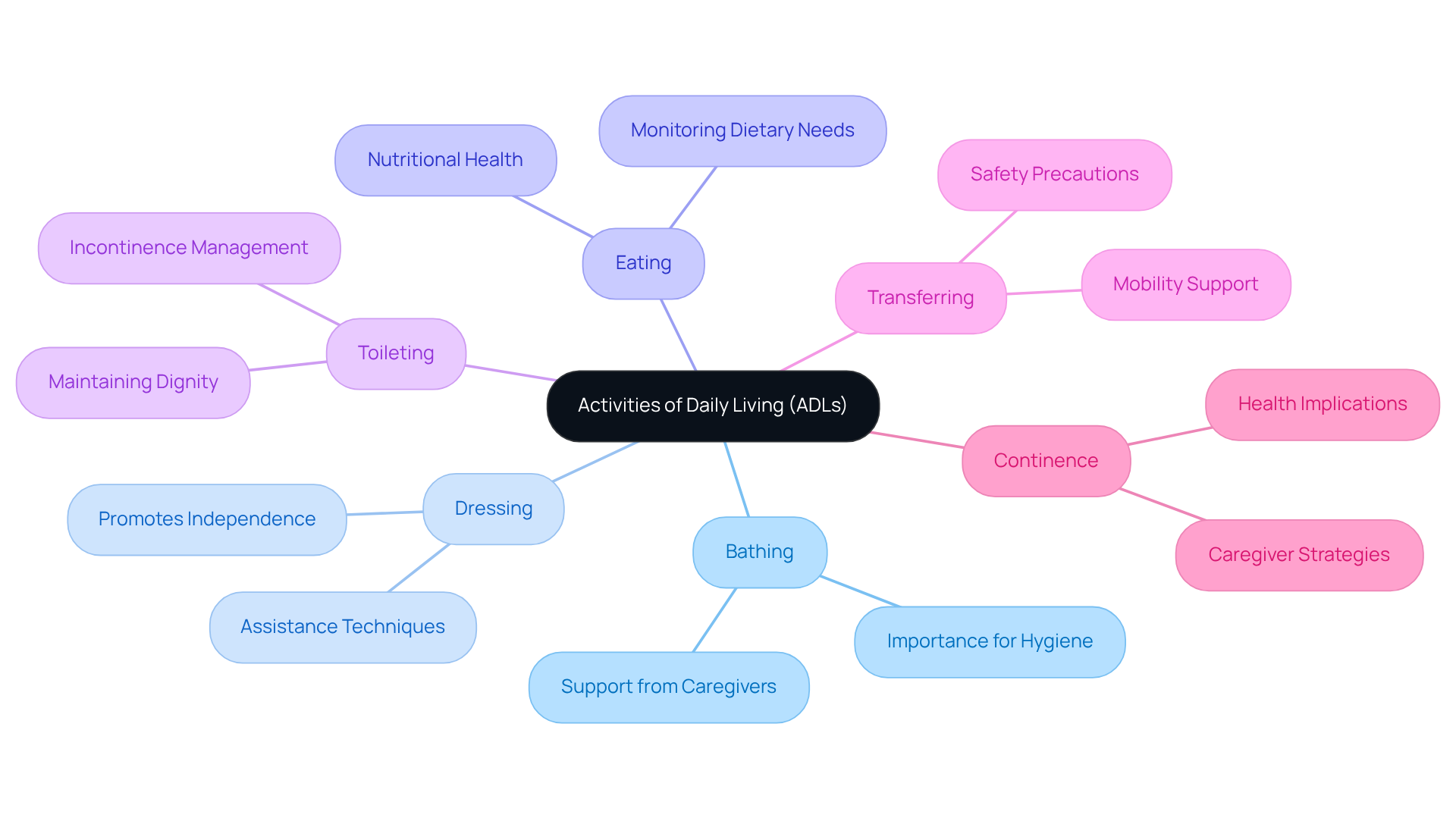
Explore the Six Key Activities of Daily Living
The 6 activities of daily living are essential for maintaining a sense of independence and dignity. They include:
-
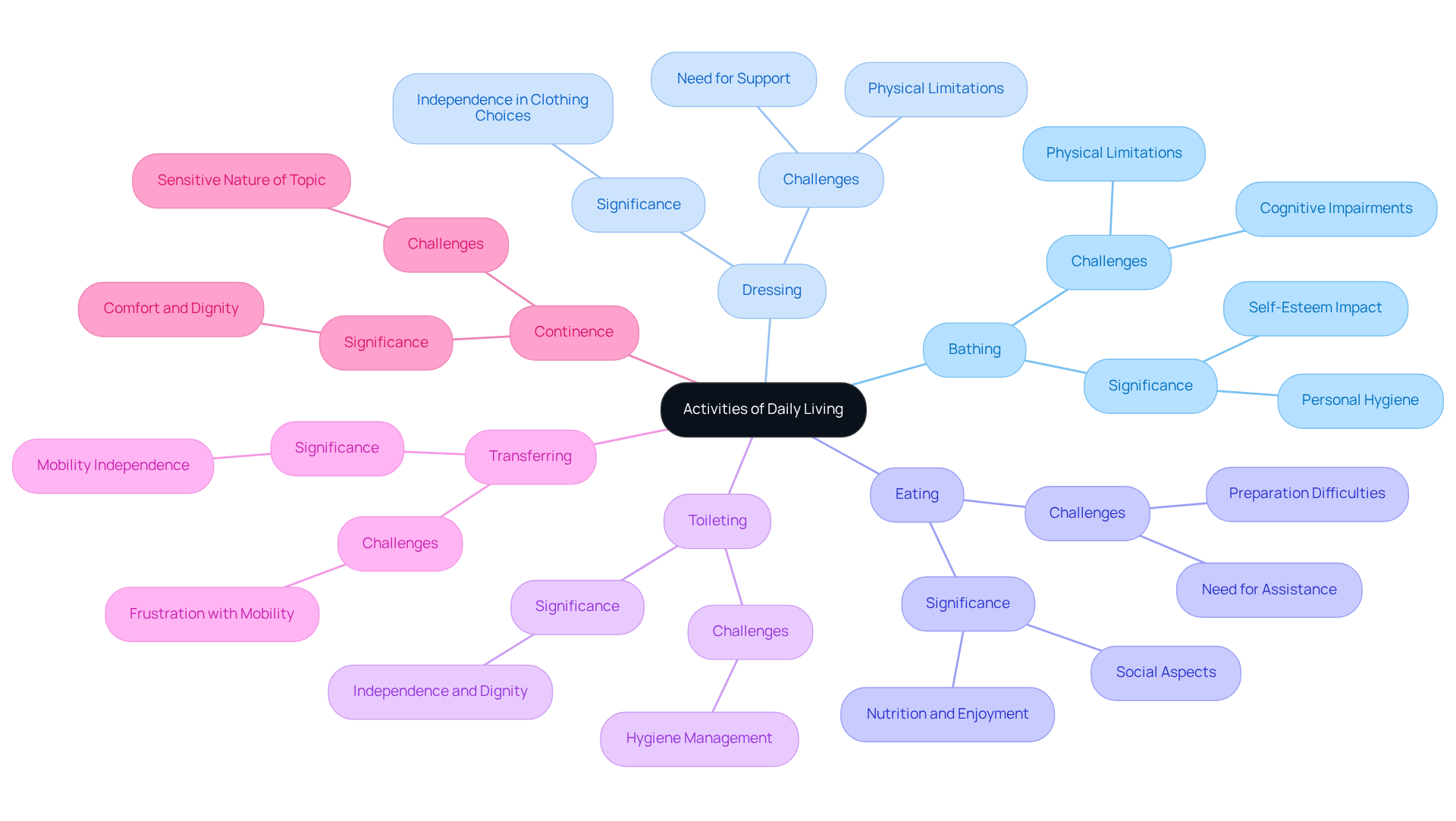
Bathing: This involves the ability to wash oneself and maintain personal hygiene, which encompasses showering, bathing, and grooming. It’s a fundamental aspect of self-care that can greatly impact one’s self-esteem.
-
Dressing: The capability to select appropriate clothing and put it on independently is crucial. Physical limitations or cognitive impairments can make this challenging, and it’s important to approach this with understanding and support.
-
Eating: Feeding oneself is not just about nutrition; it’s also about enjoying meals and the social aspects of eating. This may involve preparing food or simply consuming it without assistance, and it’s vital for overall well-being.
-
Toileting: The ability to use the restroom independently, including managing hygiene afterward, is a significant aspect of personal care. It’s essential for maintaining dignity and comfort.
-
Transferring: Moving from one position to another, like getting in and out of bed or a chair, is crucial for mobility. This can be a source of frustration for many, and understanding their needs is key.
-
Continence: Controlling bladder and bowel functions is essential for maintaining dignity and comfort. It’s a sensitive topic, but one that deserves compassionate attention.
Each of the 6 activities of daily living plays a vital role in a person's daily life and contributes to their overall well-being. For caregivers, recognizing the emotional weight of these tasks is important. Providing support in these areas can alleviate stress and burnout, fostering a nurturing environment. Remember, you’re not alone in this journey; there are resources and compassionate care available to help you navigate these challenges.
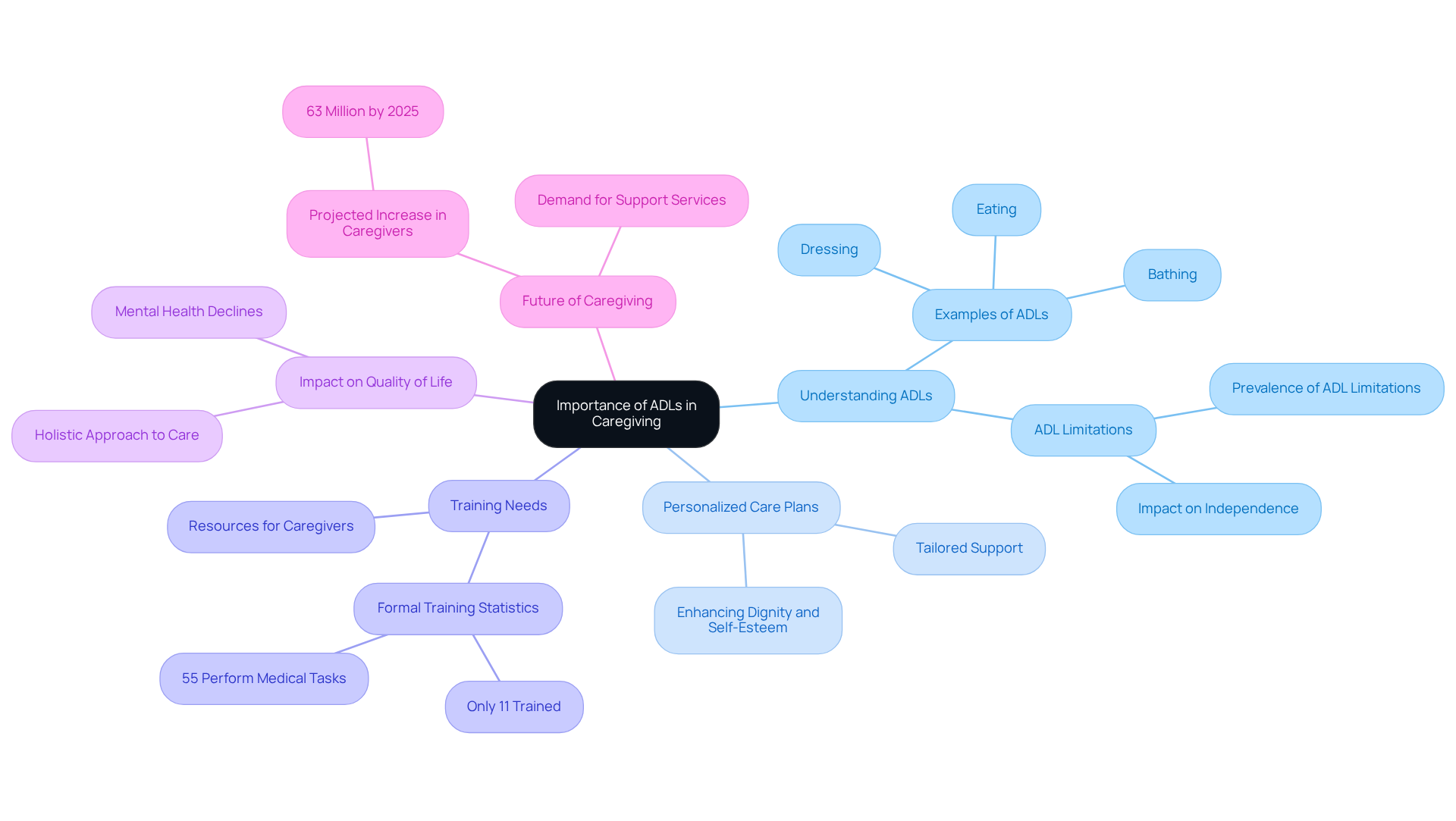
Understand the Importance of ADLs in Caregiving
Understanding the 6 activities of daily living is vital for caregivers, as it significantly impacts the quality of care they provide. When caregivers assess a person's ability to perform the 6 activities of daily living, such as dressing, eating, and bathing, they can pinpoint specific areas where support is needed. This thoughtful assessment helps create personalized care plans that cater to each client's unique needs, promoting their independence while enhancing their dignity and self-esteem.
Moreover, keeping an eye on changes in a person's ability to perform ADLs can indicate when adjustments in care are necessary. This ensures that assistance aligns with the evolving needs of the client. It's concerning to note that nearly 55% of family caregivers take on medical or nursing responsibilities, yet only 22% have received formal training for these roles. Alarmingly, just 11% of family supporters have been trained for the complex tasks they handle. This gap in training can impact the quality of care provided, making it crucial for caregivers to seek resources and support to improve their skills.
Focusing on the 6 activities of daily living fosters a holistic approach to caregiving, prioritizing the well-being and comfort of clients. By understanding and addressing the challenges associated with the 6 activities of daily living, caregivers can significantly enhance the quality of life for seniors, resulting in better health outcomes and a more fulfilling caregiving experience. With the number of family support providers expected to reach 63 million by 2025, grasping the importance of ADLs becomes increasingly essential in meeting the growing demand for assistance.
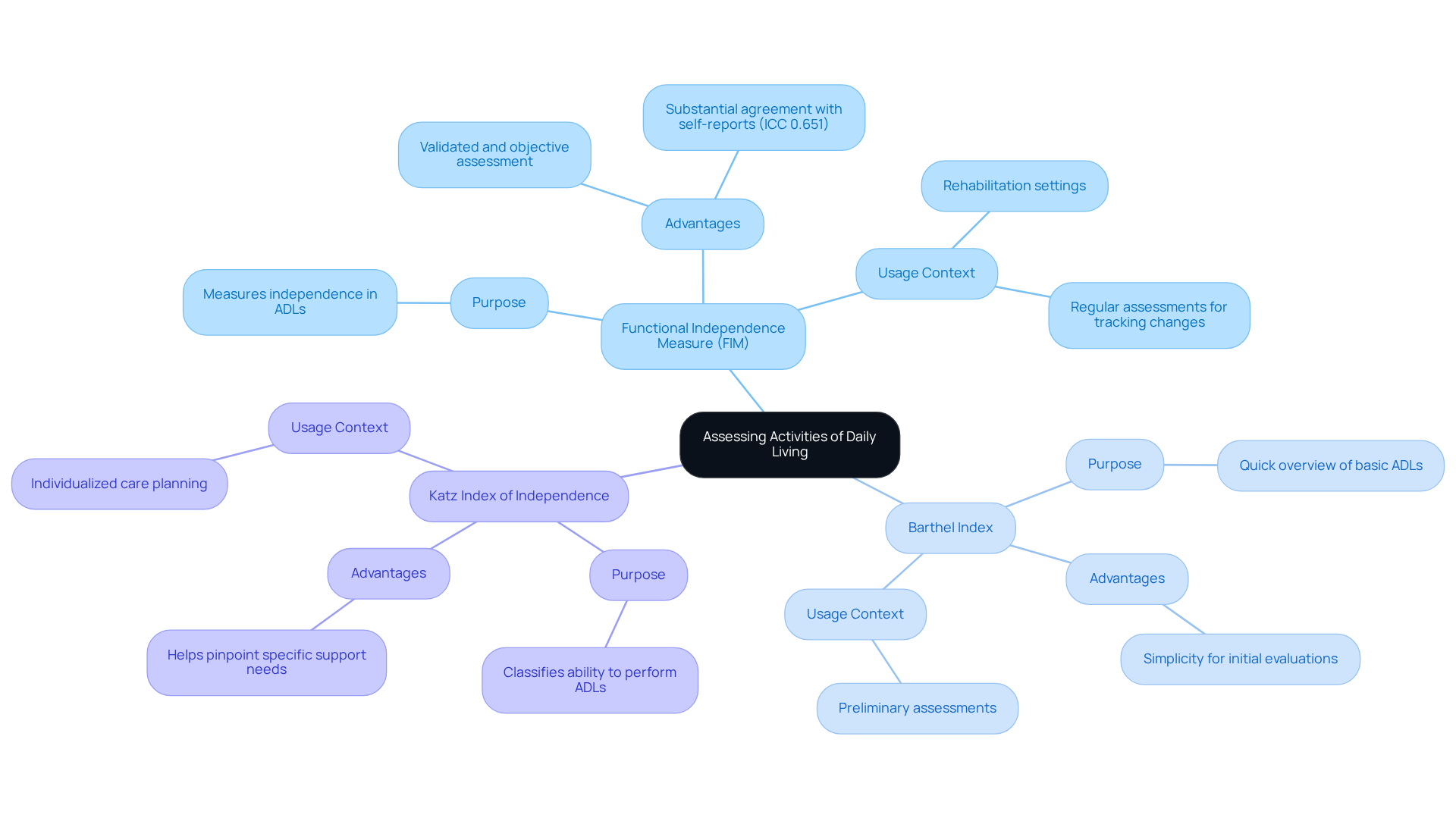
Assess Activities of Daily Living: Methods and Tools
Evaluating the 6 activities of daily living is crucial for support providers. It helps them understand a person's abilities and tailor assistance to meet individual needs. This process can be daunting, but there are various assessment tools available to make it easier:
-
Functional Independence Measure (FIM): This well-known tool assesses a person's independence in performing ADLs. It offers a structured way to measure functional status. Recent updates in 2025 have reinforced its importance in rehabilitation settings, ensuring providers can accurately gauge the level of assistance required. As Aruni Seneviratna notes, the FIM is a validated, objective assessment of functional status, boasting an intraclass correlation coefficient (ICC) of 0.651. This indicates substantial agreement between patient self-reports and multidisciplinary assessments, providing reassurance to caregivers.
-
Barthel Index: This straightforward scoring system gives a quick overview of an individual's ability to perform basic ADLs. Its simplicity makes it a popular choice among providers for initial evaluations, allowing for swift identification of care needs. Current usage rates suggest it remains a favored tool for preliminary assessments, easing the burden on caregivers.
-
Katz Index of Independence in Activities of Daily Living: This tool classifies individuals based on their ability to perform the 6 activities of daily living, helping caregivers pinpoint the specific support each client needs.
Beyond these standardized tools, providers can enhance their assessments through informal methods like direct observation and conversations with clients and their families. Regular assessments are vital for tracking changes in a person's abilities, allowing support providers to adjust care plans proactively. By combining these methods, caregivers can offer tailored support that significantly enhances the quality of life for those they serve.
Remember, you’re not alone in this journey. Regularly assessing and adapting care can make a world of difference, not just for those you care for, but for your own peace of mind as well.
Your Path Forward
Understanding the 6 activities of daily living (ADLs) is vital for effective caregiving. These essential tasks—bathing, dressing, eating, toileting, transferring, and continence—play a crucial role in maintaining personal independence and dignity, especially as individuals age. When caregivers recognize the importance of these activities, they can offer tailored support, helping those in their care sustain their quality of life while promoting autonomy.
Throughout this article, we’ve highlighted the significance of assessing and addressing the 6 ADLs. Caregivers are encouraged to use various assessment tools, like the Functional Independence Measure and the Katz Index, to evaluate the needs of those they support. This proactive approach not only helps identify areas needing assistance but also fosters a deeper understanding of the emotional and physical challenges individuals face. By staying attentive to changes in a person’s ability to perform these activities, caregivers can adapt their strategies, ensuring that care aligns with the evolving needs of their clients.
In conclusion, prioritizing the 6 activities of daily living is essential for enhancing the well-being of seniors and those requiring assistance. By embracing the significance of ADLs in caregiving, caregivers can truly make a meaningful impact on the lives of those they serve. It’s important to seek resources and support to improve caregiving skills, as this can lead to better health outcomes and a more fulfilling experience for both caregivers and recipients of care. Emphasizing the value of independence and dignity in daily routines enriches the lives of individuals and creates a compassionate caregiving environment that benefits everyone involved.
https://iframe.tely.ai/cta/eyJhcnRpY2xlX2lkIjogIjY5MDdmMGMxMjgwOGZmMDZiMWM5NTZiYiIsICJjb21wYW55X2lkIjogIjY4ZWU1ZGNhNzMxNzYyNTU3ZjNjOTVjMSIsICJpbmRleCI6IG51bGwsICJ0eXBlIjogImFydGljbGUifQ==Frequently Asked Questions
What are the 6 activities of daily living (ADLs)?
The 6 activities of daily living are bathing, dressing, eating, toileting, transferring, and continence. These tasks are essential for maintaining personal care and independence.
Why are activities of daily living important for seniors?
As people age, the need for support with activities of daily living often increases. Approximately 70% of seniors require assistance with at least one of these activities, highlighting their significance for well-being.
How can understanding ADLs help caregivers?
Understanding the 6 activities of daily living allows caregivers to assess the level of support needed for individuals. This knowledge helps in creating personalized care plans that promote independence and dignity.
What role do caregivers play in assisting with ADLs?
Caregivers help individuals with activities such as bathing while encouraging them to maintain autonomy in other tasks, like dressing. This approach fosters a sense of independence.
How is the ability to perform ADLs linked to overall health?
The ability to perform daily activities is closely associated with overall health and well-being. A decline in these activities may indicate a need for additional support or a reassessment of living arrangements.
What signs might indicate a decline in Instrumental Activities of Daily Living (IADLs)?
Signs such as frequent dehydration or poor hygiene may suggest a decline in IADLs, indicating that the individual may require more assistance.
What resources are available for caregivers?
Many caregivers face similar challenges, and there are various resources available to help navigate these issues. Seeking support can enhance the quality of care provided to individuals.