Understanding 3 Types of Senior Care for Family Caregivers

For families in our service areas
For families in our service areas, this guide explains caregiver support and how non-medical in-home caregiving can support care planning in East Idaho, Treasure Valley & Magic Valley, Northern Wasatch, North Central West Virginia & Southwestern Pennsylvania, and Northeast Ohio.
The Importance of 3 Types of Senior Care
Understanding the diverse landscape of senior care presents a significant challenge for families. As the older adult population continues to grow, the complexities of aging become more pronounced, making effective support systems essential. Families often struggle to navigate these options, leading to increased stress for caregivers and potential declines in the quality of life for their loved ones.
What challenges do families face in choosing the right type of care? Many feel overwhelmed by the variety of services available, from in-home care to assisted living facilities. This uncertainty can lead to poor decision-making, which may not only affect the elderly relative's well-being but also add to the caregiver's burden.
To address these issues, families can take proactive steps:
- It's crucial to assess the specific needs of the elderly relative, considering factors such as health status, mobility, and personal preferences.
- Engaging with healthcare professionals can provide valuable insights into the most suitable care options.
- Families should explore community resources and support groups that can offer guidance and share experiences.
By understanding the landscape of senior care and actively seeking solutions, families can enhance their loved ones' quality of life while alleviating caregiver stress.
Defining Senior Care: Understanding Its Importance
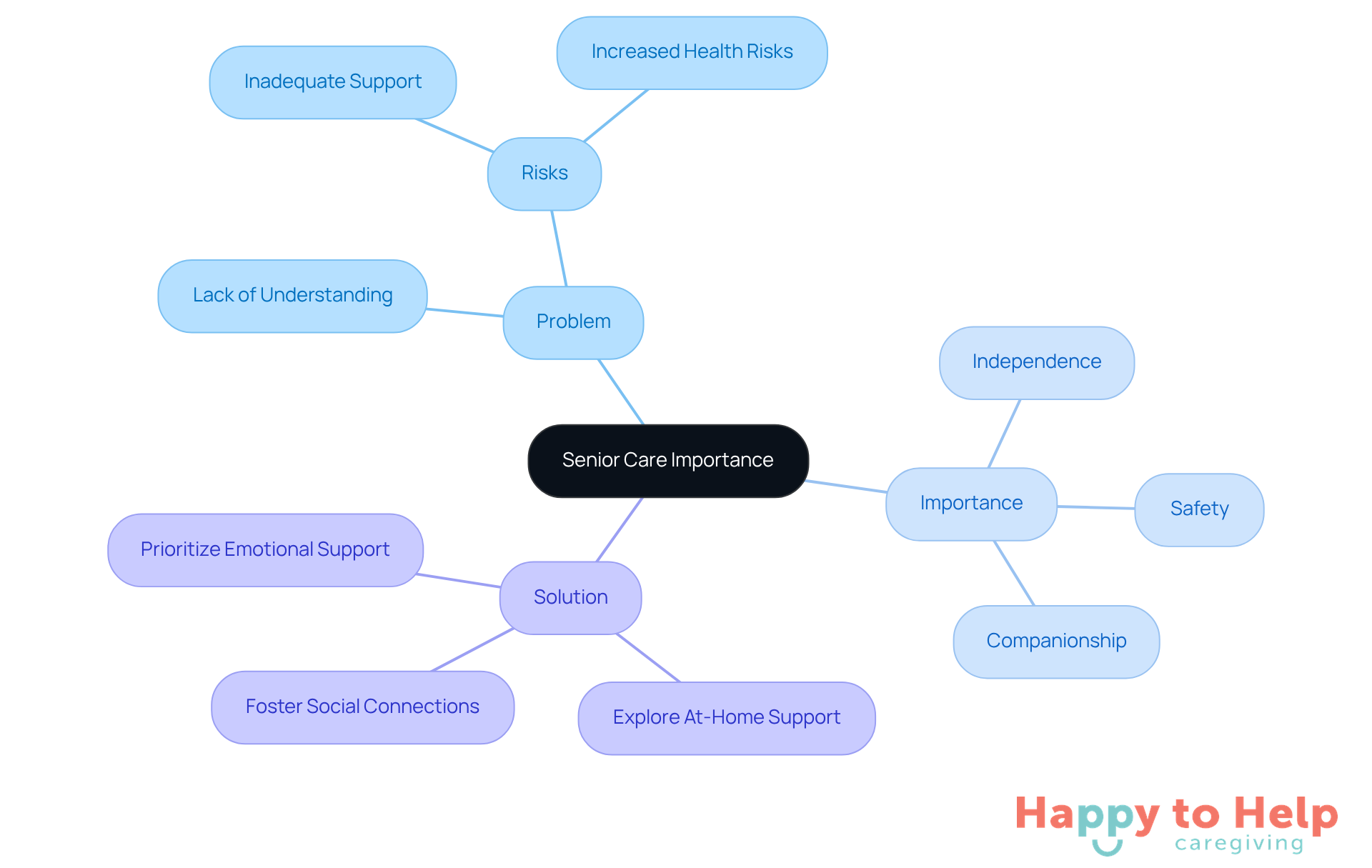
Types of senior care encompass various services aimed at improving the wellness and quality of life for older adults. However, many families struggle to understand the different types of senior care, which can lead to inadequate support and increased risks for their loved ones.
Agitate: The importance of elder support is underscored by its ability to promote independence, ensure safety, and provide companionship-factors essential for maintaining mental and emotional well-being as individuals age. With the older adult demographic expected to grow significantly, the need for effective types of senior care systems is more pressing than ever. Studies reveal that 84% of family supporters value their loved one's autonomy, indicating a growing preference for at-home support options as one of the types of senior care over traditional elder living facilities. Additionally, social isolation affects a quarter of older adults, raising the risk of heart disease, depression, and cognitive decline.
Solution: To address these challenges, families should consider the concept of 'supported independence,' which allows older adults to maintain their lifestyle while receiving essential support. This approach not only enhances their quality of life but also alleviates the burden on caregivers. Recognizing the advantages of types of senior care can empower families to make informed decisions that enhance the overall well-being of their loved ones. Here are some actionable tips:
- Explore at-home support services that cater to daily tasks and healthcare needs.
- Foster social connections to combat isolation, such as community activities or virtual gatherings.
- Prioritize emotional support through companionship programs or counseling services.
By understanding and implementing these strategies, families can ensure their loved ones receive the care and support they deserve.
Exploring Different Types of Senior Care Services
Finding the right elder assistance services can be a daunting task for families. With various options available, it’s crucial to understand the distinct requirements of elderly individuals.
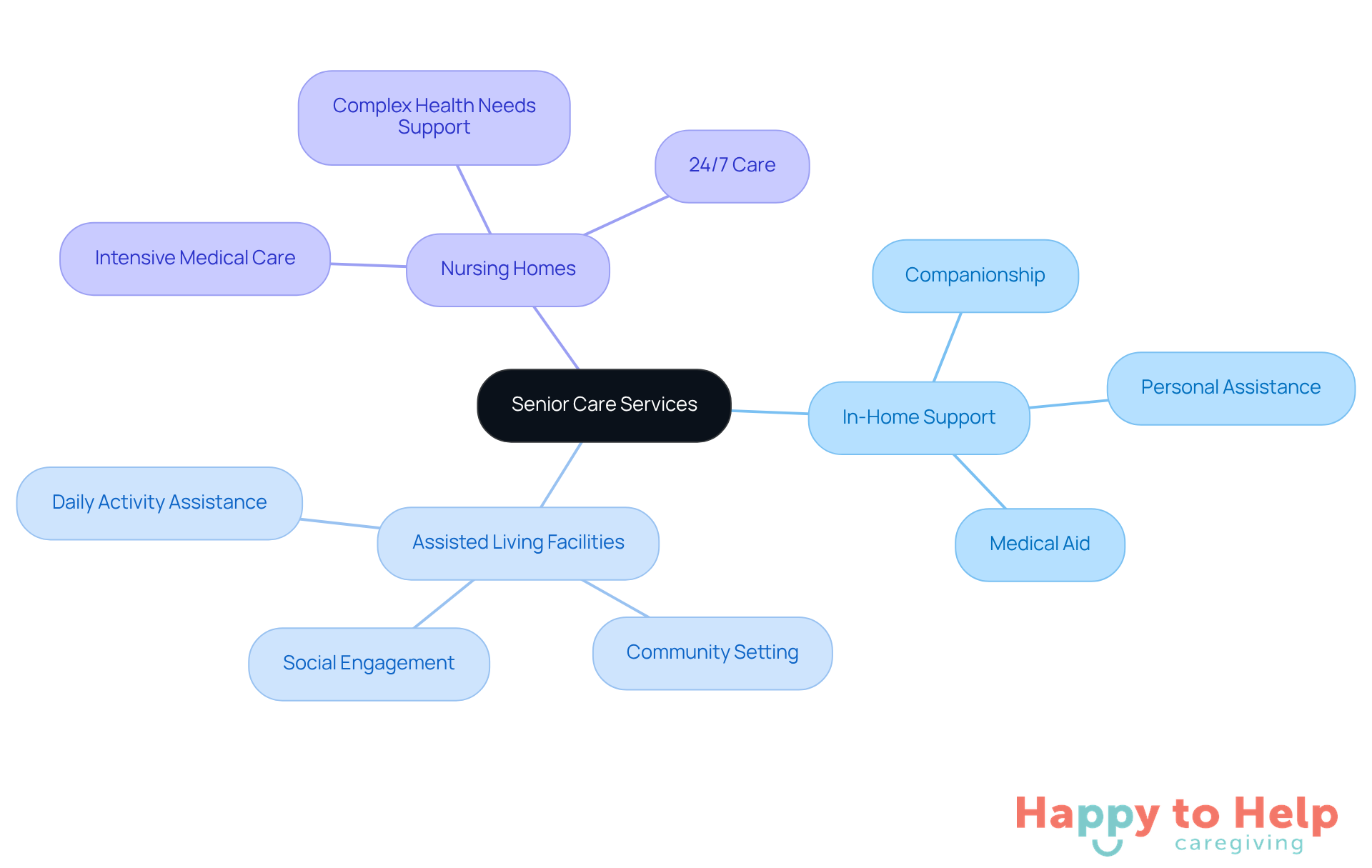
In-home support allows seniors to receive help in the comfort of their own homes. This can include:
- Companionship
- Personal assistance
- Medical aid
This addresses the need for both emotional and physical support.
Assisted living facilities offer a community setting where seniors can maintain their independence while receiving help with daily activities. This option is ideal for those who want to socialize and engage with peers while still having access to necessary assistance.
For individuals with significant health issues, nursing homes provide more intensive medical care. These facilities are equipped to handle complex health needs, ensuring that residents receive the appropriate level of support.
Understanding the types of senior care options is essential for families to select the right type of support that aligns with their loved one's needs and preferences. By grasping the available services, caregivers can make informed decisions that enhance the quality of life for their elderly family members.
Key Characteristics of Senior Care Options
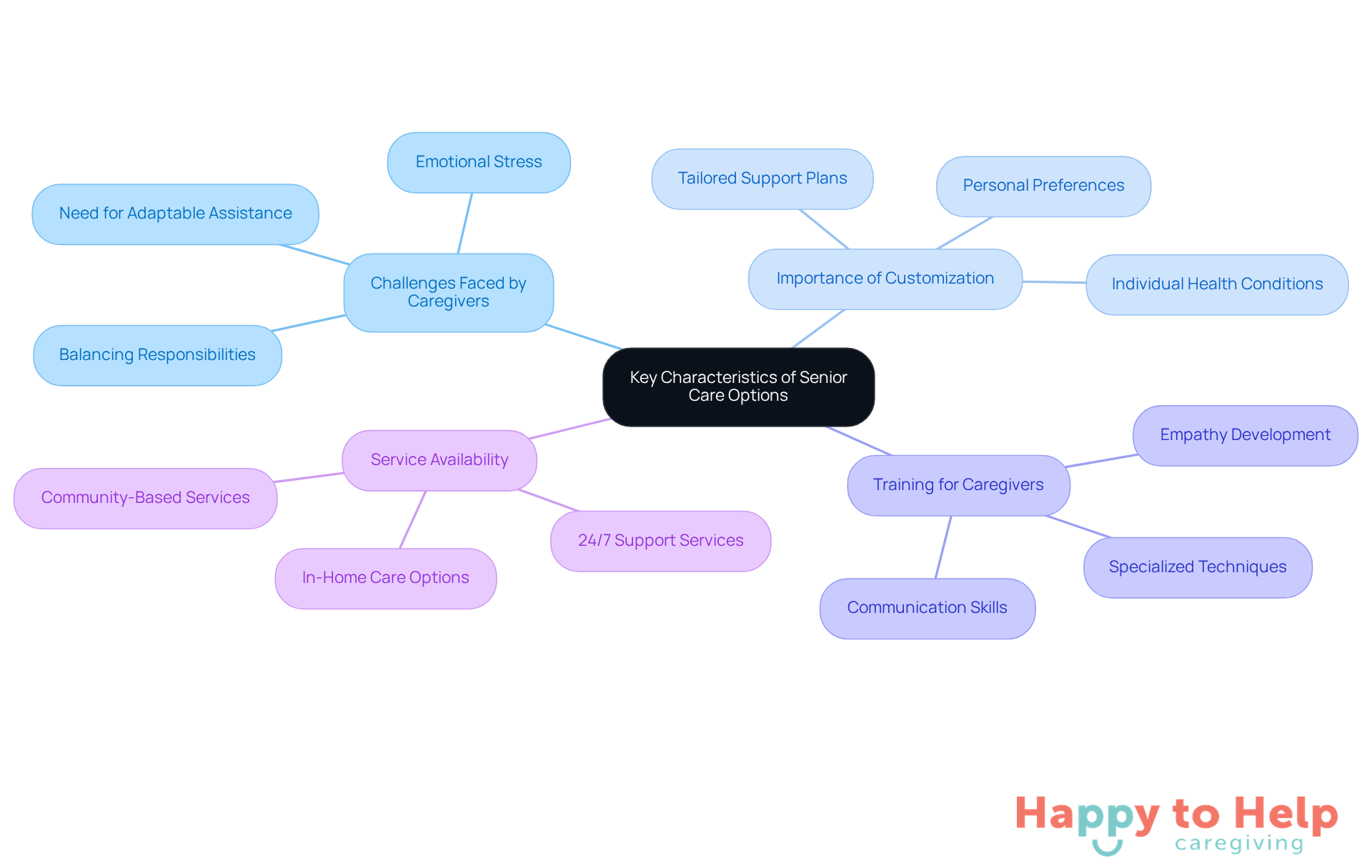
Caregivers face significant challenges when it comes to supporting elderly loved ones. Almost 70% of family supporters struggle to balance their responsibilities, leading to emotional stress and a pressing need for adaptable assistance options. This situation highlights the importance of having support plans that are tailored to individual health conditions and personal preferences.
To address these challenges, high-quality types of senior care must prioritize customization. Service plans should be specifically designed to meet the unique needs of each individual. Caregivers need to possess not only the necessary training but also a compassionate approach, fostering an environment that promotes independence and emotional well-being.
Effective training programs for caregivers often include modules on:
- Communication
- Empathy
- Specialized techniques
These equip providers to handle diverse situations with confidence. Additionally, the availability of services, such as 24/7 support, enhances the caregiving experience, allowing families to feel secure knowing that help is always accessible.
In summary, the combination of individualized assistance, skilled professionals, and adaptable service choices is crucial for ensuring that older adults receive the types of senior care necessary to thrive in their own homes.
The Role of Family Caregivers in Senior Care
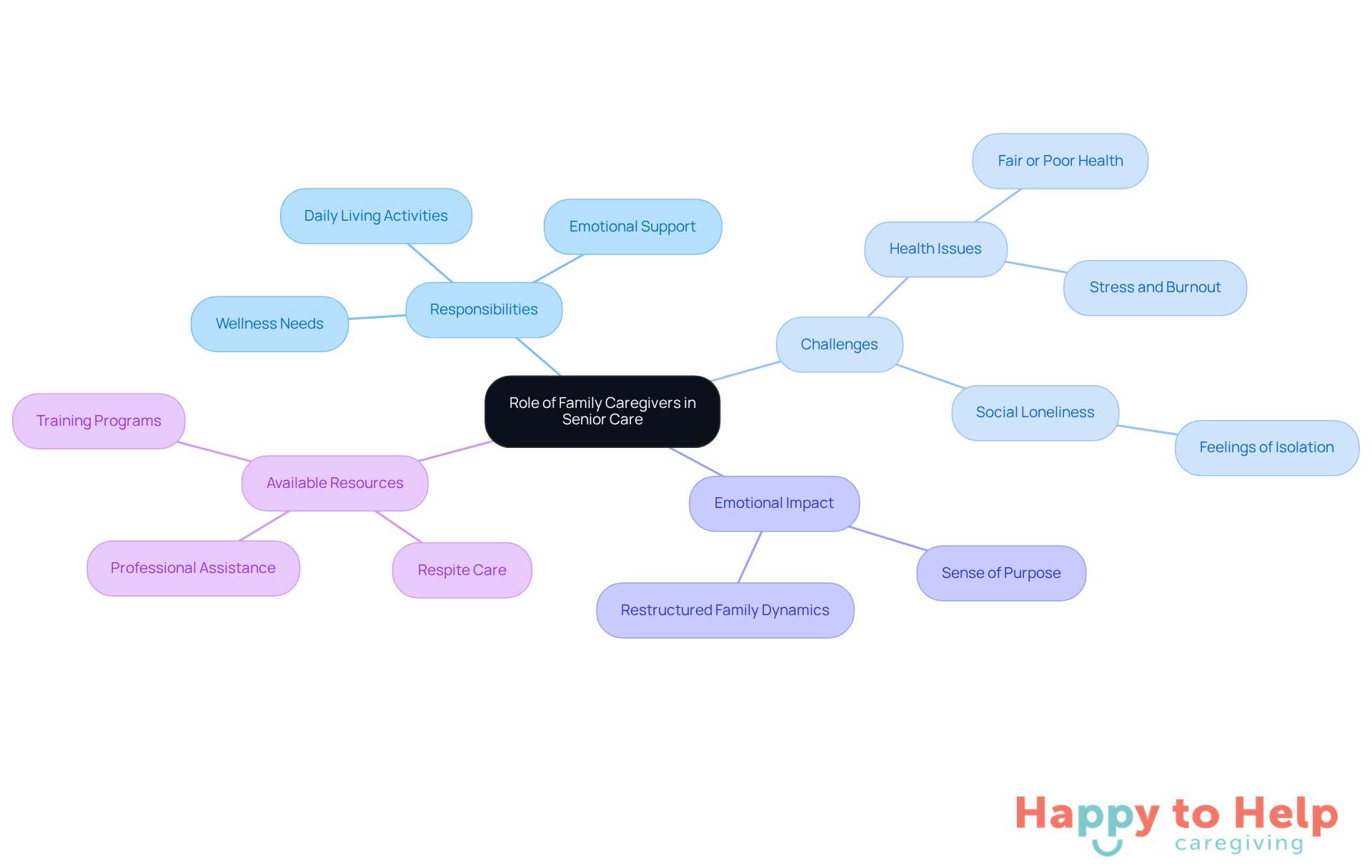
Family supporters play a crucial role in the elder assistance environment, often providing the majority of help for their relatives. However, this role comes with significant challenges. Caregivers frequently manage complex wellness needs, offer emotional support, and assist with daily living activities. This can lead to heightened stress and health issues. In fact, nearly one in five caregivers report being in fair or poor health, and almost one in four struggle to care for their own well-being due to their responsibilities. The emotional toll of caregiving can foster feelings of isolation, with around 25% of caregivers experiencing social loneliness, a number that continues to rise.
To address these challenges, families must explore the available resources and support systems related to types of senior care. Types of senior care, such as respite care and professional assistance services, can provide essential relief, allowing caregivers to recharge and maintain their health. Additionally, training programs tailored to the diverse needs of caregivers can enhance their skills and confidence, benefiting both the supporters and those they care for. Recognizing the vital contributions of family caregivers and advocating for improved support systems is essential for sustaining their well-being and effectiveness in their roles.
Your Path Forward
Understanding the various types of senior care is essential for families seeking to provide the best support for their elderly loved ones. The complexities of aging create a significant problem: many families struggle to find the right care options that allow their loved ones to maintain independence while receiving necessary assistance. This challenge not only affects the elderly but also places emotional and physical burdens on family caregivers.
Recognizing the significance of tailored care options is crucial. When families understand the different types of senior care - such as in-home support, assisted living, and nursing homes - they can enhance the quality of life for seniors. This understanding alleviates the stress faced by caregivers, allowing them to make informed decisions that prioritize the well-being of their loved ones while addressing their own challenges.
Ultimately, the significance of senior care extends beyond individual needs; it impacts family dynamics and community health as a whole. Families are encouraged to actively engage in exploring available resources and seeking professional guidance. By fostering social connections, they can combat isolation and improve the lives of their aging relatives.
Here are some actionable steps families can take:
- Research local senior care options to find the best fit for your loved one.
- Consult with healthcare professionals for tailored advice on care needs.
- Encourage social interactions to help combat feelings of loneliness.
Embracing the importance of senior care is a vital step toward ensuring a fulfilling and dignified aging experience for all.
https://iframe.tely.ai/cta/eyJhcnRpY2xlX2lkIjogIjY5Mjc5NTIwNmFmMzU5NTU2OTU3ODdlMyIsICJjb21wYW55X2lkIjogIjY4ZWU1ZGNhNzMxNzYyNTU3ZjNjOTVjMSIsICJpbmRleCI6IG51bGwsICJ0eXBlIjogImFydGljbGUifQ==Frequently Asked Questions
What is senior care and why is it important?
Senior care encompasses various services aimed at improving the wellness and quality of life for older adults. It is important because it promotes independence, ensures safety, and provides companionship, which are essential for maintaining mental and emotional well-being as individuals age.
What challenges do families face regarding senior care?
Many families struggle to understand the different types of senior care, which can lead to inadequate support for their loved ones and increased risks to their well-being.
What is the concept of 'supported independence' in senior care?
'Supported independence' allows older adults to maintain their lifestyle while receiving essential support, enhancing their quality of life and alleviating the burden on caregivers.
What are some statistics related to senior care preferences?
Studies show that 84% of family supporters value their loved one's autonomy, indicating a growing preference for at-home support options over traditional elder living facilities.
How does social isolation affect older adults?
Social isolation affects a quarter of older adults and raises the risk of heart disease, depression, and cognitive decline.
What strategies can families implement to improve senior care?
Families can explore at-home support services for daily tasks and healthcare needs, foster social connections through community activities or virtual gatherings, and prioritize emotional support through companionship programs or counseling services.
What is the expected trend regarding the older adult demographic?
The older adult demographic is expected to grow significantly, making the need for effective types of senior care systems more pressing than ever.
List of Sources
- Defining Senior Care: Understanding Its Importance
- New Study Explores the Need for Expanded Long-Term Care Services to Support Aging-in-Place | Johns Hopkins Bloomberg School of Public Health (https://publichealth.jhu.edu/2025/new-study-explores-the-need-for-expanded-long-term-care-services-to-support-aging-in-place)
- Families Prefer In-Home Care To Senior Living – Yet Struggle To Identify Needed Support (https://homehealthcarenews.com/2025/11/families-prefer-in-home-care-to-senior-living-yet-struggle-to-identify-needed-support)
- The Future of Senior Care: What to Expect in 2025 and Beyond (https://arhomecare.com/the-future-of-senior-care-what-to-expect-in-2025-and-beyond)
- Press Release - Newsroom | California Department of Aging - State of California (https://aging.ca.gov/Newsroom/Press_Release/January3025)
- Exploring Different Types of Senior Care Services
- Seven trends in senior living that will define 2025 and beyond (https://mcknightsseniorliving.com/home/columns/guest-columns/seven-trends-in-senior-living-that-will-define-2025-and-beyond)
- Senior Living Trends in 2025 | Juniper (https://junipercommunities.com/senior-living-trends-in-2025)
- Types of Home Care Services in 2025 (https://websterhc.com/breaking-down-the-different-types-of-home-care-services-in-2025)
- Long Term Care Options for Seniors in 2025 (https://seniorliving.org/care)
- What has 2025 got in store for Senior Care? - Compass Associates (https://compass-associates.com/us/what-has-2025-got-in-store-for-senior-care)
- Key Characteristics of Senior Care Options
- Seven trends in senior living that will define 2025 and beyond (https://mcknightsseniorliving.com/home/columns/guest-columns/seven-trends-in-senior-living-that-will-define-2025-and-beyond)
- Importance of Personalized Senior Home Care in Burlington NC (https://wisdomseniorcare.com/the-importance-of-personalized-care-plans-for-seniors)
- 2025 Home Care Statistics: Trends & Insights To Know (https://premierhcinc.com/blog/home-care-statistics)
- Senior Living Operators Pivot to Blended Care Levels to Promote Personalization, Ease Transitions (https://seniorhousingnews.com/2025/08/05/senior-living-operators-pivot-to-blended-care-levels-to-promote-personalization-ease-transitions)
- Senior Living Trends in 2025 | Juniper (https://junipercommunities.com/senior-living-trends-in-2025)
- The Role of Family Caregivers in Senior Care
- New Report Reveals Crisis Point for America’s 63 million Family Caregivers - Massachusetts Healthy Aging Collaborative (https://mahealthyagingcollaborative.org/new-report-reveals-crisis-point-for-americas-63-million-family-caregivers)
- Honoring America’s Family Caregivers, the Unseen Workforce Behind Our Health System - Medicare Rights Center (https://medicarerights.org/medicare-watch/2025/11/25/honoring-americas-family-caregivers-the-unseen-workforce-behind-our-health-system)
- Caregivers: the invisible backbone of dementia care (https://publichealth.gmu.edu/news/2025-11/caregivers-invisible-backbone-dementia-care)
- National Alliance for Caregiving: Caregiving in the US 2025 Report (https://johnahartford.org/resources/view/national-alliance-for-caregiving-caregiving-in-the-us-2025-report)