Understanding Aging Support Groups: Importance and Key Features
For families in our service areas
For families in our service areas, this guide explains caregiving and how non-medical in-home caregiving can support care planning in East Idaho, Treasure Valley & Magic Valley, Northern Wasatch, North Central West Virginia, and Northeast Ohio.
Understanding Aging Support Groups: Importance and
Social isolation is a pervasive issue for seniors, with nearly half of older adults experiencing loneliness. This problem can lead to significant emotional distress, affecting overall well-being. Aging support groups have emerged as vital lifelines, offering a unique opportunity for connection, understanding, and shared experiences that enhance emotional health.
To maximize their impact, effective aging support groups must be structured thoughtfully. These groups should foster an environment where seniors feel safe to share their experiences and connect with others. By exploring the essential characteristics of these networks, we can uncover the profound benefits they provide, paving the way for healthier, more connected lives among older adults.
Define Aging Support Groups
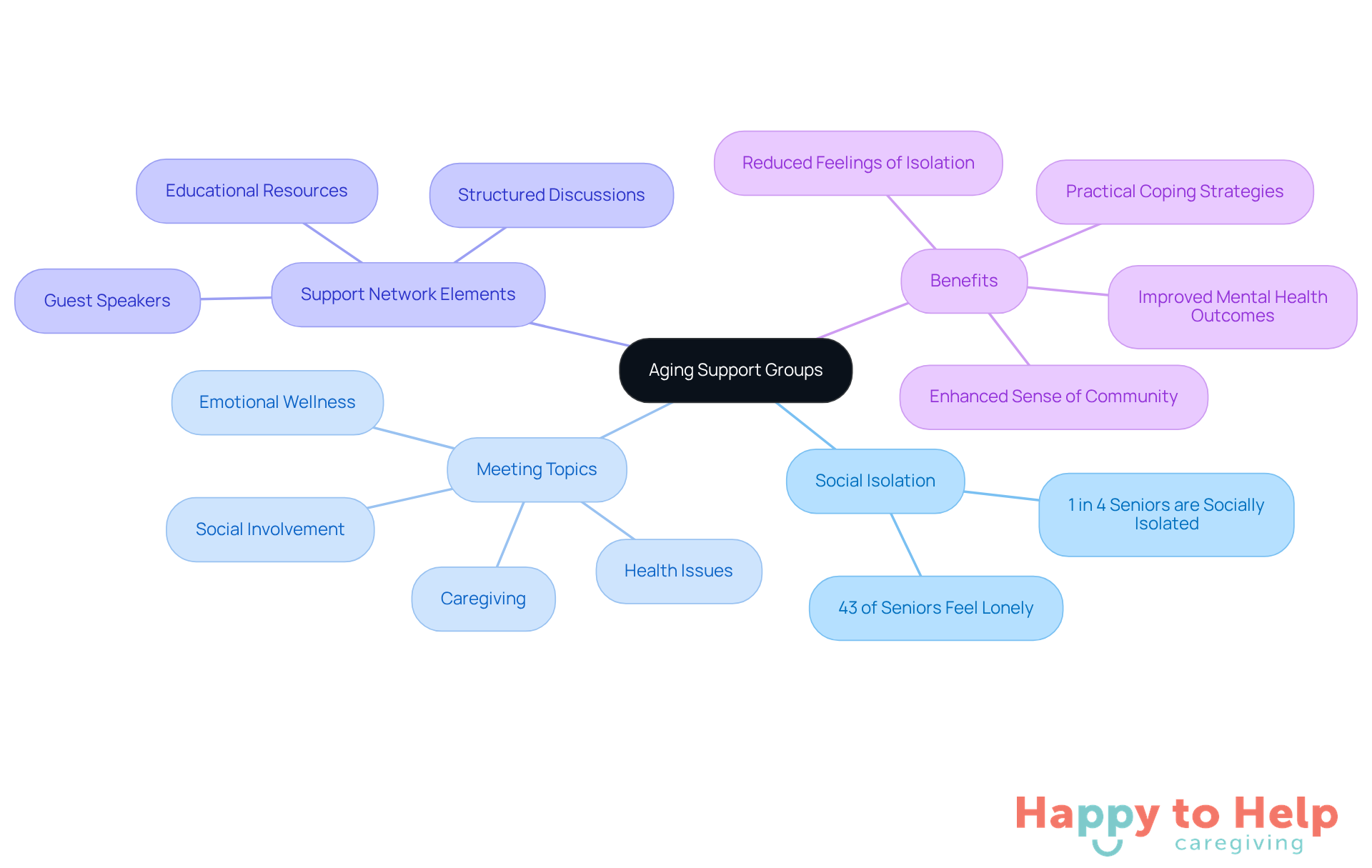
Aging support groups address a significant problem: social isolation among seniors. Research indicates that nearly 43% of older individuals feel lonely, and about 1 in 4 community-dwelling seniors are socially isolated. This isolation can severely impact mental and emotional health, making it crucial to foster connections among seniors.
These aging support groups provide a solution by organizing meetings where seniors can share experiences, offer mutual assistance, and discuss challenges related to aging. Topics covered include:
- Health issues
- Caregiving
- Emotional wellness
- Social involvement
By connecting with peers who understand their unique circumstances, seniors cultivate a sense of community and belonging, which is vital for their well-being.
Support networks, such as aging support groups, can be facilitated by professionals or led by the members themselves, accommodating diverse participant needs. They may convene in person or online, offering flexibility for those with mobility issues or living in remote areas. Successful aging assistance frameworks often include:
- Educational resources
- Guest speakers
- Structured discussions
These elements enhance support for both caregivers and seniors.
For instance, caregiver networks not only provide emotional affirmation but also equip participants with practical techniques for managing stress and navigating healthcare systems. Data show that seniors involved in aging support groups experience better mental health outcomes, with longer participation linked to reduced feelings of isolation and improved overall wellness.
Confidentiality is a key aspect of these groups, creating a safe space for participants to share their experiences without fear of judgment. With the older adult population projected to grow significantly by 2040, the role of aging assistance networks becomes increasingly essential in promoting healthy aging and empowering seniors to thrive in their communities.
Contextualize the Importance of Aging Support Groups
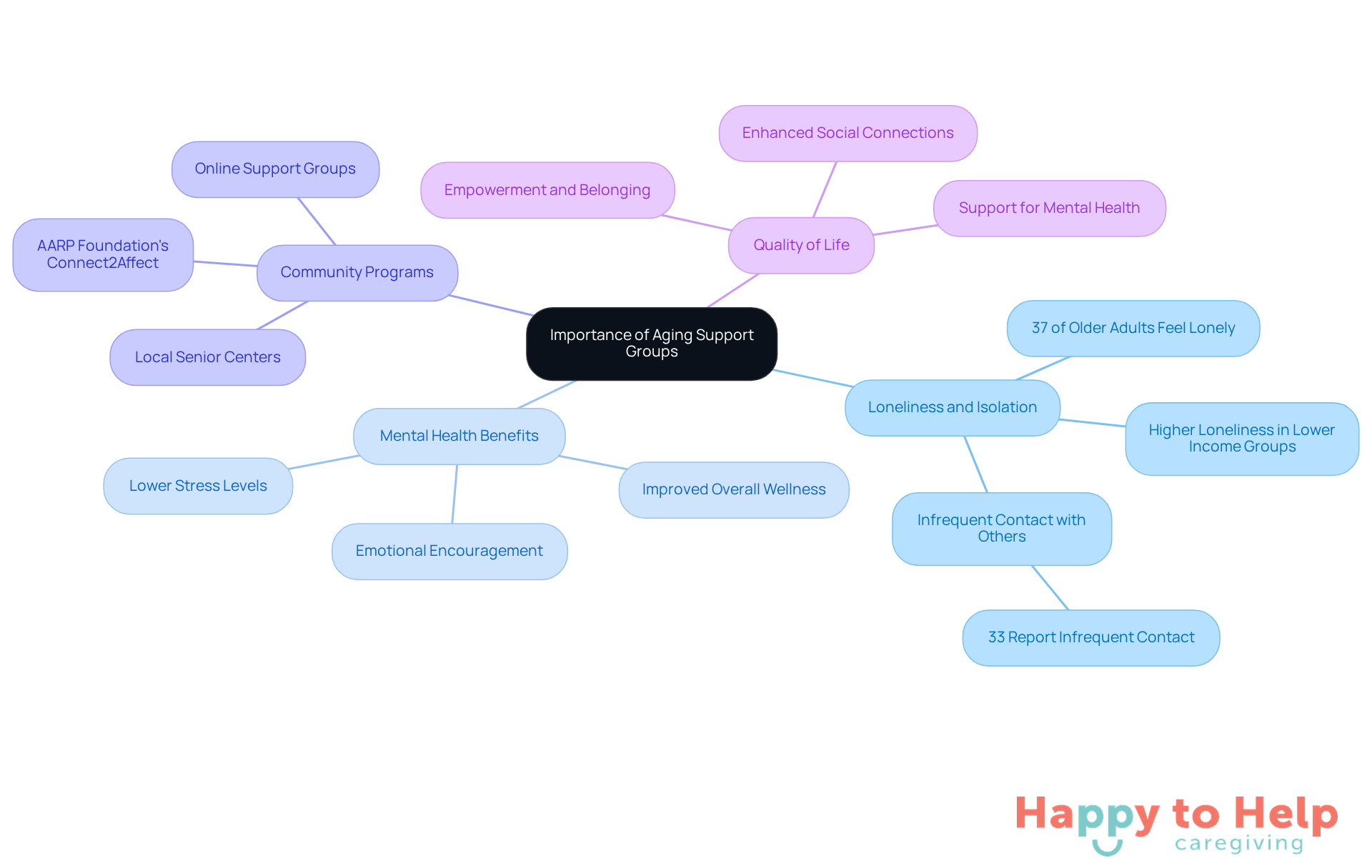
Loneliness and social isolation are significant challenges faced by seniors today. Research indicates that 37% of older adults report feeling lonely, underscoring the urgent need for effective support systems. These feelings can lead to serious mental health issues, making it essential to address this problem head-on.
Aging support groups play a vital role in combating these feelings. They provide emotional encouragement and affirmation, which can enhance mental health outcomes. Studies show that social connections can lower stress and improve overall wellness, making these communities crucial for maintaining a healthy lifestyle in later years.
Programs like the AARP Foundation's Connect2Affect illustrate how community networks can be part of broader initiatives to tackle social isolation. These aging support groups create a safe space for seniors to express their feelings and share coping strategies, fostering a sense of empowerment and belonging.
Moreover, research from the University of Eastern Finland highlights the importance of social assistance for health and well-being in seniors. By prioritizing these connections, we can significantly enhance the quality of life for older adults.
Trace the Origins of Aging Support Groups
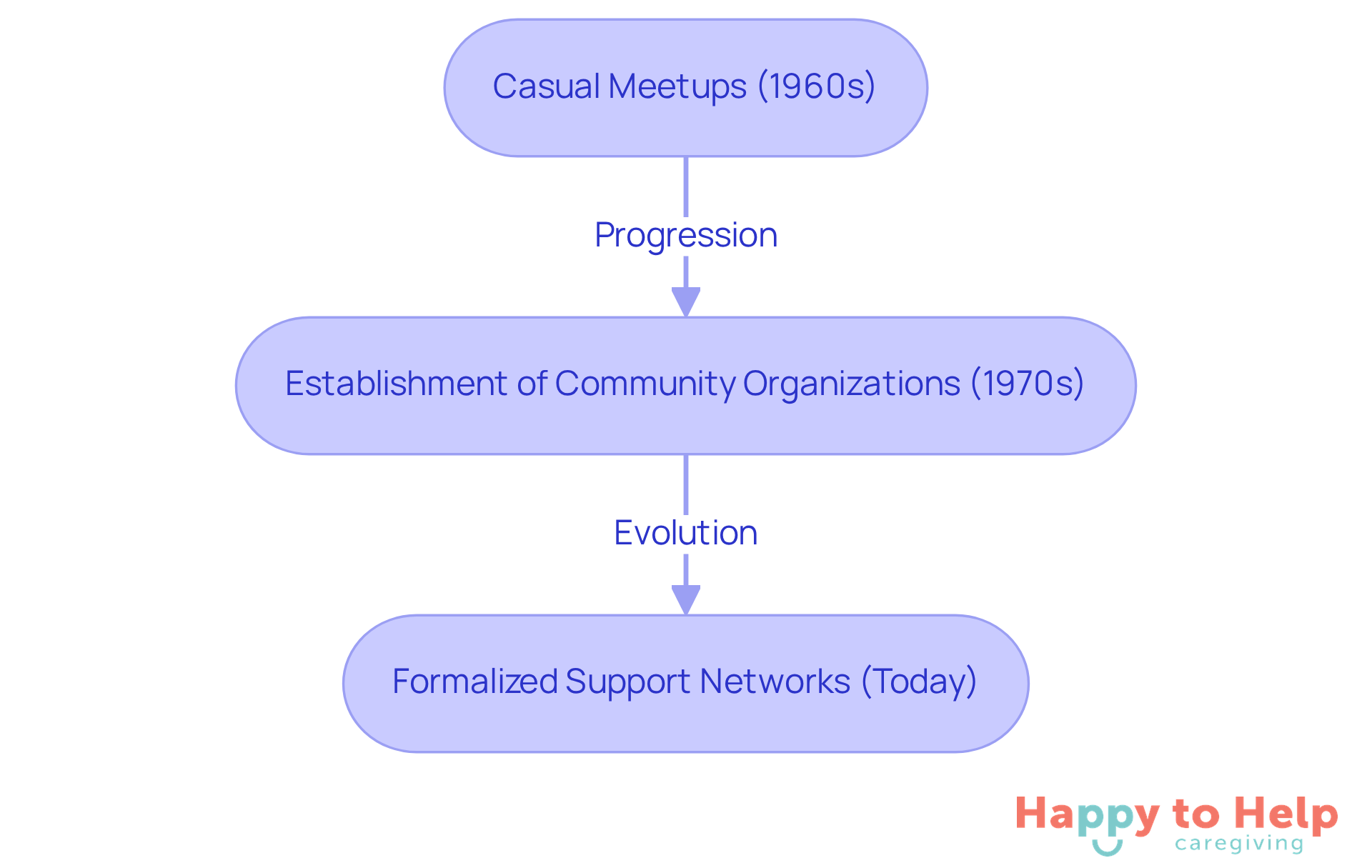
The issue of social isolation among older adults has become increasingly significant over the past several decades. Initially, assistance networks began as casual meetups among friends and relatives, providing emotional support to elderly individuals. However, as society's understanding of mental well-being and the importance of social connections evolved, the implications of isolation became clearer, highlighting the need for more structured aging support groups.
The 1960s and 1970s marked a pivotal period with the establishment of community organizations dedicated to aging. These organizations laid the groundwork for formalized support networks, addressing the unique challenges faced by older adults. Today, aging support groups are recognized as essential components of senior care, reflecting a holistic approach that prioritizes emotional and social well-being alongside physical health.
To combat social isolation, caregivers can actively engage with aging support groups, fostering connections that enhance resilience among older adults. Historians note that this shift reflects a broader societal acknowledgment of the need for supportive environments. By participating in community activities and encouraging social interactions, caregivers can significantly improve the quality of life for the elderly.
Identify Key Characteristics of Aging Support Groups
Caregivers often struggle to find aging support groups that provide supportive networks fostering understanding and connection. This lack of community can lead to feelings of isolation and overwhelm, making it difficult to navigate the challenges of caregiving.
Aging support groups tackle these issues by emphasizing key characteristics that create a supportive environment. These networks focus on:
- Peer encouragement
- Confidentiality
- A non-judgmental atmosphere
These elements allow members to share common experiences and feel understood. Regular meetings, whether in-person or virtual, foster consistency and build trust among participants.
Moreover, effective aging support groups are typically facilitated by trained professionals who guide discussions and ensure that all voices are heard. Incorporating activities such as guest speakers or workshops enhances engagement and provides valuable resources for members.
Overall, these characteristics contribute to a supportive atmosphere that encourages personal growth and community building, offering caregivers the connection and resources they need to thrive.

Moving Forward with Aging Support Groups: Importance and
Aging support groups address a pressing problem: social isolation among seniors. This issue significantly impacts the emotional well-being of the older population, leading to feelings of loneliness and disconnection. By fostering connections among peers, these groups not only alleviate these feelings but also promote a sense of community and support.
The evolution of aging support groups from informal gatherings to structured networks highlights their importance in senior care. Effective groups are characterized by:
- Peer encouragement
- Confidentiality
- Professional facilitation
These characteristics empower seniors to navigate the complexities of aging with understanding and support.
As the older adult population continues to grow, the role of aging support groups in promoting mental health becomes increasingly critical. Increased awareness and participation in these networks can lead to healthier, more fulfilling lives for older adults. Encouraging community engagement and fostering connections ultimately benefits society as a whole, enhancing the quality of life for seniors.
https://iframe.tely.ai/cta/eyJhcnRpY2xlX2lkIjogIjY5MmZiYWE3ZjExYTFkODJmNzkxMjU2OCIsICJjb21wYW55X2lkIjogIjY4ZWU1ZGNhNzMxNzYyNTU3ZjNjOTVjMSIsICJpbmRleCI6IG51bGwsICJ0eXBlIjogImFydGljbGUifQ==Frequently Asked Questions
What are aging support groups?
Aging support groups are organized meetings that help address social isolation among seniors by allowing them to share experiences, offer mutual assistance, and discuss challenges related to aging.
Why are aging support groups important?
They are important because nearly 43% of older individuals feel lonely, and about 1 in 4 community-dwelling seniors are socially isolated. These groups foster connections, which are vital for seniors' mental and emotional well-being.
What topics are typically covered in aging support groups?
Topics typically covered include health issues, caregiving, emotional wellness, and social involvement.
Who can facilitate aging support groups?
Aging support groups can be facilitated by professionals or led by the members themselves, accommodating diverse participant needs.
How do aging support groups accommodate participants with mobility issues?
They may convene in person or online, offering flexibility for seniors with mobility issues or those living in remote areas.
What elements are included in successful aging assistance frameworks?
Successful frameworks often include educational resources, guest speakers, and structured discussions to enhance support for both caregivers and seniors.
What benefits do seniors gain from participating in aging support groups?
Seniors involved in these groups experience better mental health outcomes, with longer participation linked to reduced feelings of isolation and improved overall wellness.
How does confidentiality play a role in aging support groups?
Confidentiality is a key aspect, creating a safe space for participants to share their experiences without fear of judgment.
Why is the role of aging assistance networks becoming increasingly essential?
With the older adult population projected to grow significantly by 2040, these networks are essential in promoting healthy aging and empowering seniors to thrive in their communities.
List of Sources
- Define Aging Support Groups
- Social Determinants of Health and Older Adults | odphp.health.gov (https://odphp.health.gov/our-work/national-health-initiatives/healthy-aging/social-determinants-health-and-older-adults)
- The Benefits of Support Groups for Older Adults and Caregivers (https://watermarkcommunities.com/resources/in-the-news/the-benefits-of-support-groups-for-older-adults-and-caregivers)
- Association between Senior Center Attendance and Older Adults’ Health - PMC (https://pmc.ncbi.nlm.nih.gov/articles/PMC12435386)
- The Role of Caregiver Support Groups in Promoting Healthy Aging (https://friendshipcenters.org/a-closer-look-at-the-role-of-caregiver-support-groups-in-healthy-aging)
- Number of Family Caregivers Supporting Older Adults Increased Nearly One-Third Between 2011 and 2022 | Johns Hopkins Bloomberg School of Public Health (https://publichealth.jhu.edu/2025/number-of-family-caregivers-supporting-older-adults-increased-nearly-one-third-between-2011-and-2022)
- Contextualize the Importance of Aging Support Groups
- Trends in Loneliness Among Older Adults from 2018-2023 (https://ihpi.umich.edu/national-poll-healthy-aging/reports-and-resources/trends-loneliness-among-older-adults-2018-2023)
- How Older Adults Can Overcome Social Isolation (https://ncoa.org/article/online-therapy-for-social-isolation-a-guide-for-older-adults)
- 1 in 3 older adults still experience loneliness and isolation (https://michiganmedicine.org/health-lab/1-3-older-adults-still-experience-loneliness-and-isolation)
- Social support plays an important role in health and well-being of older adults (https://news-medical.net/news/20251127/Social-support-plays-an-important-role-in-health-and-well-being-of-older-adults.aspx)
- The Benefits of Support Groups for Older Adults and Caregivers (https://watermarkcommunities.com/resources/in-the-news/the-benefits-of-support-groups-for-older-adults-and-caregivers)
- Trace the Origins of Aging Support Groups
- The Evolution of Elder Care: Trends Shaping the Future - Bethesda Health Group (https://bethesdahealth.org/blog/the-evolution-of-elder-care-trends-shaping-the-future)
- The Benefits of Support Groups for Older Adults and Caregivers (https://watermarkcommunities.com/resources/in-the-news/the-benefits-of-support-groups-for-older-adults-and-caregivers)
- A Brief History of the Aging Assistance Granting Group - NewsBreak (https://newsbreak.com/news/4243186267976-a-brief-history-of-the-aging-assistance-granting-group)
- The Role of Peer Support in Behavioral Health for Seniors - Supportive Care (https://thesupportivecare.com/blog/the-role-of-peer-support-in-behavioral-health-for-seniors)
- 75 Years of Impact for Aging Well (https://ncoa.org/page/a-legacy-of-impact)
- Identify Key Characteristics of Aging Support Groups
- The Role of Caregiver Support Groups in Promoting Healthy Aging (https://friendshipcenters.org/a-closer-look-at-the-role-of-caregiver-support-groups-in-healthy-aging)
- The Benefits of Support Groups for Older Adults and Caregivers (https://watermarkcommunities.com/resources/in-the-news/the-benefits-of-support-groups-for-older-adults-and-caregivers)
- The Role of Peer Support in Behavioral Health for Seniors - Supportive Care (https://thesupportivecare.com/blog/the-role-of-peer-support-in-behavioral-health-for-seniors)